

22 Ornamental Grass Ideas for Modern Landscapes
Ornamental grasses are one of the most underused yet most rewarding plant categories available to modern landscape designers and homeowners alike. Unlike traditional flowering plants that peak briefly and then fade, ornamental grasses deliver year-round beauty through their texture, movement, color, and seasonal transformation. From architectural focal points to soft, flowing ground covers, these plants bring life, dimension, and a sense of natural elegance to any outdoor space. Whether you are designing a minimalist courtyard, a sweeping mixed border, or a water-wise front yard, these 22 ornamental grass ideas for modern landscapes will inspire you to see this remarkable plant family in an entirely new and exciting light.
1. Karl Foerster Feather Reed Grass as a Vertical Accent
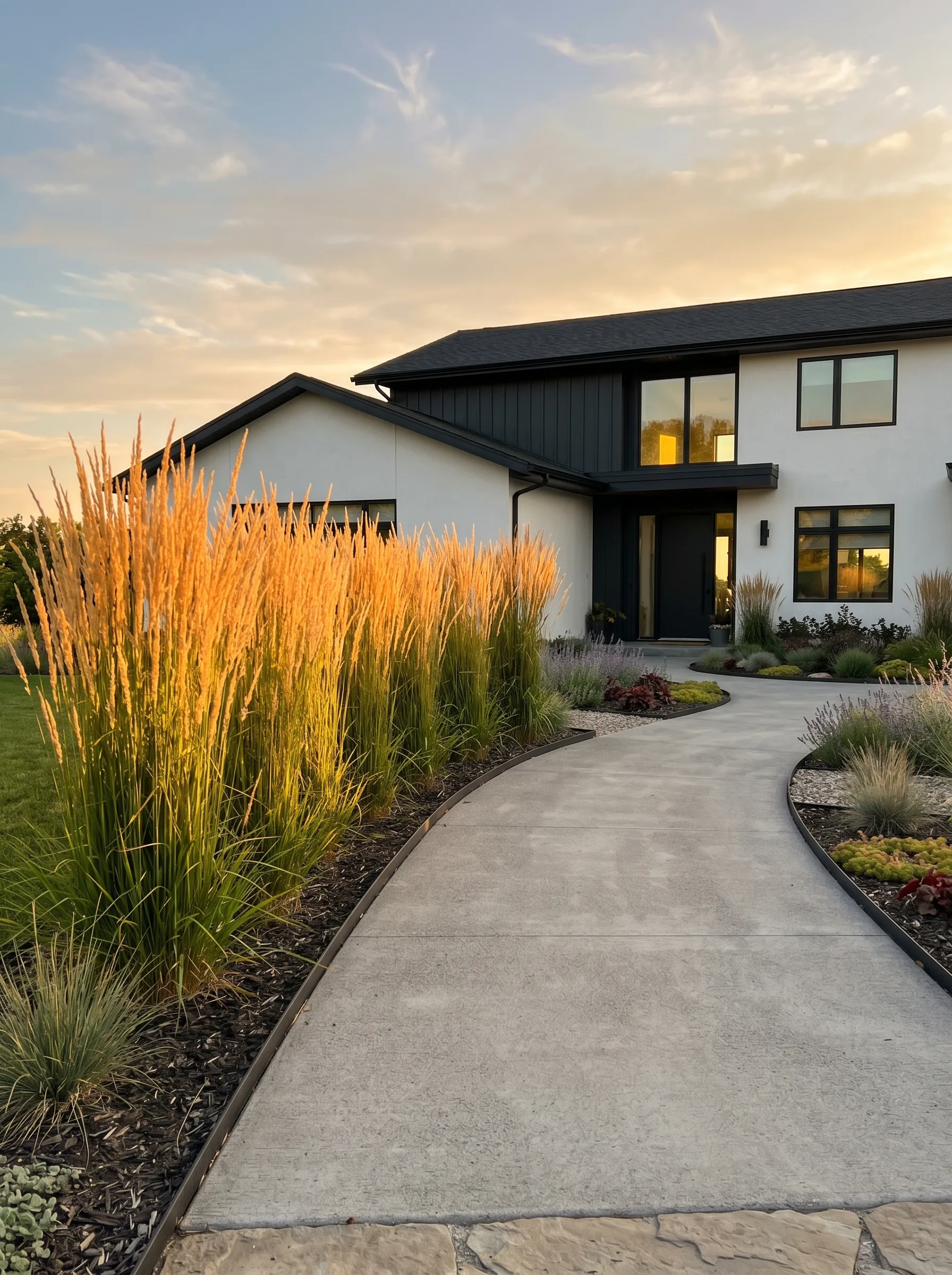
Karl Foerster feather reed grass is one of the most celebrated ornamental grasses in modern landscape design, and its popularity is entirely deserved. This upright, architectural variety grows in tight, vertical clumps reaching five to six feet tall, producing feathery pink-bronze plumes in early summer that fade to warm gold by fall. Its perfectly columnar form makes it an ideal choice wherever a strong vertical accent is needed in a contemporary planting scheme.
What makes Karl Foerster truly exceptional for modern landscapes is its four-season interest and structural reliability. It maintains its upright form even through heavy rain and wind, unlike many other tall grasses that tend to flop. Planted in a bold row along a driveway, beside a modern fence, or flanking a pathway, it creates a sense of dramatic rhythm and intentional design. It thrives in full sun with minimal care and delivers consistent, reliable beauty throughout every season of the year.
2. Mexican Feather Grass for Airy Texture
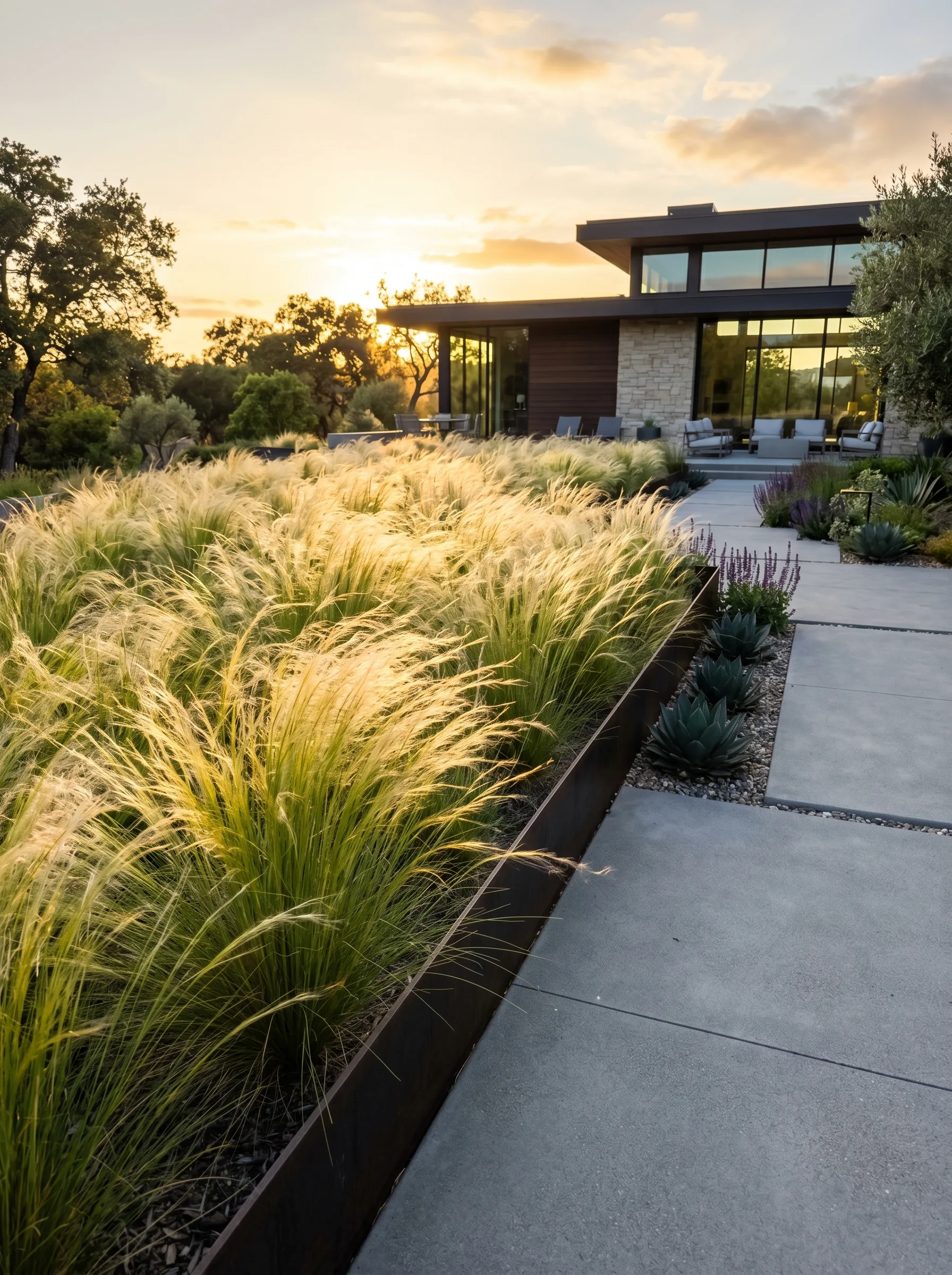
Mexican feather grass is the definition of delicate beauty in a landscape, producing impossibly fine, hair-like foliage that shimmers and sways in the lightest breeze. Its soft, flowing texture creates a striking contrast against hard landscape materials like concrete, steel, and stone, which is precisely why it has become a staple in contemporary garden design. Growing in loose, arching mounds about two feet tall, it has a natural, effortless quality that makes any planting look both intentional and relaxed.
In modern landscapes, Mexican feather grass works beautifully as a massed ground cover, a border edging plant, or as a softer companion to bold architectural shrubs and grasses. Its golden seed heads catch the light dramatically in late afternoon, creating a glowing effect across the entire planting bed. It is extremely drought-tolerant and self-seeds readily, filling in bare patches naturally over time. This is a grass that rewards the gardener with constant, effortless beauty throughout the entire growing season.
3. Blue Oat Grass for Cool Color Contrast
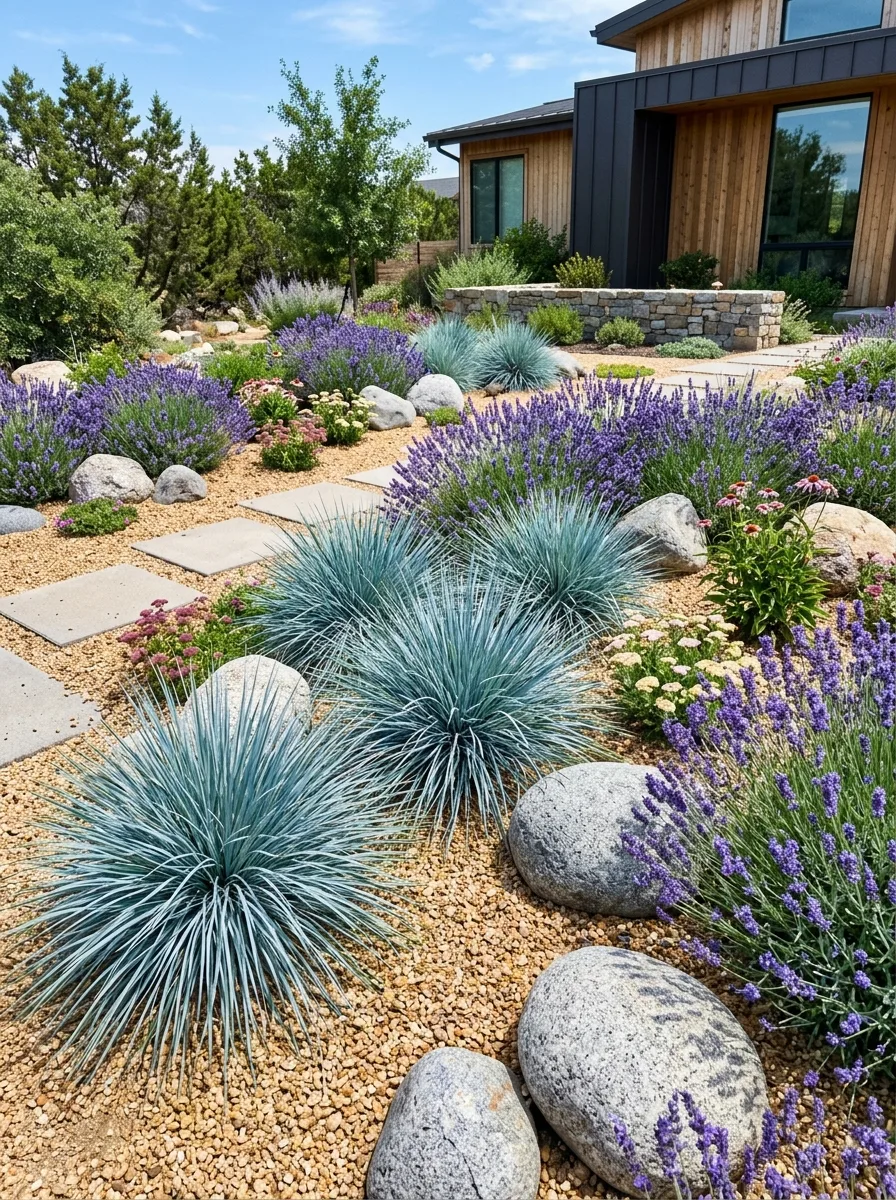
Blue oat grass is a compact, low-growing ornamental variety prized for its striking steel-blue foliage that holds its color reliably throughout the entire growing season. The cool, silvery blue tone of its fine, arching blades creates a powerful contrast against warm-toned paving materials, dark mulch, and the green foliage of surrounding plants. Growing to about two feet in height, it is perfectly scaled for use in containers, rock gardens, and mixed planting borders in any modern outdoor setting.
The versatility of blue oat grass in contemporary design comes from how naturally it complements other colors and textures. Paired with burgundy-leafed plants, warm orange sedums, or lime-green ground covers, the blue foliage creates a bold, painterly composition that feels both designed and naturally beautiful. It produces attractive oat-like seed heads in summer that age to a warm tan and add a second season of ornamental interest. This is a genuinely low-maintenance grass that performs reliably in full sun to light shade with very little supplemental watering.
4. Maiden Grass for Bold Focal Points
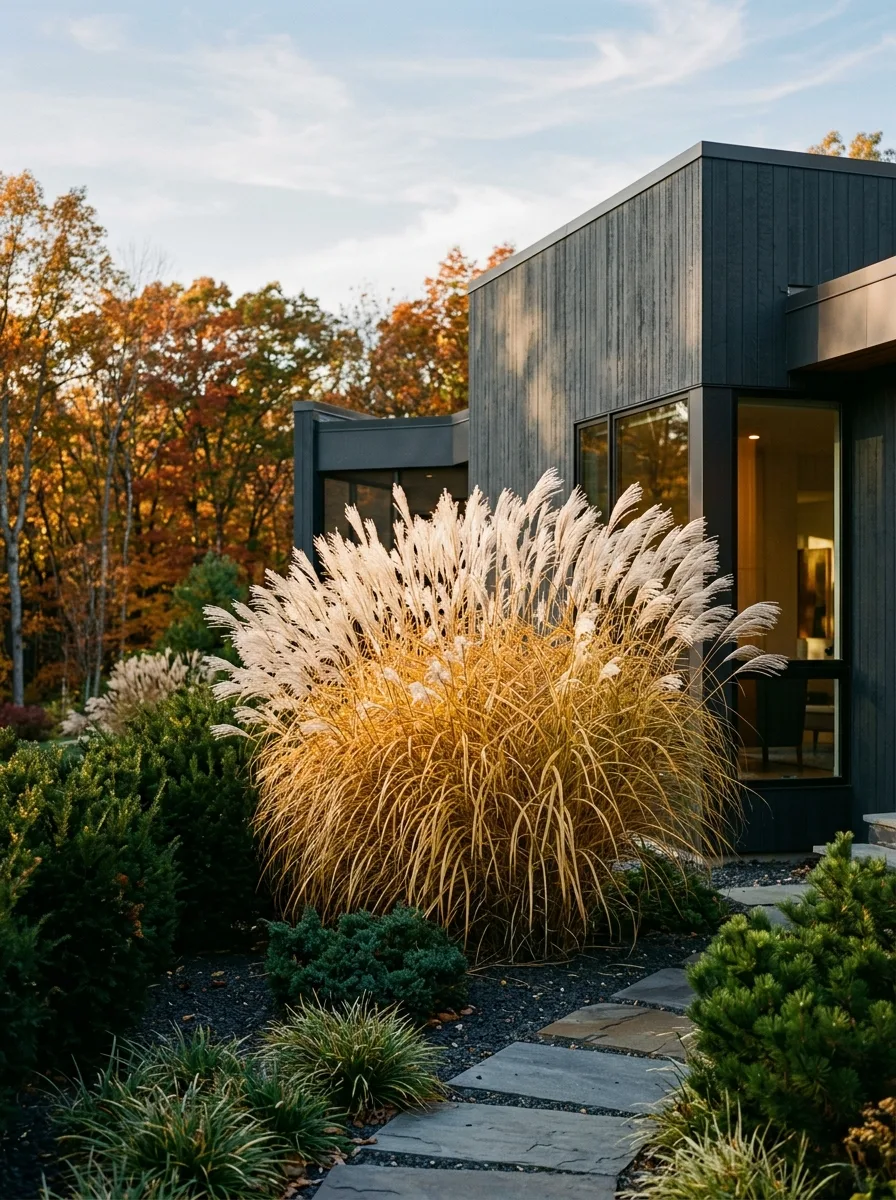
Maiden grass, a large-growing cultivar within the Miscanthus family, is one of the most visually impressive ornamental grasses available for creating bold focal points in modern landscapes. Growing six to eight feet tall in a graceful, arching fountain form, it commands attention from every angle. In late summer it produces large, silky silver plumes that age beautifully through fall and winter, creating outstanding seasonal interest long after most other perennials have retreated underground.
Using maiden grass as a specimen plant in a modern landscape creates an immediate sense of scale and drama that very few other plants can match. It works beautifully at the corner of a building, at the end of a mixed border, or as a living privacy screen along a property boundary. Its warm golden and bronze fall color makes it one of the most spectacular autumn plants in the entire garden. Despite its impressive size, maiden grass requires very little care beyond an annual cutback in late winter before new growth emerges.
5. Japanese Forest Grass for Shaded Spaces
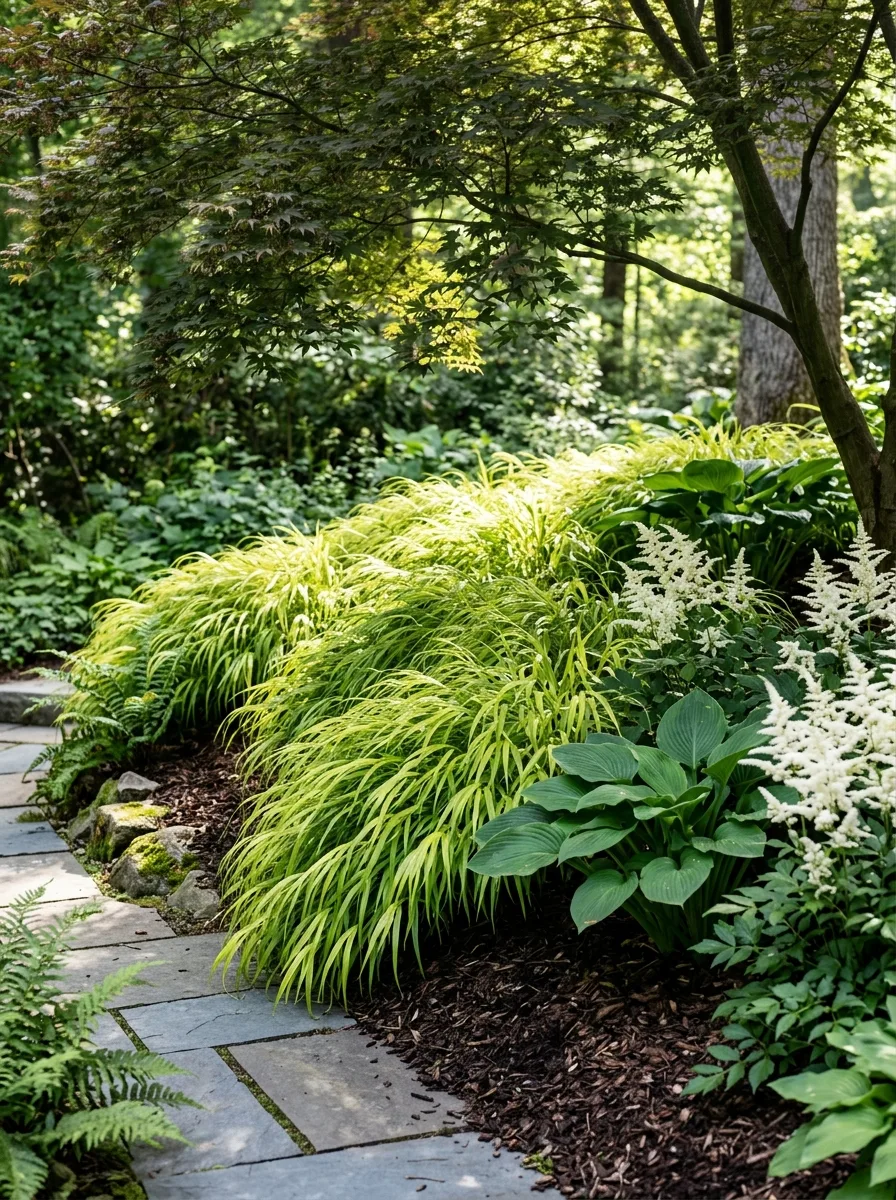
Japanese forest grass is a luminous, golden-chartreuse ornamental grass that brings light and warmth to shaded areas of a modern landscape where few other plants perform as beautifully. Its cascading, ribbon-like foliage falls in graceful arching waves, creating a soft, flowing ground cover effect that looks genuinely lush and intentional. The bright golden coloring intensifies in partial shade, making it more vibrant and eye-catching in low-light conditions than it is in full sun.
In contemporary shade gardens, Japanese forest grass functions as both a ground cover and a textural accent plant with equal effectiveness. Pairing it with deep green hostas, dark-leafed heucheras, and white-flowering astilbes creates a richly layered composition of contrasting colors and forms. It also performs wonderfully in containers, where its cascading habit allows it to spill beautifully over the edges. This is a plant that makes every shaded corner of a modern garden feel like a deliberately and artfully designed space.
6. Purple Fountain Grass for Drama and Color
Purple fountain grass is one of the most visually dramatic ornamental grasses available, producing rich burgundy-purple foliage and soft, arching burgundy plumes that sway gracefully in every passing breeze. Its deep, warm color makes it an extraordinary contrast plant in modern landscapes where bold, sculptural color combinations are valued. Growing two to four feet tall in a rounded, fountain-like form, it works beautifully as a specimen plant, in mixed borders, or in large decorative containers on a patio or terrace.
The seasonal performance of purple fountain grass is particularly impressive in late summer and fall when its plumes are at their fullest and most ornamental. The entire plant catches the light beautifully at golden hour, glowing with a warm, almost translucent quality that is genuinely spectacular. In warmer climates it behaves as a perennial, returning reliably each spring, while in colder regions it is grown as a striking annual. Either way, the visual impact it delivers throughout the growing season makes it worth every effort involved in planting it.
7. Switchgrass for Native Modern Gardens
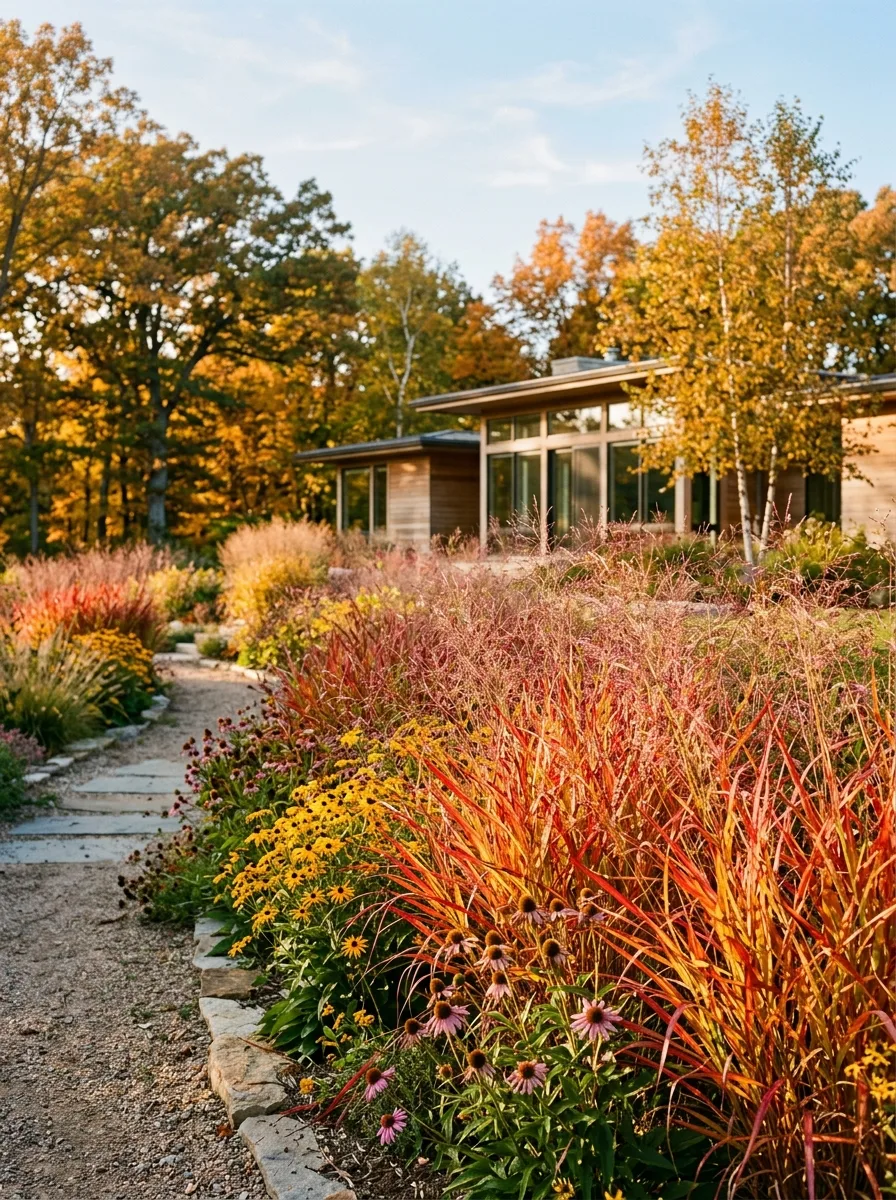
Switchgrass is a native North American prairie grass that has earned a well-deserved place in modern landscape design thanks to its outstanding adaptability, ecological value, and genuine ornamental beauty. Varieties like Shenandoah and Heavy Metal offer upright form, fine-textured foliage, and spectacular fall color in shades of red, burgundy, and gold that rival any ornamental shrub. It supports butterflies, birds, and beneficial insects throughout the growing season, making it an ecologically responsible choice for any modern garden.
What sets switchgrass apart from many other ornamental grasses is the sheer range of cultivars available, each with distinct color, height, and texture characteristics suited to different design applications. The upright Shenandoah turns a brilliant scarlet red in fall, while the blue-foliaged Heavy Metal maintains a striking vertical form throughout the season. Both perform well in full sun with minimal supplemental watering once established. Planted in masses or mixed borders, switchgrass creates a naturalistic prairie aesthetic that feels simultaneously wild and beautifully designed.
8. Pampas Grass as a Statement Plant
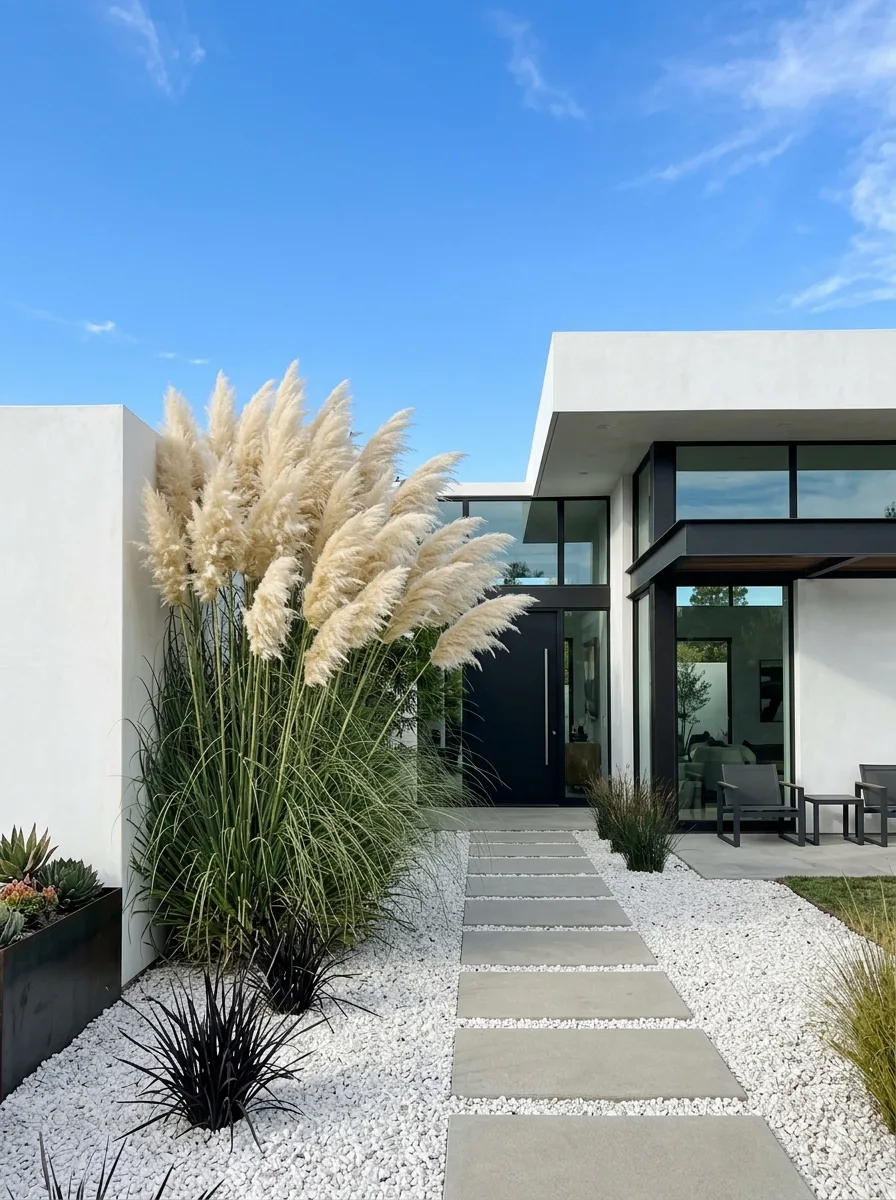
Pampas grass is one of the most iconic and instantly recognizable ornamental grasses in the world, producing enormous, feathery white or pink plumes on tall canes that can reach eight to twelve feet in height. In modern landscapes, it functions as an unforgettable statement plant with the visual presence of a small tree. Its bold scale and dramatic plumes make it ideal for large open spaces where it can be appreciated from a distance without crowding neighboring plants.
The contemporary approach to using pampas grass involves restraint and intentionality rather than mass planting. A single well-placed specimen at the corner of a modern home, beside a swimming pool, or at the end of a long driveway creates maximum visual impact with elegant simplicity. Its creamy white plumes pair beautifully with modern exterior materials like white render, concrete, and weathered steel. Harvested plume stems have also become enormously popular in interior decor, making this grass a plant that delivers beauty both inside and outside the home.
9. Tufted Hair Grass for Wet Areas
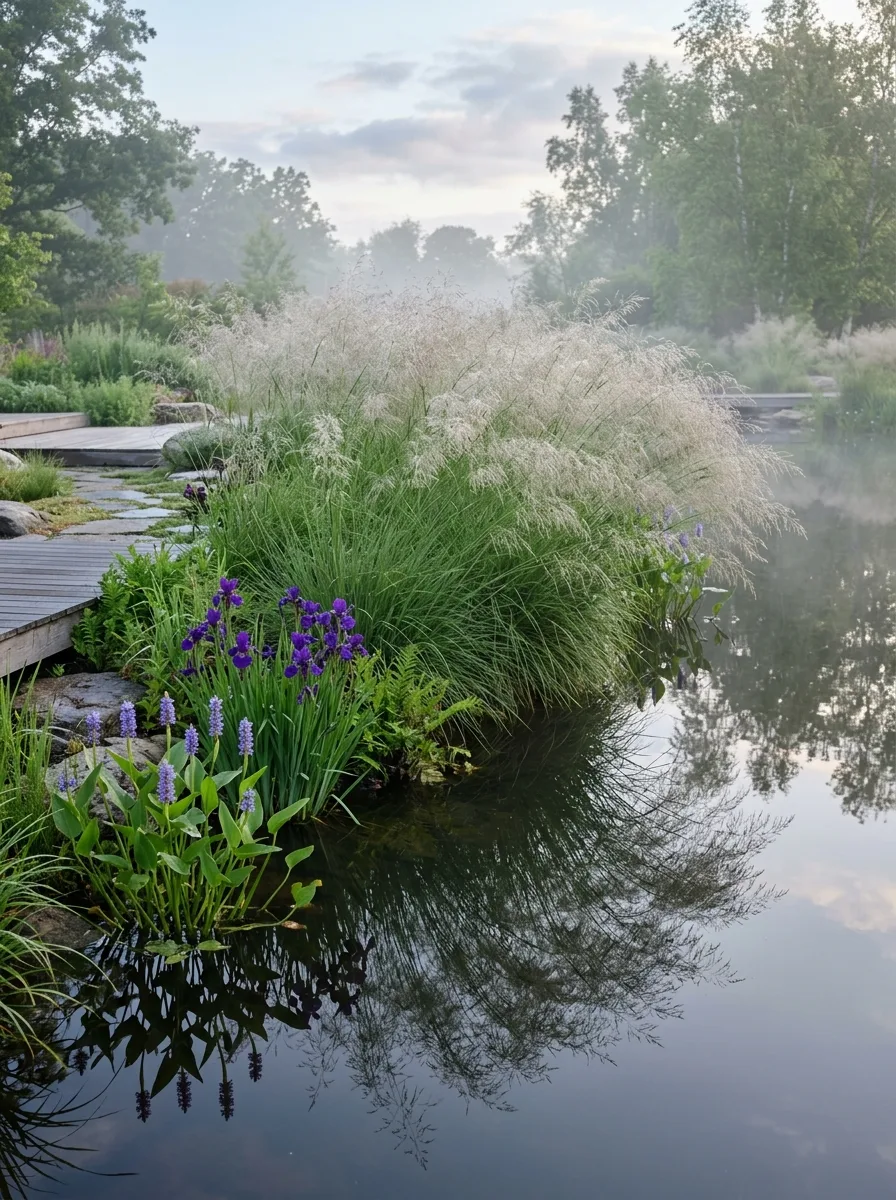
Tufted hair grass is an exceptionally beautiful and underutilized ornamental grass that thrives in consistently moist soil conditions where many other ornamental varieties would struggle to survive. Its fine-textured, deep green foliage forms tidy, dense tufts that remain attractive throughout the growing season, and in summer it produces airy, cloud-like flower heads that hover above the foliage on delicate stems, creating a soft, ethereal effect. It is particularly beautiful when planted near water features, rain gardens, or boggy low points.
In modern landscapes with challenging wet areas, tufted hair grass solves a genuine design problem while creating visual beauty at the same time. Massing it along a stream edge, around a naturalistic pond, or in a designed rain garden creates a naturalistic, waterside aesthetic that feels completely authentic. Its delicate flower heads catch early morning light and dew in a way that is genuinely magical. Varieties like Goldtau offer warm golden tones that add an extra layer of seasonal color interest to an already beautiful and ecologically valuable plant.
10. Little Bluestem for Fall Fire
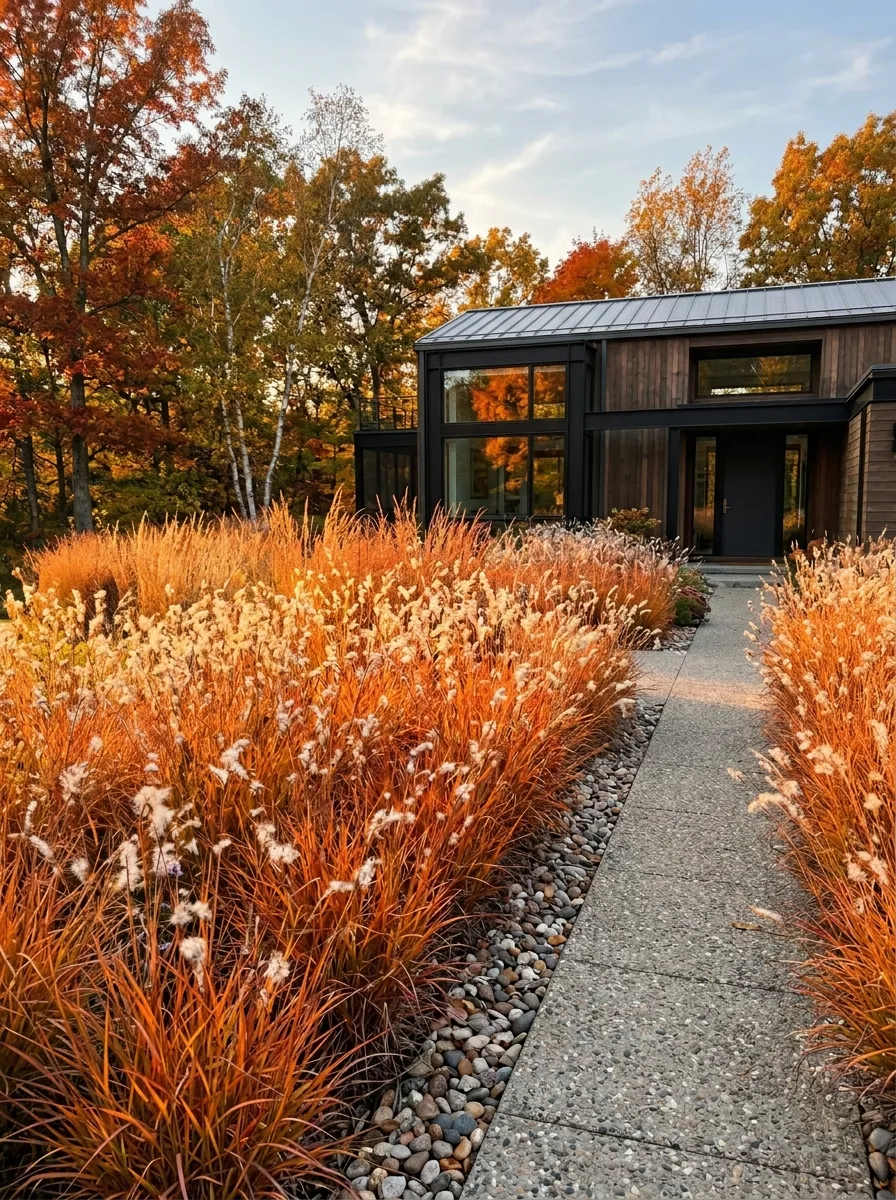
Little bluestem is a native North American grass that delivers one of the most spectacular fall color displays of any ornamental plant in the garden. Through spring and summer its fine blue-green foliage is attractive and tidy, but when fall arrives the entire plant transforms into a blazing display of orange, copper, and deep red tones that hold beautifully through winter. Growing two to four feet tall in upright clumps, it is perfectly scaled for mixed borders and naturalistic planting designs.
The ecological and design value of little bluestem in modern landscapes is exceptional. It supports native bees, provides winter habitat for beneficial insects, and feeds birds that feed on its seed heads through the colder months. In design terms, its fall color creates a warm, fiery contrast against the deep greens and purples of other late-season plants. It is extremely drought-tolerant, thrives in poor soils, and requires no fertilizing, making it one of the most rewarding and low-maintenance ornamental grasses available to modern landscape gardeners today.
11. Black Mondo Grass for Dark Drama
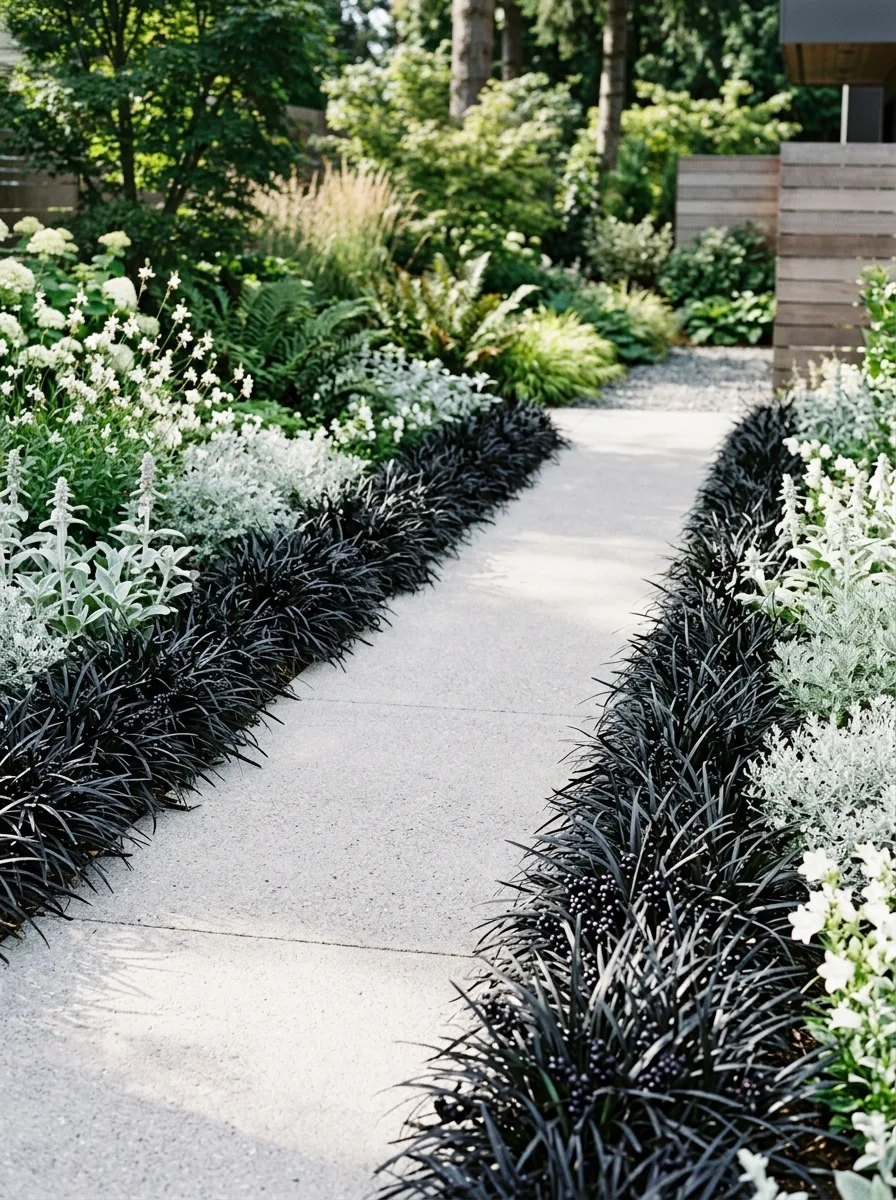
Black mondo grass is unlike any other ornamental grass in the plant world, producing deep, near-black strap-like foliage that creates a startling and sophisticated effect in modern landscape designs. Its dark coloring acts as a living contrast element against light-colored paving, pale gravel, or bright green plantings in a way that few other plants can achieve. Growing in slow, spreading clumps about six inches tall, it functions beautifully as an edging plant, a container feature, or a ground cover in shaded areas.
The design applications for black mondo grass in contemporary gardens are remarkably varied and creative. Using it as a dark border along the edge of a light concrete pathway creates an elegant, linear contrast. Planting it in mass drifts between stepping stones creates a dramatic dark carpet effect. Pairing it with silver-leafed plants, golden grasses, or white-flowering ground covers produces compositions of striking visual tension and sophistication. It also produces small pink flowers followed by glossy black berries, adding two further seasons of quiet ornamental interest to an already exceptional plant.
12. Zebra Grass for Bold Texture
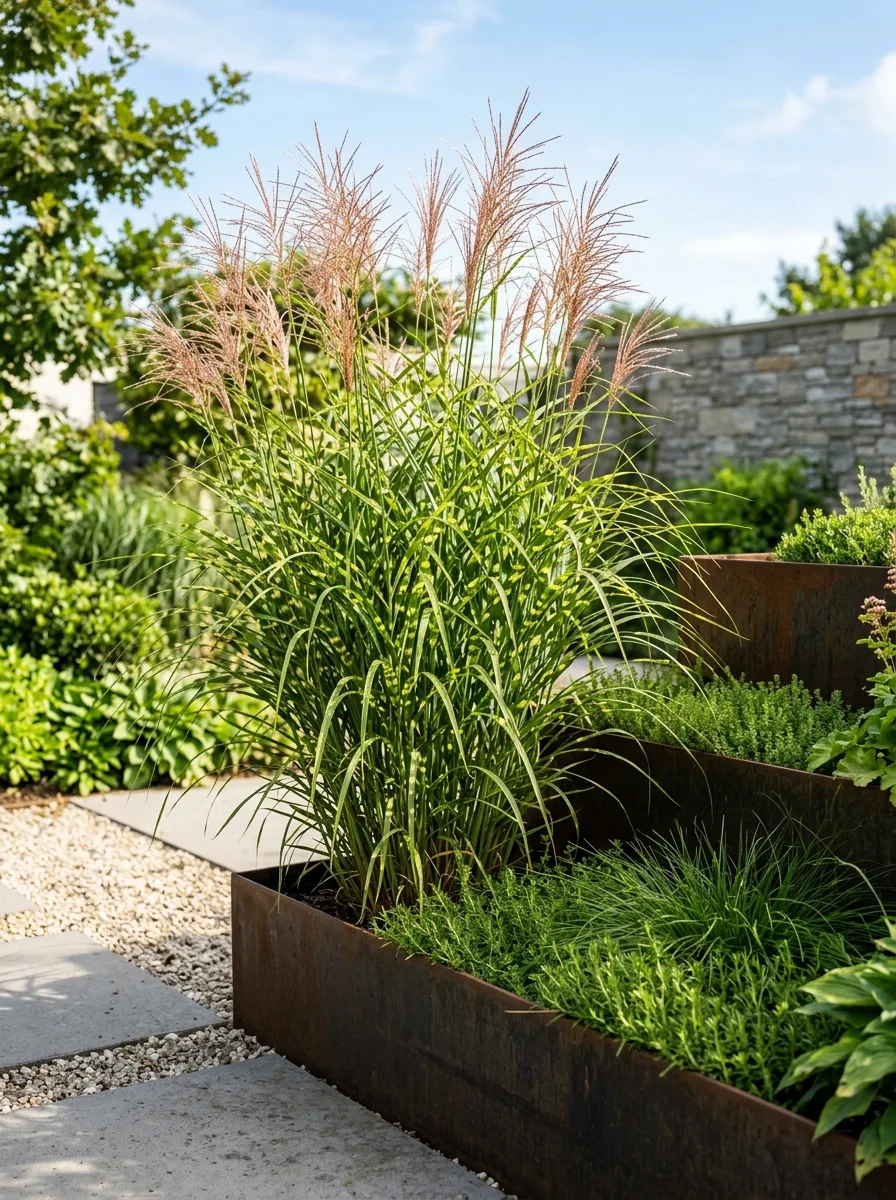
Zebra grass is a striking Miscanthus cultivar that earns its name from the distinctive horizontal gold banding that runs across its broad, arching green blades. These unusual golden stripes create a visually complex, almost exotic texture that makes zebra grass one of the most eye-catching ornamental grasses available for modern landscape design. Growing five to seven feet tall in an arching, vase-like form, it creates a large, dramatic presence that suits bold, statement-driven garden designs.
The banded foliage of zebra grass is most visible and vibrant in bright light, making it an ideal choice for sunny, prominent positions where it can show off its unique patterning to full advantage. Pairing it with dark-leafed shrubs or plants with plain green foliage lets the banding stand out without visual competition. In late summer it produces coppery pink plumes that add a further layer of ornamental appeal. This is a grass that invites close inspection and rewards it, offering layers of detail that make it endlessly interesting throughout the entire growing season.
13. Blue Fescue as a Compact Accent
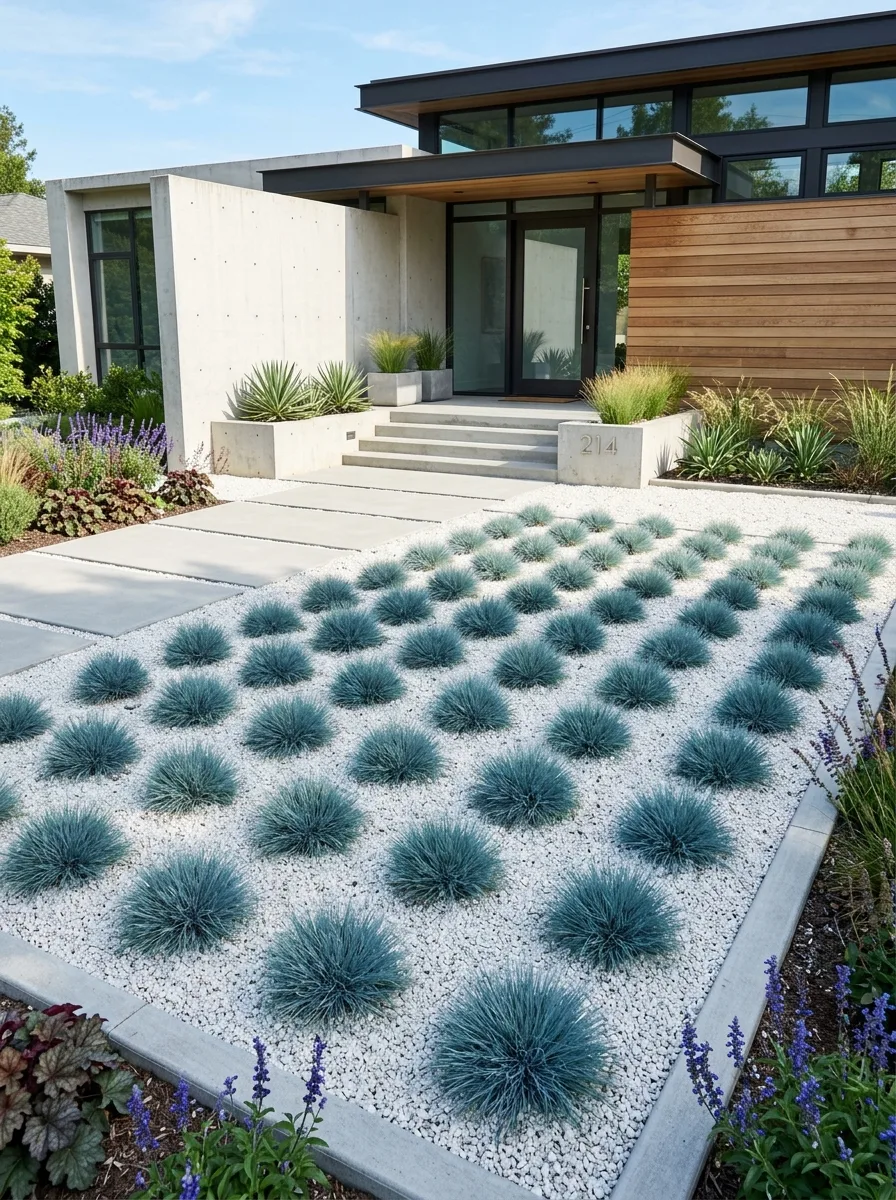
Blue fescue is one of the most widely used and beloved ornamental grasses in contemporary landscape design, and its enduring popularity speaks to how effectively it delivers color, texture, and form in a very compact package. Growing in dense, rounded tufts about ten inches tall with intensely blue-silver fine-textured foliage, it creates a striking contrast against almost every other plant material in the landscape. Its small scale makes it perfect for edging, rock gardens, containers, and the front of mixed borders.
The design versatility of blue fescue is one of its greatest strengths in a modern landscape context. Repeated in a regular grid pattern across a gravel garden, it creates a contemporary, almost meditative planting rhythm. Used in mass drifts along a pathway edge, it creates a soft blue border that guides the eye and defines the space beautifully. It pairs exceptionally well with warm orange and rust-toned plants, succulent ground covers, and bold architectural perennials. Trimming it back in early spring keeps it compact, fresh, and intensely blue throughout every growing season.
14. Muhly Grass for Pink Cloud Effects
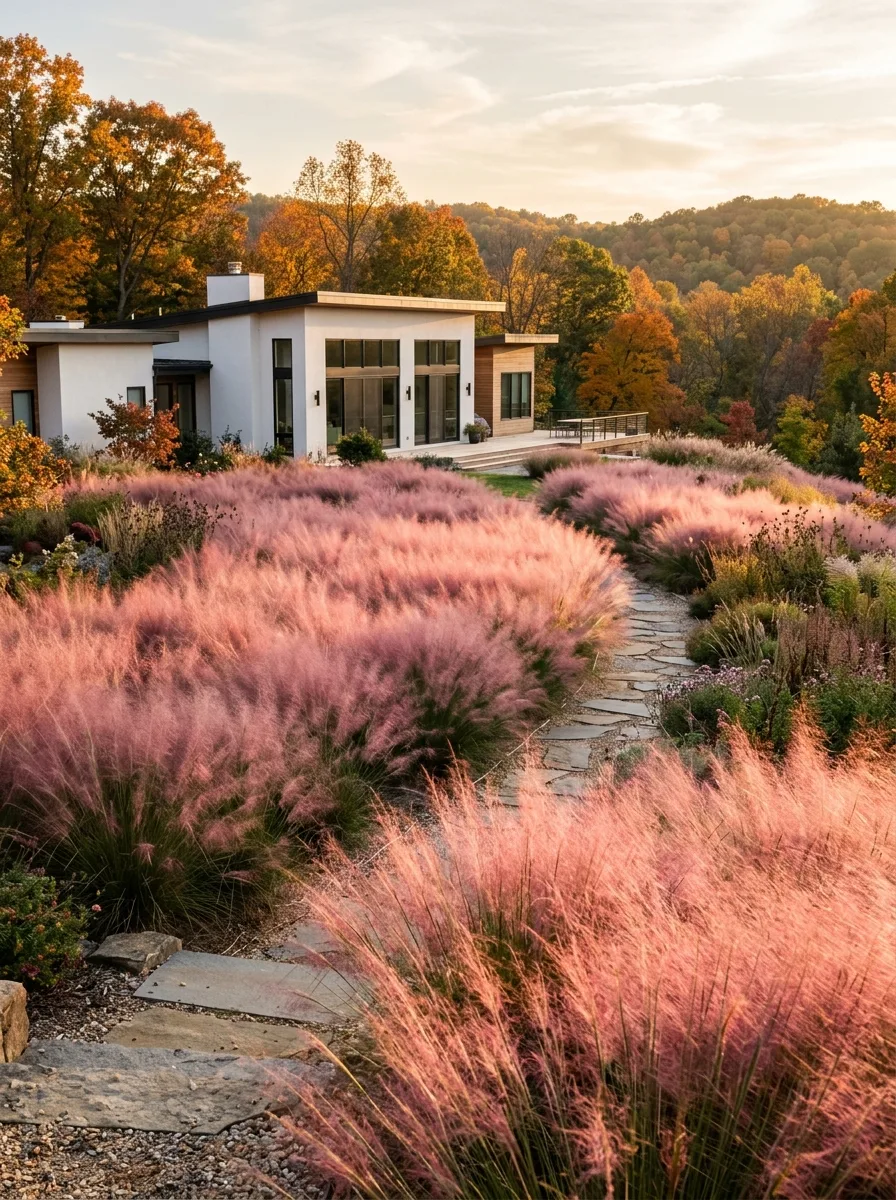
Muhly grass is arguably one of the most photogenic and showstopping ornamental grasses available to modern landscape designers, producing an extraordinary cloud of fine pink-purple flowering stems every fall that completely transforms the appearance of the plant and the entire surrounding garden. From a distance, a mass planting of muhly grass in full bloom creates the impression of a pink mist hovering above the landscape, an effect so beautiful that it genuinely stops traffic and draws people in for a closer look.
Outside of its spectacular fall bloom period, muhly grass is an attractive, fine-textured green mound that serves as a useful and graceful mid-border plant throughout spring and summer. It is native to the southeastern United States and thrives in heat, humidity, and drought once established, requiring virtually no supplemental watering or care. Planted in bold masses of five to fifteen plants, the fall cloud effect is maximized. This is one of the most effective single-species seasonal plantings available in contemporary landscape design today.
15. New Zealand Flax for Architectural Impact
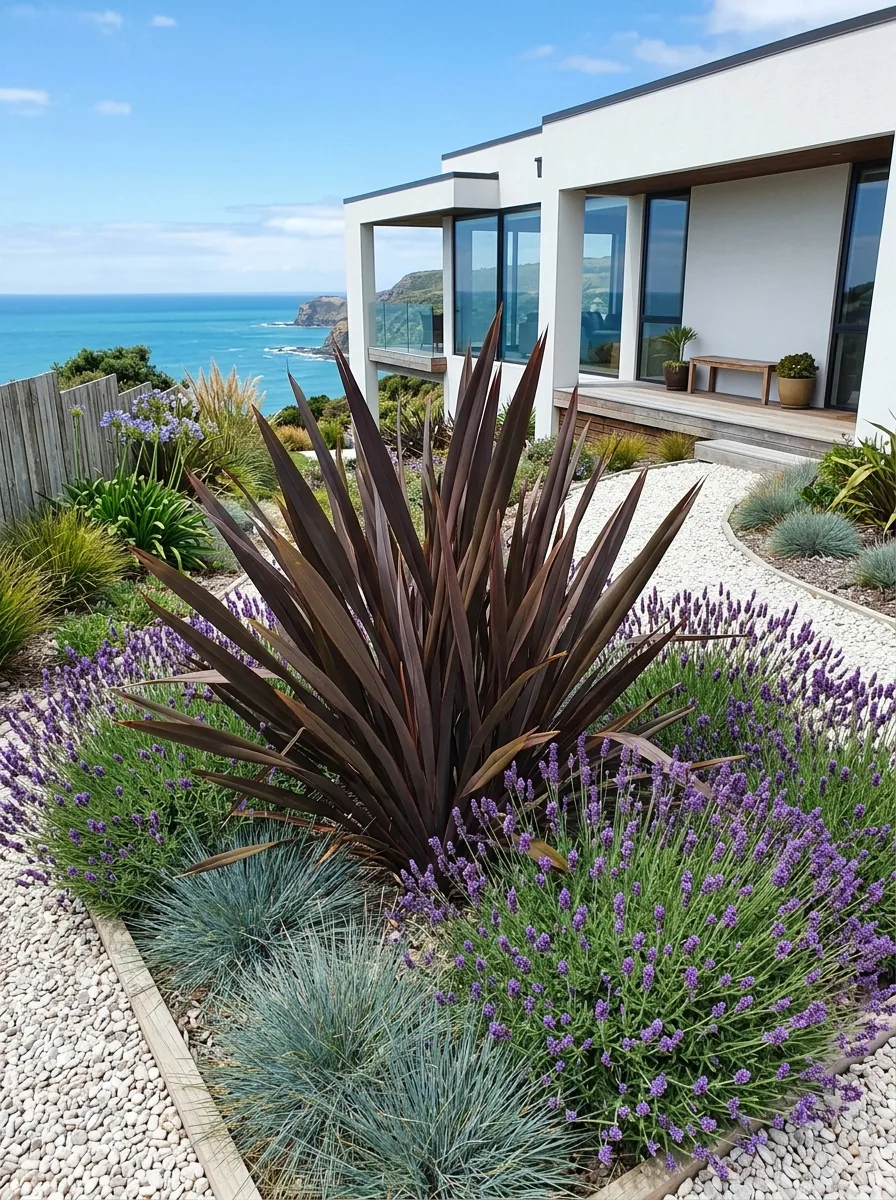
New Zealand flax, while not a true grass, is grouped with ornamental grasses in modern landscape design because of the similar architectural role it plays in a planting scheme. Its bold, sword-like leaves grow in dramatic fans that can reach three to six feet tall, creating a strong vertical form and a sculptural presence that anchors planting beds and containers with real authority. Available in colors ranging from deep burgundy and bronze to lime green and variegated pink, it offers exceptional design flexibility.
New Zealand flax works particularly well in contemporary coastal and Mediterranean style gardens where its bold structure feels appropriate and at home. Pairing it with low-growing grasses, succulents, and lavender creates a layered composition of contrasting scales and textures. In containers it is an outstanding specimen plant that provides year-round structure and color. Its tolerance for coastal winds, salt spray, and periods of drought makes it one of the most resilient and low-maintenance statement plants available to gardeners in challenging environments.
16. Sedge as a Fine-Textured Ground Cover
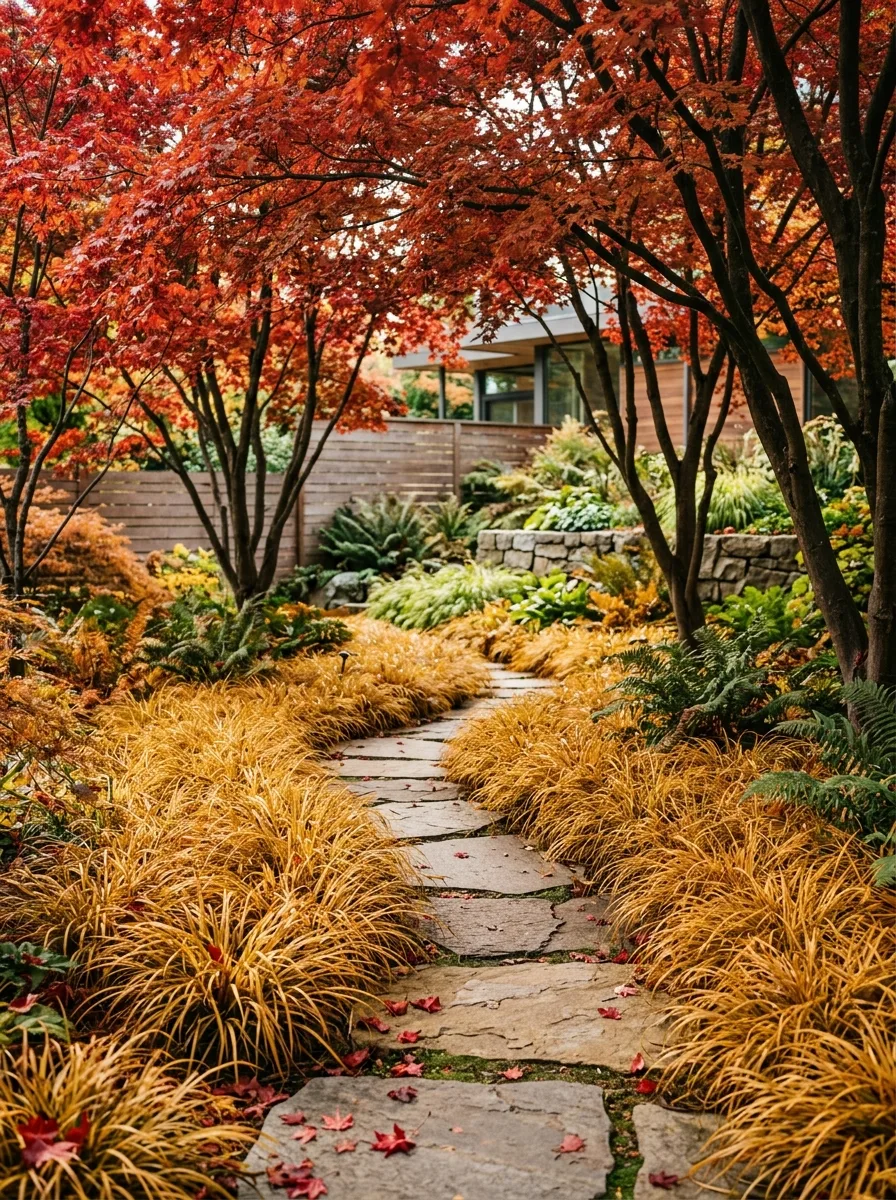
Sedges are a diverse and incredibly versatile group of grass-like plants that offer modern landscape designers a remarkable range of textures, colors, and growth habits for use in both sunny and shaded garden settings. Unlike true grasses, most sedges perform exceptionally well in shade and moist conditions, making them indispensable for areas of the garden where other ornamental grasses simply refuse to thrive. Varieties like bronze Carex, palm sedge, and golden leatherleaf sedge each bring a distinct and beautiful character to the landscape.
Using sedge as a ground cover under trees, between stepping stones, or along shaded pathways creates a lush, low-maintenance alternative to traditional lawn grass in difficult areas. Many sedge varieties are semi-evergreen, maintaining attractive foliage through winter and providing year-round landscape interest. Their fine texture contrasts beautifully with broad-leafed shade plants like hostas and ferns, creating layered planting compositions of genuine sophistication. Sedges require minimal care once established and reward the designer with consistently beautiful results across a wide range of growing conditions.
17. Giant Silvergrass for Privacy Screening
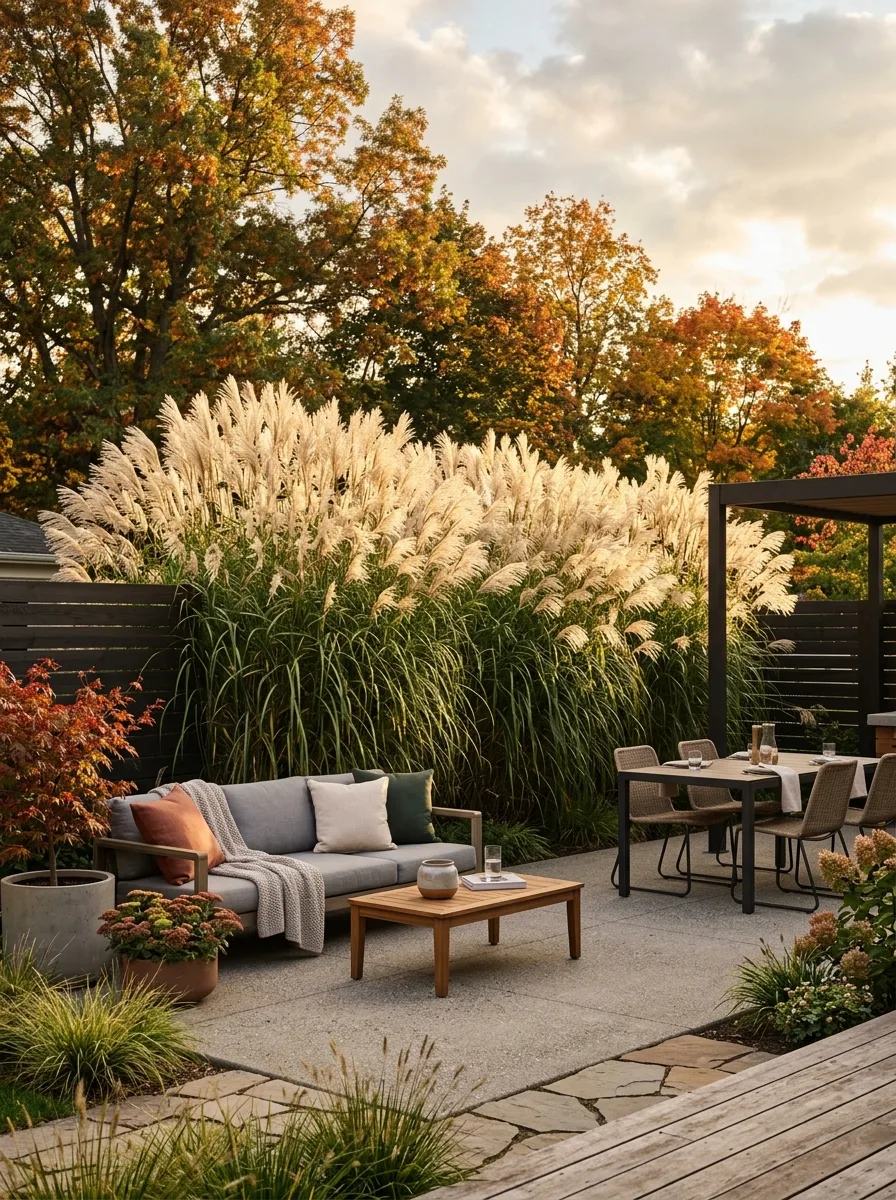
Giant silvergrass, a large cultivar within the Miscanthus family, is one of the most effective and beautiful plants available for creating a living privacy screen in a modern landscape. Growing eight to twelve feet tall in dense, upright clumps, it creates a solid visual barrier that blocks unwanted views while contributing genuine ornamental beauty to the garden. Its large, feathery silver plumes emerge in late summer and persist through winter, adding graceful texture to the screen even in the coldest months.
As a privacy planting, giant silvergrass has enormous advantages over traditional hedging plants. It grows significantly faster than most shrubs and trees, reaching full screening height within two to three growing seasons. It requires no clipping or formal maintenance, only an annual cutback in late winter. Its seasonal transformation from green summer foliage to golden autumn color to silver winter plumes means the privacy screen is also a dynamic, living garden feature rather than simply a functional barrier between you and the outside world.
18. Prairie Dropseed for Naturalistic Planting
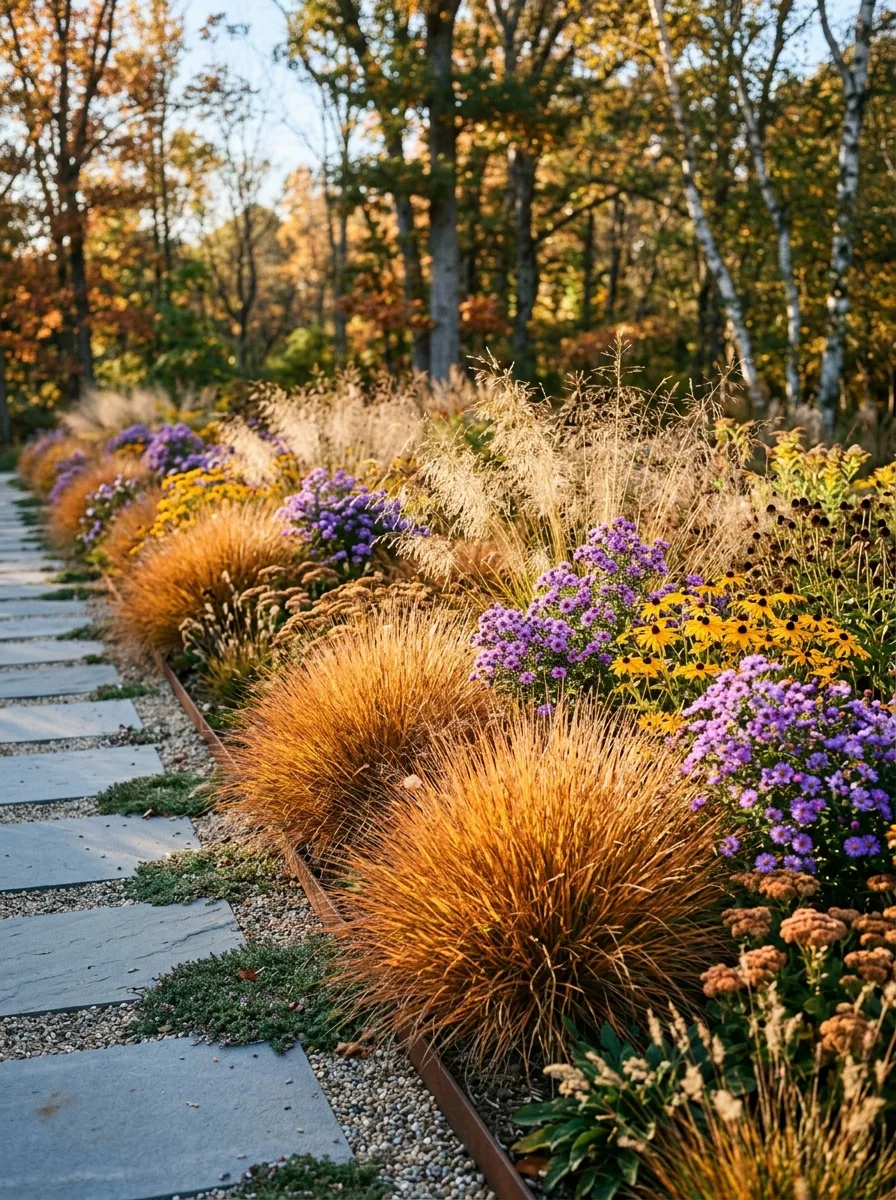
Prairie dropseed is a beautiful native grass that has earned significant recognition in modern naturalistic landscape design for its elegant, fine-textured appearance and remarkable adaptability. Its arching, hair-fine foliage forms perfect rounded mounds that have an almost manicured appearance despite requiring virtually no maintenance throughout the growing season. In late summer it produces tiny fragrant flower heads that smell faintly of coriander and add a delicate, airy quality to the planting composition.
The fall and winter performance of prairie dropseed is just as valuable as its summer appearance. Its foliage turns a rich orange-bronze in fall before fading to a warm tan that persists attractively through the winter months. It thrives in full sun and well-drained soils, tolerating heat and drought with ease once established. Using it in mass plantings along pathways or in large mixed prairie borders creates a soft, flowing ground layer of exceptional refinement. This is a grass that rewards designers who take the time to discover its quiet, understated beauty.
19. Fountain Grass in Container Displays
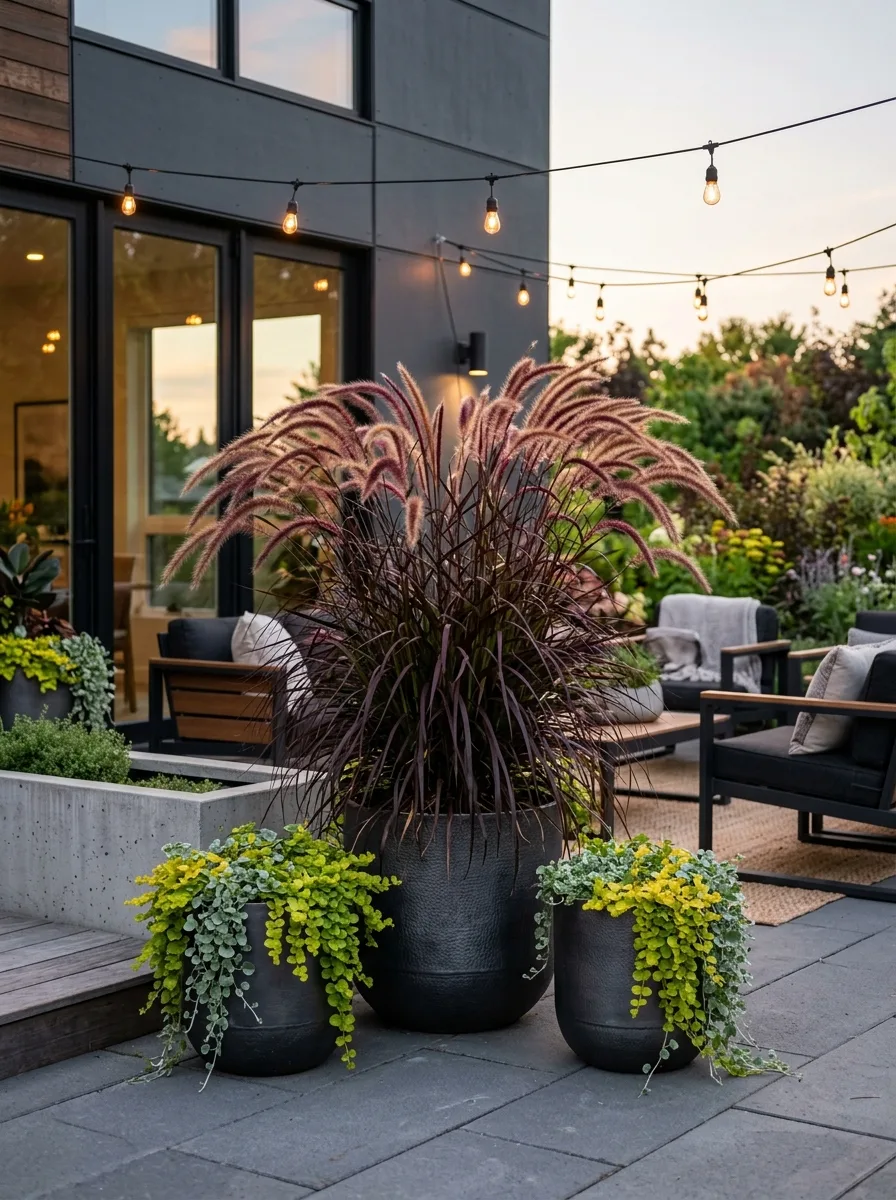
Growing ornamental fountain grass in large containers is one of the most effective and design-forward ways to incorporate this beautiful plant family into a modern outdoor space. A tall, elegant container planted with a single specimen of green or burgundy fountain grass creates a sculptural focal point on a patio, terrace, or entrance area that delivers movement, texture, and seasonal interest simultaneously. The arching, fountain-like habit of the plant echoes the classic urn form of traditional containers in a way that feels both contemporary and timeless.
Combining fountain grass with companion plants in large mixed container arrangements opens up even more creative design possibilities for modern outdoor spaces. Pairing it with trailing sweet potato vine, bold-colored coleus, and cascading bacopa creates a dynamic, multi-layered container composition that is genuinely spectacular throughout the entire growing season. Containers of ornamental grass also work beautifully as moveable landscape elements, allowing you to shift focal points and create new arrangements on a deck or terrace as the seasons change and different plants reach their peak.
20. Mixed Grass Border for Layered Design
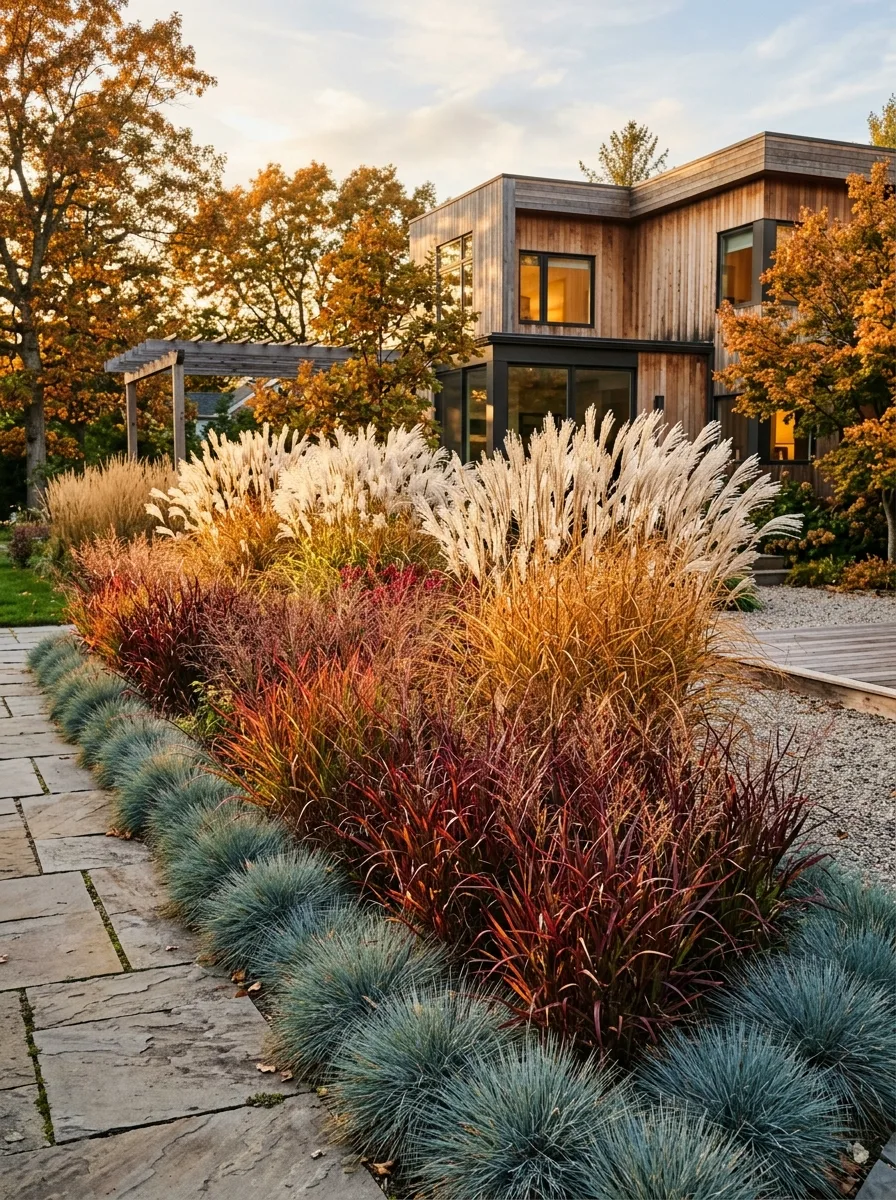
A dedicated mixed ornamental grass border is one of the most sophisticated and seasonally dynamic plantings available to modern landscape designers and passionate home gardeners. By combining grasses of varying heights, textures, colors, and bloom times in a single thoughtfully designed border, you create a planting that is never static and never dull. Tall back-of-border miscanthus, mid-height switchgrass, and low-growing blue fescue at the front edge create a naturally layered composition with genuine visual depth.
The key to a successful mixed grass border is sequencing plant interest through the seasons so that something new and beautiful is always emerging. Spring brings fresh new growth in a range of greens and blues, summer delivers full-sized foliage in its peak color, and late summer through fall is when the majority of ornamental grasses reach their absolute finest with plumes, seed heads, and fall color all contributing to a breathtaking seasonal display. A mixed grass border looks genuinely professional and costs a fraction of a traditional perennial border to maintain.
21. Weeping Brown Sedge for Warm Tones
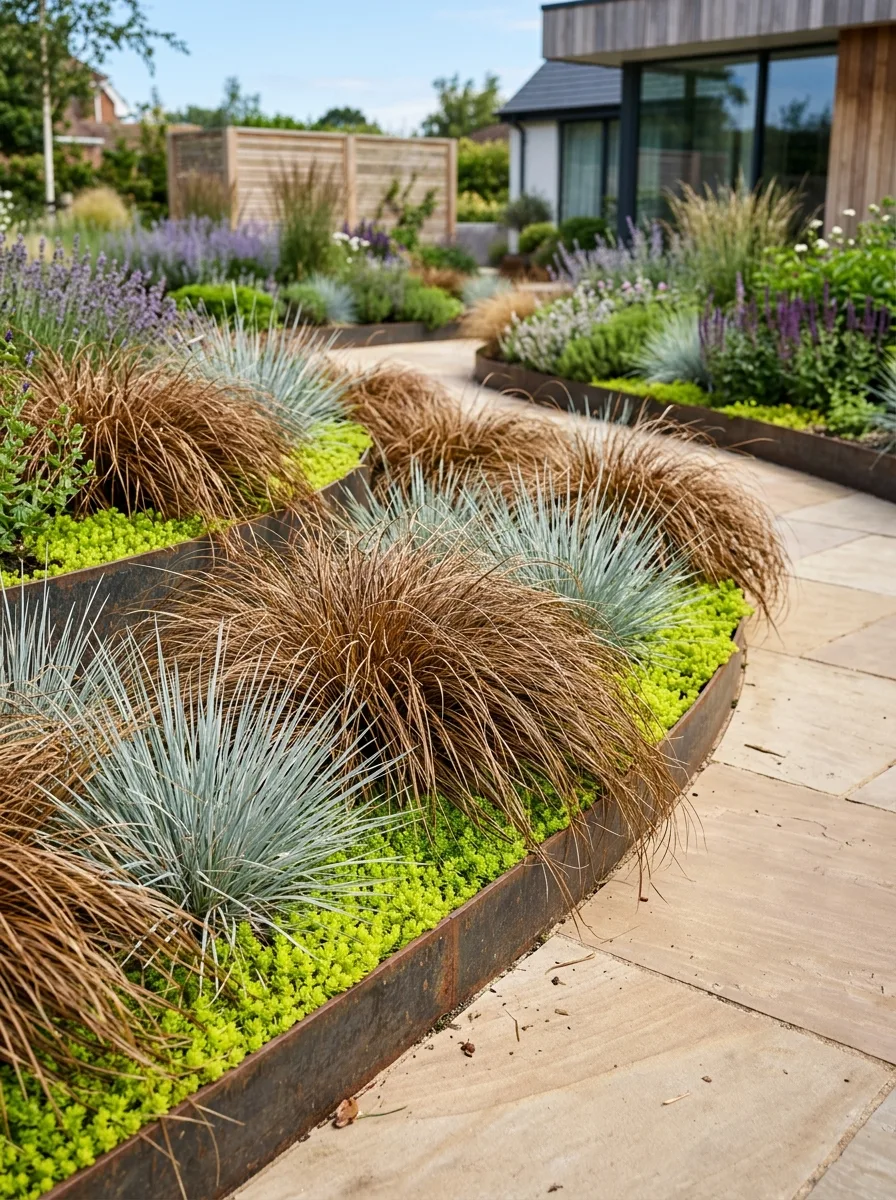
Weeping brown sedge is a distinctive and quietly beautiful ornamental grass that offers something genuinely different from the typical green or blue alternatives commonly seen in modern landscapes. Its warm, coppery-bronze foliage arches in graceful weeping curves that create a soft, flowing effect at ground level. The warm brown tones are unusual and eye-catching in a landscape context, complementing earthy materials like corten steel, weathered timber, warm-toned stone, and terracotta pottery beautifully.
In contemporary garden design, weeping brown sedge is particularly effective in naturalistic planting schemes where its warm color adds depth and contrast among green-foliaged companions. Pairing it with lime-green ground covers, silver blue oat grass, and dark-leafed heucheras creates a richly toned composition with genuine visual complexity. It performs well in both sun and partial shade and tolerates moderately dry conditions once established. This is a grass that experienced designers return to repeatedly because of how reliably beautiful and versatile it proves to be in real garden settings.
22. Deer Grass for Water-Wise Landscapes
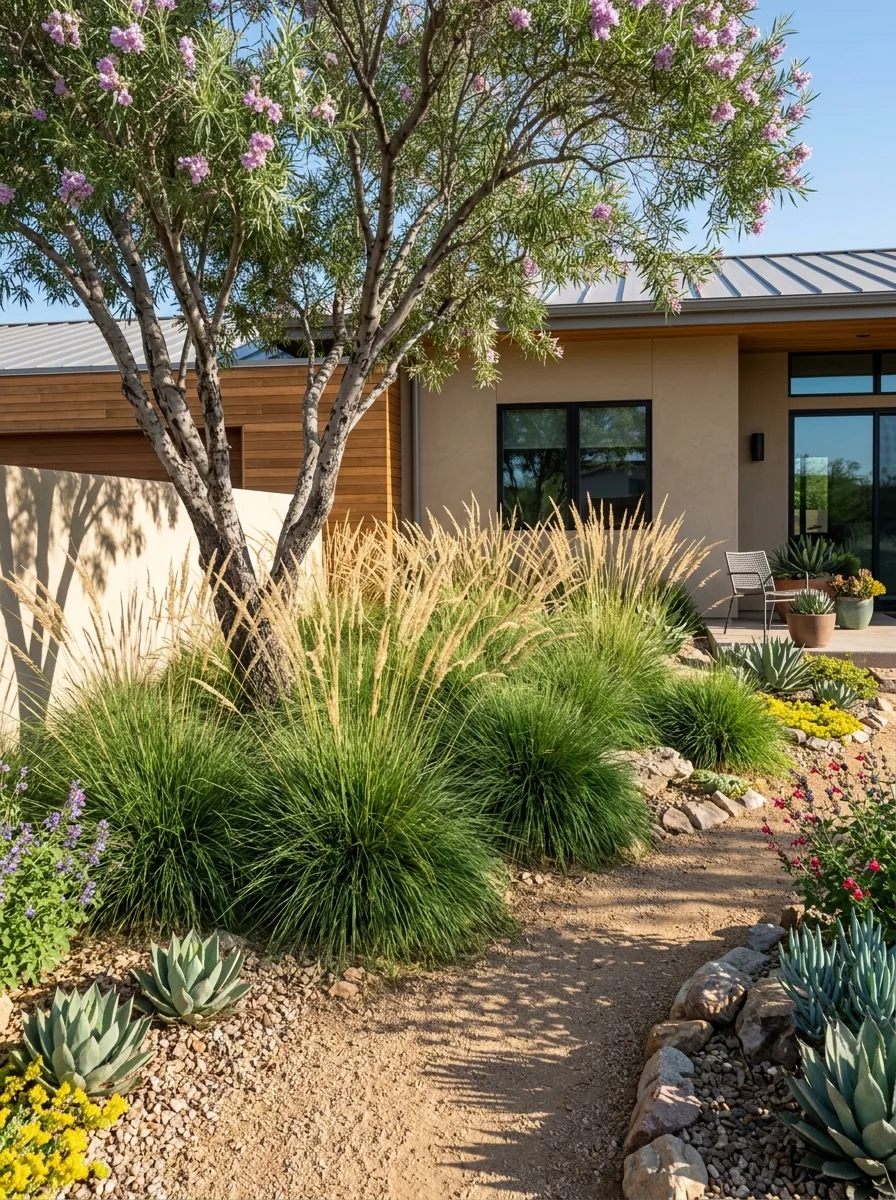
Deer grass is a robust, clumping native grass of the American Southwest that has become an essential component of water-wise and drought-tolerant modern landscapes in warm, dry regions. Growing in dense, rounded mounds of fine green foliage that reach two to four feet in height, it has a clean, tidy form that looks genuinely designed rather than merely practical. Its slender golden flower stems rise well above the foliage mound in summer, creating a beautiful two-tier effect of green base and airy, golden flowering canopy.
The practical advantages of deer grass for modern landscapes in water-restricted climates are considerable. Once established it requires almost no supplemental irrigation, no fertilizing, and very little maintenance beyond an occasional cleanup of the previous year’s foliage. It tolerates full sun, reflected heat, and poor soils with equal grace. In design terms, massing it in groups of three to seven plants creates a cohesive, naturalistic ground layer beneath larger desert trees and shrubs. This is a plant that solves a real design challenge while looking genuinely beautiful in the process.


