

24 Turtle Painting Ideas That Feel Calm and Fun
Turtles suit painters at almost any level. A cartoon turtle is a few simple shapes, while a realistic sea turtle is a lesson in shell pattern, texture and underwater light.
Below are 24 turtle painting ideas, from quick kids’ projects and painted rocks to realistic studies, each with the surface and paint that suit it, the main steps and a tip. Start with the basics on paint, reference photos and finishing.
Before you start
Match the paint to the surface
Acrylic works on canvas, canvas panels, wood and rocks, dries quickly and cleans up with water while wet. Watercolor and gouache need watercolor paper; cold press paper has a light texture that suits loose washes. Traditional gouache can be rewetted after it dries, so lower layers can lift, while acrylic gouache becomes water-resistant once dry.
Use good reference photos
Shell patterns differ by species. NOAA Fisheries describes green turtles as having five scutes down the middle of the shell and four on each side, with dark brown, gray or olive shells; the name comes from the color of their fat, not their shells. Loggerheads have five pairs of side scutes and a reddish-brown shell. If you plan to sell a painting, work from your own photos or images you have permission to use.
Varnish acrylics, frame paper
Acrylic feels dry long before it is ready for varnish. Golden Artist Colors suggests waiting a day or two before an isolation coat and another two days to a week before varnishing thin paint, and a week or two for thick paint. Watercolor and gouache are usually framed under glass instead. The Library of Congress warns that light exposure causes permanent fading, so hang works on paper out of direct sunlight.
Seal rocks with care
Wash and dry rocks before painting, and seal finished rocks with a clear sealer made for outdoor use. Spray sealers and varnishes release solvent vapors, so the EPA advises increasing ventilation and following label precautions with products like these; spray outdoors when you can.
The 24 ideas at a glance
| Idea | Surface | Paint | Skill level |
|---|---|---|---|
| Cartoon sea turtle | Canvas panel | Acrylic or tempera | Beginner, kids |
| Loggerhead study | Gessoed panel | Acrylic | Advanced |
| Hatchling on the beach | Canvas | Acrylic | Intermediate |
| Underwater scene | Canvas | Acrylic | Intermediate |
| Turtle and coral reef | Canvas | Acrylic, palette knife | Intermediate |
| Minimalist line art | Canvas or panel | Ink or acrylic | Beginner |
| Shell pattern study | Watercolor paper | Watercolor | Beginner |
| Baby hatchling | Small panel | Acrylic | Beginner |
| Turtle mandala | Wood board | Acrylic, dot tools | Intermediate |
| Sunset silhouette | Canvas | Acrylic | Beginner |
| Green turtle profile | Gessoed panel | Acrylic | Advanced |
| Turtle and bubbles | Canvas or paper | Acrylic or watercolor | Beginner |
| Mosaic tile turtle | Canvas | Acrylic | Intermediate |
| Turtle family | Wide canvas | Acrylic | Intermediate |
| Painted rock turtle | Smooth rock | Acrylic or paint markers | Beginner, kids |
| Turtle in a lily pond | Canvas | Acrylic | Intermediate |
| Abstract shell geometry | Square canvas | Acrylic, metallic paint | Intermediate |
| Turtle and waves | Canvas | Acrylic | Intermediate |
| Stained glass style | Canvas | Acrylic | Beginner |
| Top view | Canvas | Acrylic | Intermediate |
| Rescue turtle portrait | Panel | Acrylic | Advanced |
| Turtle and palm split view | Tall canvas | Acrylic | Intermediate |
| Moonlit nesting beach | Canvas | Acrylic | Beginner |
| Zen turtle with enso | Square panel | Acrylic or ink | Beginner |
1. Cute Cartoon Sea Turtle
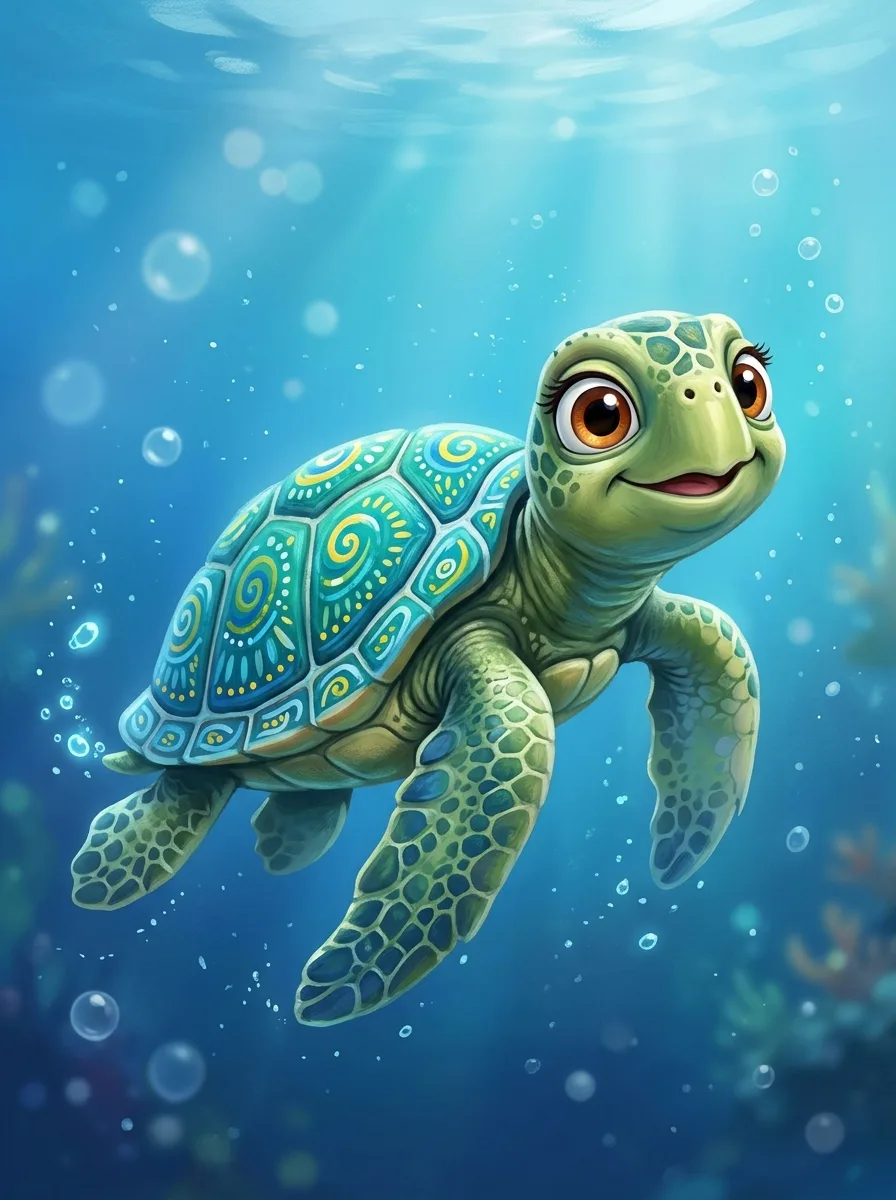
A cartoon turtle is a domed shell, a round head with big eyes and four paddle-shaped flippers, which makes it a good first painting for kids. Sketch the shapes lightly in pencil on a small canvas panel, paint the shell teal or green and the body a lighter green, then add a hexagon pattern, big eyes and white bubbles once the base is dry. For more kids’ projects, see these summer art projects for kids.
Good to know: for children, choose paints with the ACMI AP seal, which ACMI recommends for kids in grade 6 and younger.
2. Realistic Loggerhead Study
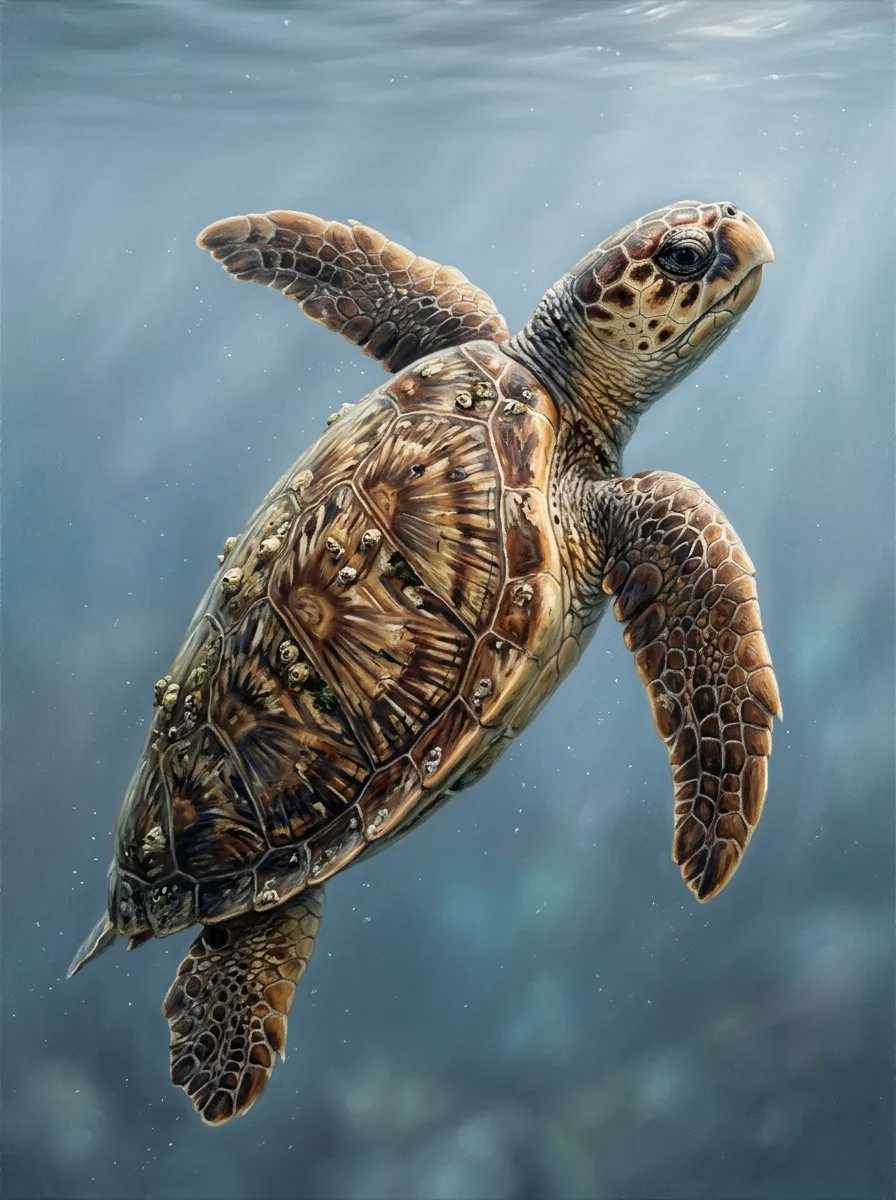
Loggerheads are named for their large heads, so a close study of the head and front of the shell makes a strong subject. Work from a clear reference photo on a gessoed panel or canvas. Block in the shell plates in reddish brown, darken the seams between them, then dry-brush lighter ochre across the top where the light hits. Keep the background a plain, muted blue-gray so the turtle stands out.
Good to know: dry-brushing means wiping most of the paint off a stiff brush before dragging it lightly across the surface, so it picks out texture instead of covering it.
3. Turtle on Sandy Beach
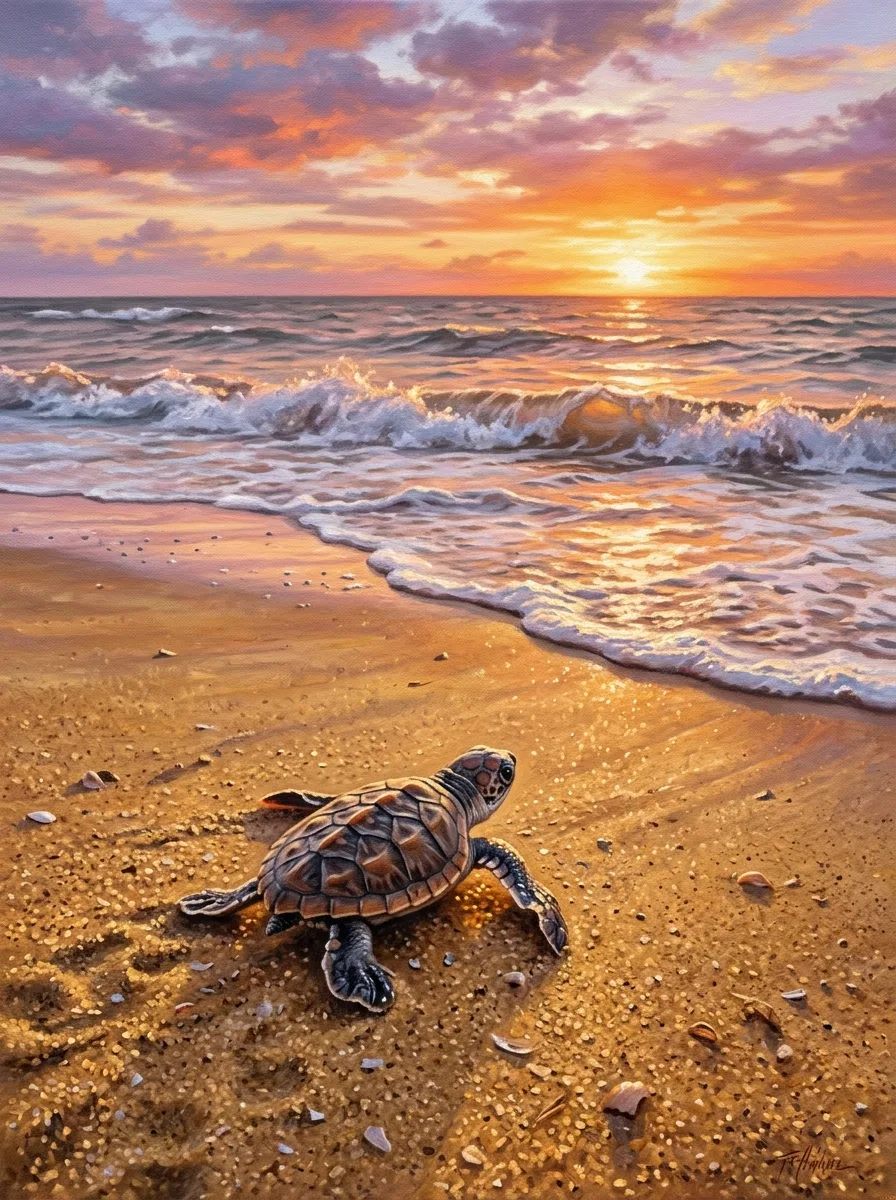
A hatchling crawling toward the surf works well as a wide, horizontal painting. Paint the sky and sea first, then the sand, and keep the hatchling small in the frame so the beach feels big. Stipple or dry-brush lighter and darker tans over the sand for texture, then add the hatchling and a short trail of flipper marks behind it.
Good to know: hatchlings almost always leave the nest at night and head for the brightest horizon, usually the sky over the ocean, so a dusk or moonlit scene is more accurate than midday sun.
4. Underwater Turtle Scene
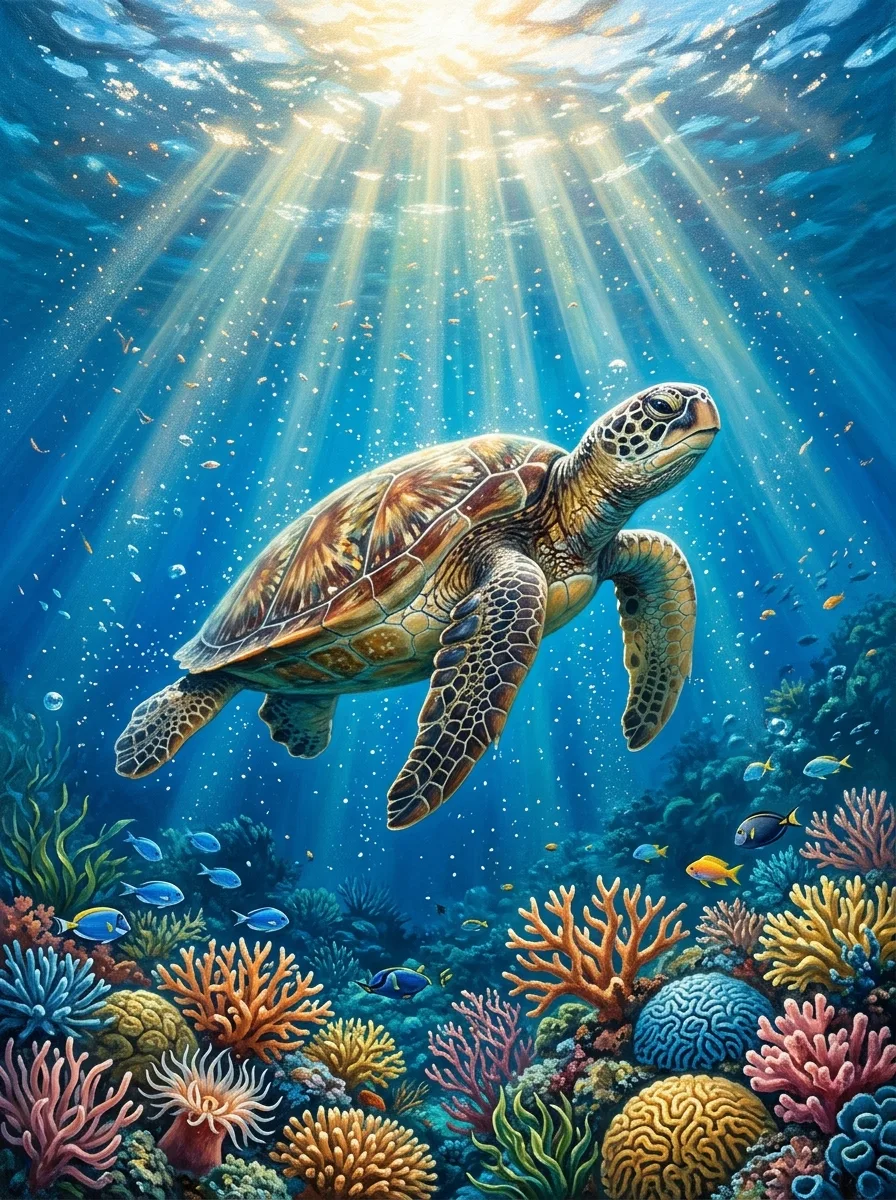
A green turtle swimming through shafts of light is a good lesson in depth. Paint the water from lighter blue at the top to darker blue at the bottom. Give the turtle warmer, sharper colors than the water around it, and make any fish or coral behind it paler, bluer and softer. Add light rays and bubbles last with thin, light paint.
Good to know: underwater, distant objects look bluer, lighter and less detailed; using that rule on background coral and fish makes the turtle look closer.
5. Turtle and Coral Reef
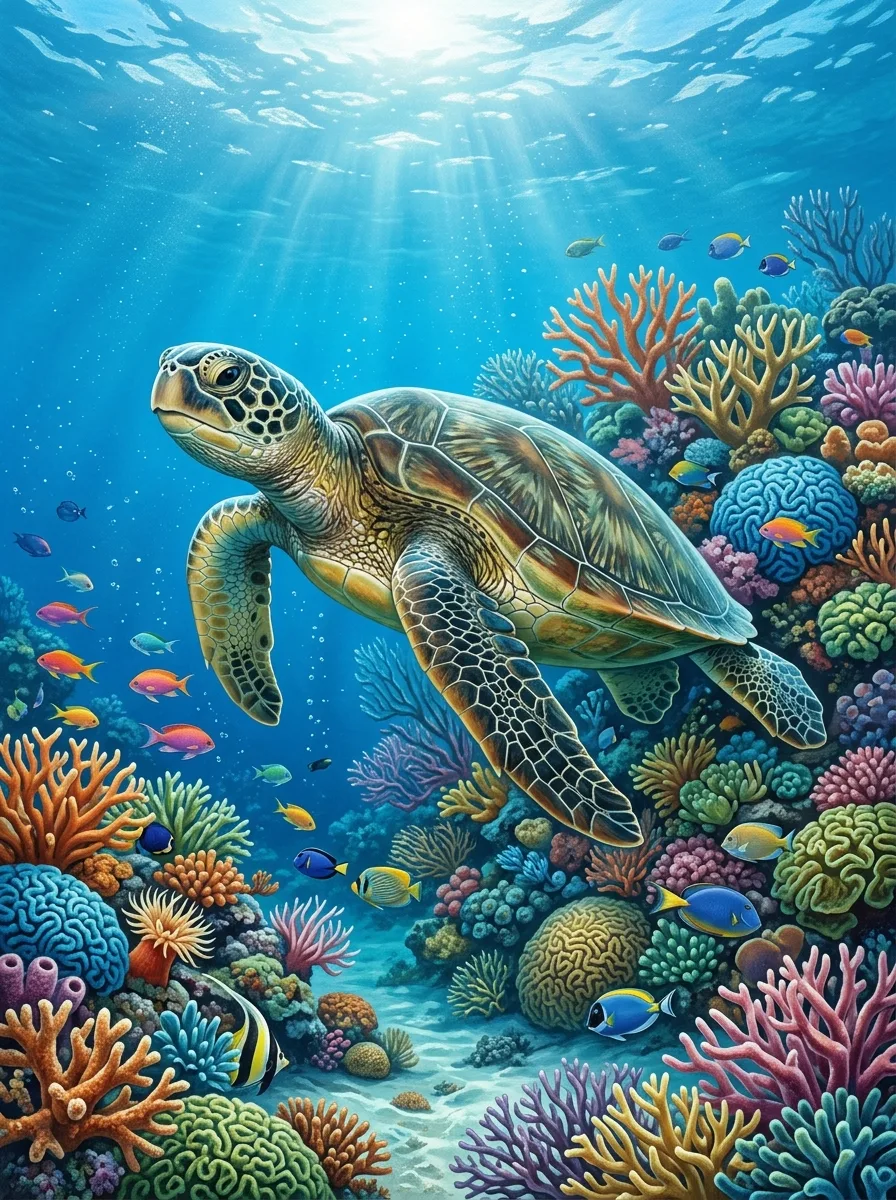
A turtle swimming over a reef pairs a smooth subject with busy, colorful coral. Sketch the turtle first, then paint the coral around it in warm pinks, oranges and purples; a palette knife gives thick, textured coral. Paint the turtle in cooler greens and browns so it stands apart from the warm reef, and keep the sand below darker to anchor the scene.
Good to know: thick, knife-applied acrylic takes much longer to dry through; Golden suggests waiting a week or two before varnishing thick paint.
6. Minimalist Turtle Line Art
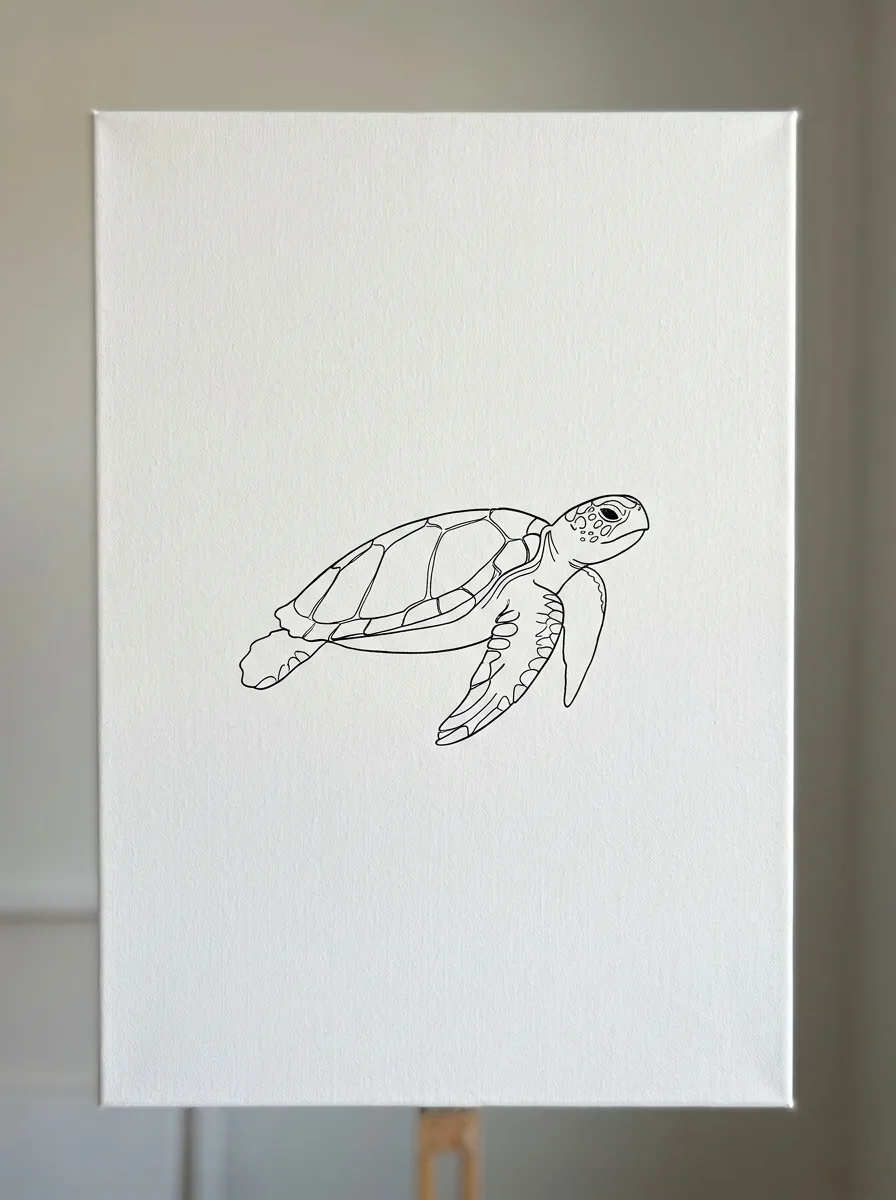
A single-line turtle drawing suits a small canvas or panel with plenty of empty space. Practice the outline on scrap paper until you can draw the shell, head and flippers in one smooth movement. Then paint it with a liner brush and black acrylic or India ink. Add one eye and maybe a single hexagon on the shell, and leave the rest blank.
Good to know: a liner brush holds enough paint for a long line; thin acrylic with a little water so it flows, but not so much that the black turns gray.
7. Watercolor Turtle Shell Pattern
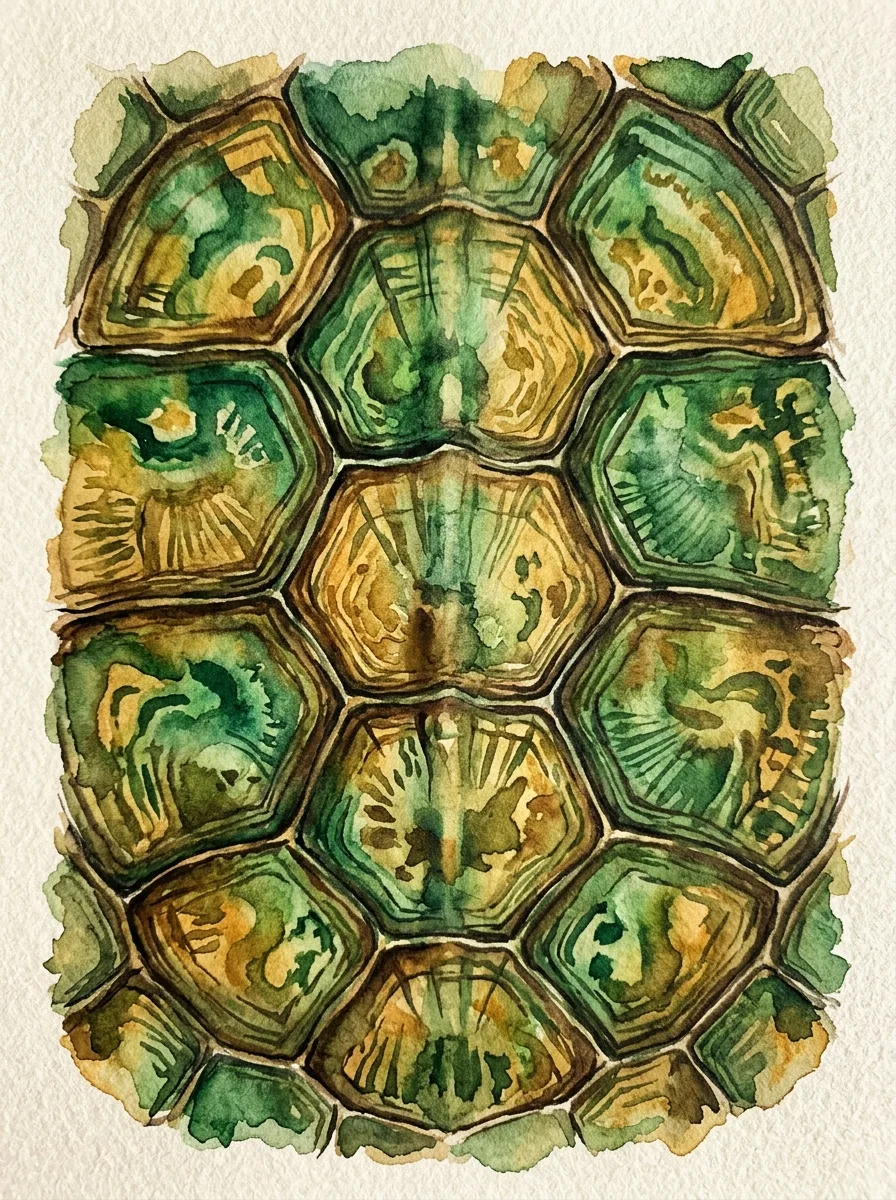
A close-up of shell plates is a good watercolor study that doesn’t require drawing a whole animal. Pencil the plate shapes lightly on watercolor paper, then paint each plate in greens, golds and browns, letting colors run together inside it. Leave a thin dry gap between plates for crisp lines. For texture, sprinkle a little coarse salt onto a wet wash.
Good to know: let the paint dry completely, then brush the salt off gently; frame the piece on acid-free mat board and hang it away from direct sun, which fades paper and pigment.
8. Baby Turtle Hatchling
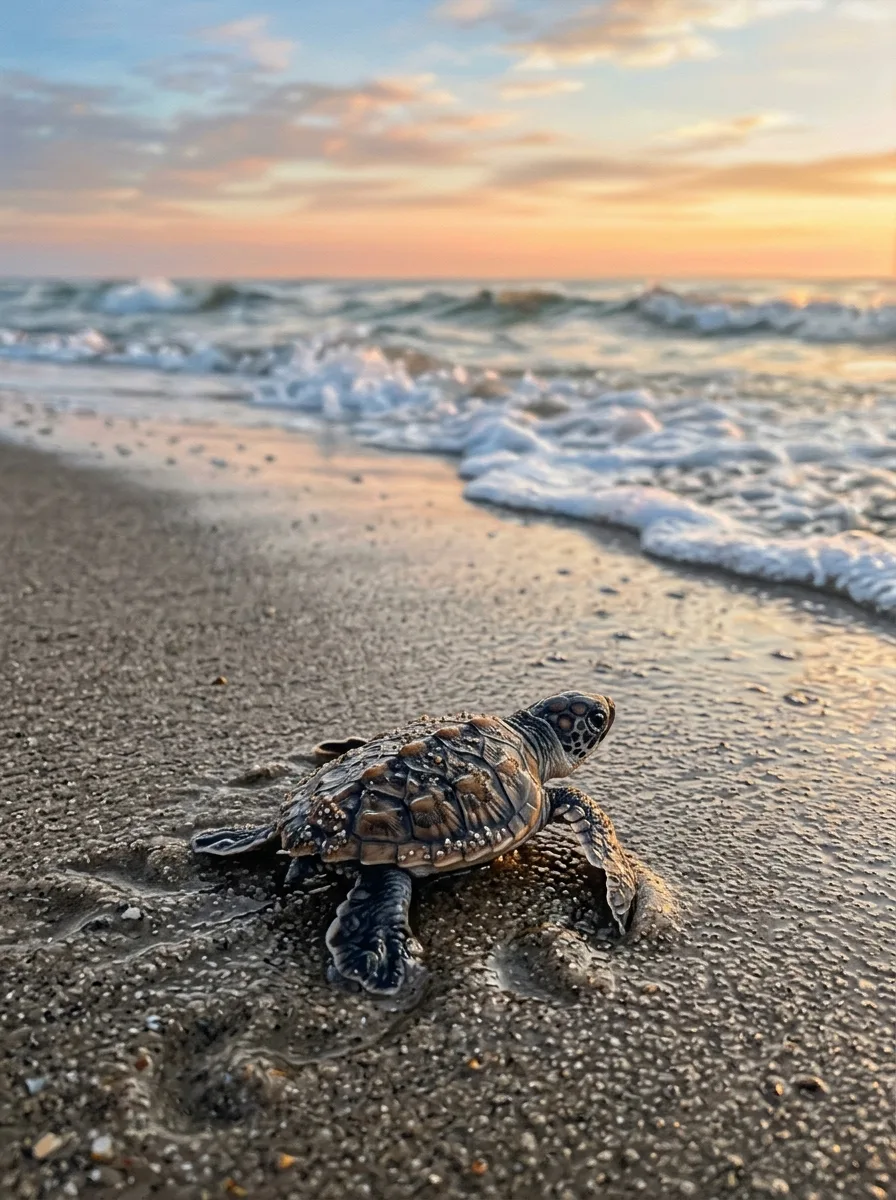
A single hatchling on a small square panel is a quick, beginner-friendly project. Paint the sand first in pale tan, add darker and lighter speckles, then paint the hatchling in the center with a small dark shell, oversized flippers and a round head. A broken eggshell or a bit of driftwood beside it gives a sense of scale.
Good to know: NOAA describes green turtle hatchlings as having a dark gray to black shell, a white underside and white edges on the shell and flippers; a thin pale edge helps a small hatchling read clearly.
9. Turtle Mandala Design
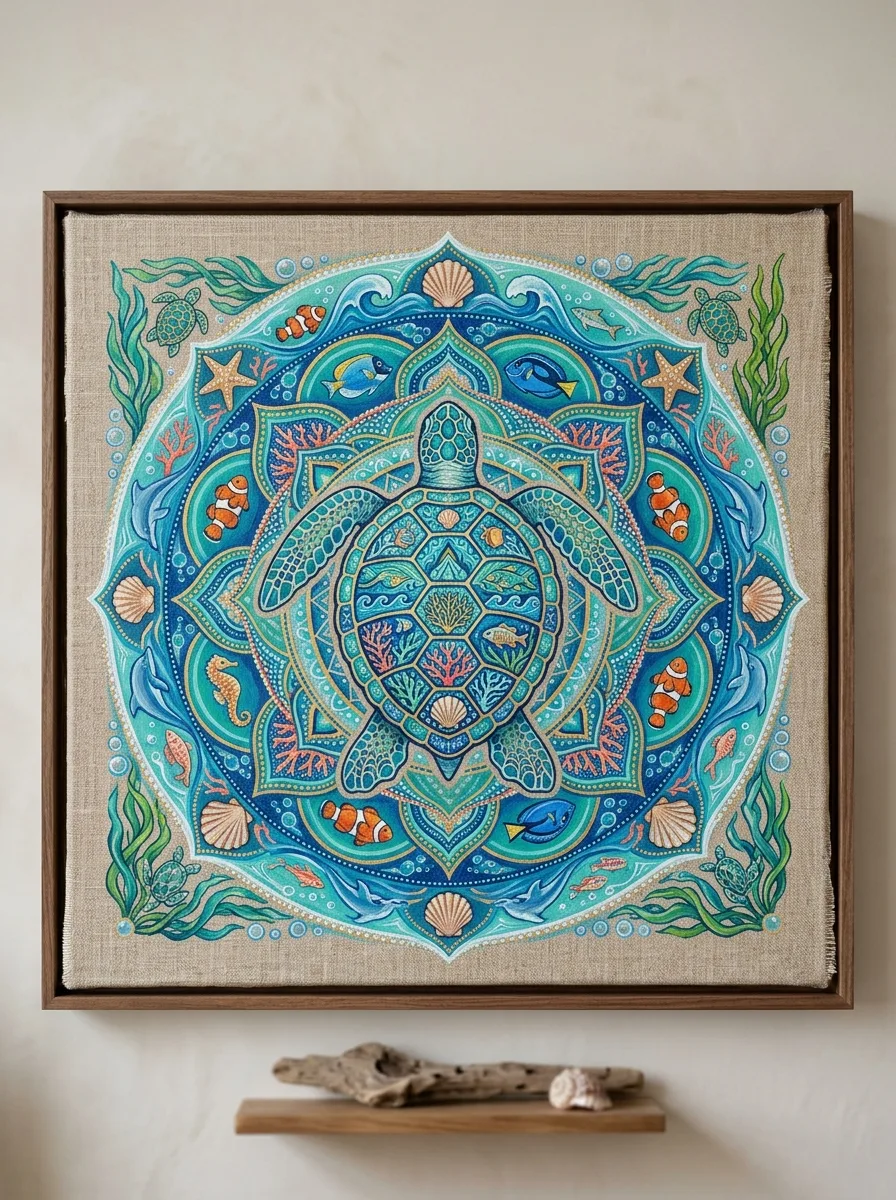
A turtle mandala puts a simple turtle in the center and surrounds it with rings of repeated shapes such as waves, dots, petals or hexagons. Find the center of a square board, draw circles with a compass, and divide them into equal sections with light pencil lines; 12 sections are 30 degrees apart. Paint one ring at a time, repeating the same motif in every section.
Good to know: dotting tools or the ends of brush handles make even dots; reload often, because dots shrink as the paint runs out.
10. Sea Turtle Sunset Silhouette
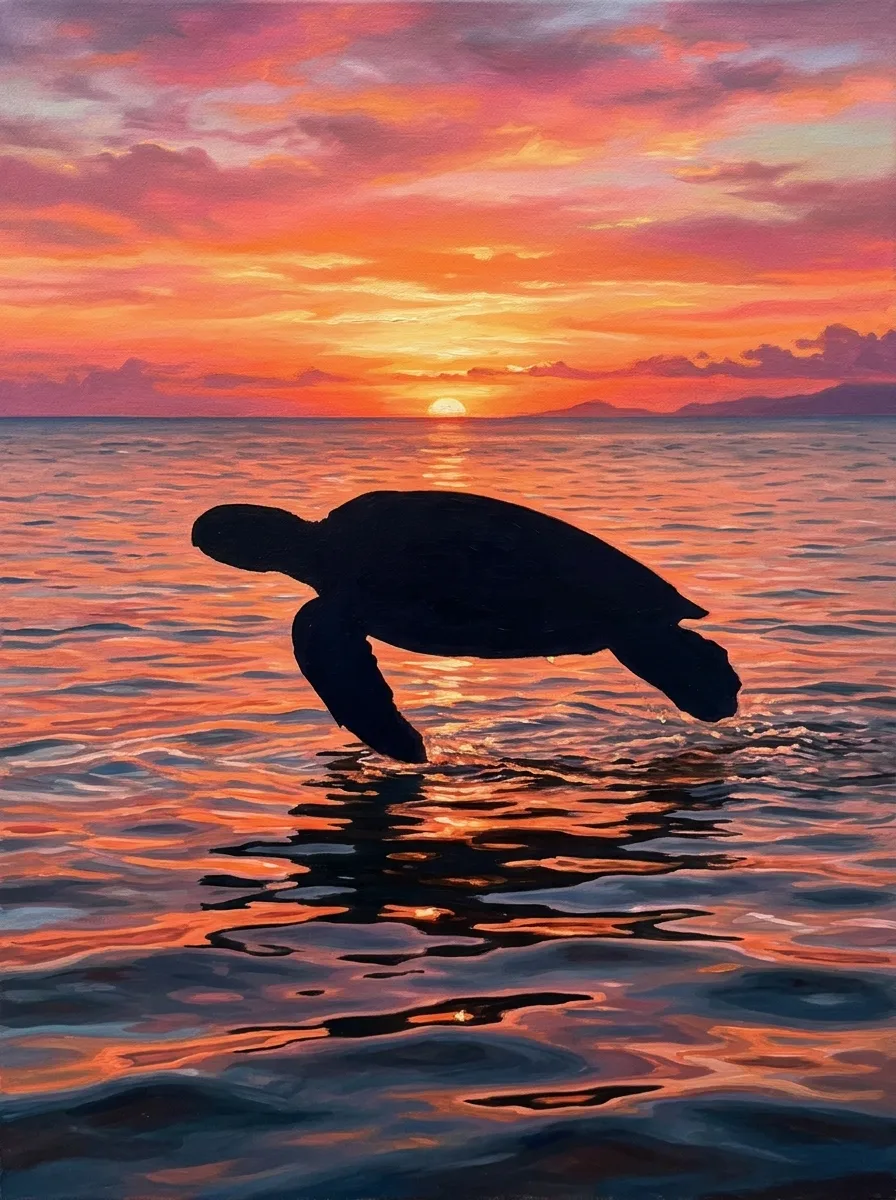
A silhouette needs only a sky gradient and one dark shape. With the canvas flat, blend the sky from yellow near the horizon through orange and pink into purple at the top. When it’s dry, paint the turtle in solid black or dark brown, using a cut-paper stencil if freehand feels hard. A darker band of sea with a soft reflection finishes it.
Good to know: blend the sky quickly in small sections while the paint is wet; acrylic dries fast, and a slow-drying medium gives you more time.
11. Green Sea Turtle Profile
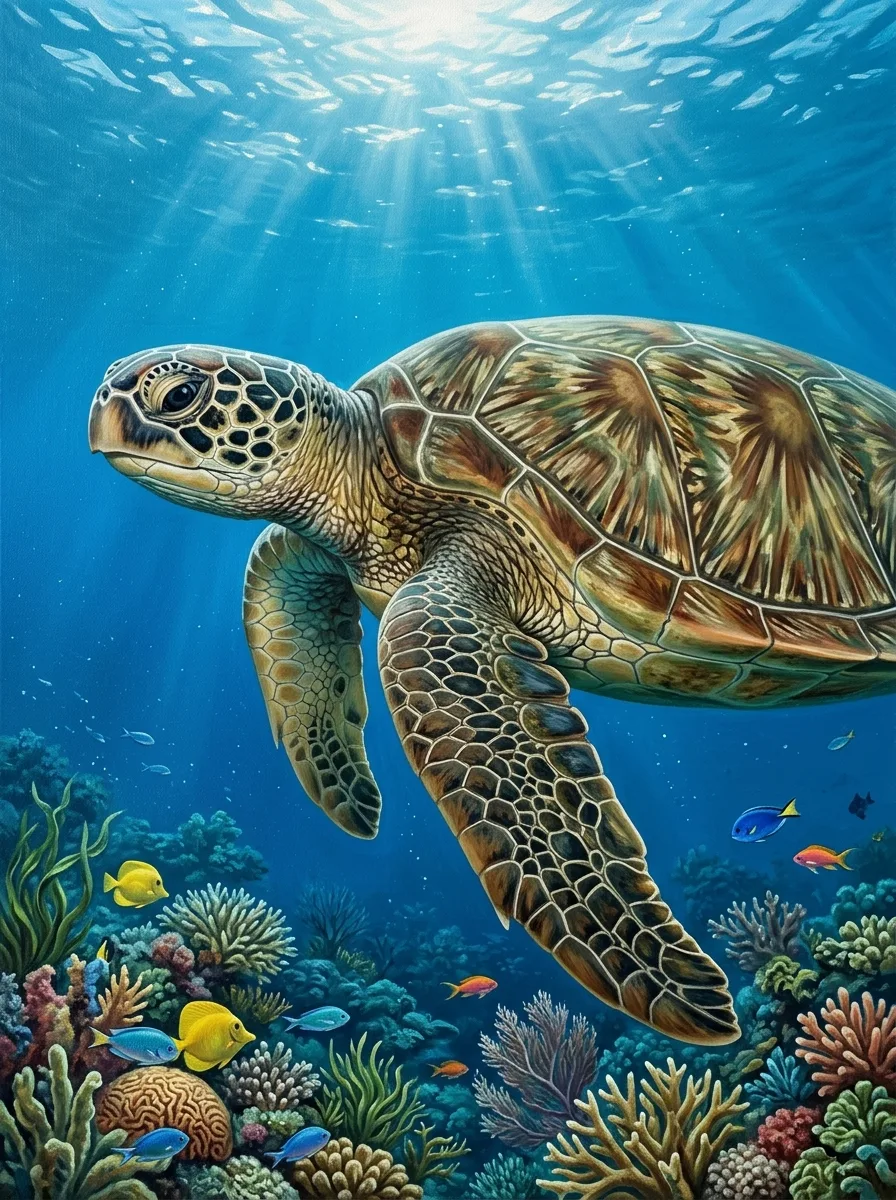
A side view of a green turtle is a good study of the rounded beak, the eye and the shell plates. Sketch lightly from a reference photo, then block in the shell, skin and background. Despite the name, green turtles aren’t bright green: mix olives and browns for the shell and save stronger greens for small highlights. A muted blue background suggests open water.
Good to know: count the plates: five scutes down the middle and four on each side is what makes the painting look like a green turtle and not a loggerhead.
12. Turtle and Bubbles
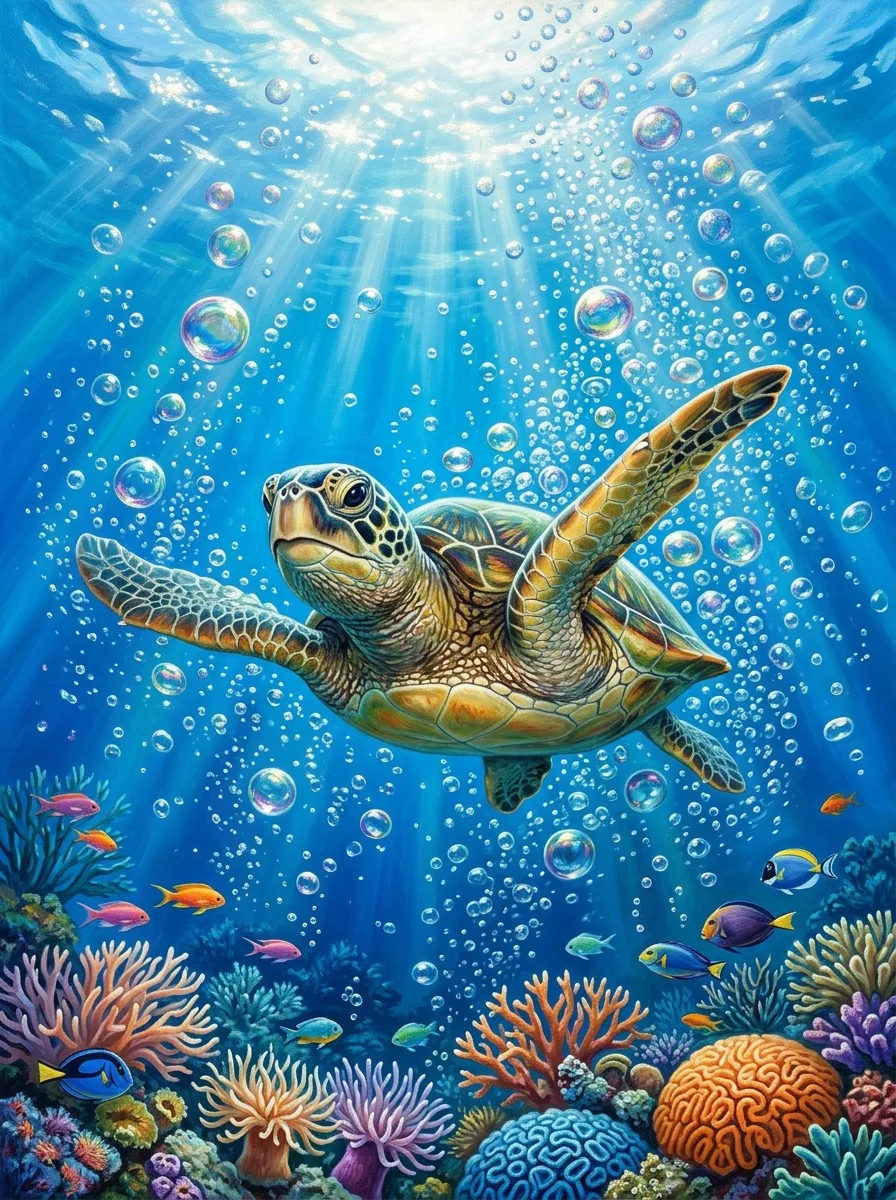
Bubbles around a swimming turtle are a simple way to practice highlights. Paint the background water and the turtle, and let both dry. Add bubbles in several sizes as thin rings of pale blue or white with a small bright highlight on the upper side of each, clustered near the head and flippers.
Good to know: a bubble is mostly clear, so paint just the rim and a highlight, not a filled white circle.
13. Mosaic Tile Turtle
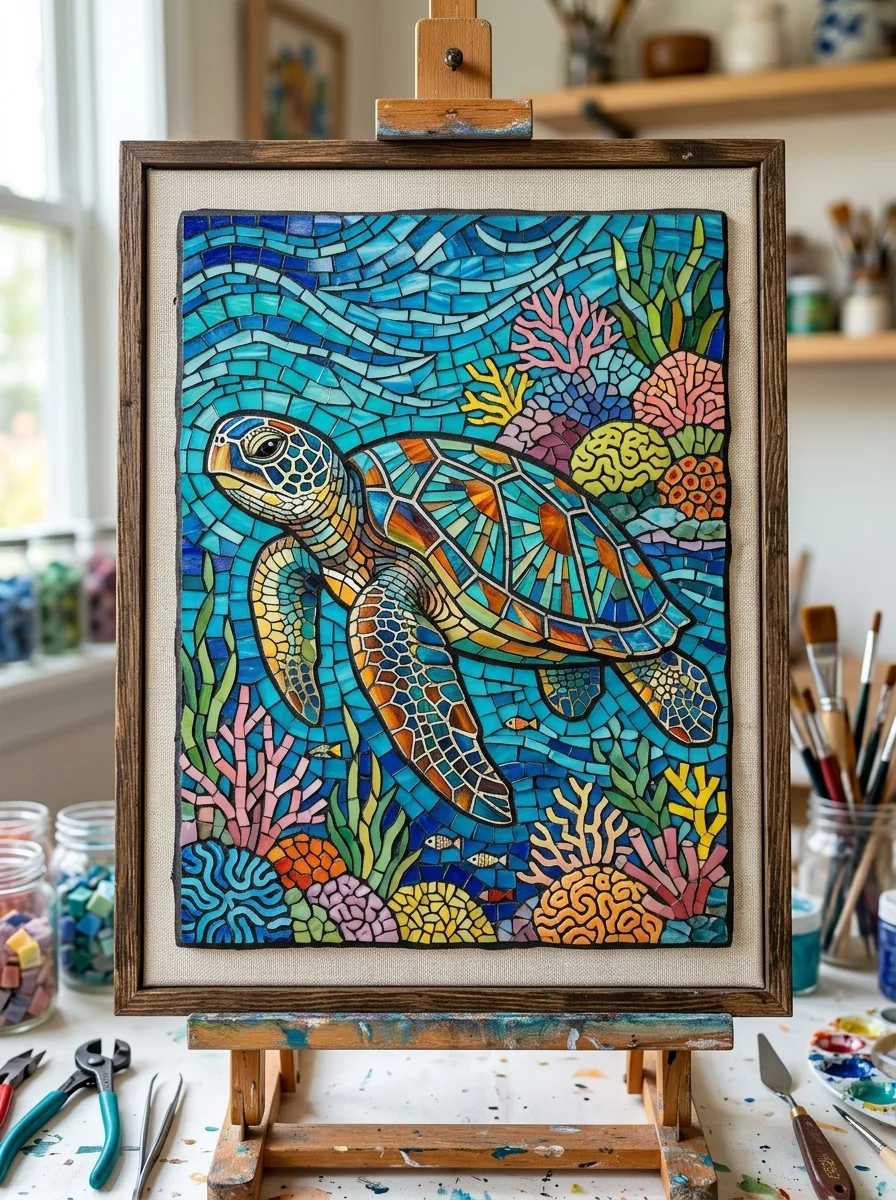
This design copies the look of a tile mosaic with paint. Draw a large turtle outline, then divide the shell, head and flippers into small irregular shapes like broken tiles. Fill each shape with a different blue, teal or green, and the background tiles with sand colors. Finally, paint thin dark gray lines between the shapes for grout.
Good to know: varnish protects a canvas from dust and handling, but it doesn’t make a canvas painting weatherproof, so keep it indoors.
14. Turtle Family Group
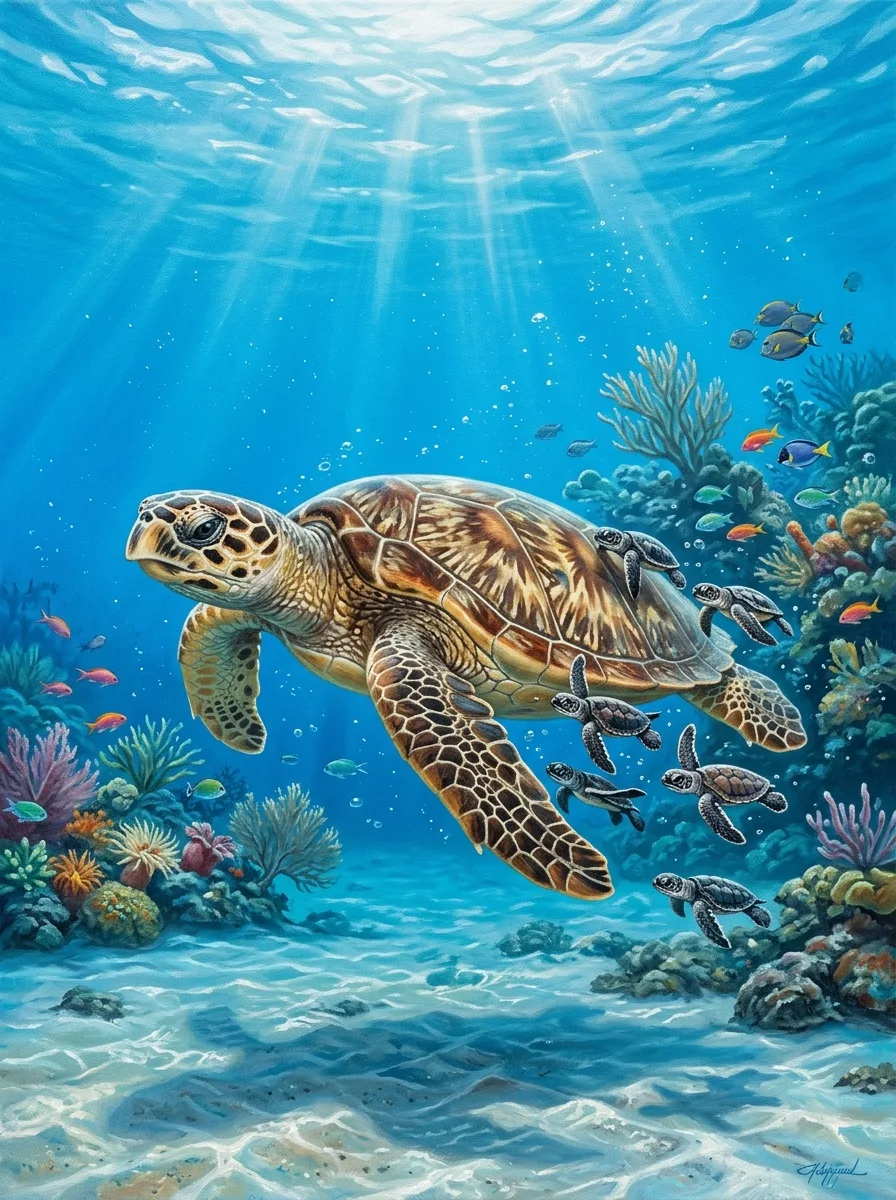
One adult turtle with three small ones swimming in a diagonal line is a simple way to show movement. Place the large turtle a little off center and line the small ones up behind it, heading toward one corner. Give each turtle a slightly different shell color so they read as individuals, and keep the background a calm pale blue.
Good to know: let one small turtle overlap slightly behind another; overlapping shapes create depth, so the group looks like it’s swimming in water.
15. Painted Rock Turtle
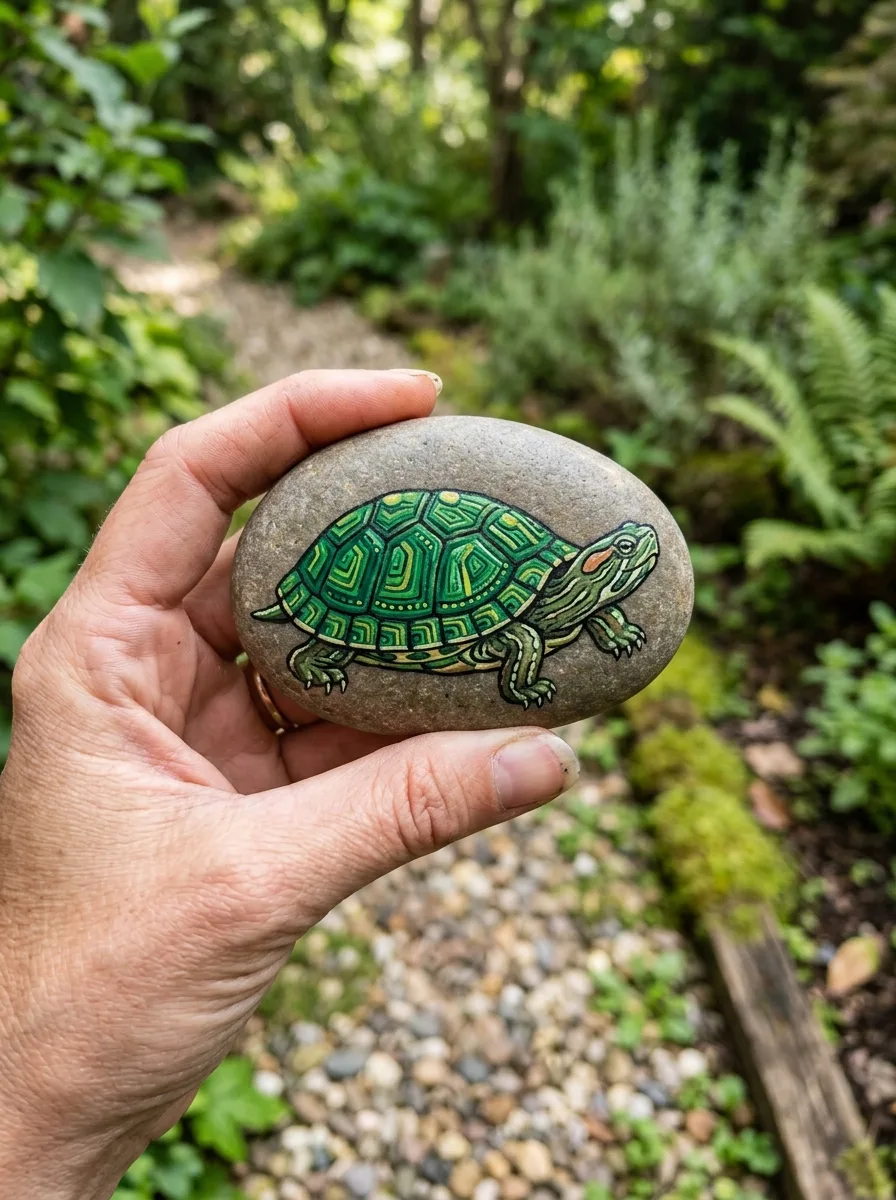
A smooth, flat, oval rock makes a turtle shell. Wash and dry it, paint a base coat of green acrylic and let it dry. Add hexagon plates in lighter green with a fine brush or paint marker, then paint a head, four flippers and a tail around the edge so it looks like a turtle seen from above. Seal it with a clear outdoor sealer.
Good to know: collect rocks only where it’s allowed, and don’t leave painted rocks in national parks; several parks have asked visitors not to, and Leave No Trace asks people to leave natural objects as they find them.
16. Turtle in Lily Pond
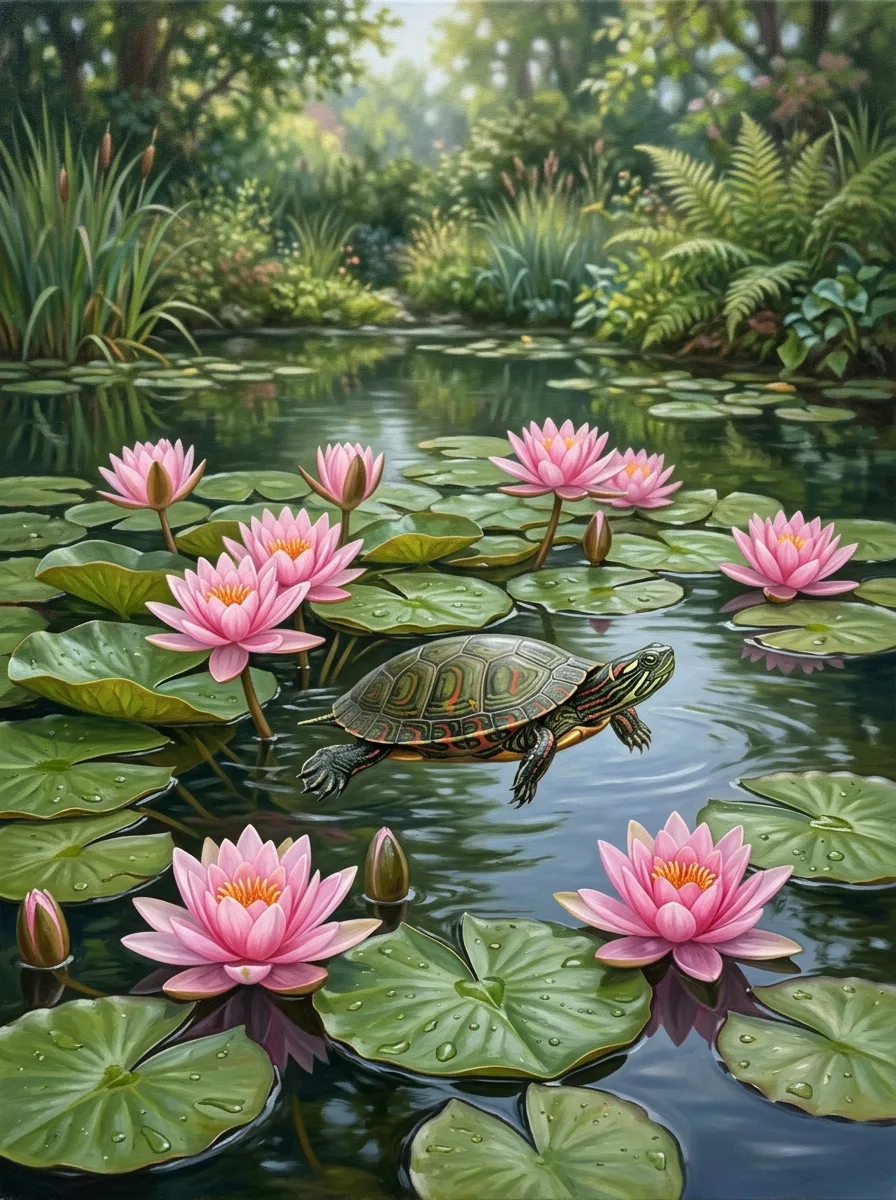
A freshwater turtle among lily pads makes a quieter, earthier painting than a reef scene. Paint the water in dull greens and browns, then lily pads as flat green ovals with a notch cut into each. Tuck the turtle’s shell and head between the pads and add one pink water lily. A darker reflection under each pad makes the water look still.
Good to know: pond turtles such as sliders often bask on logs, so a turtle on a log is an easy alternative if lily pads crowd the picture.
17. Abstract Shell Geometry
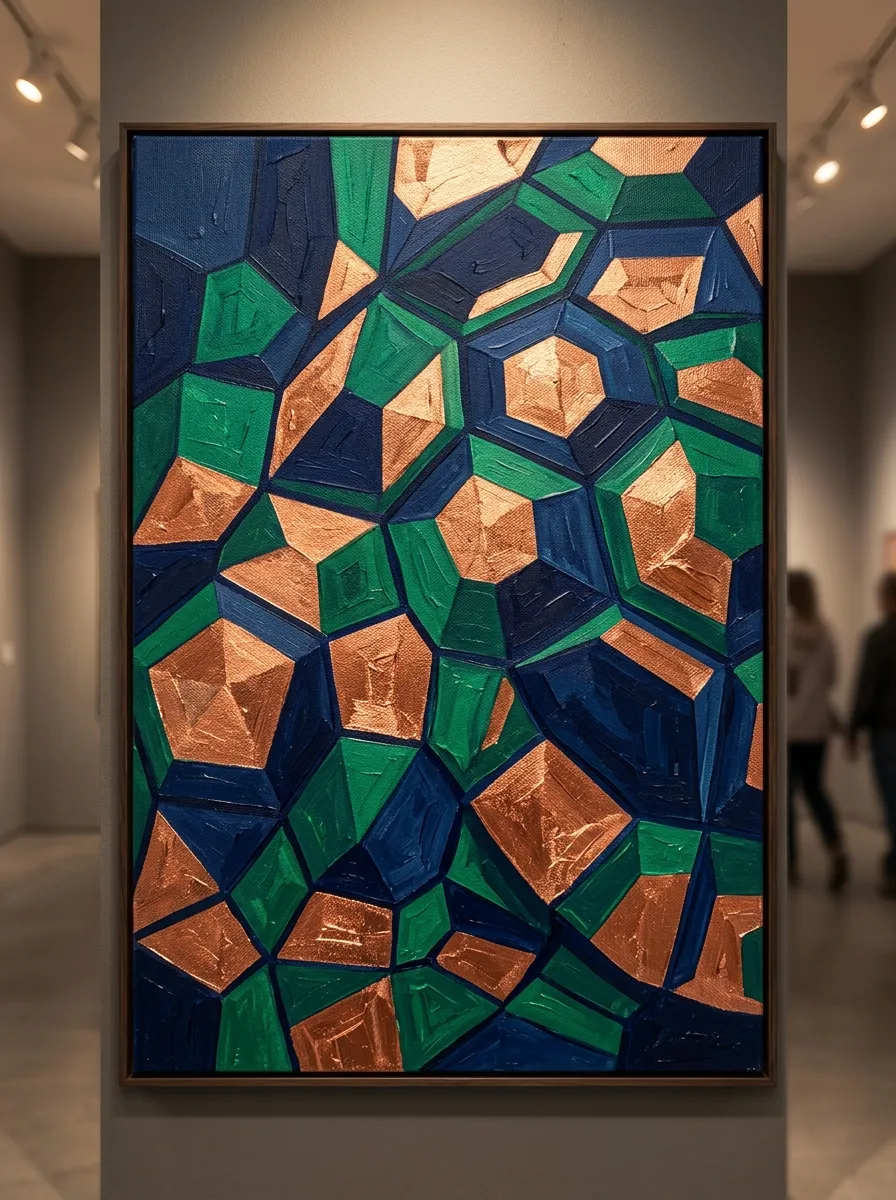
This idea uses shell plates as the starting point for an abstract painting. Draw overlapping hexagons and other polygons across a square canvas, loosely based on a turtle shell. Fill them with deep blue, green and metallic copper, and leave thin lines of bare canvas or white between the shapes. The pattern matters more than looking like a real turtle.
Good to know: mask the thin lines between shapes with narrow painter’s tape for crisp edges, or paint them last with a liner brush.
18. Turtle and Ocean Waves
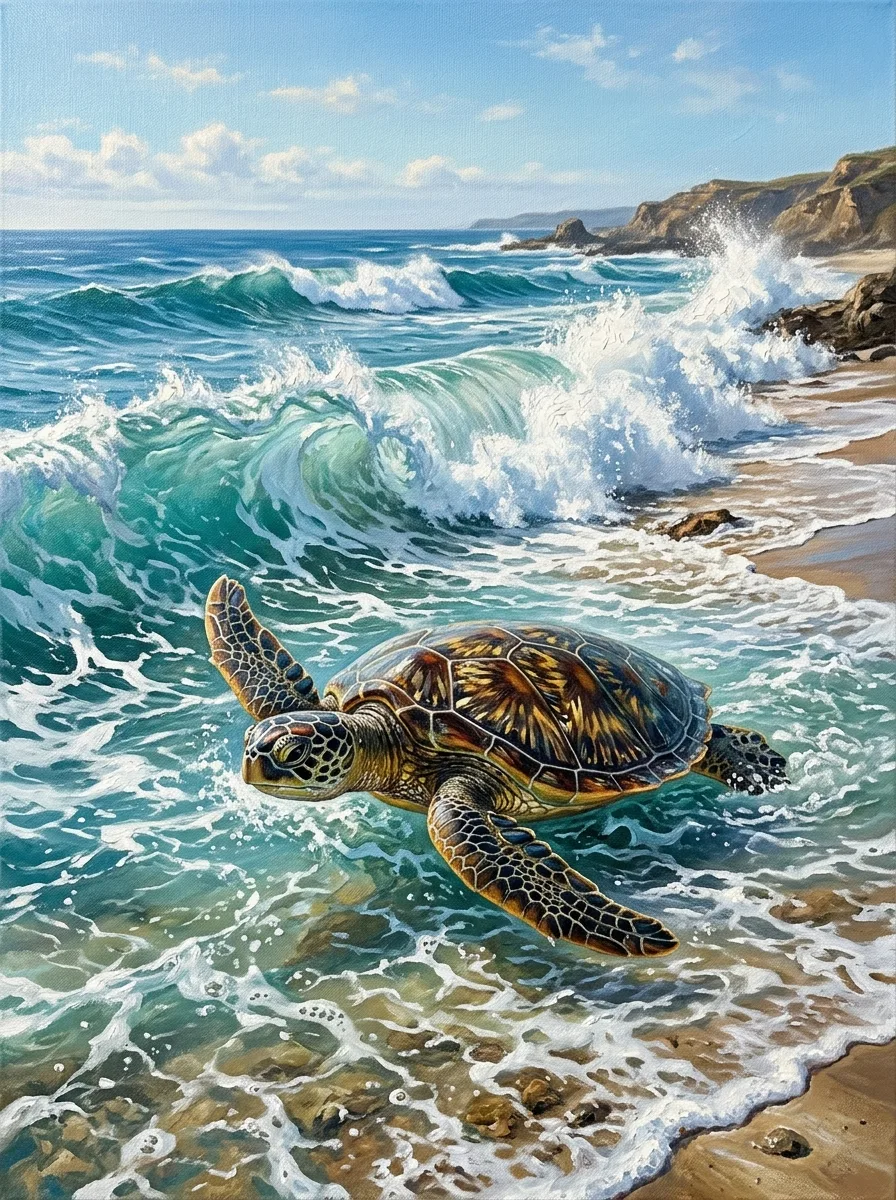
A turtle beside a breaking wave adds movement. Paint the waves from the horizon forward, each one overlapping the one behind it, with dark blue troughs and lighter turquoise tops. Place the turtle beside the curl of a wave, then add white foam along the crests with a dry brush and a few flicked specks of spray.
Good to know: keep the turtle’s edges crisp and the water’s edges soft and broken; the contrast keeps attention on the turtle.
19. Stained Glass Style Turtle
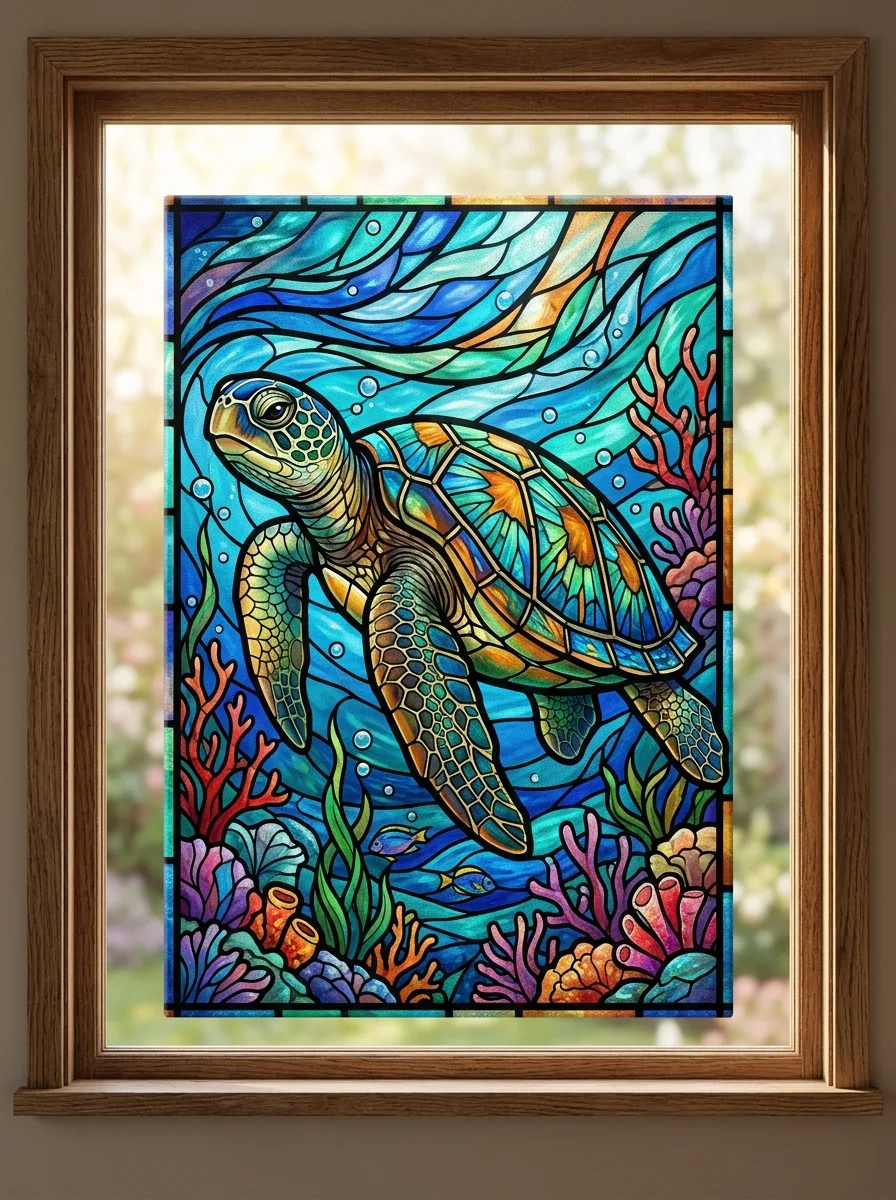
Thick dark outlines around bright cells give a painting the look of stained glass. Draw the turtle and background in pencil, divided into simple shapes. Paint the dark lines first with a small flat brush, then fill each cell with one bright color, such as red, ultramarine or viridian, without blending inside the cells.
Good to know: let the outlines dry before filling the cells, or the black will drag into the colors.
20. Turtle Swimming Top View
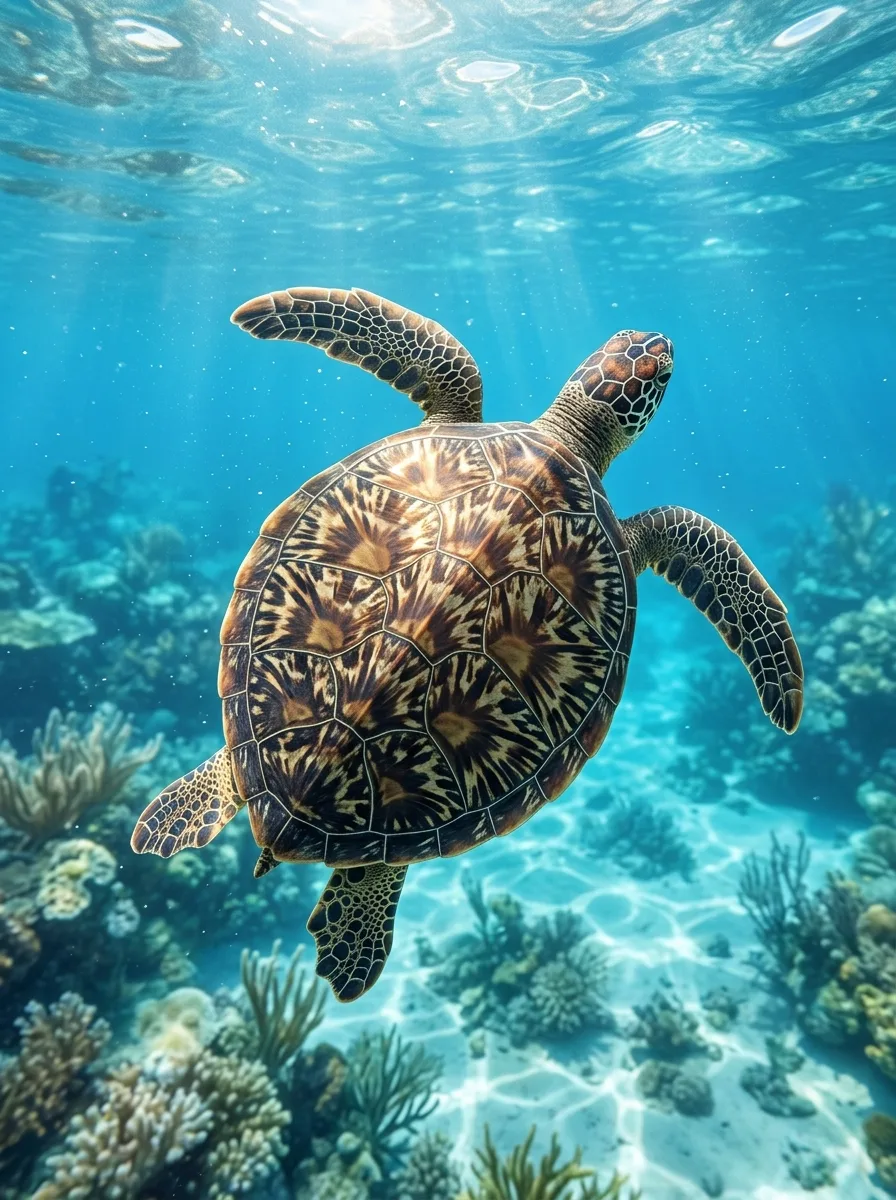
Seen from above, a sea turtle is an oval shell with a head and four flippers, which makes a good layout study. Paint the shell plates in a symmetrical pattern around the center line. Make the front flippers long and wing-like and the back flippers short. Darken the water toward the corners and add pale ripples of light across the shell.
Good to know: sea turtles swim with their large front flippers and steer with the smaller back ones, so the front pair should look much bigger.
21. Rescue Turtle Portrait
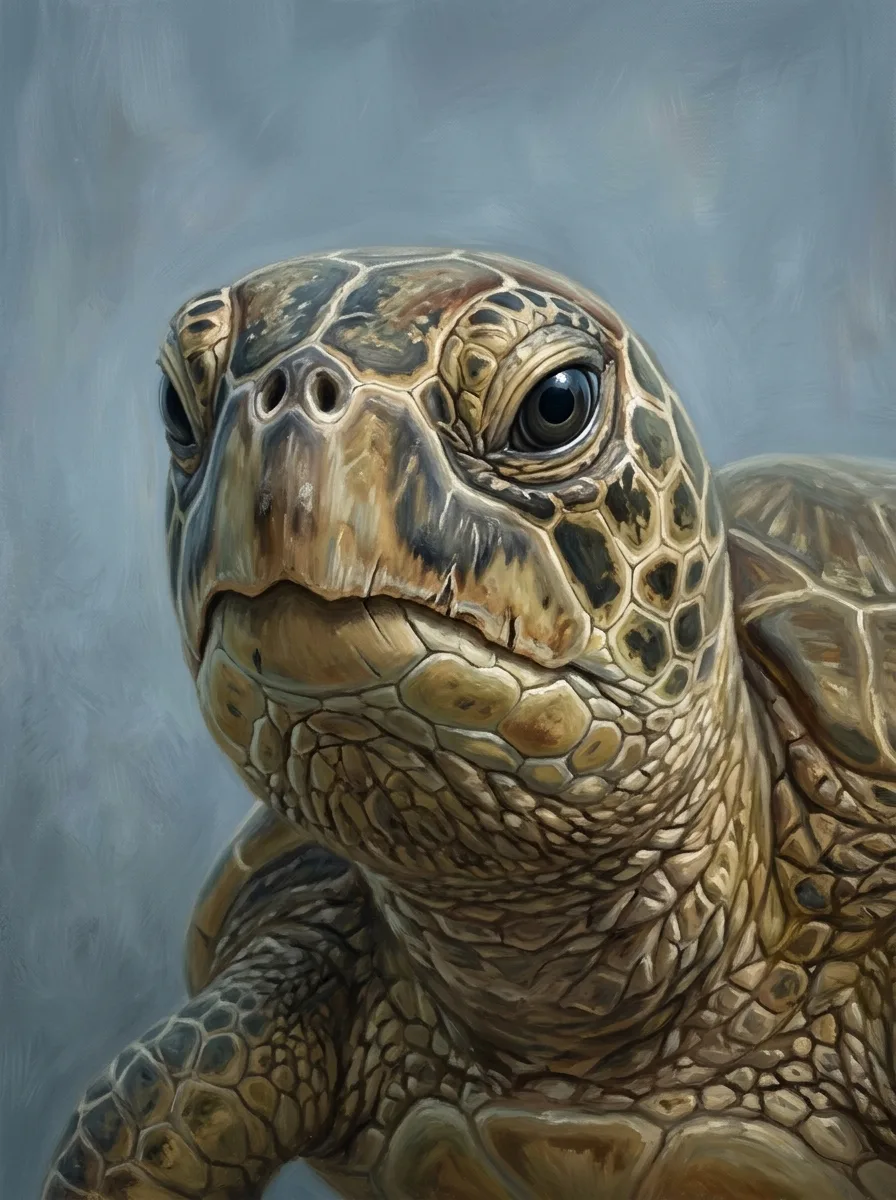
A portrait of a rescued turtle can tell its story, for example through a healed scar or a flipper tag. Choose a three-quarter view of the head and the front of the shell, block in the large shapes in warm grays and greens, then add detail to the eye and the skin folds. Keep the background a plain cool gray so the face holds attention.
Good to know: many rehabilitation centers share photos of their patients; ask permission before painting from one, especially if you plan to sell the painting or prints.
22. Tropical Turtle and Palm
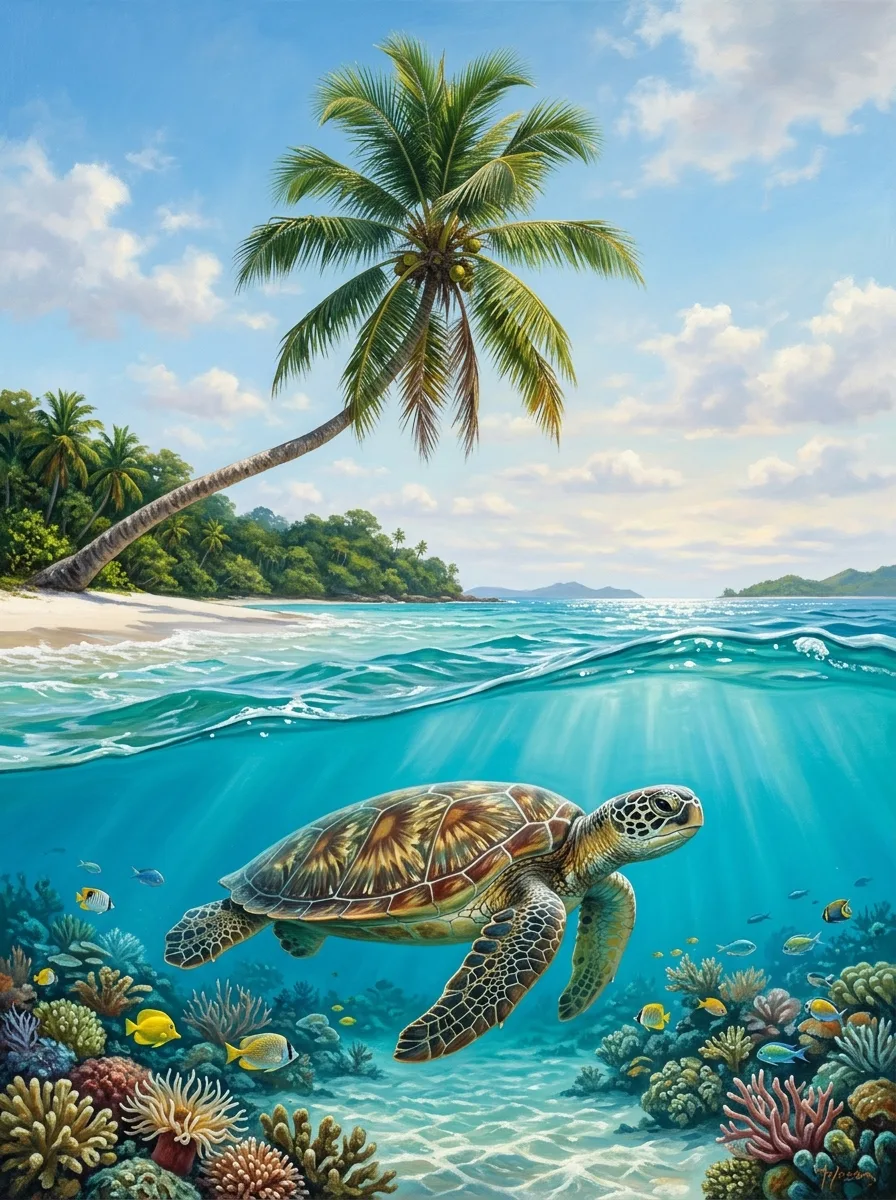
A split view shows sky and palm trees above a wavy waterline, with a turtle and coral below. Draw the waterline across the middle of a tall canvas first. Paint the sky in warm oranges and pinks and the water in cool blues, then the palm fronds, coral and turtle. Keeping the underwater half cooler keeps the two halves distinct.
Good to know: a thin, slightly brighter line along the waterline makes it look like you’re seeing through the surface.
23. Night Moon Turtle Beach
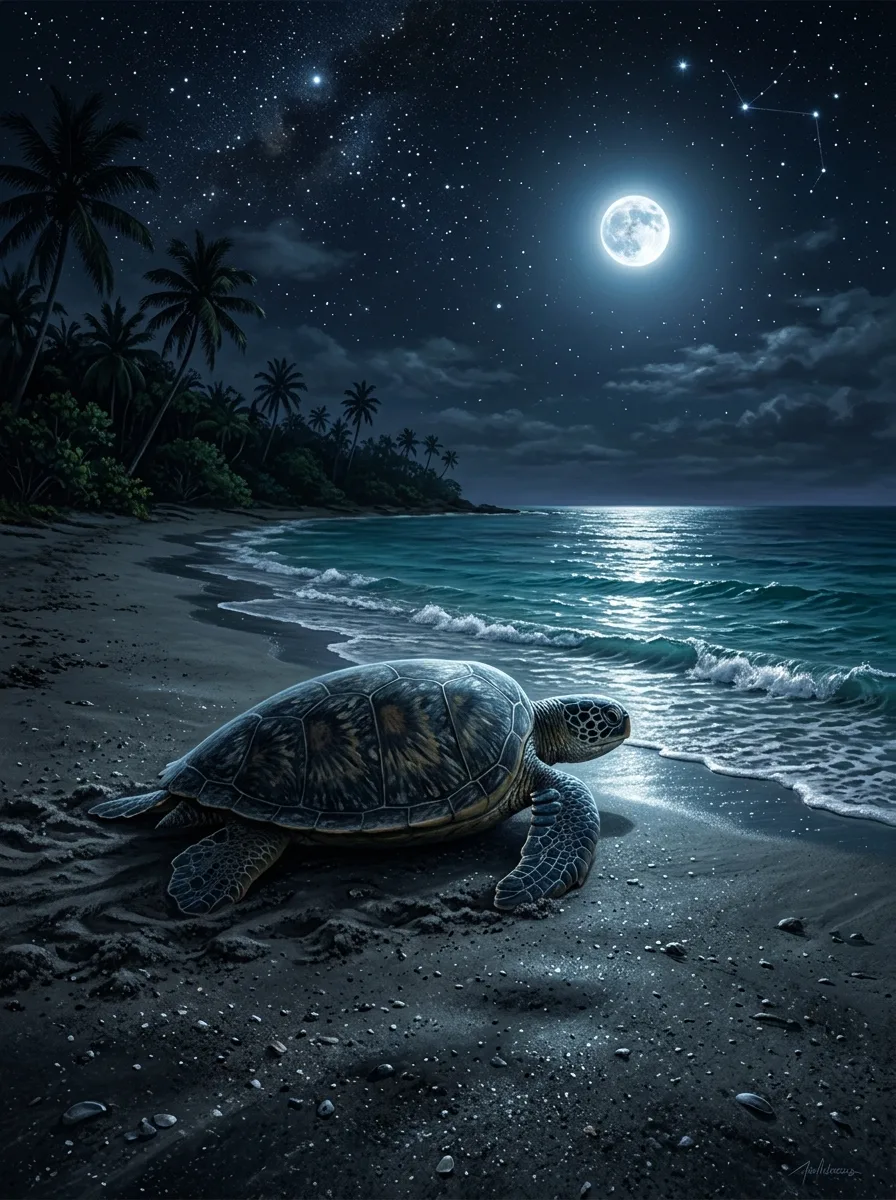
A turtle on a moonlit beach needs only a small palette: ultramarine, black and white. Paint the sky deep blue, then a white moon with a soft pale halo. Paint the turtle and sand as near-silhouettes with just a hint of shell pattern, and flick small stars from an old toothbrush. These moon painting ideas and star pattern painting ideas have more night-sky techniques.
Good to know: the scene is accurate, since NOAA describes loggerheads and green turtles as night-time nesters; for a matte finish, Golden advises no more than two coats of satin or matte varnish.
24. Zen Turtle Meditation Art
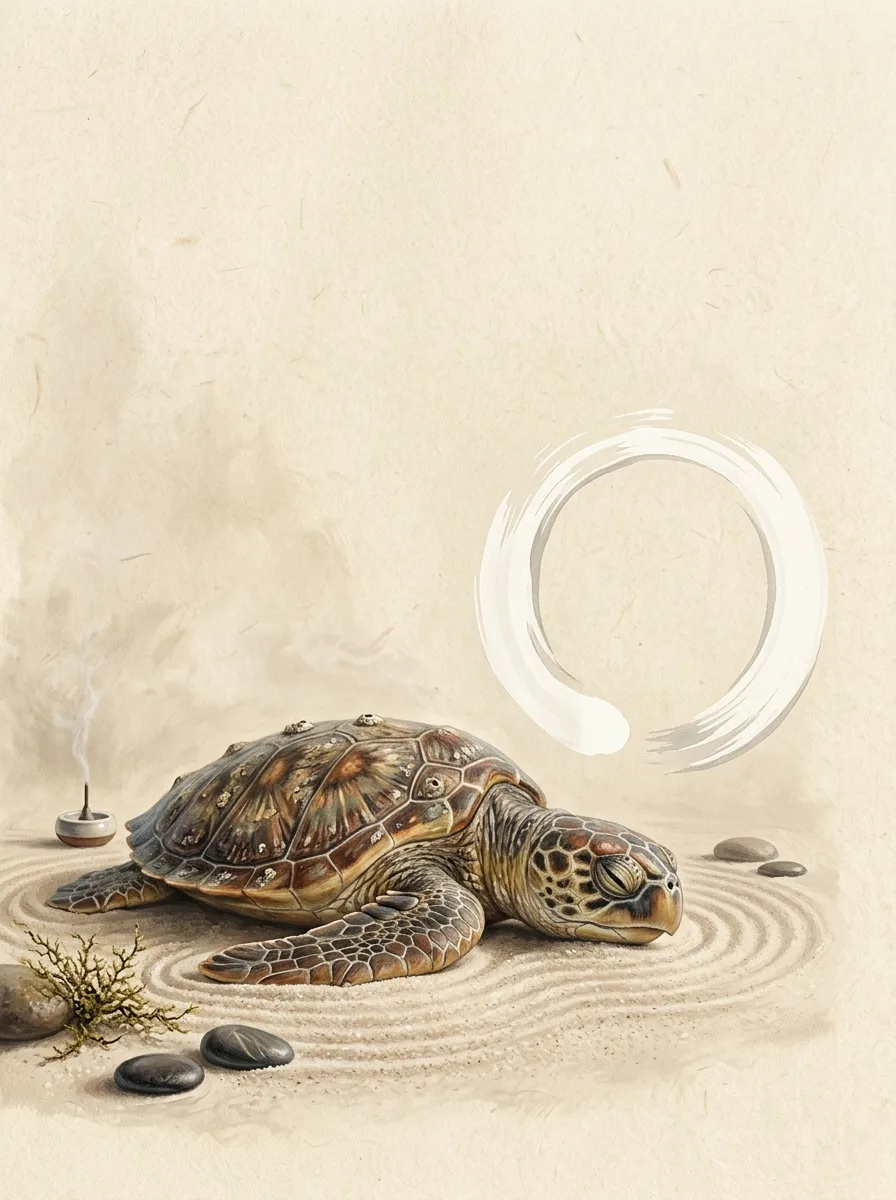
This idea pairs a small resting turtle with an enso, the circle painted in a single brushstroke in Zen art. Paint a plain pale background on a square panel, paint the enso in one confident pass, then place a small turtle inside or beside it. Leave most of the panel empty.
Good to know: practice the circle on cheap paper with the same brush and paint until one pass looks right; going back over it spoils the single-stroke look.
Common mistakes to avoid
- Painting green sea turtles bright green; their shells are brown, gray or olive.
- Guessing the shell pattern instead of counting the scutes on a reference photo.
- Varnishing acrylic before it has fully dried.
- Hanging watercolor or gouache paintings in direct sunlight.
- Mixing colors on the canvas until they turn muddy.
- Leaving painted rocks in parks, or taking rocks where collecting isn’t allowed.
Turtle painting FAQs
What paint is best for a beginner turtle painting?
Acrylic on a canvas panel. It dries quickly, covers mistakes and cleans up with water while wet.
How do I make a sea turtle look realistic?
Work from a clear photo of one species, count the shell plates, and use the right colors: brown, gray or olive for green turtles and reddish brown for loggerheads.
Do I need to varnish a turtle painting?
Varnish is optional for acrylic but protects it from dust and handling; wait until the paint has fully dried. Watercolor and gouache are usually framed under glass instead.
How do I seal a painted rock turtle?
Use a clear sealer labeled for outdoor use, apply it outdoors or with plenty of ventilation, and follow the drying times on the label.


One Comment