

21 Golden Ratio Front Yard Layout Ideas That Work
The golden ratio is a mathematical proportion found throughout nature that our eyes instinctively recognize as beautiful and harmonious. When you apply this 1:1.618 ratio to your front yard layout, every element from pathways to planting beds feels naturally balanced without looking forced or overly calculated. Professional landscape designers have used this principle for centuries to create outdoor spaces that feel intuitively right the moment you see them. These 21 golden ratio front yard layout ideas will show you exactly how to use this timeless proportion to transform your landscape into something that looks effortlessly perfect and endlessly appealing from every angle.
1. Golden Spiral Pathway Leading to the Front Door
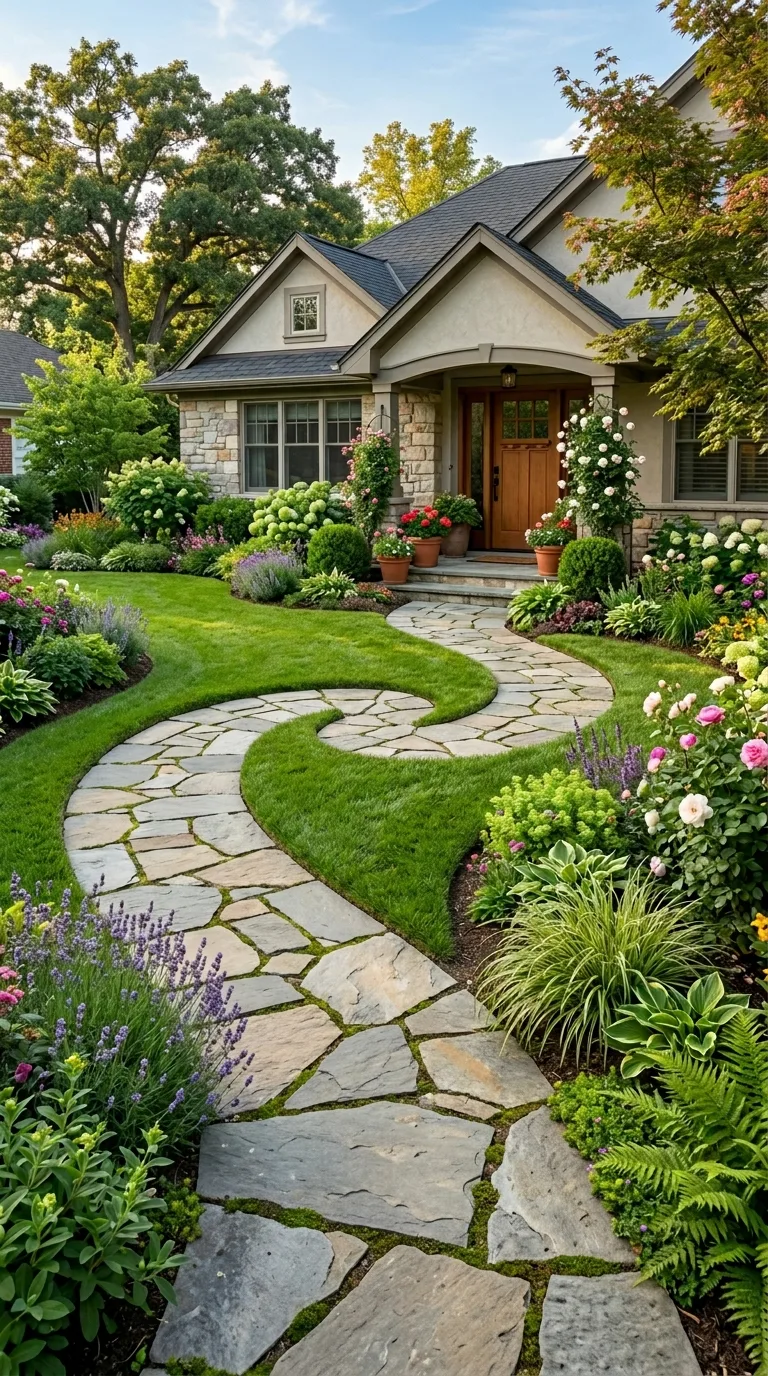
A gently curving front pathway that follows the golden spiral creates a natural flow that guides visitors toward your entrance while making the journey feel relaxed and unhurried. Instead of a straight line from the sidewalk to your door, this subtle curve adds visual interest and makes even a small front yard feel larger because the path covers more visual ground.
Use flagstone or pavers to lay out the curve starting wider near the street and gradually narrowing as it approaches your entrance following the spiral proportion. The wider beginning welcomes visitors openly while the narrowing end creates a sense of arrival and focus that draws attention naturally to your front door as the destination.
2. Asymmetrical Planting Beds in 1:1.618 Proportion
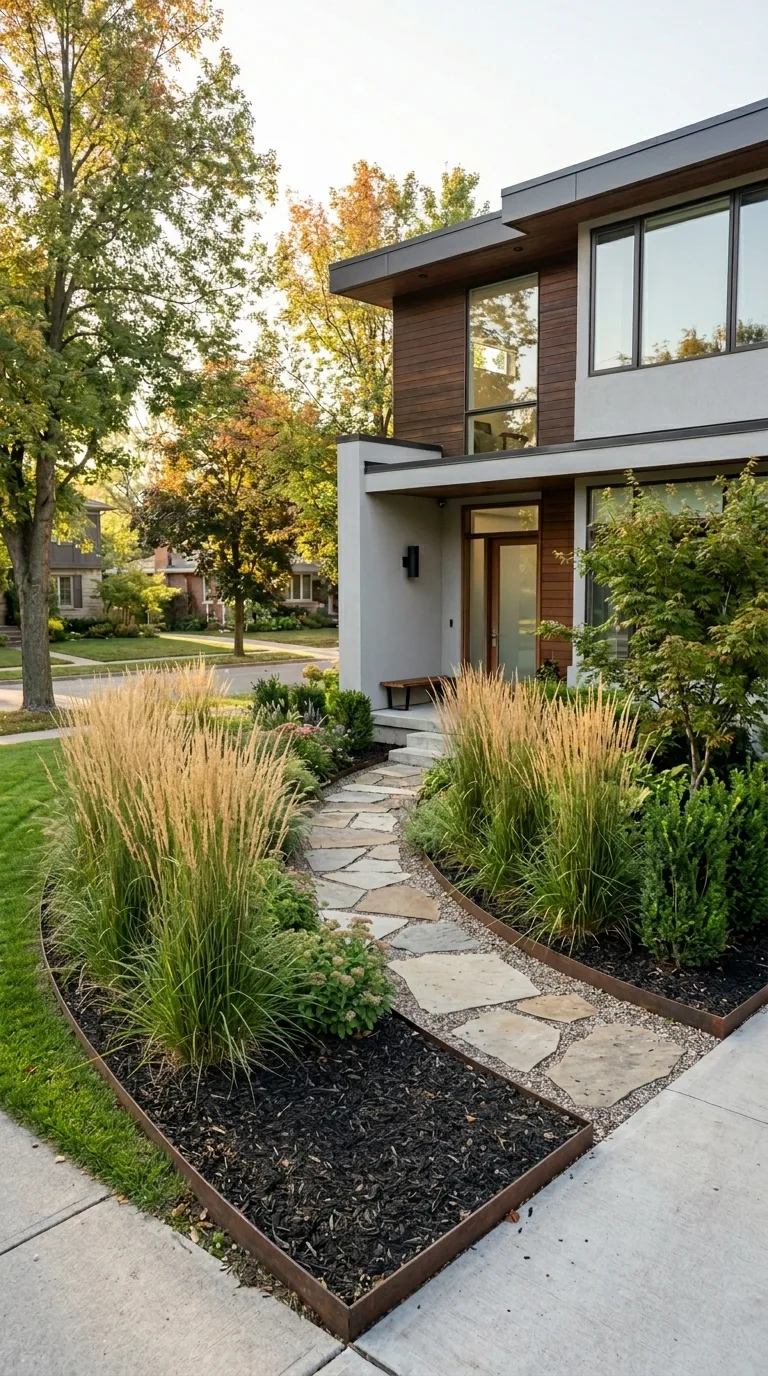
Instead of placing identical planting beds on both sides of your front yard, create one larger bed and one smaller bed using the golden ratio proportion so the larger bed is approximately 1.6 times the size of the smaller one. This asymmetry feels more dynamic and visually interesting than perfect symmetry while still maintaining a sense of balance that our eyes naturally find pleasing.
Place the larger bed on the side of your yard that receives more visual attention such as the side facing oncoming traffic or the side visible from your main living spaces. Fill both beds with complementary plants but vary the heights and textures proportionally so the larger bed contains taller anchor plants while the smaller bed stays lower and more refined.
3. Focal Point Placement at the Golden Section
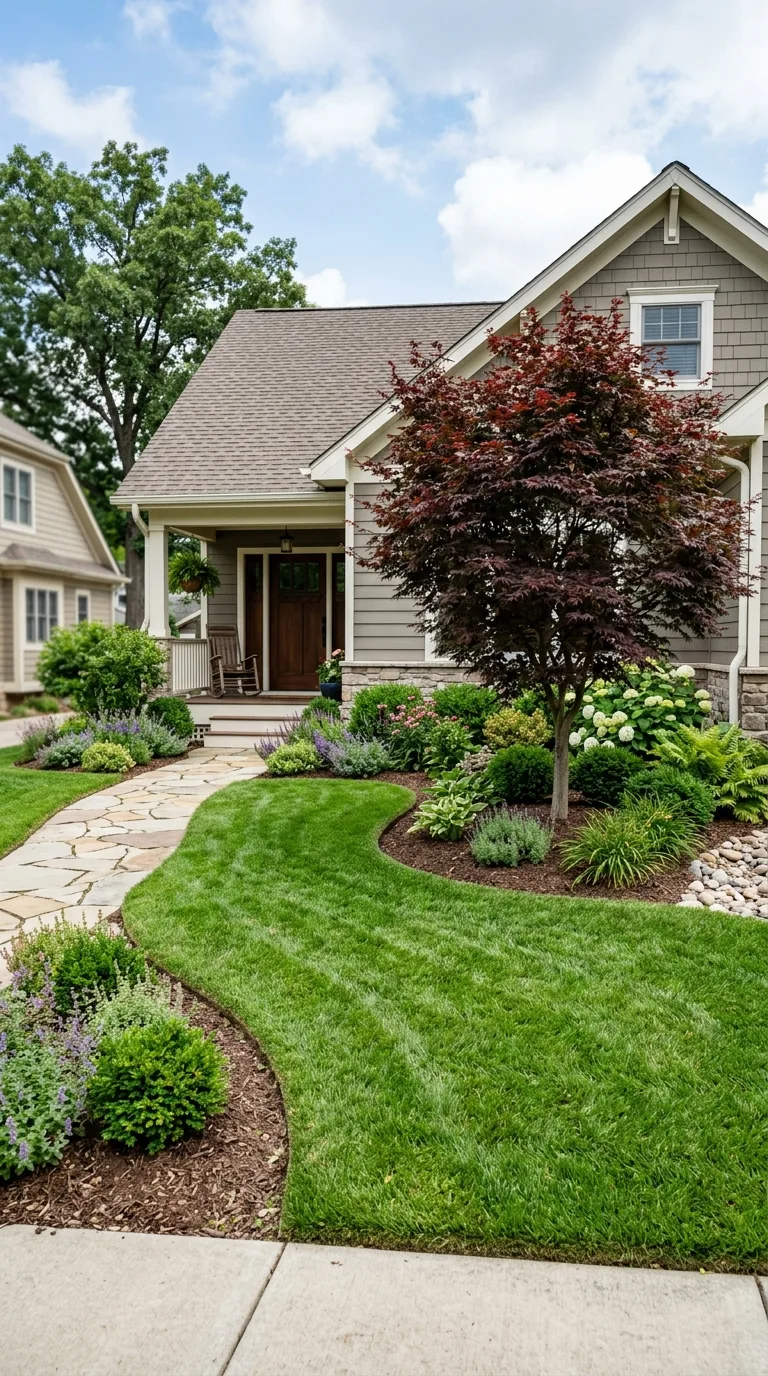
Position your primary front yard focal point whether it is a specimen tree, fountain, or sculpture at the golden section point of your yard rather than dead center. Measure the width of your front yard and multiply by 0.618 to find this sweet spot where a focal element looks most naturally placed and draws the eye without feeling forced or artificially positioned.
This off center placement creates visual tension that keeps the eye moving across the entire landscape rather than landing on a centered object and stopping there. The result is a front yard that feels curated and sophisticated because you have used the same proportional placement that master painters and photographers rely on to create compelling compositions.
4. Layered Hedge Heights Following the Ratio
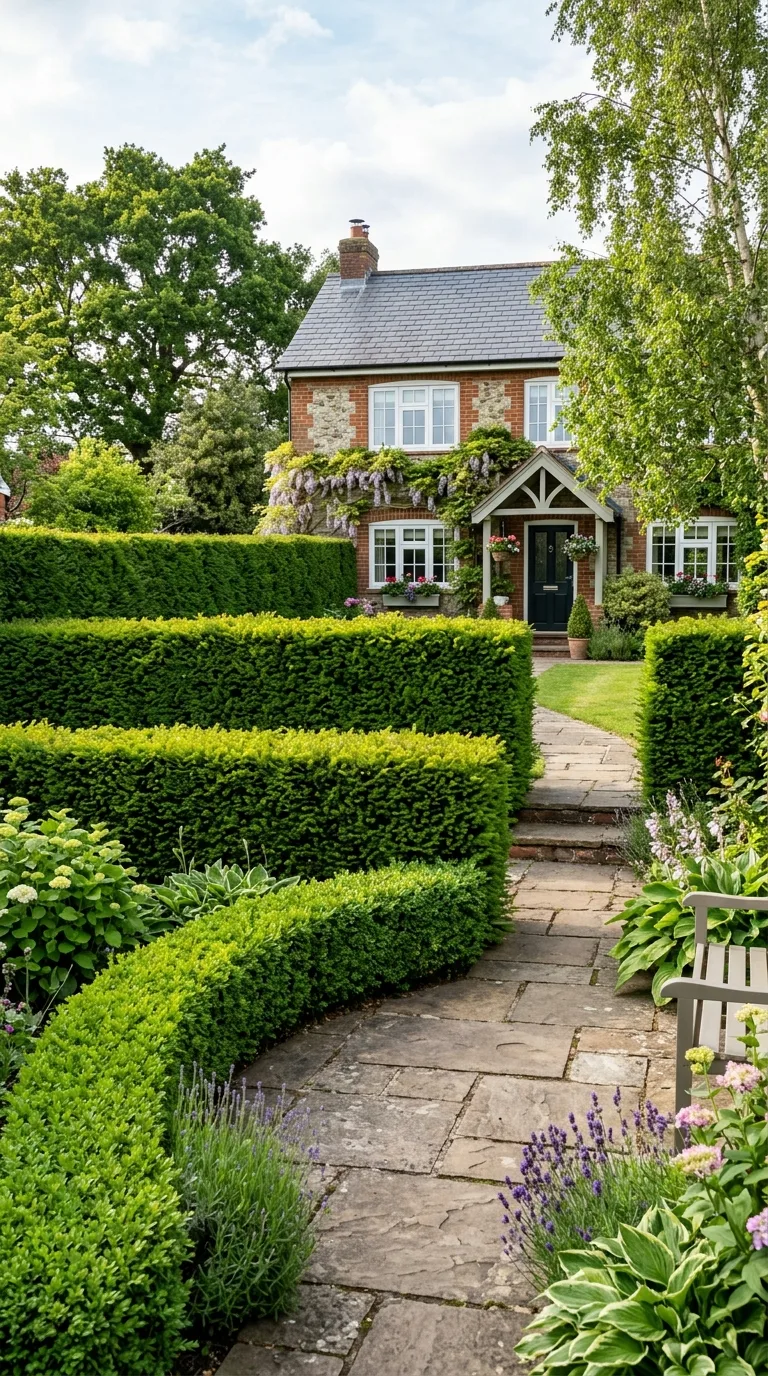
Create a layered hedge arrangement where each successive row is 1.618 times taller than the one in front of it to produce a naturally graduated backdrop that frames your home beautifully. Start with a low twelve inch hedge at the front, a twenty inch mid layer behind it, and a thirty two inch tall hedge at the back creating a proportional staircase of green.
This graduated layering creates depth and dimension that makes a flat front yard feel three dimensional and lush. Each layer is visible above the one in front so no plant material is hidden and the proportional height increase ensures that the eye travels smoothly upward toward your home rather than jumping awkwardly between mismatched heights.
5. Golden Rectangle Lawn Panel
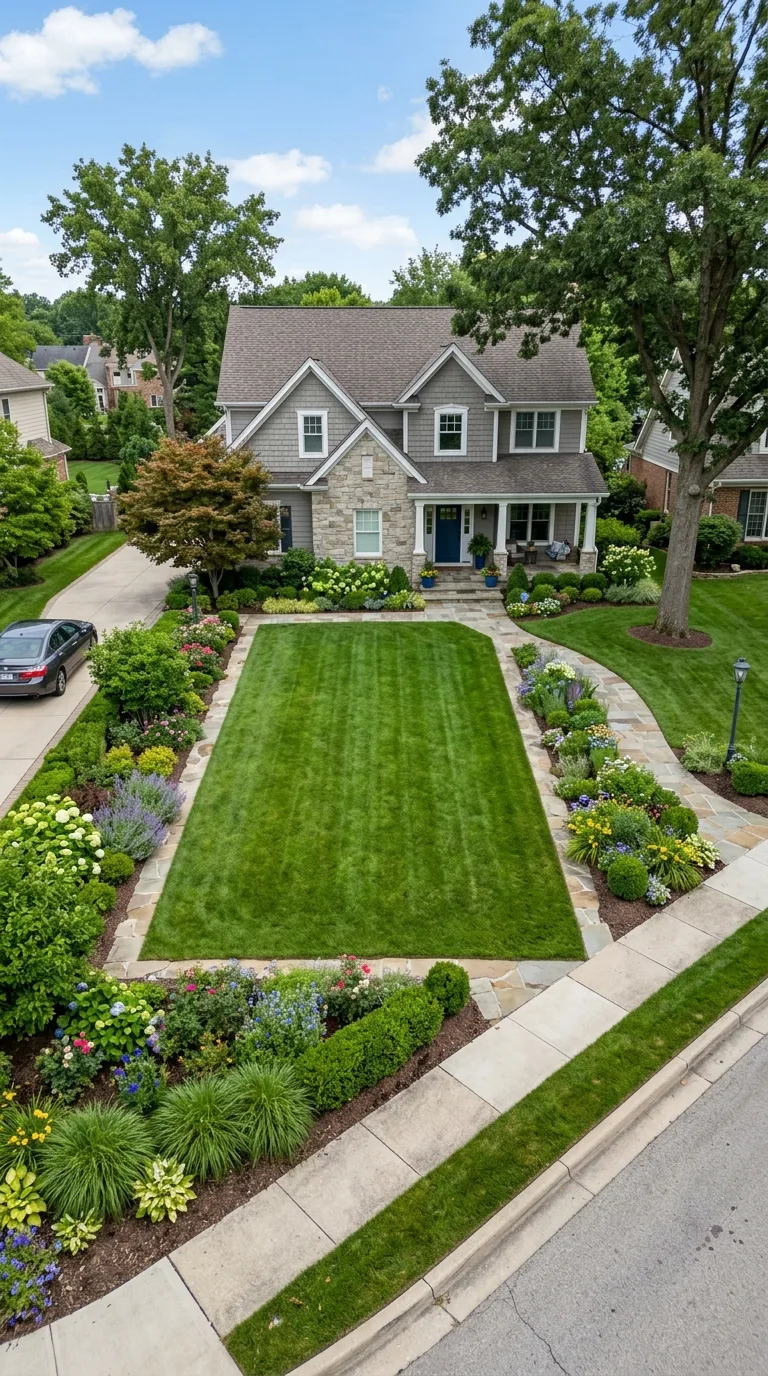
Shape your front lawn area as a golden rectangle where the length is 1.618 times the width to create a grass panel that looks perfectly proportioned from the street. Most front lawns are shaped arbitrarily but when you intentionally cut the turf area to this ratio the space immediately looks more designed and intentional without anyone being able to pinpoint exactly why it feels so right.
Border the golden rectangle lawn with planting beds or a low stone edging to define its shape clearly and maintain the proportional integrity over time. This contained lawn shape is also far easier to mow than irregular organic shapes and it provides a strong geometric anchor that balances the softer organic forms of surrounding plantings.
6. Tree Spacing Using Fibonacci Sequence
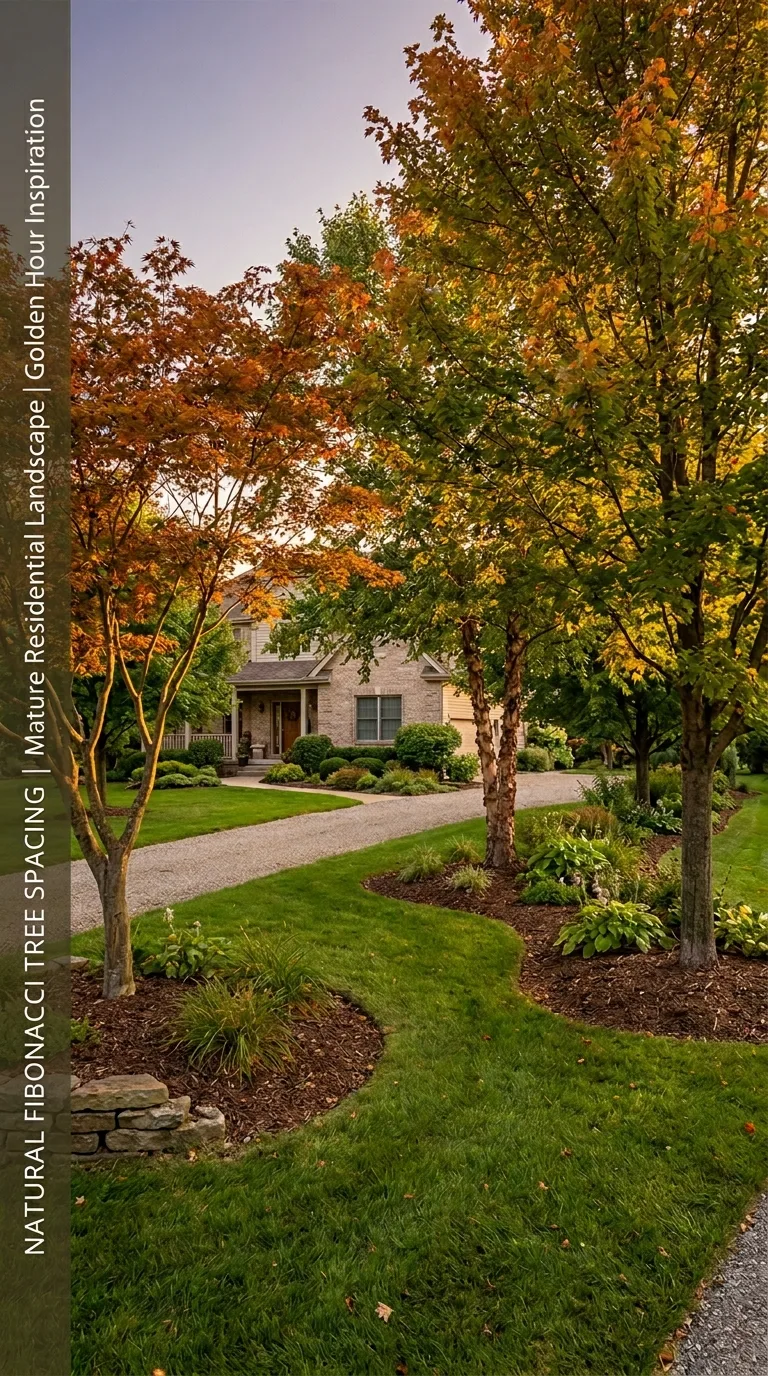
Space your front yard trees using intervals derived from the Fibonacci sequence which is the mathematical foundation of the golden ratio. If your first tree is three feet from the property edge, place the next one five feet from the first, then eight feet to the next creating a rhythm of increasing gaps that feels organic rather than mechanical or rigidly uniform.
This irregular but mathematically related spacing mimics how trees grow naturally in forest settings where they are never evenly distributed but still maintain a pleasing visual rhythm. The increasing distances also allow each tree more growing room as they mature which is practical as well as aesthetically harmonious and prevents overcrowding in the long term.
7. Front Porch to Yard Proportion
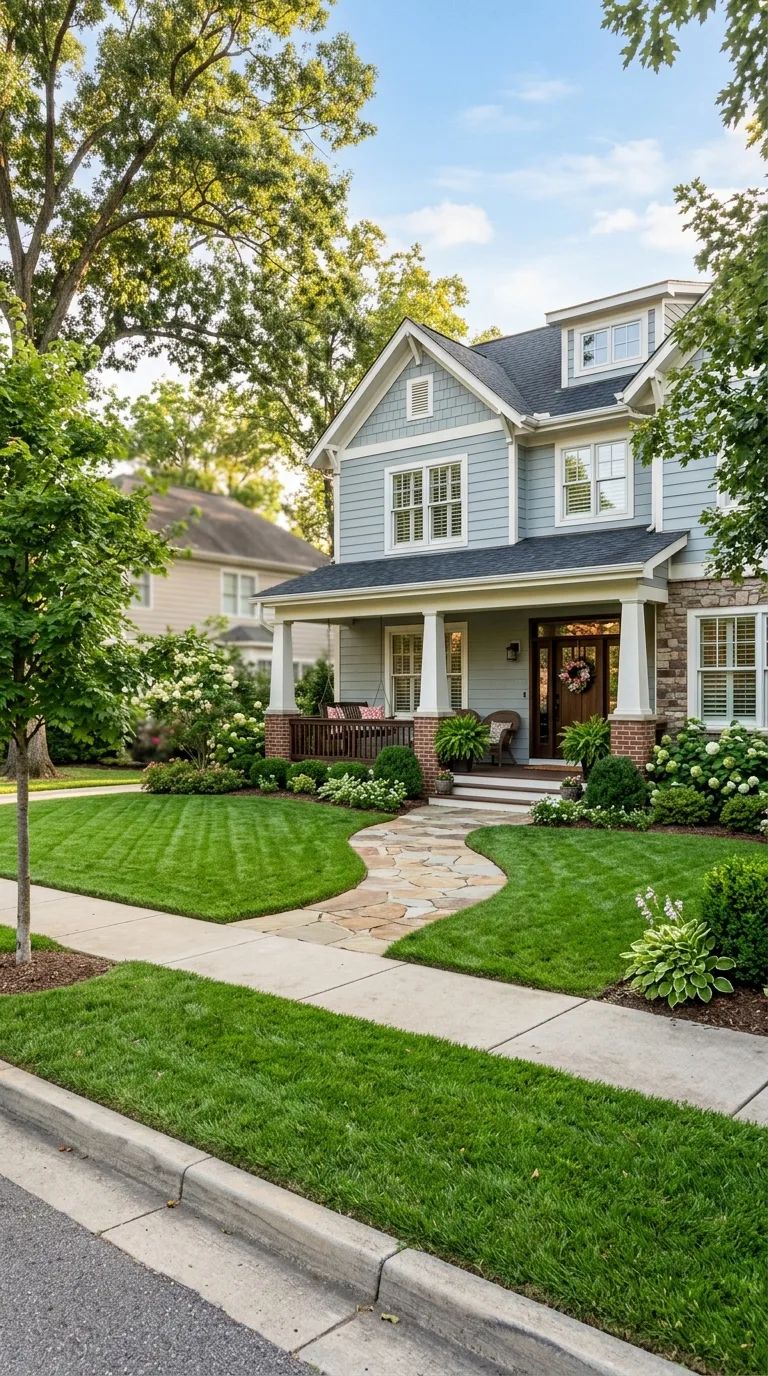
Design the relationship between your front porch depth and the distance from porch to sidewalk using the golden ratio so that if your porch is eight feet deep the front yard extends approximately thirteen feet to the public sidewalk. This proportion makes the transition from public to private space feel gradual and welcoming rather than abrupt or uncomfortably compressed.
When these two zones relate proportionally the entire front of your home feels balanced and the porch neither dominates the yard nor gets lost within it. This principle works whether you have a large wraparound porch or a small covered stoop because the ratio scales perfectly regardless of the actual measurements involved.
8. Flower Bed Color Distribution by Ratio
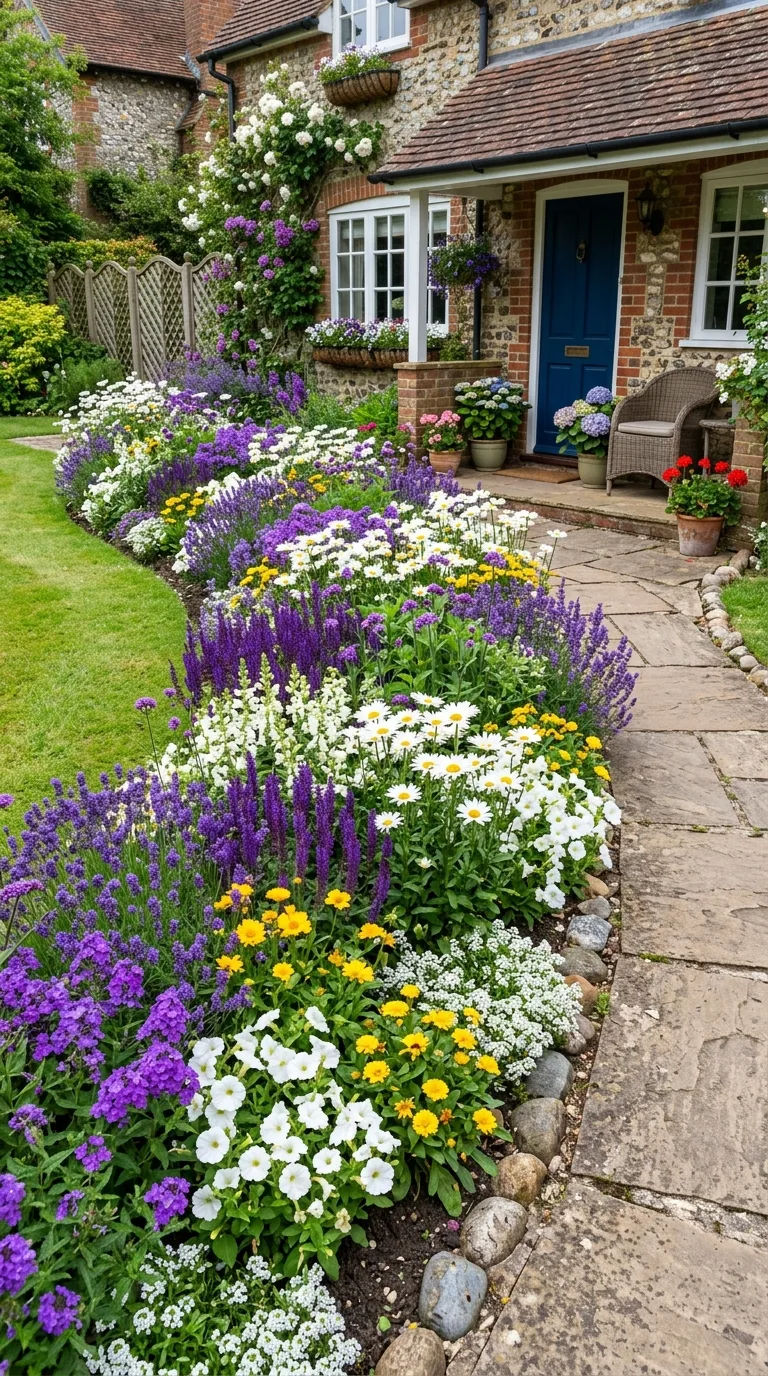
Apply the golden ratio to your flower bed color scheme by using your dominant color in roughly 62 percent of the planting area, your secondary color in 38 percent, and an accent color sparingly throughout. This proportional color distribution creates visual harmony because no single color overwhelms the composition while still maintaining clear hierarchy and intentional design.
Choose your dominant color based on what complements your home exterior then select a secondary color that provides contrast without competing for attention. The small accent color should be something bold that draws the eye to specific points creating moments of surprise within the larger harmonious composition that keeps viewers engaged and interested.
9. Driveway and Garden Bed Width Ratio
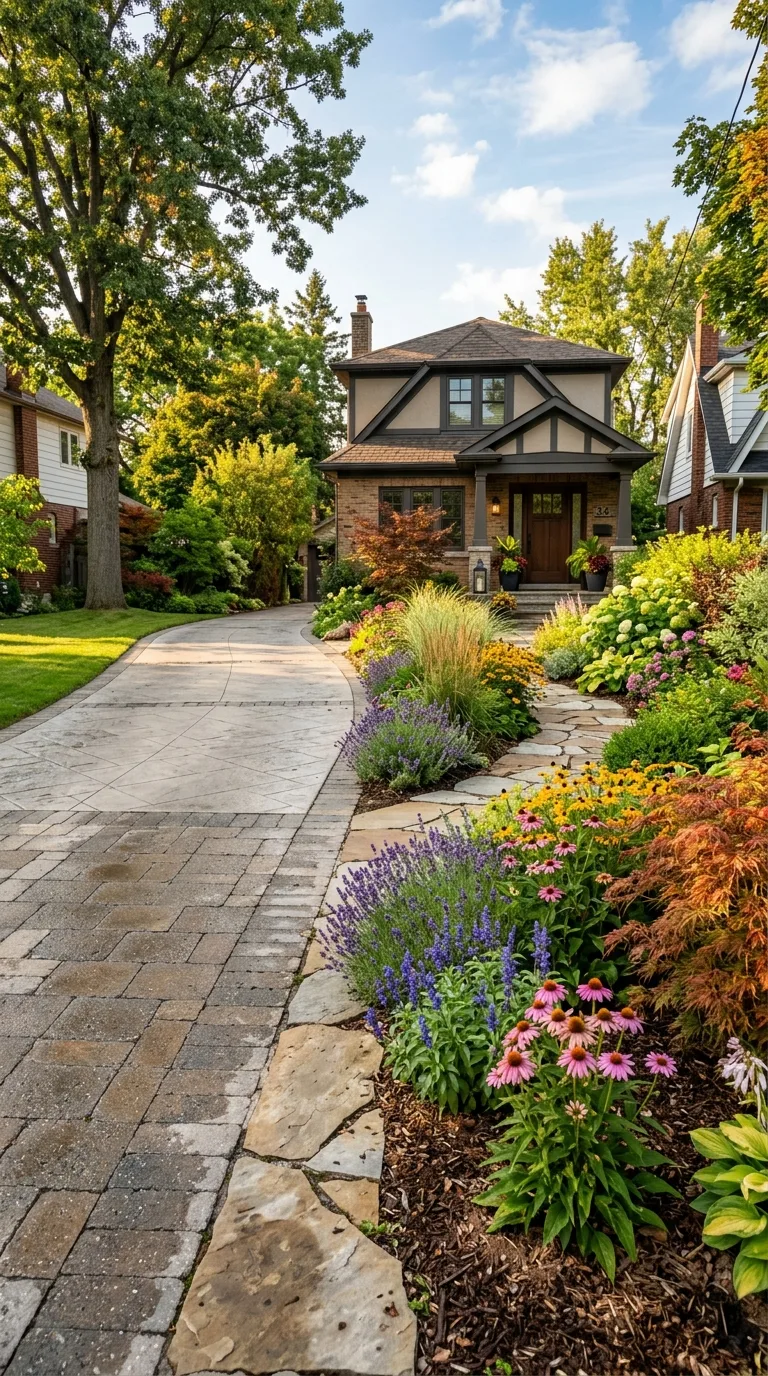
Set the width of the planting bed alongside your driveway at 0.618 times the width of the driveway itself to create a proportional relationship between hardscape and softscape that looks naturally balanced. If your driveway is sixteen feet wide, a ten foot deep garden bed beside it will feel perfectly scaled rather than too thin and neglected or too wide and overwhelming.
This proportional bed width gives plants enough room to grow to full maturity without encroaching on the driveway while providing sufficient visual mass to balance the weight of the paved surface. The result is a driveway that feels integrated into the landscape rather than dominating it like an oversized parking lot.
10. Golden Ratio Water Feature Sizing
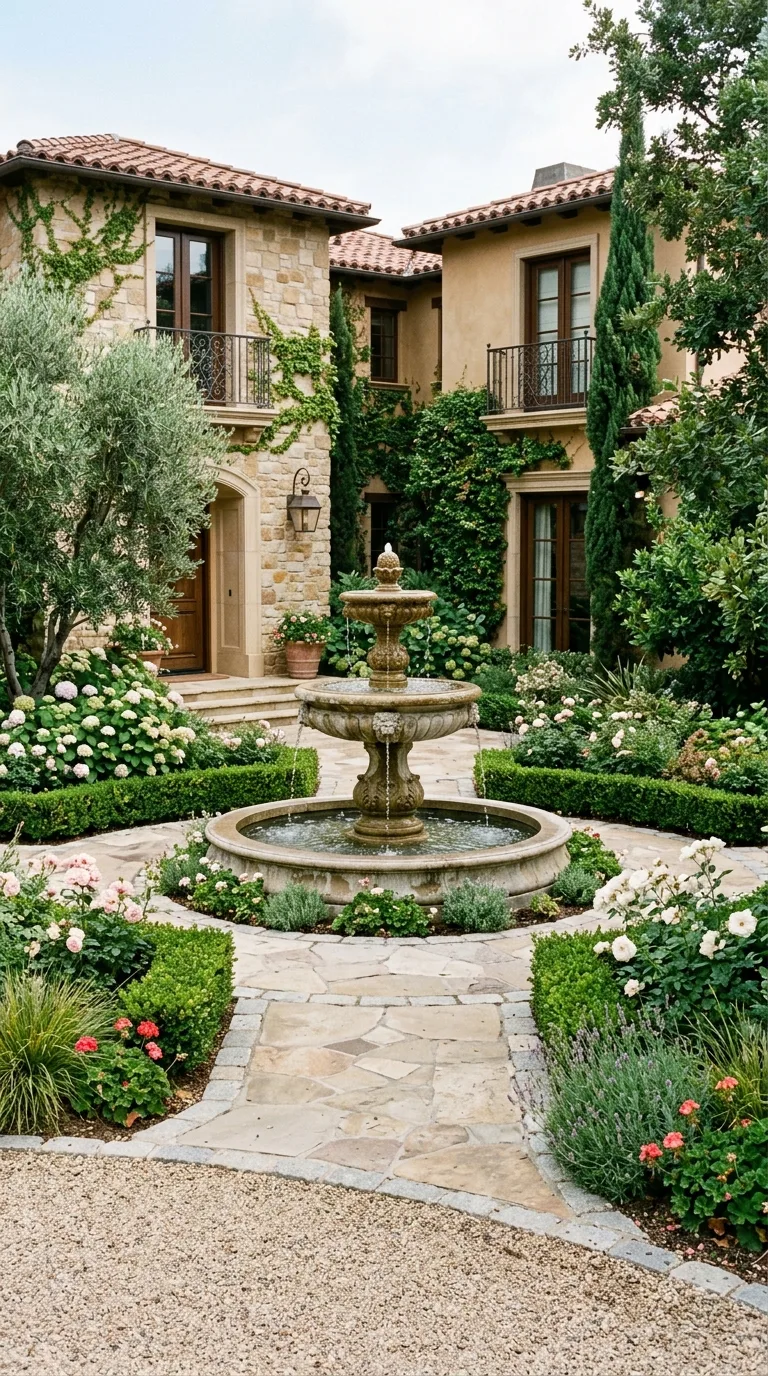
Size your front yard water feature so its diameter or longest dimension relates to the surrounding open space by the golden ratio ensuring it commands attention without overwhelming the area. A fountain that is 1.618 times smaller than the patio or bed it occupies will feel perfectly scaled and purposeful rather than either lost in too much space or cramped and oversized.
Position the water feature at the golden section point of the bed or courtyard it sits within for maximum visual impact with minimum spatial awkwardness. This proportional approach to sizing removes the guesswork that leads many homeowners to install features that are either too large for their space or too small to make a meaningful visual statement.
11. Retaining Wall Step Heights in Proportion
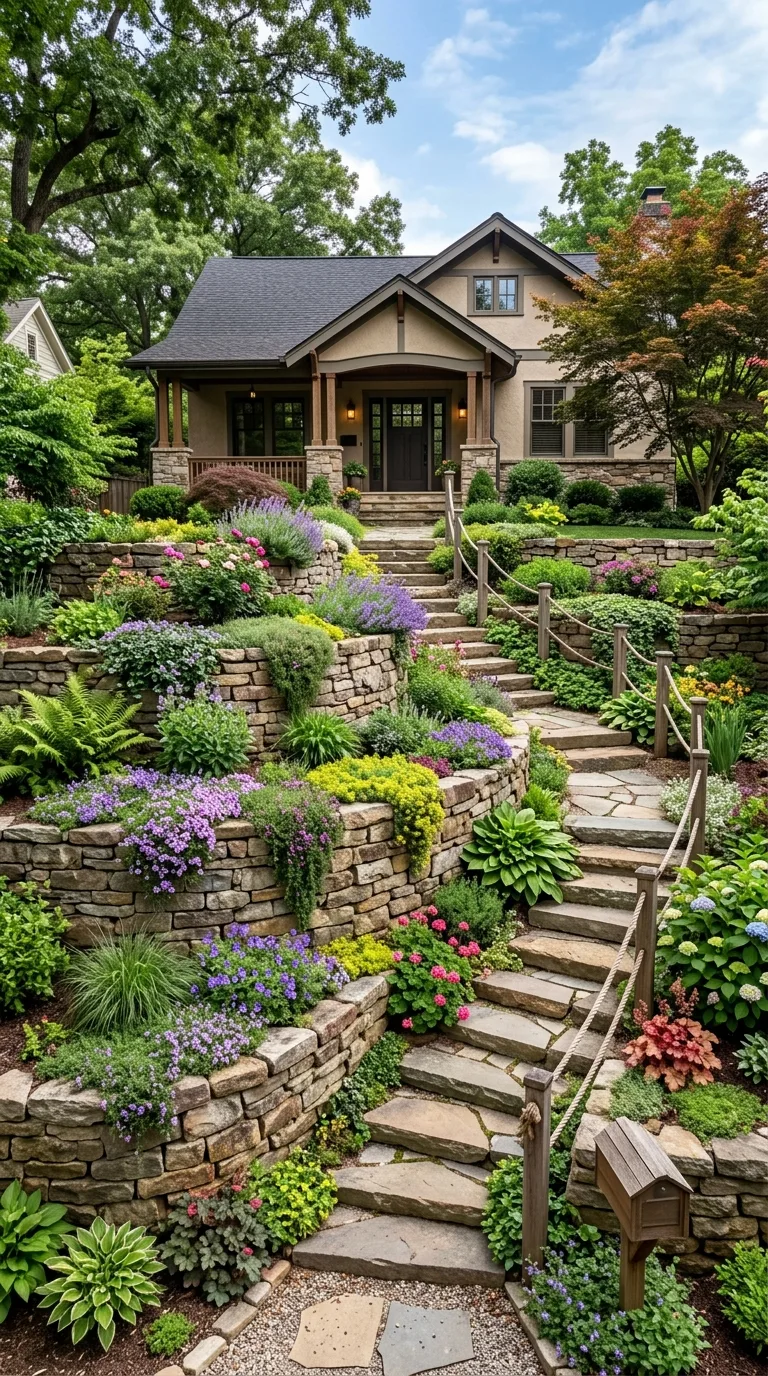
If your front yard has elevation changes, build retaining wall tiers whose heights follow the golden ratio with each successive tier being 0.618 times the height of the one below it. A bottom wall of twenty inches, a middle wall of twelve inches, and a top wall of eight inches creates a naturally diminishing sequence that guides the eye gracefully up the slope.
This graduated approach makes a steep grade change feel gentle and manageable rather than imposing and harsh. Each tier provides a planting shelf where you can add cascading plants that soften the stone faces and the proportional heights ensure no single wall feels too dominant or too insignificant within the overall composition.
12. Entrance Gate Width to Wall Length Ratio
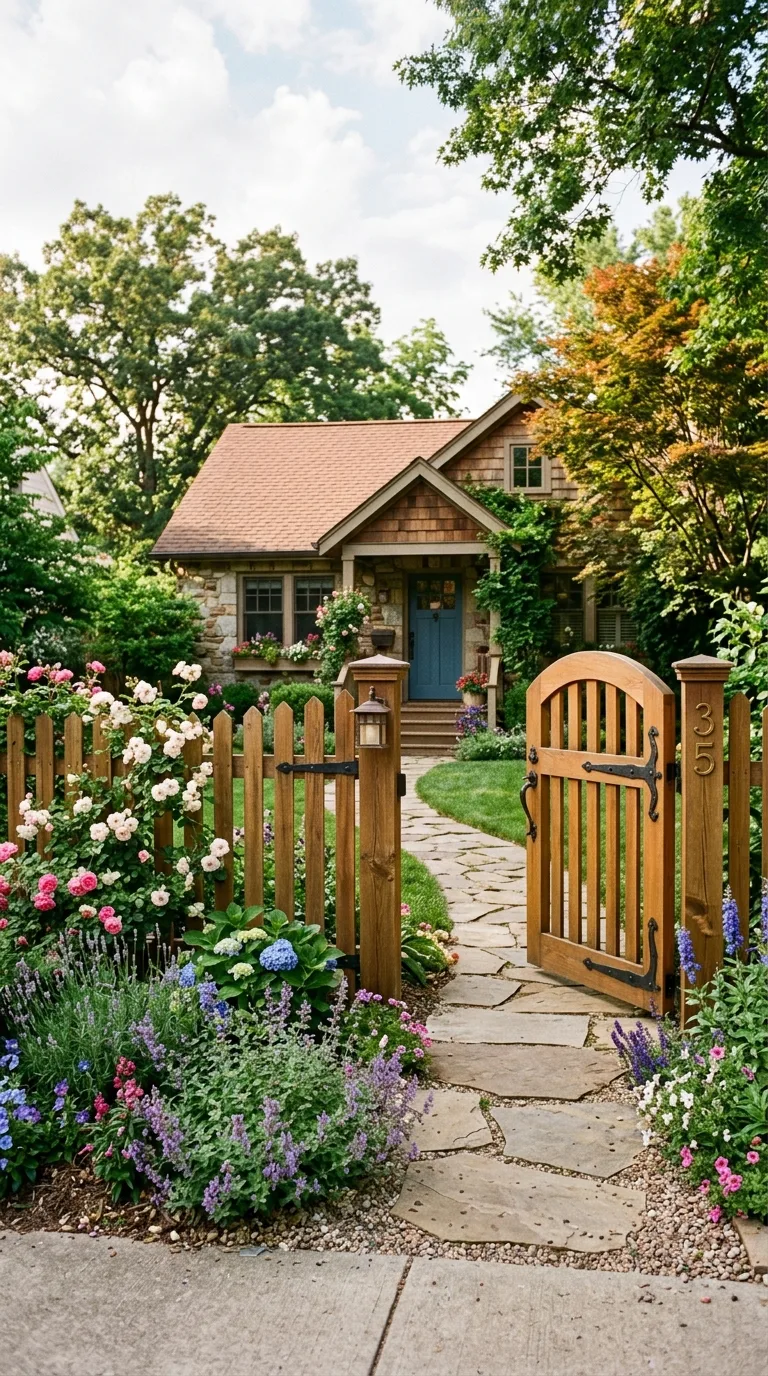
Design your front yard entrance gate or opening so its width relates to the total length of the front wall or fence by the golden ratio. A fence running twenty feet across the front of your property would have a gate opening of approximately twelve feet at the golden section point creating an entrance that feels generous and welcoming without breaking the continuity of the boundary.
This proportional gate placement also means the shorter wall section and longer wall section on either side of the gate relate to each other by the same golden ratio. The result is a front boundary that looks architecturally considered and balanced from every viewing angle along the street.
13. Circular and Elliptical Beds Using Golden Proportions
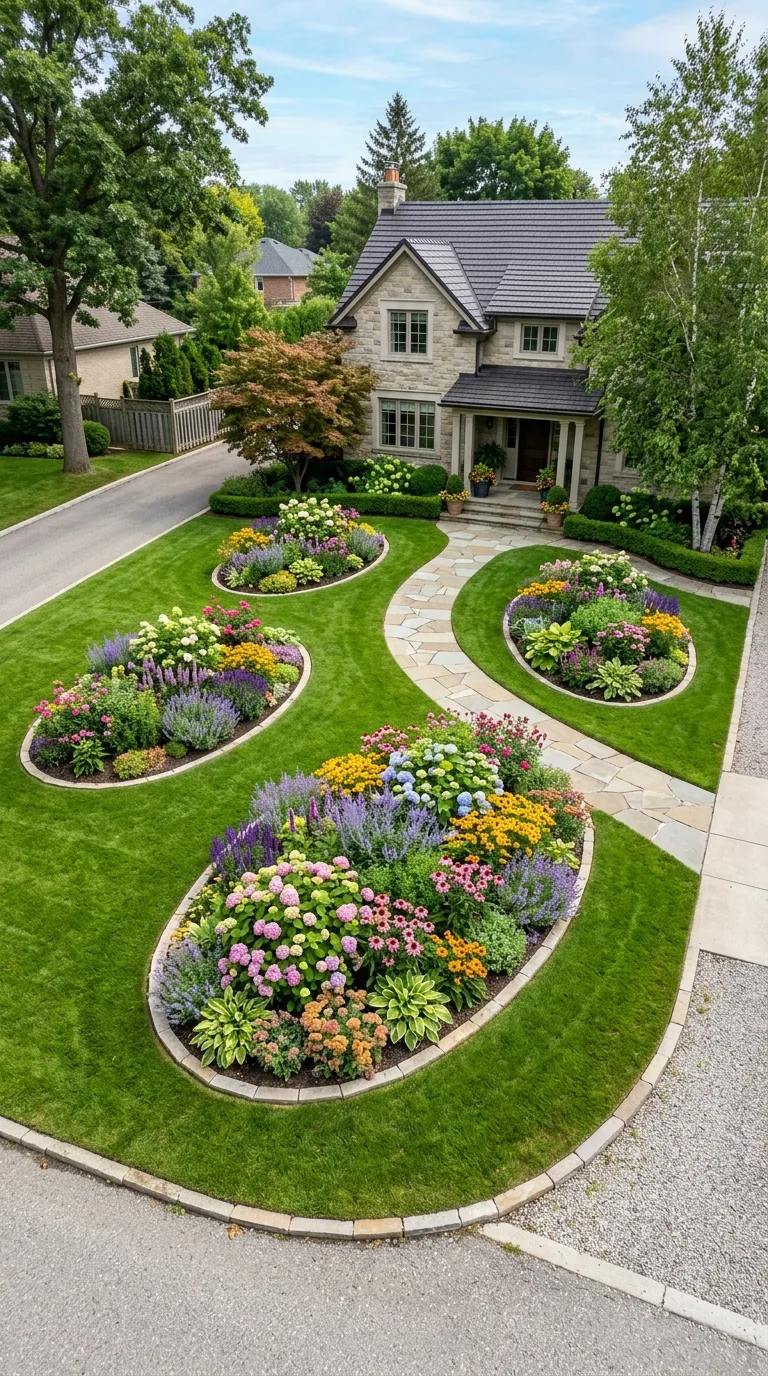
Create elliptical planting beds in your front yard where the long axis is 1.618 times the short axis to produce oval shapes that feel more graceful and natural than perfect circles. These golden ellipses have a flowing organic quality that works beautifully in both formal and informal landscape styles and they fit more naturally into rectangular front yards than circular beds do.
Position these elliptical beds at angles to your property lines rather than parallel to them to create dynamic visual energy and movement across the yard. Fill them with a single plant type for a bold modern statement or mix perennials in proportional color ratios for a cottage garden feeling that still maintains underlying mathematical harmony.
14. Pergola Column Spacing by Golden Ratio
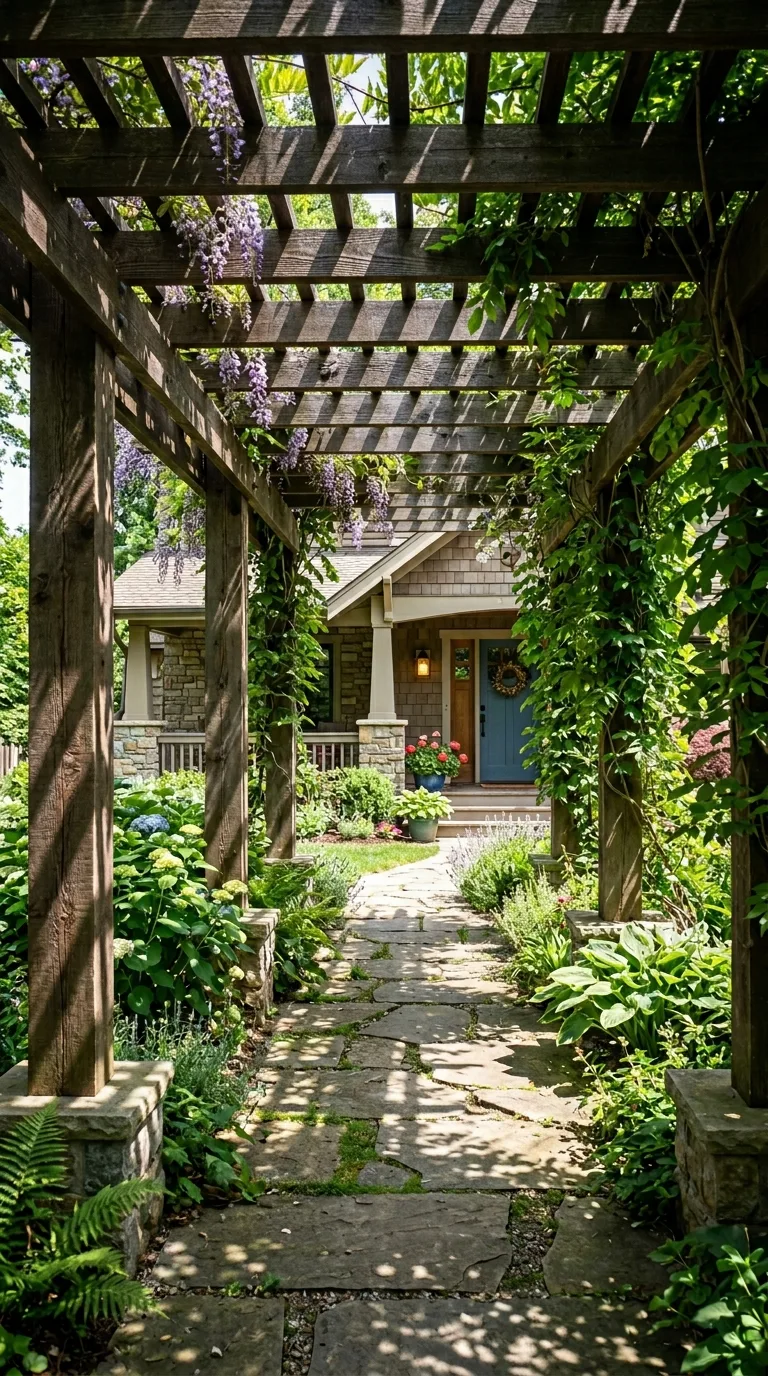
Space the columns of a front yard pergola using golden ratio intervals so that the gaps between posts progressively widen or narrow following the 1:1.618 proportion. This creates a pergola that feels rhythmic and graceful rather than rigidly uniform like a row of identical soldiers standing at attention along your walkway.
The progressive spacing also creates practical benefits because wider gaps can frame views or accommodate seating areas while narrower gaps provide more shade and a greater sense of enclosure near the entrance. This variable rhythm makes walking beneath the pergola a more interesting sensory experience because the light and shadow pattern constantly shifts.
15. Front Yard Thirds Divided by Golden Proportion
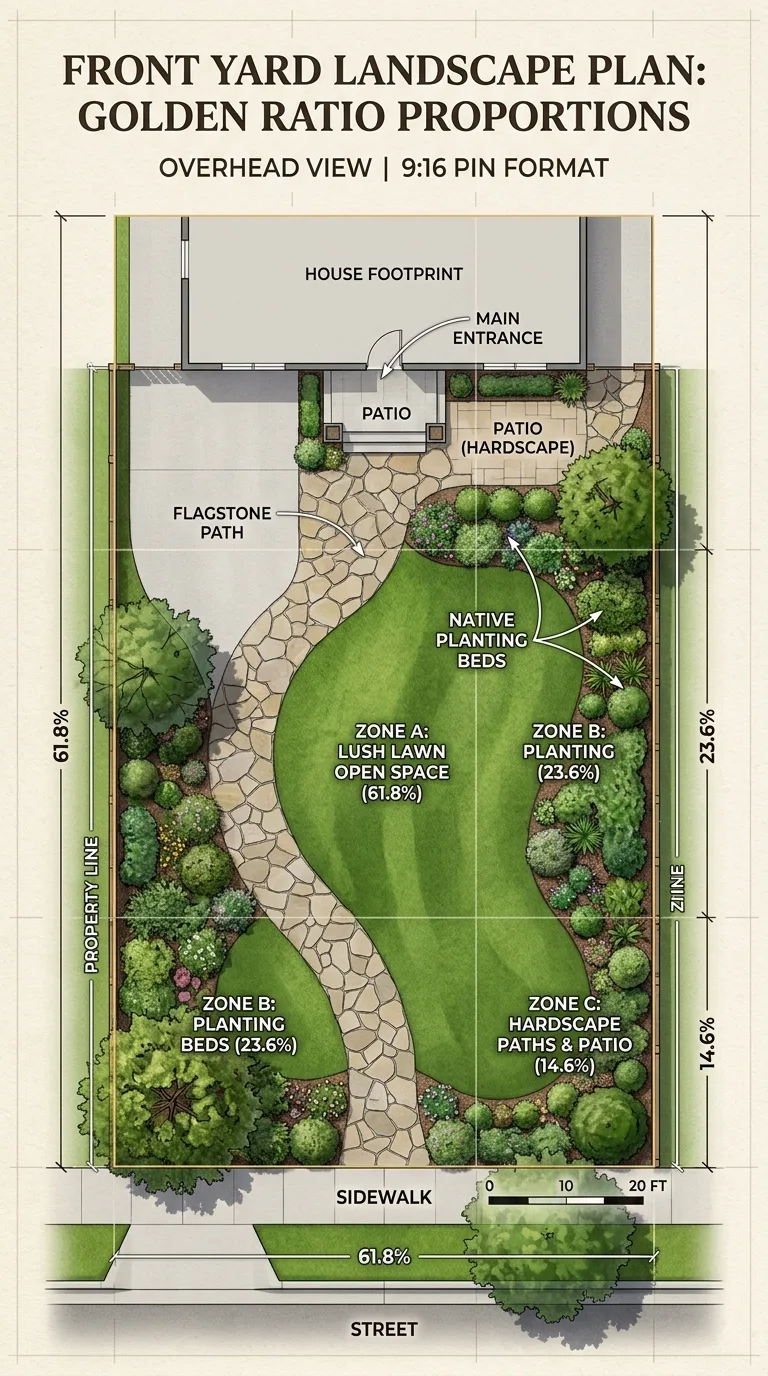
Divide your front yard into three zones using golden proportion rather than equal thirds. The largest zone at 50 percent becomes lawn or open space, the medium zone at 31 percent becomes planting beds, and the smallest zone at 19 percent becomes hardscape paths and features. These proportions create a landscape that breathes with sufficient open space while still feeling planted and designed.
This three zone approach prevents the common mistake of either overplanting a front yard until it feels like an overgrown jungle or leaving too much empty lawn that looks barren and uninspired. The golden proportions ensure each element receives exactly the right amount of space to fulfill its purpose without competing with the others.
16. Stepping Stone Spacing in Golden Intervals
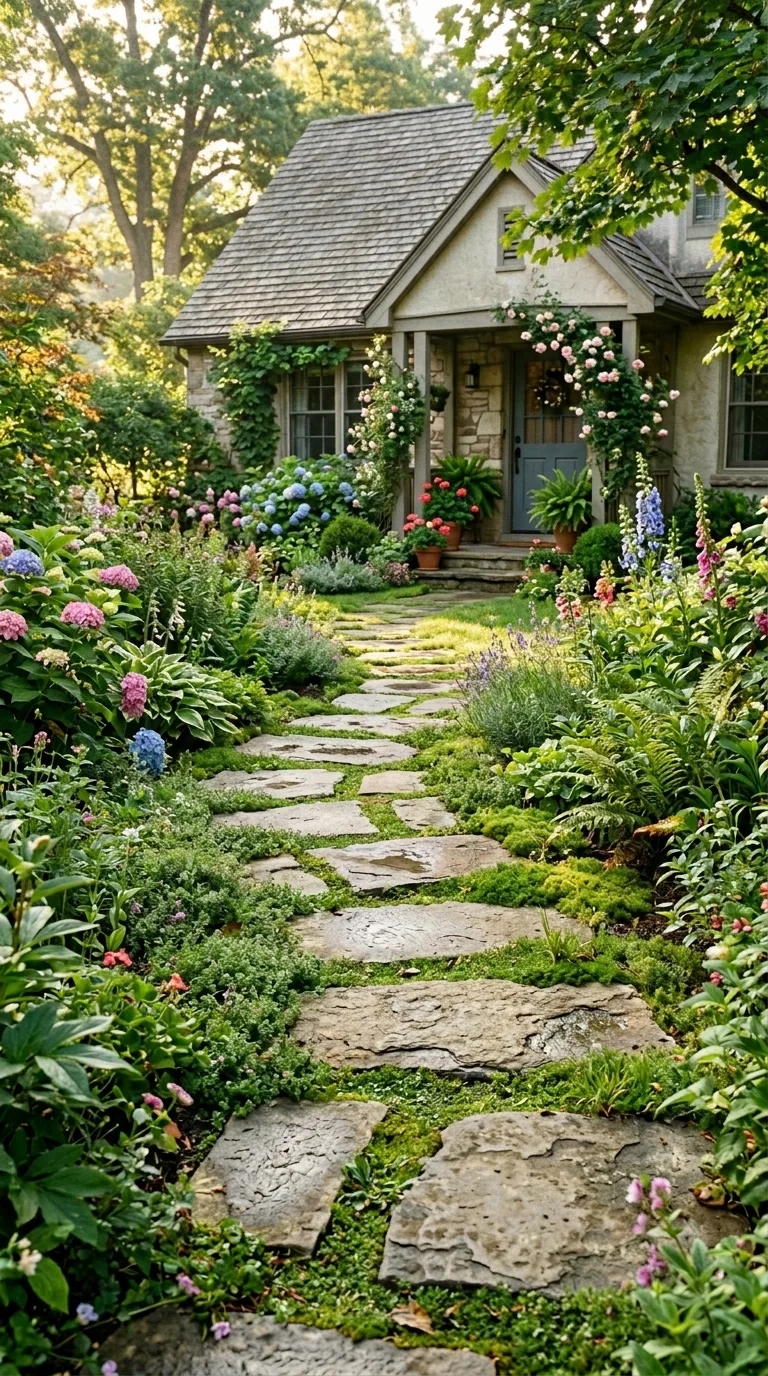
Lay stepping stones through a front yard planting bed with spacing that increases according to the golden ratio so each gap is 1.618 times wider than the previous one. Start with stones close together where the path begins then gradually increase the spacing as it moves through the garden creating a natural deceleration that encourages visitors to slow down and enjoy the surroundings.
This variable spacing mimics natural walking rhythms better than uniform gaps and it creates a path that feels more like a journey through a garden than a utilitarian connection between two points. The widening gaps also allow more ground cover plants to show between stones creating increasingly lush green pockets as you move deeper into the planted area.
17. Lighting Placement at Golden Section Points
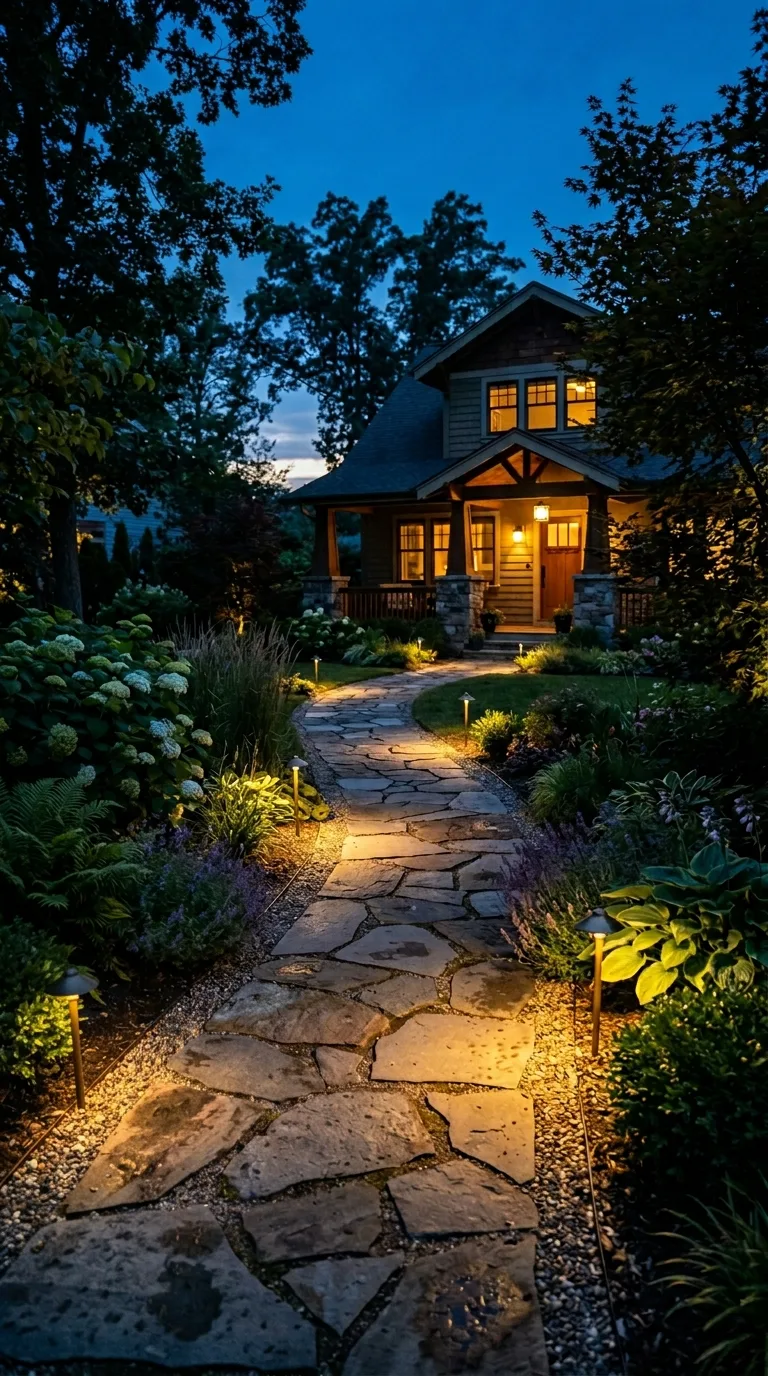
Position your landscape lights at golden section points along pathways and within planting beds rather than spacing them evenly. Measure the total length of a path and place the first light at 38 percent of the distance and the second at 62 percent. This creates pools of light that feel natural and dramatic rather than the uniform illumination that looks commercial and institutional.
This approach to lighting design also creates darker zones between the lit areas which adds mystery and depth to your nighttime landscape. The variable brightness guides movement through space by making some areas more visible and inviting while allowing others to recede into soft shadow creating a much more atmospheric evening experience.
18. Mulch to Plant Coverage Ratio
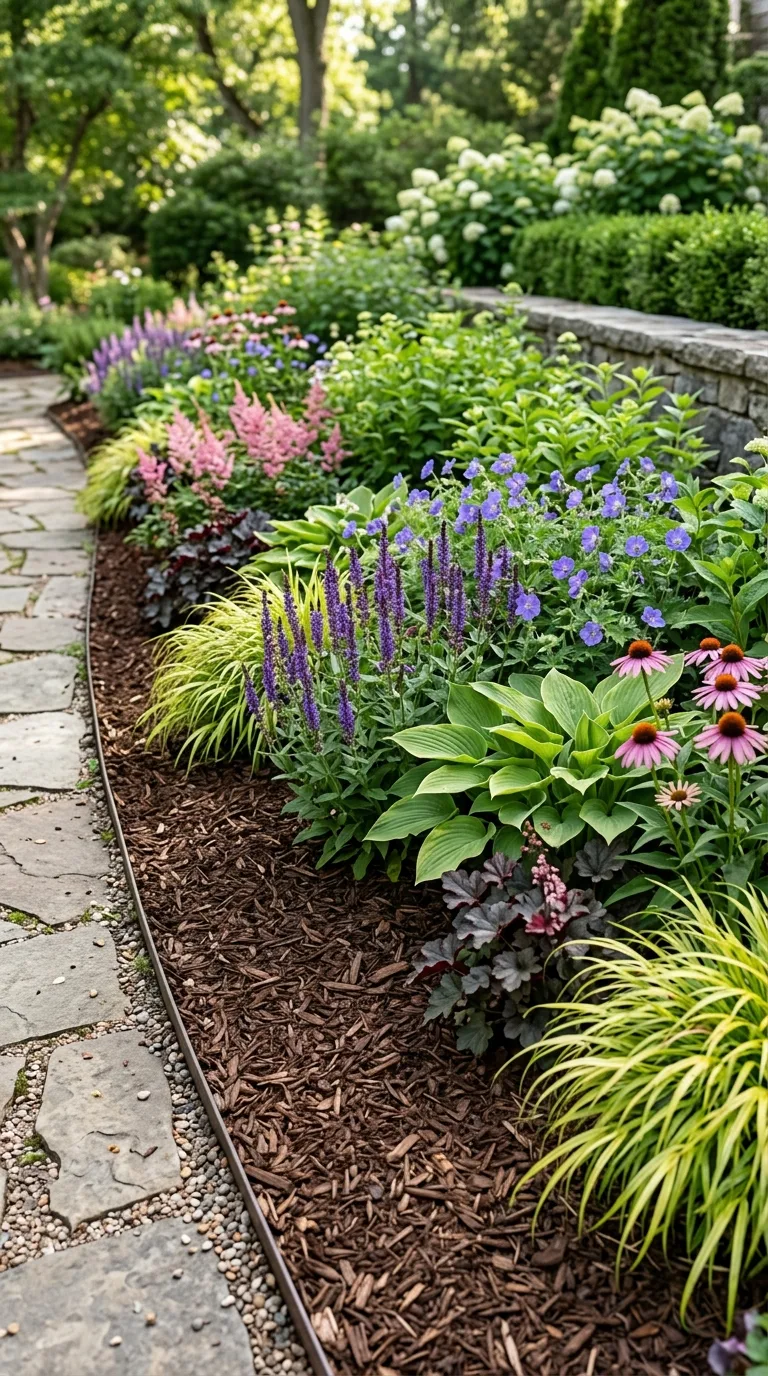
Maintain visible mulch or ground coverage at approximately 38 percent of your planting bed area with actual plant foliage covering the remaining 62 percent for golden ratio balance between planted fullness and breathing room. This proportion ensures beds look lush and established without appearing overcrowded or so packed that individual plants lose their identity within the mass.
When planting beds are new, accept that the ratio will temporarily favor more visible mulch and plan for the plants to grow into the golden proportion within two growing seasons. This patience prevents overplanting which leads to root competition disease problems and the need to remove plants later when they inevitably outgrow their allotted space.
19. House Facade to Landscape Height Ratio
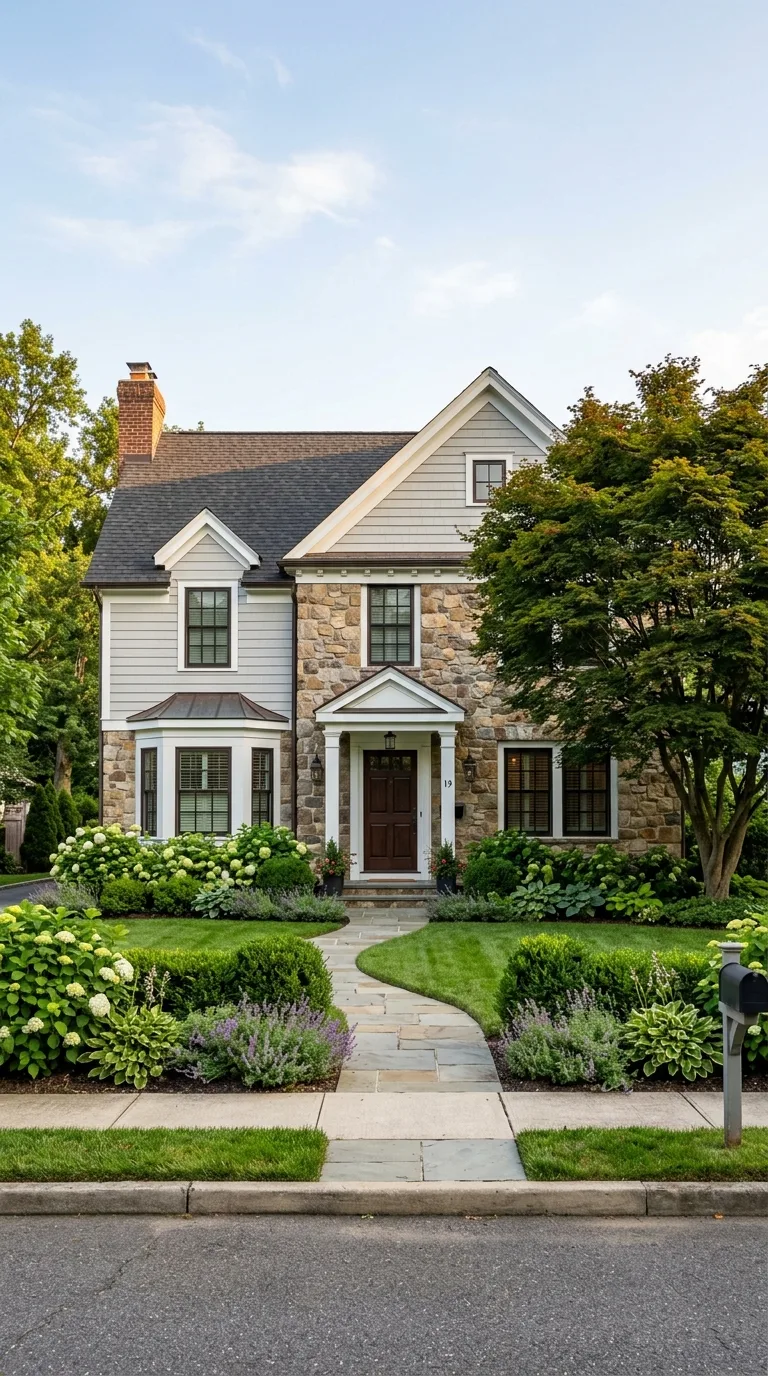
Select the maximum height of your front yard plantings so they relate to your house facade height by the golden ratio. If your roofline is twenty feet from grade, the tallest landscape element should reach approximately twelve feet creating a proportional frame that enhances rather than competes with the architecture. Trees and tall shrubs that exceed this proportion can make a home feel overwhelmed and hidden.
This height relationship ensures your home remains the visual focus of the property with the landscape serving as a complementary frame rather than a competing element. It also maintains sight lines from inside the house looking out and from the street looking in which is important for both aesthetics and practical security considerations.
20. Paver Pattern Module Based on Golden Rectangle
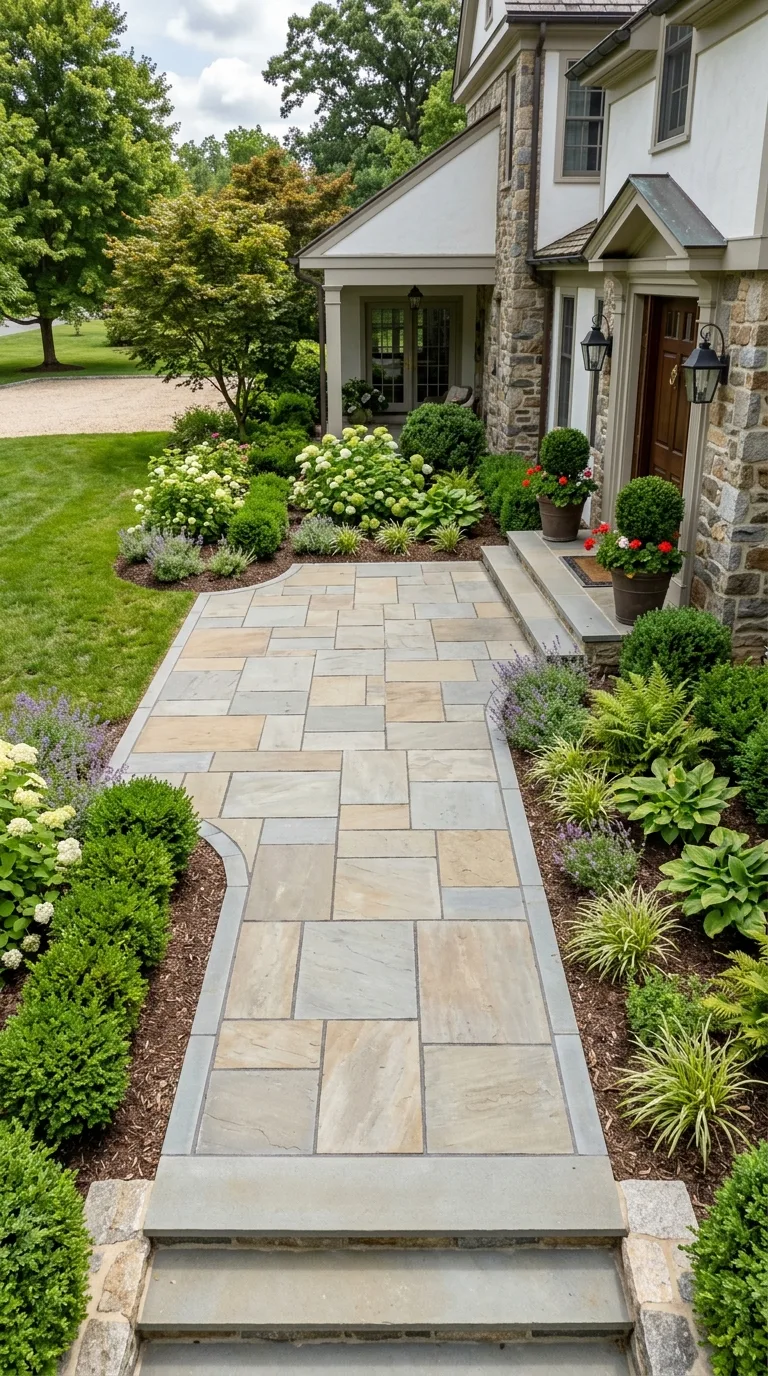
Design your front walkway or patio paver pattern using golden rectangle modules where each paver or pattern repeat has length to width proportions of 1:1.618. This subtle geometric foundation makes the paving surface feel elegant and intentionally designed even when viewed casually because the underlying proportions register subconsciously as harmonious and pleasing to the human eye.
Combine golden rectangle pavers in different sizes using the Fibonacci sequence so small medium and large units interlock in patterns that never feel repetitive or monotonous. This approach creates a unique custom appearance that distinguishes your front walkway from the standard running bond or herringbone patterns that most neighbors default to.
21. Overall Front Yard Master Plan Using Golden Sections
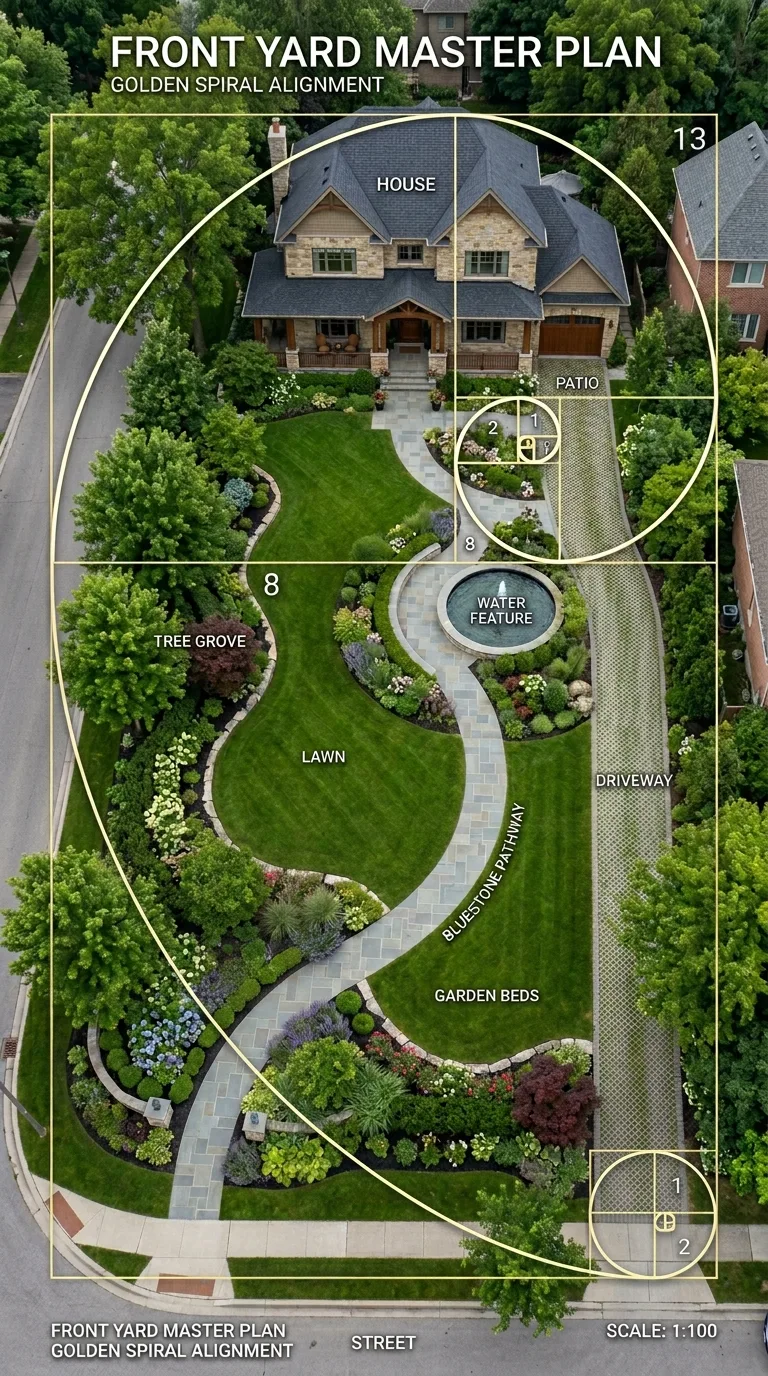
Apply the golden ratio as the master organizing principle for your entire front yard by dividing the total space into golden sections both horizontally and vertically. Draw the golden spiral over your property plan and align major elements like trees, pathways, focal points, and bed edges along the spiral curves and section lines. This creates a unified composition where every element relates proportionally to every other element.
The beauty of using the golden ratio as a master plan framework is that the final result looks completely natural and unforced even though it is mathematically precise. Visitors and passersby will sense that your front yard is exceptionally beautiful and well designed but they will never be able to identify why it feels so perfect. That invisible harmony is the true power of applying golden proportions to landscape design.


