

21 Moon Painting Ideas That Feel Calm and Magical
The moon is a forgiving subject for a painting. A pale circle or crescent on a dark sky reads as a moon straight away, so most of the work goes into a smooth background, a soft glow and one or two simple shapes such as trees, water or a silhouette.
Below are 21 moon painting ideas, each with the surface and paint that suit it, the main steps and one practical tip. Start with the basics on paint, reference photos and finishing.
Before you start
Pick the paint for the surface
Acrylic on a canvas or canvas panel suits most of these ideas: it dries quickly, covers mistakes and cleans up with water while it’s wet. Watercolor and gouache need watercolor paper. Blend large skies quickly, or in small sections, because acrylic dries fast.
Work from a reference photo
Real moon photos show where the dark patches sit and how each phase is shaped. NASA notes that people on Earth only ever see one side of the Moon, so the pattern of patches stays the same from month to month. In the Northern Hemisphere a waxing moon is lit on the right; in the Southern Hemisphere it’s the reverse.
Let acrylic dry before you varnish
Varnish is optional, but it protects a canvas from dust and handling. Golden Artist Colors suggests waiting a day or two before an isolation coat on thin paint and another two days to a week before varnish, and a week or two for thick paint. Spray varnishes release solvent vapors, so the EPA advises increasing ventilation and following label precautions; spray outdoors when you can.
Choose child-safe paint for kids
If children are painting, look for the ACMI AP seal, which ACMI recommends for kids in sixth grade and younger. ACMI says products with its CL seal should never be given to children in grade 6 or lower.
The 21 ideas at a glance
| Idea | Surface | Paint | Skill level |
|---|---|---|---|
| Crescent moon | Canvas panel | Acrylic | Beginner |
| Glowing full moon | Canvas | Acrylic | Beginner |
| Watercolor moon | Watercolor paper | Watercolor, masking fluid | Beginner |
| Galaxy moon | Canvas | Acrylic, sponge | Intermediate |
| Moon phases | Long canvas or panel | Acrylic | Beginner |
| Moon over mountains | Canvas | Acrylic | Beginner |
| Moon over the ocean | Canvas | Acrylic | Intermediate |
| Cat and moon silhouette | Canvas panel | Acrylic | Beginner |
| Floral crescent | Canvas or watercolor paper | Acrylic or gouache | Intermediate |
| Forest silhouette | Canvas | Acrylic | Beginner |
| Gold leaf moon | Canvas or panel | Acrylic, metal leaf | Intermediate |
| Pastel moon | Canvas | Acrylic | Beginner |
| Moon and clouds | Canvas | Acrylic | Intermediate |
| Reflection on water | Canvas | Acrylic | Intermediate |
| Sleeping moon face | Canvas panel | Acrylic | Beginner, kids |
| Palette knife moon | Canvas or panel | Heavy-body acrylic | Intermediate |
| Moon and hot air balloon | Canvas | Acrylic | Beginner |
| Moon and owl silhouette | Canvas panel | Acrylic | Beginner |
| Blue moon | Canvas | Acrylic | Beginner |
| Moonlit meadow | Canvas | Acrylic | Intermediate |
| Moon and stars ring | Square canvas | Acrylic | Beginner |
1. Crescent Moon Painting
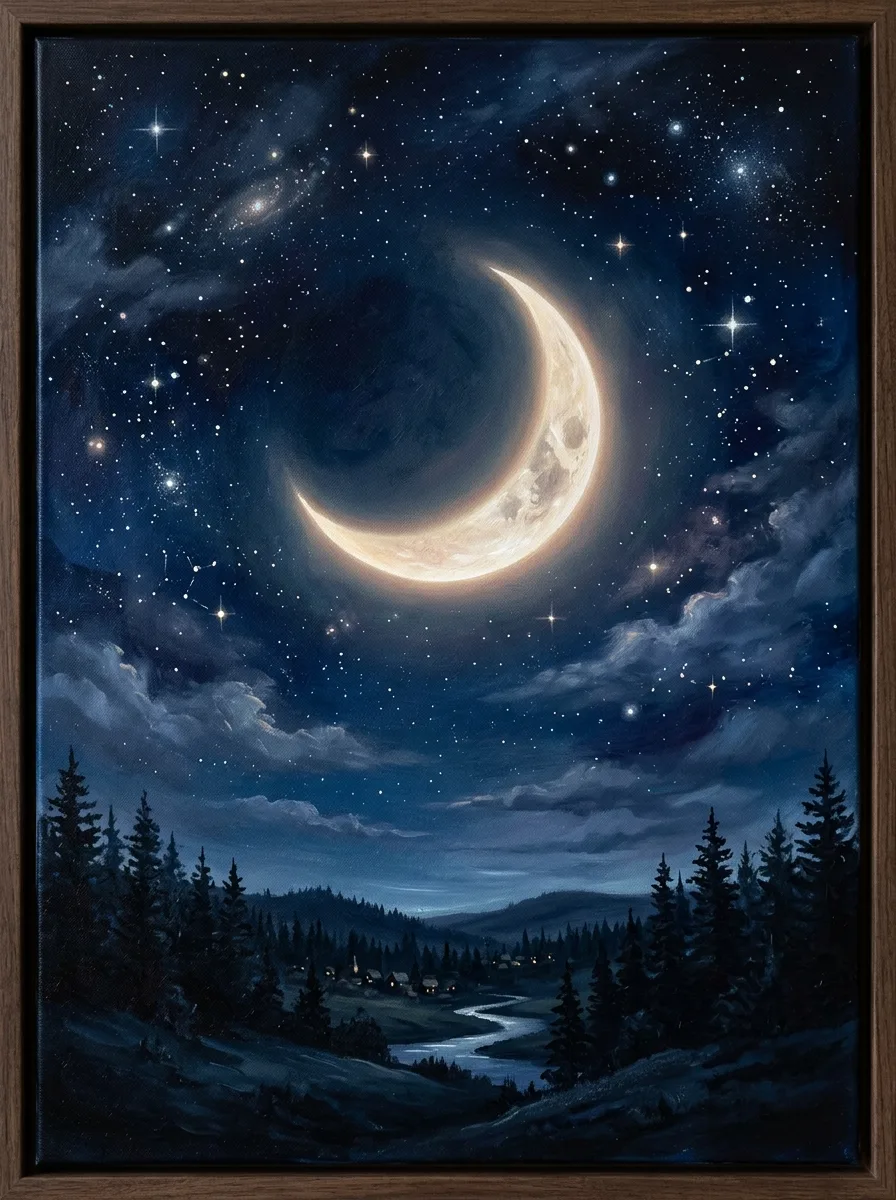
A crescent on a dark sky is the simplest moon painting and a good first canvas. Paint the background in navy or blue-black acrylic and let it dry. Draw the crescent lightly with chalk, then fill it with pale yellow or cream. For a soft glow, dry-brush a little of the same color just outside the outer edge.
Good to know: a crescent is the sliver left between two overlapping circles, so trace a jar lid twice, shifting it sideways the second time, for a clean shape.
2. Glowing Full Moon
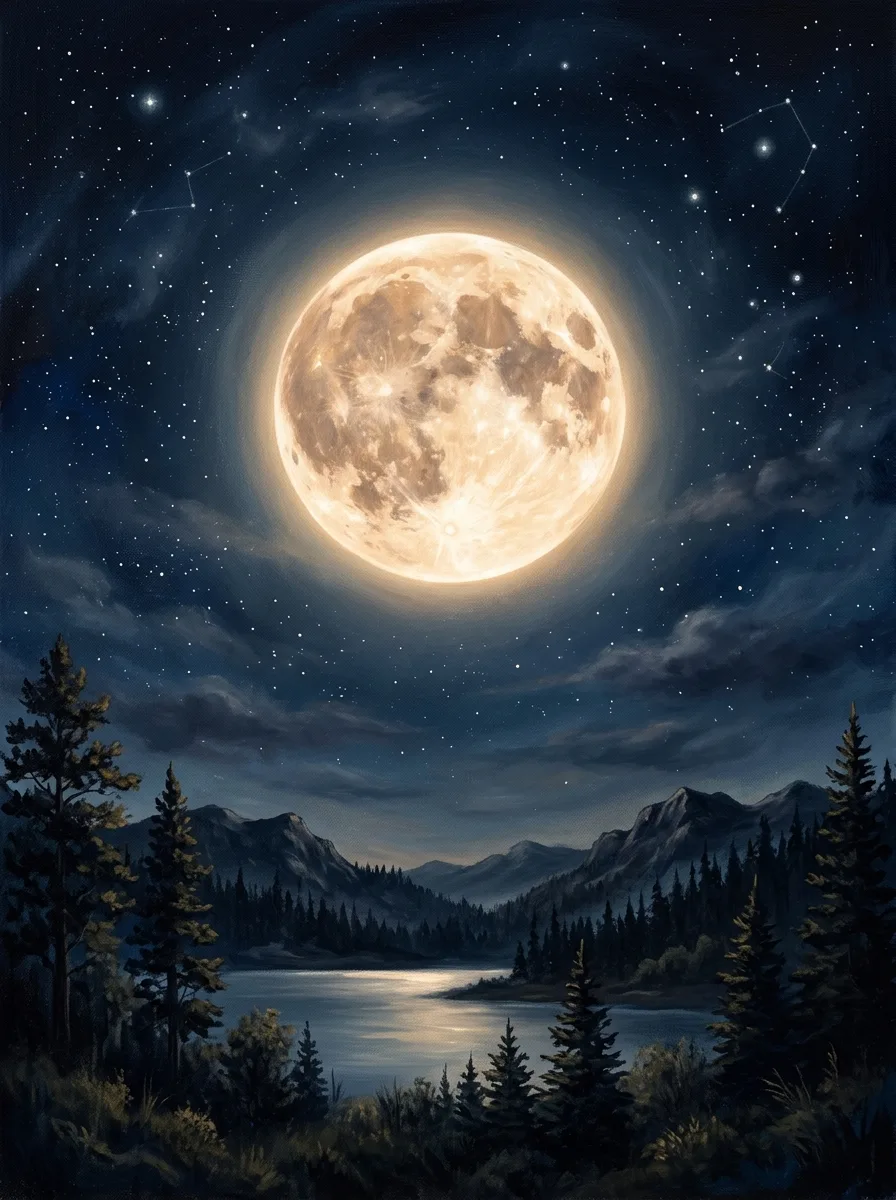
A large full moon needs a round shape, a few soft gray patches and a halo. Trace a circle with a lid or compass on a dark, dry background and fill it with off-white. Dab in the darker patches with a soft gray mixed from white and a touch of blue or black. Finish with a thin, pale glaze around the edge for the halo.
Good to know: copy the dark patches from a photo of the real full moon; because the same side always faces Earth, the familiar pattern makes the painting look like the moon and not just a white disc.
3. Watercolor Moon
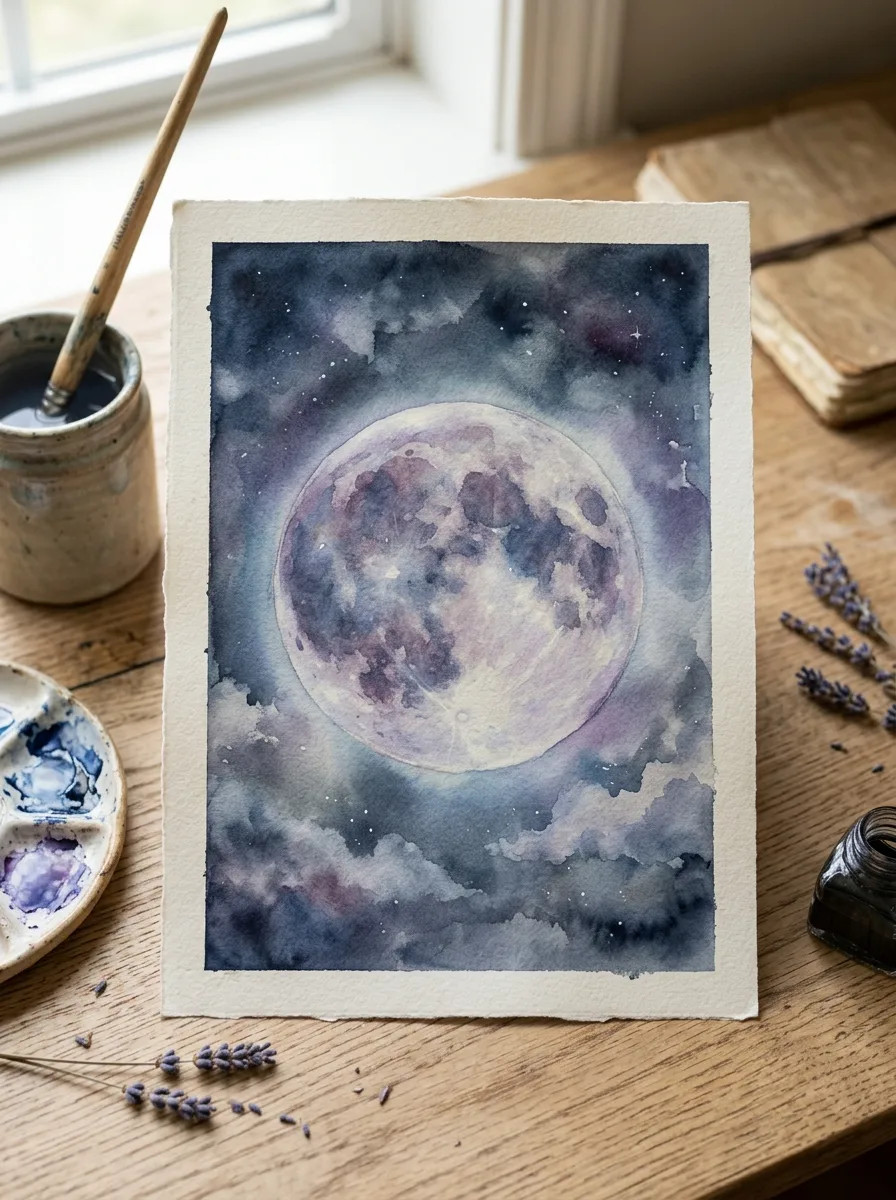
Watercolor gives a soft, hazy moon. On watercolor paper, cover the moon’s circle with masking fluid and let it dry. Wet the sky with clean water and drop in blues, purples and grays, letting them spread. When the paper is completely dry, rub the mask off with a clean finger or an eraser and tint the moon with a very pale gray wash.
Good to know: Winsor & Newton says to apply masking fluid only to dry paper and to use an old brush, washing it in soapy water straight after. Without a mask, you can lift a moon out of a damp wash with a clean, damp brush or a tissue.
4. Galaxy Moon
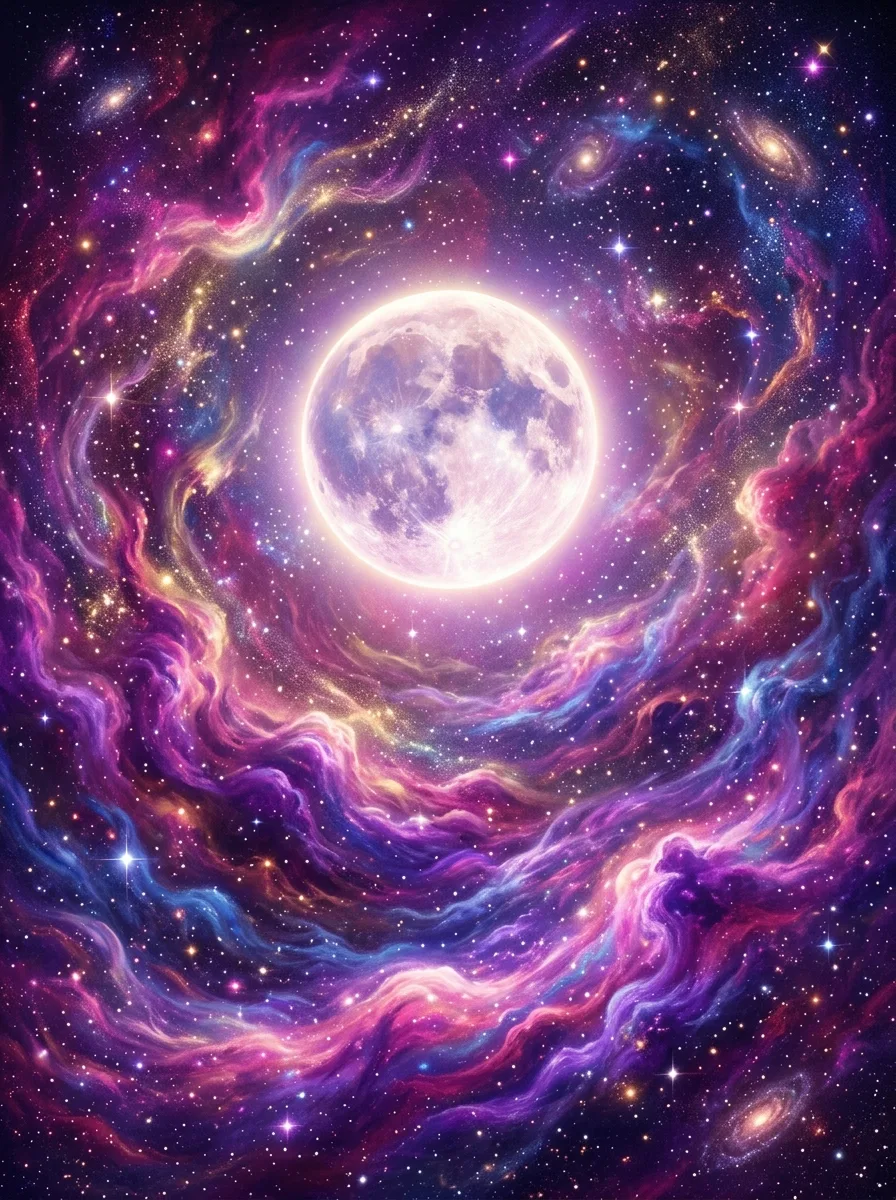
A galaxy moon sets a pale moon against blended blue, purple and pink. Paint the sky in loose patches of dark blue and purple, then sponge lighter pink and violet clouds over the top for a nebula. Add the moon once the background is dry, then flick white stars from an old toothbrush. These star pattern painting ideas show more ways to paint stars.
Good to know: test the toothbrush on scrap paper first: drag your thumb across the bristles, and thin the white with a little water if it comes out in blobs.
5. Moon Phases Painting
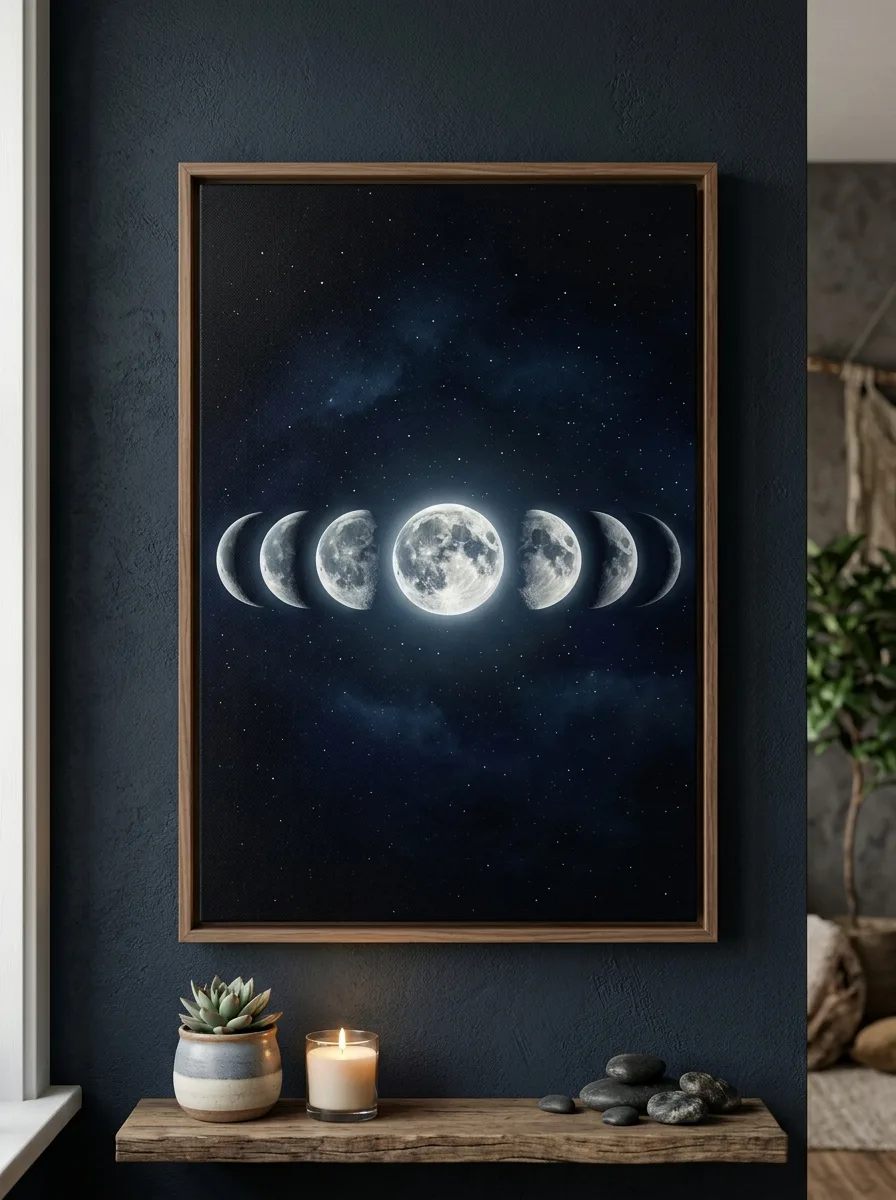
A row of phases suits a long, narrow canvas or panel. NASA lists the eight phases in order: new moon, waxing crescent, first quarter, waxing gibbous, full moon, waning gibbous, third quarter and waning crescent. Trace eight equal circles with a lid, paint them all pale gray, then paint the shadowed part of each one dark to match its phase.
Good to know: in the Northern Hemisphere the waxing phases are lit on the right and the waning phases on the left; reverse them for the Southern Hemisphere. Give the new moon a faint outline so the row stays complete.
6. Moon Over Mountains
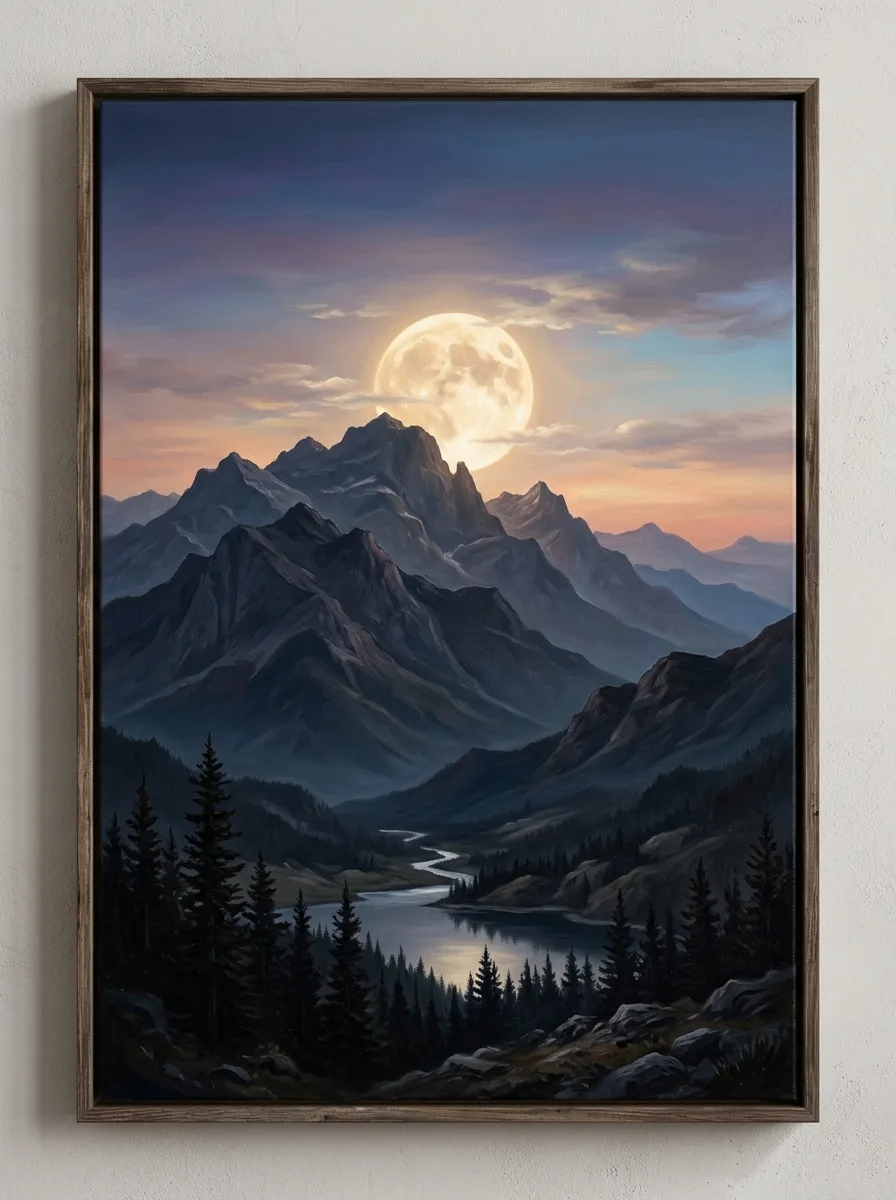
Paint a sky gradient from dark blue at the top to lighter blue near the horizon, then add the moon. Paint the mountain ridges in layers from back to front: the farthest ridge in a pale blue-gray, each nearer ridge darker, and the closest almost black. A few stars above the peaks finish the scene.
Good to know: making distant ridges lighter and bluer is called atmospheric perspective; it’s the simplest way to give a landscape depth.
7. Moon Over the Ocean
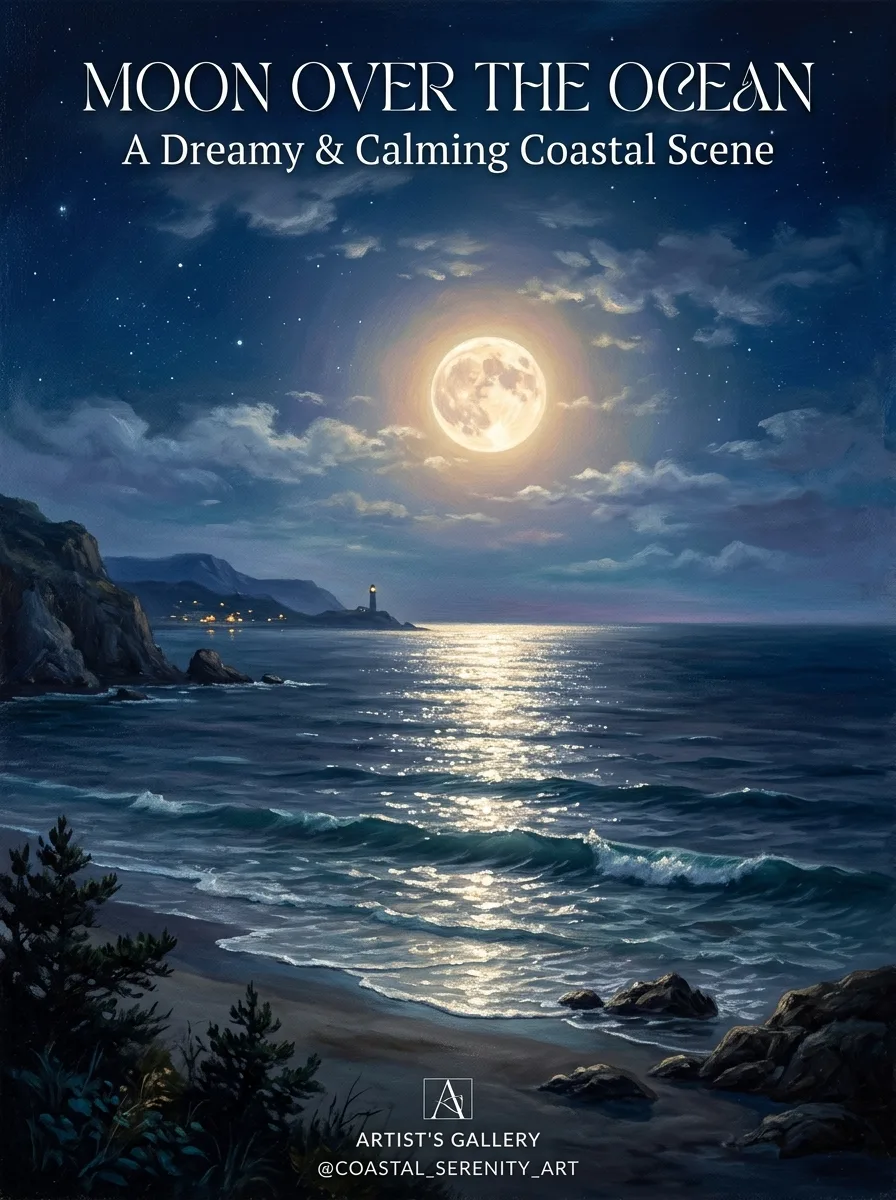
Place the horizon low on the canvas so the sky has room, and paint the moon a little above it. Paint the sea in dark blues, darkest at the bottom. Then paint the moonlight on the water as a broken column of short, horizontal strokes of pale yellow or white, running from the horizon straight down toward the viewer.
Good to know: keep the path of light directly below the moon; a reflection that drifts to one side looks wrong.
8. Cat and Moon Silhouette
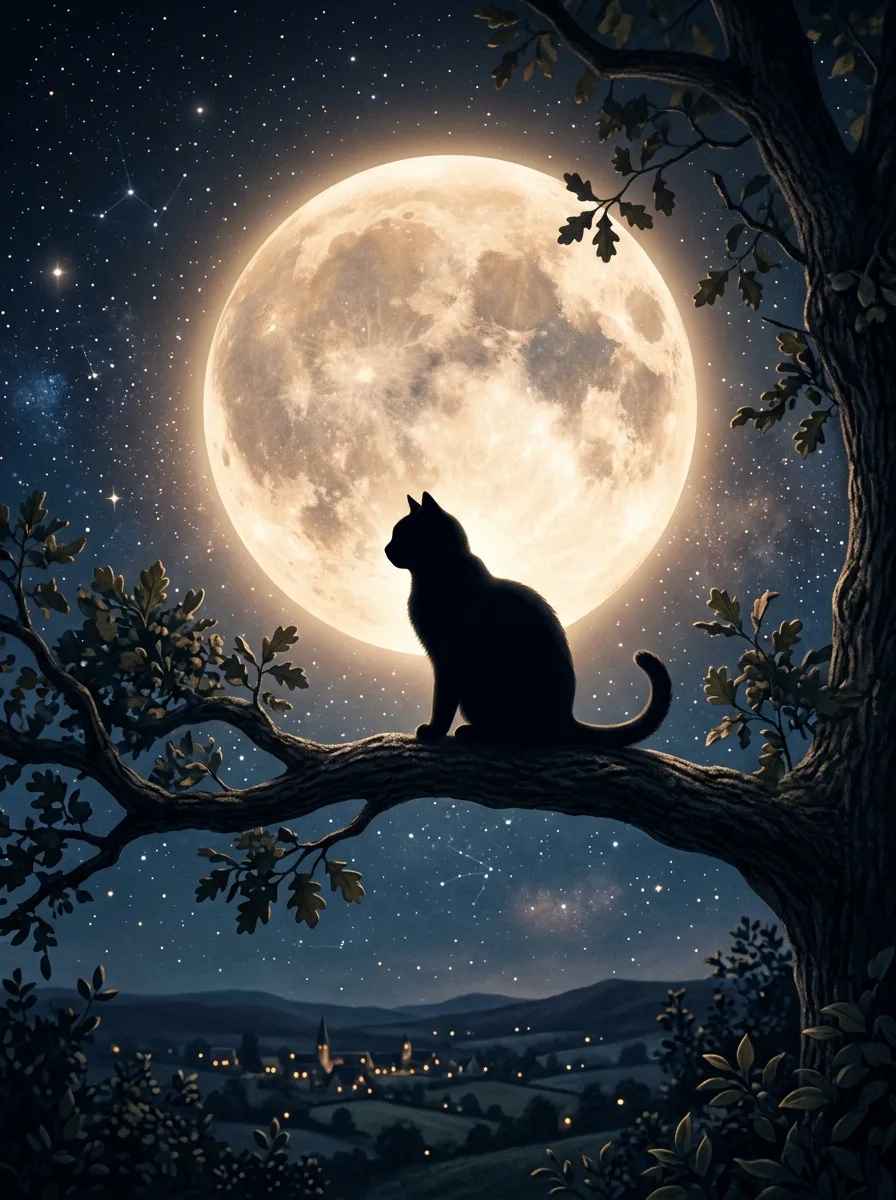
A black cat in front of a large moon needs two colors and one bold shape. Paint a pale moon on a dark blue sky and let it dry. Draw the cat in profile with chalk, sitting on a wall or roof edge with its head tilted up, then fill it with solid black. Let part of the cat overlap the moon so its outline stands out.
Good to know: if freehand feels hard, cut the cat from paper, trace around it and fill it in; the ears, tail and a few whiskers are what make the shape read as a cat.
9. Floral Crescent Moon
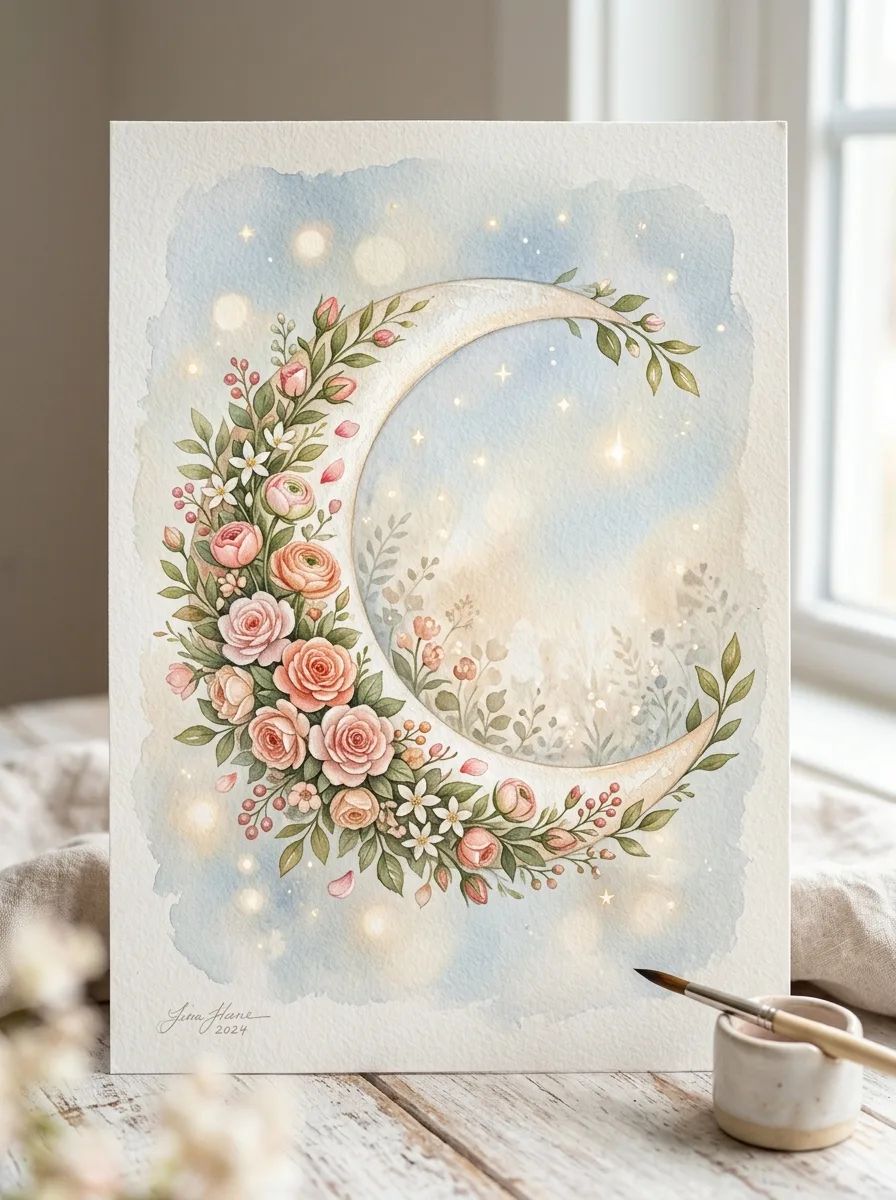
This design runs a line of small flowers and leaves along the inner curve of a crescent. Paint the crescent first in pale gold or cream on a dark or light background. When it’s dry, paint small roses as spirals, simple five-petal blooms and leaves along the curve, with the largest flowers in the middle and smaller ones toward the tips.
Good to know: keep the flowers a little softer in color than the moon, or the crescent shape gets lost; painted small on watercolor paper, the design also works for handmade cards.
10. Forest and Moon Silhouette
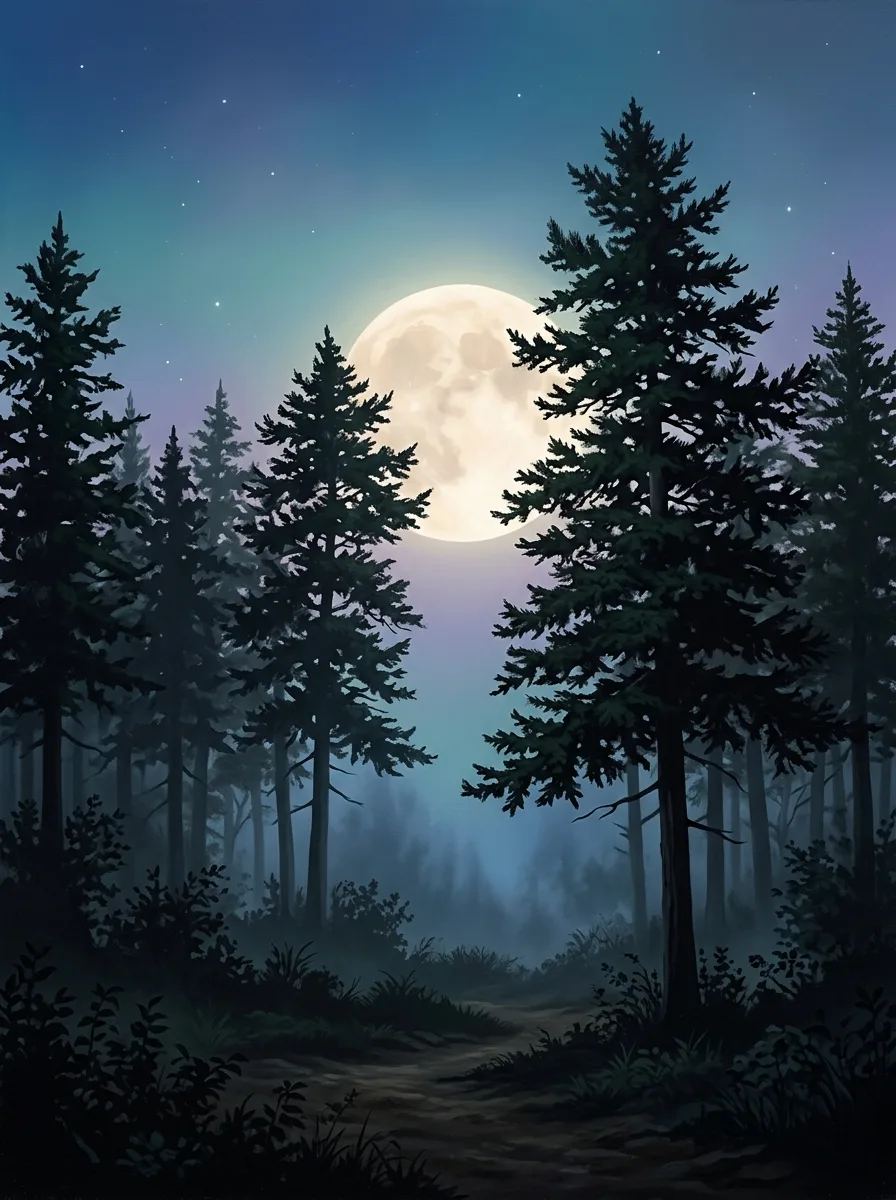
Paint a sky gradient, add the moon and let it dry. Paint a row of pine trees across the bottom in black or very dark green: a vertical trunk line, then short, slightly downward strokes that get wider toward the base. Vary the heights and spacing, and let a couple of trees overlap the lower edge of the moon.
Good to know: the corner of a fan brush or a small flat brush, tapped downward along the trunk, gives quick pine branches; start at the top and work down.
11. Gold Leaf Moon
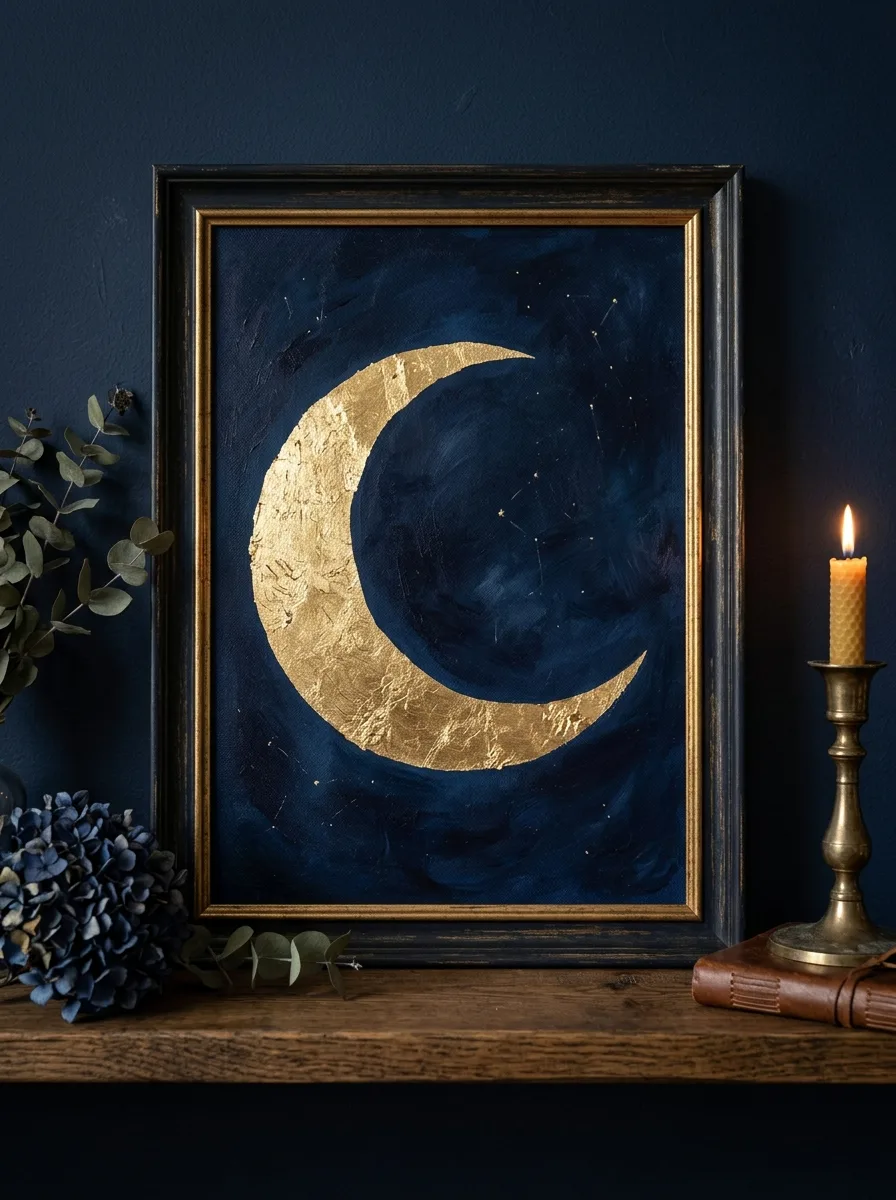
Metal leaf gives the moon a shine that changes with the light. Paint a dark background and let it dry. Brush leaf adhesive onto the moon shape, wait until it turns tacky as the label directs, then lay the leaf on, press it down with a soft brush and brush away the loose flakes. Gold metallic paint is a simpler alternative.
Good to know: most craft gold leaf is imitation leaf, a copper and zinc alloy that can tarnish, which is why leaf makers such as Speedball sell a sealer to protect it; seal it once the leaf is down.
12. Pastel Dreamy Moon
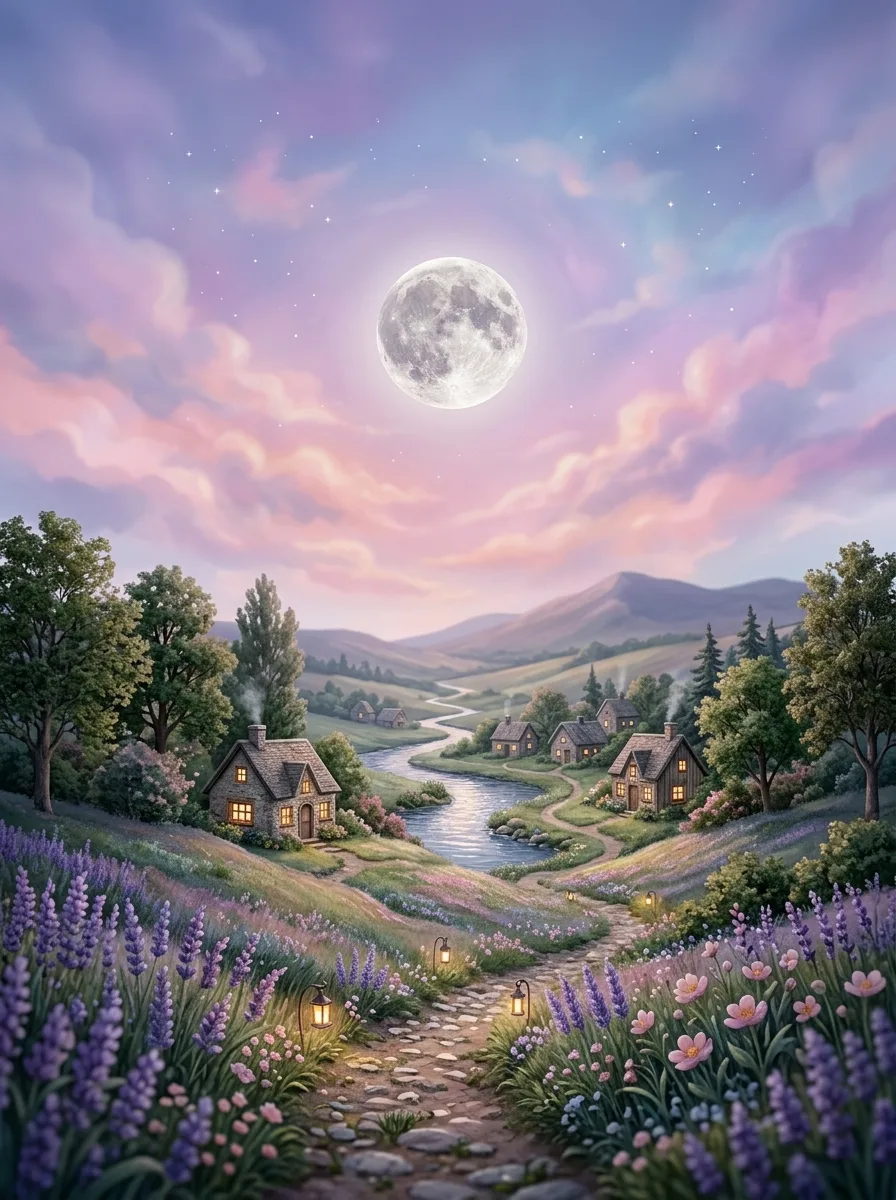
A pastel moon uses soft tints instead of a dark night sky. Mix each sky color with plenty of white, such as pink, lilac and pale blue, and paint them in horizontal bands, blending where they meet while the paint is wet. Add a moon in cream or white; it shows up best against the deeper lilac or blue band.
Good to know: mix more of each tint than you think you need, because matching a pastel later is hard, and blend one band edge at a time before the acrylic sets.
13. Moon and Clouds
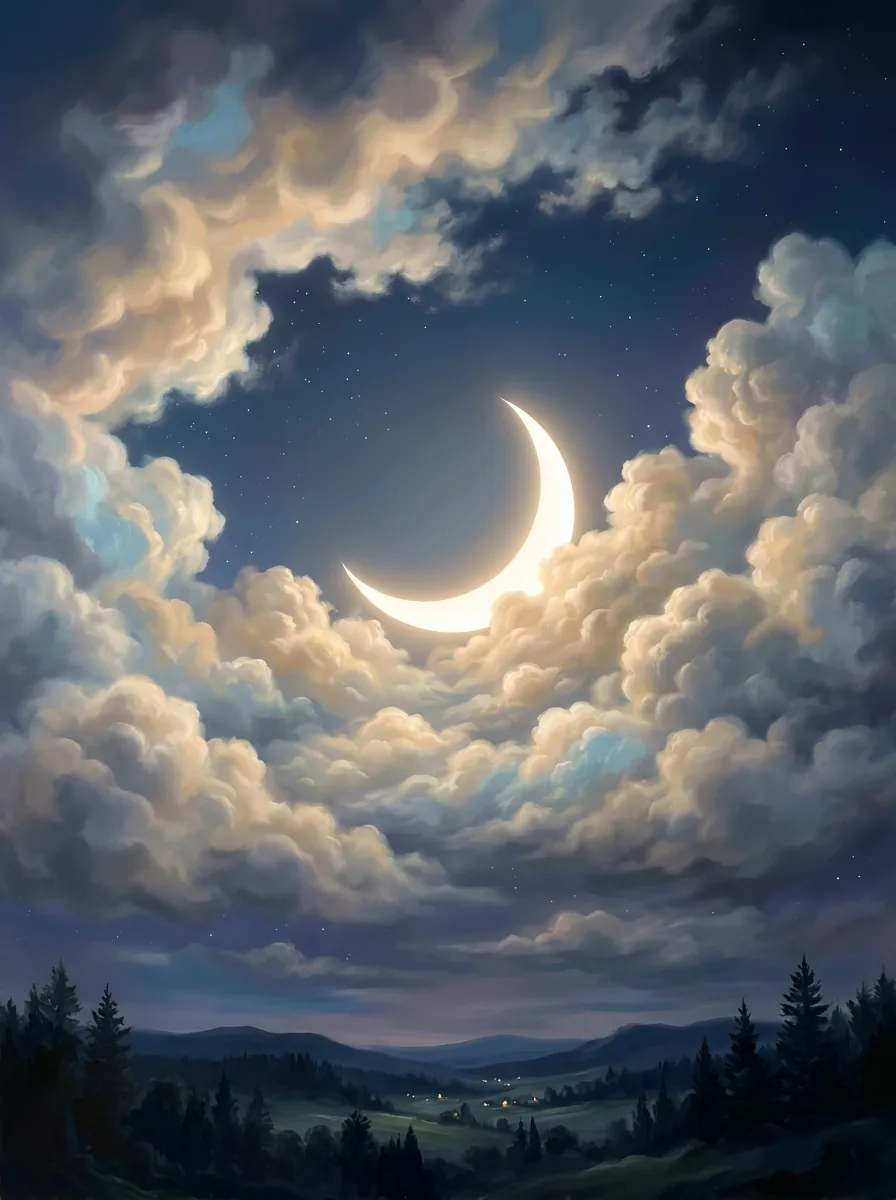
Paint a gray-blue night sky and a pale moon, then let them dry. Paint clouds over part of the moon with a mix of the sky color and white, keeping the edges soft by dabbing with a dry brush or sponge. Add a thin, brighter edge along the side of each cloud nearest the moon, where the light catches it.
Good to know: clouds in front of the moon should be darker than the moon itself; if they’re lighter, the moon looks as if it’s in front of the clouds.
14. Moon Reflection on Water
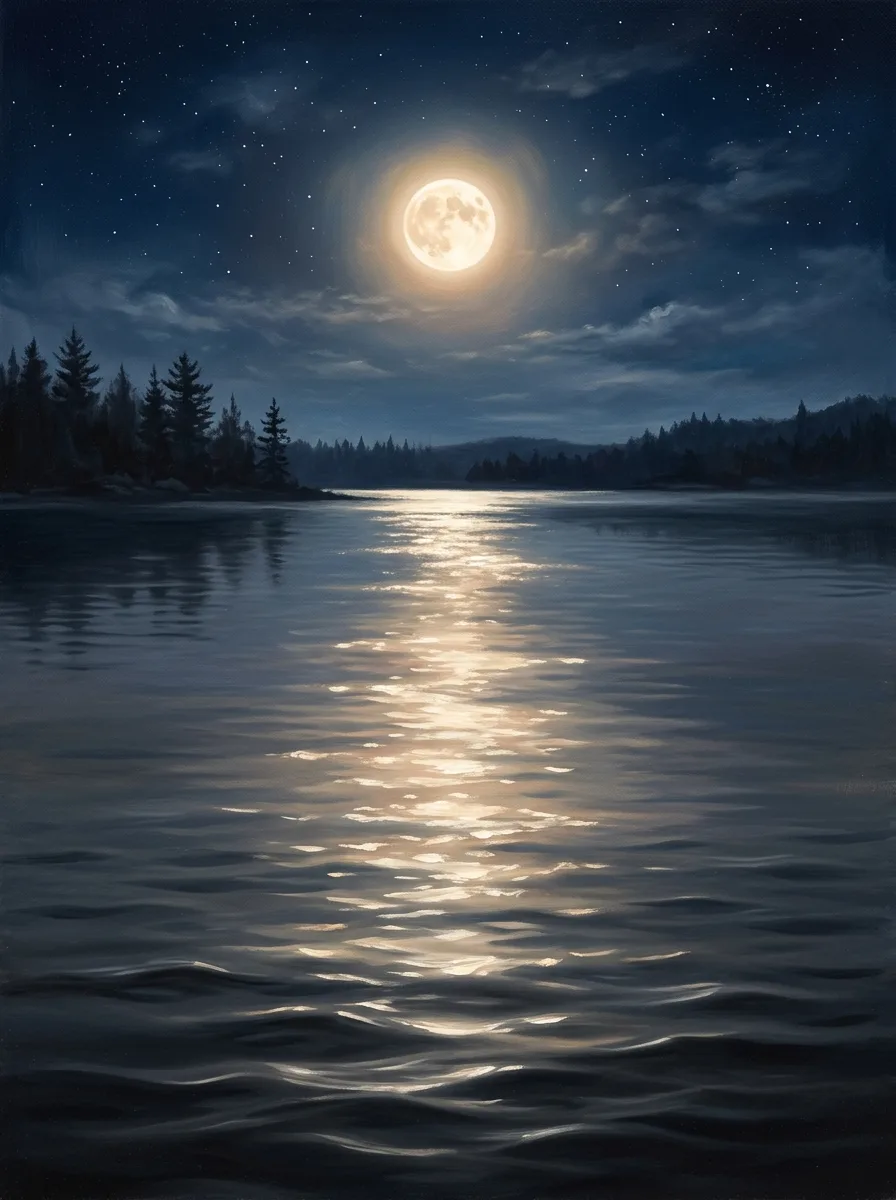
A still lake makes a mirror image. Paint the sky and moon in the upper half and a dark band of trees or hills along the far shore. Paint the water in slightly darker versions of the sky colors, then add the moon’s reflection directly below the moon, broken into a few horizontal lines to suggest gentle ripples.
Good to know: on still water the reflection sits directly below the moon, about as far below the horizon as the moon is above it, and a little darker than the moon.
15. Sleeping Moon Face
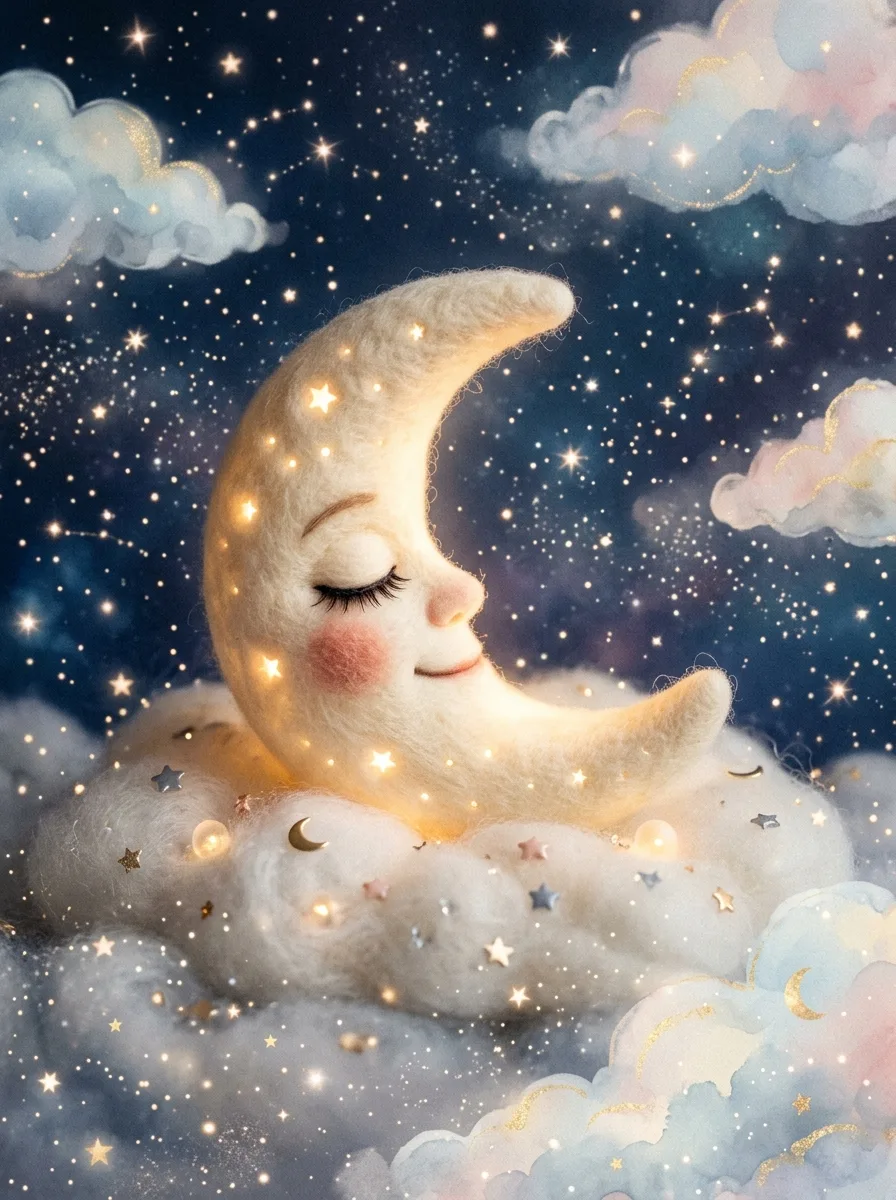
A crescent with a sleeping face suits a child’s room. Paint the crescent in cream or pale yellow on a soft blue background. On the inner curve, paint a closed eye as a downward curve with lashes, a small nose bump, a smile and a pink cheek, then dot small stars around it. For more projects to paint with children, see these summer art projects for kids.
Good to know: if a child helps, give them the stars and the background, and do the fine face lines yourself with a small round brush.
16. Textured Palette Knife Moon
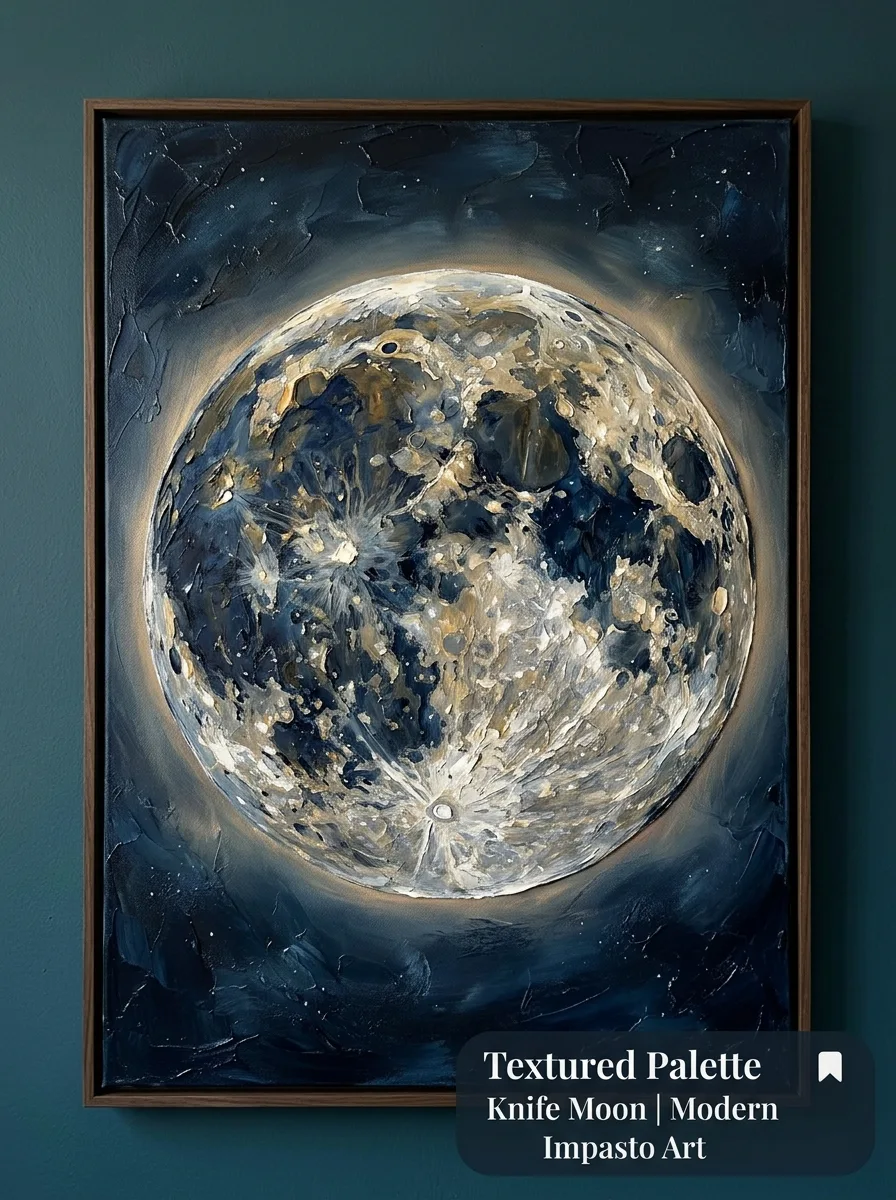
Thick paint applied with a palette knife gives the moon real texture. Keep the sky smooth and let it dry. Spread heavy-body acrylic or a texture paste onto the moon in short, overlapping strokes, building ridges for craters. Once it’s dry, brush on a thin gray glaze and wipe it back so it settles in the low spots, leaving the ridges light.
Good to know: thick acrylic takes much longer to dry through than it seems; Golden advises waiting a week or two before varnishing thick, textured areas.
17. Moon and Hot Air Balloon
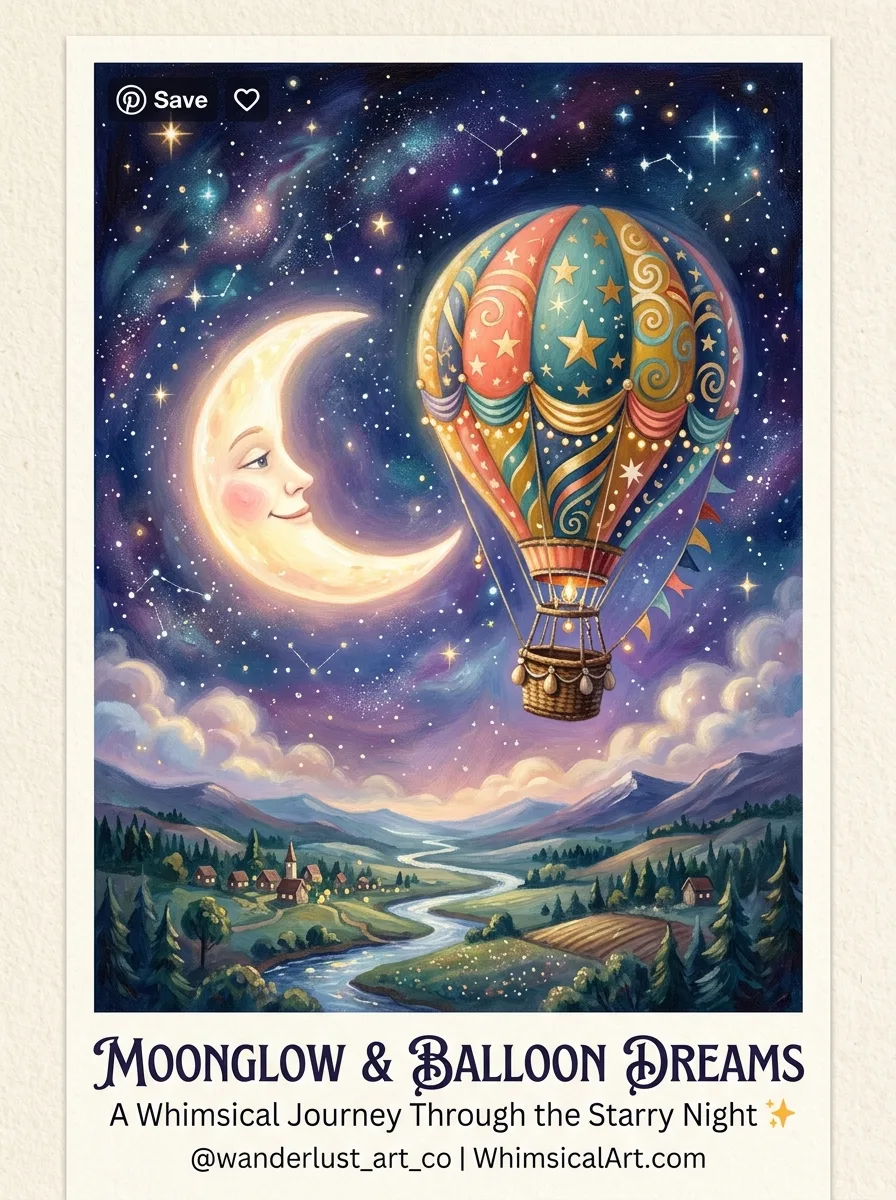
Paint a large moon on a night sky, then a hot air balloon drifting beside or in front of it. The balloon is an upside-down teardrop divided into curved vertical stripes, with a small basket hanging from two thin lines. Use warm colors such as red, orange and yellow so the balloon stands out against the cool sky.
Good to know: warm colors tend to look closer and cool colors farther away, which is why a warm balloon stands forward from a blue sky.
18. Moon and Owl Silhouette
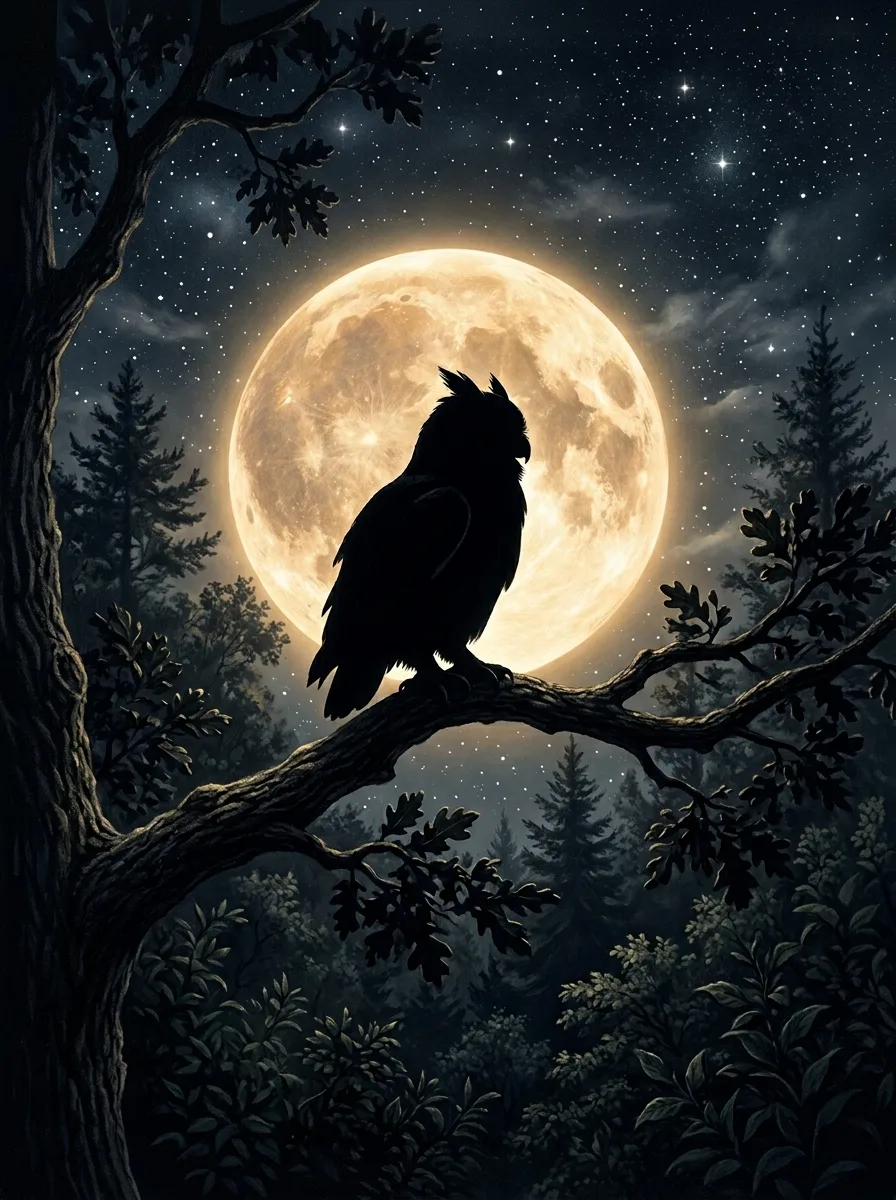
Paint a large moon on a dark gradient sky and let it dry. Add a bare branch across the lower part of the moon, then an owl perched on it: a rounded body, a slightly flattened head, ear tufts if you’re painting a horned owl, and a short tail. Fill the shapes with solid black and add two small pale eyes.
Good to know: make the branch thinner and more twisted toward its tip, and let it run past the moon’s edge so it doesn’t look pasted on.
19. Blue Moon Painting
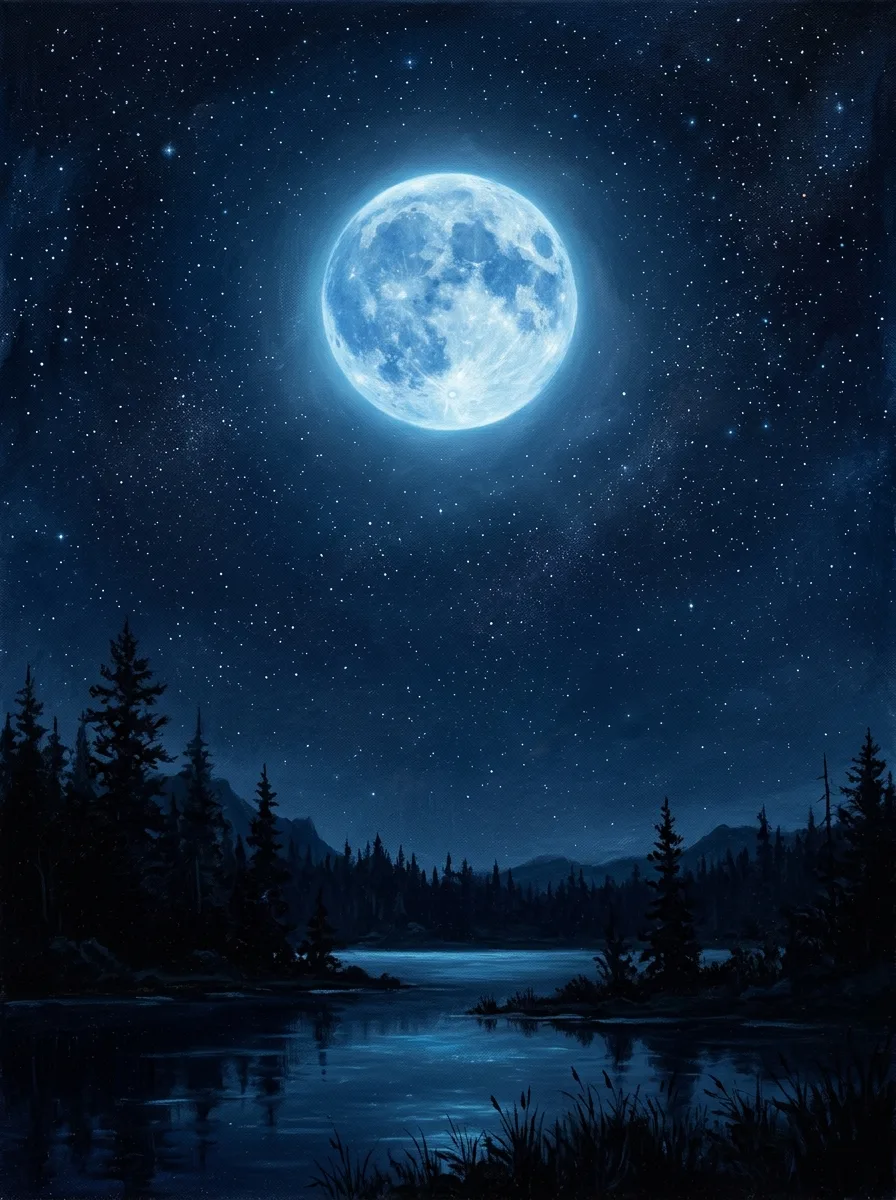
Paint a navy or black sky and a round moon in pale blue and gray, blending a soft blue glow around the edge, then add a few white stars. The blue is artistic license: NASA explains that the name blue moon, used today for the second full moon in a calendar month, refers to timing, not color.
Good to know: keep one side of the moon slightly lighter and the other slightly darker so it looks round, not flat.
20. Moonlit Meadow Painting
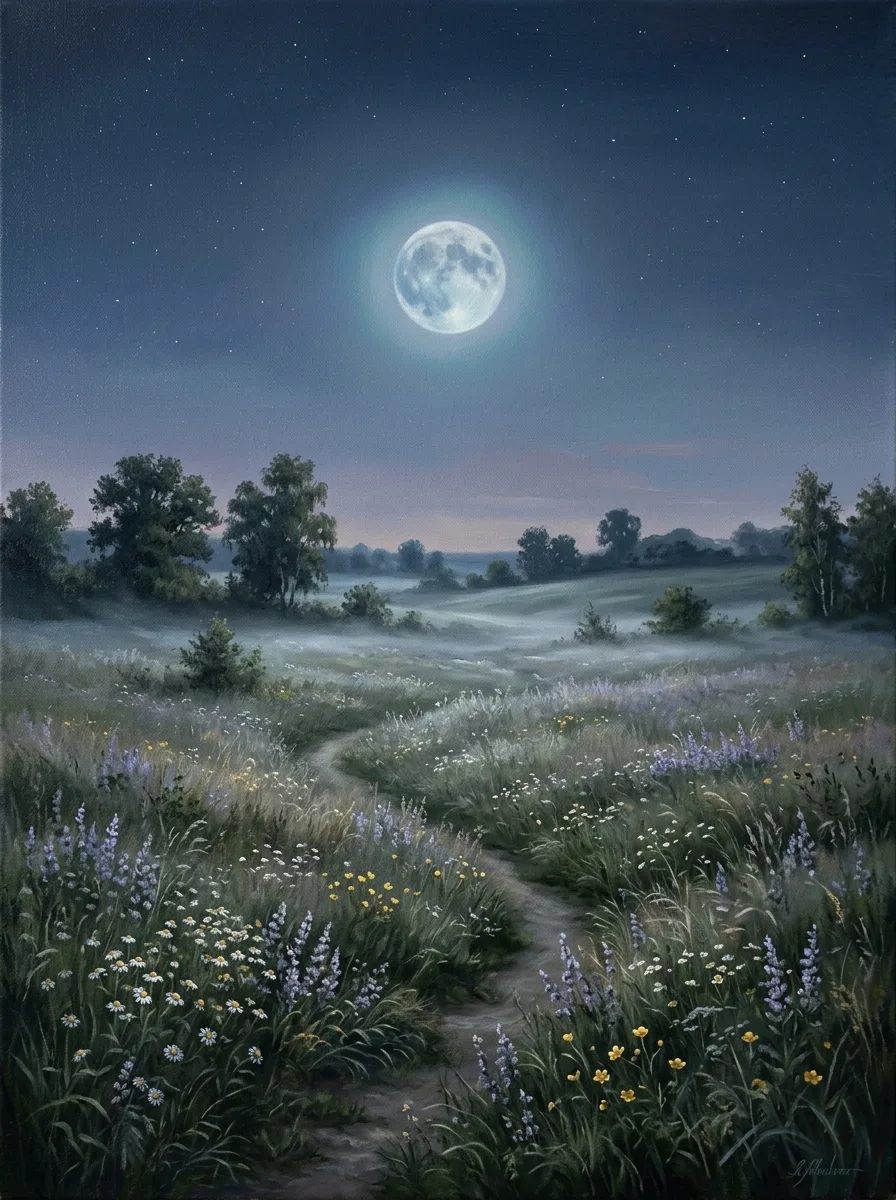
Paint a sky gradient and a moon near the top, then a dark meadow across the lower third. Flick grass upward with a liner or small round brush, in dark green with a lighter green on some tips. Dot tiny pale flowers among the grass, and add fireflies as small yellow dots with a faint glow around them.
Good to know: for fireflies, paint a soft, thin halo of pale yellow first, then a tiny dot of yellow-white in the center once the halo is dry.
21. Moon and Stars Ring
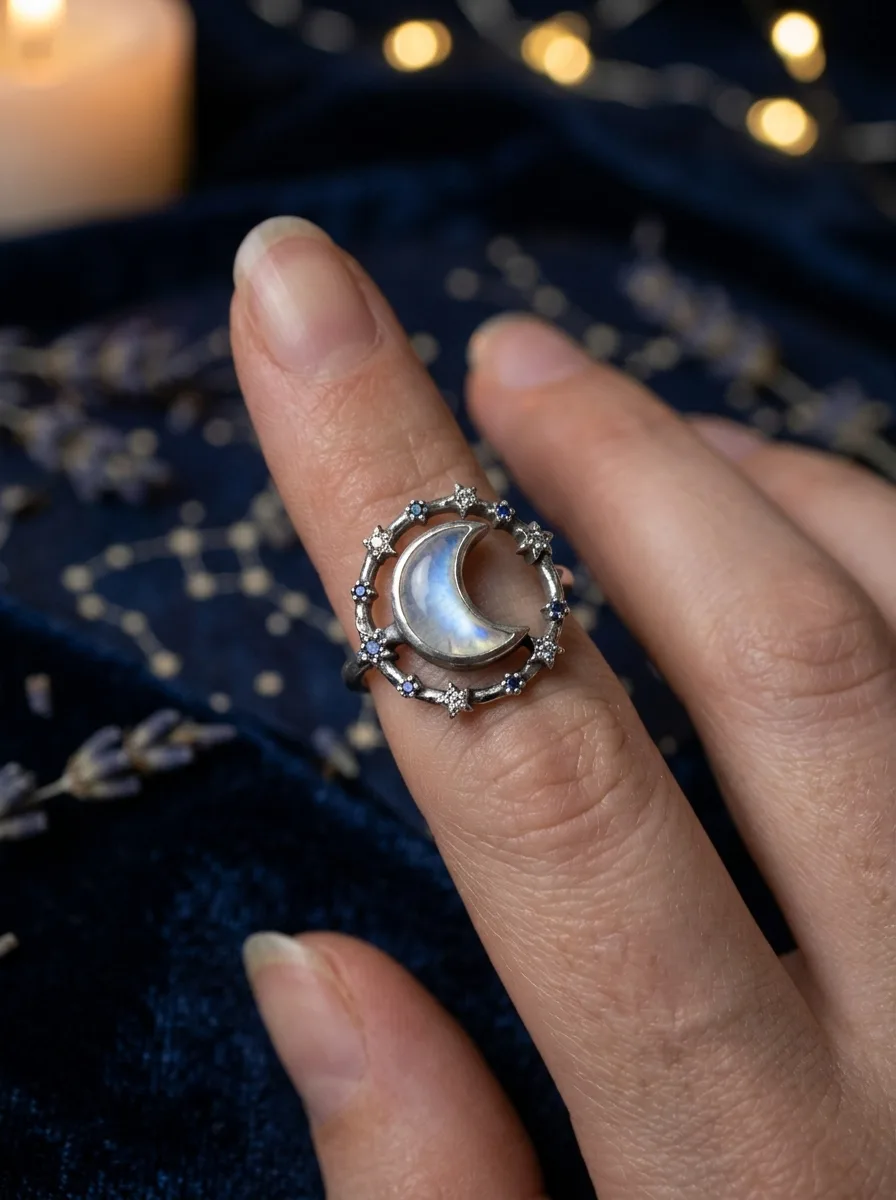
Paint a dark sky and a moon in the center. Draw a light circle around it with a compass, a large plate or a pencil tied to a string. Mark evenly spaced points around the circle like the hours on a clock, then paint a small star at each mark. Add a faint halo behind the moon to finish.
Good to know: for even spacing, mark the 12, 3, 6 and 9 positions first, then divide each quarter into equal steps.
Common mistakes to avoid
- Painting stars inside the dark part of a crescent; the unlit part of the moon still blocks the stars behind it.
- Placing the moon’s reflection off to one side instead of directly below it.
- Lighting the phases on the wrong side for your hemisphere.
- Blending acrylic sky colors after they’ve started to dry, which leaves streaks.
- Varnishing thick palette-knife paint before it has dried through.
- Leaving imitation gold leaf unsealed, so it tarnishes.
Moon painting FAQs
What paint is best for a beginner moon painting?
Acrylic on a canvas panel. It dries quickly, covers mistakes and cleans up with water while it’s wet.
How do you make a painted moon look like it’s glowing?
Keep the moon the lightest thing in the painting, make the sky slightly lighter right around it and darkest in the corners, and add a thin, pale halo glaze around the edge.
Which side of a crescent moon is lit?
In the Northern Hemisphere, a waxing crescent, seen in the evening, is lit on the right, and a waning crescent on the left. In the Southern Hemisphere it’s the other way around.
Do I need to varnish a moon painting?
It’s optional, but varnish protects acrylic from dust and handling. Wait until the paint has fully dried, and use spray varnish outdoors or with plenty of ventilation.


3 Comments