

24 Mud Kitchen Ideas for Sensory Outdoor Play
A mud kitchen is one of the best gifts you can give a child, offering hours of open-ended, screen-free outdoor play that develops creativity, sensory awareness, fine motor skills, and a deep love of the natural world from a very early age. Research consistently shows that children who engage in outdoor sensory play are more imaginative, more resilient, and more confident than those who spend their play time in structured, indoor environments. Whether you have a large garden or a compact backyard, there is a mud kitchen design that will work perfectly for your space and your budget. These 24 mud kitchen ideas for sensory outdoor play will inspire you to create a magical outdoor play space that children will return to again and again throughout every season of childhood.
1. Classic Wooden Mud Kitchen
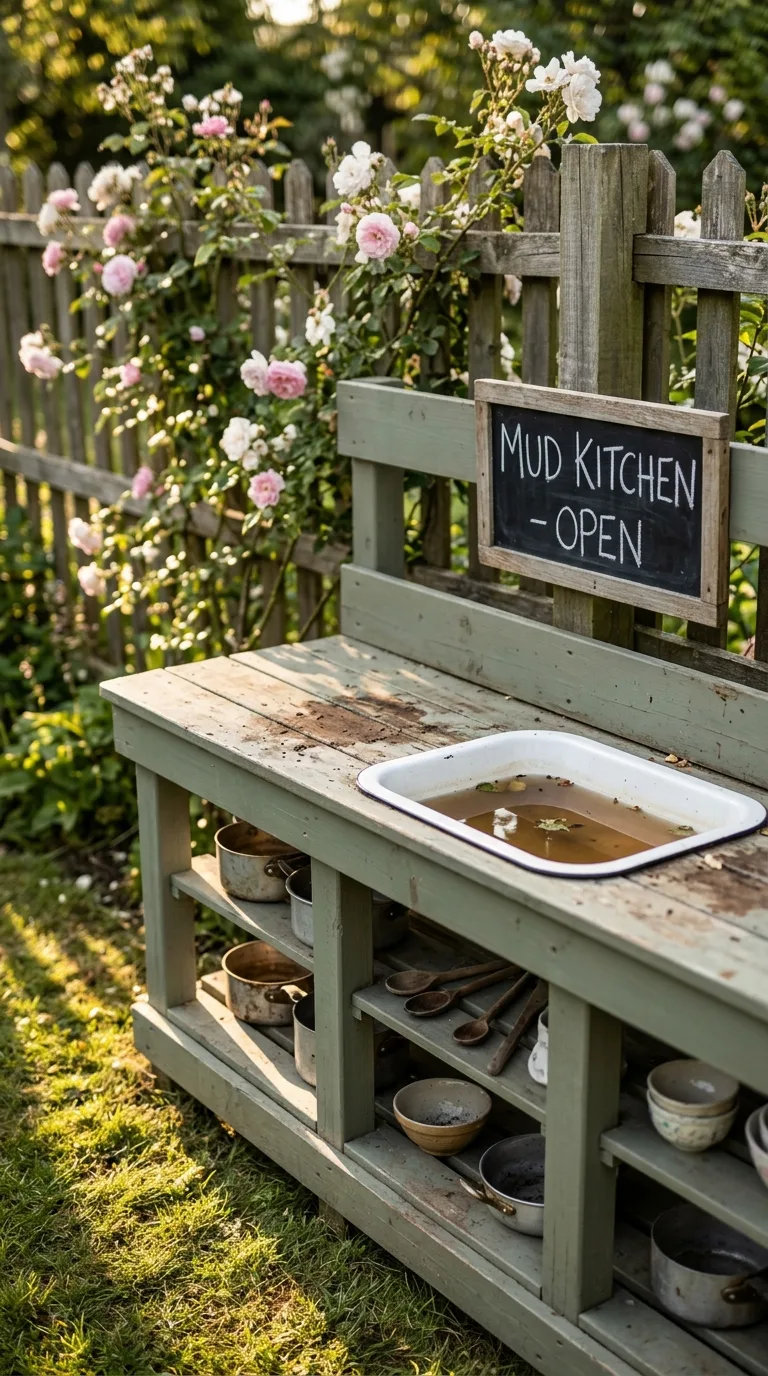
A classic wooden mud kitchen is the most beloved and timeless design in outdoor sensory play equipment, and it earns that status through the simple, honest beauty of natural timber combined with the boundless imaginative possibilities it offers every child who stands in front of it. Built from treated or naturally weather-resistant timber like cedar or pine, a classic mud kitchen typically features a countertop work surface, a sunken basin for water and mud mixing, open shelving below for pots and utensils, and hooks for hanging tools.
The beauty of a classic wooden mud kitchen design is that it can be built to suit the exact height of the children who will use it most, ensuring comfortable play posture and reducing frustration during extended play sessions. Painting it in a cheerful color or leaving the natural timber to weather to a beautiful silver-gray are both valid and lovely finishing choices. Adding a small wooden sign above the kitchen with the child’s name or a playful menu board detail personalizes the space and makes every play session feel like a special event in a child’s own outdoor world.
2. Pallet Wood Mud Kitchen
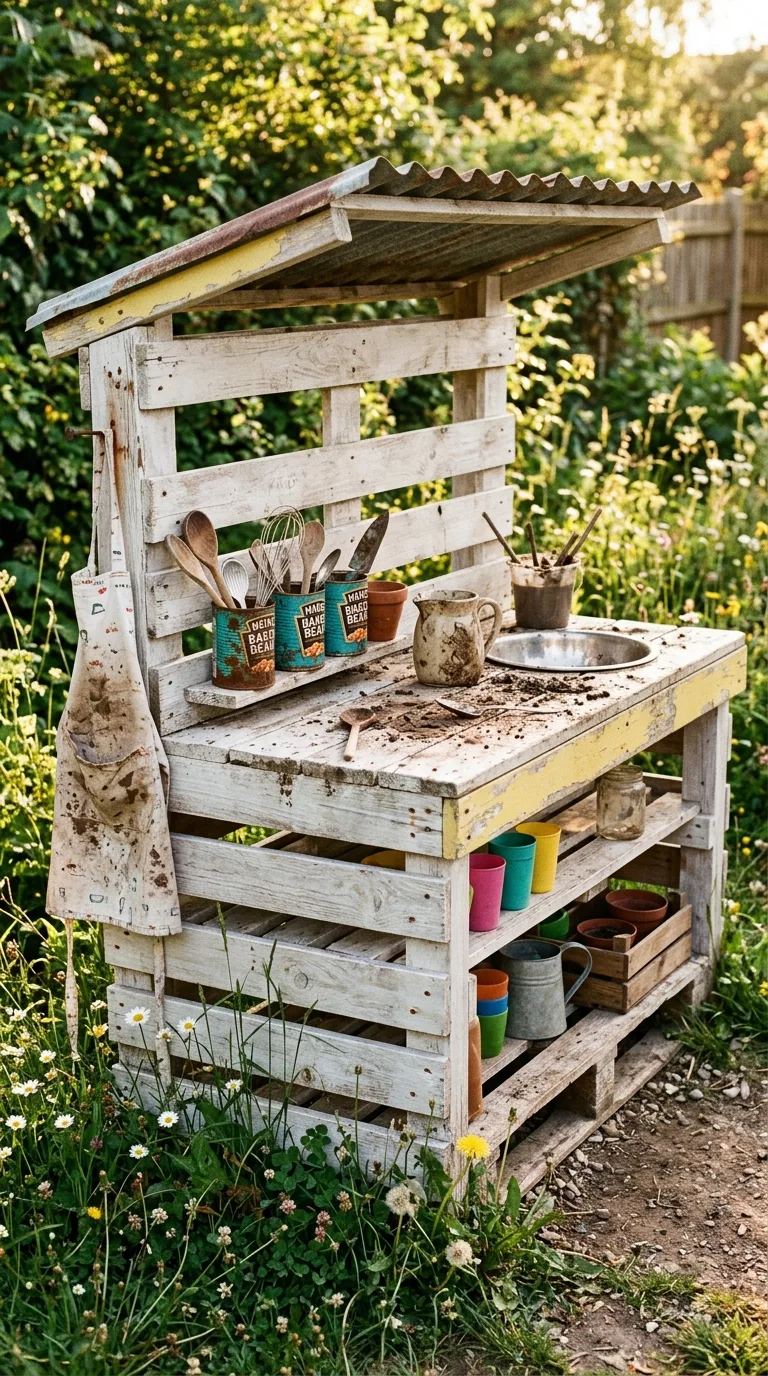
A mud kitchen built from recycled wooden pallets is a wonderfully resourceful and creative approach to outdoor sensory play space design that costs very little to build while delivering enormous play value. Pallets can be stacked, joined, and configured in countless ways to create a kitchen structure of almost any size, shape, and complexity. Their open slatted surfaces allow rainwater to drain through naturally, reducing the risk of wood rot and keeping the kitchen structure sound through multiple seasons of outdoor use.
Sanding pallet surfaces smooth before construction eliminates splinter risks and creates a much more child-friendly surface quality. Painting the finished pallet mud kitchen in a bright, cheerful exterior paint color transforms raw reclaimed timber into a vibrant, characterful play kitchen that looks genuinely purposeful and designed rather than improvised. Adding a small corrugated metal or timber offcut roof over the kitchen gives it a market stall quality that children find irresistibly appealing and that also provides practical protection from rain and harsh sun during play.
3. Mud Kitchen with Running Water
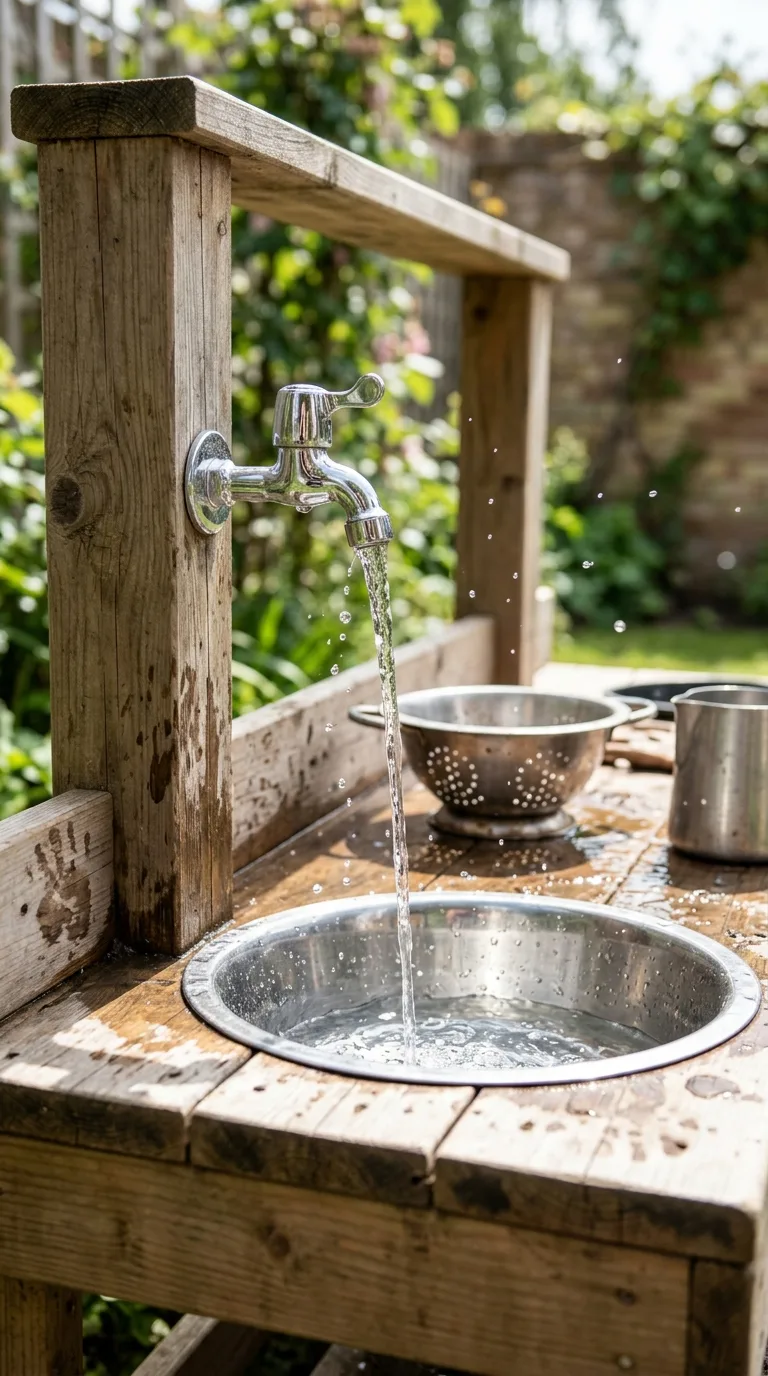
A mud kitchen with a genuine running water supply is the ultimate upgrade to any outdoor sensory play space, transforming the mud kitchen from a simple mixing station into a fully functional outdoor kitchen experience that children will use with absolute intensity and delight. Running water can be supplied via a simple garden hose connection with a child-height tap, a small hand pump connected to a buried water reservoir, or a gravity-fed system using an elevated water container that delivers a gentle, controllable flow.
The magic of a mud kitchen with real running water lies in the immediate sensory feedback it provides. Children can regulate water temperature by mixing hot and cold supplies if a proper plumbed tap is installed, or simply control flow rate with a simple outdoor tap. Adding a proper drainage channel beneath the mud kitchen that leads water safely away from the kitchen area keeps the surrounding ground from becoming a swamp after extended play sessions. Water play combined with mud, sand, and natural materials creates a complete sensory play environment of extraordinary richness and educational value.
4. Two-Story Mud Kitchen
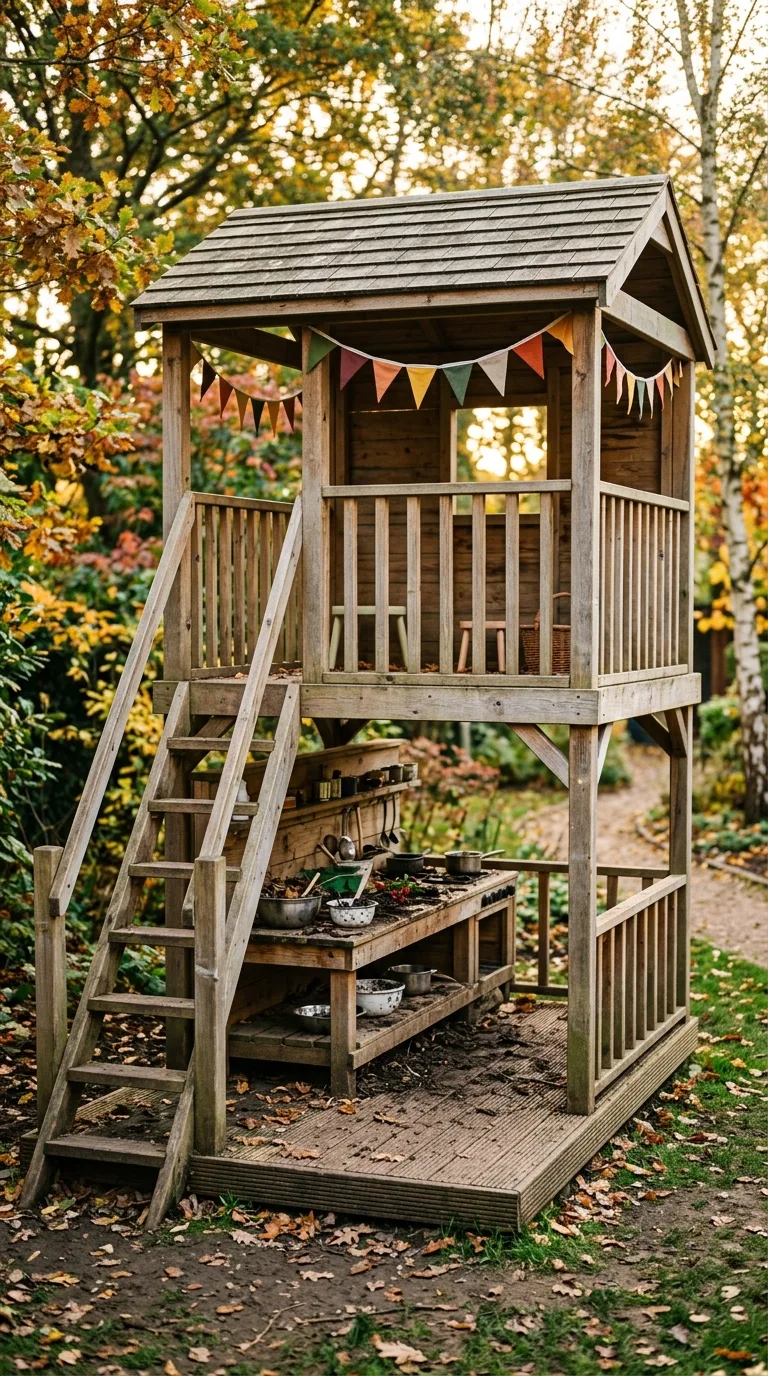
A two-story mud kitchen is an ambitious and genuinely spectacular outdoor play structure that combines the functionality of a ground-level mud kitchen with an upper level platform or loft space that children can climb to for a completely different play perspective. The upper level might serve as a lookout tower, a small reading nook, a pretend restaurant dining area, or simply an exciting high vantage point from which to survey the garden. The two levels work together to create a rich, layered play environment that supports multiple children simultaneously.
Building a two-story mud kitchen safely requires careful attention to structural integrity, railing height, and step dimensions appropriate for the age group of children who will use it. Using pressure-treated structural timber for the posts and frame and adding a weather-resistant roof over both levels protects the structure from the elements and significantly extends its usable lifespan. Children who have access to a well-built two-story mud kitchen tend to use it as their primary outdoor play base throughout their entire childhood, making it one of the best long-term outdoor play investments a family can make.
5. Mud Kitchen with Chalkboard Menu
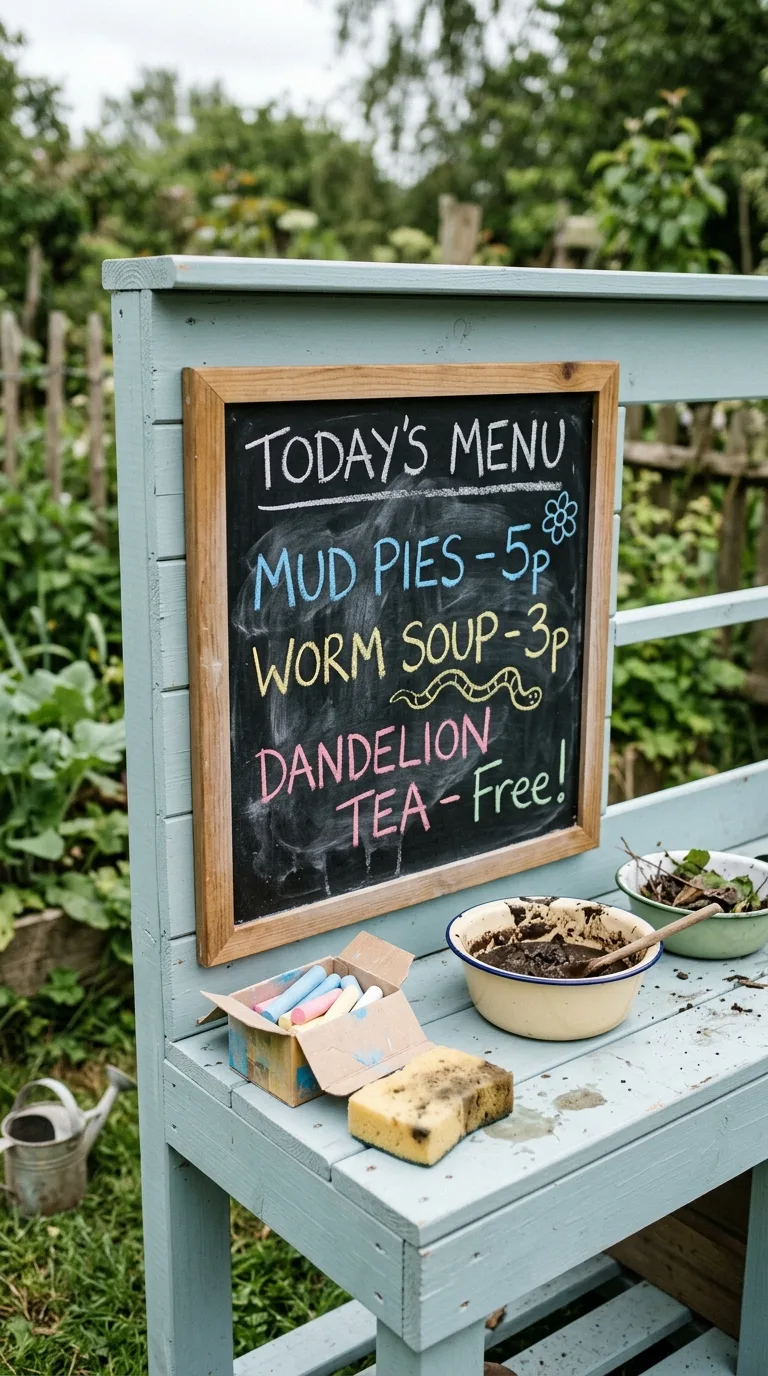
Adding a chalkboard panel to a mud kitchen is one of the simplest and most delightful enhancements possible, providing a surface where children can write their daily menu, draw their recipes, keep a tally of imaginary customers, and practice early literacy and numeracy skills through completely self-motivated, playful activity. A chalkboard painted directly onto a smooth timber panel on the front or side of the mud kitchen, or a framed slate board hung at child height, both work beautifully and become one of the most used features of the entire kitchen.
Children who are given chalkboard space on their mud kitchen consistently use it to organize and extend their play in ways that surprise and delight observing adults. A list of today’s specials, a price board for imaginary customers, a drawing of the mud pie they are currently making, or the names of ingredients they have collected from the garden all appear with joyful regularity. Providing a selection of chalk colors and a small damp sponge for erasing encourages even more enthusiastic use of this simple, brilliant, and completely open-ended play addition.
6. Mud Kitchen with Herb Garden Planting
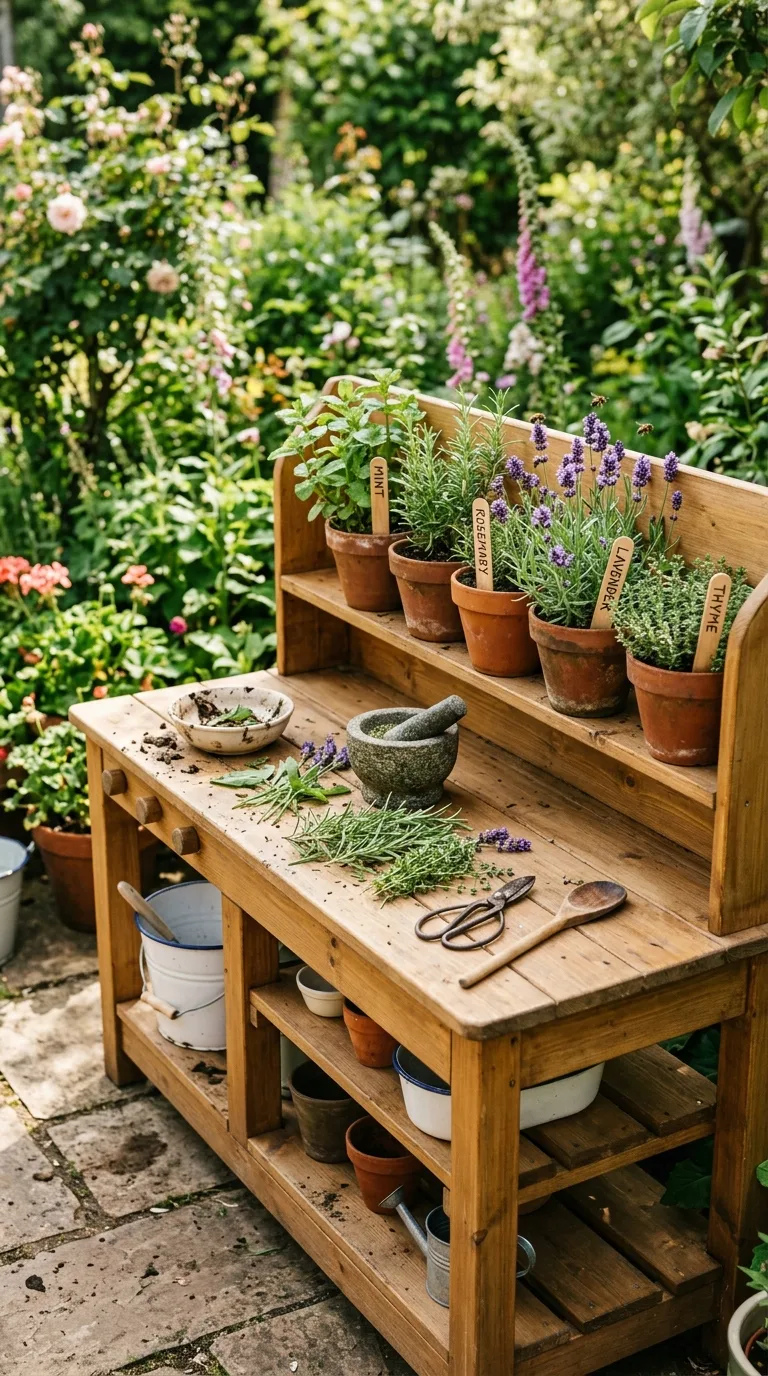
Integrating a small herb garden planting area directly into or immediately beside a mud kitchen creates a deeply enriching sensory play environment that connects children to the origins of real food ingredients in a meaningful and tactile way. Growing fragrant herbs like mint, rosemary, lavender, chamomile, and lemon balm beside the mud kitchen allows children to harvest real ingredients for their mud kitchen concoctions, and the process of picking, smelling, and incorporating fresh herbs into play activities engages multiple senses simultaneously.
The herb garden element of a mud kitchen also provides rich educational opportunities around plant identification, growth cycles, and the connection between the garden and the table that are genuinely difficult to replicate in any other play context. Planting herbs in small labeled pots arranged on a shelf beside the kitchen or in a dedicated raised bed immediately adjacent to the kitchen workspace keeps the harvesting experience immediate and accessible. Children who grow up with herb garden access beside their mud kitchen develop a familiarity with living plants and culinary ingredients that enriches their relationship with food and nature throughout their entire lives.
7. Mud Kitchen with Overhead Canopy
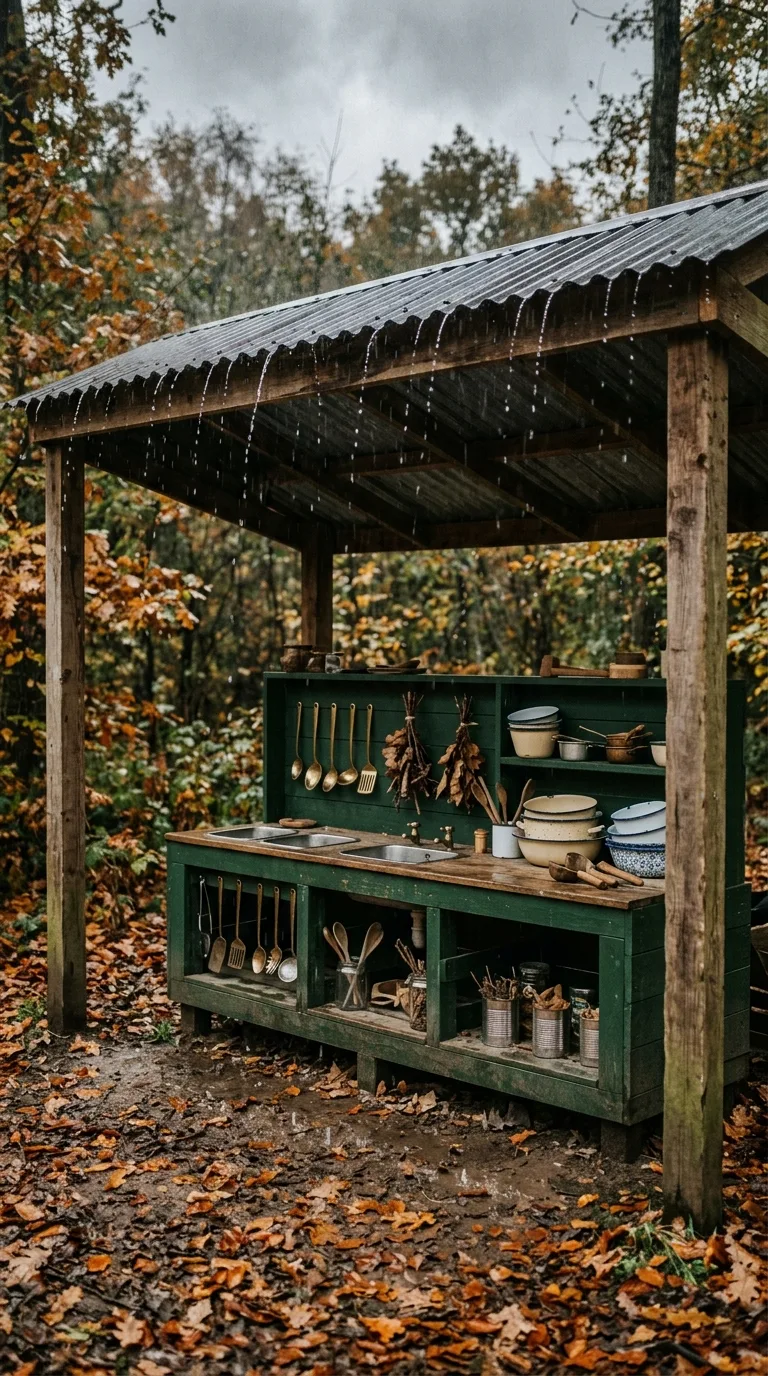
Adding an overhead canopy or roof to a mud kitchen is one of the most practical and valuable upgrades possible because it dramatically extends the range of weather conditions in which children can safely and comfortably play outdoors. A simple timber lean-to roof with a corrugated metal or clear polycarbonate sheet covering keeps rain off the kitchen workspace and protects children from direct sun during the hottest parts of summer days. The canopy also allows the mud kitchen to be used and enjoyed throughout the autumn and winter months.
A canopy over a mud kitchen creates a defined, sheltered outdoor play zone that feels like a genuinely special space, similar in psychological effect to a den or hideaway that children naturally gravitate toward and invest with imaginative significance. Hanging wind chimes, a bird feeder, or small seasonal decorations from the canopy structure adds sensory and visual interest to the overhead space. Ensuring the canopy structure is solidly built and properly weatherproofed means it will serve through many years and many seasons of active outdoor play without requiring constant maintenance or repair.
8. Mud Kitchen with Storage Shelves and Hooks
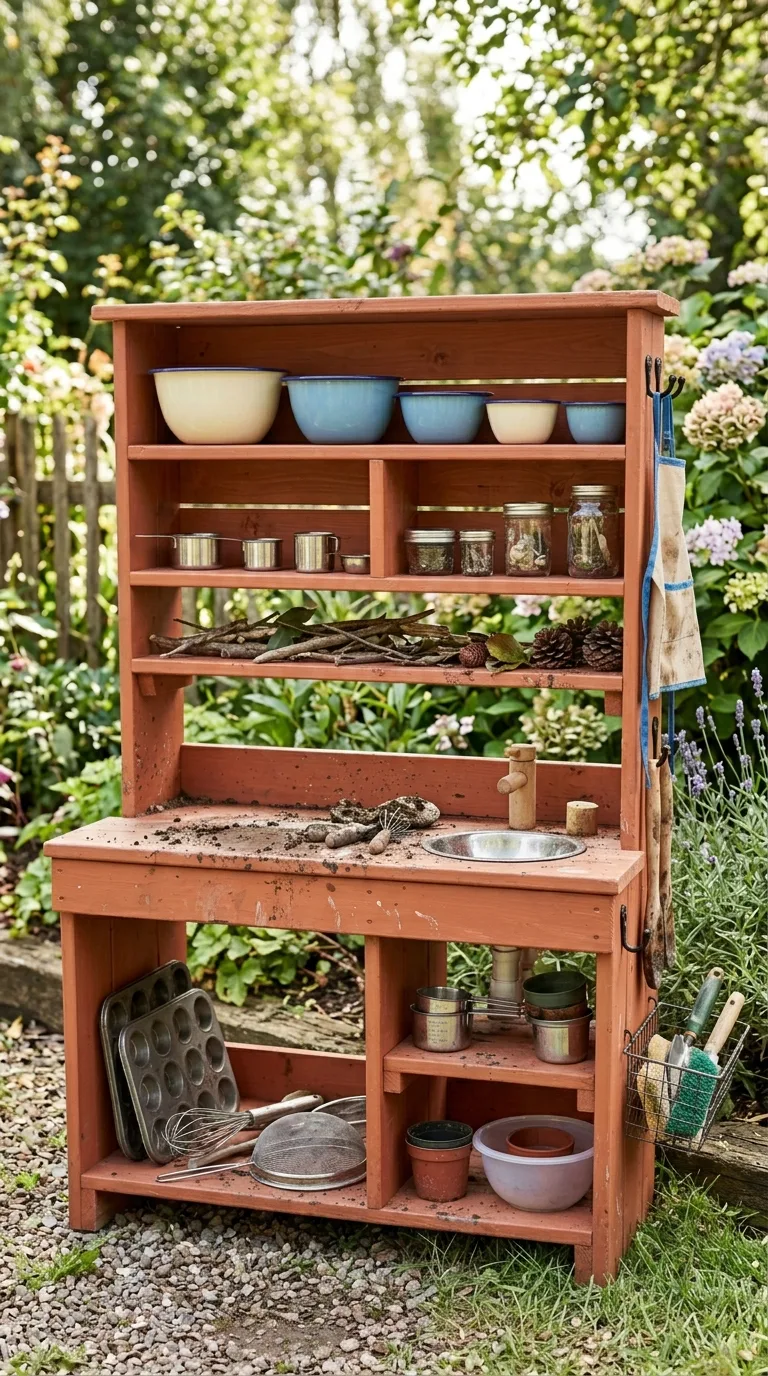
A mud kitchen with well-designed integrated storage in the form of open shelves and hanging hooks is a significantly more functional and organized play space than one where pots, utensils, and ingredients are left to accumulate in a pile. Open shelves above and below the main work surface create dedicated spaces for mixing bowls, muffin tins, cake molds, wooden spoons, and other kitchen accessories, while hooks on the side panels hold larger utensils, an apron, and a small basket for collecting garden ingredients.
The organizational structure that built-in storage provides also supports a very important developmental benefit: children learn the habits of tidying and putting things away in their correct place through the natural process of play within a well-organized kitchen environment. Making the storage visually accessible and clearly sized for specific items makes it genuinely easy for children to locate what they need and return it when they are finished. A mud kitchen with good storage is used more imaginatively, kept in better condition, and enjoyed for significantly longer than one where equipment is poorly organized.
9. Mud Kitchen with Sand and Mud Mixing Station
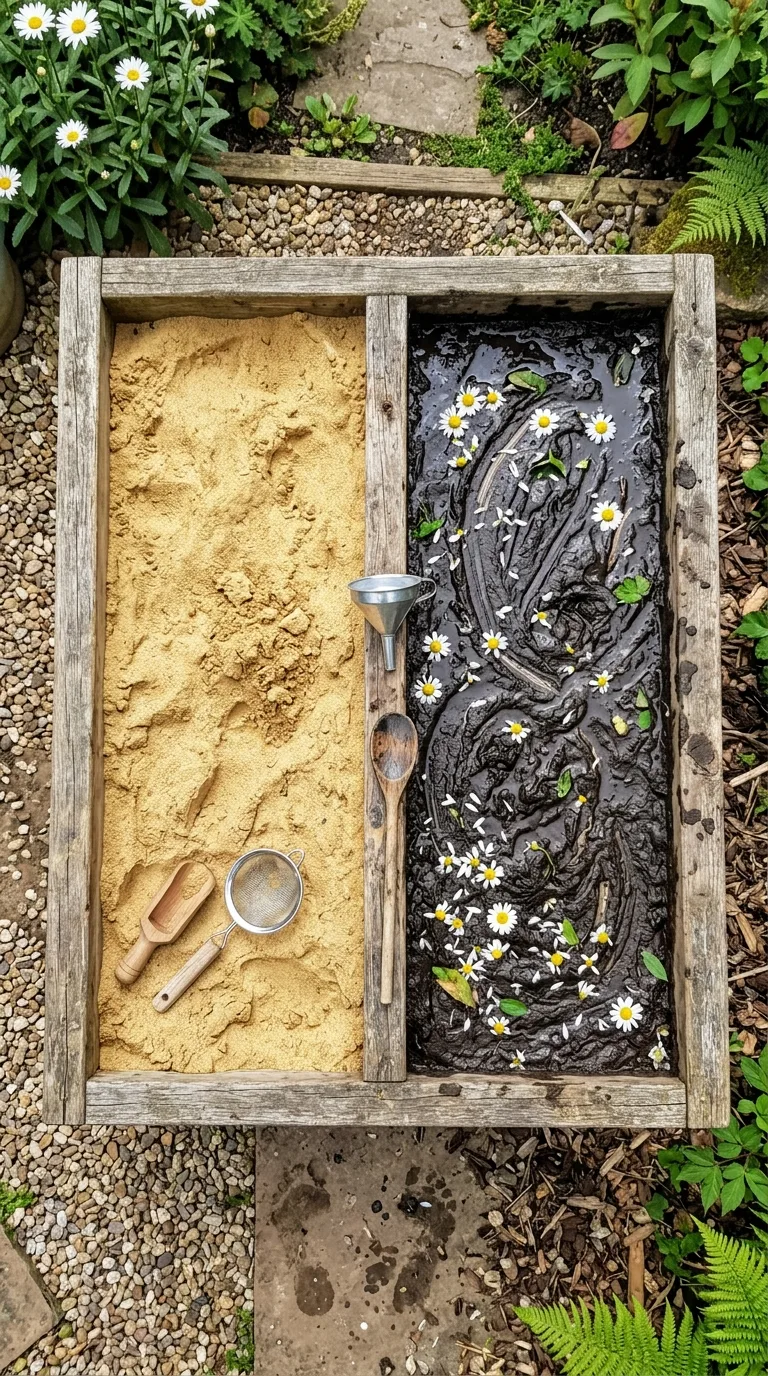
A mud kitchen with a dedicated sand and mud mixing station beside the main kitchen workspace creates a complete sensory play environment that gives children access to two of the most fundamentally engaging natural materials available in any outdoor play setting. Side by side containers of mud and sand allow children to experiment with mixing ratios and textures in a genuinely scientific way, observing how different proportions of each material change the consistency, color, and workability of the mixture they are creating.
The sensory feedback from mixing sand and mud together is rich and uniquely satisfying in ways that are developmentally important for children across a wide age range. The gritty resistance of sand combined with the smooth plasticity of wet mud creates a material of remarkable textural complexity that engages tactile sensitivity in a deeply beneficial way. Adding small stones, sticks, seeds, and flower petals to the mixing station as additional loose part ingredients creates an even richer sensory palette and supports the kind of sustained, complex, imaginative play that is the hallmark of genuinely excellent outdoor play provision.
10. Vintage Tin Can and Pot Mud Kitchen

Equipping a mud kitchen with a collection of vintage tin cans, old saucepans, mixing bowls, muffin trays, and assorted kitchen utensils sourced from charity shops and second-hand stores creates a play kitchen of extraordinary charm, variety, and sensory richness that purpose-built plastic play kitchens cannot begin to replicate. Real metal pots and pans make genuinely satisfying sounds when struck with a wooden spoon, feel appropriately weighty in small hands, and have a quality of authentic realness that resonates deeply with children’s play instincts.
Building a collection of mud kitchen equipment over time from thrift stores, garage sales, and donations from family and friends is a joyful process that costs very little while delivering significant play value. Keeping the collection organized on open shelves where children can easily see and access every item makes spontaneous play easier and reduces the frustration of searching for equipment before play has even properly begun. Replacing and adding new items occasionally refreshes the kitchen’s play potential and rekindles children’s interest with the excitement of new materials to explore.
11. Mud Kitchen with Natural Loose Parts
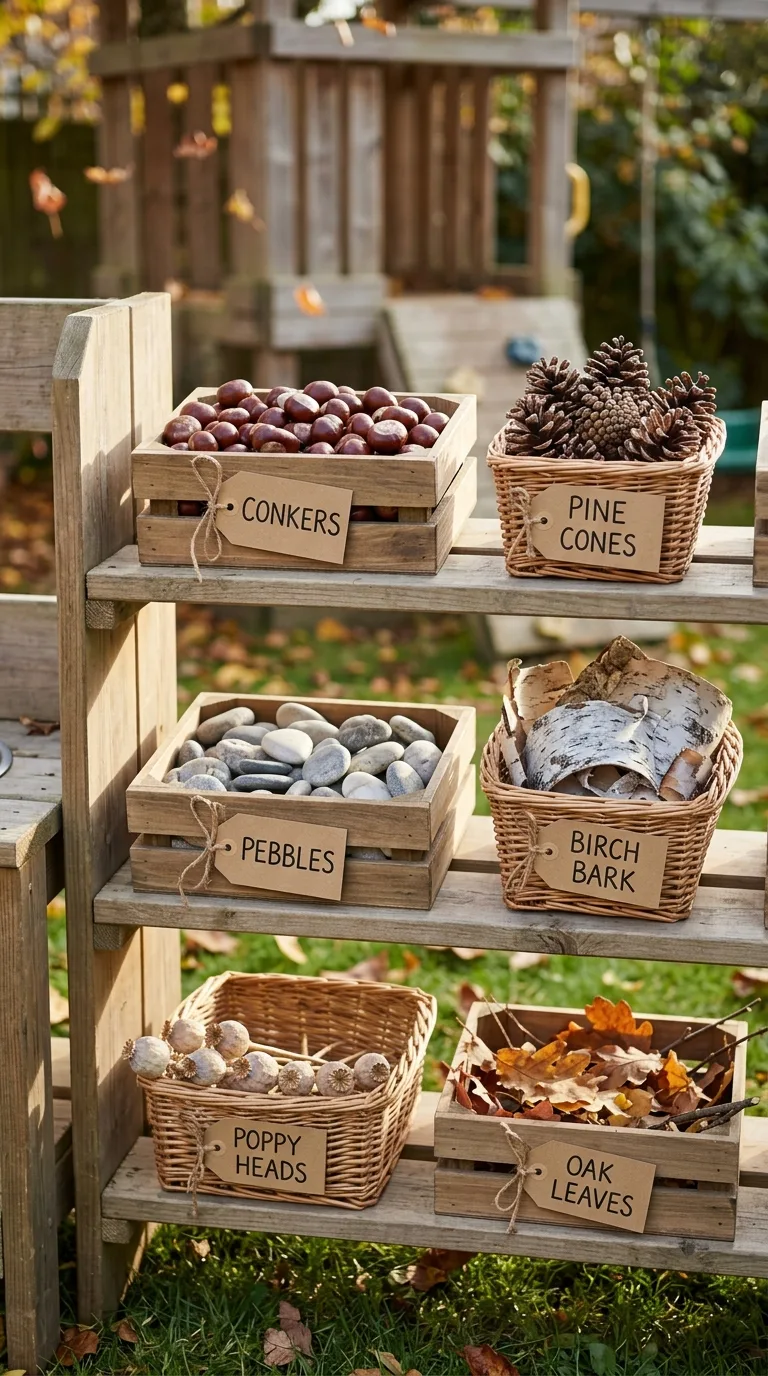
A mud kitchen stocked with a curated collection of natural loose parts creates a play environment of exceptional richness and creativity that supports genuinely complex, sustained imaginative play. Pine cones, acorns, conkers, smooth river pebbles, pieces of bark, dried seed heads, fallen leaves, and small sticks all serve as valuable and infinitely versatile play ingredients that children incorporate into mud kitchen recipes, potions, and constructions in endlessly inventive and surprising ways.
The loose parts approach to play provision has strong roots in early childhood education research, which consistently finds that children play more creatively, more persistently, and more collaboratively when given open-ended natural materials than when given prescriptive toys with a single correct use. Storing natural loose parts in labeled wooden crates or wicker baskets on the mud kitchen shelving keeps them organized and accessible while also creating a visually beautiful and inviting play environment. Replenishing the collection seasonally with new natural finds introduces a wonderful rhythm of change and discovery to the mud kitchen throughout the year.
12. Mud Kitchen with Sensory Bins
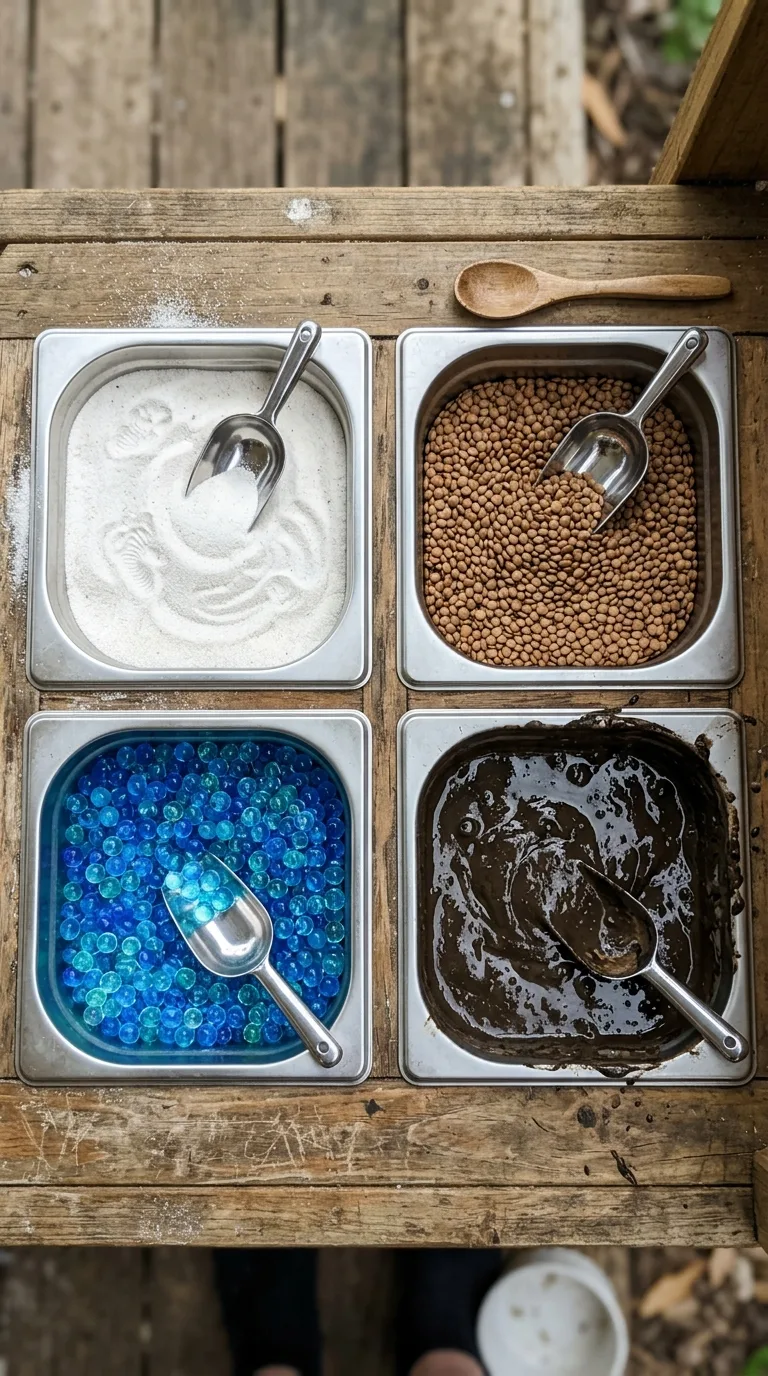
Adding individual sensory bins filled with different natural and textural materials to a mud kitchen dramatically expands the range of sensory experiences available to children in a single outdoor play session. Individual bins filled with kinetic sand, water beads, dried rice or lentils, fresh mud, fine sand, or gravel each offer a completely different tactile experience that develops sensory processing skills and fine motor coordination in profoundly beneficial ways. Children move between bins naturally, mixing and comparing textures with genuine scientific curiosity.
Sensory bins work best when they are positioned at the correct height for the child to reach into comfortably without stretching or bending awkwardly. Building a sensory bin station into the mud kitchen design with individual recessed bins set into the countertop at varying depths creates a professional-quality sensory play station of great visual appeal and functional excellence. Including small tools like spoons, funnels, sieves, and small cups beside each bin encourages more deliberate and exploratory engagement with each material rather than simple free-form manipulation.
13. Mud Kitchen with Fairy Garden Corner
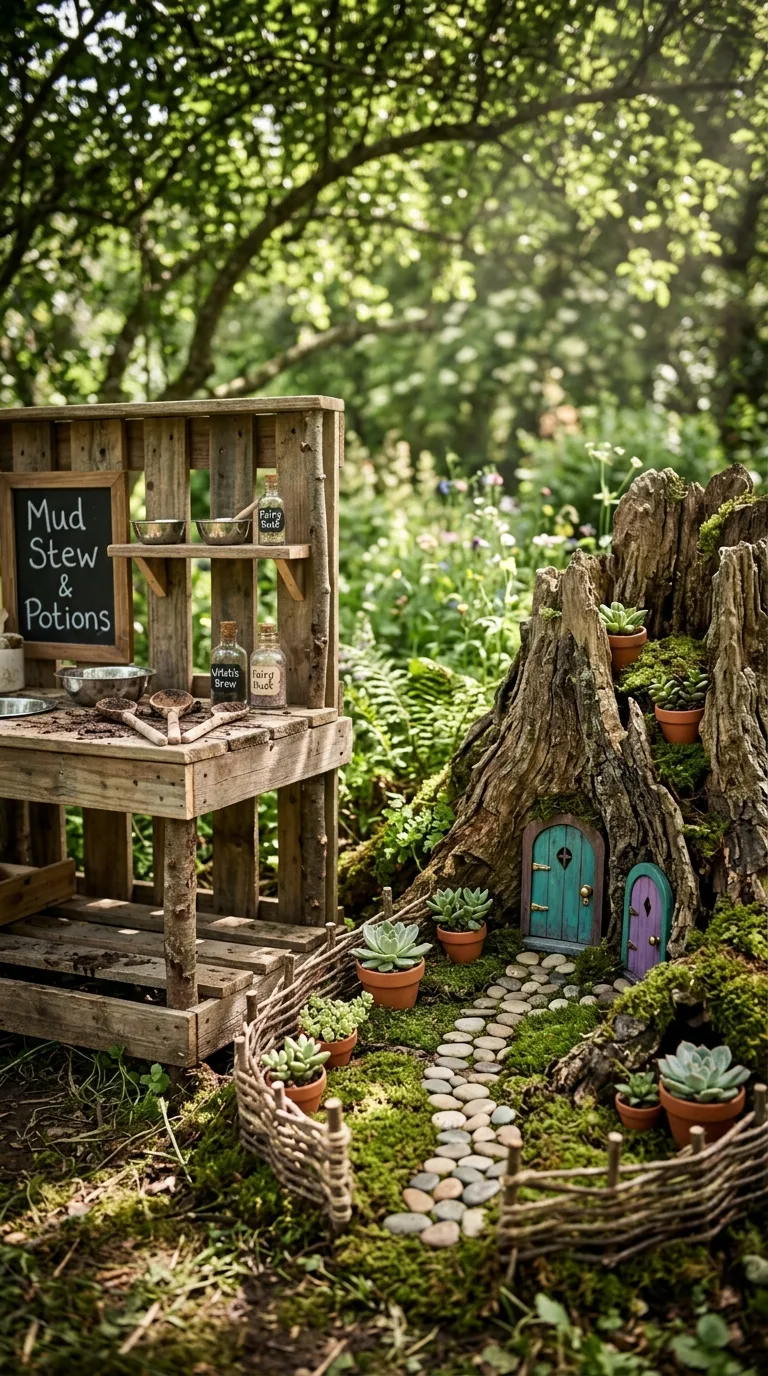
Combining a mud kitchen with a small fairy garden area in an adjoining corner creates a magical outdoor play space that bridges the practical, sensory world of mud kitchen play with the imaginative, fantastical world of miniature fairy garden construction and storytelling. Children who play in both spaces naturally begin connecting the two, harvesting tiny flowers and leaves from the fairy garden as mud kitchen ingredients and creating potions and recipes that are supposedly made for the fairy garden’s invisible inhabitants.
Building a fairy garden beside a mud kitchen is a project that children can participate in actively at every stage, from planting small alpine plants and thyme ground covers to placing tiny handmade wooden doors, mossy pathways, and miniature accessories. The ongoing nature of a fairy garden, which grows and changes with every season, means the combined play space never becomes stale or boring. This combination of mud kitchen and fairy garden is one of the most requested and most loved outdoor play environments among children and parents who have experienced the extraordinary depth of play it inspires.
14. Mud Kitchen with Nature Art Station
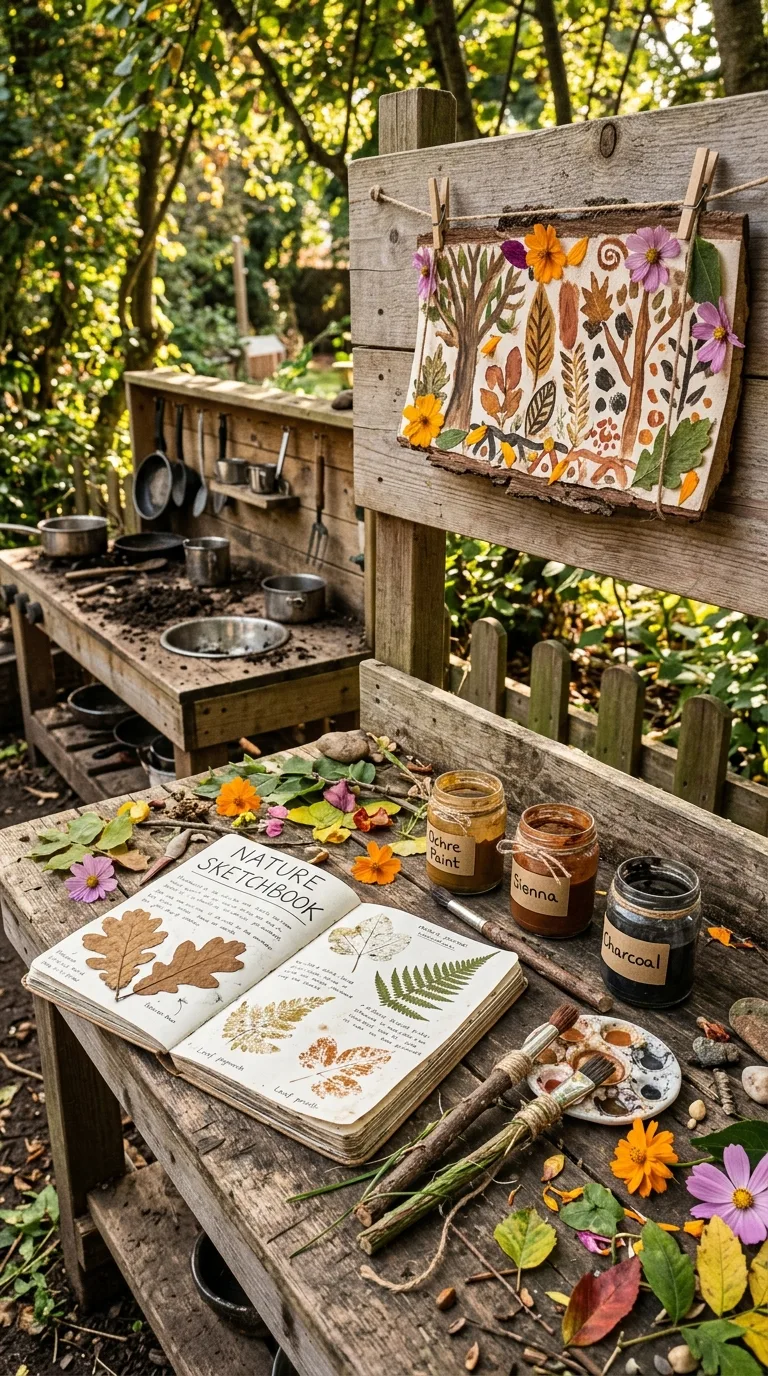
A nature art station attached to or positioned beside a mud kitchen creates a creative outlet for children who want to move beyond cooking and mixing into the territory of artistic expression using the natural materials the garden provides. A simple timber-framed art station with a flat working surface, a display board for showing finished work, and organized storage for art materials creates a seamless transition between sensory mud kitchen play and nature-based artistic activity that deepens children’s engagement with the outdoor environment.
Providing small containers of soil paint made by mixing different colored soils with water, alongside brushes, paper, leaf rubbings materials, and pressed flower supplies, creates an art station of genuine creative richness that uses entirely natural materials. Children who use a nature art station beside their mud kitchen regularly develop a remarkable vocabulary of natural materials and artistic techniques that grows more sophisticated with every session. Displaying finished nature artworks in a dedicated outdoor gallery space beside the kitchen validates children’s creative work and motivates further artistic exploration.
15. Mud Kitchen with Mud Pie Bakery Theme
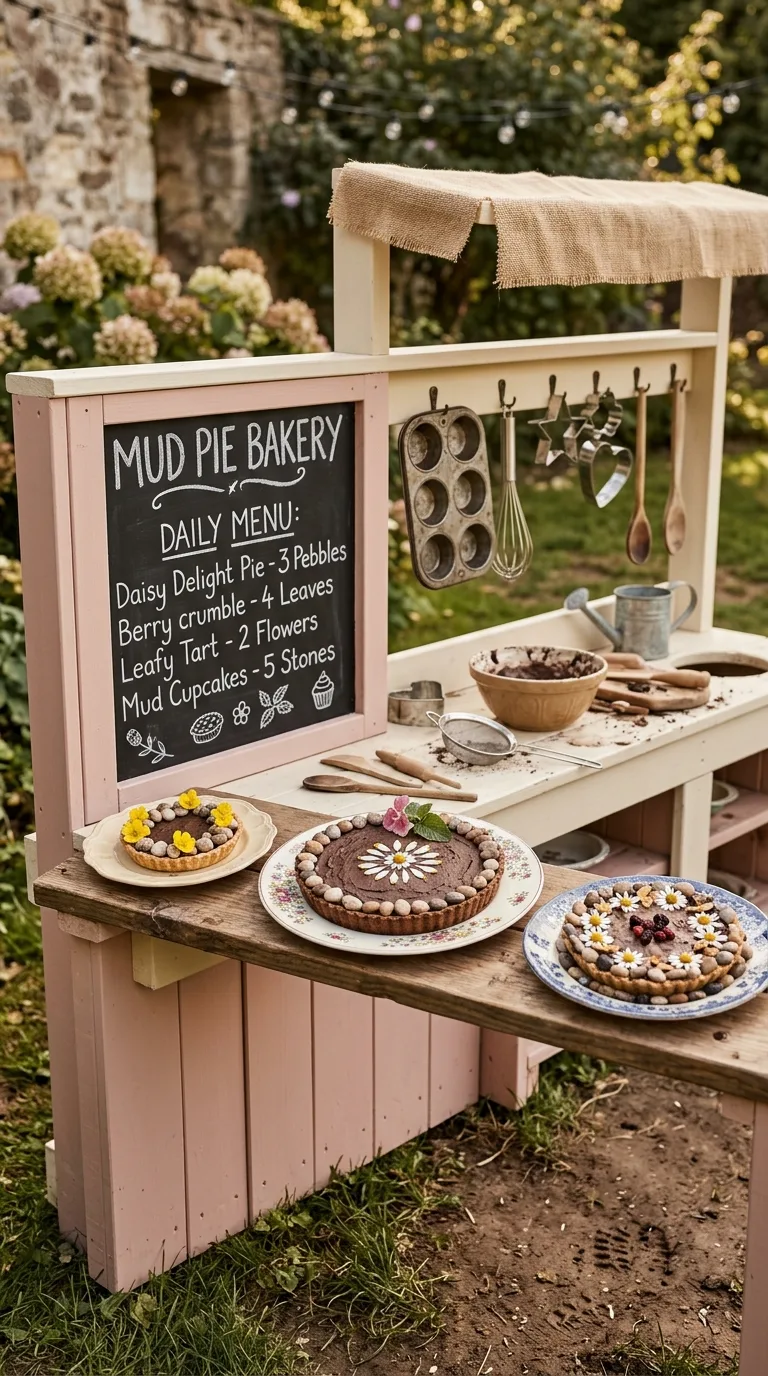
Theming a mud kitchen as a mud pie bakery creates an irresistibly playful and specific imaginative context that gives children an immediate, clear narrative framework for their play while leaving enormous room for individual creative interpretation within that framework. A bakery-themed mud kitchen features muffin tins, loaf pans, cake molds, rolling pins, and cookie cutters as its primary utensil collection, alongside a display shelf for showing finished mud baked goods and a small chalkboard menu for the day’s specials.
The bakery theme encourages children to observe and replicate real baking processes in their outdoor play, including measuring, mixing, kneading, shaping, and presenting their creations for admiration and pretend sale. This kind of purposeful, process-driven play develops mathematical thinking, scientific observation, language development, and social skills simultaneously and in a context that feels genuinely meaningful to the child rather than imposed by an adult. Adding a small pretend cash register and play money beside the bakery extends the play scenario further and introduces early numeracy concepts in the most natural and enjoyable way imaginable.
16. Mud Kitchen with Potting Bench Integration
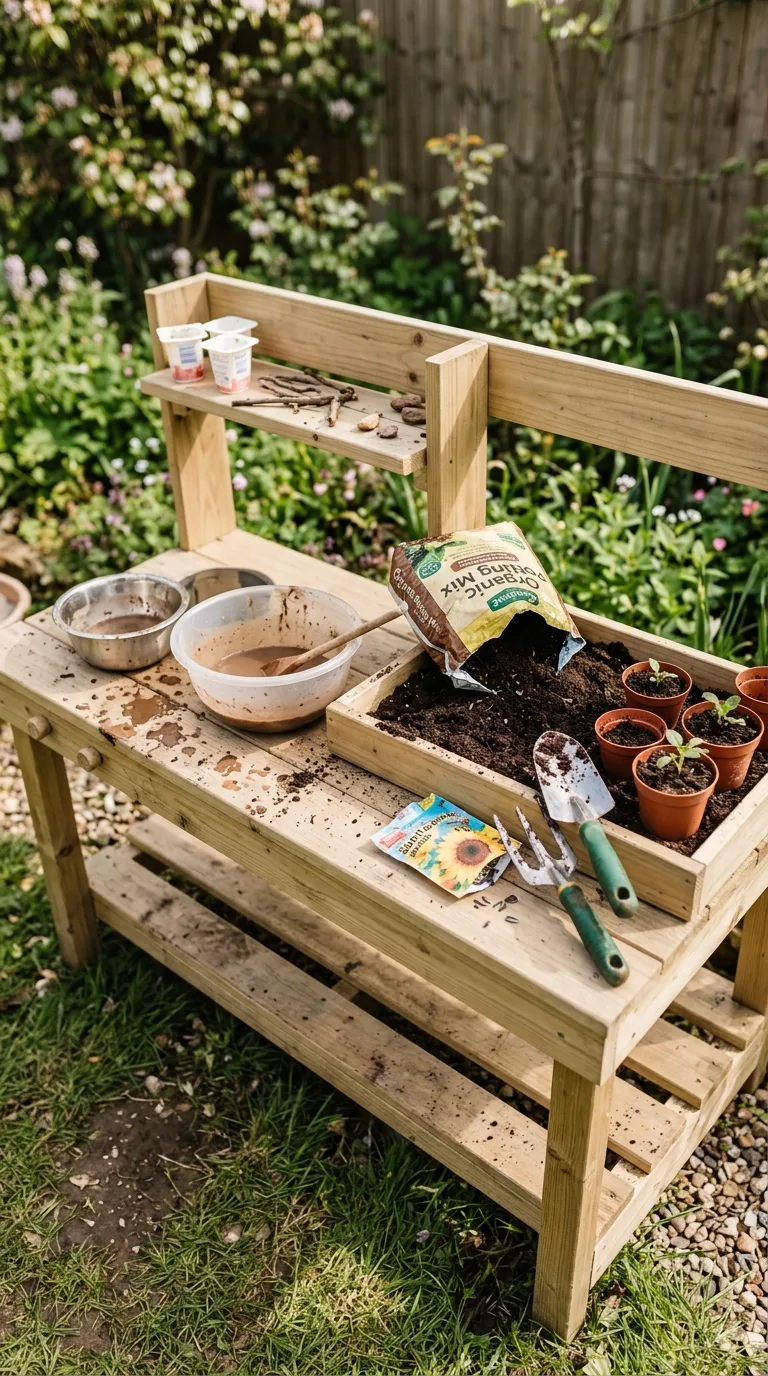
Integrating a small potting bench area into a mud kitchen design creates a combined outdoor play and gardening space that supports children’s growing interest in plants, soil, and the life cycles of the natural world alongside their sensory kitchen play. A low potting bench with a soil tray, small gardening tools sized for children’s hands, a selection of small pots, and a packet of fast-growing seeds creates a complete junior gardening station of wonderful practical value and genuine educational richness.
Children who have regular access to a potting bench beside their mud kitchen develop strong connections between the soil they play with in the mud kitchen and the soil in which real food and flowers grow. Planting seeds in the potting area and then watching them germinate and grow over following weeks and months provides a deeply satisfying long-term play narrative that complements the immediate sensory gratification of mud kitchen play. This combination makes the entire outdoor play space more educational, more purposeful, and more deeply engaging for children throughout every season of the year.
17. Mud Kitchen with Flower Pressing Station
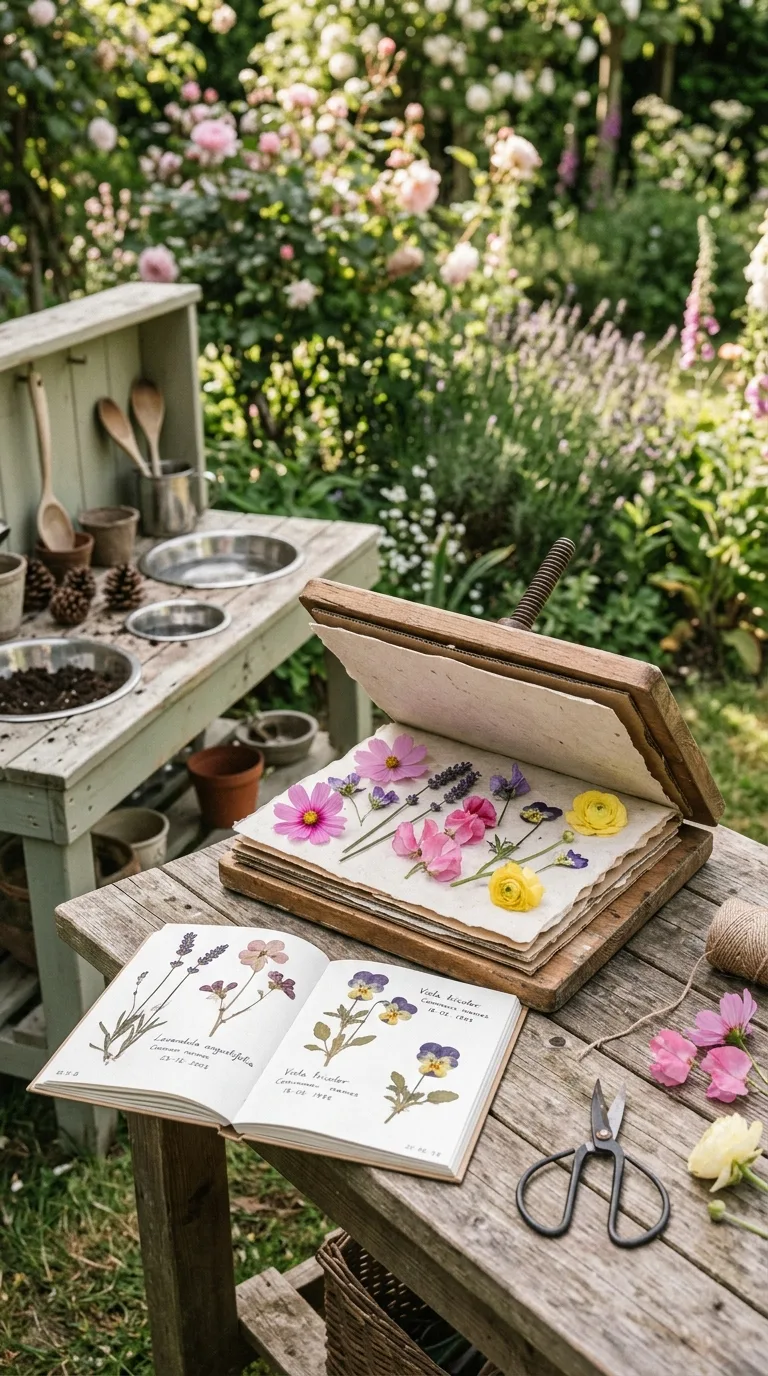
A flower pressing station beside a mud kitchen creates a beautiful and gentle artistic counterpoint to the more exuberant, messy sensory play of mud mixing and potion-making. Children who have access to a flower pressing station learn to look at garden flowers and leaves with a new level of careful attention, selecting specimens for their color, shape, and form and handling them with a delicacy and care that is developmentally valuable and intrinsically beautiful to observe. A simple wooden flower press with wing nuts is all that is needed.
Displaying pressed flower collections in a small outdoor frame or nature journal beside the mud kitchen creates a tangible record of children’s seasonal discoveries and artistic choices that can be treasured by the whole family. The flower pressing process also introduces children to the concept of botanical preservation and the idea that beauty can be captured and kept from the garden. Seasonal changes in the flowers available for pressing naturally shift the activity with the calendar, making the flower pressing station a year-round feature that reflects the changing seasons of the garden in the most lovely and gentle way.
18. Corner Mud Kitchen for Small Gardens
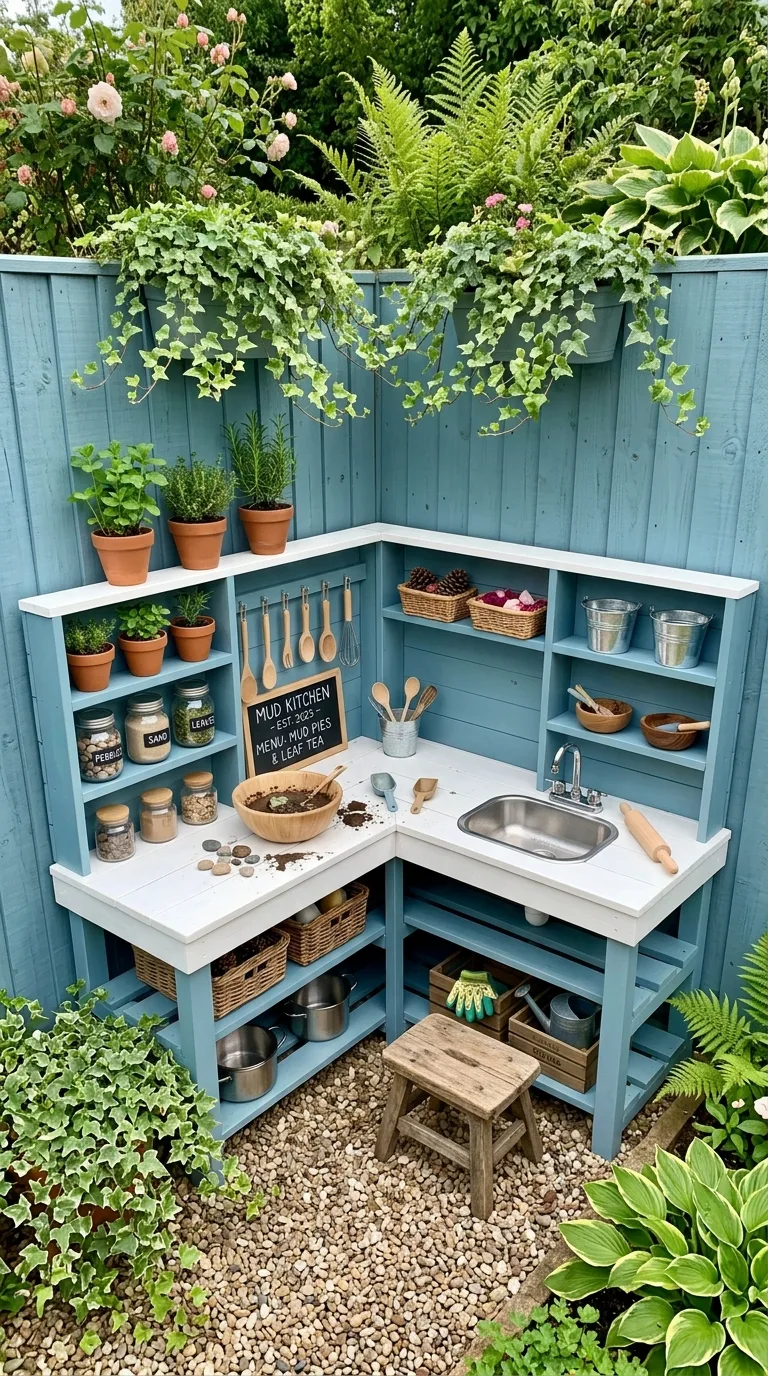
A corner mud kitchen is a space-efficient and cleverly designed outdoor play solution for small gardens, compact courtyards, and urban backyards where maximizing the use of limited square footage is an important practical consideration. Built to fit neatly into a ninety-degree corner of a fence or wall, a corner mud kitchen uses the two converging surfaces to create a naturally enclosed play space that feels intimate and den-like without requiring any additional screening or enclosure structures.
The corner format allows the kitchen to have surfaces on both walls of the corner, creating a generous workspace and extensive shelving storage area despite the compact overall footprint. Painting the fence or wall sections behind the kitchen in a bold, cheerful color creates a vibrant backdrop that makes the kitchen feel more immersive and purposefully designed. Even in the smallest garden, a well-built corner mud kitchen creates an outdoor play destination that is used enthusiastically and regularly and contributes enormously to children’s outdoor time and physical and creative wellbeing.
19. Mud Kitchen with Rock and Stone Collection
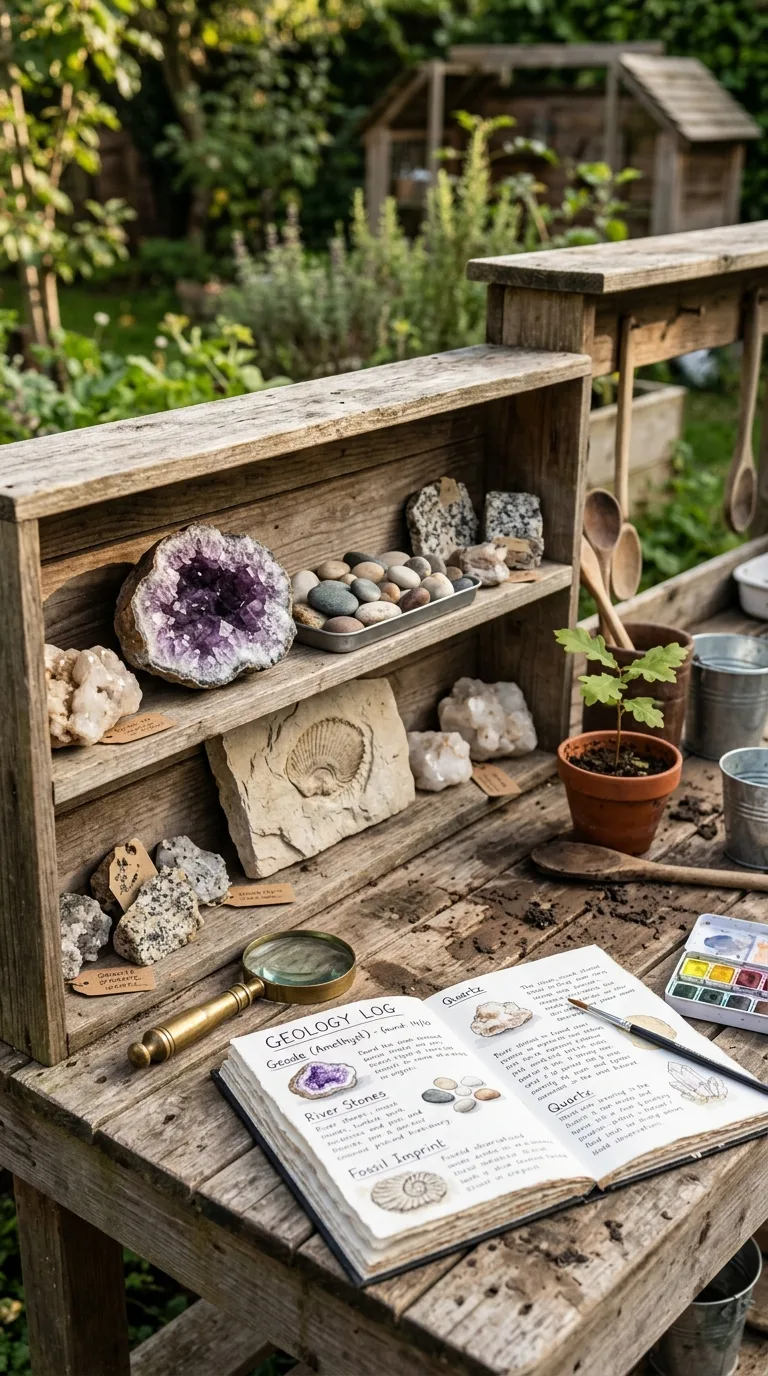
A mud kitchen equipped with a carefully curated collection of interesting rocks, minerals, geodes, fossils, and smooth pebbles in a dedicated display shelf or open box creates a geological discovery element within the broader sensory play environment that sparks genuine scientific curiosity in children of all ages. Rocks and stones function as wonderful mud kitchen ingredients and decorative elements for mud pies and potions, while also serving as fascinating objects of study in their own right when children begin to examine them closely.
Building a rock and stone collection over time through family walks, beach trips, and nature explorations creates a personal, meaningful collection with real stories attached to individual specimens. Providing a simple magnifying glass, a small brush for cleaning specimens, and a nature journal for drawing and recording favorite finds extends the geological play in a more structured direction when children are ready for it. A mud kitchen with a rock collection becomes a natural history corner of the garden that enriches children’s relationship with the material world in genuinely lasting and meaningful ways.
20. Mud Kitchen with Rope and Pulley System
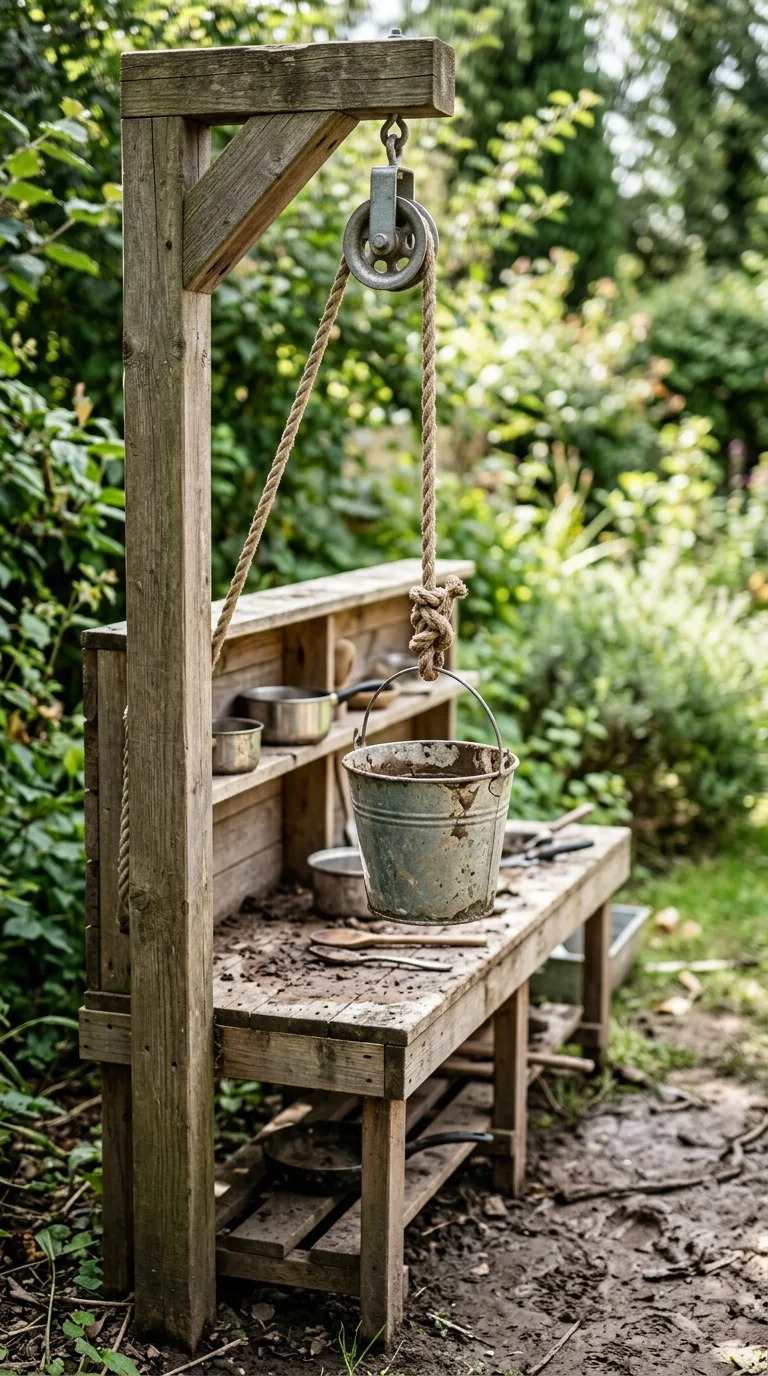
Adding a simple rope and pulley system to a mud kitchen or adjacent outdoor play structure creates an engineering play element that children find immediately and intensely engaging. A rope and pulley allows children to transport small buckets of mud, water, and natural materials between ground level and an elevated platform or shelf, introducing practical physics concepts including force, weight, balance, and mechanical advantage in a completely experiential and self-directed play context that is as educational as it is genuinely and deeply fun.
The collaborative play opportunities created by a rope and pulley system are particularly valuable because the most effective use of the system typically requires two children working together, one loading the bucket and the other pulling the rope. This natural requirement for coordination and communication makes the pulley system one of the best social play features possible in an outdoor play environment. Installing the pulley system on a timber post beside the mud kitchen keeps it accessible and visually integrated with the broader kitchen play context rather than feeling like a separate, disconnected play element.
21. Mud Kitchen with Water Wheel and Channels
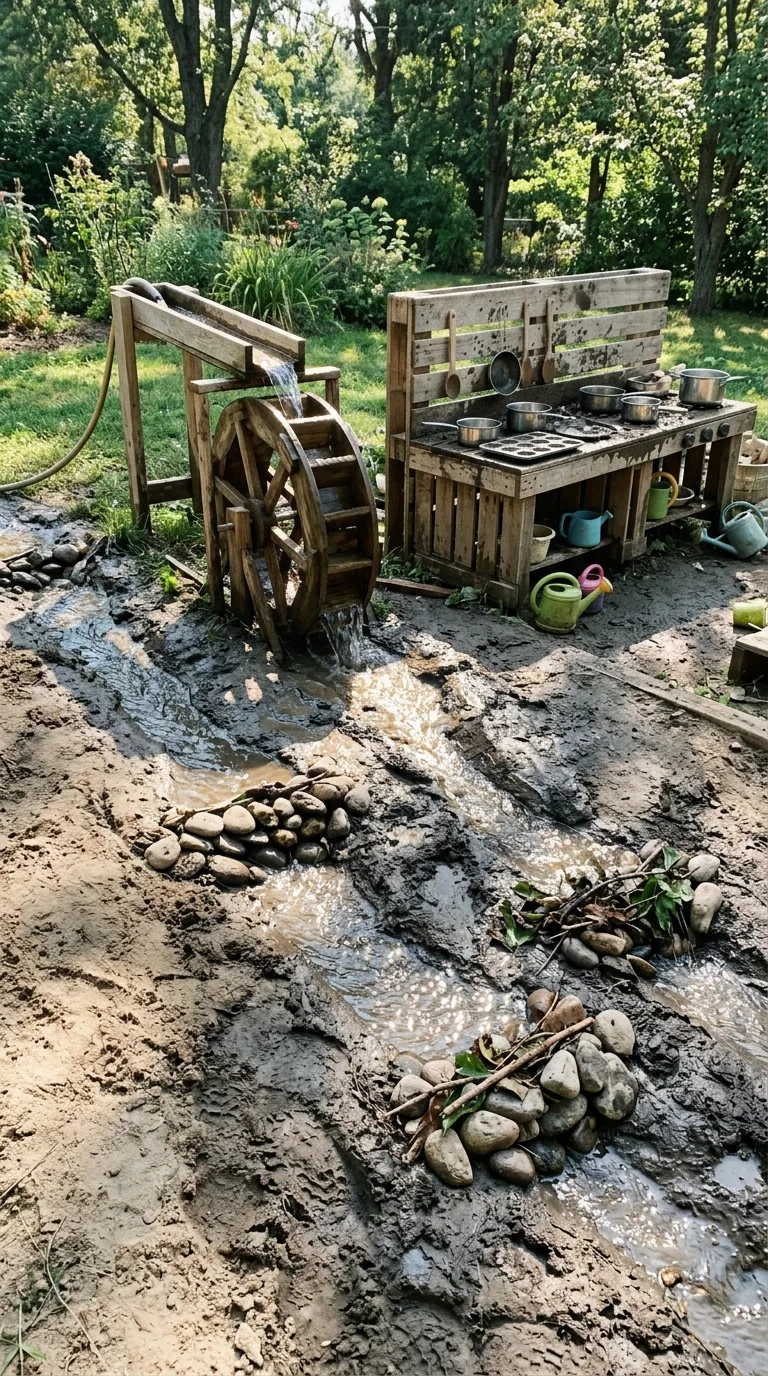
A mud kitchen play environment enriched with a water wheel and a network of channeled water runs creates an extraordinary STEM play landscape that keeps children engaged in complex, collaborative, hypothesis-driven play for extended periods. Water wheels powered by a gentle flow from an elevated water source introduce the concept of renewable energy and mechanical power in a context that is immediately tangible and visually gratifying. Water channels cut into a sloped sand or mud play area allow children to direct water flow and observe the principles of hydraulics in action.
The engineering, construction, and problem-solving activity involved in building and modifying water channels is some of the richest outdoor learning available to children without any adult direction or instruction. Children naturally test hypotheses, modify their channel designs based on observed results, and develop persistent, iterative thinking habits that are foundational to scientific and engineering mindsets. A mud kitchen that incorporates water wheel and channel play creates an outdoor STEM learning environment of genuine educational quality that is also, crucially, one of the most joyful and exciting play settings a child can inhabit.
22. Mud Kitchen with Seasonal Decorating Station
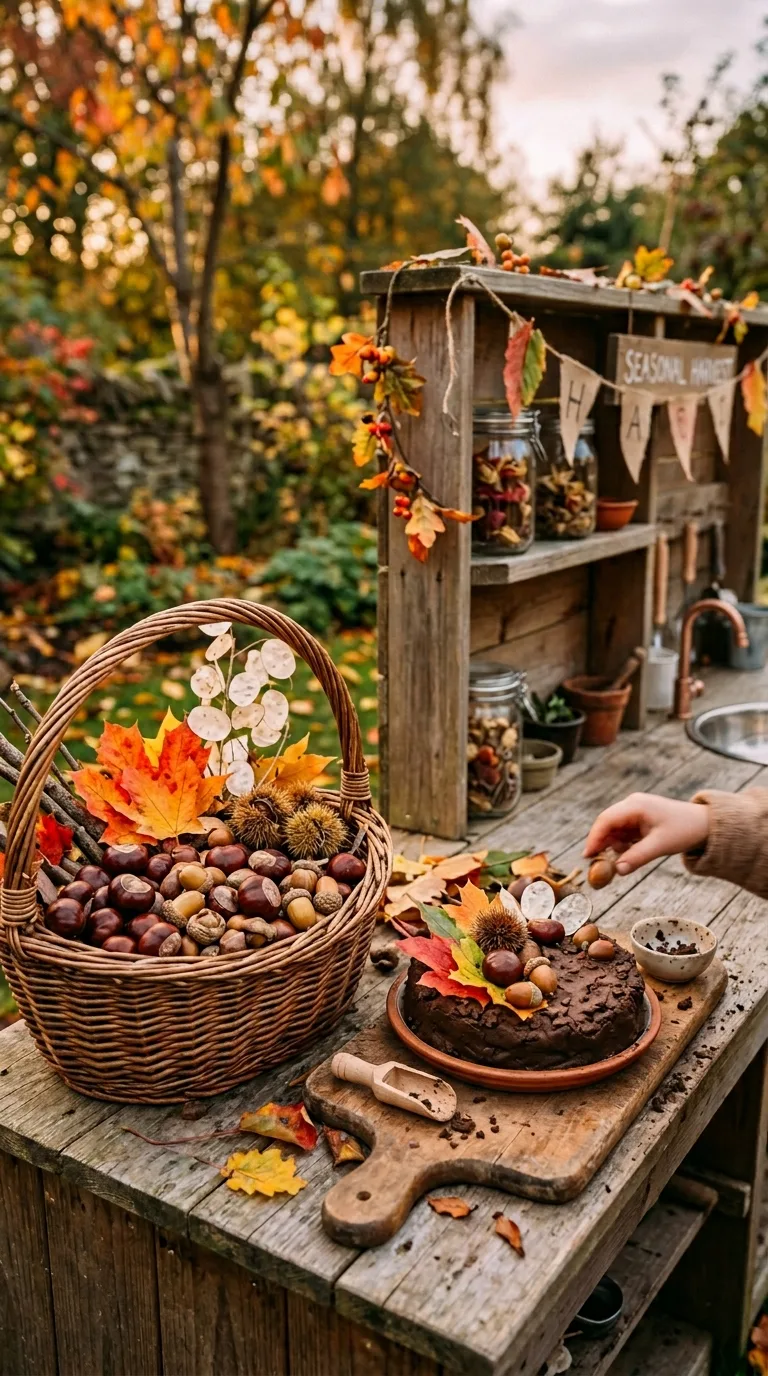
A seasonal decorating station beside a mud kitchen where children can decorate their mud pies, potions, and nature creations with seasonal natural materials creates a beautiful rhythm of connection to the natural calendar that enriches outdoor play throughout the entire year. Spring brings fresh flower petals, blossom, and green shoots for decorating. Summer offers berries, large leaves, and an abundance of flower colors. Autumn delivers the most spectacular palette of all with acorns, conkers, seed heads, and jewel-colored fallen leaves.
Creating a dedicated collecting basket or tray for seasonal decorating materials and placing it prominently on the mud kitchen shelf encourages children to look carefully at the garden and notice what is available for creative use right now rather than taking the natural world for granted. This practice of seasonal awareness is one of the most valuable gifts an outdoor play environment can foster, developing children’s attention, gratitude, and sense of connection to the living world around them in ways that positively shape their relationship with nature throughout their entire lives.
23. Mud Kitchen with Outdoor Reading Nook
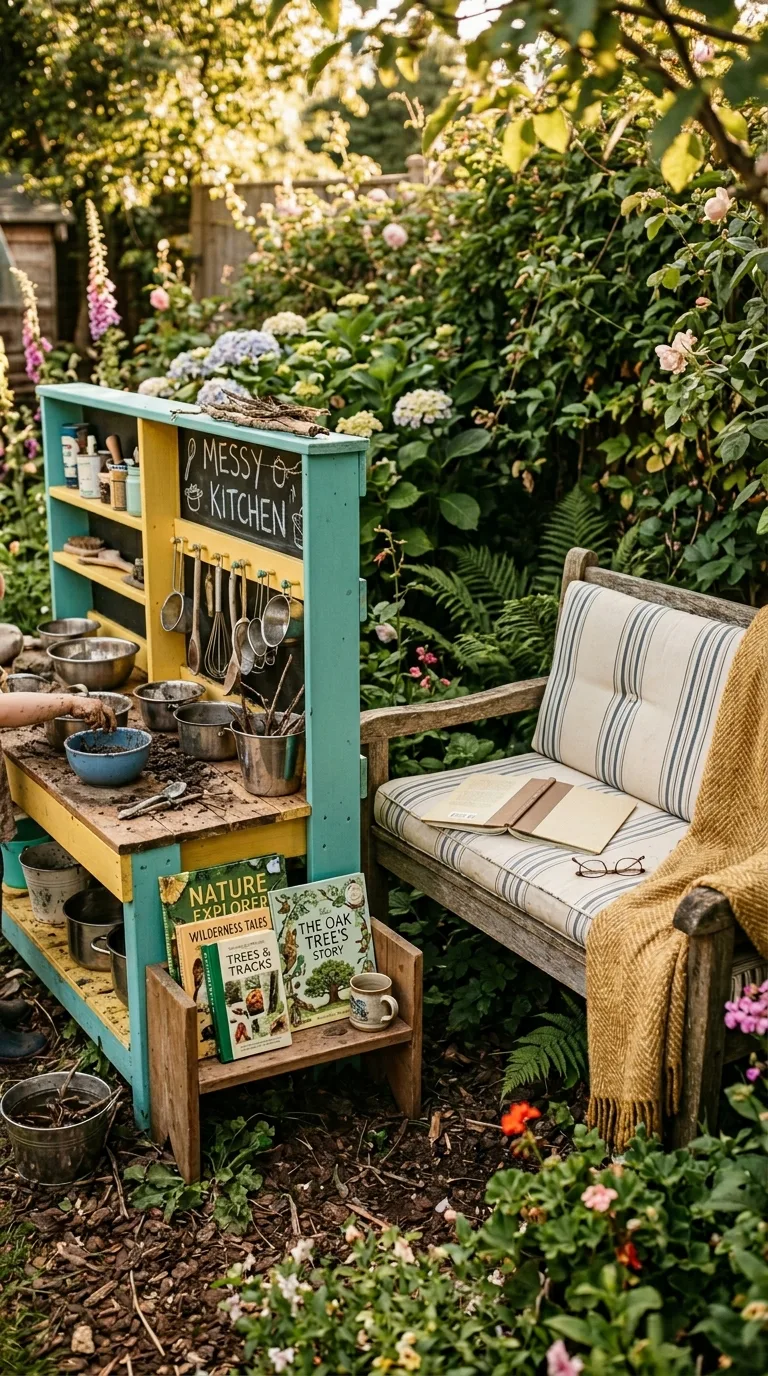
Combining a mud kitchen with a small outdoor reading nook or cozy corner creates a more complete outdoor play environment that supports children who want to move between active sensory play and quieter, more contemplative activities without having to go back indoors. A small timber bench with a weatherproof cushion tucked behind the mud kitchen, or a small wooden tepee or den beside it filled with books and soft cushions, creates a natural transition space between energetic outdoor play and restful outdoor rest.
Children who have access to both active and quiet outdoor spaces tend to stay outdoors for longer, self-regulating between high and low activity levels in a way that supports both physical development and emotional regulation. The reading nook beside the mud kitchen becomes naturally populated with nature books, field guides, and illustrated storybooks that children consult to identify natural materials they find during play, deepening the connection between physical outdoor experience and the world of language and knowledge. This is a genuinely enriching outdoor play environment combination that benefits children at every developmental stage.
24. Mud Kitchen with Recycled Materials Play Store
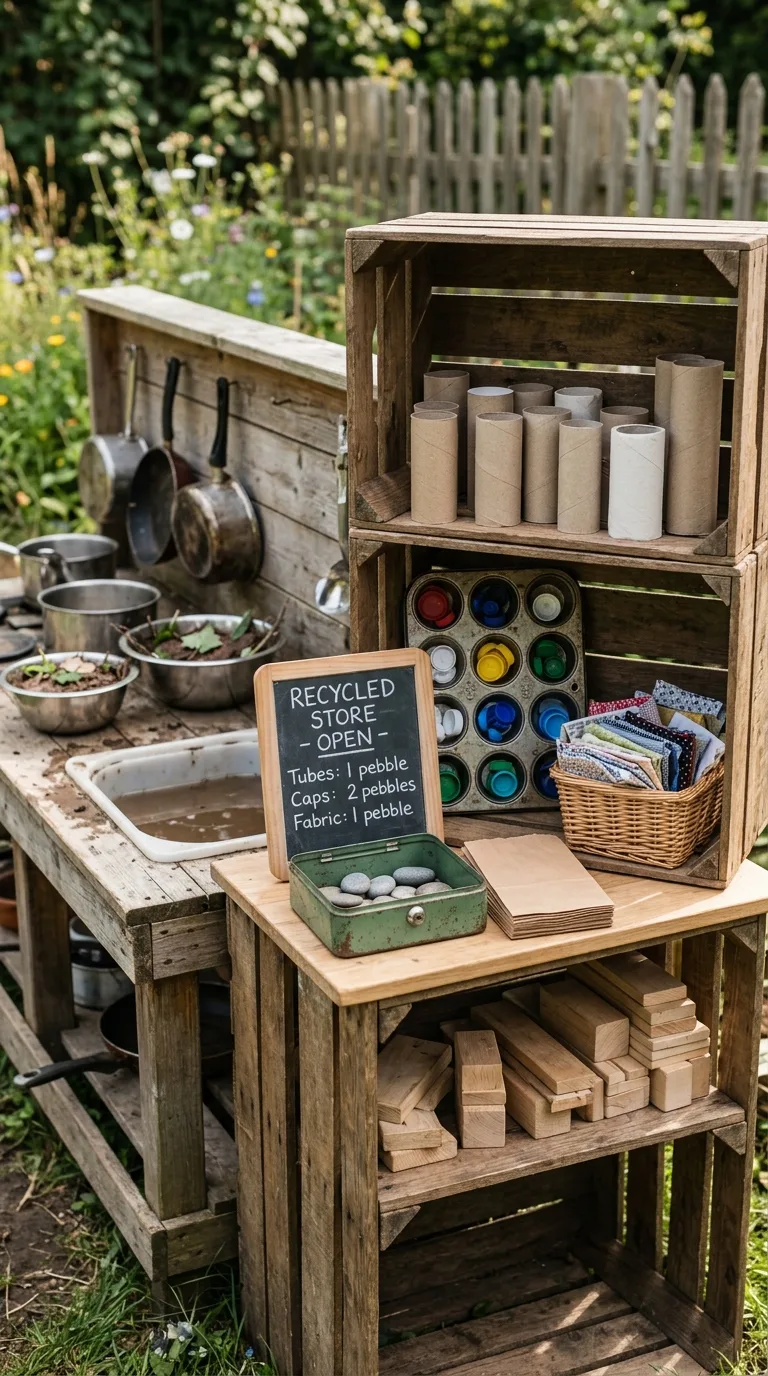
Adding a recycled materials play store area to a mud kitchen creates a complete outdoor imaginative play hub where children can move fluidly between making, selling, buying, and trading in a rich, self-directed economic play scenario. A simple shelf unit stocked with clean, recycled household materials including cardboard tubes, bottle caps, fabric scraps, ribbon pieces, and wooden off-cuts creates an abundant supply of open-ended play materials that children use as currency, packaging, decoration, and construction components in their mud kitchen play scenarios.
The play store concept naturally extends mud kitchen play into social role play territory where children take on the roles of shopkeeper, customer, supplier, and delivery person in a collaborative, language-rich play environment of great developmental value. Providing small paper bags, a cash tin with coin-like pebbles as currency, and a small chalkboard price list makes the play store experience more concrete and more deeply engaging. A mud kitchen with an integrated play store is one of the most complete and developmentally rich outdoor play environments it is possible to create for children of any age from two years onward.


