

20 Budget Deck Skirting Ideas That Look Expensive
The space beneath a raised deck is one of the most overlooked areas of any home’s exterior, and leaving it exposed to show the dirt, weeds, stored junk, and structural framing underneath can drag down the appearance of even the most beautifully built deck above. Good deck skirting covers that unsightly gap between the deck edge and the ground with a clean, finished surface that makes the entire structure look intentional and complete. The great news is that impressive looking deck skirting does not require an impressive budget. These 20 budget deck skirting ideas prove that with the right materials and a little creativity, you can give your deck a polished, high end finish without spending more than necessary.
1. Horizontal Pallet Wood Skirting
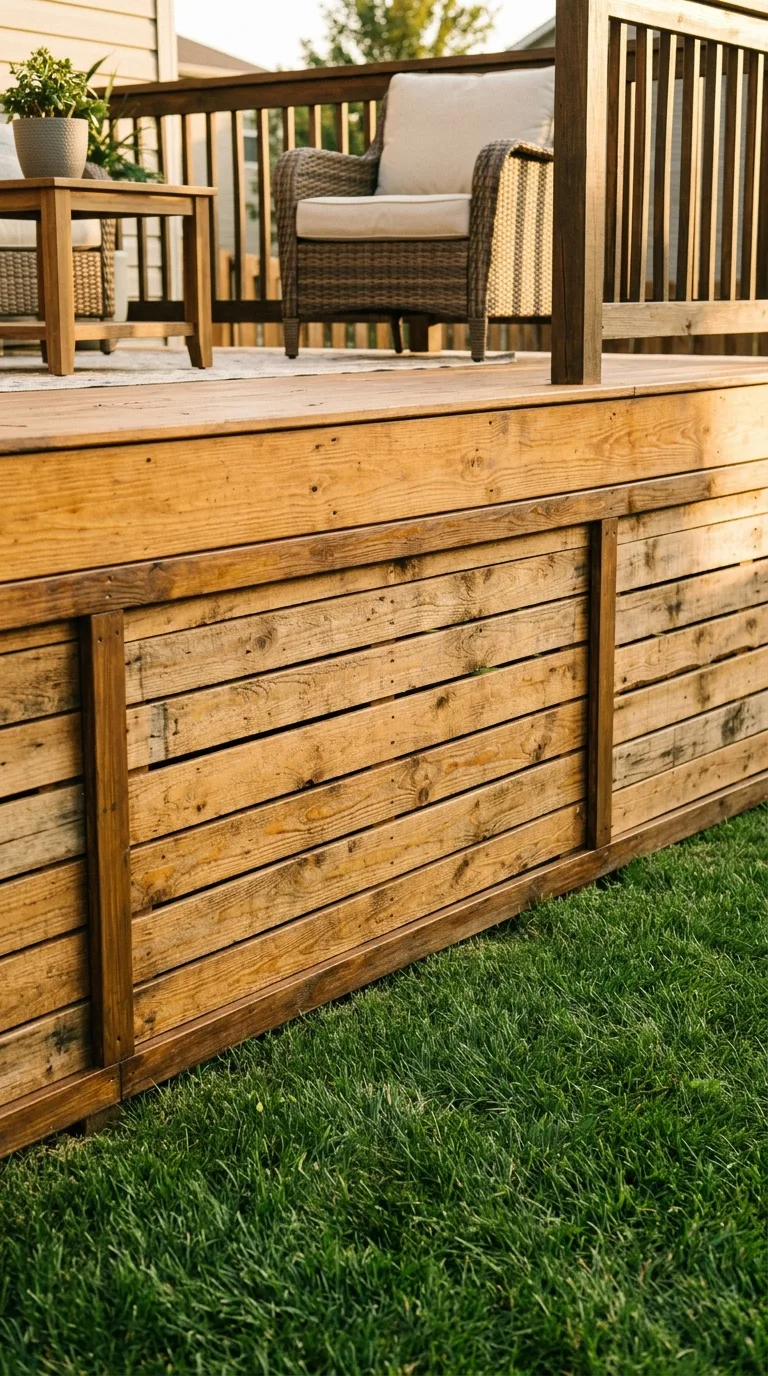
Reclaimed pallet boards installed horizontally beneath your deck create a rustic, textured skirting that looks like an intentional design choice rather than a budget solution. Pallets can be sourced for free from local businesses, and the weathered wood has a natural patina and character that new lumber simply cannot replicate. Sanding the boards lightly and trimming them to uniform lengths is all the preparation needed.
Attaching the pallet boards to a simple frame of treated timber creates a solid skirting panel that is easy to remove for access to the space beneath when maintenance is needed. Leaving small gaps between the boards allows air circulation that prevents moisture buildup under the deck. A coat of exterior wood stain in a warm tone unifies the varied pallet wood colors and gives the finished skirting a cohesive, polished appearance.
2. Corrugated Metal Panel Skirting
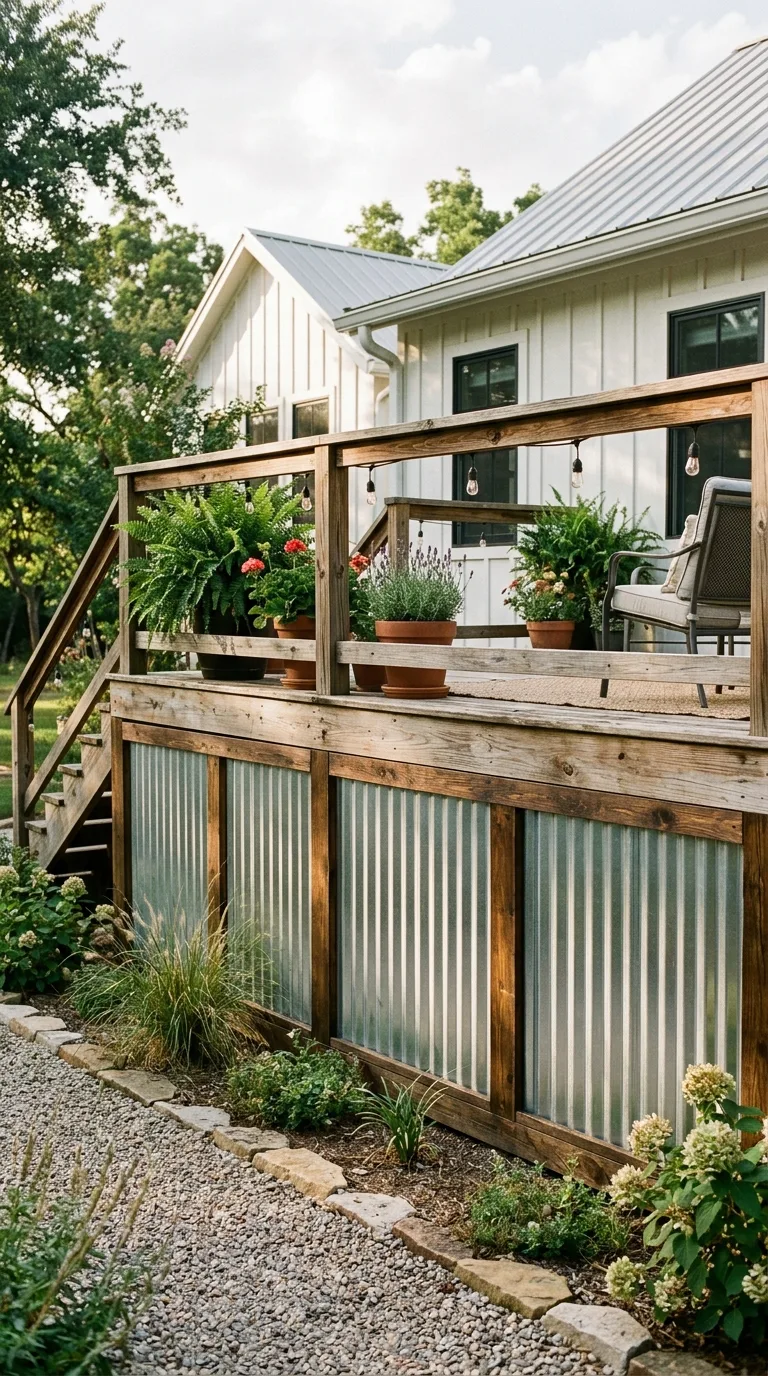
Corrugated metal panels installed as deck skirting create a clean, modern, farmhouse inspired look that is surprisingly affordable and incredibly durable. Metal panels resist rot, insects, and moisture damage completely, which means this skirting will last for decades without any maintenance beyond an occasional rinse. The ribbed texture of corrugated metal adds visual interest and catches light in attractive ways throughout the day.
Galvanized silver is the most classic choice, but corrugated metal is also available in painted finishes including black, charcoal, barn red, and forest green that can coordinate with your deck stain or home exterior color. Framing the metal panels with stained timber trim creates a finished edge that elevates the look significantly. This is one of the most durable and lowest maintenance deck skirting options available at any price point.
3. Vinyl Lattice Panel Skirting
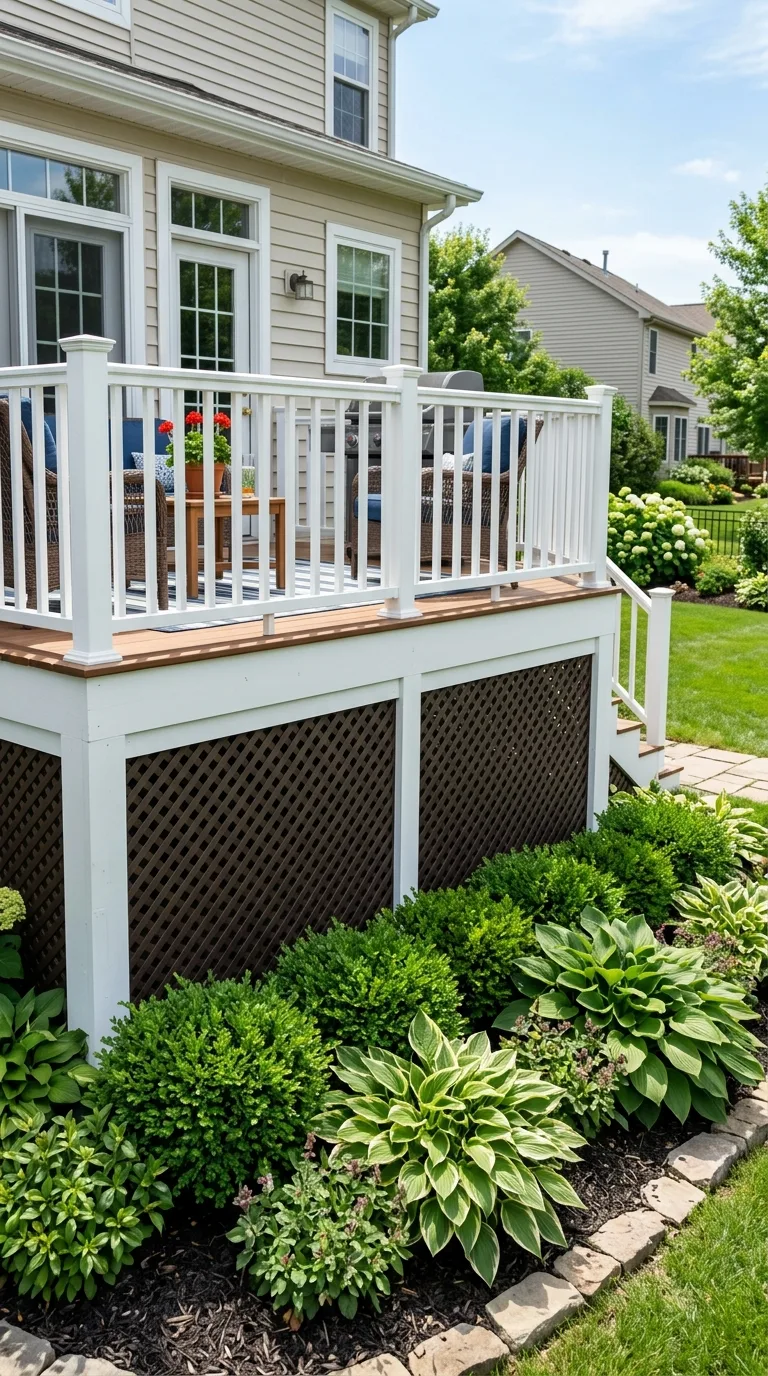
Vinyl lattice panels are the most popular and readily available budget deck skirting material because they are inexpensive, easy to cut and install, and require virtually zero maintenance over their long lifespan. The crisscross pattern provides ventilation beneath the deck while screening the view of the underside from anyone looking at the structure from ground level.
White vinyl lattice is the most common choice, but choosing a dark color like black or brown creates a much more sophisticated and expensive looking result because darker colors recede visually and make the lattice pattern less visible from a distance. Framing each lattice panel with a painted or stained timber border transforms the look from basic to custom. Dark lattice behind foundation plantings virtually disappears while doing its job perfectly.
4. Horizontal Cedar Fence Board Skirting
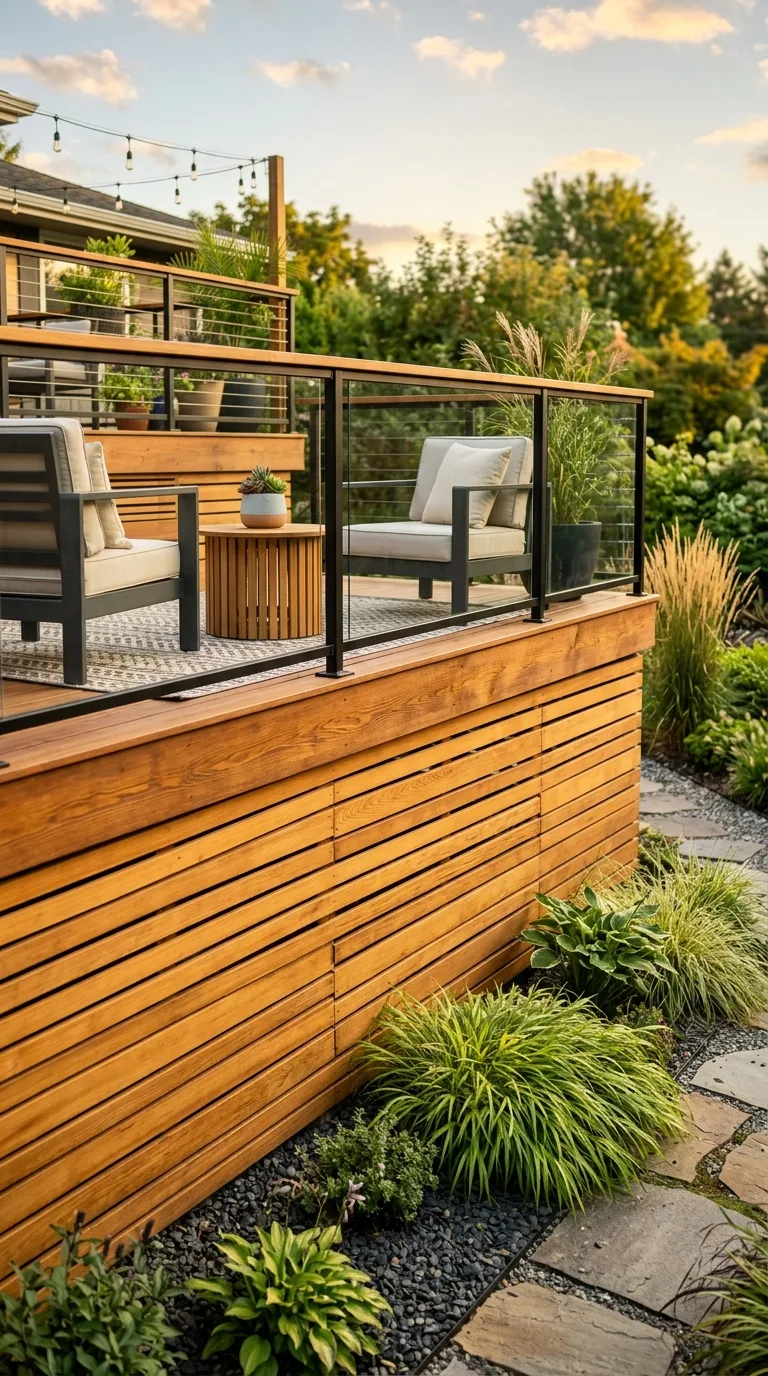
Using standard cedar fence boards installed horizontally as deck skirting creates a clean, contemporary look that mimics the appearance of expensive horizontal cladding at a fraction of the cost. Cedar fence boards are widely available, naturally resistant to rot and insects, and cost significantly less than premium decking boards while delivering a very similar visual result when used as skirting.
Installing the boards with consistent narrow gaps between them creates a modern slat wall effect that allows ventilation while providing excellent visual screening. Staining the cedar boards to match your deck surface creates a seamless, integrated look from top to bottom that makes the entire structure appear custom built. This is the skirting choice that most consistently makes people assume you spent far more than you actually did.
5. Stone Veneer Panel Skirting
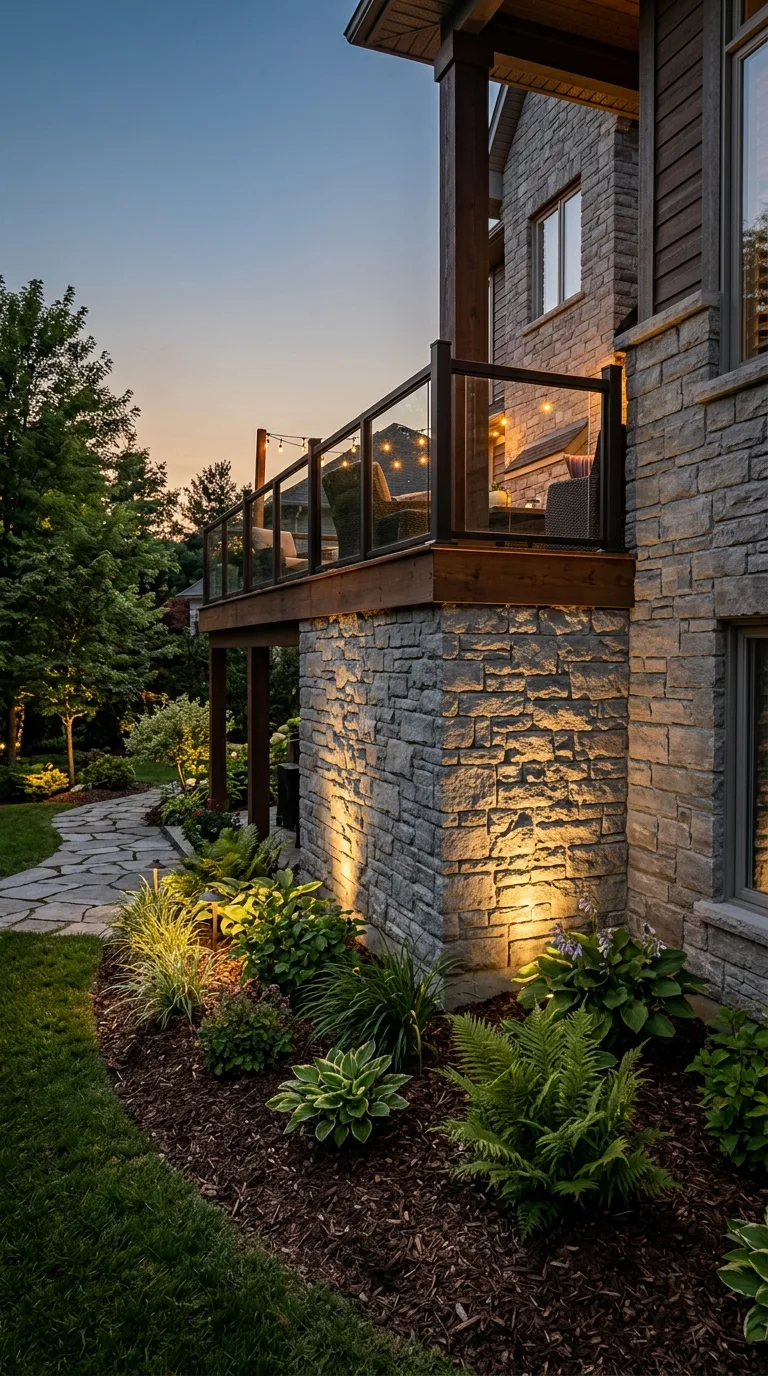
Lightweight stone veneer panels that adhere directly to a plywood or cement board backer create the appearance of a solid stone foundation beneath your deck at a small fraction of the cost and weight of real stonework. Modern stone veneer panels are remarkably realistic with genuine texture variation and natural color that is nearly impossible to distinguish from real stone at normal viewing distance.
Choosing a stone veneer color and style that matches or complements your home’s foundation or existing stonework ties the deck visually to the house and makes it look like a permanent, original part of the home’s architecture. Stone veneer skirting is particularly effective on elevated decks where the gap between the deck and ground is significant and needs a material with enough visual weight to fill the space convincingly.
6. Painted Plywood Panel Skirting
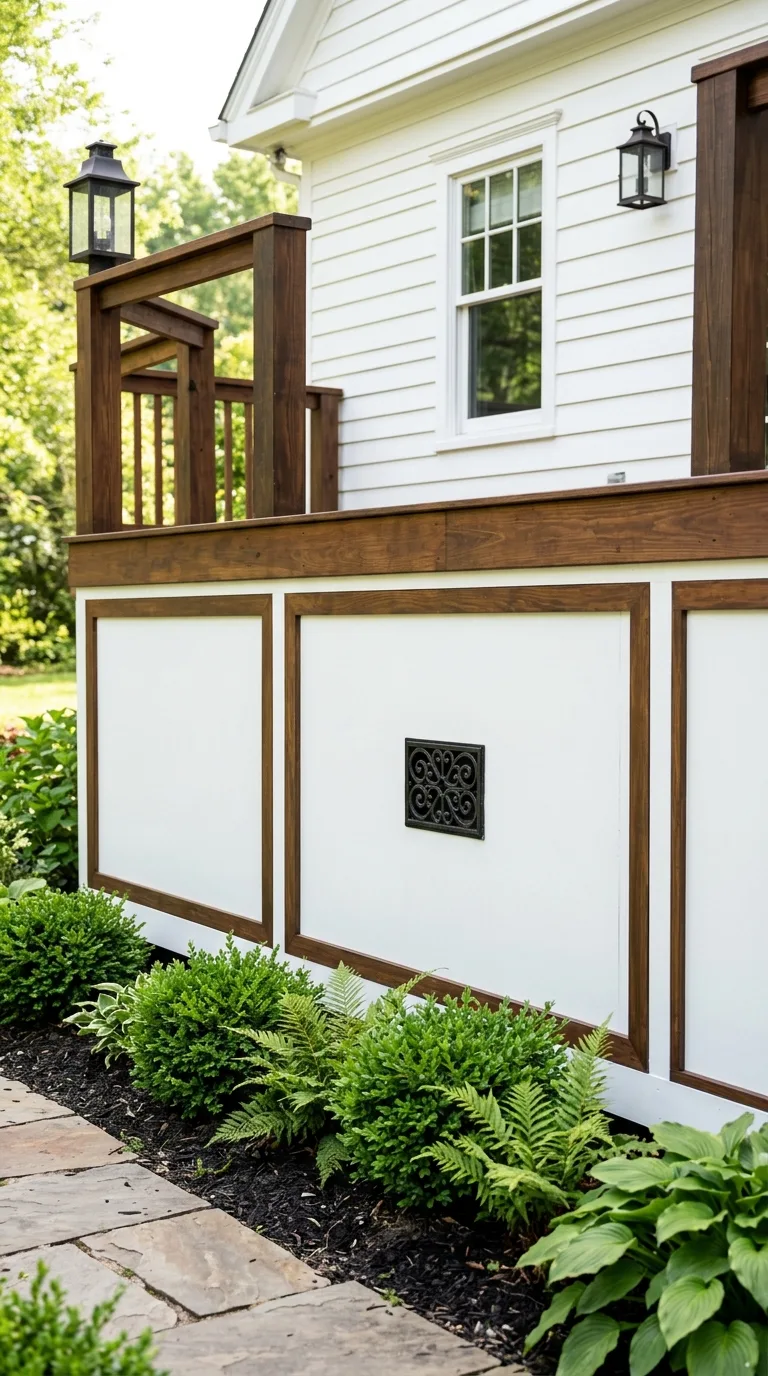
Exterior grade plywood cut into panels and painted in a color that matches your home’s exterior creates clean, solid deck skirting that looks completely seamless and intentional when finished properly. Plywood is one of the cheapest sheet materials available, and when painted with quality exterior paint, it produces a smooth, uniform surface that hides the underside of the deck completely.
The key to making plywood skirting look expensive is careful finishing, which means filling any edge grain with wood filler, sanding smooth, priming thoroughly, and applying two coats of a good exterior satin or semi gloss paint. Adding a simple trim board around the perimeter of each panel frames it neatly and creates shadow lines that give the skirting a paneled, architectural quality. Good paint and trim can make plywood look like custom millwork.
7. Vertical Board and Batten Skirting
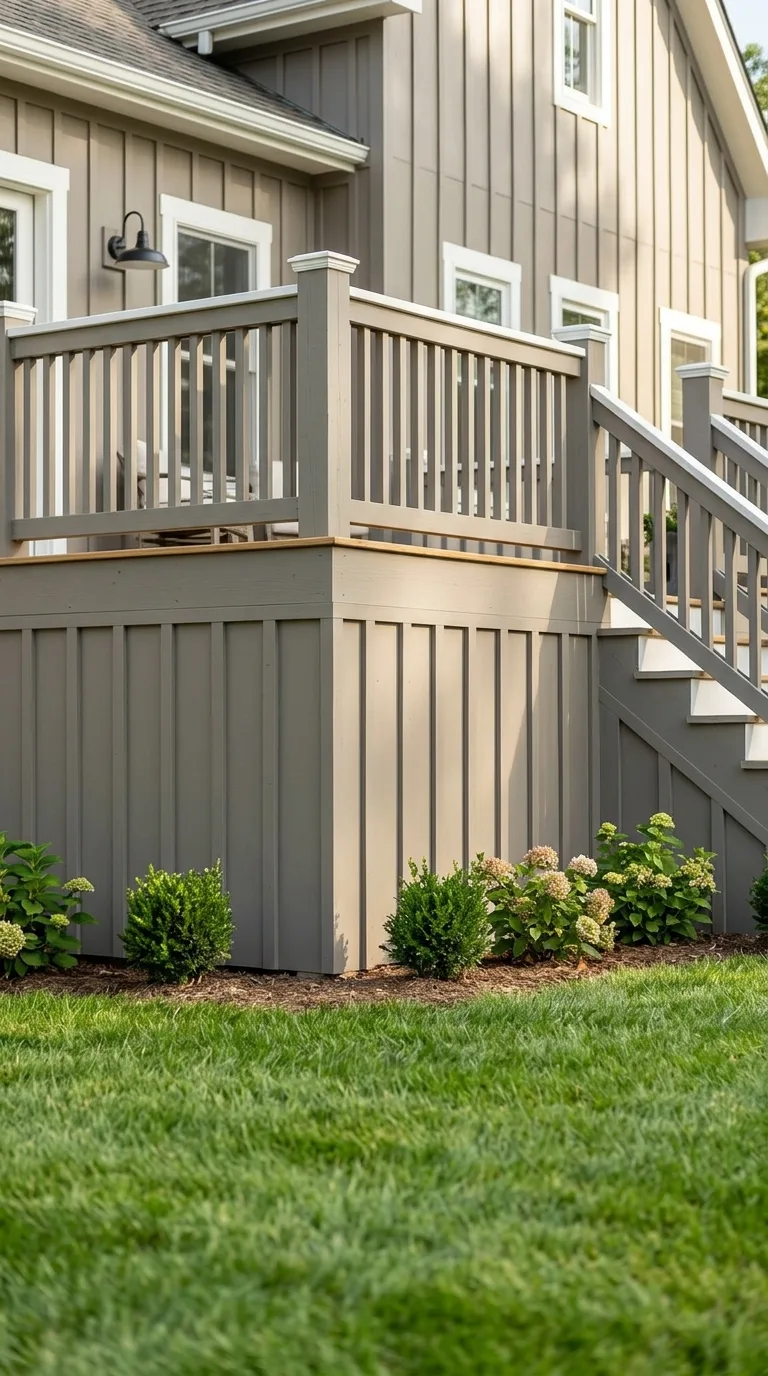
Installing vertical boards with narrow battens covering the joints as deck skirting creates a board and batten texture that echoes one of the most popular exterior siding styles in residential design today. This classic pattern adds strong vertical lines that make the deck appear taller and more substantial while providing complete coverage of the space beneath.
Using inexpensive pine boards and thin batten strips keeps costs low while the finished pattern looks identical to premium board and batten siding installed on high end homes. Painting the completed skirting in the same color as your home’s siding creates a perfectly integrated look that makes the deck appear to be a factory original part of the house. This is farmhouse elegance at a hardware store budget.
8. Bamboo Fencing Roll Skirting
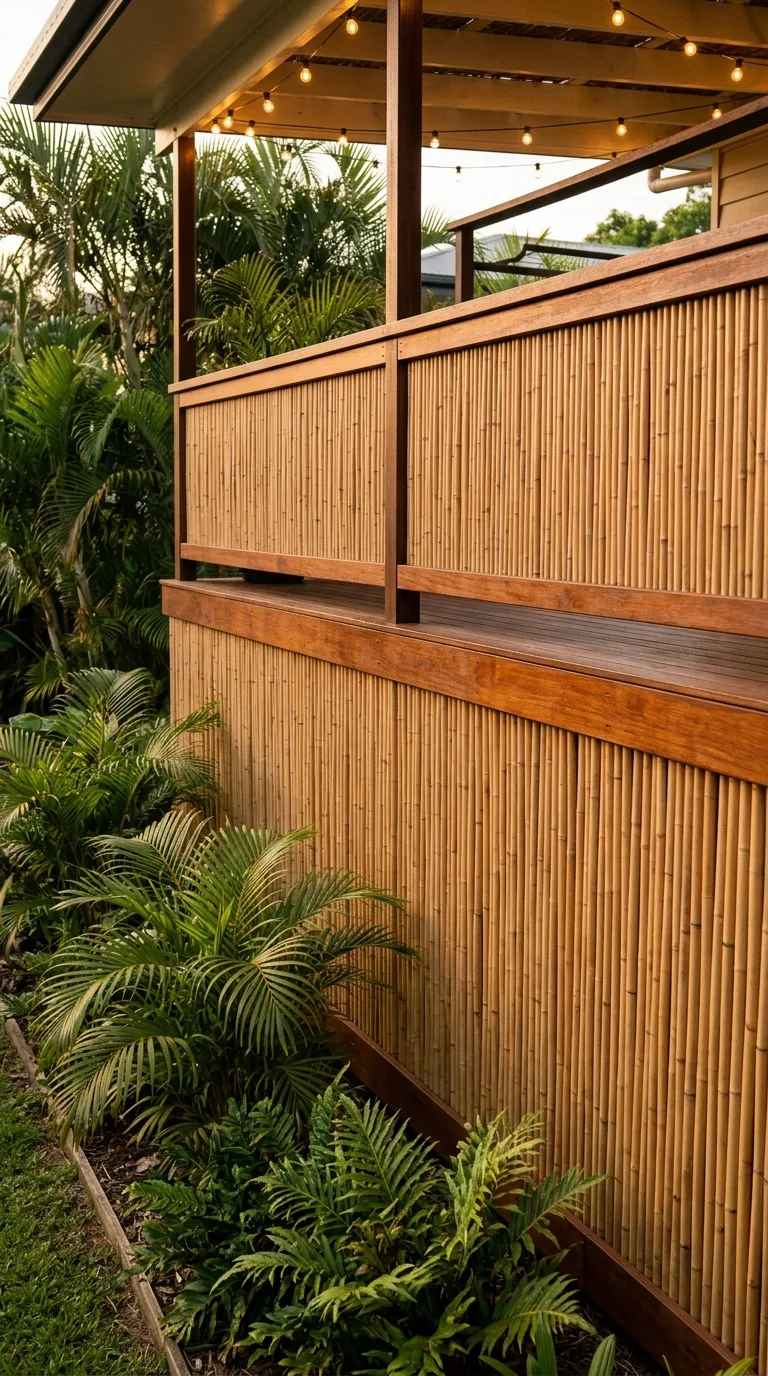
Bamboo fencing rolls, the kind sold for privacy screening, make surprisingly attractive and affordable deck skirting that brings a tropical, resort inspired texture to your outdoor space. The natural tan color and vertical reed pattern of bamboo creates a warm, organic screen that looks intentional and decorative rather than like a cover up.
Bamboo fencing rolls are sold in standard heights that work perfectly for most deck skirting applications and can be trimmed to fit with simple wire cutters. Attaching the bamboo to a treated wood frame behind keeps it flat and secure. Adding a stained timber top rail and bottom rail to frame the bamboo gives it a finished, polished look. This skirting works especially well with tropical landscaping, tiki bars, and pool area decks.
9. Cinder Block with Stucco Finish Skirting
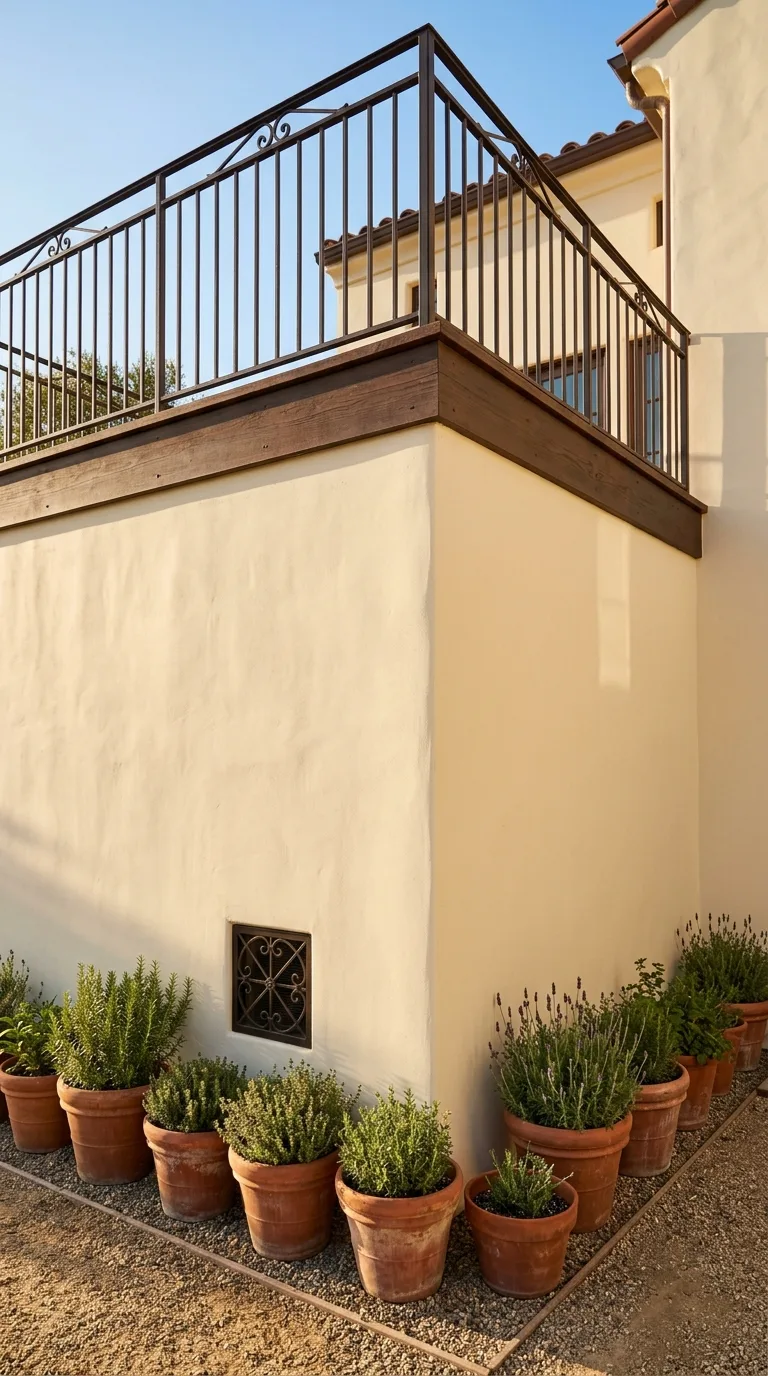
Stacking cinder blocks around the perimeter of your deck base and finishing them with a coat of stucco creates the appearance of a solid masonry foundation wall that looks permanent, substantial, and far more expensive than the modest materials involved. The stucco finish completely hides the block structure beneath and can be tinted or painted in any color to match your home.
A smooth stucco finish creates a modern, clean wall surface while a slightly textured finish adds a Mediterranean or southwestern character that works beautifully in warmer climates. Including one or two small ventilation openings covered with decorative metal grates ensures air circulates beneath the deck while maintaining the solid wall appearance. This approach creates genuinely robust skirting that also provides structural benefits.
10. Reclaimed Shutter Skirting
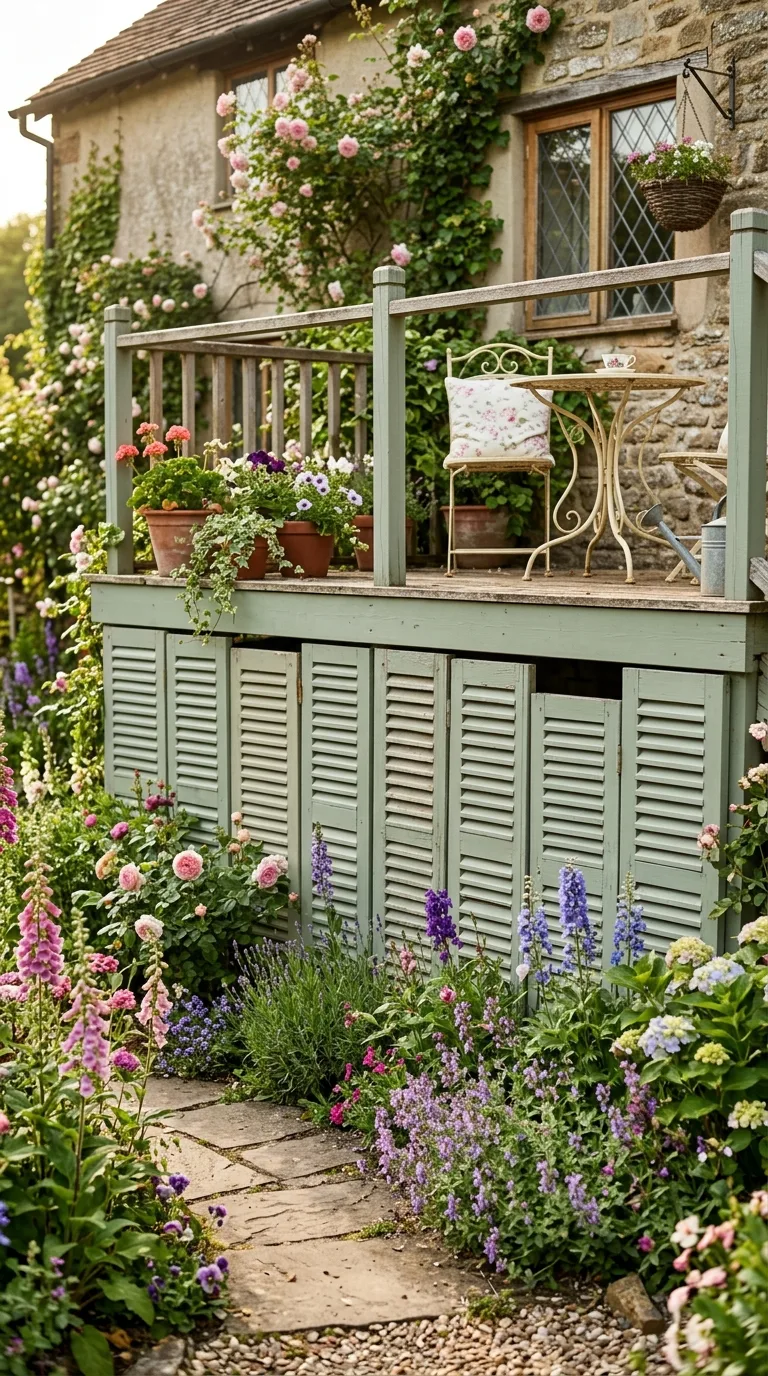
Old wooden shutters sourced from salvage yards, architectural resale shops, or estate sales can be repurposed into uniquely charming deck skirting that no one else will have. Mounting reclaimed shutters side by side beneath your deck creates a louvered screen with built in ventilation that looks like a deliberate, creative design decision with real vintage character.
Painting all the shutters in a single coordinating color unifies the mismatched collection and creates a cohesive panel with consistent character. Alternatively, leaving them in their original varied paint colors creates an eclectic, colorful display that adds playful personality to your deck’s exterior. Shutters with working louvers even allow you to adjust ventilation seasonally. This is deck skirting with genuine story and soul.
11. Pressure Treated Lattice with Timber Frame
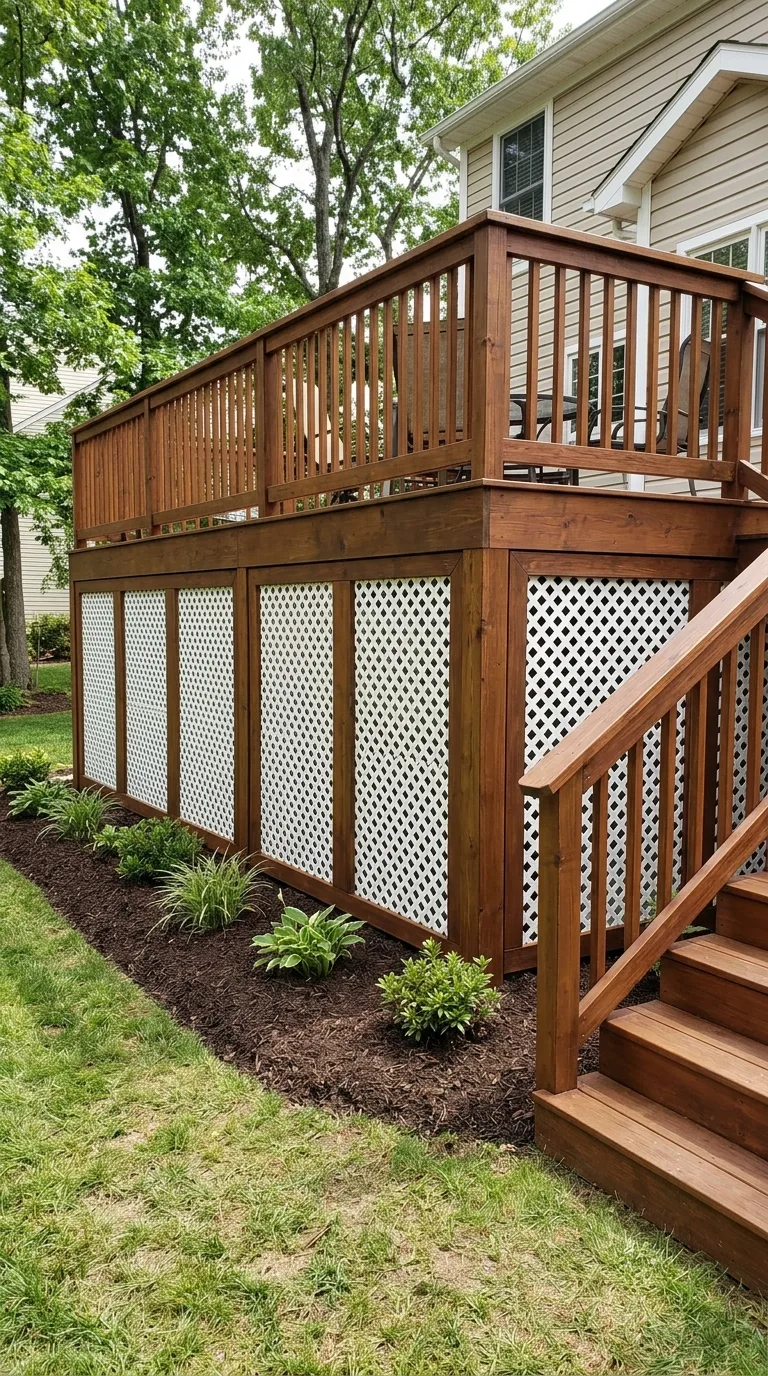
Standard pressure treated lattice elevated with a proper timber frame surround is the difference between lattice skirting that looks like an afterthought and lattice skirting that looks like a custom architectural detail. The frame provides clean, defined edges that give each panel a finished, intentional quality that unframed lattice stapled to the deck frame simply cannot achieve.
Building the frame from the same material as your deck railing posts and painting or staining everything to match creates visual consistency from the railing down to the ground. Making each framed panel removable with simple clips or turn buttons ensures easy access beneath the deck for storage and maintenance. The timber frame is the detail that transforms cheap lattice into something that looks thoughtfully designed and properly built.
12. Horizontal Metal Slat Skirting
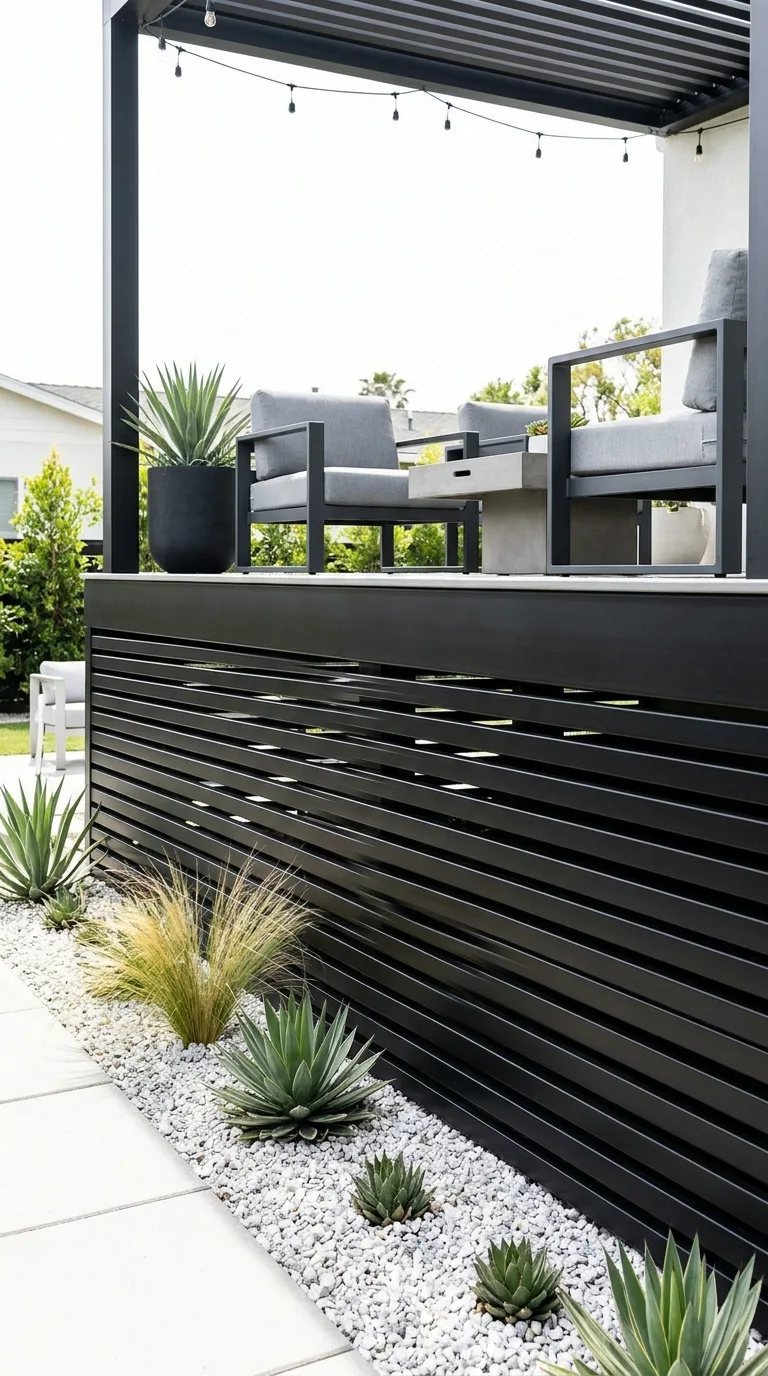
Thin horizontal metal slats or aluminum flat bars mounted with even spacing to a simple frame create sleek, modern deck skirting that looks like it was specified by an architect. The thin metal profile creates clean, precise shadow lines that have a level of refinement and sharpness that wood slats cannot quite match no matter how carefully they are installed.
Aluminum flat bars from any metal supplier are surprisingly affordable and can be cut to length with a basic hacksaw or chop saw. Painting them in matte black or dark bronze before installation creates the most premium appearance. The metal slats will never warp, rot, or need refinishing, making this one of the most genuinely long lasting skirting options. This is the choice for homeowners who want their deck to look contemporary and precise.
13. Woven Reed or Willow Screen Skirting
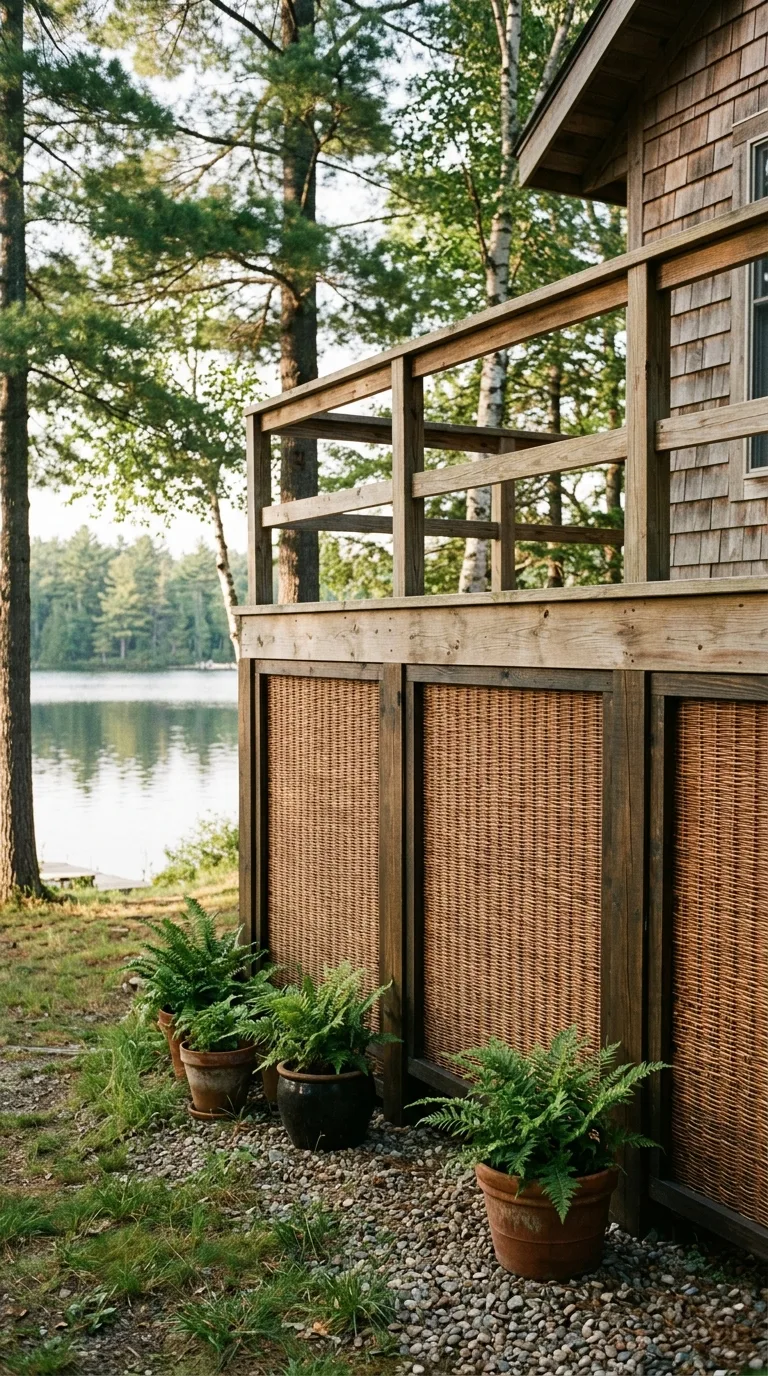
Natural woven reed or willow screening panels installed as deck skirting bring an organic, handcrafted texture that adds warmth and artisanal character to the base of your deck. The woven pattern has a natural beauty and tactile richness that manufactured materials struggle to replicate, and the neutral brown tones complement virtually every deck stain color and home exterior palette.
Woven screening panels are available in rolls and rigid panels from garden centers and are designed to withstand outdoor conditions for several years before needing replacement. Framing each section with stained timber creates a finished, furniture quality look. This natural material skirting works particularly well on cottages, lakehouse decks, and any setting where an organic, nature connected aesthetic is the design goal.
14. Painted Concrete Block Skirting Wall
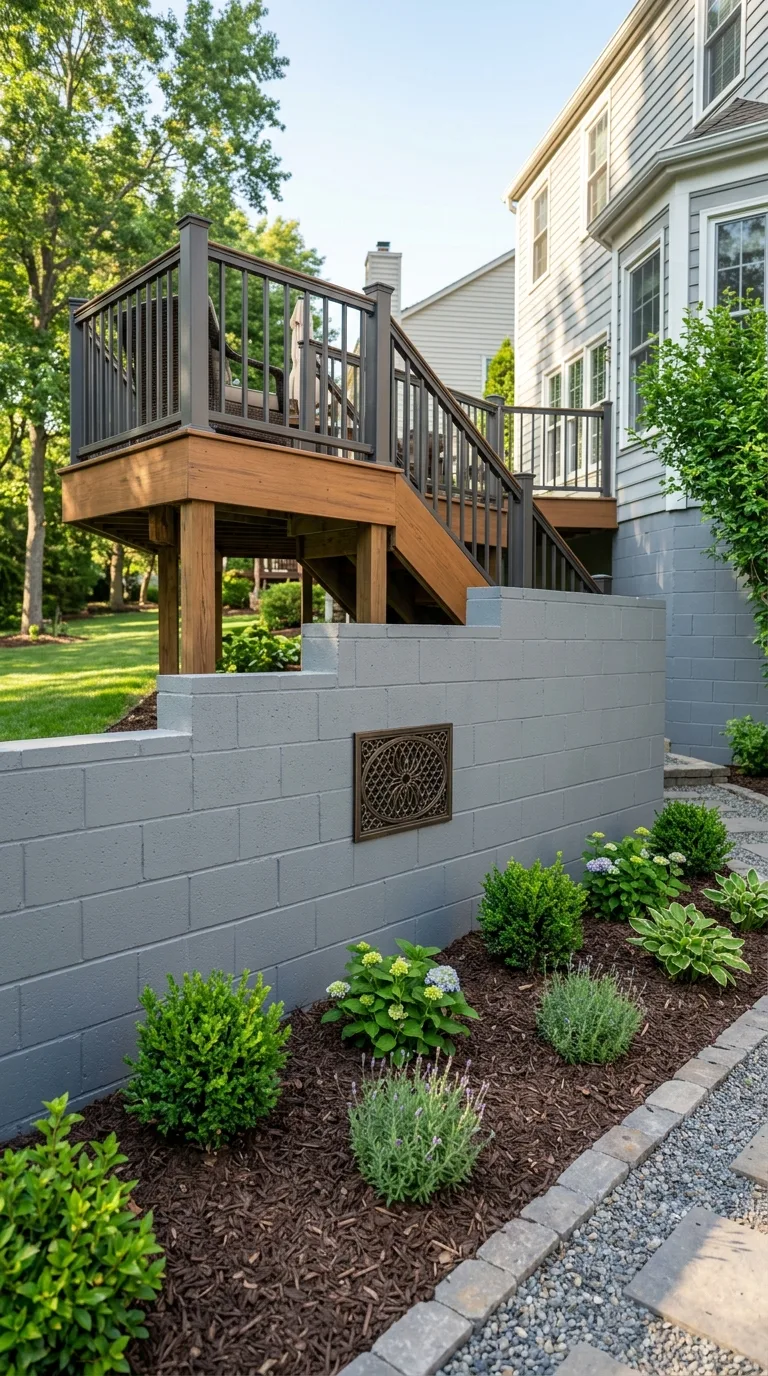
A low wall of stacked concrete blocks painted to match your home’s foundation color creates solid, permanent deck skirting that doubles as a structural retaining element on sloped sites. Concrete blocks are among the cheapest building materials available and when painted with masonry paint in a matching color they blend seamlessly with the existing foundation of most homes.
The solidity of a concrete block skirting wall gives the deck a sense of permanence and robustness that lighter materials like lattice and fabric cannot provide. Including decorative iron or aluminum vent covers at regular intervals prevents moisture buildup while maintaining the solid wall appearance. On sloped sites where the deck height varies, stepping the block wall down the slope creates a terraced effect that looks naturally landscaped and professional.
15. Vertical Log Slice Skirting
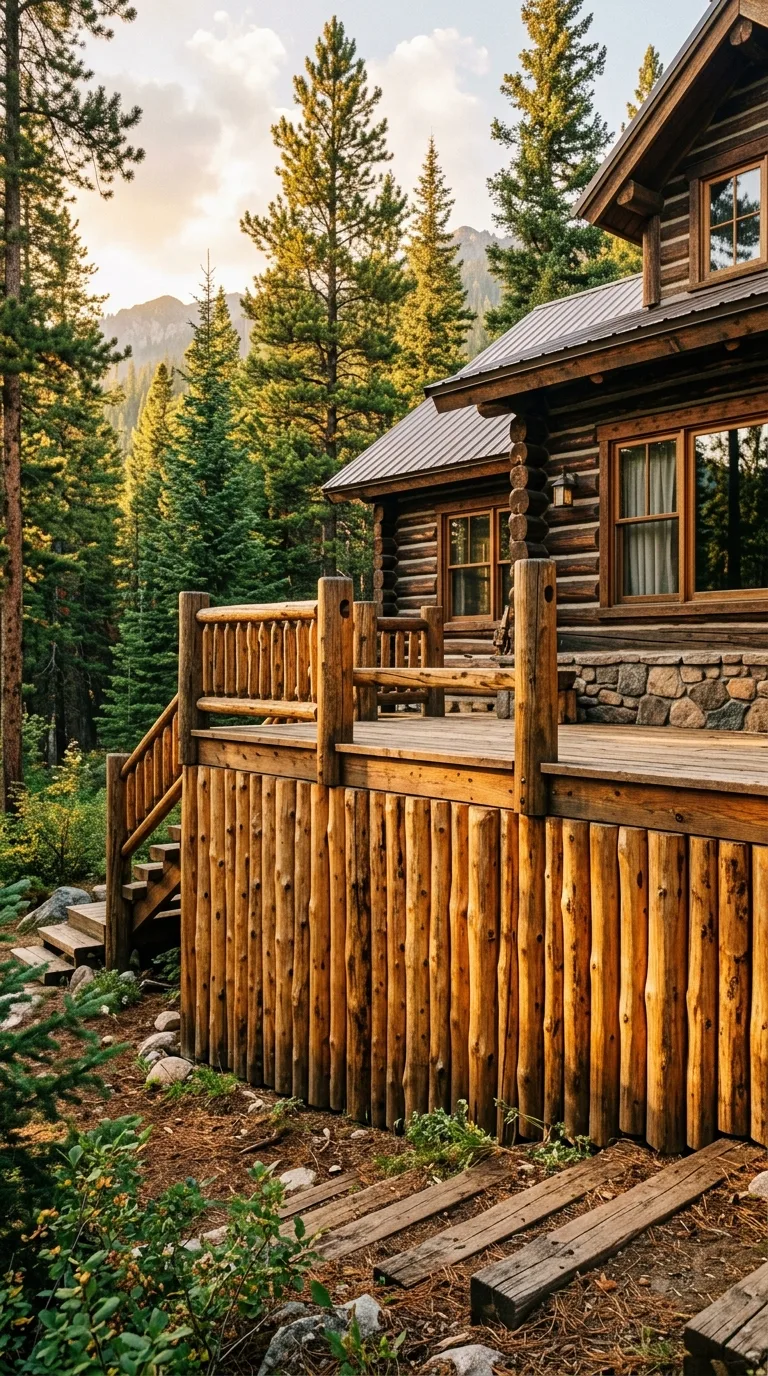
Half round log slices or small diameter logs installed vertically side by side as deck skirting create a rustic, cabin inspired look that adds genuine natural character to the base of your deck. Sourcing logs from tree trimming services or fallen trees on your own property makes this an extremely low cost option with extraordinary visual impact and one of a kind authenticity.
Peeling the bark and treating the logs with a wood preservative before installation ensures they last for years without significant decay. The natural variation in diameter and color between individual logs creates an organic, handcrafted appearance that makes the skirting look like it was built with care and intention. This is the perfect deck skirting choice for log cabins, mountain retreats, and woodland properties.
16. Horizontal Composite Decking Board Skirting
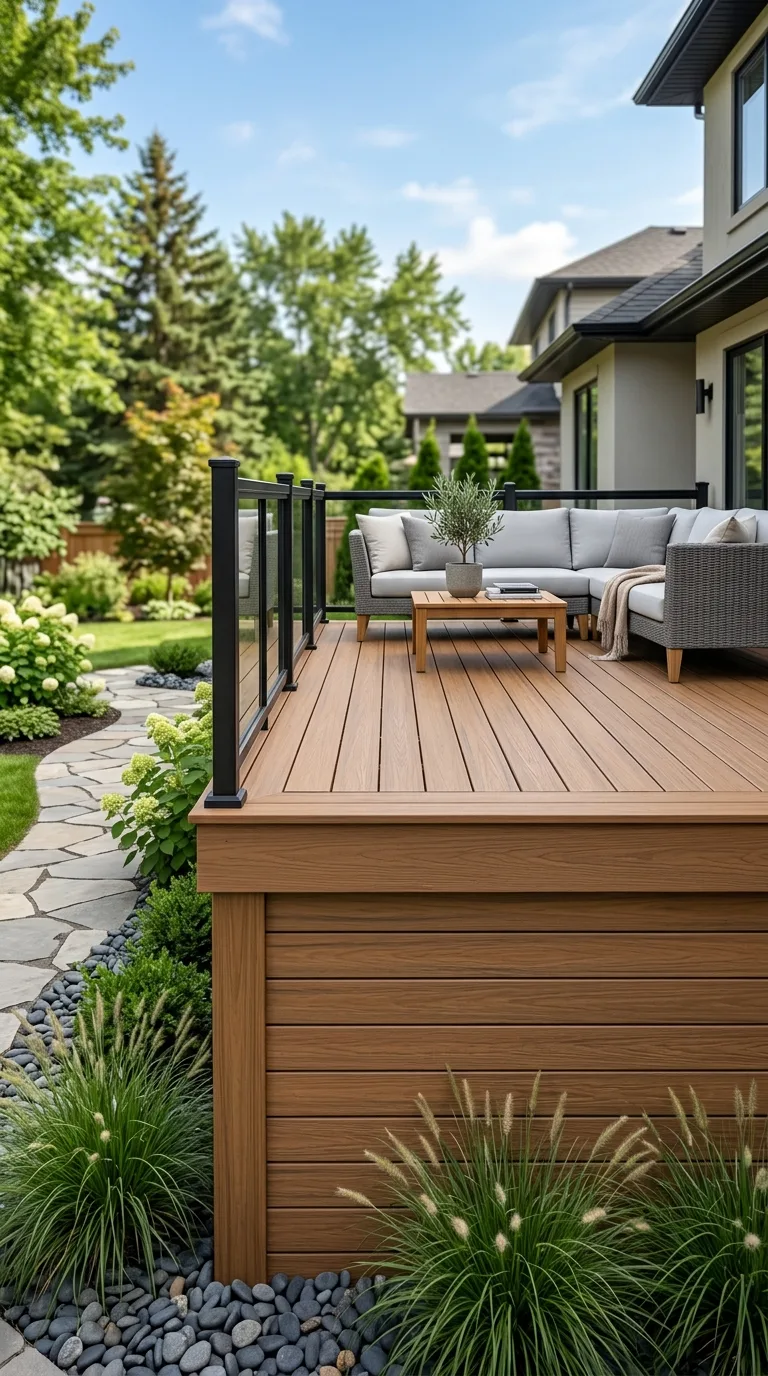
Using leftover or discounted composite decking boards installed horizontally as skirting creates a seamless, high end look that exactly matches the deck surface above. Many home improvement stores sell discontinued colors and end lot composite boards at significant discounts, making this premium material accessible for skirting applications at a fraction of its normal deck surface price.
Composite boards will never rot, warp, or require staining, which means this skirting maintains its appearance indefinitely with nothing more than occasional cleaning. The color match between the deck surface and the skirting creates a unified, custom built appearance that is incredibly impressive. If your deck is already built from composite, using the same product for skirting is the most visually cohesive choice possible.
17. Outdoor Fabric Curtain Skirting
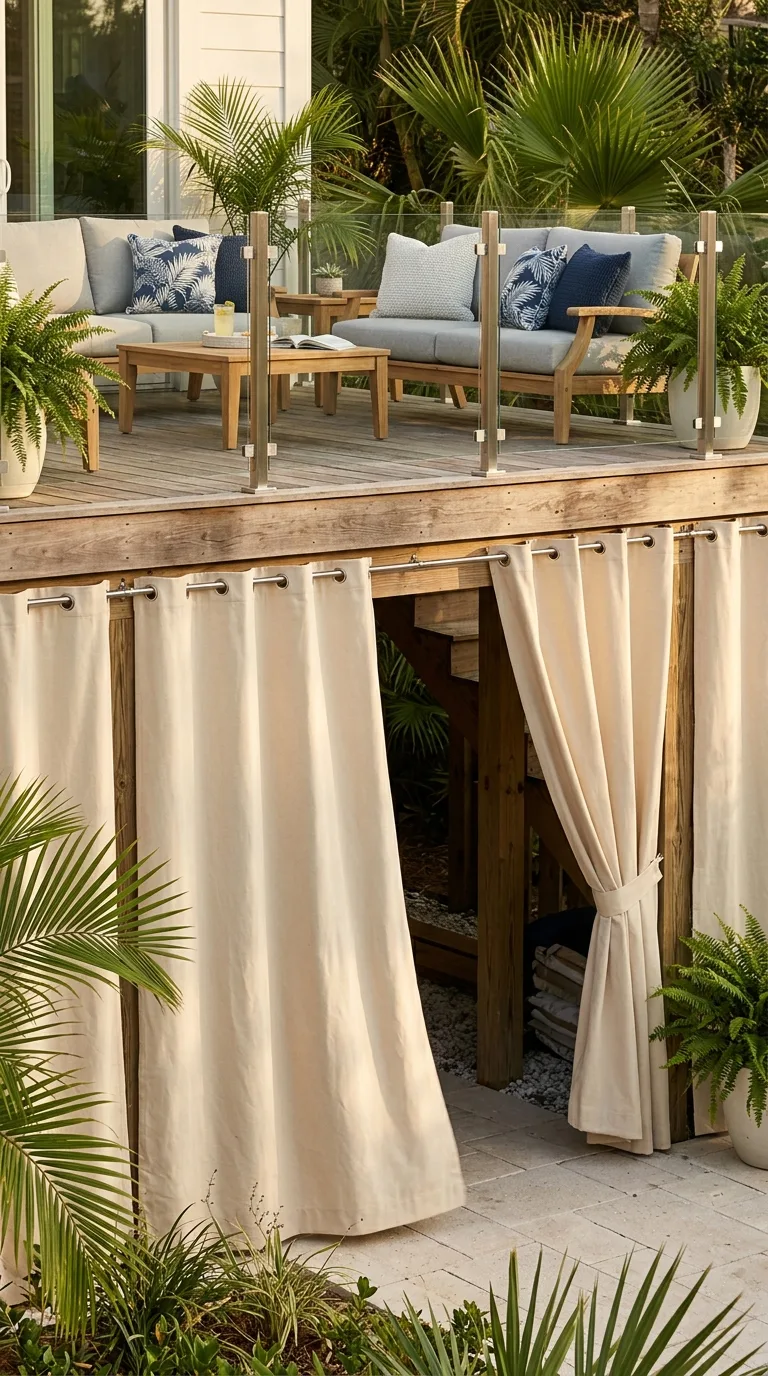
Hanging outdoor fabric curtains on a simple tension wire beneath your deck creates soft, flowing skirting that can be opened for access and closed for a finished appearance whenever you choose. Heavy duty outdoor fabric in a solid neutral color like canvas, natural linen, or navy blue creates a surprisingly elegant drape that looks intentional and resort inspired.
The fabric curtain approach is the most affordable of all skirting options and can be completed in under an hour with basic curtain clips and a stainless steel wire stretched between the deck posts. The soft movement of fabric in a breeze adds a relaxed, luxurious quality that rigid materials cannot provide. This is an excellent temporary or seasonal skirting solution that can be removed and stored during winter months.
18. Brick Veneer Skirting
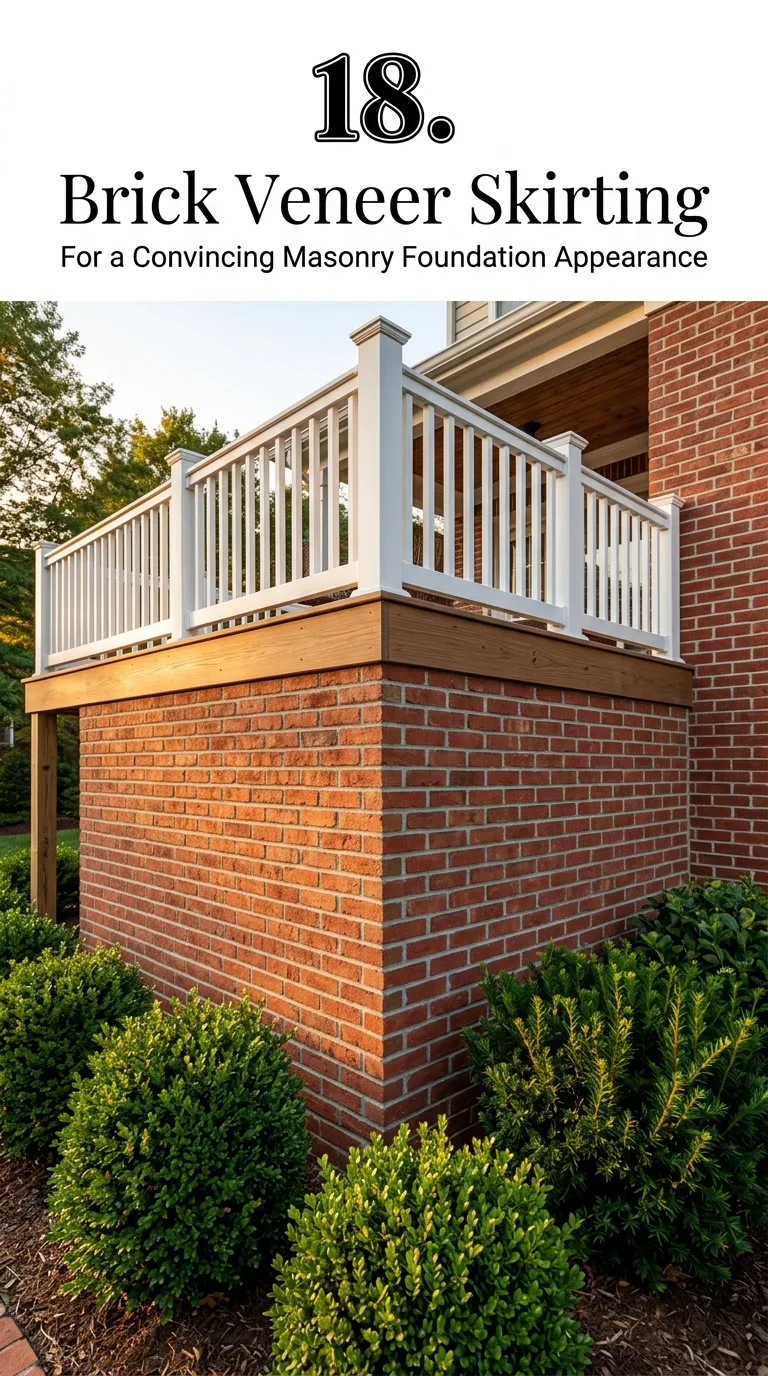
Thin brick veneer panels adhered to a plywood or cement board backer create the appearance of a genuine brick foundation beneath your deck at a fraction of the weight and cost of real brickwork. Modern brick veneer is made from real clay fired to the same specifications as full size brick and is virtually indistinguishable from traditional masonry at normal viewing distances.
Choosing a brick veneer color and pattern that matches your home’s existing brickwork makes the deck look like it was part of the original house construction rather than an addition. Running a traditional mortar joint pattern between the thin bricks completes the authentic masonry illusion. Brick veneer skirting is particularly effective on homes with brick facades where any other skirting material would look obviously mismatched and out of place.
19. Gabion Basket Skirting
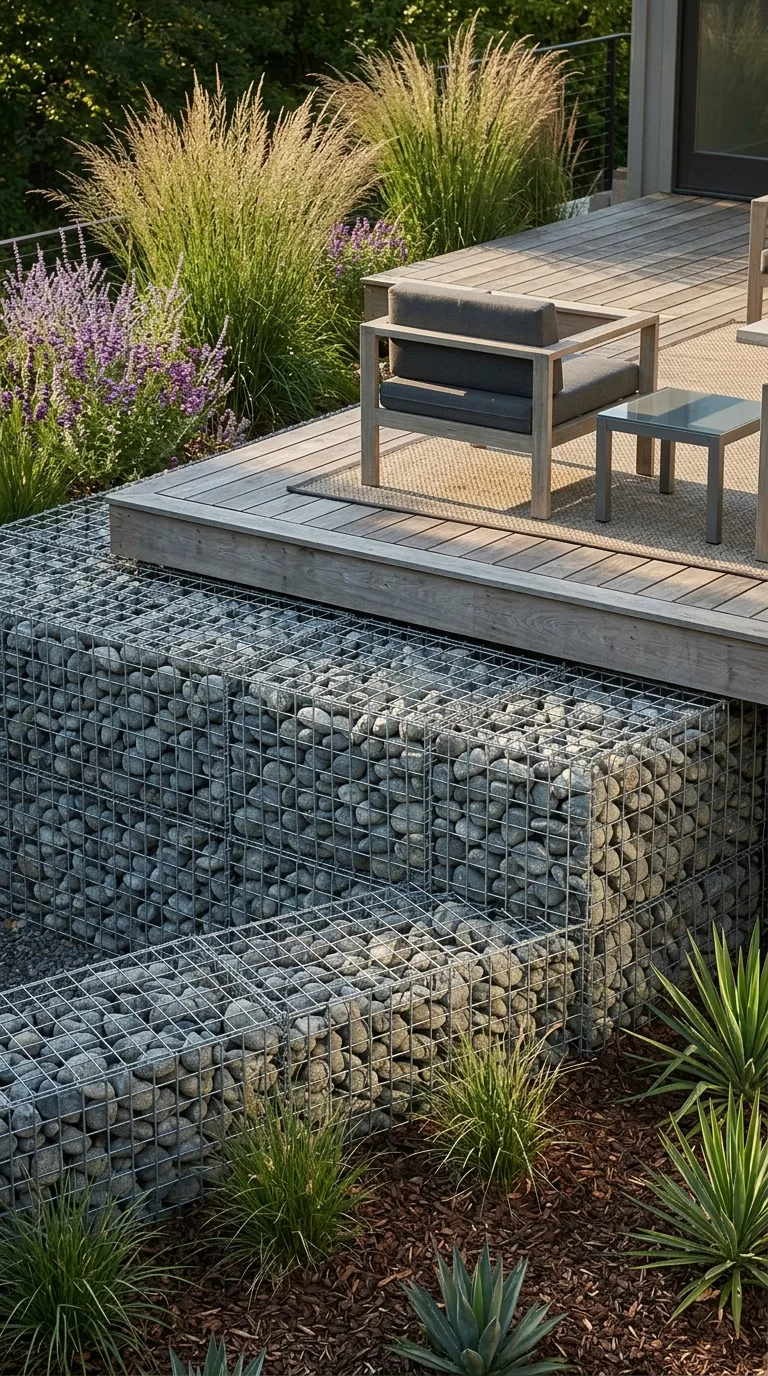
Wire gabion baskets filled with decorative stones, river rocks, or reclaimed brick pieces create robust and visually striking deck skirting that has a contemporary, landscape architectural quality rarely seen in residential settings. The wire mesh baskets are inexpensive, and filling material can often be sourced locally for very little cost or even free from construction sites and riverbeds.
Gabion skirting adds genuine mass and visual weight to the base of your deck that lighter materials cannot provide, which makes elevated decks in particular look more grounded and stable. The texture and color of the fill stone creates a constantly interesting surface that catches light differently throughout the day. This is the deck skirting choice that makes architects and designers take notice because it brings landscape design principles to residential construction.
20. Living Wall Skirting with Climbing Plants
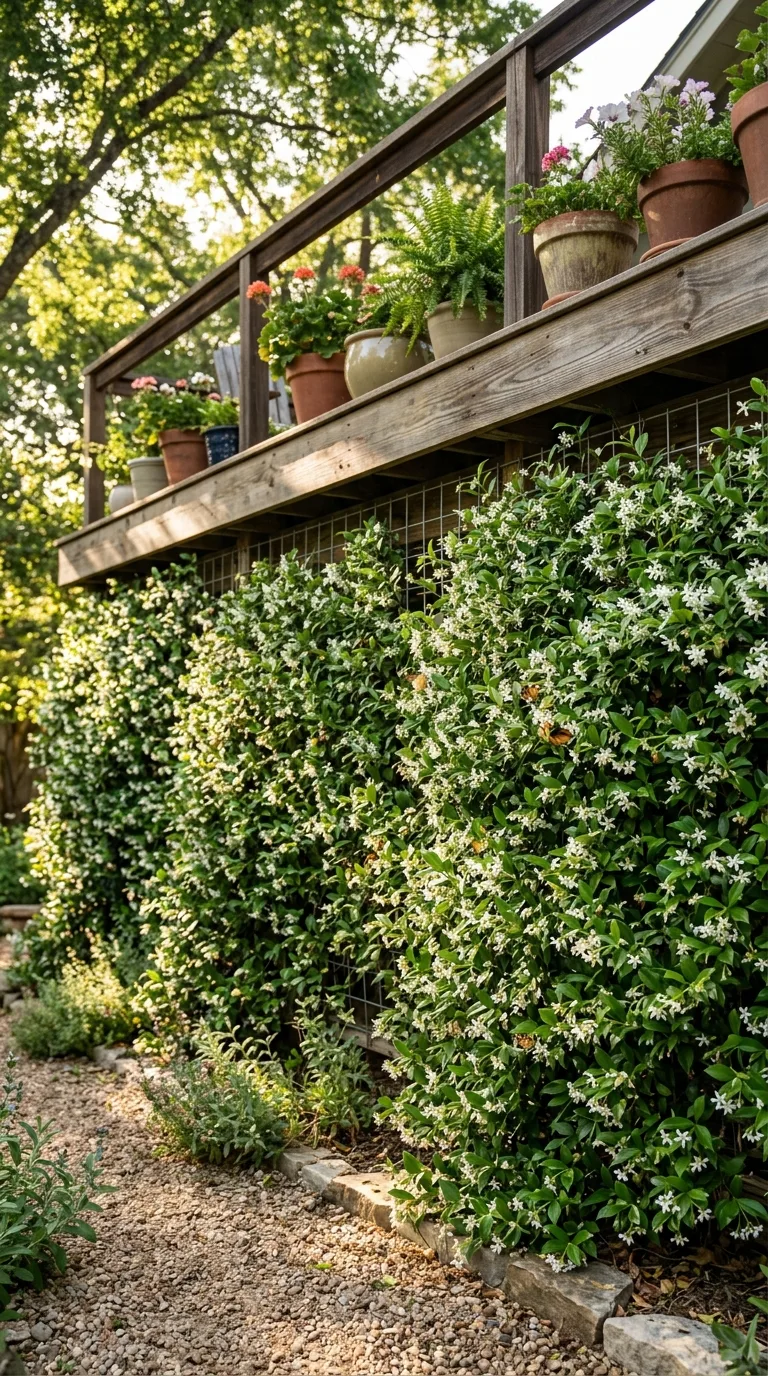
Installing a simple wire trellis mesh across the open space beneath your deck and training climbing plants to grow across it creates a living green wall that screens the underside naturally while adding beauty, seasonal interest, and environmental value that no manufactured material can match. Fast growing climbers like star jasmine, virginia creeper, or climbing hydrangea fill in remarkably quickly.
A living wall of climbing plants changes with the seasons, producing flowers in spring and summer, rich foliage in autumn, and an interesting bare vine structure in winter that still provides partial screening. The green living wall also attracts pollinators and beneficial insects to your garden. This is the most naturally beautiful deck skirting option available and costs almost nothing beyond a few plants and a roll of inexpensive wire mesh.


