

25 Stylish Mobile Home Exterior Ideas
A manufactured or mobile home’s exterior can be improved in the same ways as any house: siding and paint, a porch or deck, skirting, lighting and planting. A few things work differently, though. Additions should stand on their own supports, skirting needs vents and an access panel, and a local authority or park may need to approve changes.
Below are 25 exterior ideas for single-wide and double-wide homes, each with what it involves and what to watch for. Start with the basics, because they apply to almost every project.
Before you start
Check the rules first
HUD’s installation standards advise contacting the local authority before making any alteration to a manufactured home or its installation, to find out whether plans and permits are needed. If the home is in a community or park, read the lease and community rules too, since they may limit colors, additions and fences.
Let additions support themselves
The same standards say an attached porch, deck, carport or other add-on should be designed to carry its own weight, unless the home’s installation instructions cover it or a registered engineer or architect designs it.
Keep the crawlspace vented
Skirting must be vented. HUD’s rules call for at least 1 square foot of vent for every 150 square feet of floor (less if the ground is covered with a vapor retarder), on at least two opposite sides and as high as practical, plus an access opening at least 18 by 24 inches where the utility connections can be reached.
Use the right paint and prep
Vinyl, aluminum and wood siding each need different prep. On vinyl, Sherwin-Williams advises staying no darker than the original color unless you use a paint formulated for darker colors on vinyl, because dark paint can make it warp. If the home was built before 1978, assume old paint may contain lead: contractors paid to disturb it must be lead-safe certified, and DIYers should use lead-safe practices.
The 25 ideas at a glance
| Idea | What it involves | Watch for |
|---|---|---|
| Board and batten | New vertical siding | Permits; insulation only if added |
| Farmhouse | Light siding, black trim, porch | Dark paint on vinyl frames |
| Black and white | Paint and matching fixtures | Regular washing |
| Wrap-around porch | Built addition | Its own footings; permit |
| Stone accents | Veneer at base or entry | Weight; skirting vents |
| Shutters, window boxes | Small add-ons | Fix to framing, not siding |
| Metal roof | New roof or roof-over | Permit; roof structure |
| Pastel cottage | Paint and planting | Park or HOA color rules |
| Flower beds | Planting along the front | Keep vents clear |
| Wooden deck | Built addition | Its own footings; guards |
| Craftsman details | Brackets, columns, new door | Seal fastener holes |
| Dark paint | Repainting | Vinyl-safe paint |
| Cedar shakes | Accent siding | Upkeep; wildfire rules |
| Ranch style | Siding, carport, planting | Self-supporting carport |
| Pergola entrance | Freestanding structure | Invasive wisteria |
| Vertical garden | Trellis or wall planters | Moisture on siding |
| Brick skirt | Masonry or faux-brick skirting | Vents, access, footing |
| Minimalist | Siding, windows, lighting | Bedroom egress windows |
| Colorful front door | Paint | Door material and prep |
| Outdoor lighting | String lights, fixtures | Outdoor-rated, GFCI |
| Rustic metal roof | Corrugated steel | Rain noise, roof build |
| Coastal look | Light colors, natural textures | Salt air, anchoring |
| Log cabin look | Log-look siding | Wood upkeep |
| Rock garden | Gravel, boulders, dry plants | Watering until established |
| Boho porch | Furniture and decor | Outdoor-rated fabrics |
1. Board and Batten Siding
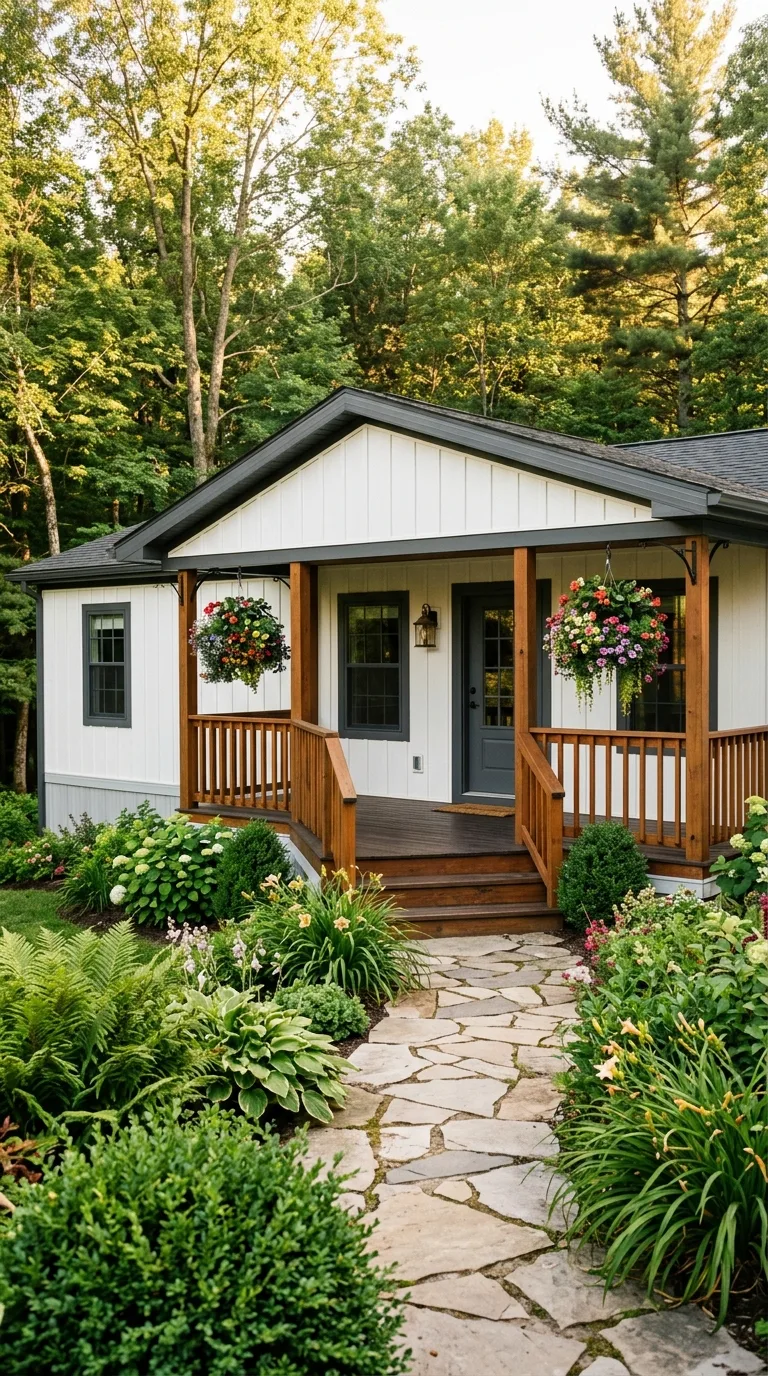
Board and batten, with wide vertical boards and narrow strips over the joints, adds texture and height to a long, low home and suits farmhouse and modern styles. Vinyl versions are common on manufactured homes; fiber cement is heavier, so ask an installer whether the walls suit it. Pair it with a contrasting trim color, such as white siding with black trim.
Good to know: new siding only adds insulation if you add a rigid foam layer or choose insulated siding, and re-siding is an alteration, so check with your local authority and community first.
2. Farmhouse Style Exterior
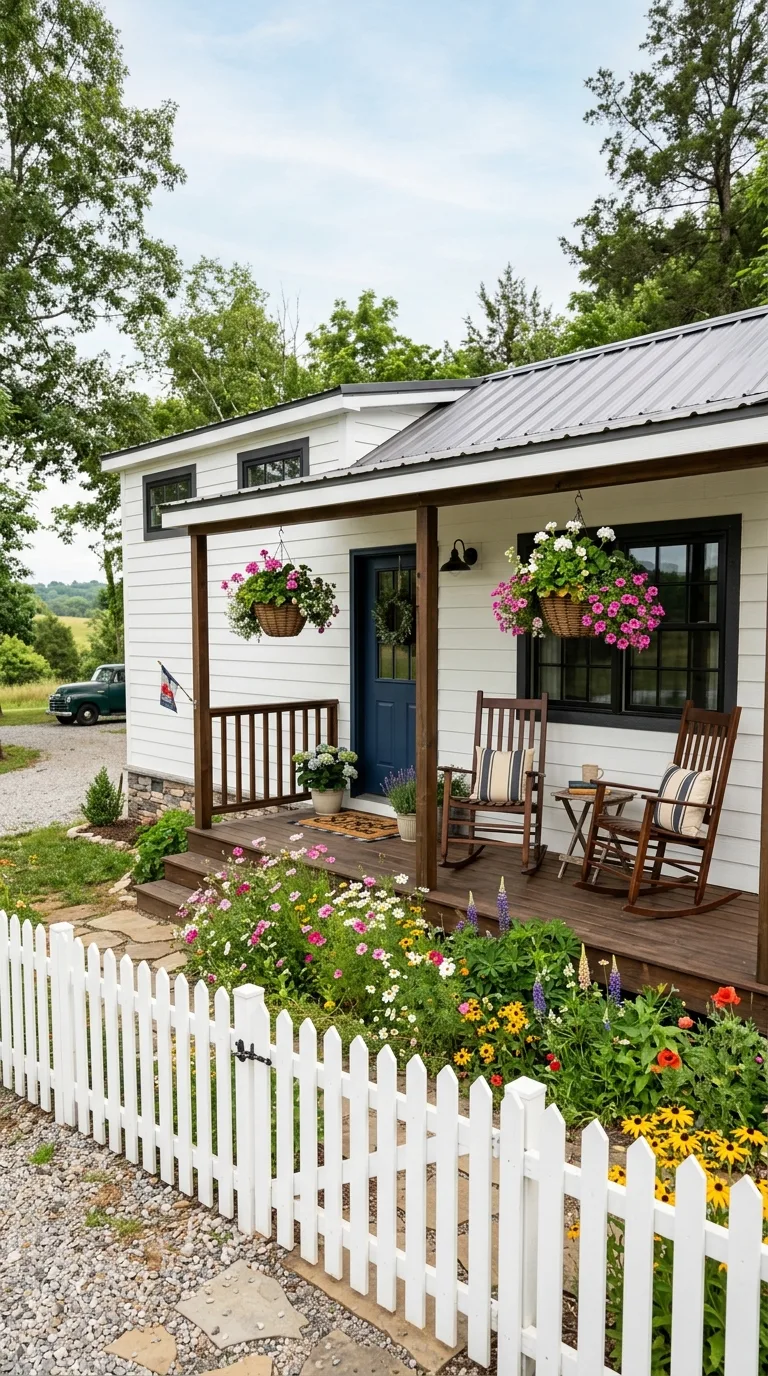
A farmhouse look uses white or cream siding, black window frames, a covered front porch and simple planting. Wooden porch posts, a plain bench by the door and potted greenery finish it. It suits single-wides and double-wides alike, and the porch does most of the work, so start there if the budget is limited.
Good to know: if the window frames are vinyl, check the window maker’s guidance before painting them black, since dark paint can make vinyl overheat and warp.
3. Modern Black and White Contrast
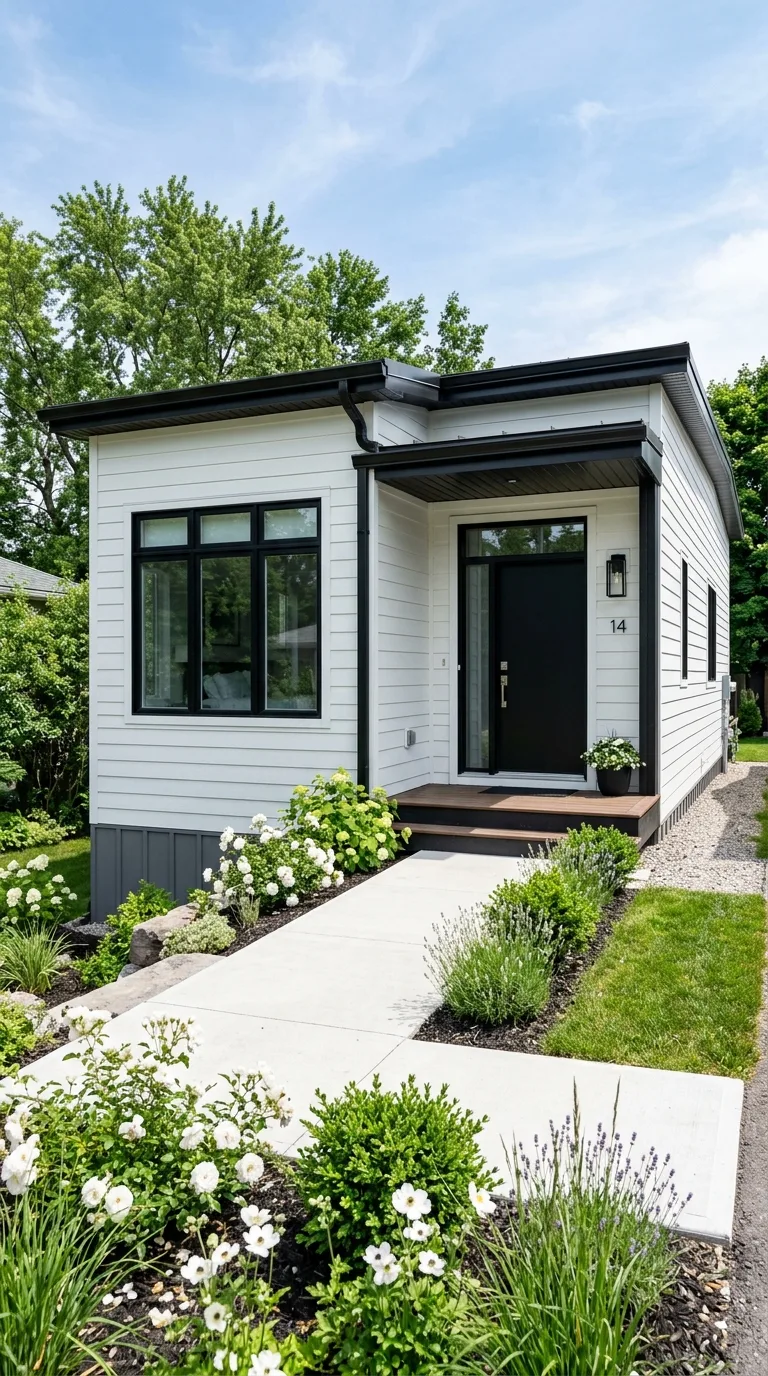
White siding with black window trim, gutters and a black front door gives a crisp, modern look. Keep metal details such as the mailbox, light fixtures and railings in the same black so the scheme looks consistent. Green planting and white flowers keep it from feeling stark.
Good to know: black gutters and fixtures show dust and pollen, and white siding shows mildew on shady sides, so plan to wash the exterior regularly with a soft brush and a siding cleaner.
4. Wrap-Around Porch
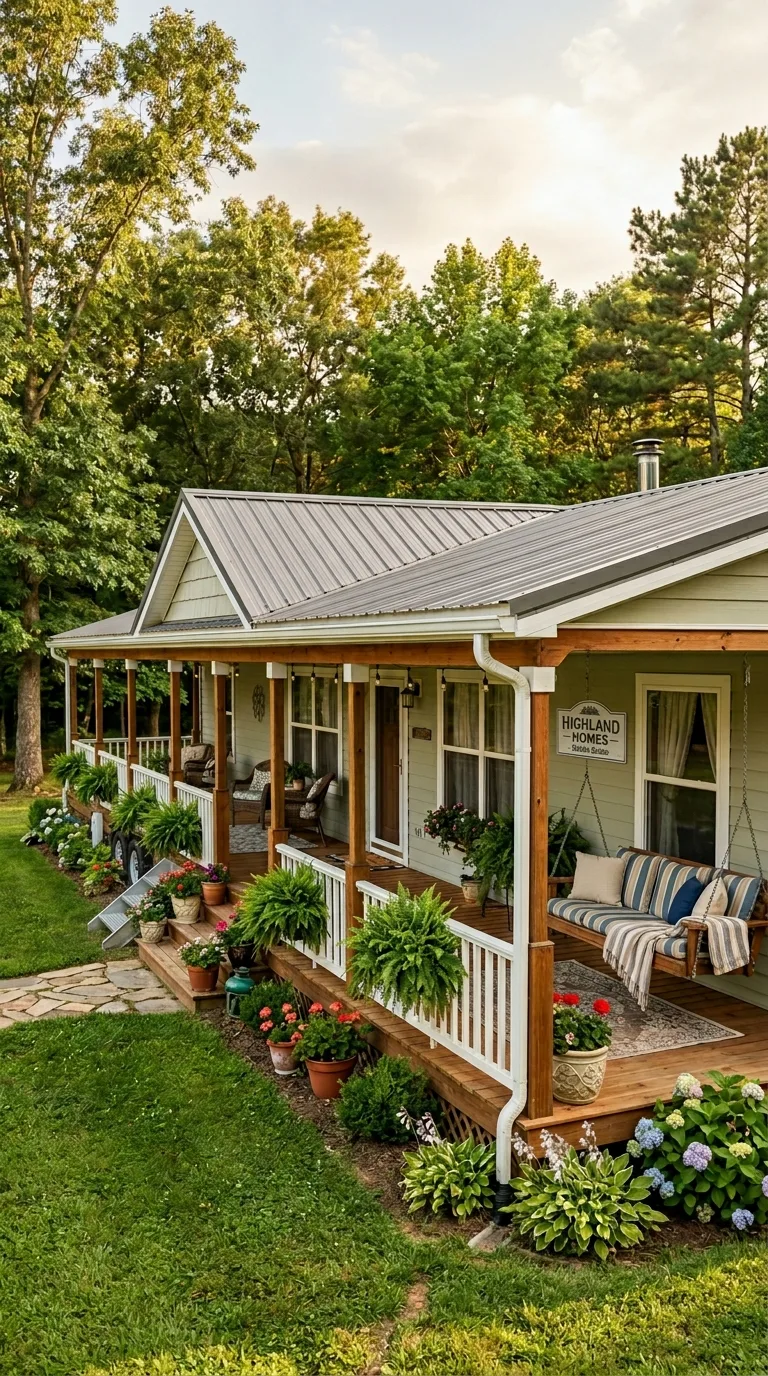
A porch along the front and one side of the home adds shaded outdoor space and gives the house a more settled, site-built look. Sturdy posts, a painted railing and a roof overhang protect the door from weather and leave room for a swing or a few chairs.
Good to know: HUD’s installation standards say an attached porch should carry its own weight unless the home’s instructions allow otherwise, so build it on its own footings and posts. It will usually need a permit, and raised sections need guards.
5. Stone Accent Walls
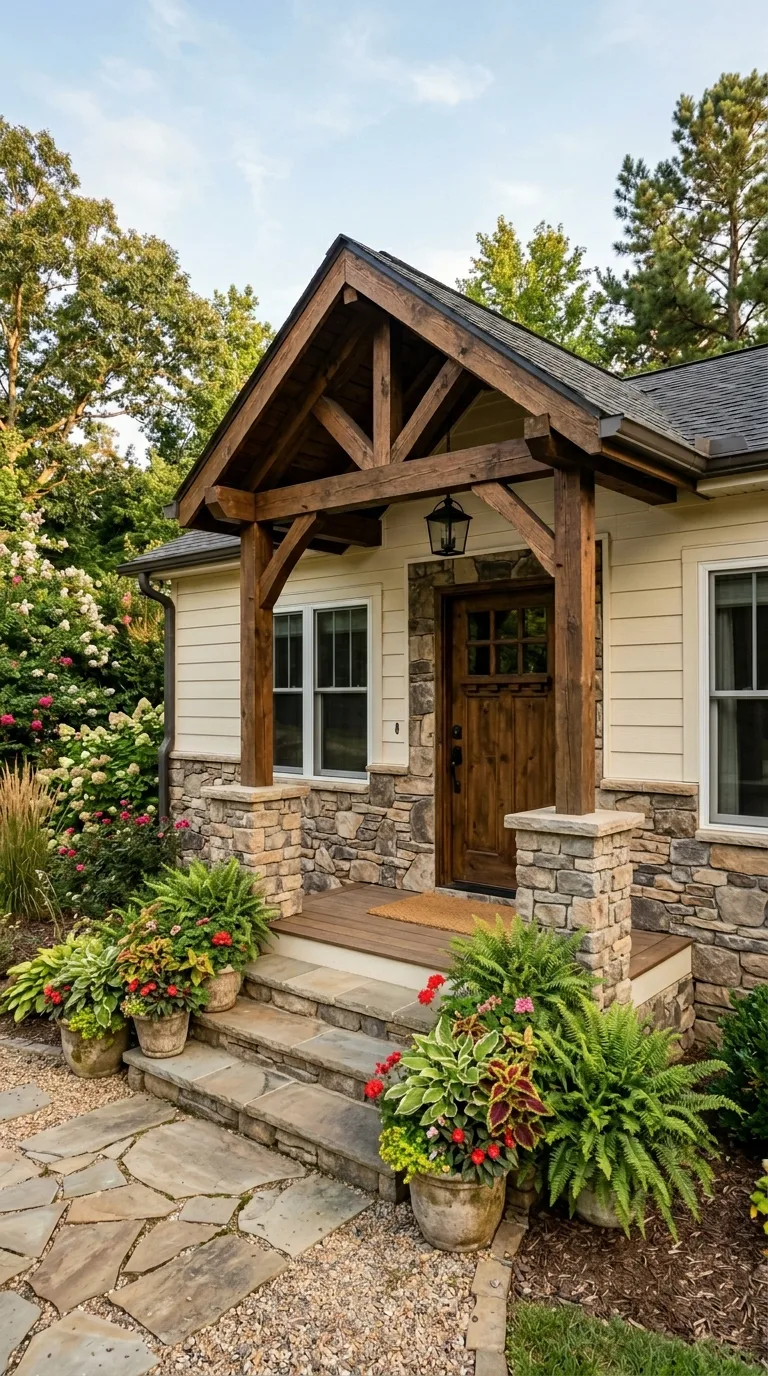
Stone veneer around the base, along the lower part of the front, or framing the entry gives a manufactured home a heavier, more permanent look. Faux stone panels are lighter and less expensive than natural stone. Warm stone pairs with tan, brown, soft gray or olive siding.
Good to know: stone veneer is much heavier than vinyl siding, so ask an installer whether the home’s walls can carry it. Used as skirting, it still needs the vents and access opening HUD’s rules require.
6. Shutters and Window Boxes
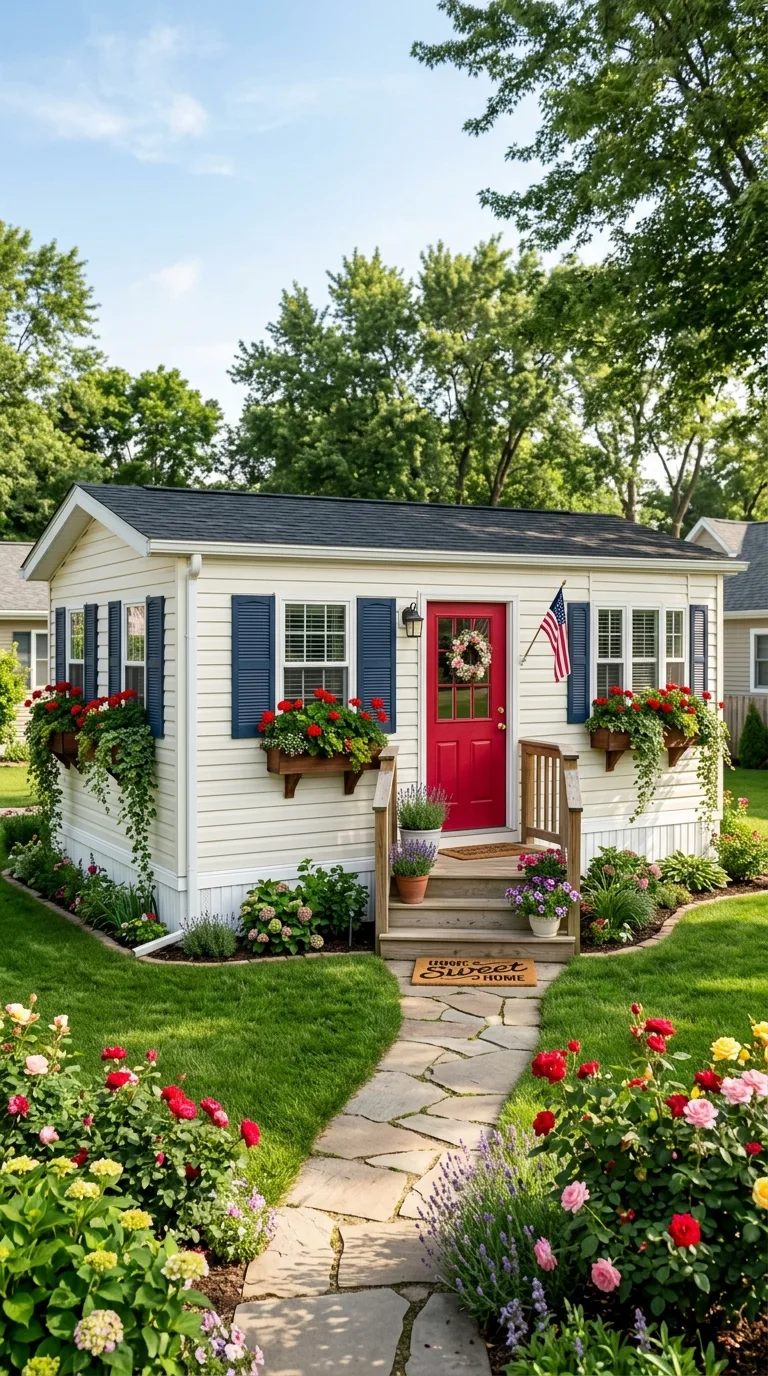
Shutters and window boxes add cottage character for little cost. Board-and-batten shutters suit farmhouse and rustic homes; louvered shutters suit colonial and coastal styles. Size each shutter at about half the window’s width, as if it could close. Fill boxes with petunias or trailing plants in summer, and evergreens and berries in winter window boxes.
Good to know: fix window boxes to the wall framing with brackets rather than to the siding alone, and leave a gap behind them so water drains and the siding can dry.
7. Metal Roof Makeover
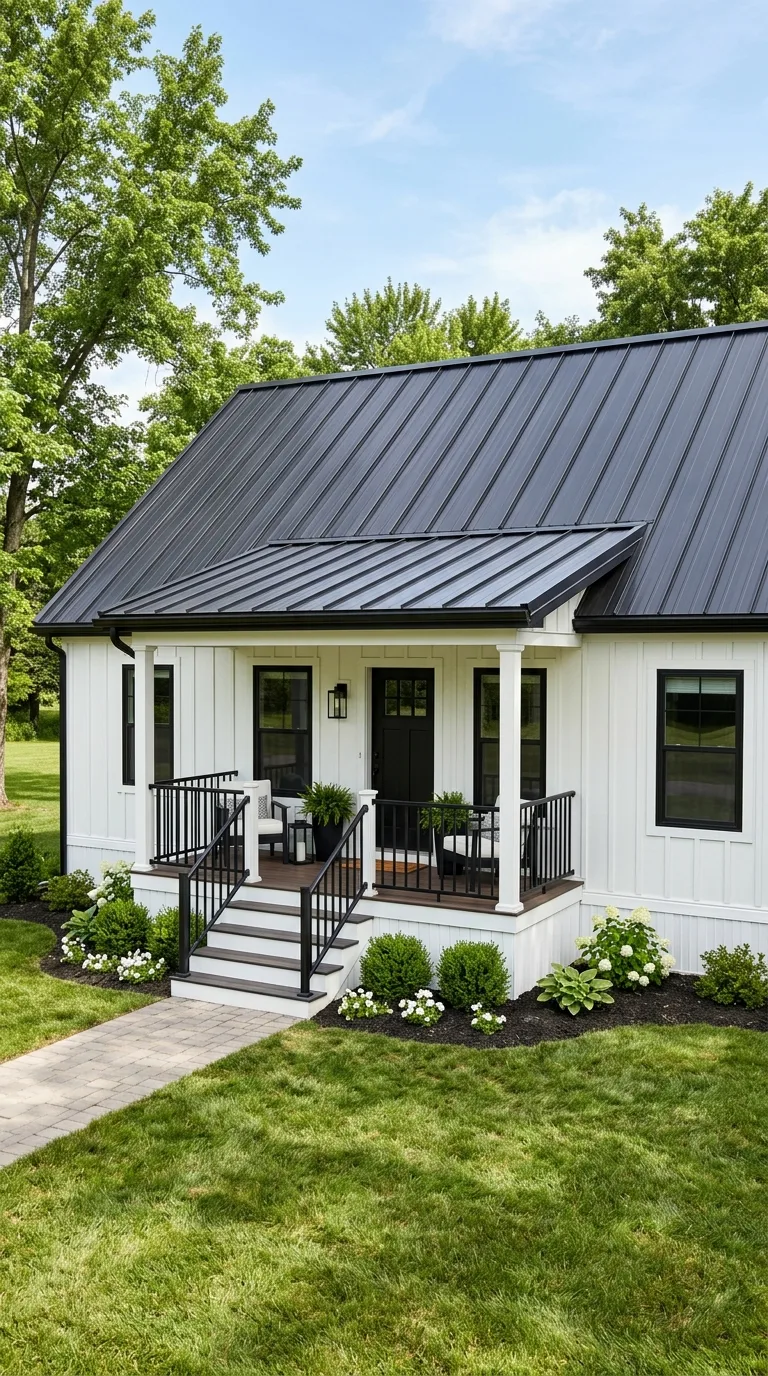
Standing seam or corrugated metal roofing changes the character of a manufactured home: charcoal suits modern and farmhouse styles, red suits a white farmhouse look, and copper tones suit rustic homes. Metal sheds rain and snow well and is known for a long service life.
Good to know: ENERGY STAR notes that lighter or reflective roofs stay cooler than roofs that absorb sunlight, which matters most in hot, sunny climates. A new roof is an alteration, so check permits and whether the roof structure suits the new material.
8. Cottage Style with Pastel Colors

Pale yellow, soft lavender, mint or blush siding with white trim and shutters gives a cottage look that suits warm climates and coastal towns. A picket fence, a trellis with climbing roses, hanging baskets on the porch posts and potted plants along the path add to it.
Good to know: pastels brighten in full sun, so choose a softer, grayer sample than you think and check it outdoors. Parks and HOAs often have color rules, so get approval before painting.
9. Landscaping with Flower Beds
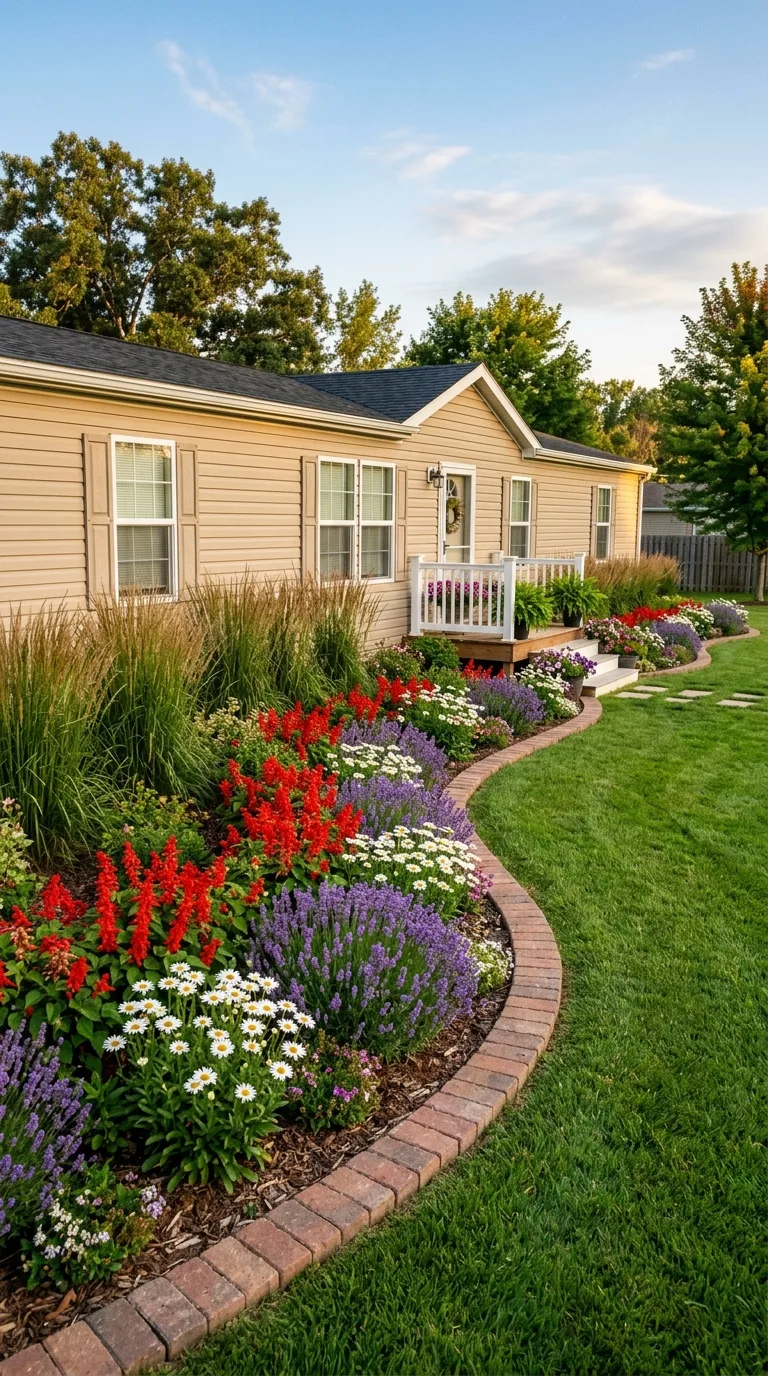
A planted bed along the front softens the line where the home meets the ground. Mix shrubs and perennials for structure with a few annuals for color, and layer by height: taller shrubs or ornamental grasses at the back, low plants at the front. An edge of brick, stone or landscape timbers keeps it tidy.
Good to know: keep soil, mulch and plants below the skirting vents, and slope the bed away from the home so water drains away from the crawlspace.
10. Wooden Deck Addition
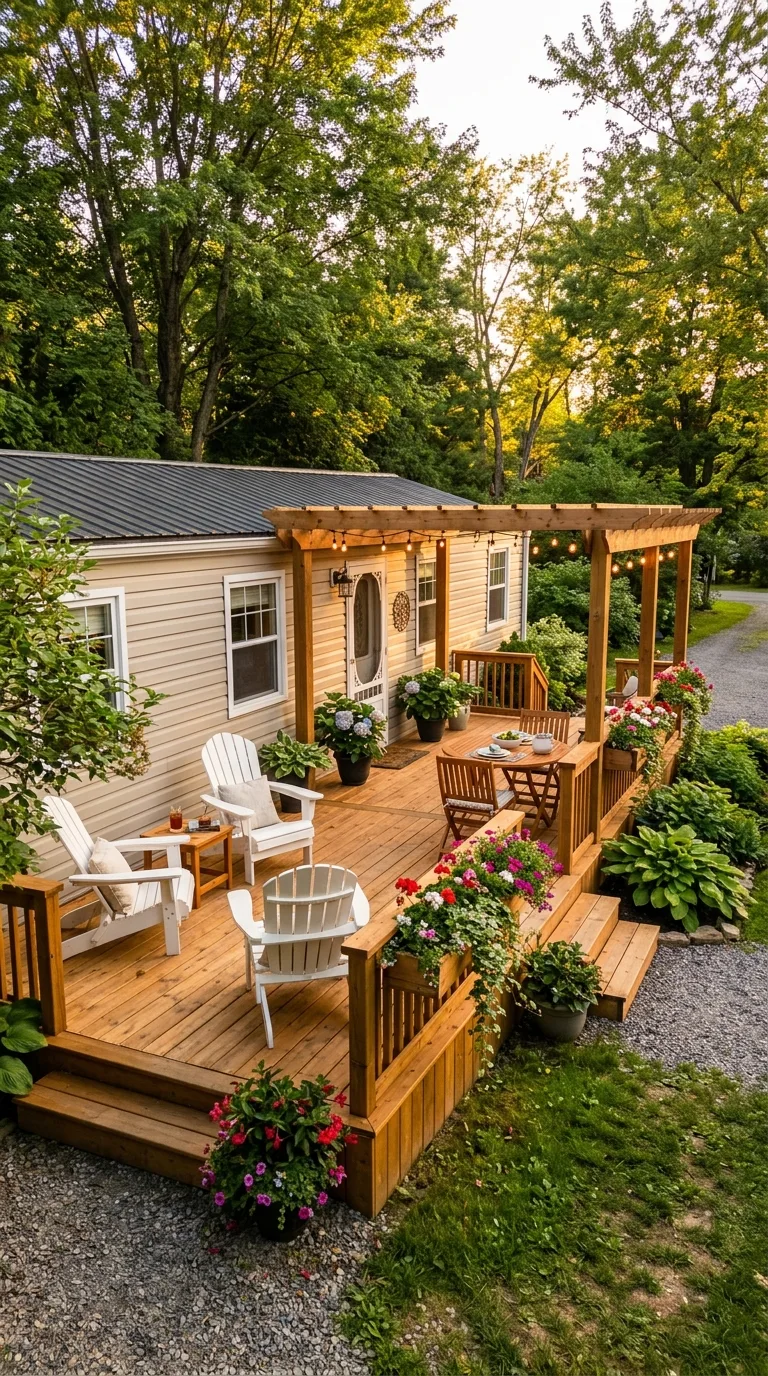
A deck at the front or back adds outdoor living space and makes the home look more established. Pressure-treated lumber, cedar and composite are the common choices: treated lumber usually costs least up front, while composite needs less upkeep. Built-in planters, a pergola or a stain that matches the trim make it feel part of the house.
Good to know: like a porch, a deck should stand on its own footings rather than hang off the home. Decks usually need a permit, and raised decks need guards and stairs that meet local code.
11. Craftsman Style Details
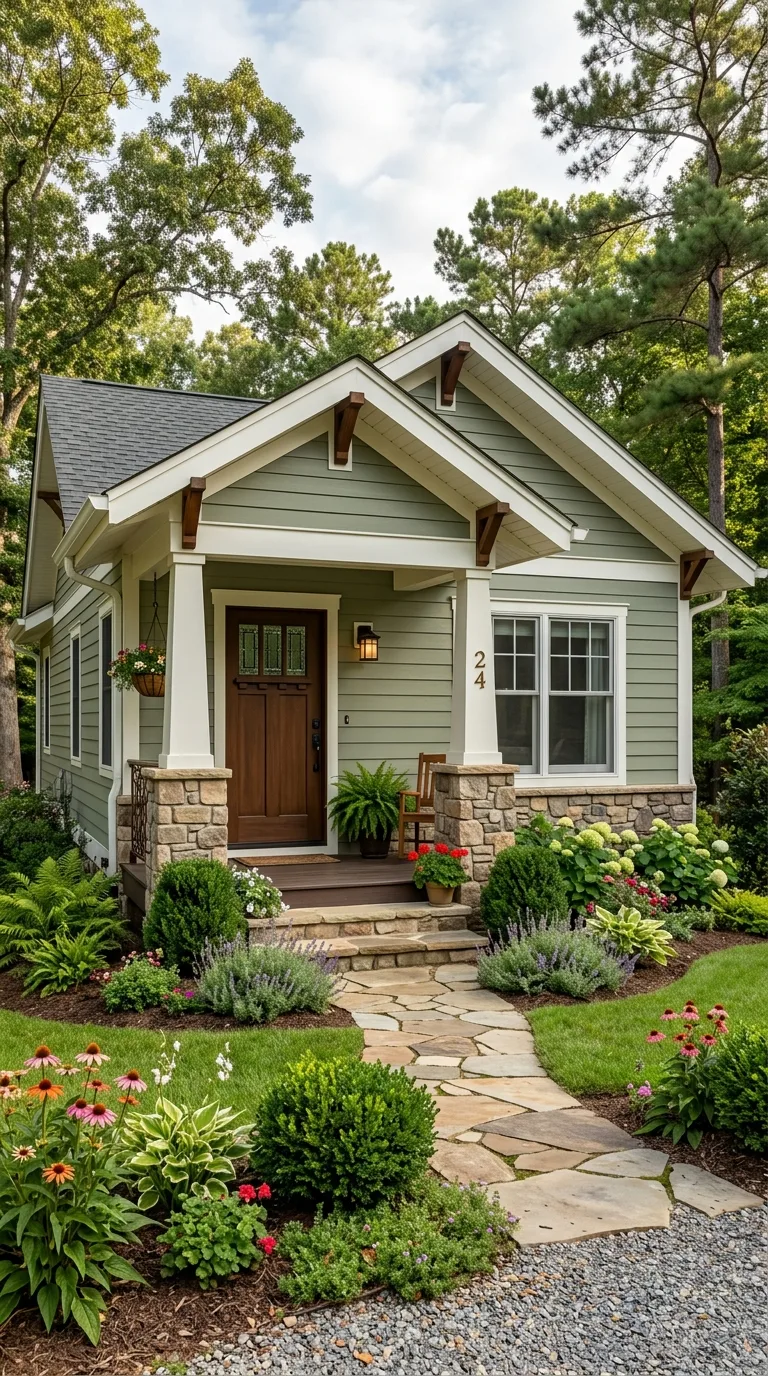
Craftsman details such as brackets under the roof edge, tapered porch columns on stone bases and a front door with glass panes give a manufactured home a handcrafted look. They pair well with earthy siding colors like sage, warm brown and olive. Decorative brackets and a new door are among the simpler upgrades.
Good to know: decorative brackets are trim, not structure, so use lightweight, rot-resistant materials such as PVC or treated wood, and seal every fastener hole in the siding.
12. Dark Exterior Paint
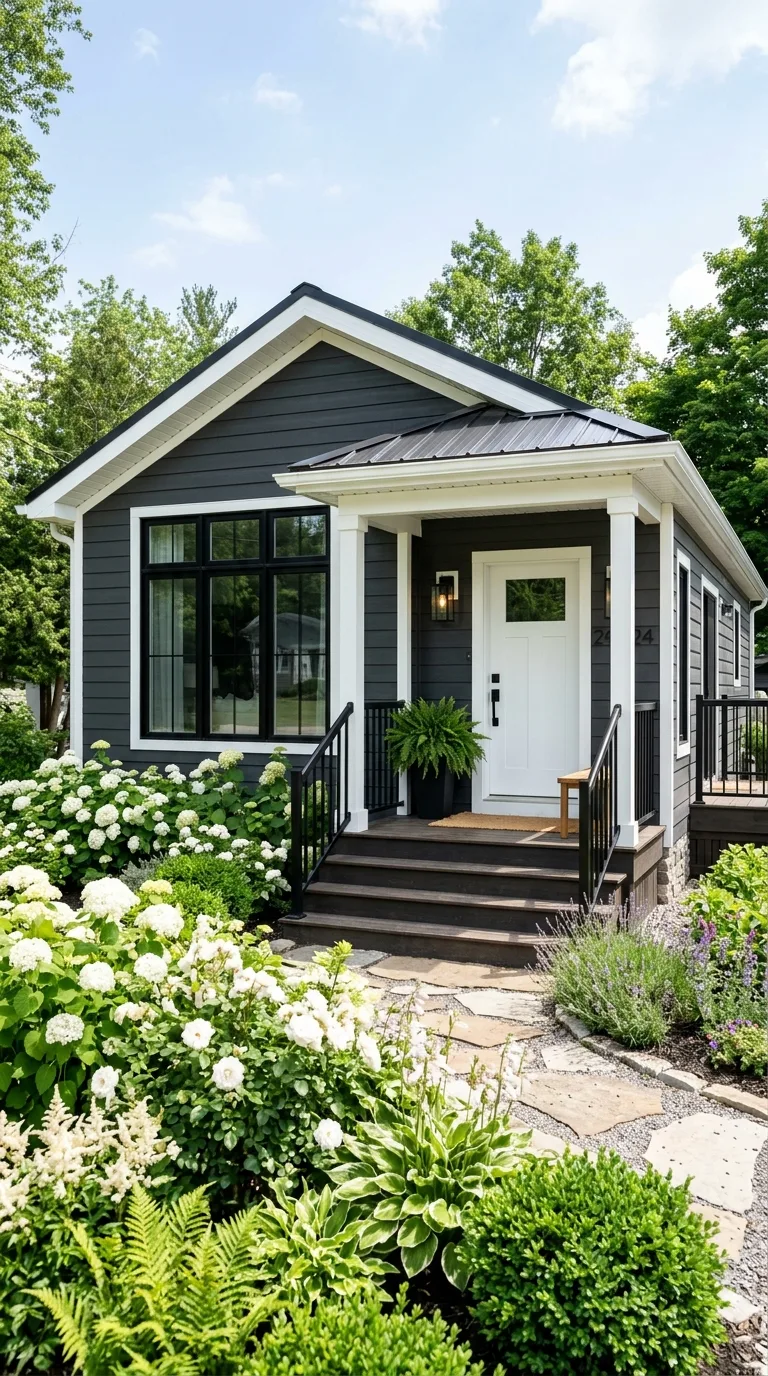
Deep charcoal, slate blue, forest green or burgundy can make a manufactured home look more grounded and substantial. Lighter trim and natural wood accents keep a dark body color from feeling heavy. Use a high-quality exterior paint made for your siding, and see these exterior paint colors for more palette ideas.
Good to know: Sherwin-Williams warns that painting vinyl siding darker than its original color can make it warp unless you use a paint formulated for darker colors on vinyl. Metal siding needs cleaning and a suitable primer first.
13. Cedar Shake Siding
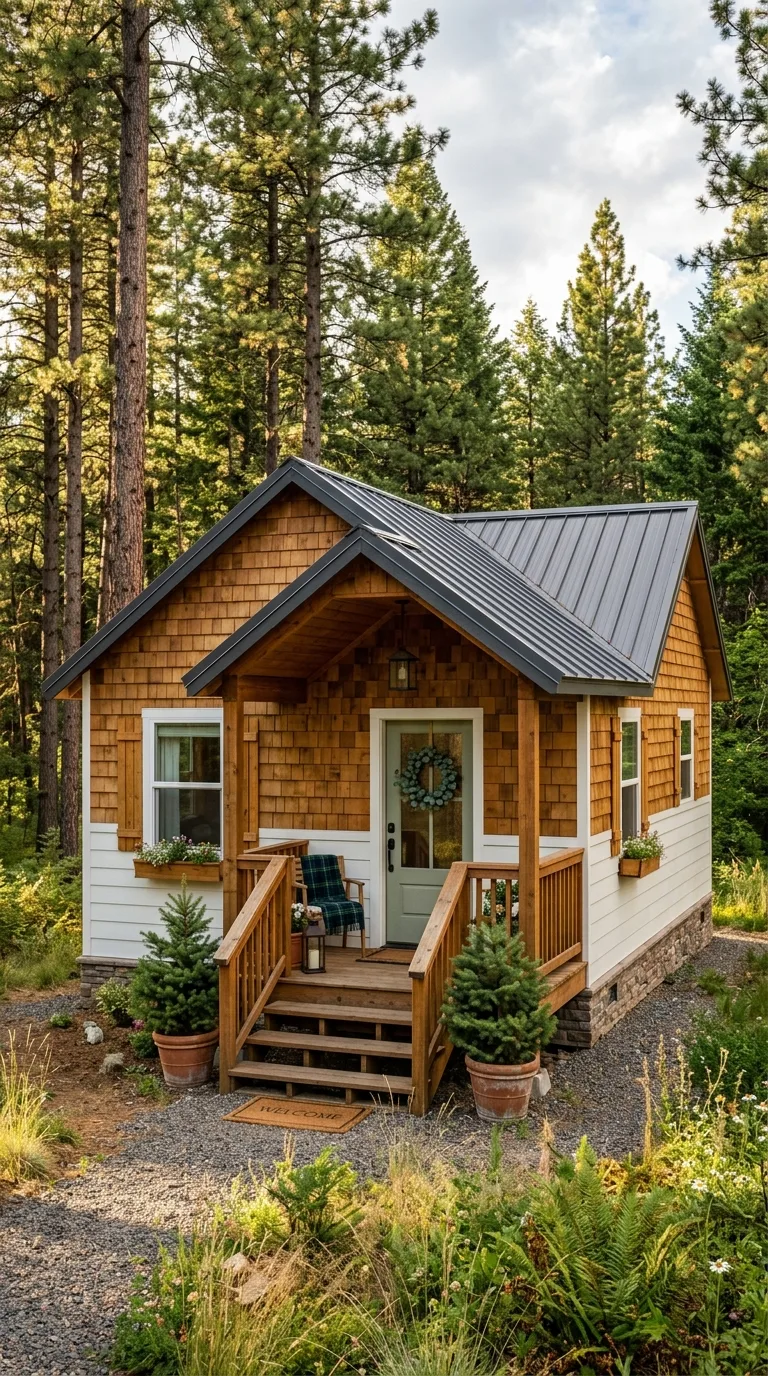
Cedar shakes add texture and warmth, especially on gables or the upper part of a wall above lap siding or stone. Vinyl shake panels give a similar look with less upkeep. Finish real shakes in a natural stain, warm gray or brown.
Good to know: real cedar needs regular staining or sealing to keep its color and weathers to gray if left unfinished. In wildfire-prone areas, check local rules, which may restrict wood siding.
14. Ranch Style Curb Appeal
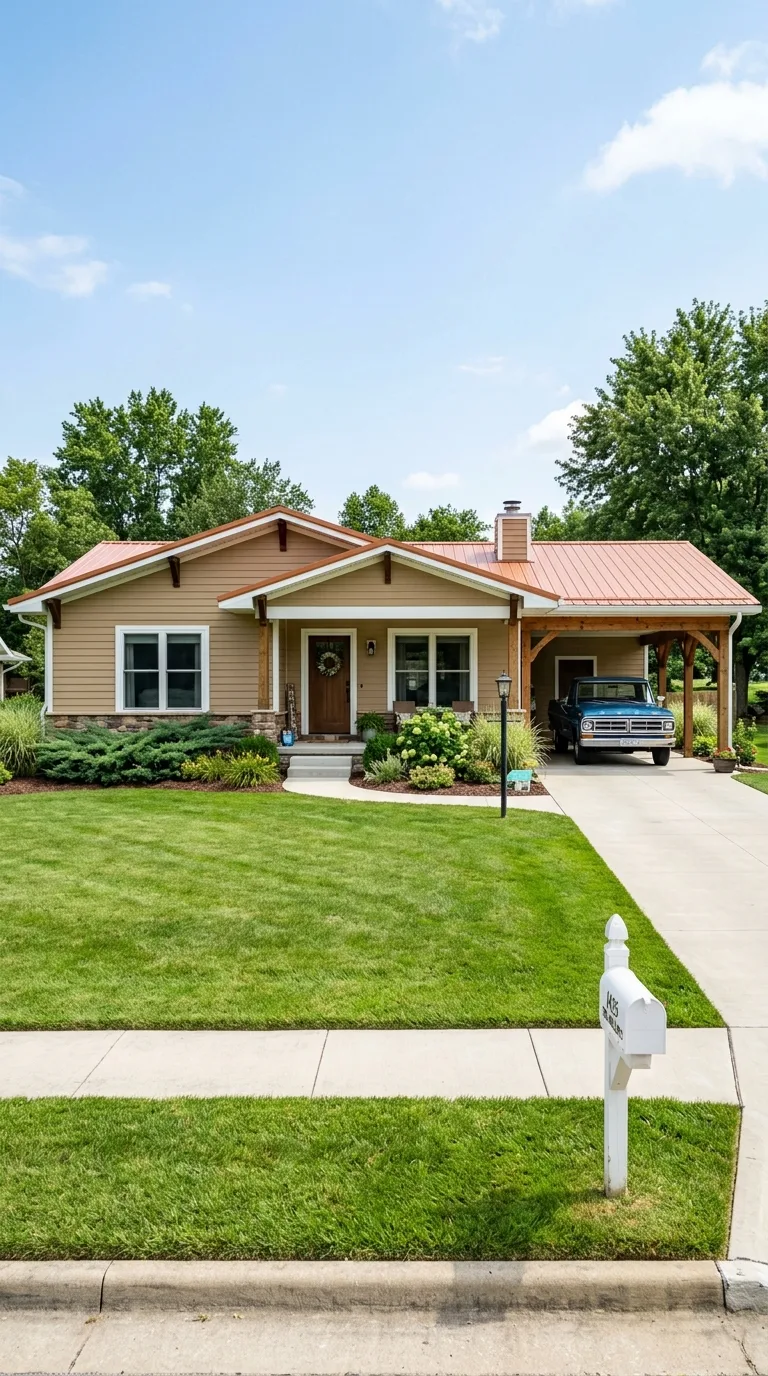
Single-story manufactured homes already have the long, low shape of a ranch house. Horizontal siding, wide eaves, a carport and warm colors such as tan, brick red or brown reinforce it. Low, spreading shrubs, a simple curved bed and a clear path to the door complete the look.
Good to know: a carport attached to the home should be designed to carry its own loads unless the home’s installation instructions allow attachment, the same rule HUD’s standards apply to other add-ons.
15. Pergola Entrance
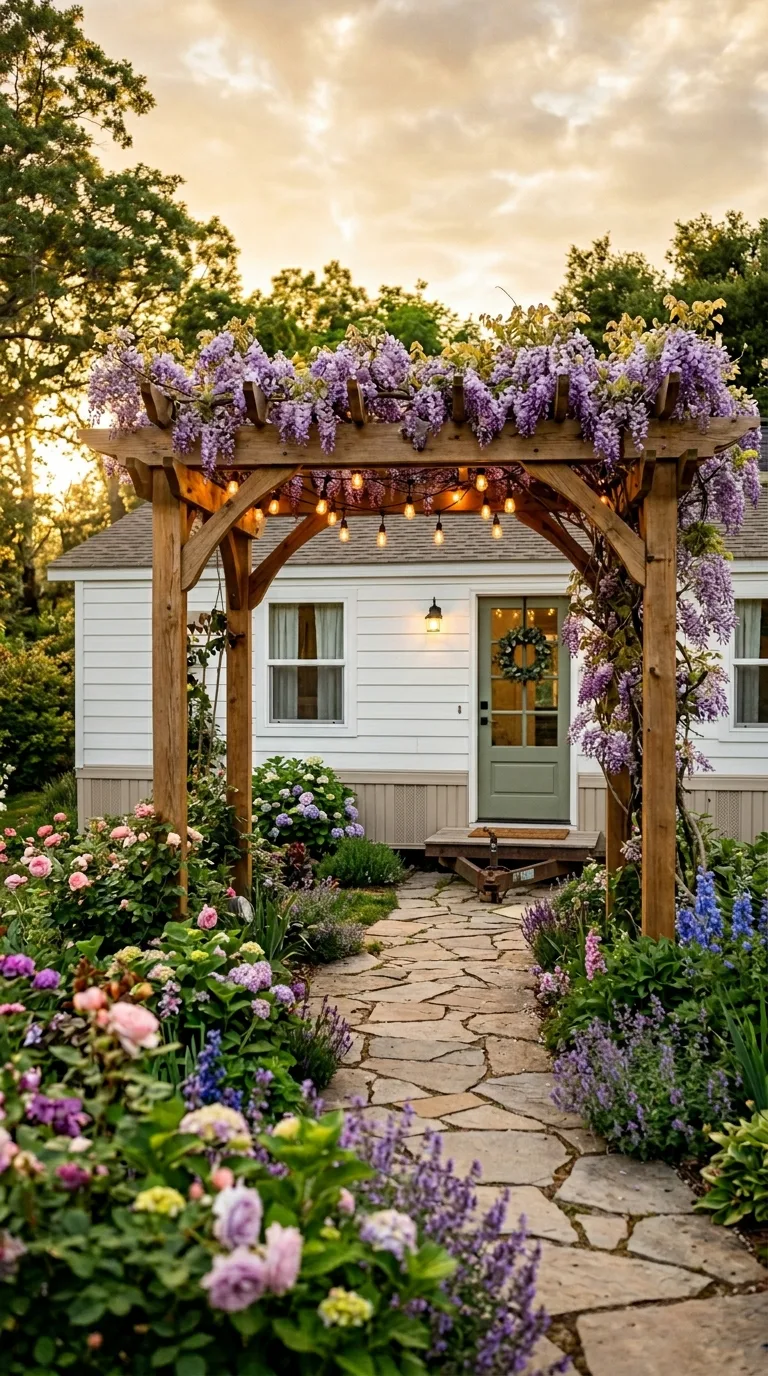
A pergola over the entry path or front steps frames the door and creates a sense of arrival. Wood, metal or vinyl all work; leave it open, add lattice for shade, or grow climbing plants over it. String lights or lanterns on the posts add evening light.
Good to know: a freestanding pergola avoids loading the home’s walls. If you plant wisteria, avoid Chinese wisteria, which NC State Extension lists as invasive, and consider native American wisteria or a lighter vine such as clematis.
16. Vertical Garden Wall
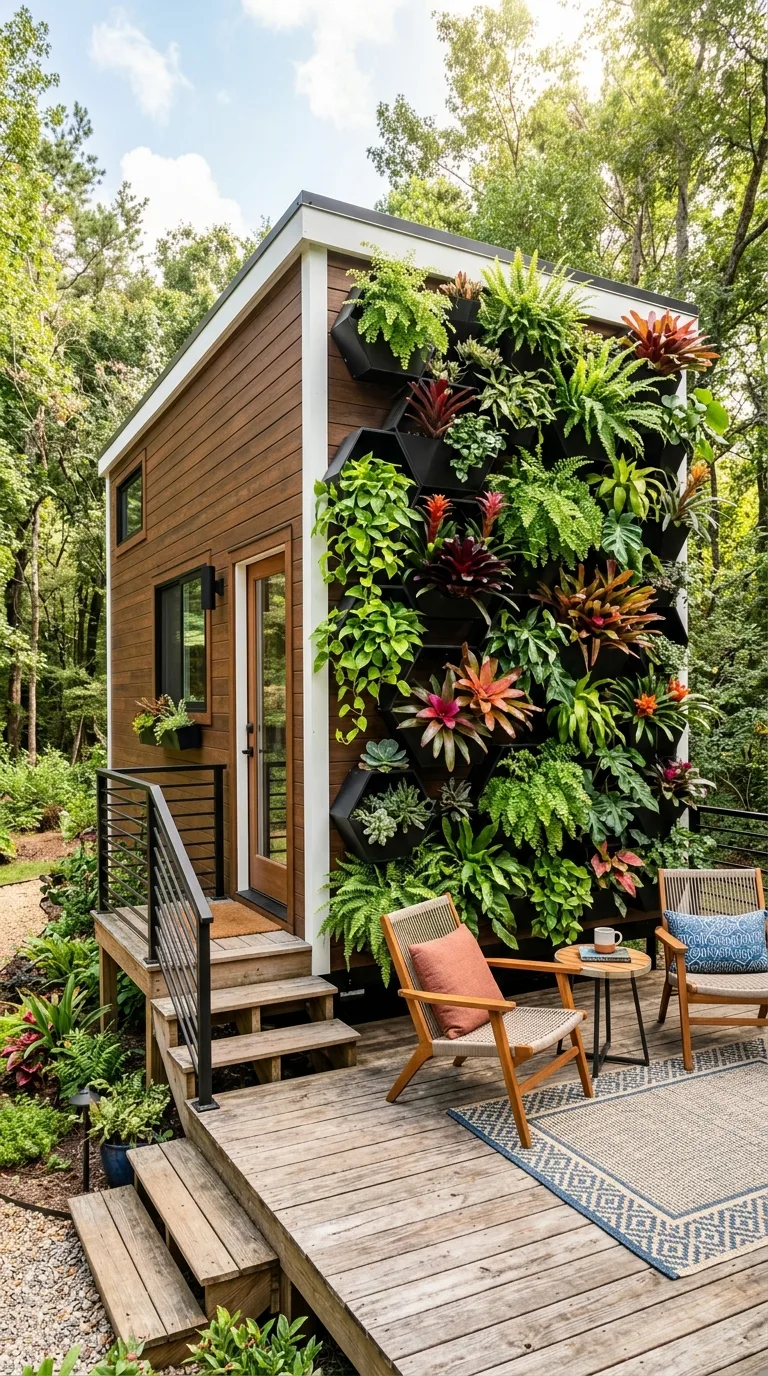
Wall planters, a trellis with climbing plants or a pocket planting system can turn a blank side wall, fence or privacy screen into a green feature. It works best near a seating area, where people see it up close. Herbs, ferns and trailing plants suit containers; check how much sun the spot gets before choosing.
Good to know: mount the garden on a freestanding trellis or a fence set off the wall rather than on the siding, so water, soil and roots stay off the home’s walls.
17. Brick Skirt
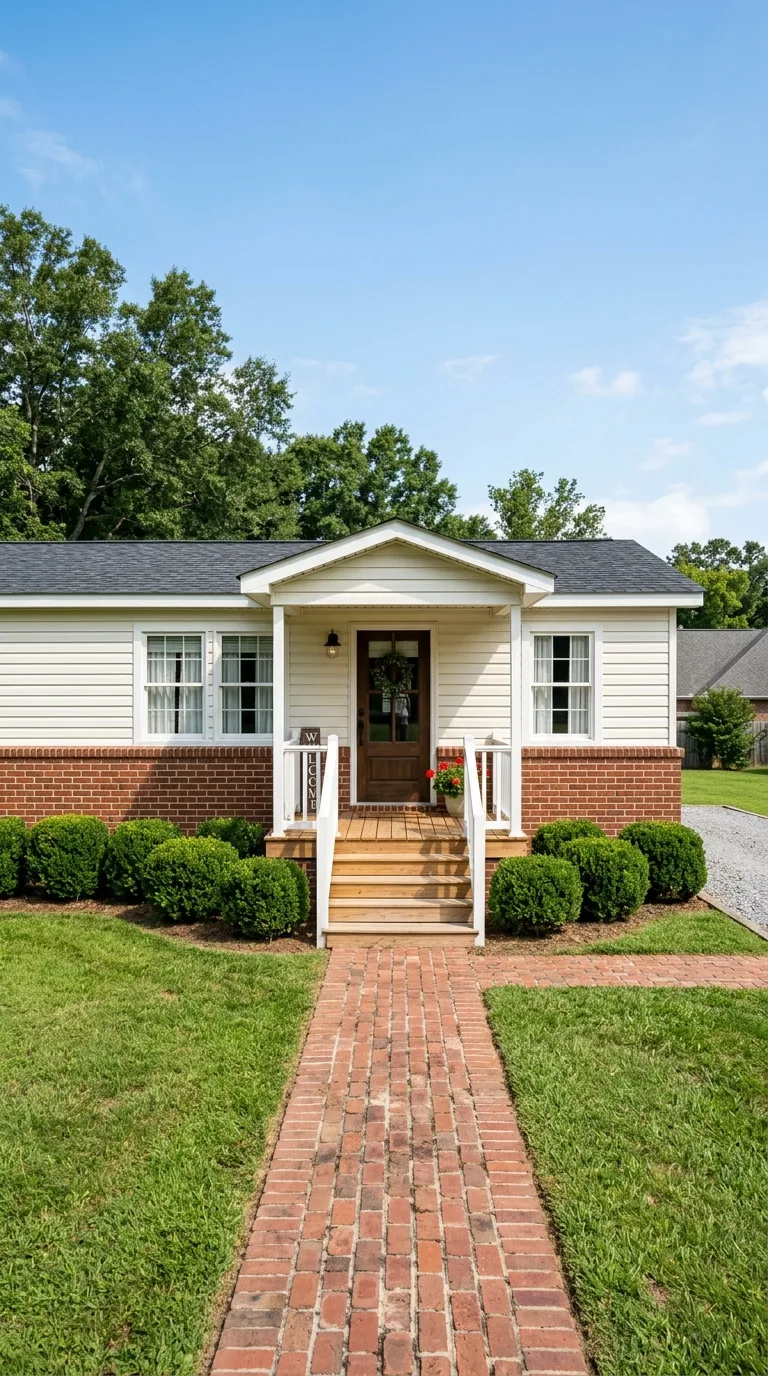
A brick or brick-look skirt hides the space under the home and gives it the look of a site-built foundation. Real brick or block is heavy and needs its own footing; faux brick panels are lighter and easier to fit. Match the color to the siding, such as red brick with tan siding or gray brick with white.
Good to know: HUD’s rules require skirting vents of at least 1 square foot per 150 square feet of floor (less with a ground vapor retarder) on opposite sides, plus an access opening at least 18 by 24 inches. Check state and local rules too.
18. Contemporary Minimalist Look
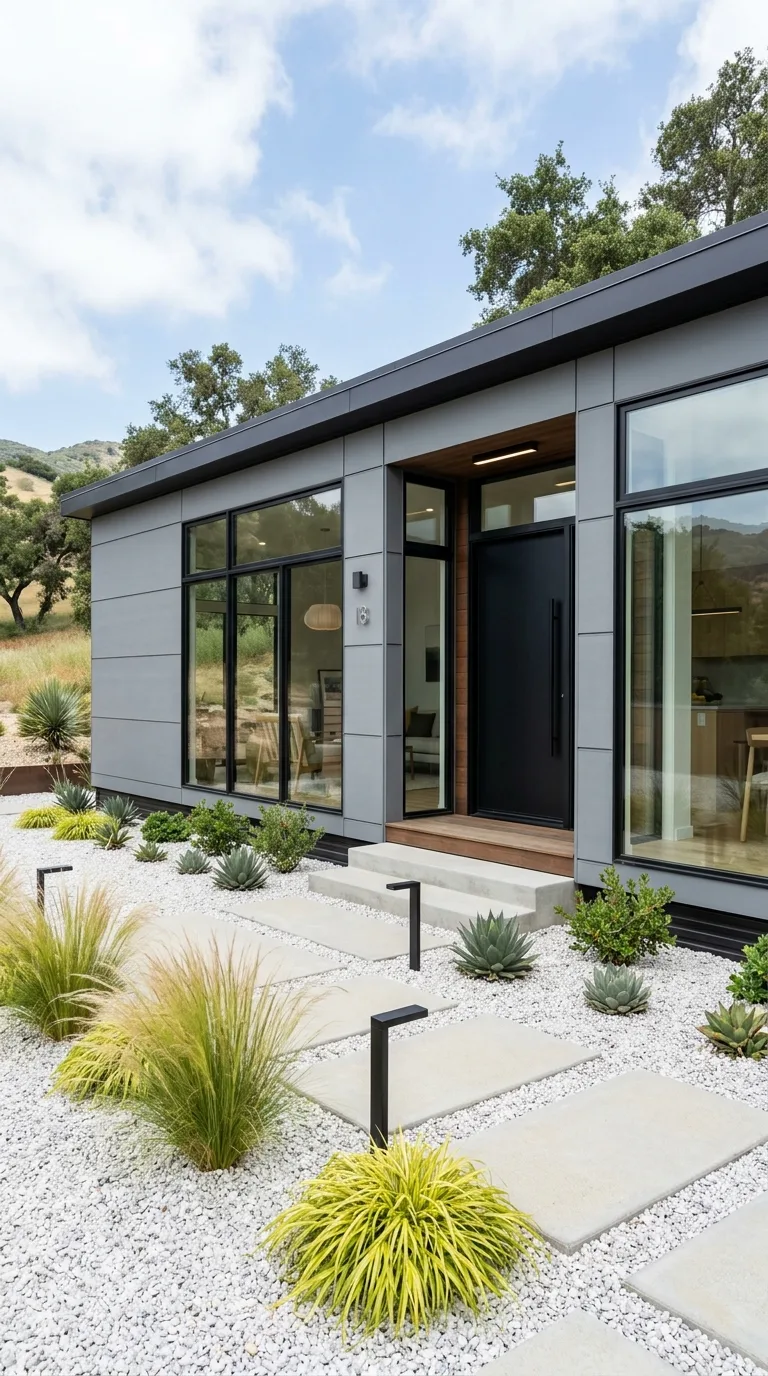
Clean lines, neutral colors and little ornament define a minimalist exterior. Smooth siding in cool gray or white, a metal roof, gravel beds with a few sculptural plants and black hardware suit it. Larger black-framed windows, a simple modern door and low path lights complete the look.
Good to know: HUD’s construction standards require each bedroom to have an exit door or an egress window, so replacement windows in bedrooms must still work as emergency exits. Buy windows made for the opening or have it reframed properly.
19. Colorful Front Door
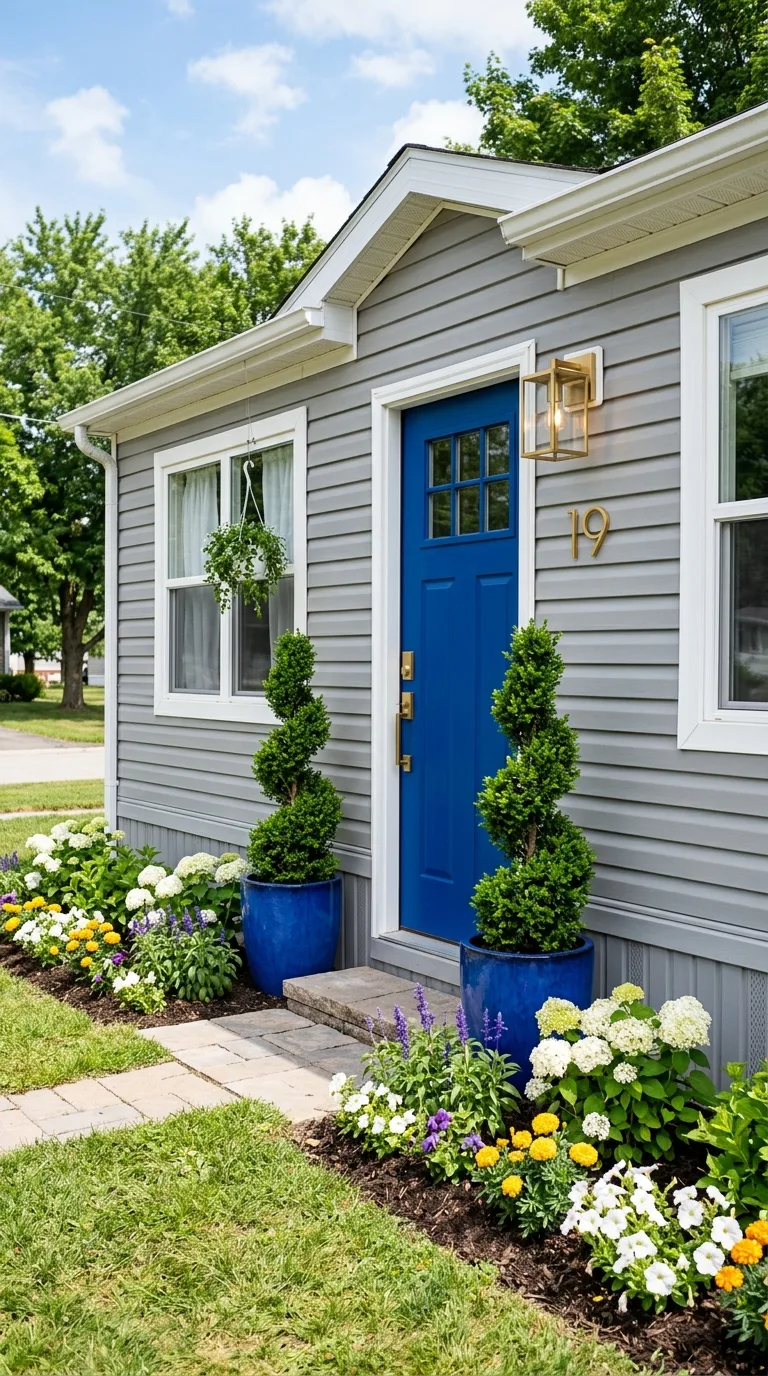
A painted front door is one of the cheapest ways to add personality. Warm siding such as tan or beige suits red, orange or gold doors, while gray or white siding suits blues, greens and deep purples. New house numbers, a doormat and potted plants finish the entry.
Good to know: use an exterior paint suited to the door’s material and follow its prep steps. If a glass storm door covers the door, check the door maker’s guidance on dark colors, since heat can build up between them.
20. String Lights and Outdoor Lighting
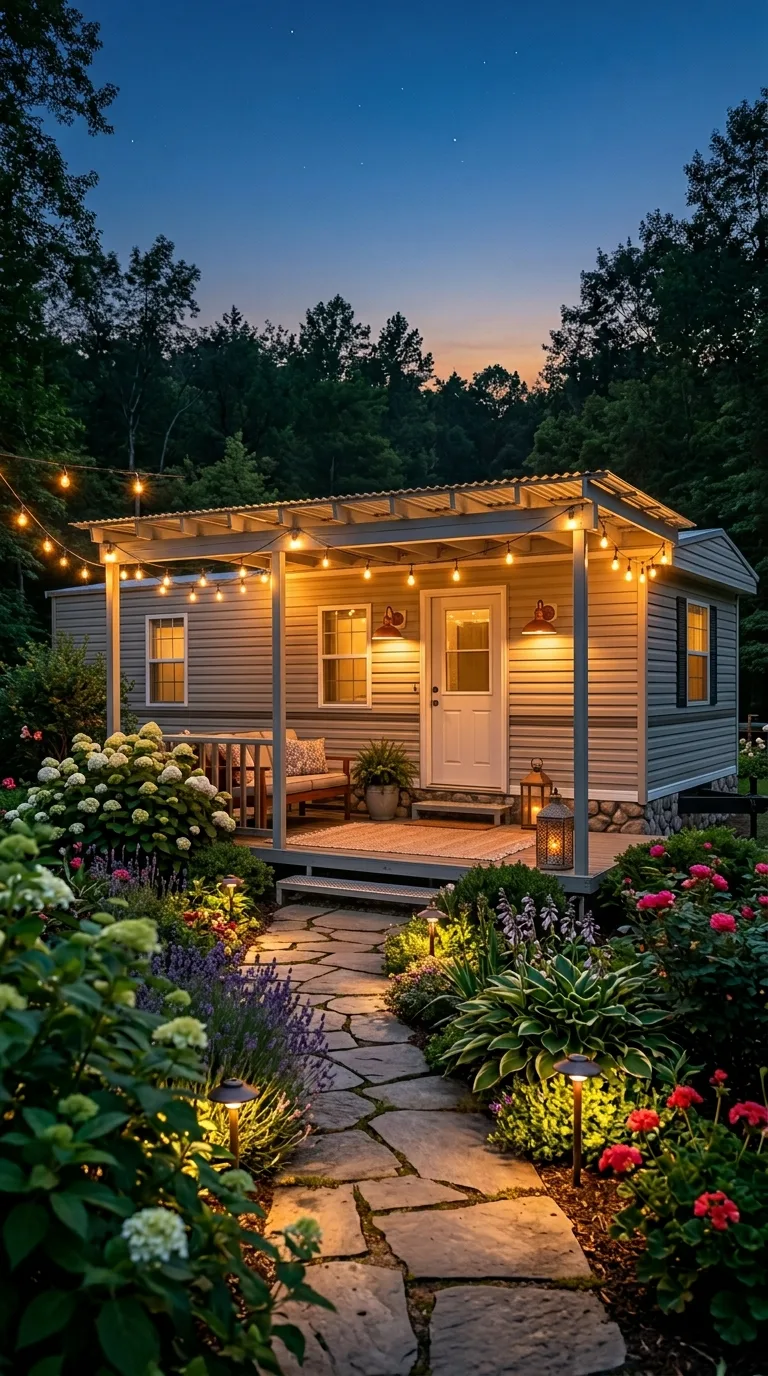
String lights along the porch railing, around pergola posts or over a seating area add a warm glow, and practical lighting makes the entry safer. Wall lights beside the door, low-voltage path lights and a few uplights on trees add depth. Warm-toned bulbs look most welcoming.
Good to know: use lights and cords rated for outdoor use, plug them into a GFCI-protected outdoor outlet, and have an electrician add any new outdoor circuits or hardwired fixtures.
21. Tin Roof with Rustic Appeal
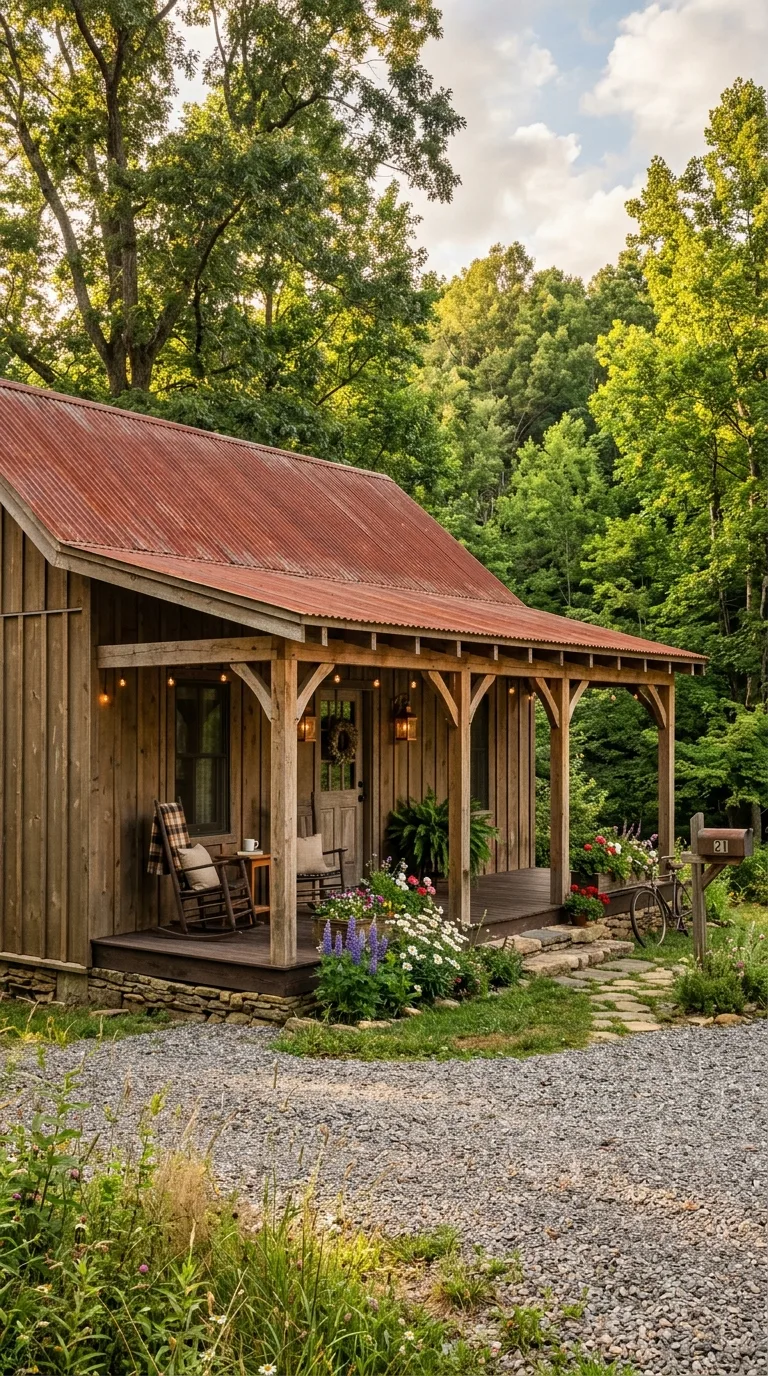
Corrugated metal with a weathered or patina-look finish suits a manufactured home on a rural lot. With a covered porch, wood beams and wildflowers, it gives a farmstead look. Today’s so-called tin roofs are usually coated steel, which comes in rust-look and aged-copper finishes.
Good to know: rain is louder on metal over open framing than over solid sheathing with underlayment, so if noise matters, ask the roofer how the roof will be built.
22. Coastal Beachy Exterior
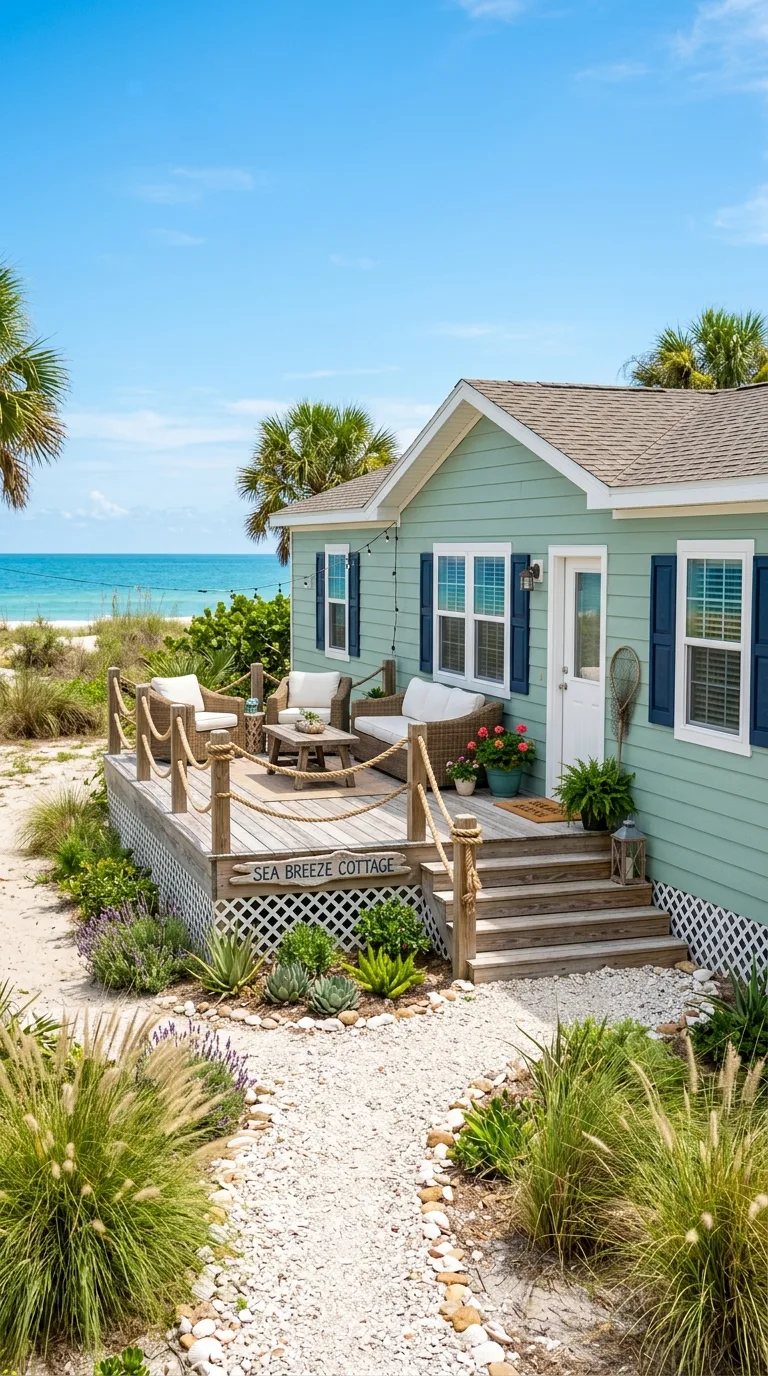
Light blue, seafoam, sandy beige or white siding with white trim, weathered wood and rope or nautical-style fixtures gives a coastal look anywhere. Drought-tolerant plants, ornamental grasses and pale gravel paths suit it, and a hammock or simple seating finishes the relaxed feel.
Good to know: near the coast, choose stainless steel or coated fasteners and fixtures, which stand up better to salt air, and have the home’s anchors and tie-downs checked, since coastal areas see high winds.
23. Log Cabin Inspired Look
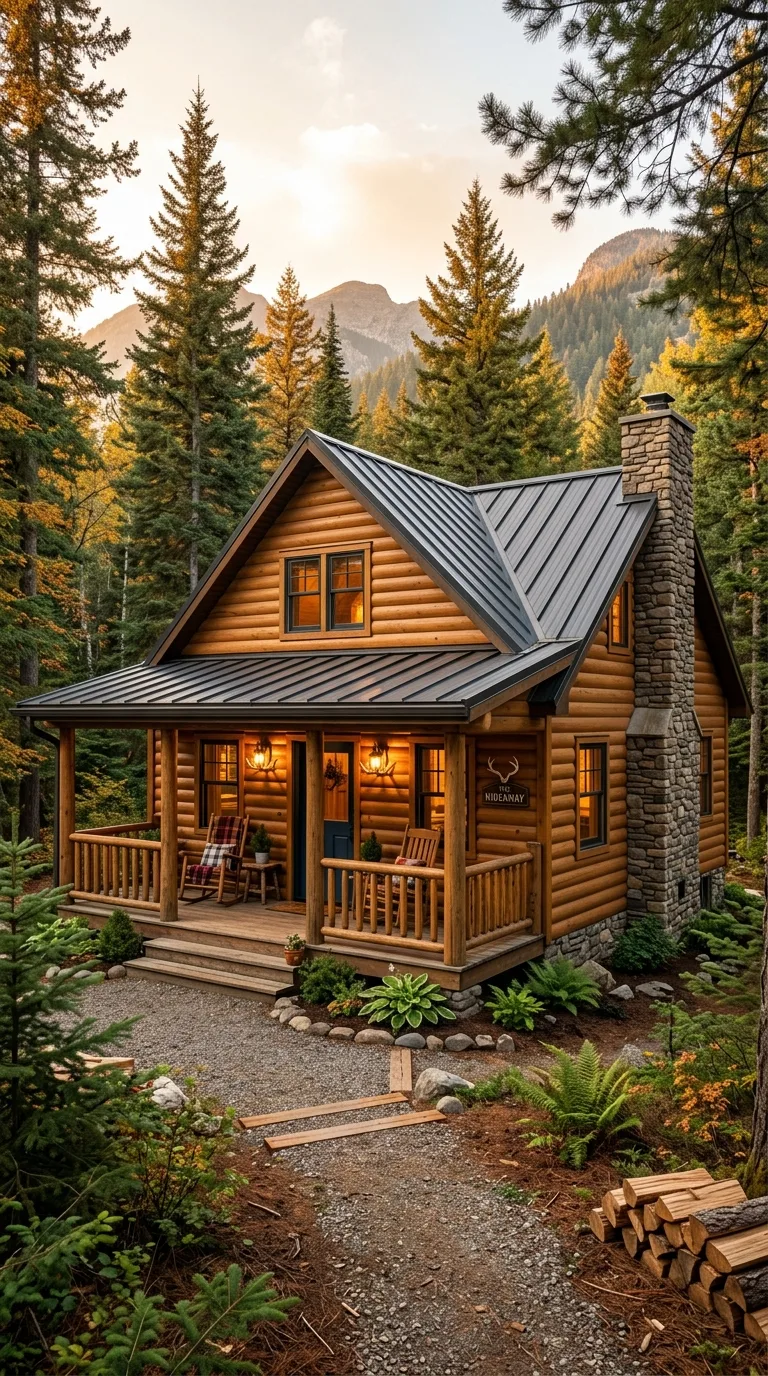
Log-look siding in wood, vinyl or steel gives a manufactured home the warmth of a cabin. A dark metal roof, stone accents and a covered wooden porch complete it, and it suits wooded lots. Rustic lights, wooden steps and an address post add to the look.
Good to know: real wood log siding needs regular staining and sealing against water and insects; vinyl or steel log-look siding needs far less upkeep.
24. Smart Landscaping and Rock Garden
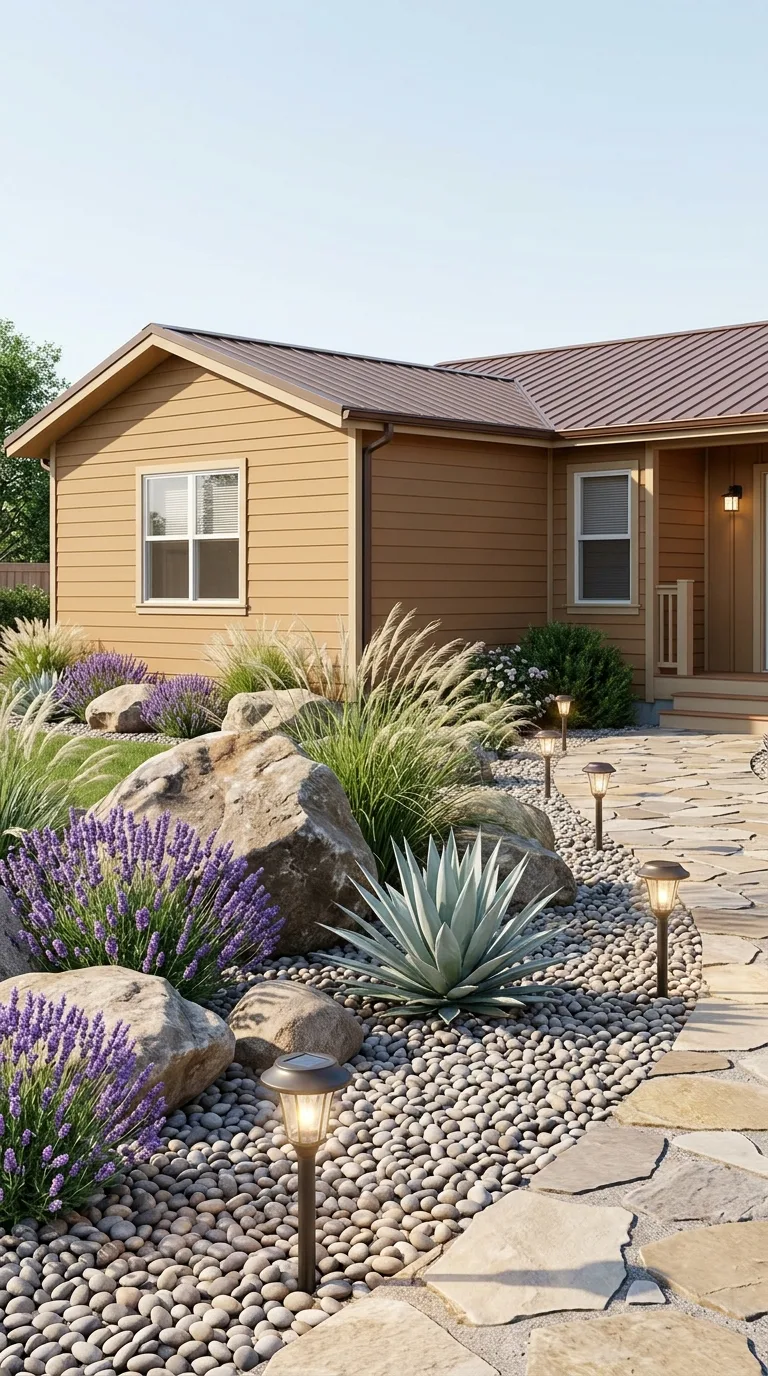
A rock garden with gravel, a few boulders, stepping stones and drought-tolerant plants such as lavender, agave and ornamental grasses needs little water once established. It suits dry, sunny climates, and with plants chosen for your region it can work elsewhere. Larger rocks near the home and finer gravel further out give a natural, layered look.
Good to know: new plants still need regular watering until their roots establish, landscape fabric under gravel reduces weeds without stopping them, and rock should stay below the skirting vents.
25. Boho Chic Outdoor Space
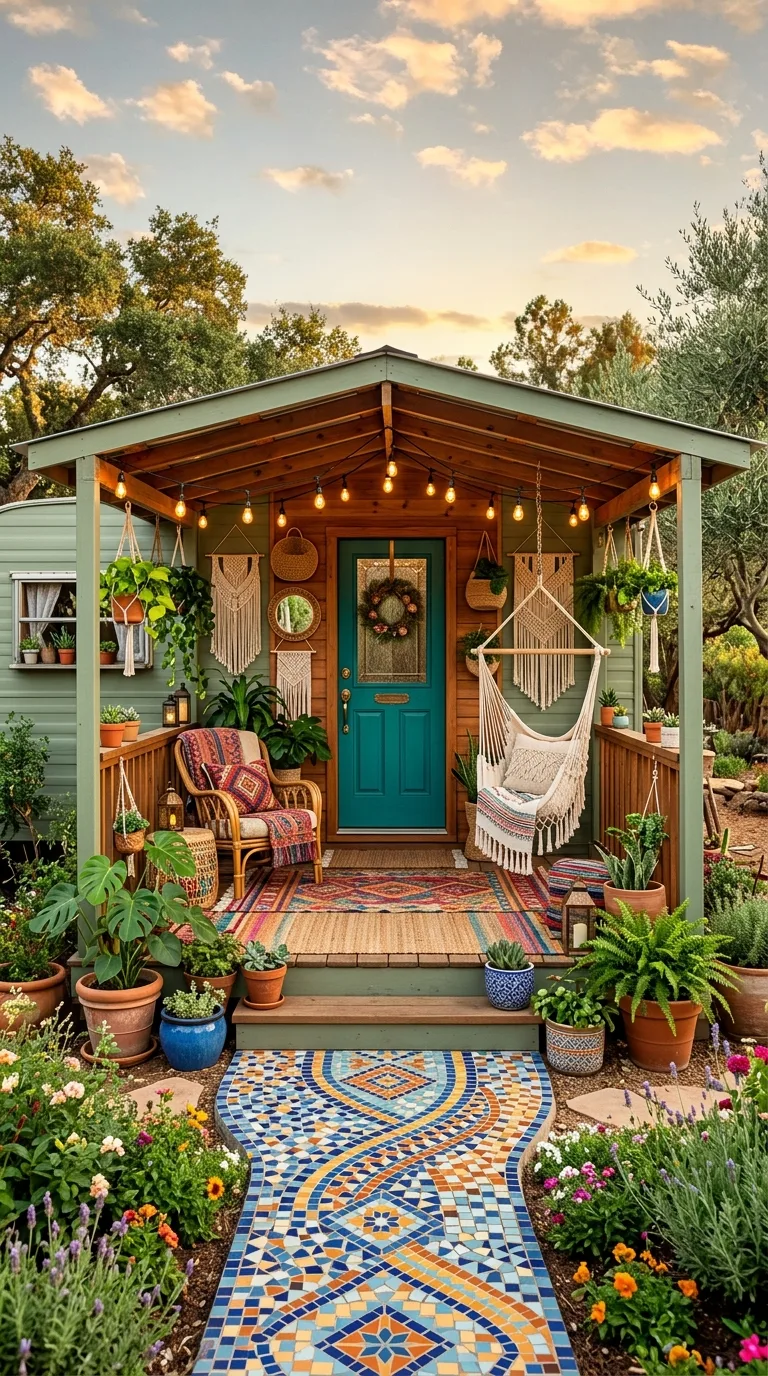
A boho porch layers rattan furniture, patterned outdoor rugs, macramé, potted cacti and string lights. It’s personal by design, so mix colors and textures you like. Plants in mismatched pots, a mosaic path or a painted mural on a fence add more character over time.
Good to know: choose furniture, rugs and cushions made for outdoor use, and check community rules before painting a mural on the home or a fence.
Common mistakes to avoid
- Attaching a porch, deck or carport to the home instead of giving it its own supports.
- Blocking skirting vents with mulch, soil, plants or new skirting.
- Painting vinyl siding darker than its original color without a paint formulated for it.
- Skipping permits and community approval for additions, roofs and re-siding.
- Mounting planters or trellises directly on the siding.
Mobile home exterior FAQs
Do I need a permit to add a porch or deck to a manufactured home?
Usually. HUD’s installation standards advise contacting the local authority before any alteration, and a park or community may need to approve it too. The porch or deck should also carry its own weight rather than rely on the home.
Can I paint the vinyl siding on a mobile home?
Yes, with an exterior paint suited to vinyl and proper cleaning first. Sherwin-Williams advises staying no darker than the original color unless the paint is formulated for darker colors on vinyl.
How much ventilation does mobile home skirting need?
HUD’s rules call for at least 1 square foot of vent per 150 square feet of floor, or 1 per 1,500 if a vapor retarder covers the ground, on at least two opposite sides, plus an access opening at least 18 by 24 inches. State or local rules may add more.
Does new siding insulate a mobile home?
Only if it includes insulation. Standard vinyl siding adds little; insulated siding or a rigid foam layer behind the new siding is what improves it.


