

Winter Window Box Ideas 20 Magical Looks
A winter window box keeps the front of the house looking cared for after the summer flowers are gone. Most winter boxes aren’t planted at all: cut evergreen boughs, branches, berries and cones are pushed into the old potting soil, and cold weather keeps them looking fresh through the winter months.
Below are 20 winter window box ideas, each with what to use and one practical tip. Start with the basics, because a box of wet soil is heavy, and some popular winter greens and berries are toxic to pets or invasive.
Before you start
Mount it securely
A box of wet soil is heavy, and snow adds more weight. Fix the brackets into wall studs or solid masonry, not just siding or sheathing, use brackets rated for the load, and fill the box only after it’s mounted. Check that it has drainage holes. For box styles and materials, see these planter box ideas.
Reuse the soil
Pull out the spent summer plants, then push the cut stems of evergreens and branches into the remaining potting soil at different angles, as Illinois Extension suggests: some upright, some sideways and some hanging over the edge. Water the soil afterward; once it freezes, it holds the stems firmly.
Live plants need extra hardiness
Roots in a window box can get as cold as the winter air, so Penn State Extension suggests choosing plants rated two zones colder than yours and watering before the soil freezes. It also warns that clay and ceramic containers may crack if left out in freezing weather.
Check plants for pets and invasiveness
Holly, English ivy and eucalyptus are on the ASPCA’s list of plants toxic to dogs and cats, and English ivy and English holly are invasive in parts of the US. Ground-floor boxes are within reach of pets and small children.
The 20 boxes at a glance
| Box | Main materials | Look | Watch for |
|---|---|---|---|
| Evergreen and pinecone | Spruce, fir, white pine, cones | Classic | Sun and wind dry the greens |
| Red berry and cedar | Cedar, winterberry or faux berries | Festive | Berries toxic to pets |
| Birch branch and greenery | Birch poles, evergreens | Woodland | Anchor tall branches |
| Frosted white | Flocked greens, white berries, silver picks | Snowy | Spray snow outdoors |
| Twinkling light | Battery lights, evergreens | Glowing | Outdoor rating |
| Mixed greens and eucalyptus | Pine, fir, cedar, eucalyptus | Soft, modern | Eucalyptus toxic to pets |
| Magnolia leaf | Magnolia branches, evergreens | Southern | Tree hardy only in zones 6–10 |
| Red twig dogwood | Red stems, evergreens | Bold | Insert before the soil freezes |
| Flocked mini tree | Small faux or live trees | Whimsical | Live trees need hardy roots |
| Pine and plaid ribbon | Pine, outdoor ribbon | Cozy | Weatherproof ribbon |
| Lantern | Lantern, battery candle | Glowing | No open flames |
| Cotton stem | Cotton stems, evergreens | Farmhouse | Gets soggy in rain |
| Gold and greenery | Evergreens, gold picks | Dressy | Shatterproof ornaments |
| Burlap and pine | Pine, burlap ribbon, cones | Rustic | Burlap fades and frays |
| Winterberry statement | Winterberry, evergreens | Bold | Toxic to pets; birds eat it |
| Cedar and orange slice | Cedar, dried oranges, cinnamon | Old-fashioned | Fruit softens when wet |
| Seeded eucalyptus and pampas | Eucalyptus, pampas plumes | Soft, boho | Plumes shed; pampas invasive |
| Holly and berry | Holly, evergreens | Traditional | Toxic; English holly invasive |
| Snow-dusted pinecone | Cones, evergreens | Rustic | Wire cones in place |
| Trailing ivy and evergreen | Evergreens, trailing sprays | Romantic | English ivy is invasive |
1. Classic Evergreen and Pinecone Box
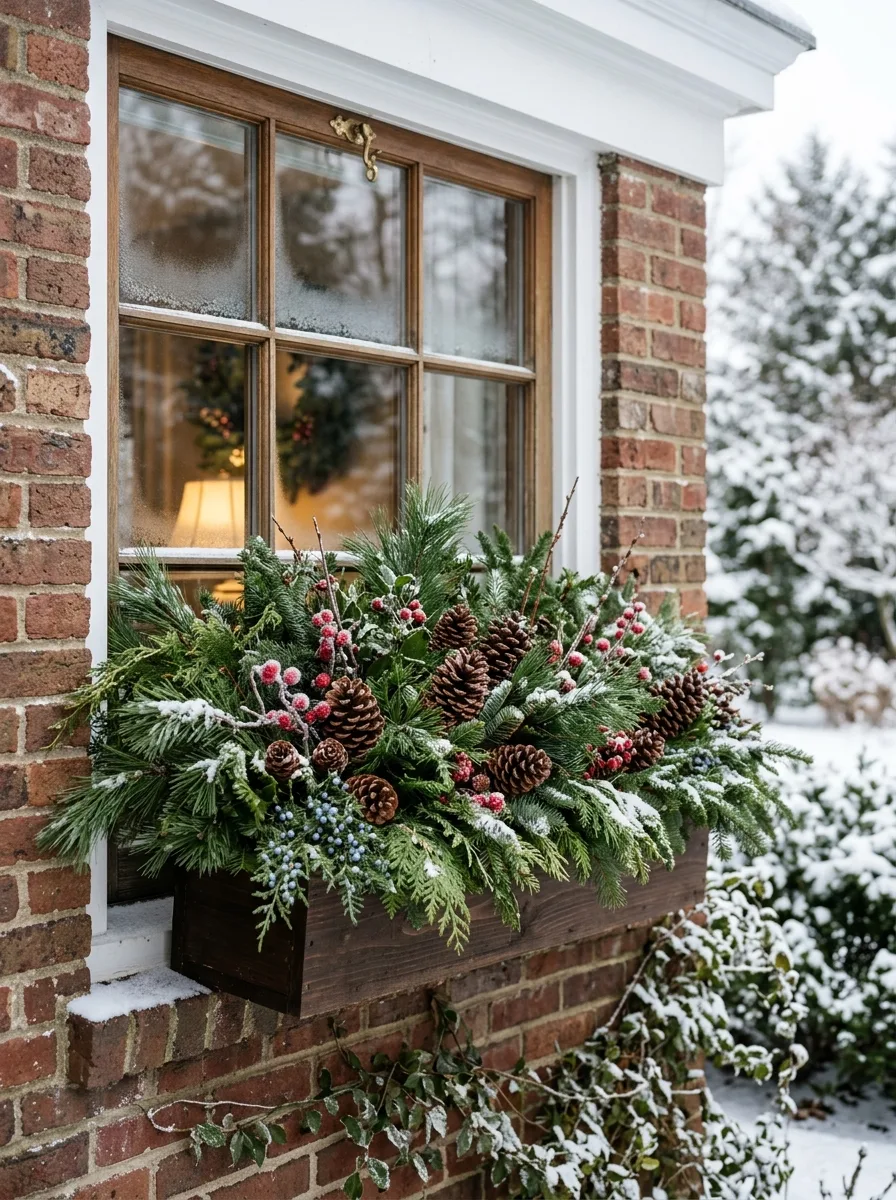
A mix of spruce, fir and white pine is the base for most winter boxes. Illinois Extension suggests full spruce or fir to fill the space quickly and softer white pine as a filler. Point some stems up, some sideways and some over the front edge, then wire in pinecones in small groups.
Good to know: cut greens last longest in cold, shaded spots. On a sunny, windy wall they dry and brown sooner, so check them after mild spells and replace tired pieces.
2. Red Berry and Cedar Box
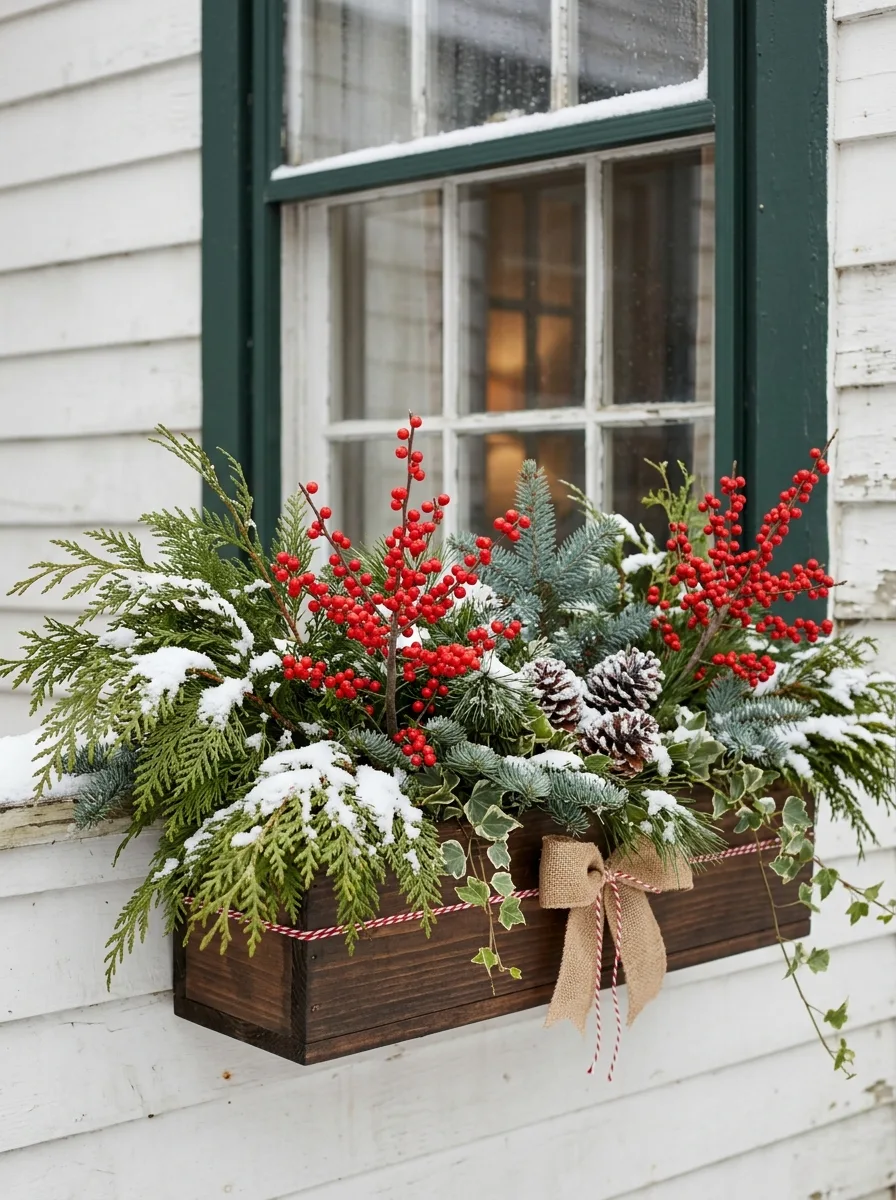
Soft, flat cedar sprays as the base with red berry stems pushed through give a classic red-and-green box. Cluster the berries in three or four places instead of spacing them evenly, and add a few pinecones for texture.
Good to know: winterberry, a native deciduous holly, is a good real-berry choice, but the ASPCA lists hollies, winterberry included, as toxic to dogs, cats and horses. Faux berries last longer and won’t be eaten by birds.
3. Birch Branch and Greenery Box
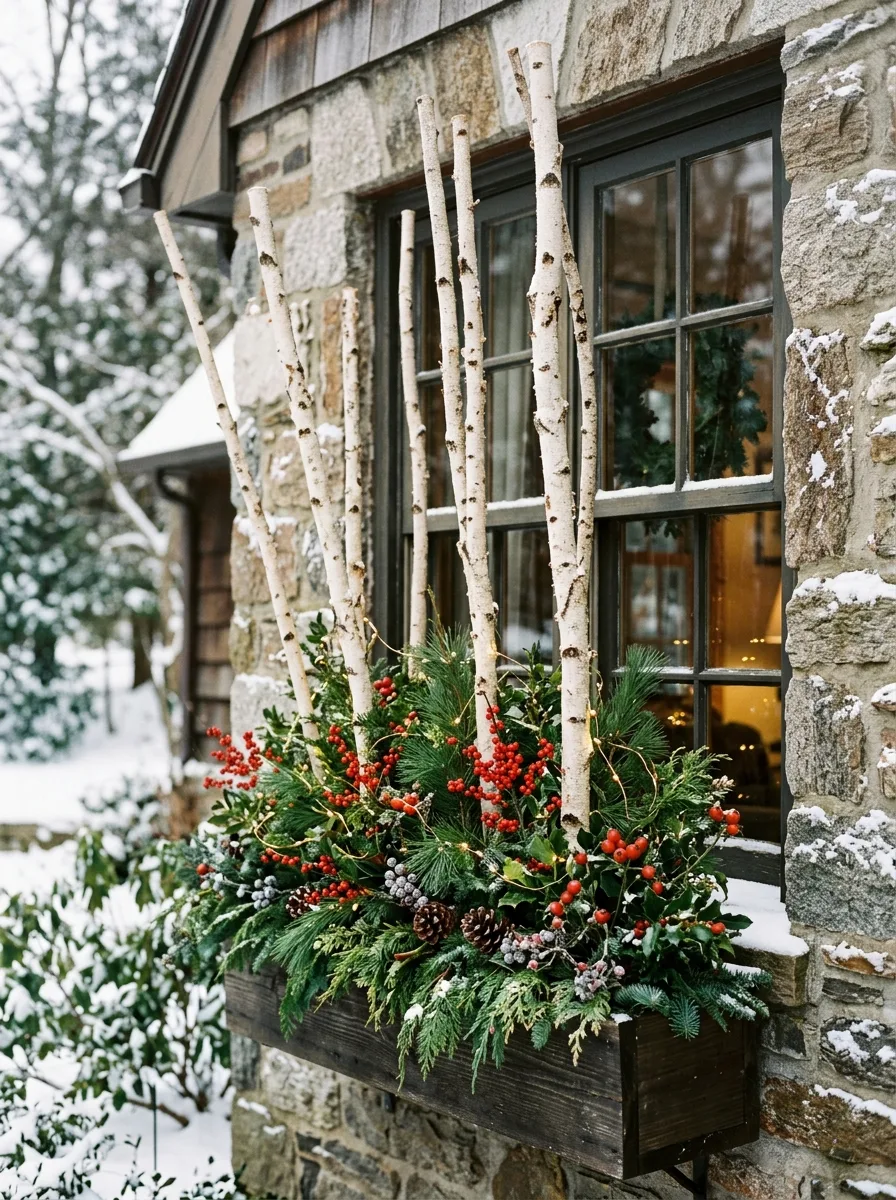
Tall birch poles or branches at the back of the box add height and pale bark that stands out against dark evergreens. Use three or five branches of slightly different heights, then fill the front with greens and a few berries or cones.
Good to know: tall branches catch the wind, so push them deep into the soil and tie them together low down, or wire them to the back of the box.
4. Frosted White Winter Box
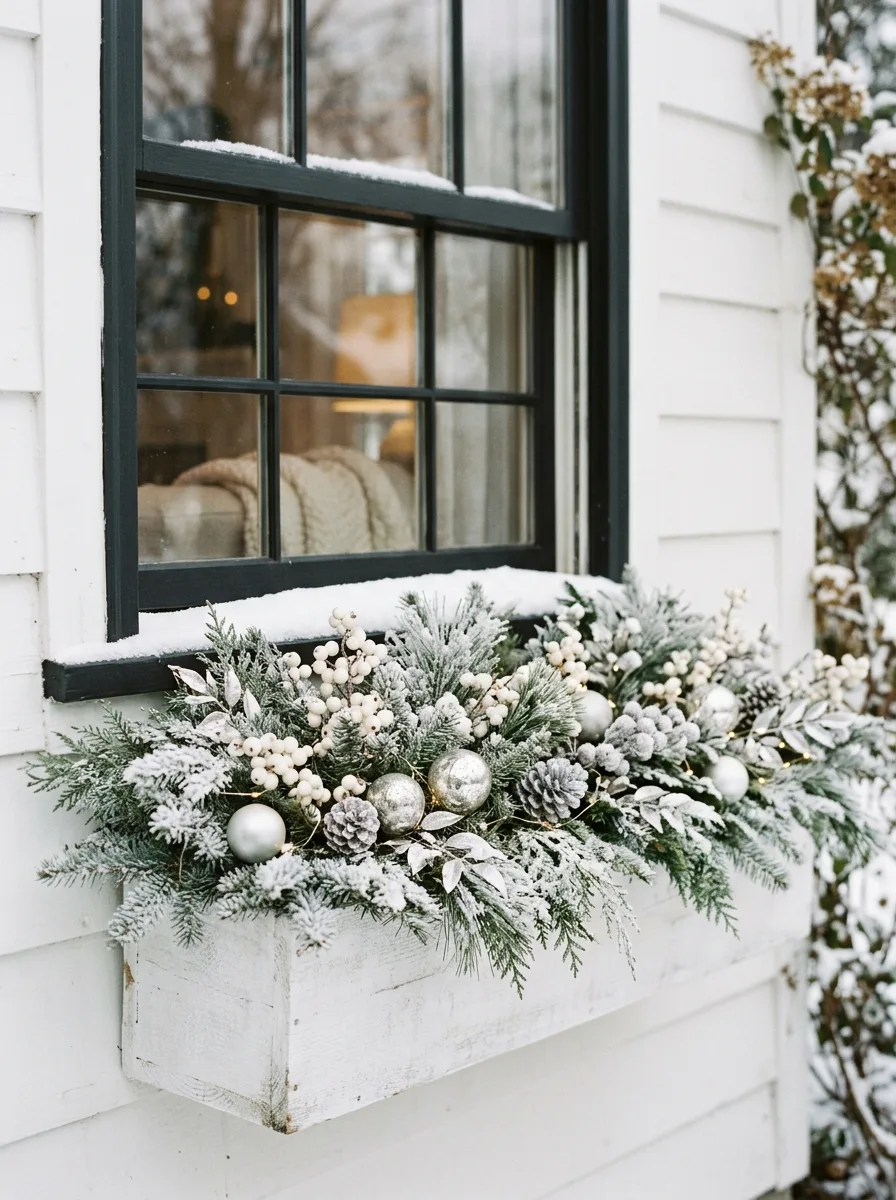
Flocked branches, white berries, silver picks and white-tipped cones give a quiet, snowy look that can stay up from December to February. It shows up well against dark siding or brick. Add warm white lights so the box doesn’t look cold at night.
Good to know: aerosol snow and flocking sprays are often flammable, so apply them outdoors, away from flames, and follow the label. Ready-flocked faux stems save the mess.
5. Twinkling Light Window Box
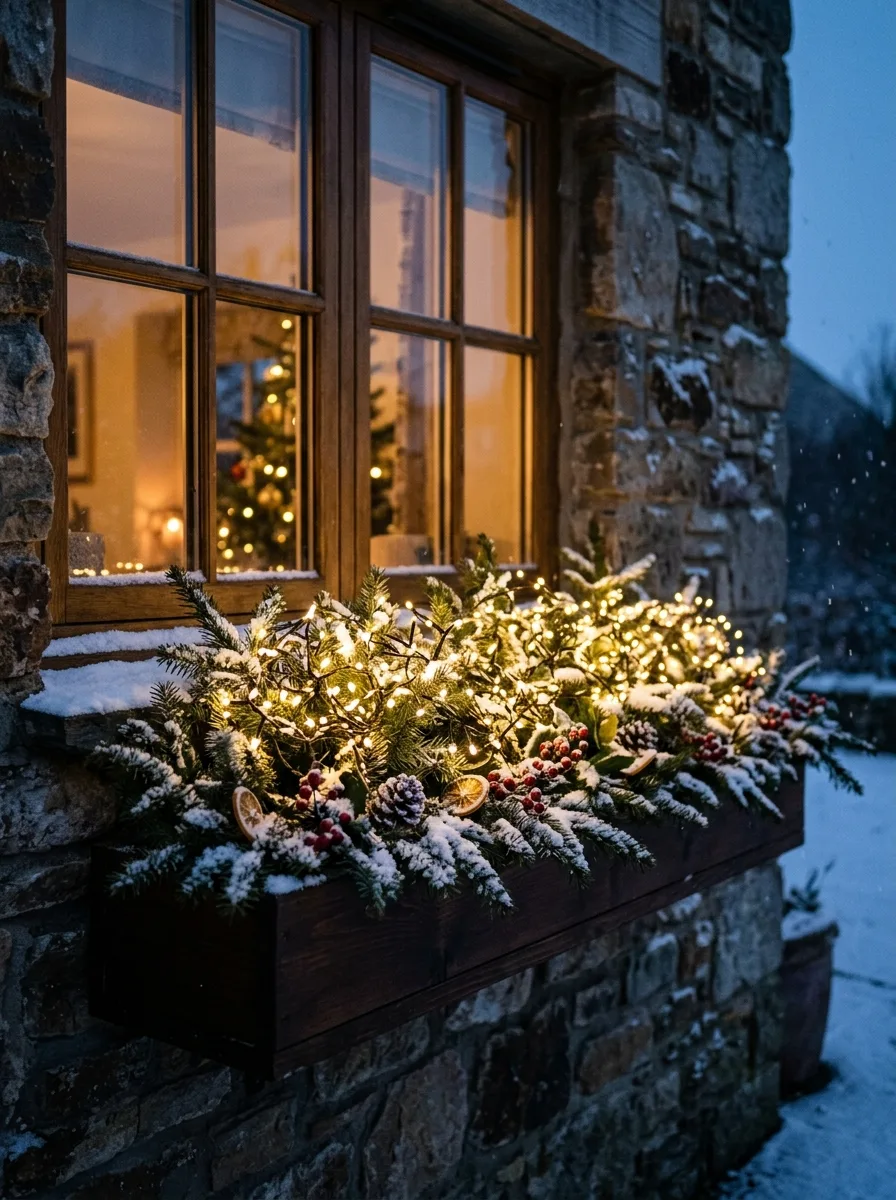
A string of battery fairy lights woven through the greenery makes the box glow after dark. Choose warm white for a soft look, and a set with a built-in timer so it switches on at dusk each day without anyone opening the window.
Good to know: check that the lights and their battery box are rated for outdoor use. For plug-in sets, CPSC advises outdoor-certified lights plugged into a GFCI-protected outlet and a cord rated for the job; don’t run a cord through a window that pinches it shut.
6. Mixed Greens and Eucalyptus Box
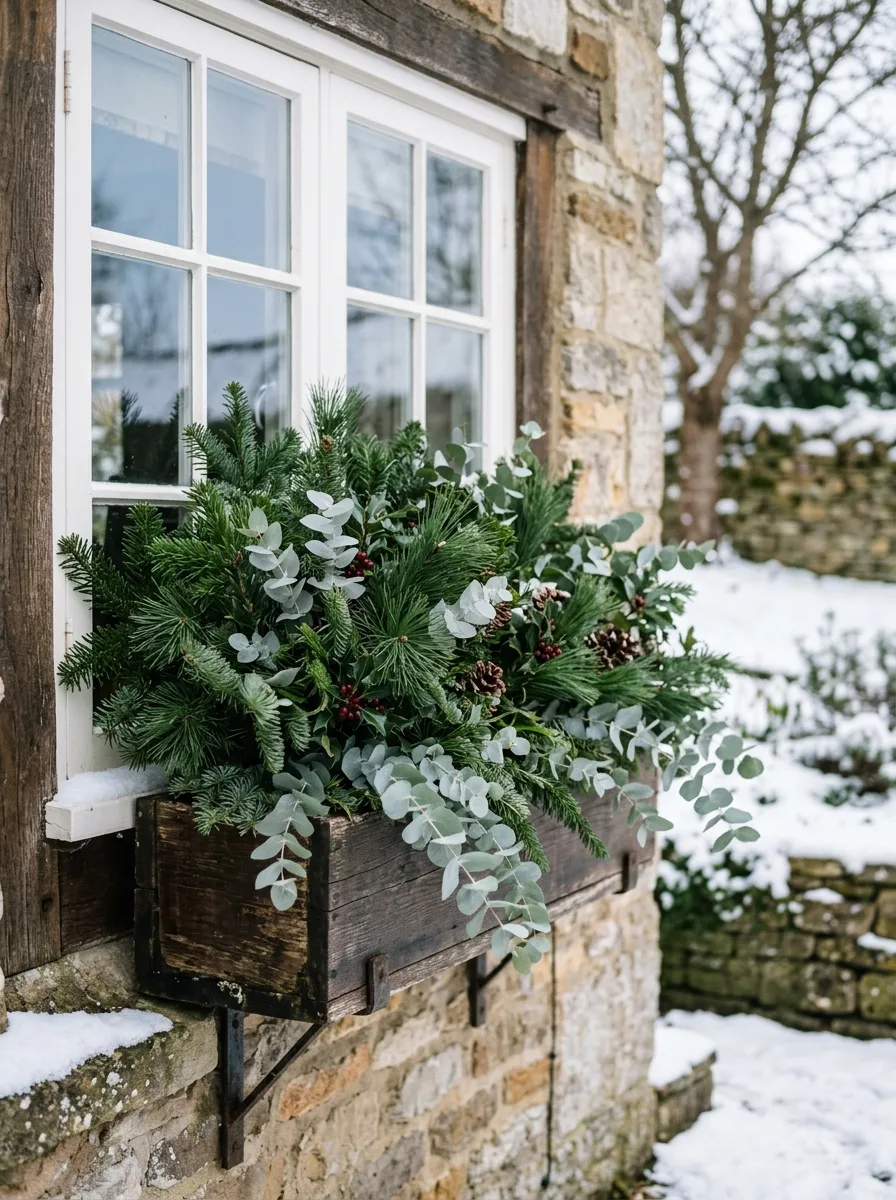
Mixing several evergreens, such as pine, fir and cedar, with silvery eucalyptus gives a box layered texture and a cooler, more modern color. Let a few eucalyptus stems spill over the front edge for a looser shape.
Good to know: the ASPCA lists eucalyptus as toxic to dogs, cats and horses, so save this mix for upper-floor windows or boxes pets can’t reach.
7. Magnolia Leaf Window Box
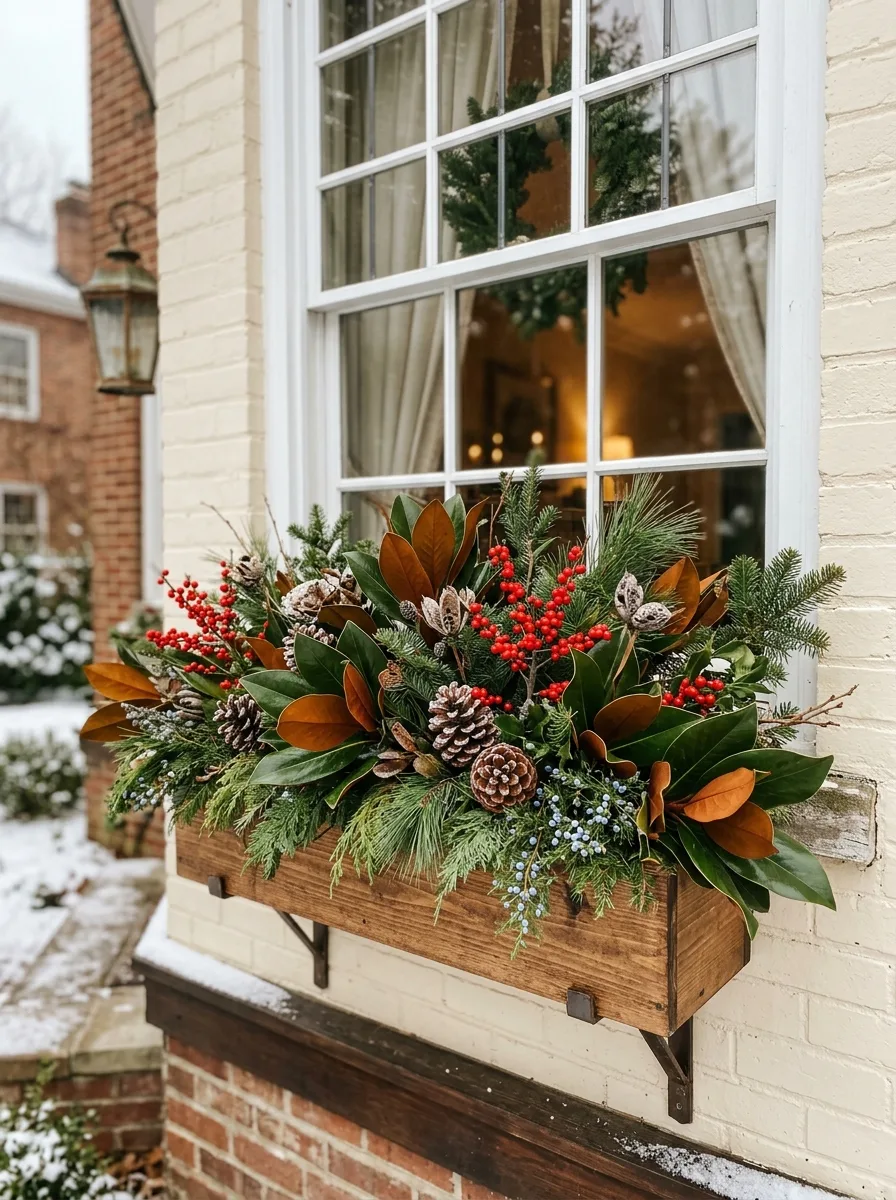
Southern magnolia branches add large, glossy leaves with brown, fuzzy undersides that contrast with fine evergreen needles. Illinois Extension used magnolia in a winter window box for exactly that color contrast. Turn some leaves over so the brown side shows.
Good to know: to grow your own supply of branches, note that NC State lists Southern magnolia as hardy in zones 6a to 10b; elsewhere, look for cut branches at florists and garden centers.
8. Red Twig Dogwood Box
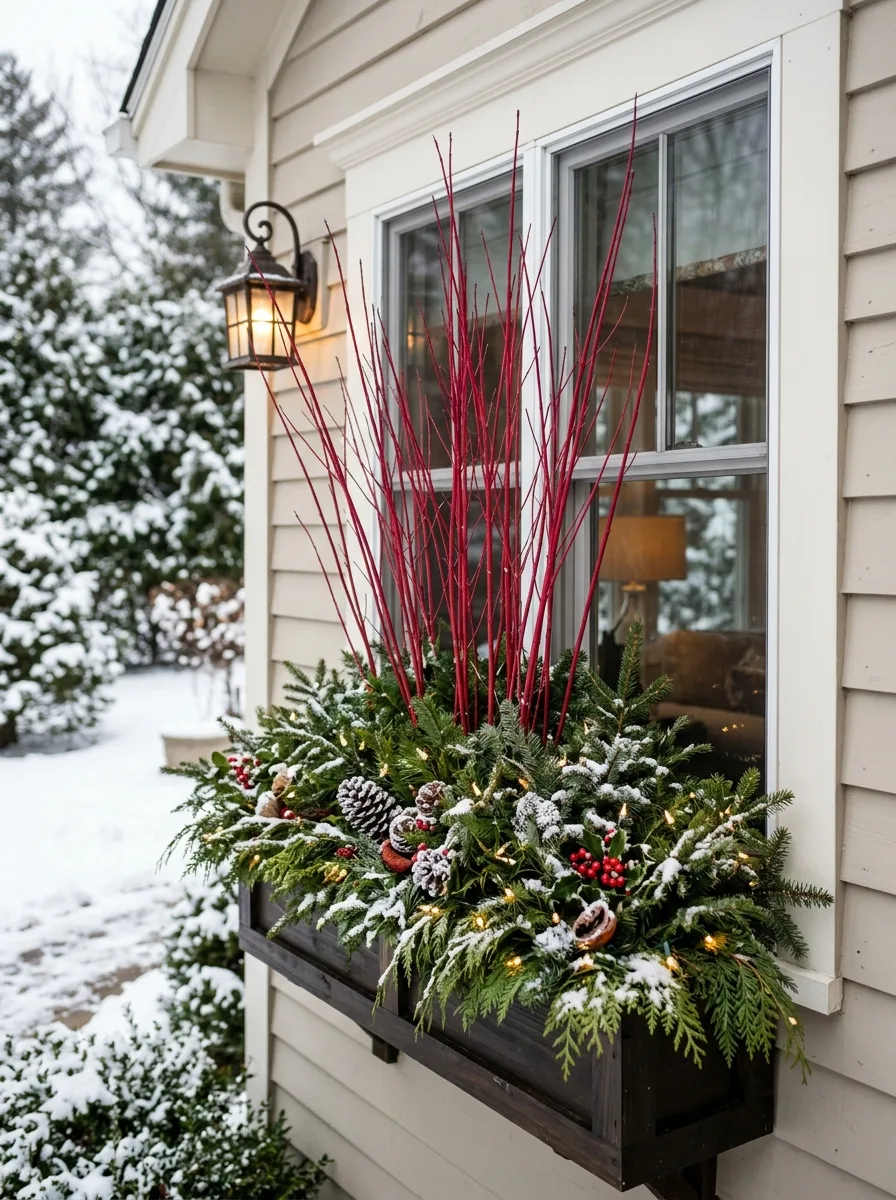
Bright red dogwood stems rising above evergreens give a bold, graphic box that stands out against snow. Bundle them in the center or along the back, and keep the greenery below them low and dense.
Good to know: push the stems in before the soil freezes and water it. NC State notes redosier dogwood (Cornus sericea) is native to most of North America and hardy in zones 2a to 7b, and its newest stems have the brightest color.
9. Flocked Mini Tree Box
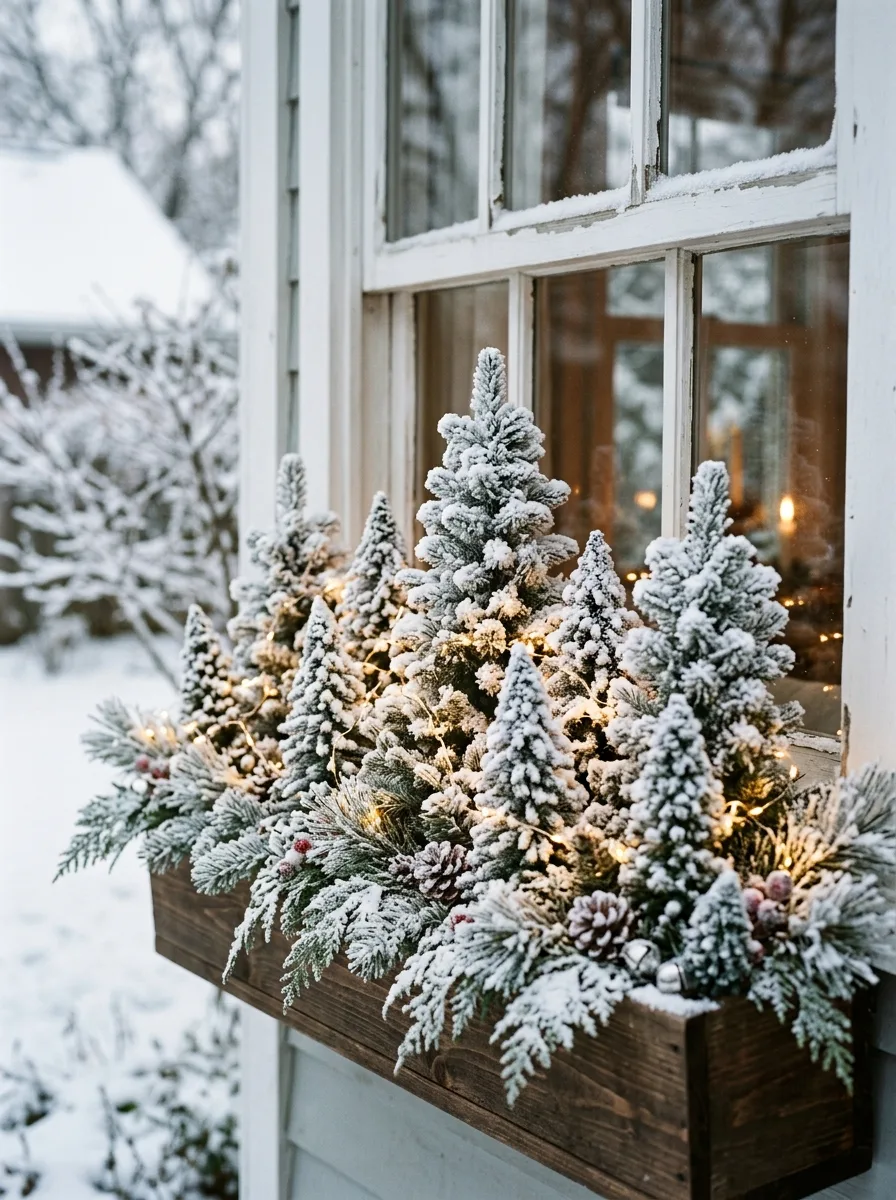
A row of small flocked trees looks like a tiny snowy forest. Space three or five trees along the box, fill the gaps with greenery and cones, and add fairy lights. Faux trees can be reused every year.
Good to know: if you use live dwarf conifers instead, remember their roots are exposed in a box: Penn State Extension suggests plants rated two zones colder than your area, watered well before the soil freezes.
10. Pine and Plaid Ribbon Box
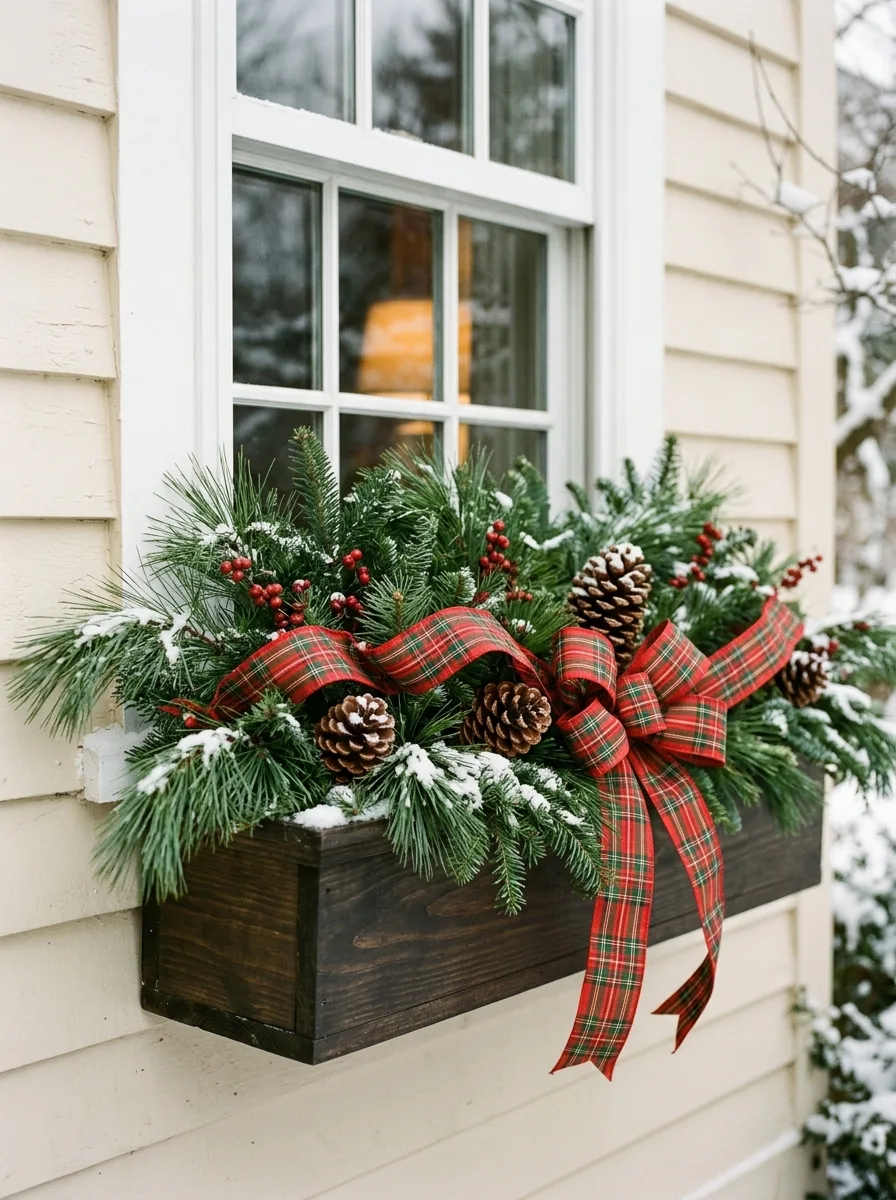
Fresh pine with plaid ribbon looped through the branches and a bow at the center looks cozy and traditional. Red-and-green plaid reads as Christmas; neutral or blue plaid can stay up through the rest of winter.
Good to know: use wired ribbon labeled weather-resistant or outdoor. Ordinary fabric ribbon soaks up rain, sags, and some colors can run onto the box or siding.
11. Lantern Window Box
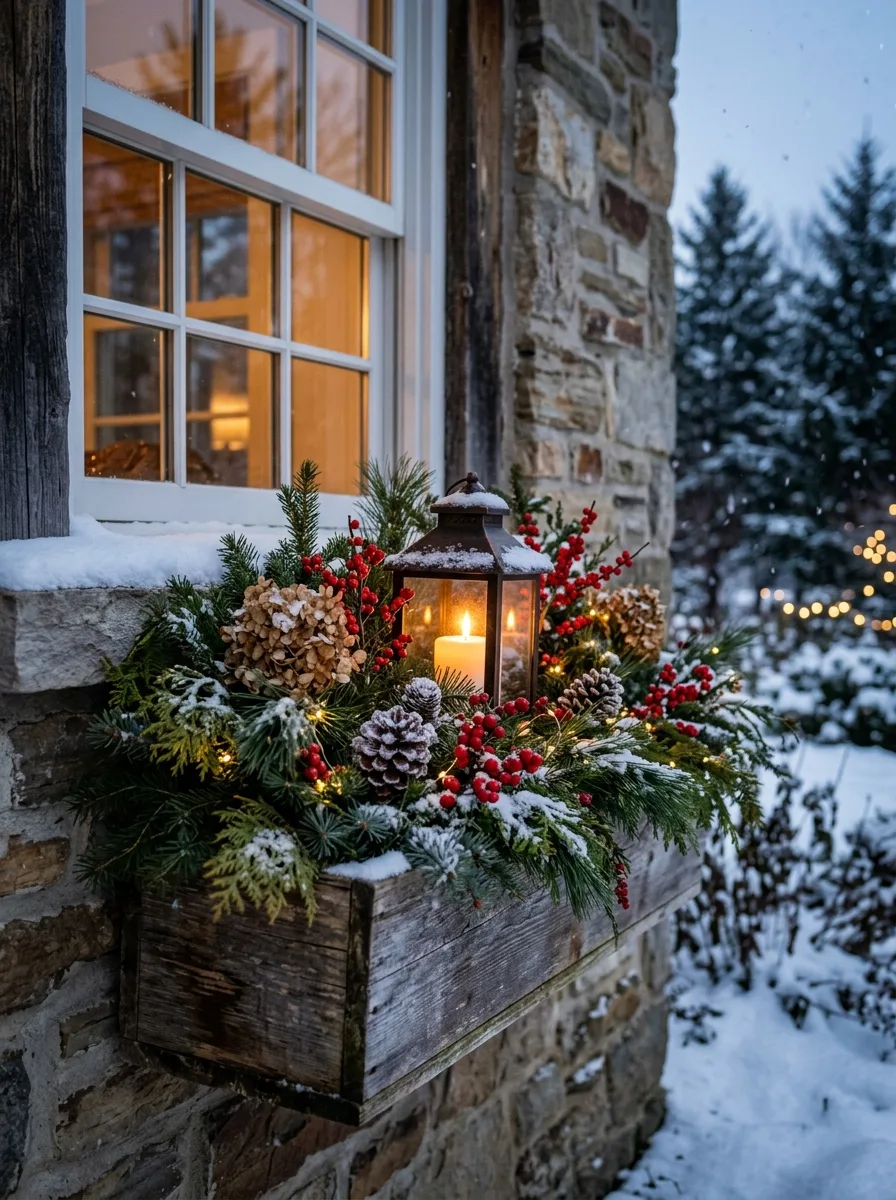
A small lantern set in the center of the box, surrounded by greens and berries, gives the arrangement a focal point by day and a glow at night. Nestle the base into the soil so it sits level.
Good to know: use a battery candle: a real flame among dry greens, right below a window, is a fire risk. Wire the lantern’s handle to the box so wind can’t tip it.
12. Cotton Stem Snowy Box
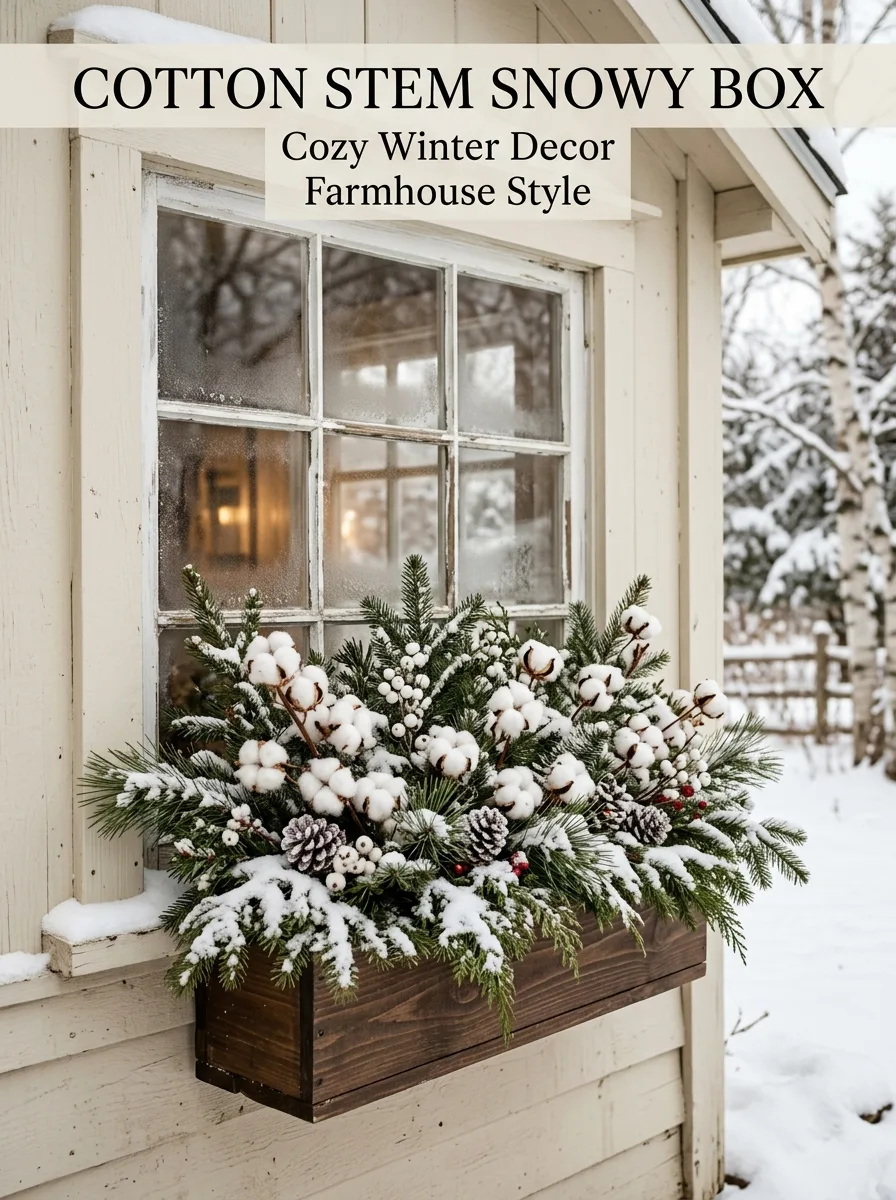
Dried cotton stems add soft white puffs that look like snow against green boughs. Use them in small groups, with pinecones or berries for contrast, for a farmhouse look.
Good to know: real cotton soaks up rain and can turn gray or moldy, so it lasts best in a box under an overhang. Faux cotton stems hold up better in open weather.
13. Gold and Greenery Glam Box
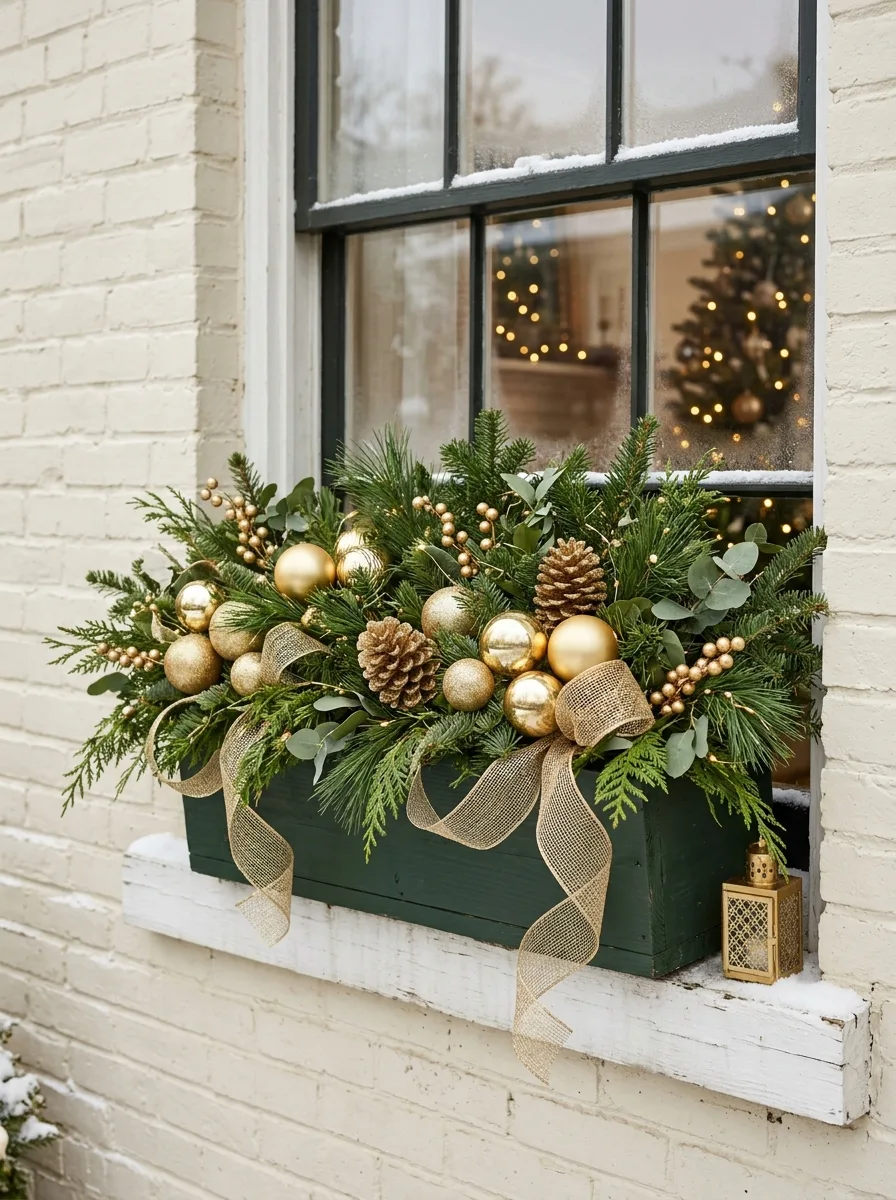
Gold picks, ornaments or wired ribbon tucked into evergreens catch the light and give the box a dressier look for the holidays. Stick to one metal and a few accents so it looks polished rather than busy.
Good to know: use shatterproof ornaments and wire each one to a branch; wind and snow can knock them loose, and glass ones break on the sill or path below.
14. Rustic Burlap and Pine Box
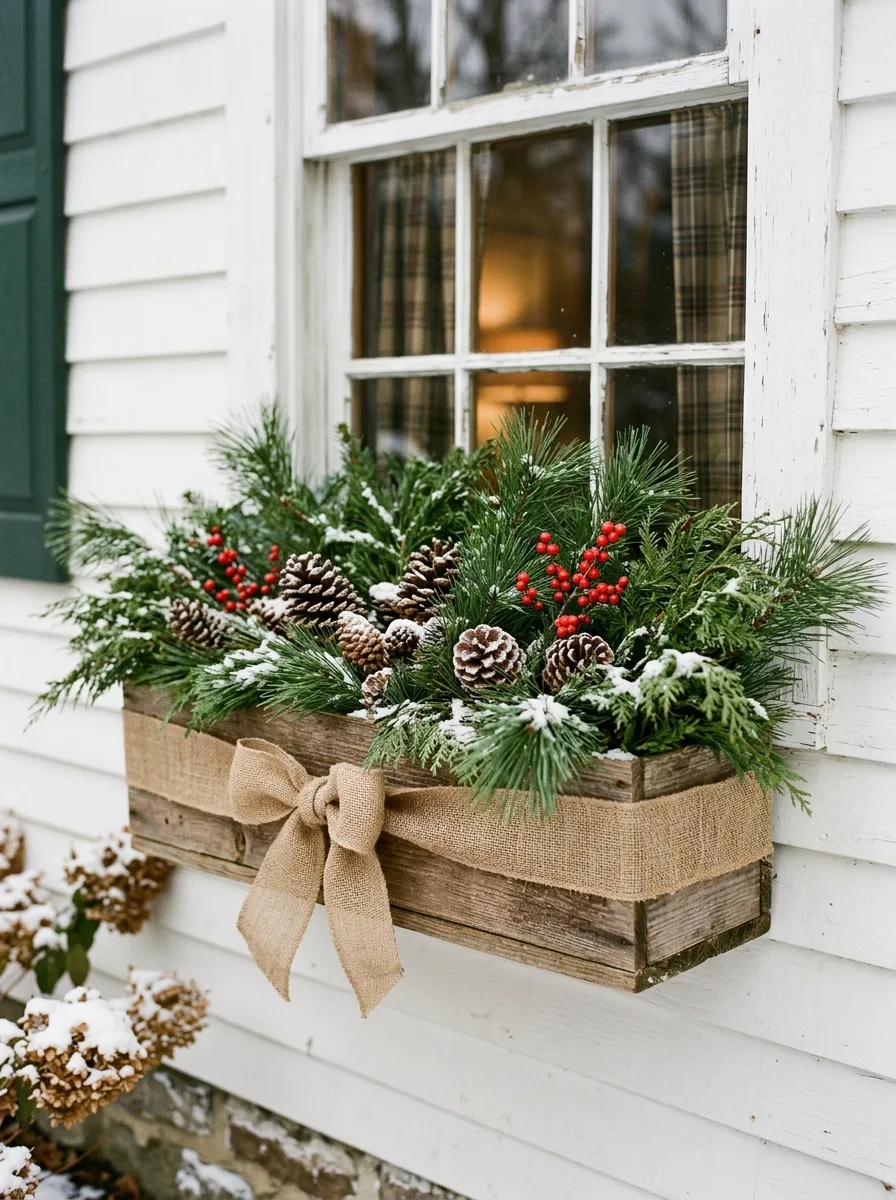
Pine with burlap ribbon and natural pinecones makes a rustic, homespun box that suits farmhouses and cottages. Tie loose burlap bows, or wrap a band of burlap around the front of the box.
Good to know: burlap fades, frays and holds water, so expect to replace it after a wet season, or use a weather-resistant burlap-look ribbon.
15. Winterberry Statement Box
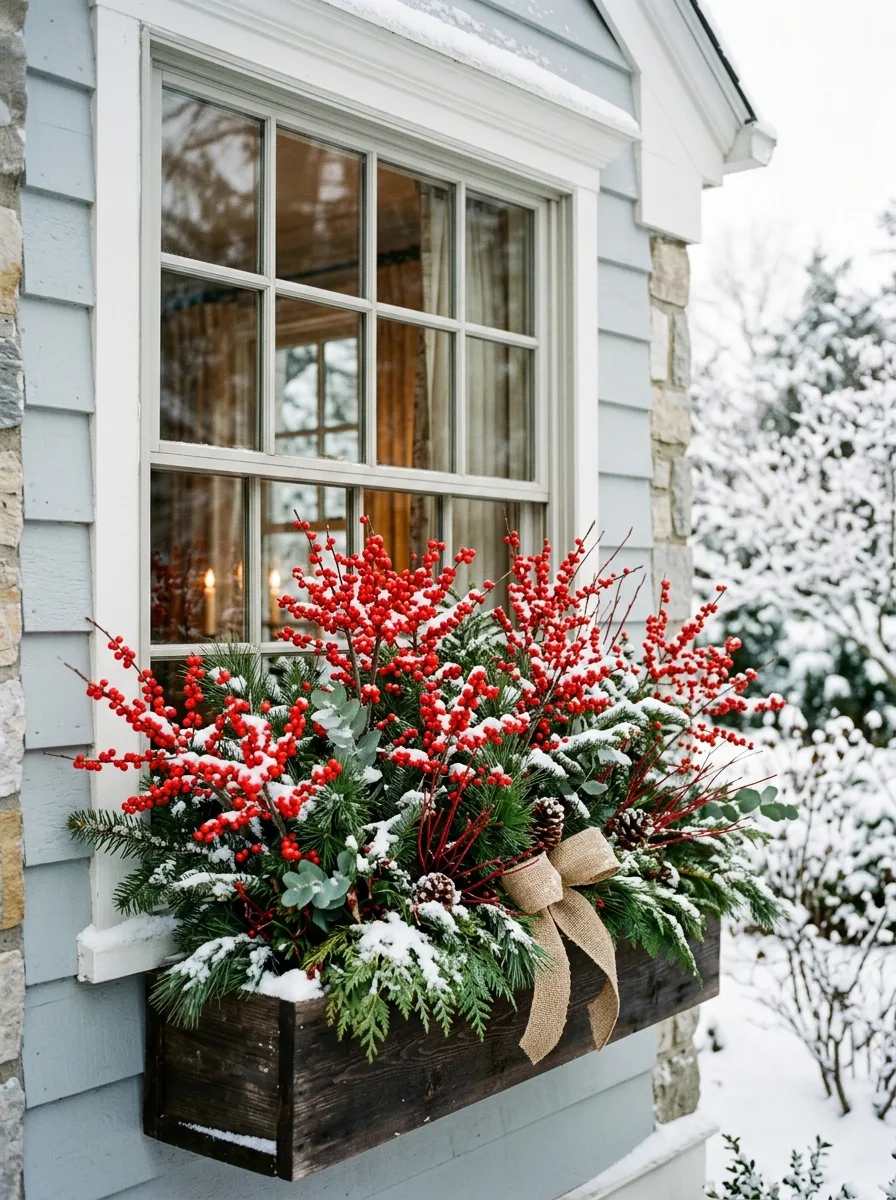
A box packed with winterberry branches gives a mass of bright red that shows from the street. Use plenty of stems, set them in the center and back, and keep the evergreen base simple so the berries stand out.
Good to know: NC State notes winterberry is native to eastern North America and its fruits feed many bird species, so birds may strip the box. The ASPCA lists it as toxic to pets, and NC State says the berries can cause vomiting and diarrhea in people.
16. Cedar and Orange Slice Box
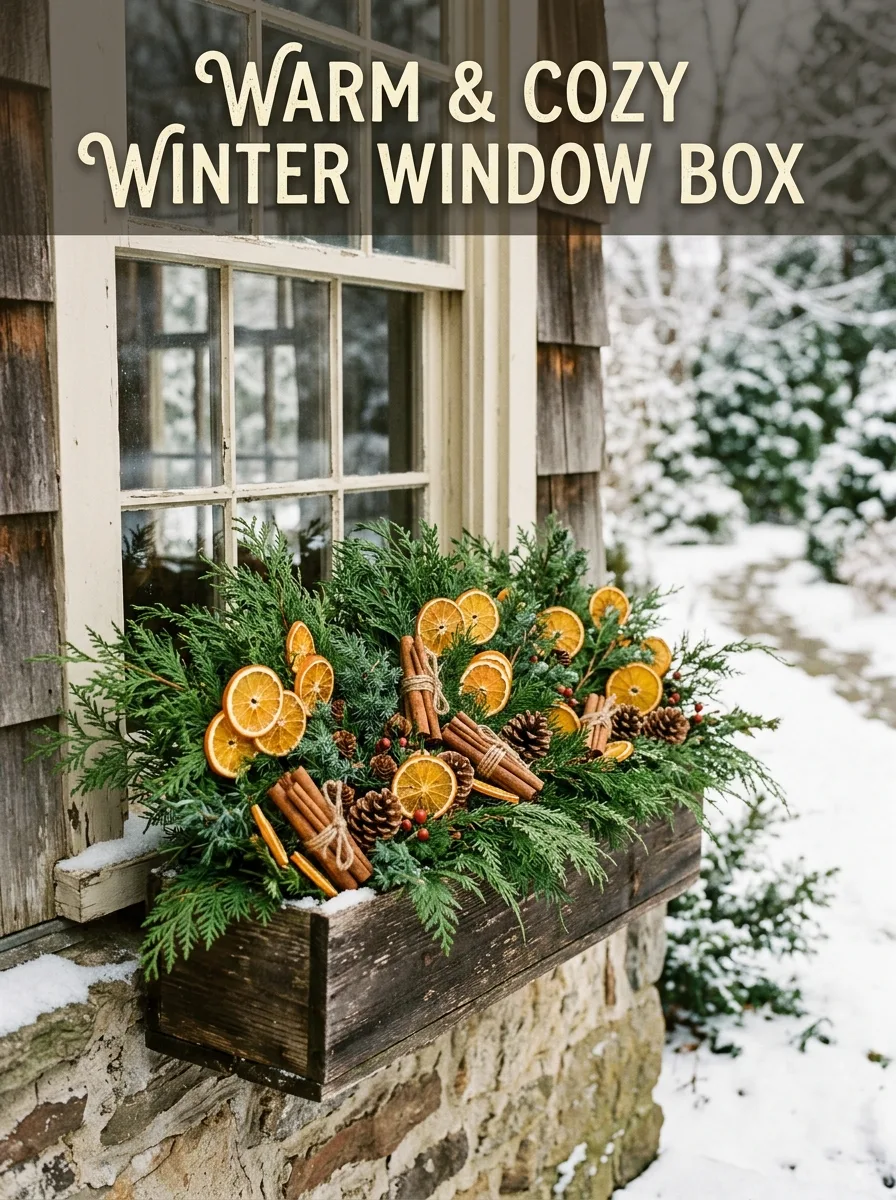
Dried orange slices and cinnamon sticks tucked among cedar sprays give an old-fashioned, warm-colored box. Thread the slices on wire or twine so they don’t blow away, and group them in clusters.
Good to know: dried fruit softens and can mold in wet weather, and it may attract squirrels and birds, so this box suits a sheltered window. The ASPCA lists orange as toxic to dogs and cats because of the oils in its peel and plant.
17. Seeded Eucalyptus and Pampas Box
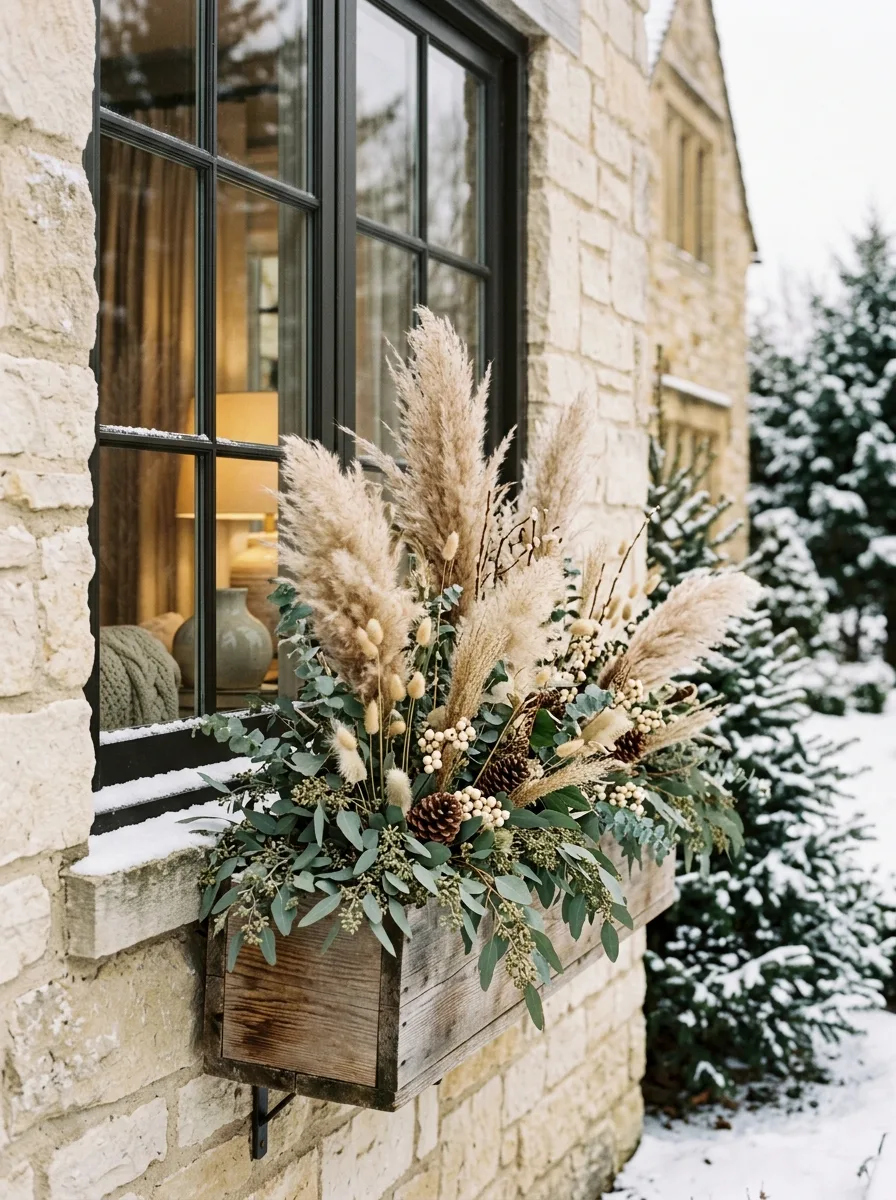
Seeded eucalyptus and pampas plumes give a soft, neutral box in cream, beige and sage. Add a few dried grasses or seed heads, and keep the colors limited so it looks intentional.
Good to know: pampas plumes shed and break up in wind and rain, so this look lasts best under an overhang. Don’t plant pampas grass to grow your own: NC State says it is highly invasive in some areas of the US, and its leaves have very sharp edges.
18. Holly and Berry Box
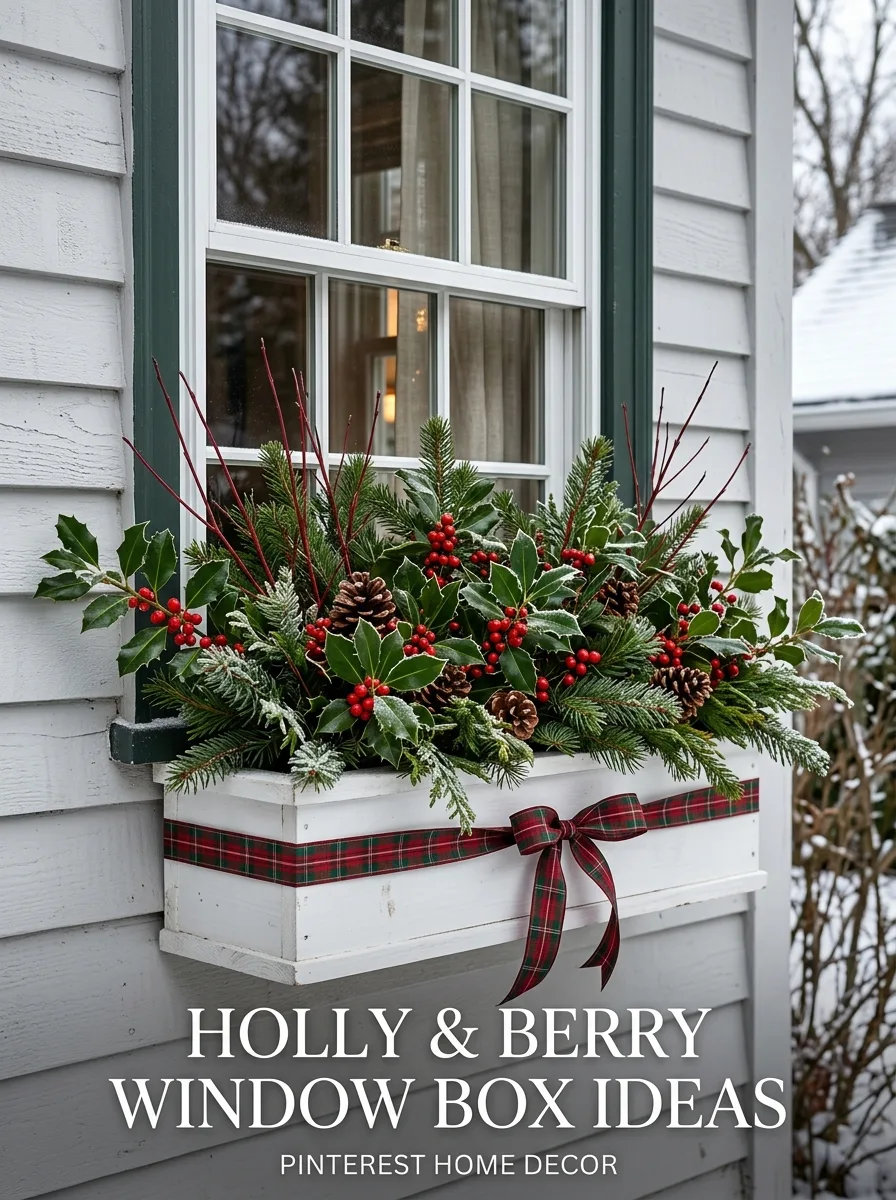
Holly’s glossy, spiny leaves and red berries make the most traditional winter box. Mix holly with softer evergreens so the box doesn’t look stiff, and add a few cones.
Good to know: the ASPCA lists holly as toxic to dogs, cats and horses, and NC State notes that English holly berries are particularly poisonous to children. NC State lists English holly as invasive in Oregon, California and Alaska, so if you plant holly, consider native American holly or winterberry.
19. Snow Dusted Pinecone Box
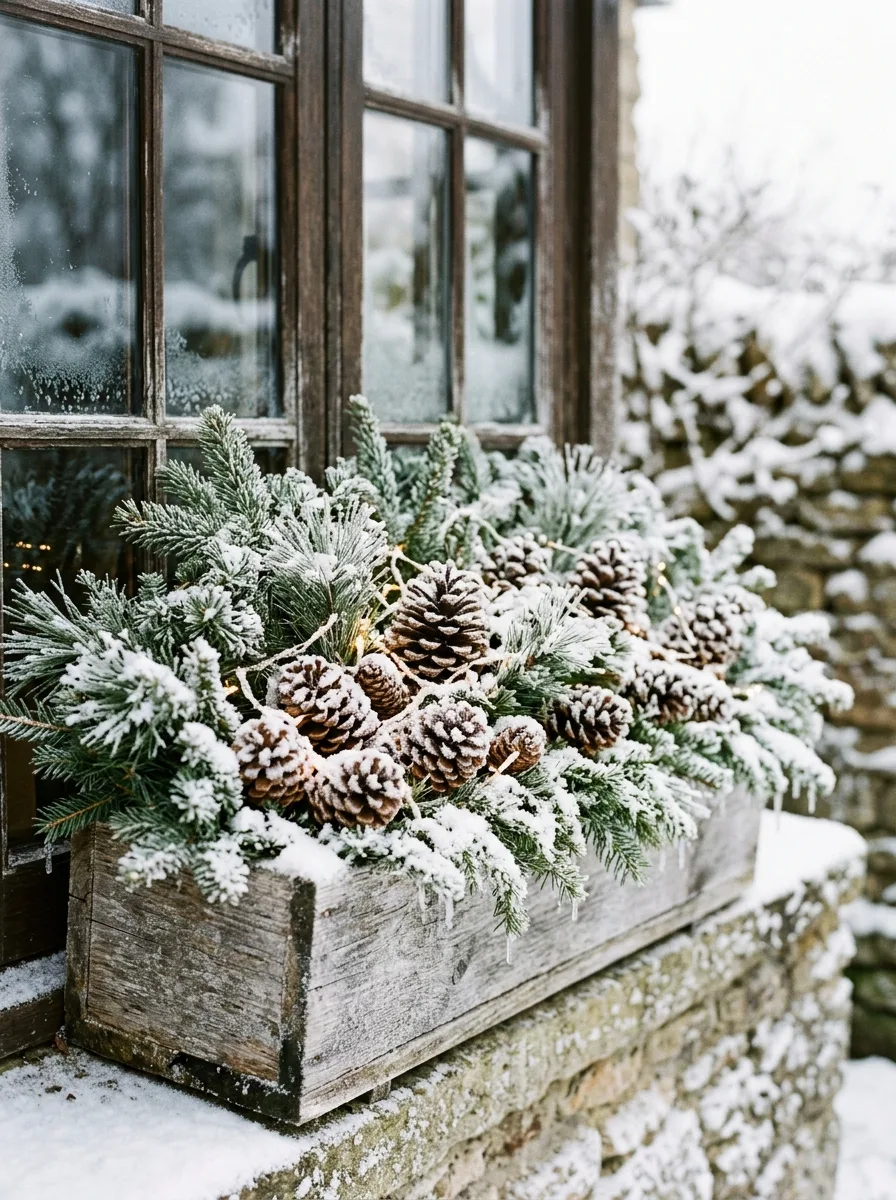
Pinecones with white tips look snowy even on a mild day. Brush the scale tips with white craft paint, scatter the cones in small groups over an evergreen base and add white lights for the evening.
Good to know: wire the cones to branches or floral picks so wind and squirrels don’t carry them off.
20. Trailing Ivy and Evergreen Box
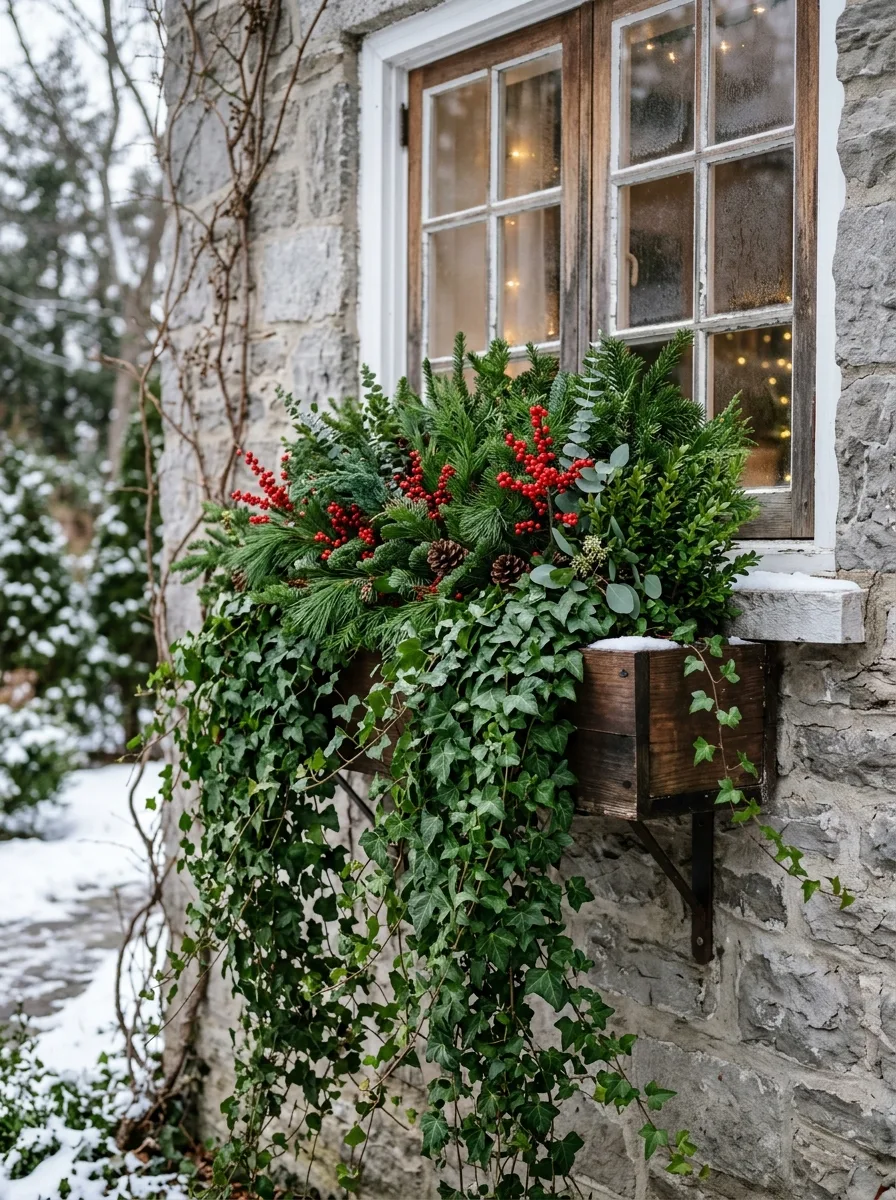
Trailing greens spilling over the front of the box soften its edge and add movement. Fill the back with upright evergreens and let long cedar or juniper sprays, or faux trailing ivy, hang over the front.
Good to know: avoid planting English ivy: NC State lists it as invasive, and the ASPCA lists it as toxic to dogs, cats and horses. If you use cut ivy, put it in the trash at the end of the season, not the compost, since the stems can root.
Common mistakes to avoid
- Screwing brackets only into siding or sheathing instead of studs or masonry.
- Waiting until the soil is frozen solid to push the stems in.
- Planting English ivy, pampas grass or nandina for a trailing, feathery or berry look.
- Leaving a clay or ceramic box out to freeze and crack.
- Using real candles in a box of dry greens under a window.
- Putting holly, eucalyptus or ivy in a box that pets can reach.
Winter window box FAQs
When should I set up a winter window box?
Once the summer plants are finished and before the soil freezes, so you can still push stems into it. The evergreen base can stay from late fall to early spring, with holiday accents added for December.
Do I need to water a winter window box?
Water cut greens well after arranging them; once the soil freezes it holds them in place. Live plants need water before the soil freezes and a check during thaws, as Penn State Extension notes.
What can I use instead of English ivy?
Long cut sprays of cedar or juniper, or faux trailing ivy, give the same draping effect without planting an invasive vine.
Are winter window box greens safe for pets?
Not all of them. The ASPCA lists holly (including winterberry), English ivy and eucalyptus as toxic to dogs and cats. Use them in upper-floor boxes or choose faux versions.


2 Comments