

25 Exterior House Color Trends for 2026 Homes
An exterior color has to work with the parts of a house you won’t repaint: the roof, any brick or stone, the windows and the landscape. For 2026, several paint brands chose warm, earthy colors of the year. Sherwin-Williams named Universal Khaki (SW 6150), a mid-tone neutral, and Benjamin Moore named Silhouette (AF-655), an espresso brown with charcoal notes. Behr chose Hidden Gem, a smoky blue-green, and Valspar chose Warm Eucalyptus, a soft green.
The 25 ideas below include those directions along with combinations that have worked on houses for decades, so treat them as color ideas rather than forecasts. Each one notes what to pair it with and where it suits. Start with the basics, because a color can look very different on your walls than on a chip.
Before you choose a color
Test large samples outside
Paint large sample boards or use big peel-and-stick samples, and look at them on more than one side of the house in morning, midday and evening light. Colors often look lighter and brighter in full sun than on a small chip indoors.
Work with what stays
Choose the body color around the things you’re keeping, such as the roof, brick, stone and window frames. Hold samples right next to them, since a color that looks neutral on its own can clash with a warm roof or cool stone.
Check the rules
Many HOAs require approval before an exterior color change, and some historic districts review paint colors too. Get written approval before you buy paint.
Prep safely and choose the right paint
In homes built before 1978, old paint may contain lead: EPA says about three-quarters of U.S. homes from that era still have some, contractors paid to disturb it must be lead-safe certified, and DIYers should use lead-safe practices. On vinyl siding, Sherwin-Williams advises staying no darker than the original color unless you use a paint formulated for darker colors on vinyl, because dark paint absorbs heat and can warp the siding.
The 25 color ideas at a glance
| Color idea | Pair with | Suits |
|---|---|---|
| Warm white, black trim | Black windows, door, hardware | Farmhouse, colonial, modern |
| Sage green | White or cream trim, wood door | Wooded and rural lots |
| Charcoal, warm wood | Wood soffits, entry or garage door | Modern houses |
| Deep navy | White trim, brass, red or wood door | Colonial, Cape Cod, craftsman |
| Terracotta | Cream trim, dark wood, stone | Stucco in hot, sunny regions |
| Matte black | Warm wood, brass, green planting | Modern houses, cabins |
| Greige | Stone, white trim, stained door | Most styles |
| Olive green | Cream trim, dark door, brass | Craftsman, colonial, Tudor |
| Soft blue-gray | White trim, black shutters | Cape Cod, shingle style |
| Forest green | Black windows and door | Wooded lots |
| Mushroom taupe | White trim, dark wood door | Mature gardens |
| Two-tone gray | White or black trim | Houses with distinct sections |
| Creamy yellow | White trim, dark shutters | Cottages, colonials, bungalows |
| Plum accent | Gray or white siding, brass | Front doors, shutters |
| Sandy beige | Limestone or fieldstone | Transitional, Mediterranean |
| Coastal blue | White trim and railings | Coastal and lake houses |
| Dark bronze, brown | Copper tones, cream trim | Contemporary houses |
| Blush pink | White trim, tile roof, iron | Stucco in sunny climates |
| Slate blue with brick | Red brick, white trim | Colonial, traditional |
| Black and white | Warm wood, warm lighting | Modern new builds |
| Rust red | White trim, dark roof | Cottages, cabins, farmhouses |
| Light cement gray | Black windows and railings | Modern and urban houses |
| Hunter green | Brass or gold hardware | Georgian, Federal, traditional |
| Concrete with timber | Wood entry or feature wall | Modern houses |
| Lavender-gray | White trim, charcoal door | Traditional or modern |
1. Warm White with Black Trim
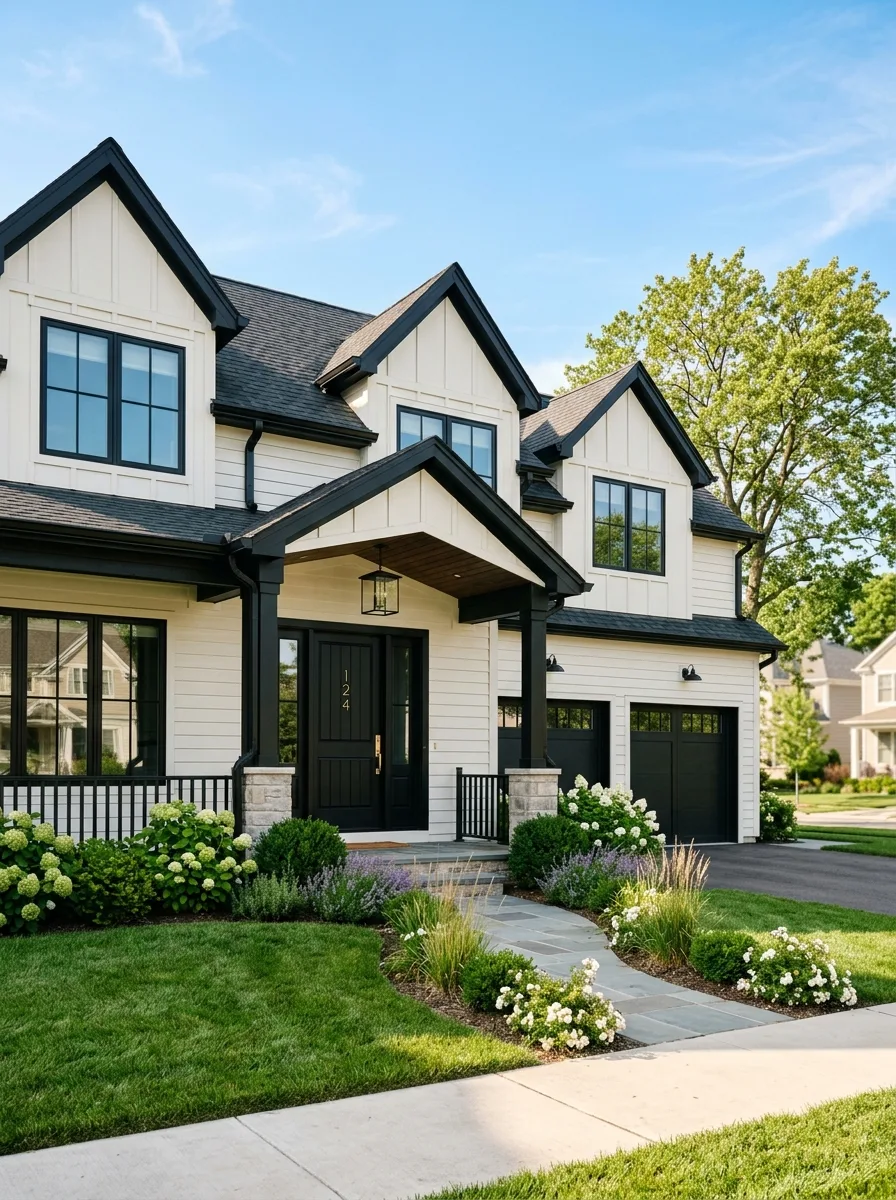
A warm white body with black window frames, doors and fascia gives a crisp, high-contrast look that suits farmhouse, colonial and modern houses. Choose a white with a little yellow or beige in it, such as an ivory or soft cream, rather than a blue-white, which can look stark in strong sun. Keep the black to the outlines of the house so the contrast stays clean.
Good to know: black trim shows dust and pollen more than mid-tones do, so plan on washing it more often. If the window frames are vinyl, check the window maker’s guidance before painting them a dark color.
2. Sage Green Exterior
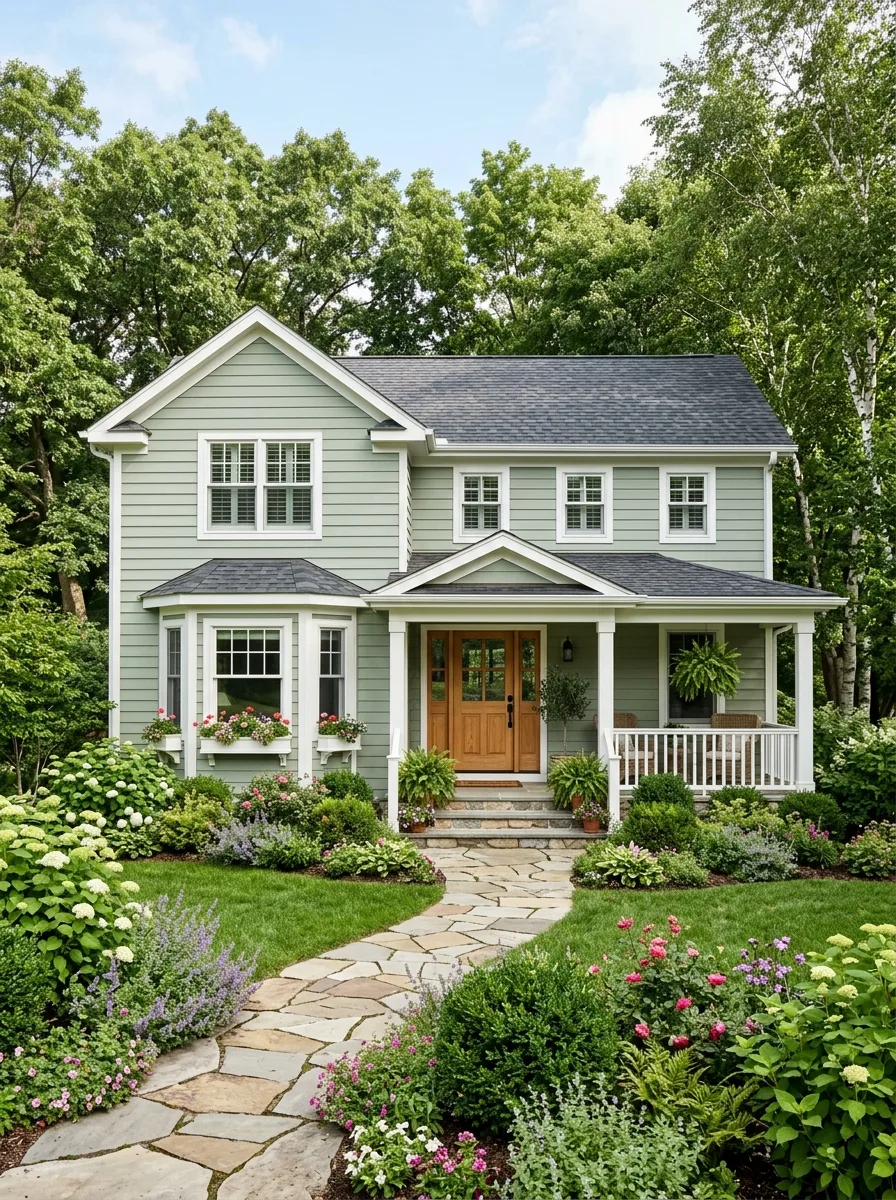
Sage is a muted gray-green that sits comfortably next to lawns, trees and natural stone. It works on lap siding, shingles and stucco, and pairs with white or cream trim and a natural wood front door. Valspar’s 2026 Color of the Year, Warm Eucalyptus, is a soft green in this family.
Good to know: gray-greens shift a lot between sun and shade, so look at samples on both a sunny wall and a shaded one before you commit.
3. Charcoal Gray with Warm Wood Accents
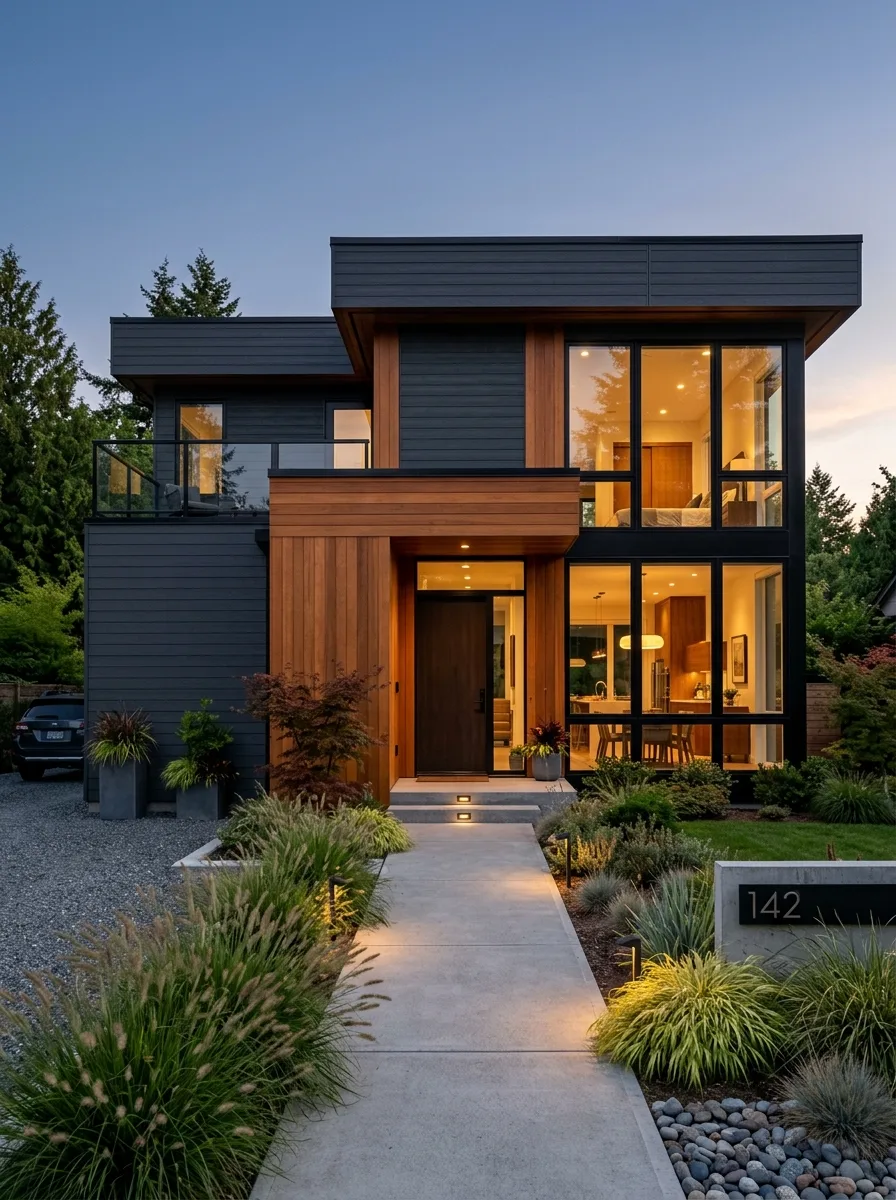
Charcoal siding with wood on the soffits, entry or garage door is a common pairing on modern houses with simple shapes. The wood keeps the dark gray from looking cold, and the gray makes the wood grain stand out. Choose a charcoal with a slight brown undertone next to a brown roof, and a cooler charcoal next to a black or gray one.
Good to know: exterior wood needs an outdoor-rated finish and regular recoating, more often on sunny south and west walls. Wood-look fiber cement or aluminum cladding needs less upkeep.
4. Deep Navy Blue Exterior
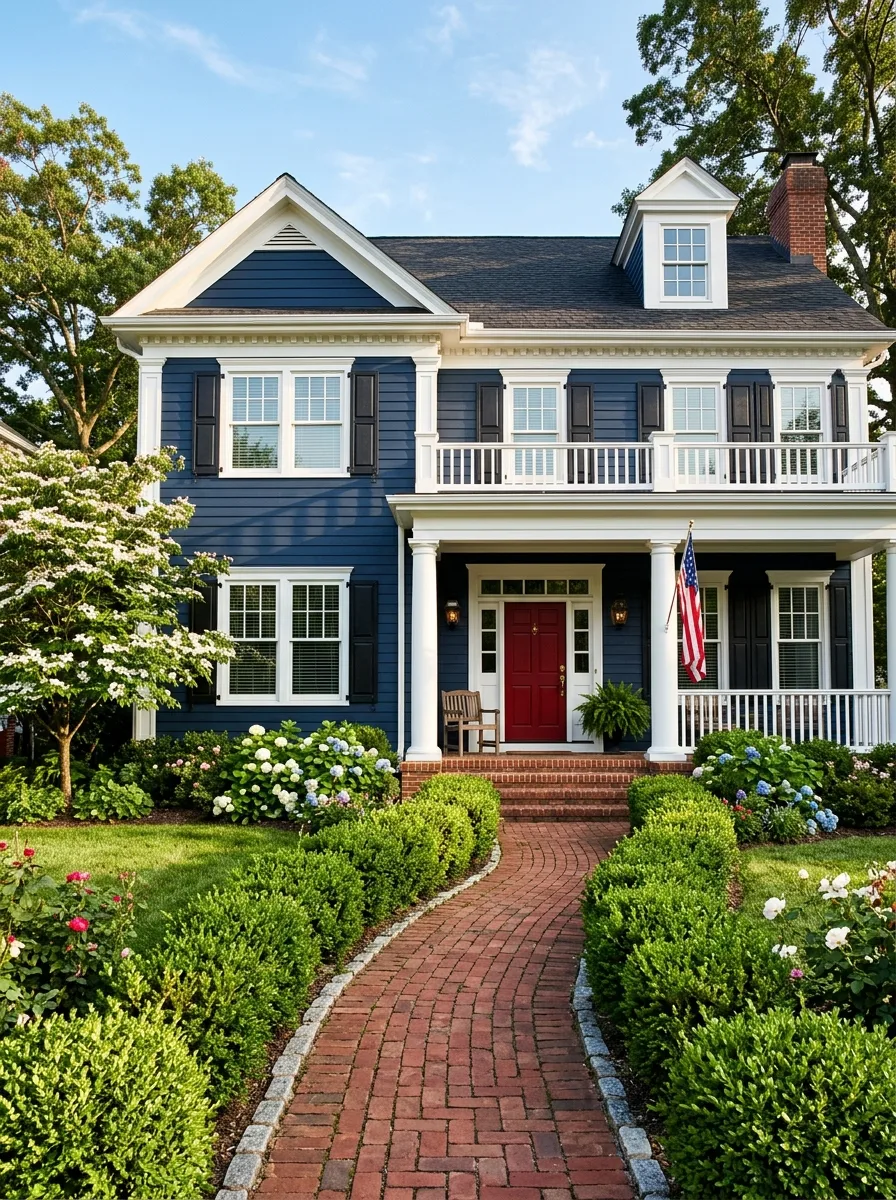
Deep navy reads as a dark neutral from the street but shows its blue in sunlight. It pairs with bright white trim, brass or black hardware, and a natural wood or red front door. Navy suits colonial, Cape Cod and craftsman houses as well as simpler modern ones.
Good to know: if you’re thinking of painting brick navy, note the Brick Industry Association’s guidance: paint can be very difficult to remove from brick without damage, and coatings that trap moisture can harm the wall, so a breathable masonry treatment is the safer choice.
5. Warm Terracotta and Earth Tones
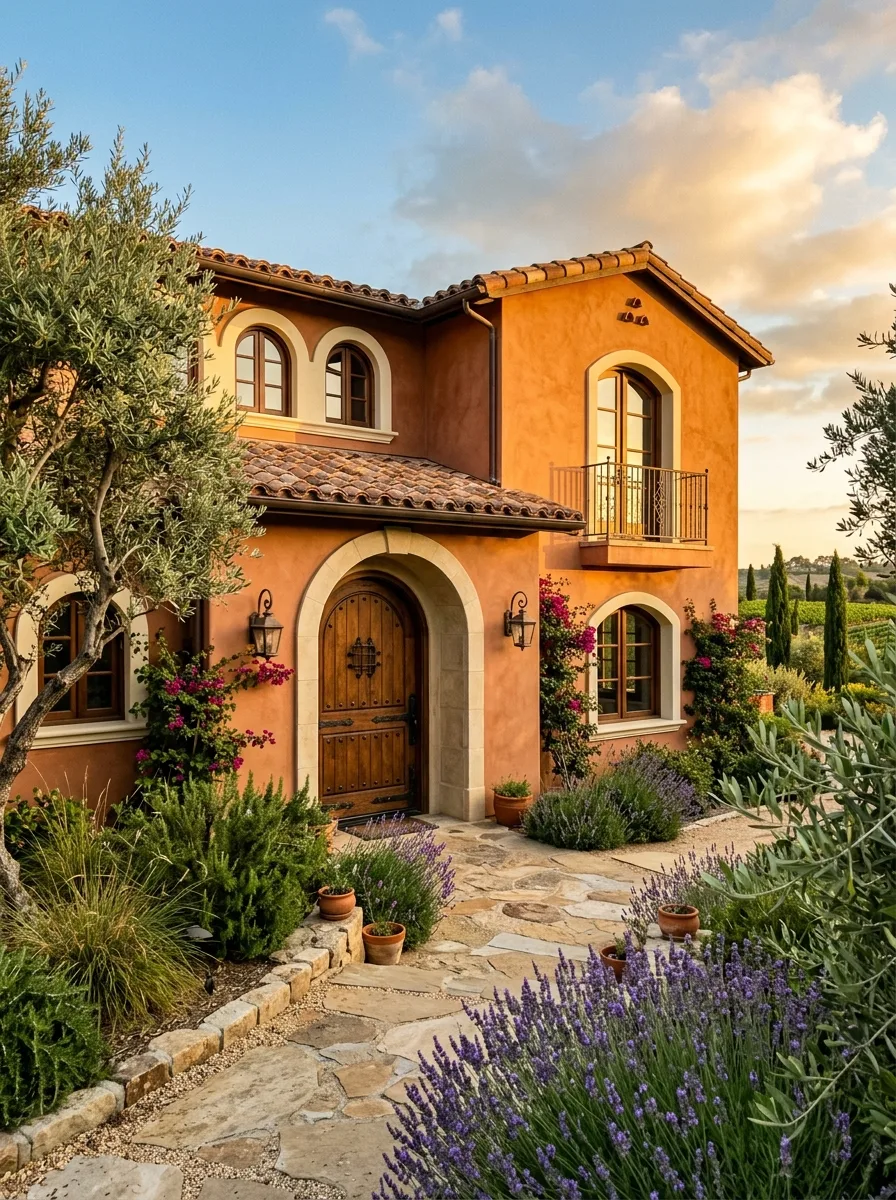
Terracotta, clay and sand tones suit stucco in hot, sunny regions, where they echo the soil and desert planting. Pair terracotta with cream trim, dark wood doors, natural stone and a drought-tolerant grass-free front yard. Use a softer, dustier terracotta for the whole house and save stronger clay colors for an entry wall or door.
Good to know: on stucco, use a paint or coating made for masonry and stucco, and repair cracks before painting so water can’t get behind the finish.
6. Matte Black Exterior
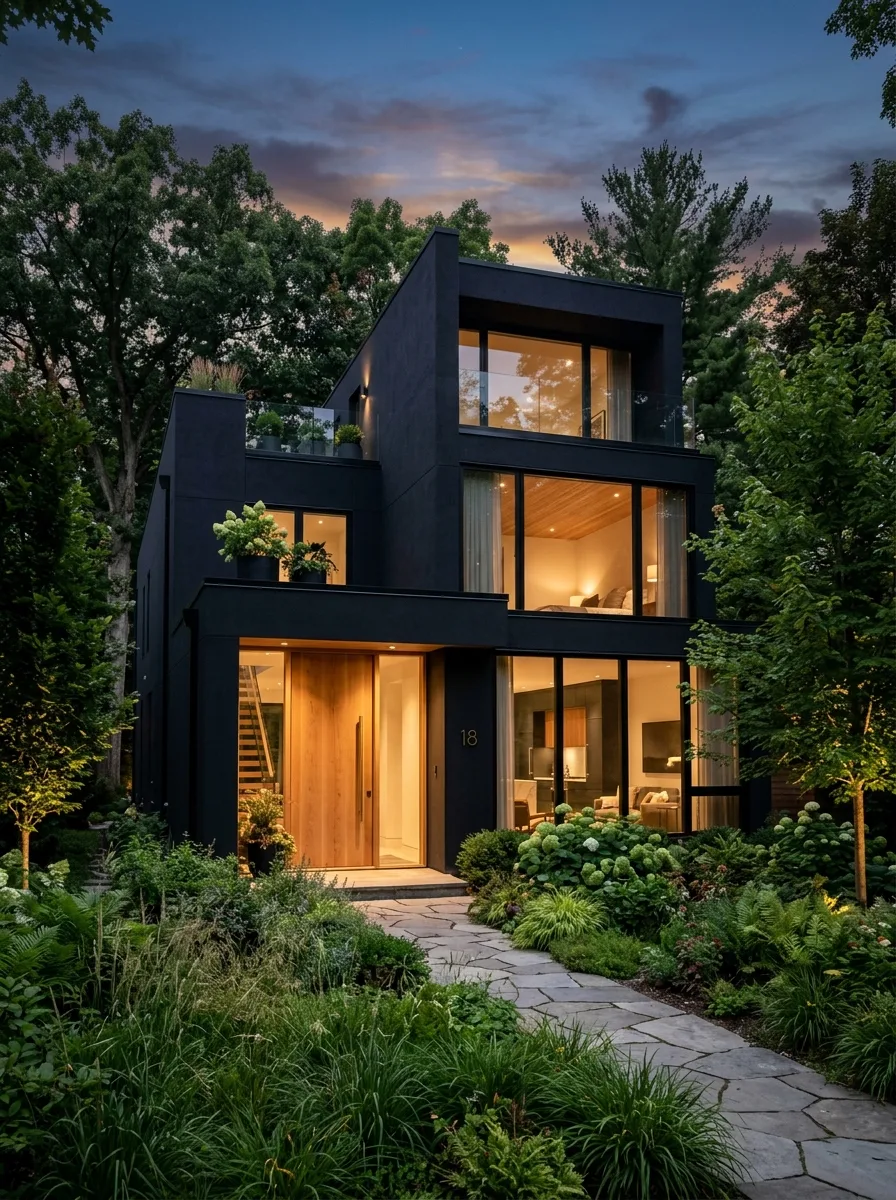
A black exterior makes windows, wood and planting stand out against it, and suits modern houses and cabins with simple forms. Balance it with a warm wood door, brass or bronze house numbers and plenty of green planting so the house still looks welcoming.
Good to know: black absorbs more sun than any other color, so check that your siding can take it: Sherwin-Williams warns that painting vinyl darker than its original color can warp it unless you use a paint formulated for that. Very flat finishes also mark more easily, so a low-sheen exterior finish is easier to clean.
7. Greige with Stone Accents
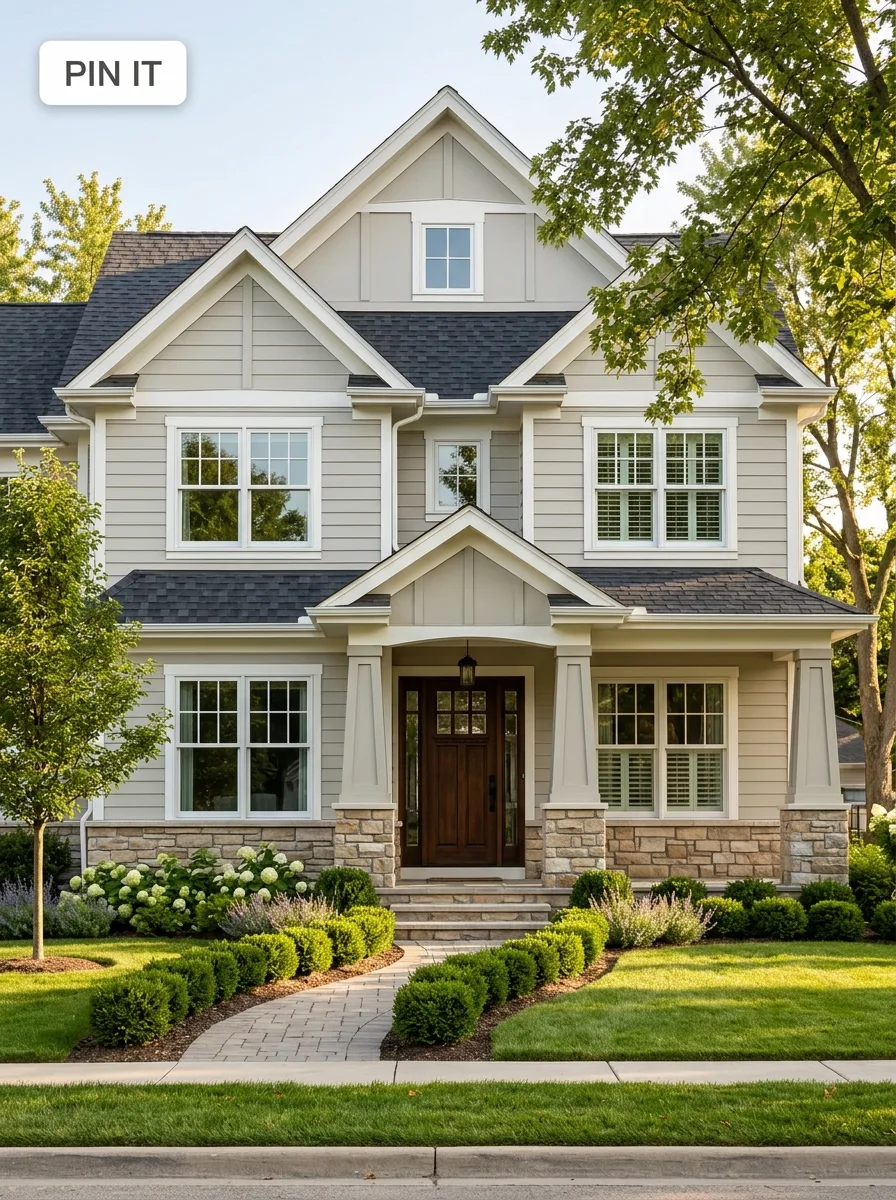
Greige, a mix of gray and beige, is warmer than gray and less yellow than beige, so it sits well with most roofs and stone. Pair it with stone on the foundation, chimney or porch columns, white trim and a stained wood door. Choose the exact shade by holding samples against the stone, since its warm and cool flecks decide which undertone works.
Good to know: greige can lean green, pink or purple outdoors, so compare at least three samples against your stone and roof before choosing.
8. Olive Green with Cream Trim
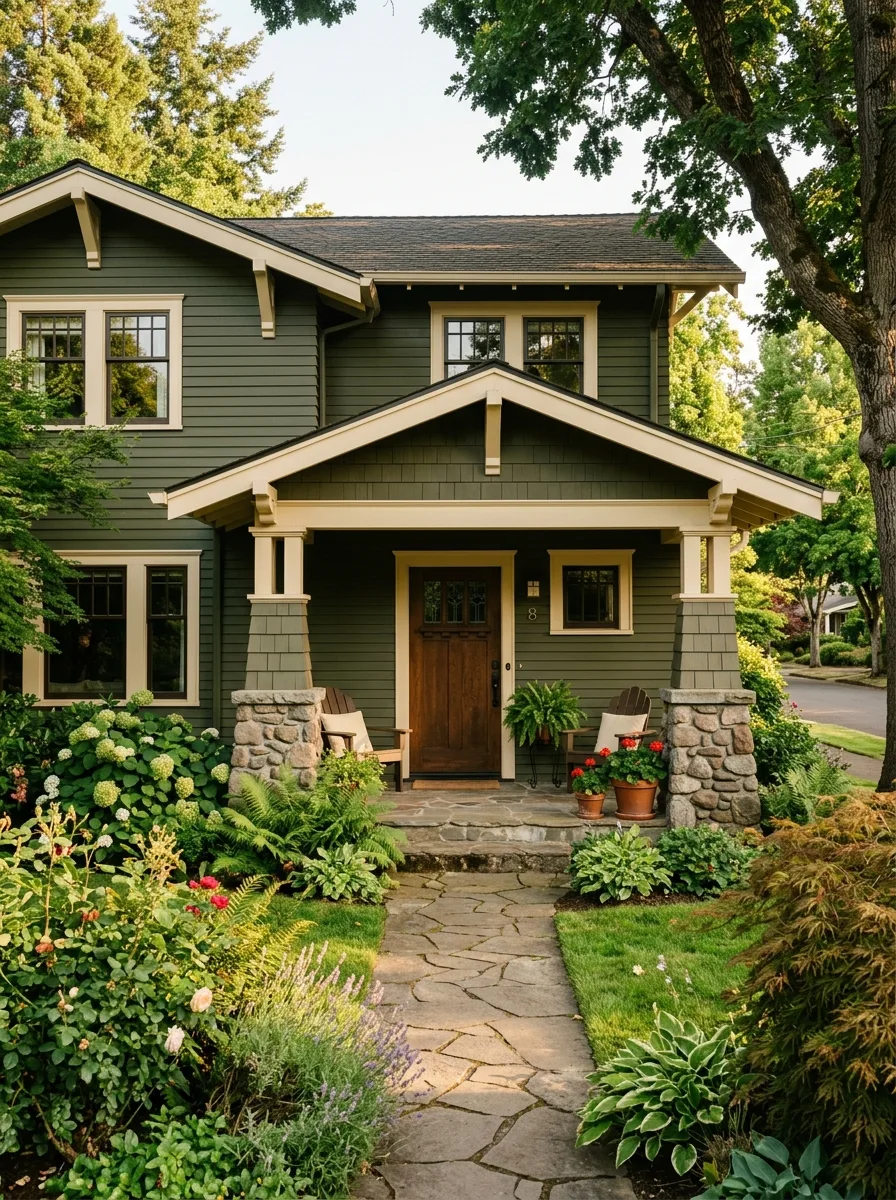
Olive is a deeper, warmer green than sage, with a brown or yellow cast that looks settled next to trees and brick. Cream trim softens it, and a dark brown or black door with brass hardware finishes the look. It suits craftsman, colonial and Tudor-style houses.
Good to know: olive can look almost brown in shade and much yellower in full sun, so test it on the wall that gets the least light as well as the sunniest one.
9. Soft Blue Gray Exterior
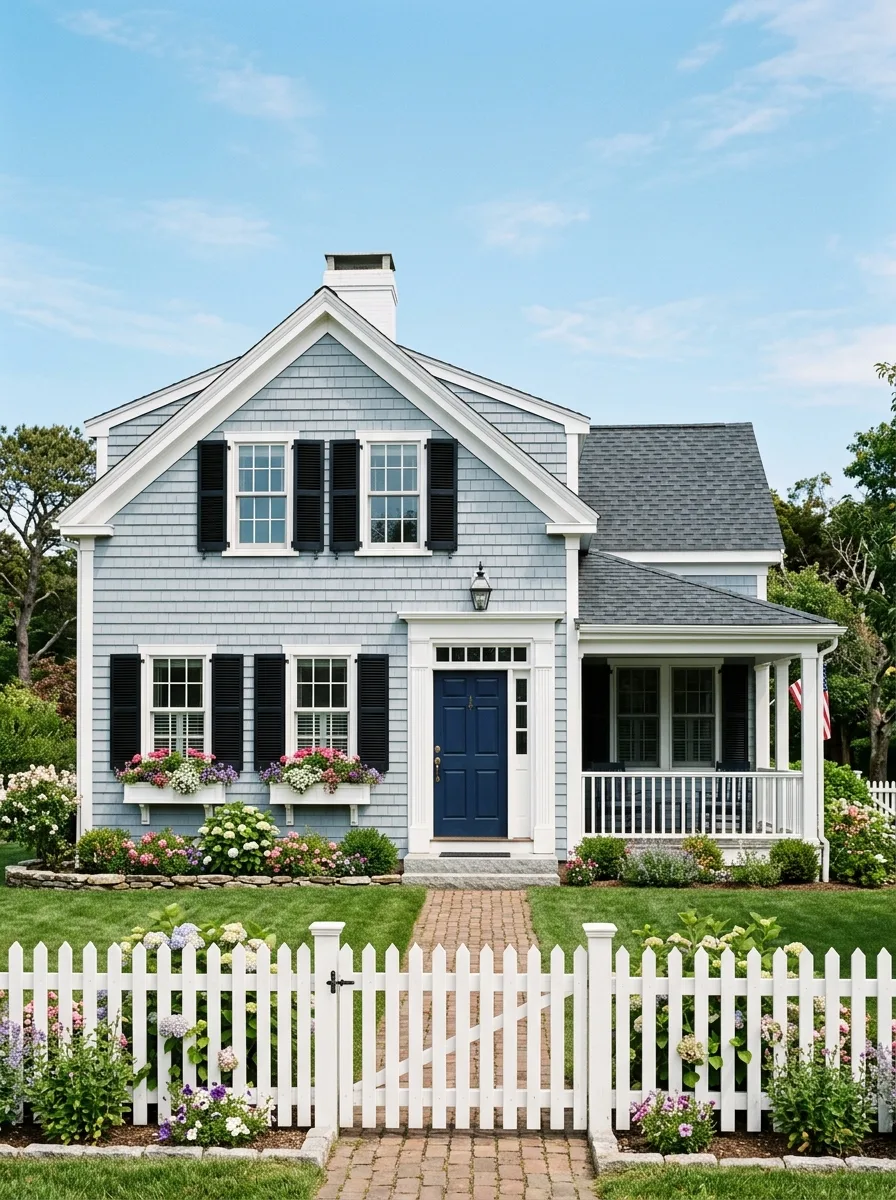
Soft blue-gray is a calm, light color that suits Cape Cod, shingle-style and traditional houses inland as well as on the coast. White trim, black shutters and a red or navy door give it a classic look. For a deeper, greener version, Behr’s 2026 Color of the Year, Hidden Gem, is a smoky blue-green.
Good to know: light blue-grays can look almost white or icy in strong sun, so pick a sample a shade deeper than you think you need and judge it outdoors.
10. Forest Green with Black Windows
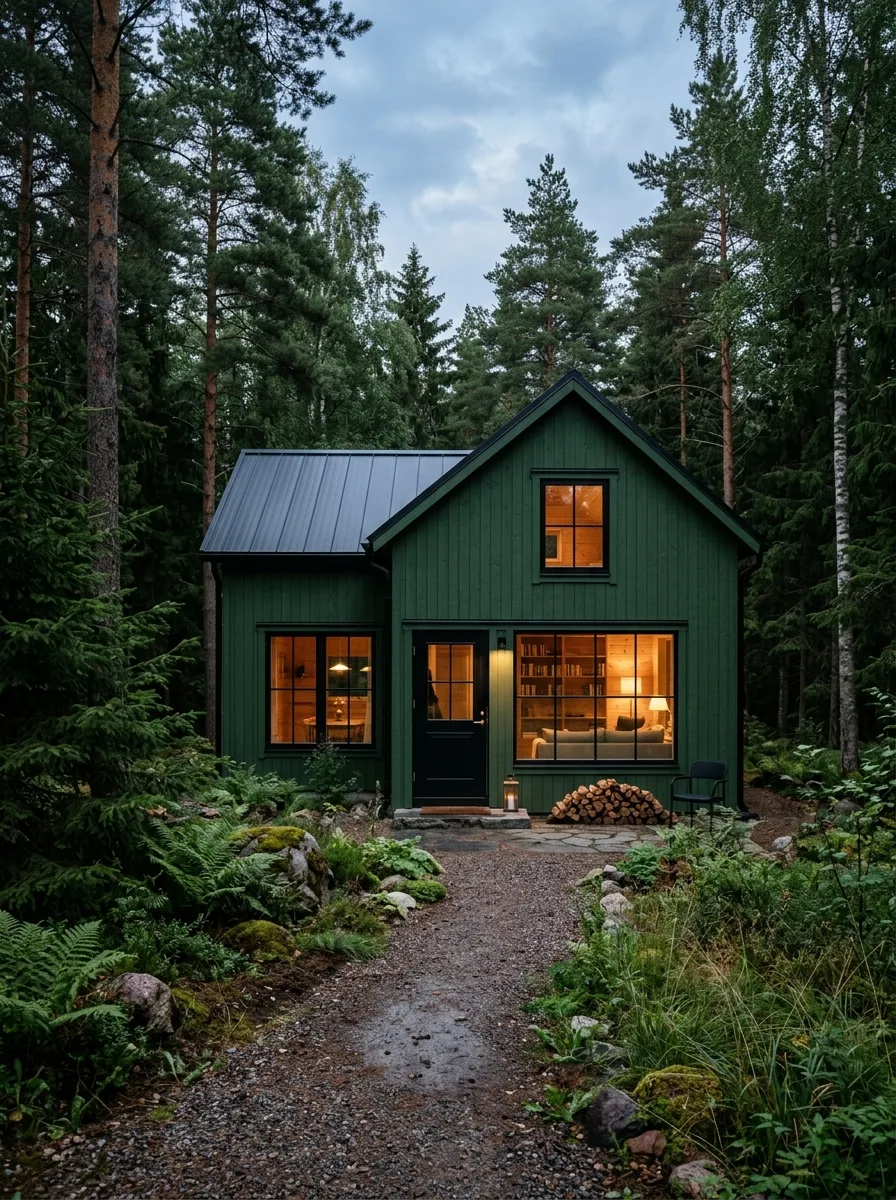
Deep forest green with black window frames gives a traditional color a modern edge. It blends into wooded lots rather than standing out from them, and looks rich in the evening with warm light in the windows. A black door and simple black hardware keep the scheme crisp.
Good to know: it suits wooded or rural lots and houses with black or dark bronze windows; on an open, sunny lot with little planting, a lighter sage can look less heavy.
11. Warm Mushroom Taupe
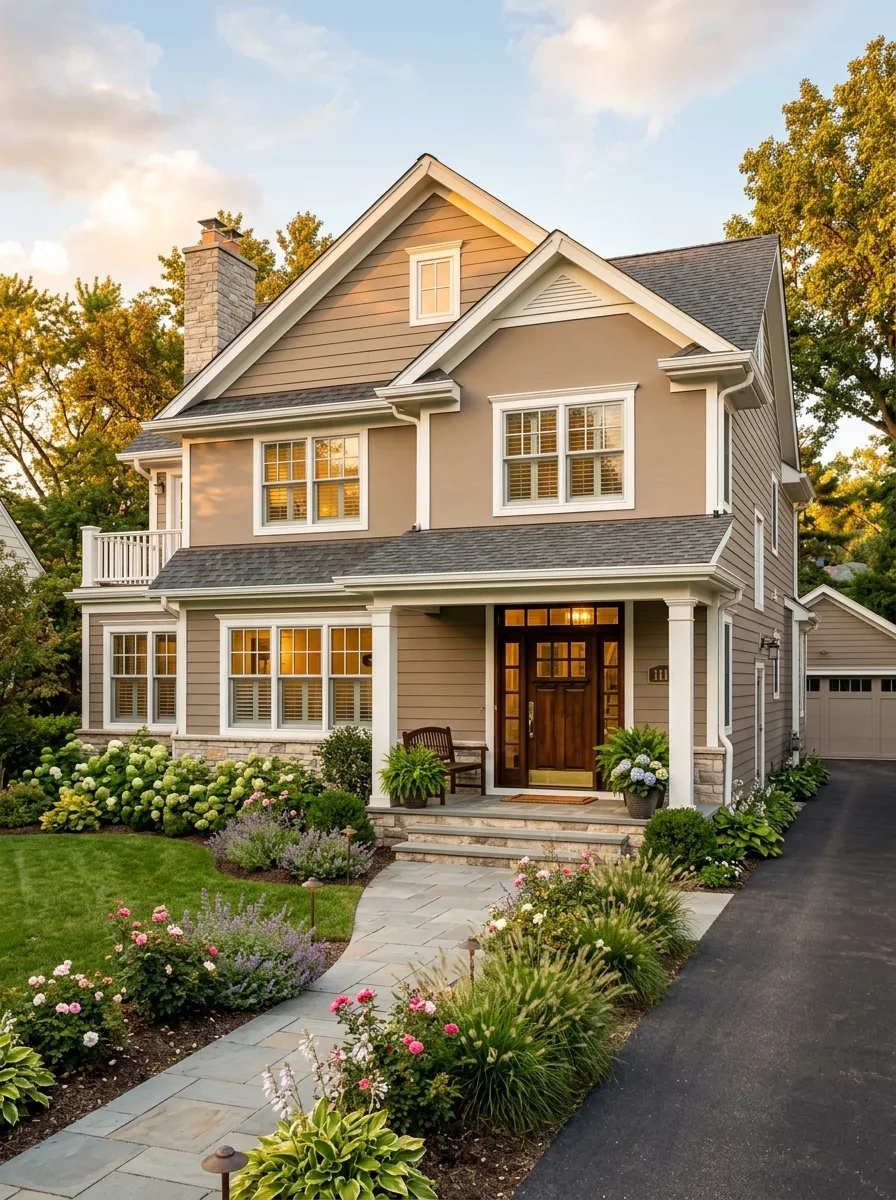
Mushroom taupe is a brown-gray with the polish of gray and the warmth of an earth tone. It works on most house styles and blends with mature planting. White trim and a dark stained door keep it crisp, and the neutral base lets planters, a colored door or brass hardware stand out.
Good to know: taupe can read pink or purple in some light, so compare samples against your roof and any brick before you commit.
12. Two Tone Gray Palette
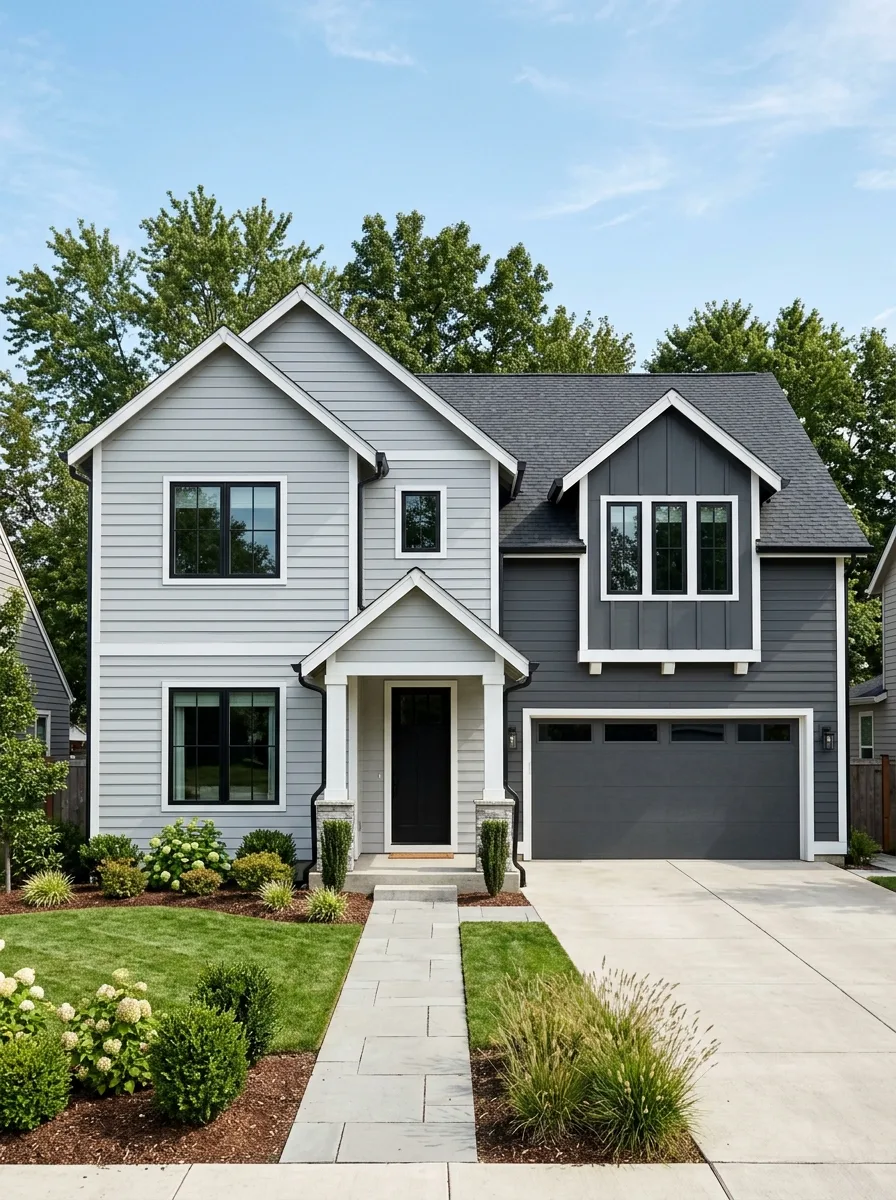
A lighter gray on the main walls and a charcoal on the garage, dormers, upper story or a bump-out adds depth and defines the shape of the house. Leave enough difference between the two grays that the change looks deliberate, and use white or black trim to separate them.
Good to know: change colors at a natural break, such as an inside corner, a floor line or a trim board, rather than in the middle of a flat wall.
13. Creamy Yellow with White Trim

A soft butter yellow suits cottages, colonials and bungalows and looks warm even on gray days. Bright white trim, black or dark green shutters and a red or teal door give it a classic, cheerful look. Avoid strong primary yellows, which look much brighter across a whole house than on a chip.
Good to know: yellow gets brighter in full sun, so choose a sample a step softer than your favorite chip, check it outdoors, and expect it to need good coverage over a darker existing color.
14. Moody Plum Accent
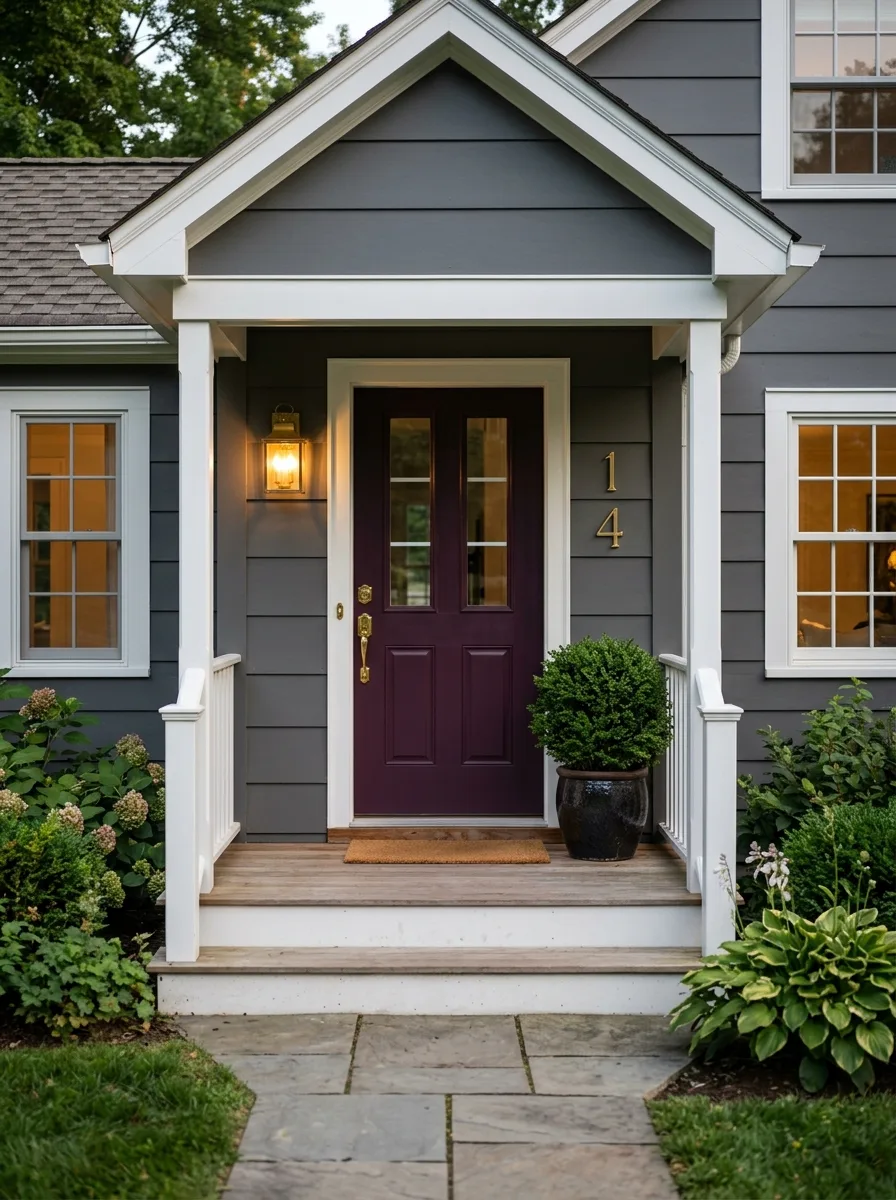
Deep plum or eggplant works best as an accent on a front door, shutters or a small entry wall. Against gray, white or greige siding, it gives the house an unusual focal point without looking loud. Brass hardware, warm outdoor lighting and green planting beside the door help it look planned.
Good to know: purples can look brown in shade and brighter in sun, so view the sample from the street as well as up close, and keep some paint for touch-ups on a sun-facing door.
15. Sandy Beige with Natural Stone
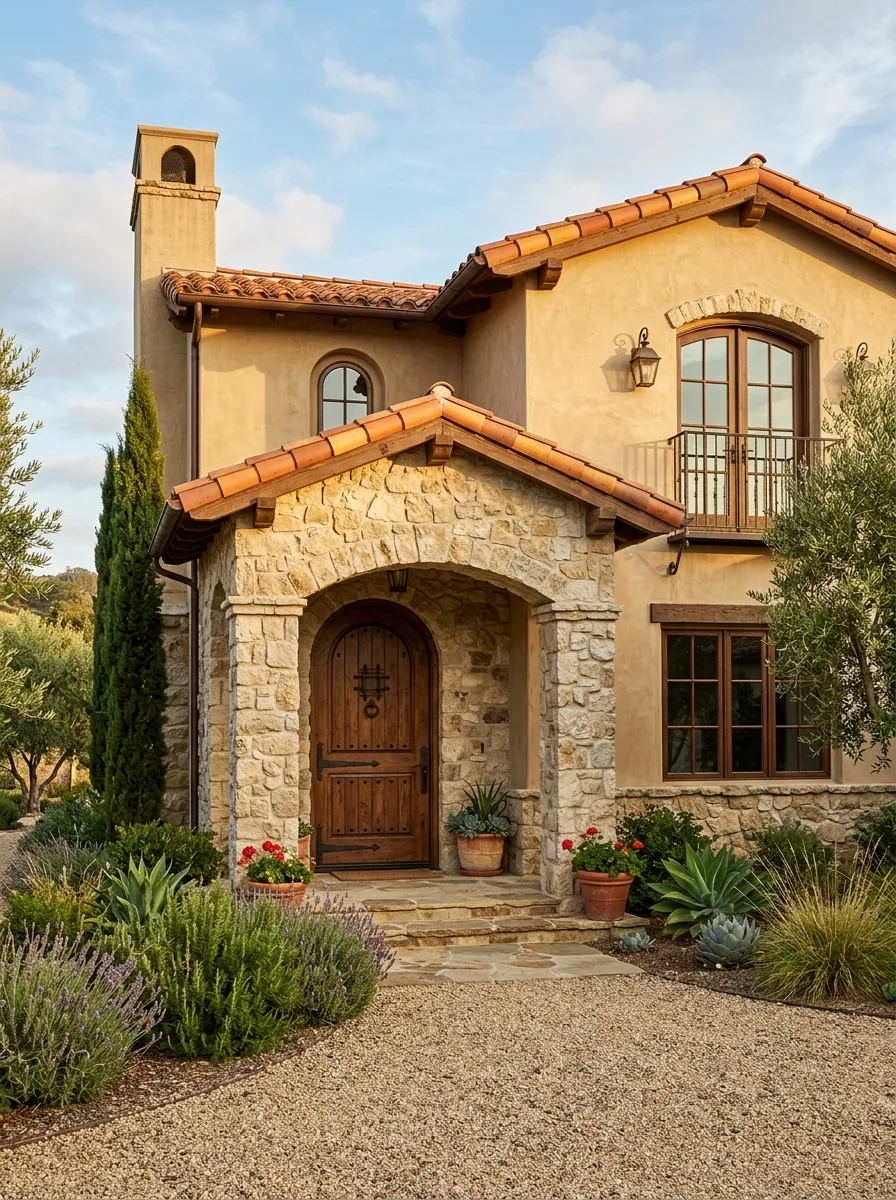
Sandy beige with limestone or fieldstone gives a warm, grounded look that suits transitional and Mediterranean-style houses. Sherwin-Williams’ 2026 Color of the Year, Universal Khaki (SW 6150), is a mid-tone neutral in this family; the brand rates it for interior and exterior use and lists its light reflectance value at about 40. Add white trim and a dark wood door.
Good to know: a color’s light reflectance value (LRV), listed on the chip or product page, runs from 0 for black to 100 for white. A mid-range value reads as a medium tone on a whole house, darker than many people expect from a beige.
16. Coastal Blue and White
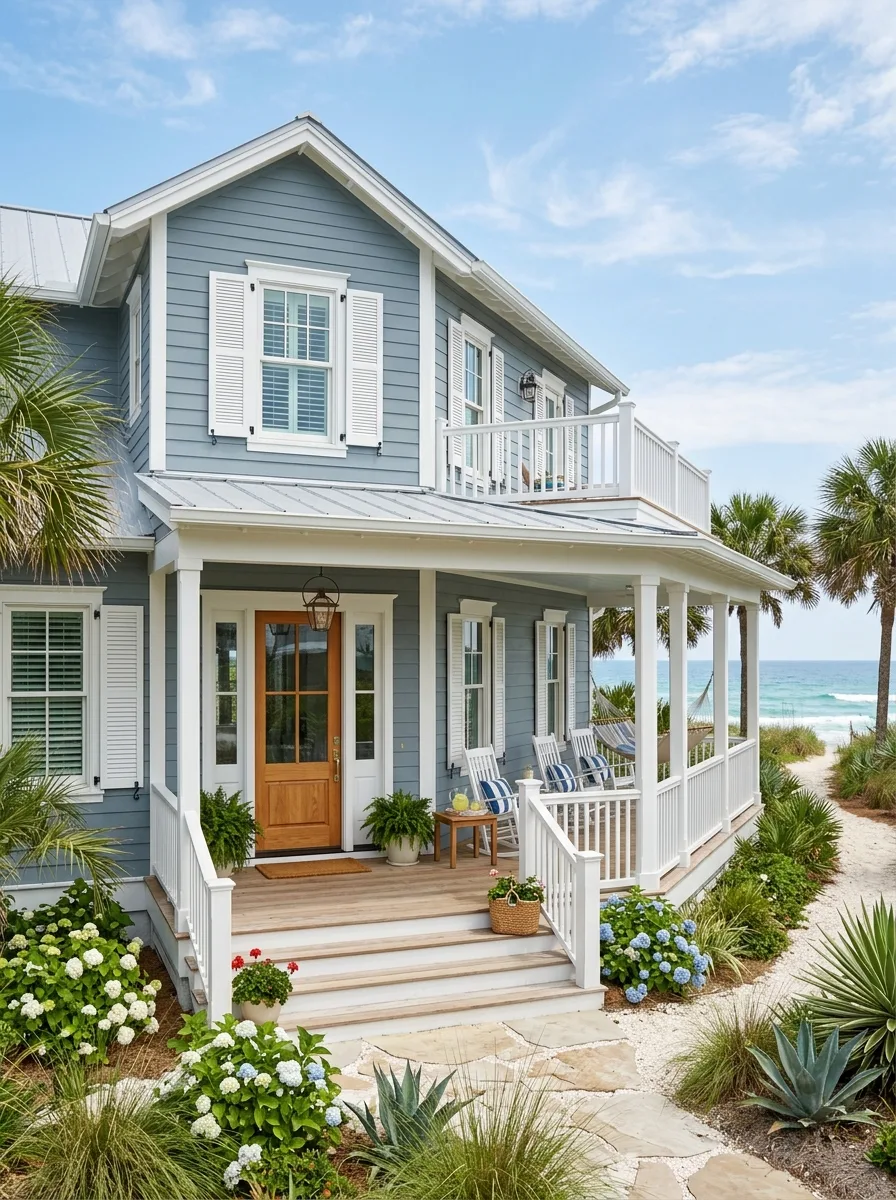
Soft blue siding with crisp white trim, railings and shutters is a long-standing look for coastal and lake houses, and it works inland too. A muted gray-blue looks more refined than a bright primary blue across a whole house. Natural wood decking and white porch furniture complete it.
Good to know: near the coast, salt air and strong sun are hard on finishes, so use a high-quality exterior paint and stainless or coated metal hardware, and rinse the siding now and then.
17. Dark Bronze and Copper Tones
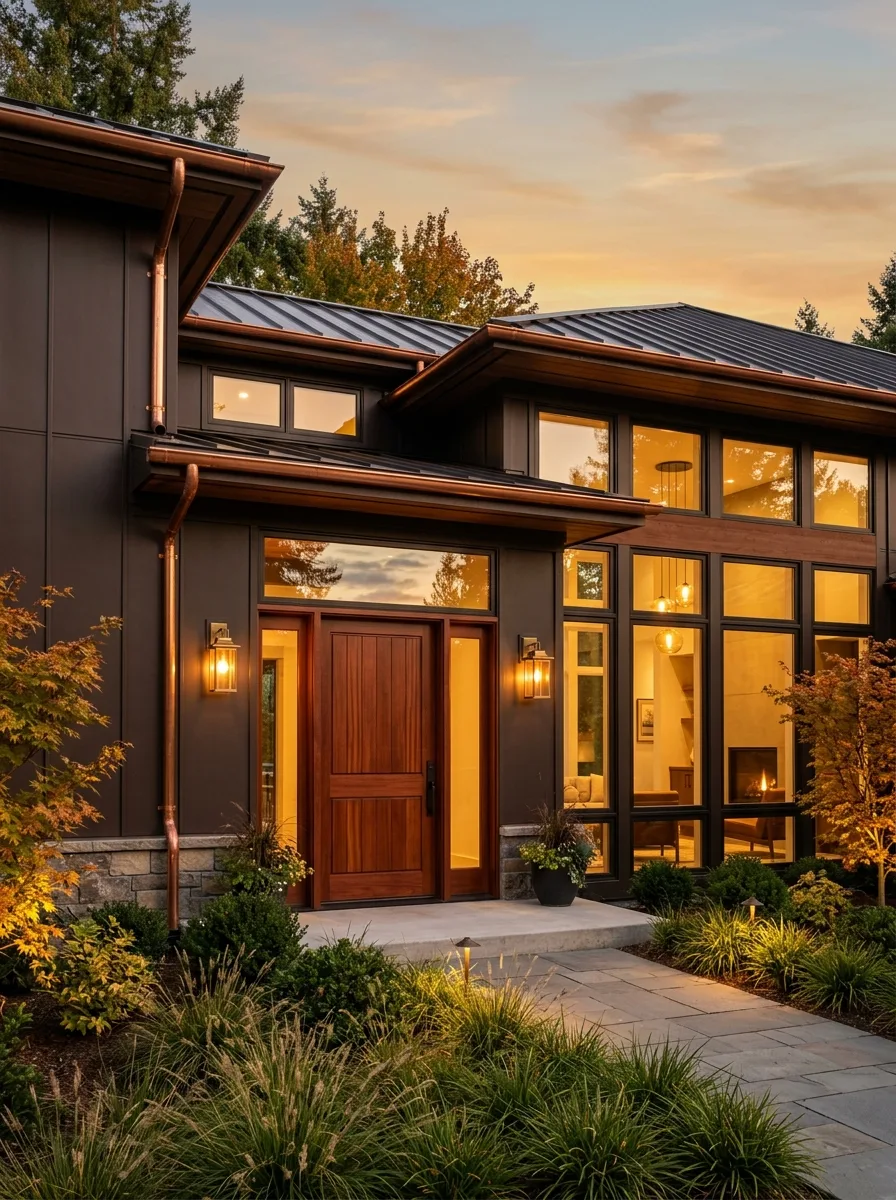
Deep brown and bronze tones give a house a warm, substantial look, and Benjamin Moore’s 2026 Color of the Year, Silhouette, is an espresso brown in this family. Pair dark bronze siding or trim with copper-tone gutters, warm lighting and cream or warm white trim. It suits contemporary houses that should feel warm rather than stark.
Good to know: colors of the year are often presented for interiors, so check the shade is available in the exterior paint line you plan to use. Real copper gutters darken and later develop a green patina, while copper-colored aluminum keeps its color.
18. Pale Blush Pink Exterior
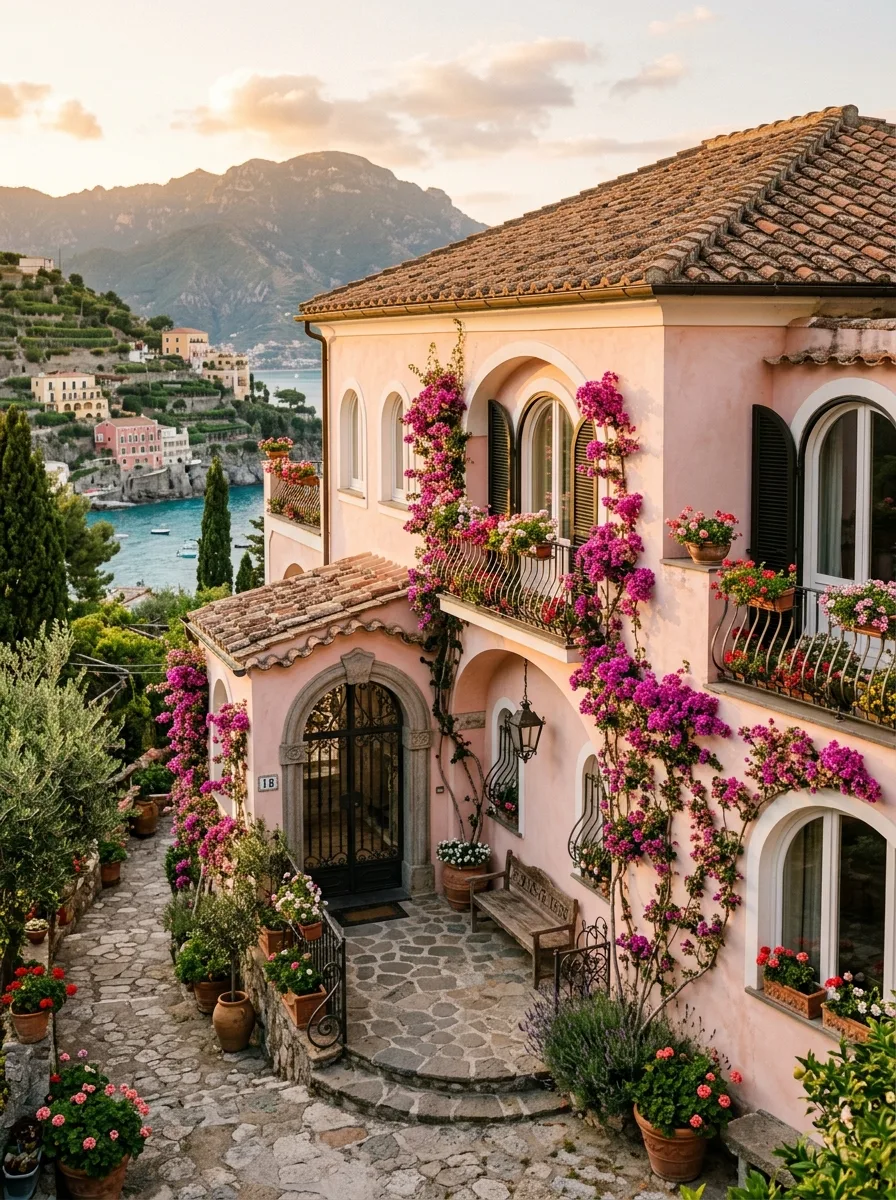
Pale blush pink suits stucco on Mediterranean, Spanish revival and mid-century houses, especially in sunny climates. White trim, a terracotta tile roof and dark iron hardware keep it grown-up rather than sugary. A pink with a little beige or gray in it looks more refined than a clear pink.
Good to know: pinks get brighter in strong sun, so choose a dusty, grayed sample and check it on site. A pink exterior is also the kind of change an HOA may review, so get approval first.
19. Slate Blue with Brick
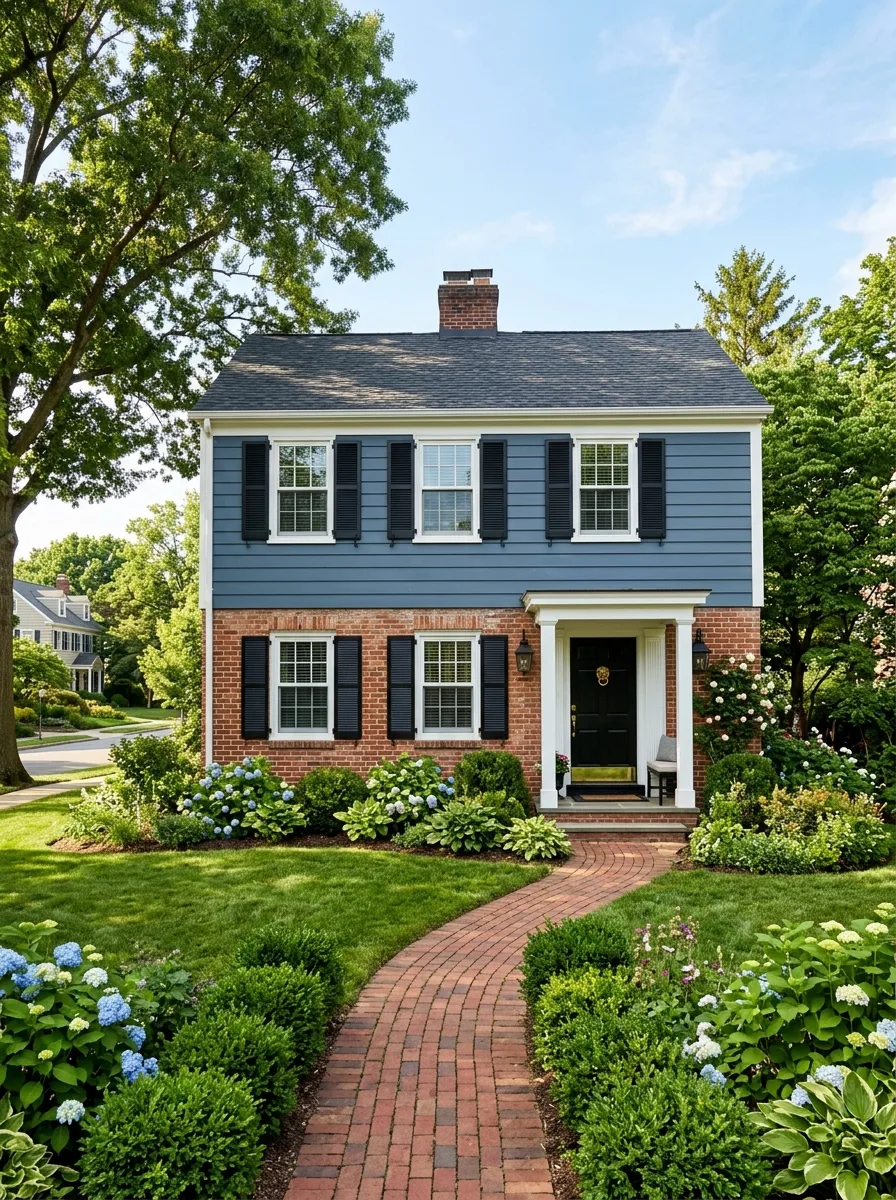
Slate blue siding or trim with red brick pairs a cool color with a warm one, so each makes the other look richer. A common version is red brick on the lower story with slate blue siding above and white window trim, which suits colonial and traditional houses. For more pairings, see these red brick color schemes.
Good to know: paint the siding and trim, not the brick: the Brick Industry Association notes that paint can be very hard to remove from brick without damage, and painted brick needs repainting over time.
20. Jet Black and White Modern
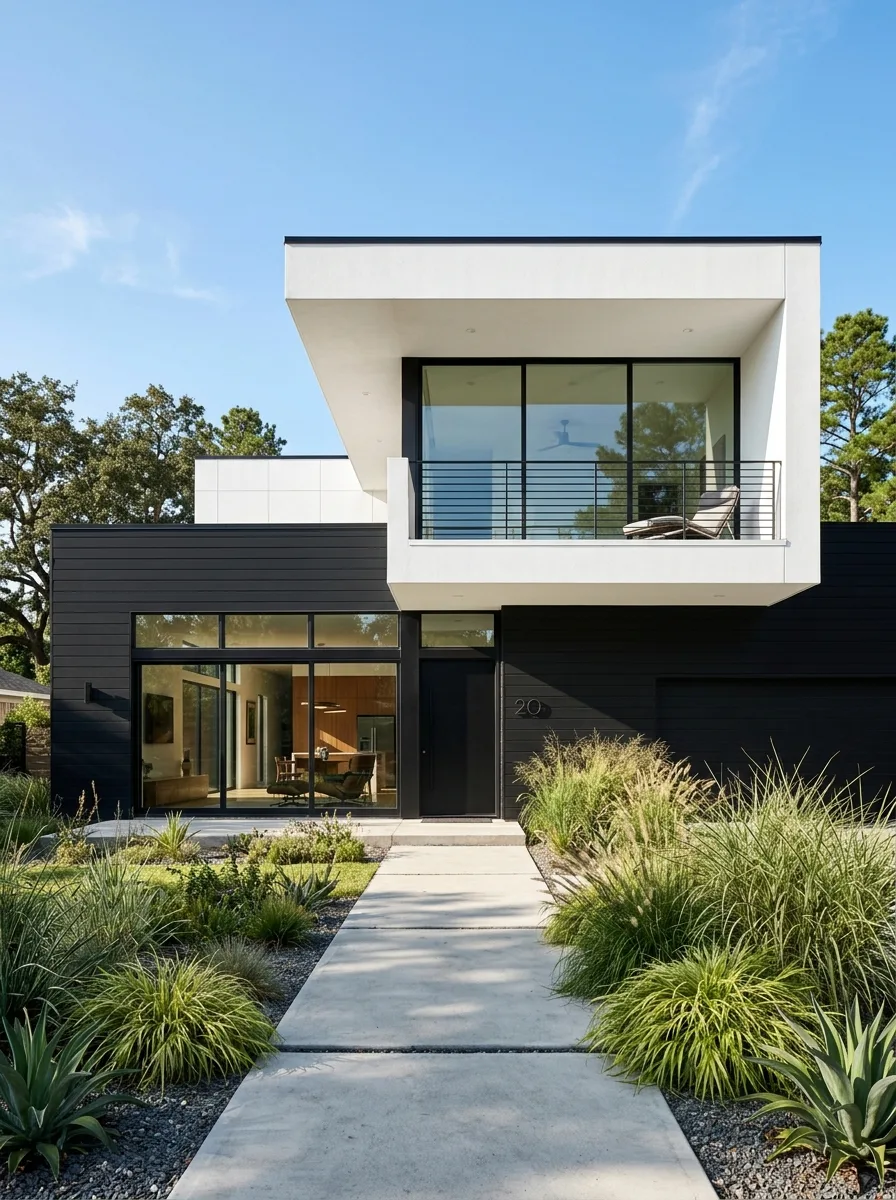
Large blocks of black cladding against white walls or a white upper story give a modern house strong, graphic contrast. It works best on houses with simple geometric volumes, where each color can define a whole section. Warm wood at the entry and warm lighting soften it.
Good to know: keep each color to whole sections of the house; switching colors on small details or partway along a wall makes the contrast look busy.
21. Warm Rust Red
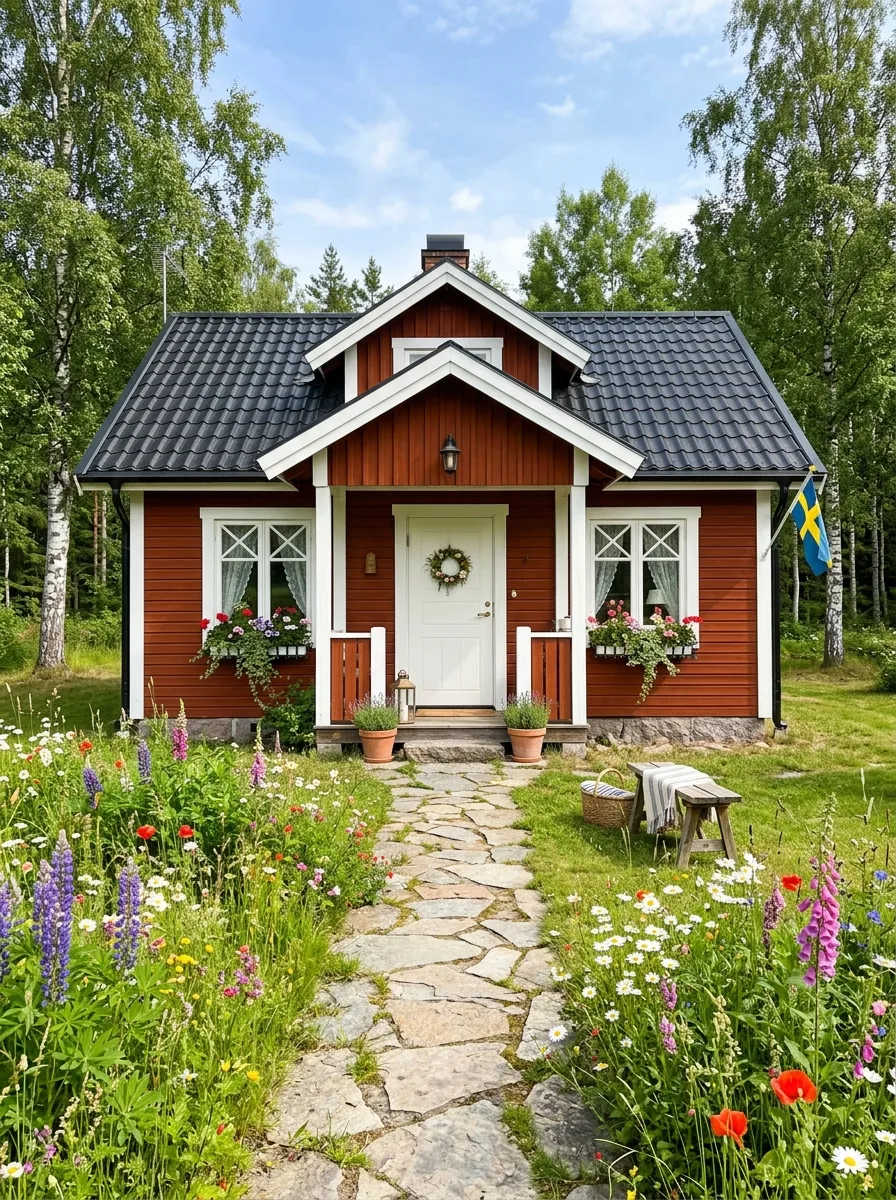
Rust red, close to traditional barn red, is a warm earthy color that stands out against green surroundings. White trim and a black or dark roof give it a classic look on cottages, cabins and farmhouse-style houses, and natural stone paths and planting suit it.
Good to know: red siding can clash with red-brown roof shingles or orange-toned brick, so check samples next to both before you commit.
22. Light Cement Gray with Black Accents
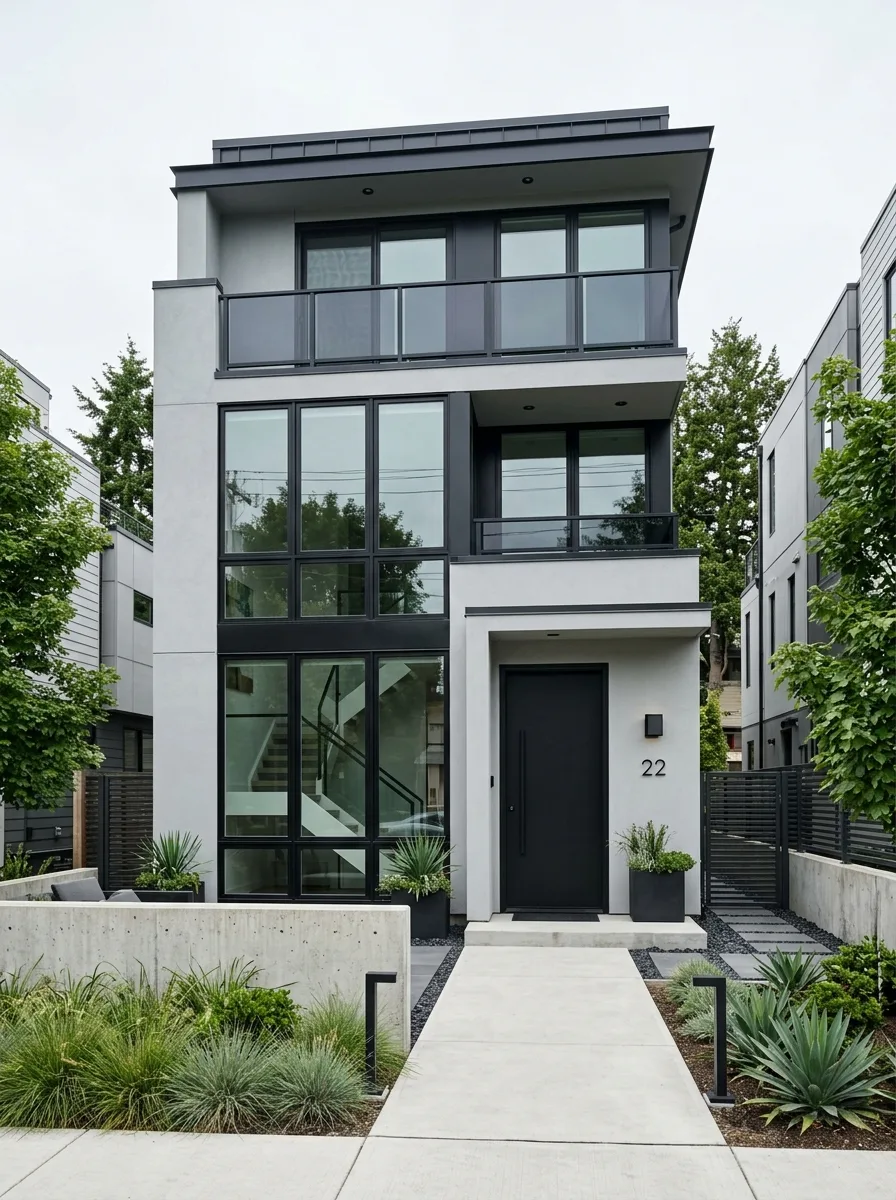
Light concrete gray with black windows, doors and railings suits modern houses, townhouses and flat-roofed designs. It is lighter and cooler than charcoal, so it keeps a modern look without being dark. Greenery in planter boxes and warm path lighting soften it.
Good to know: cool grays can look blue on overcast days and in shade, so if your roof or stone is warm-toned, choose a gray with a touch of beige.
23. Hunter Green with Gold Hardware
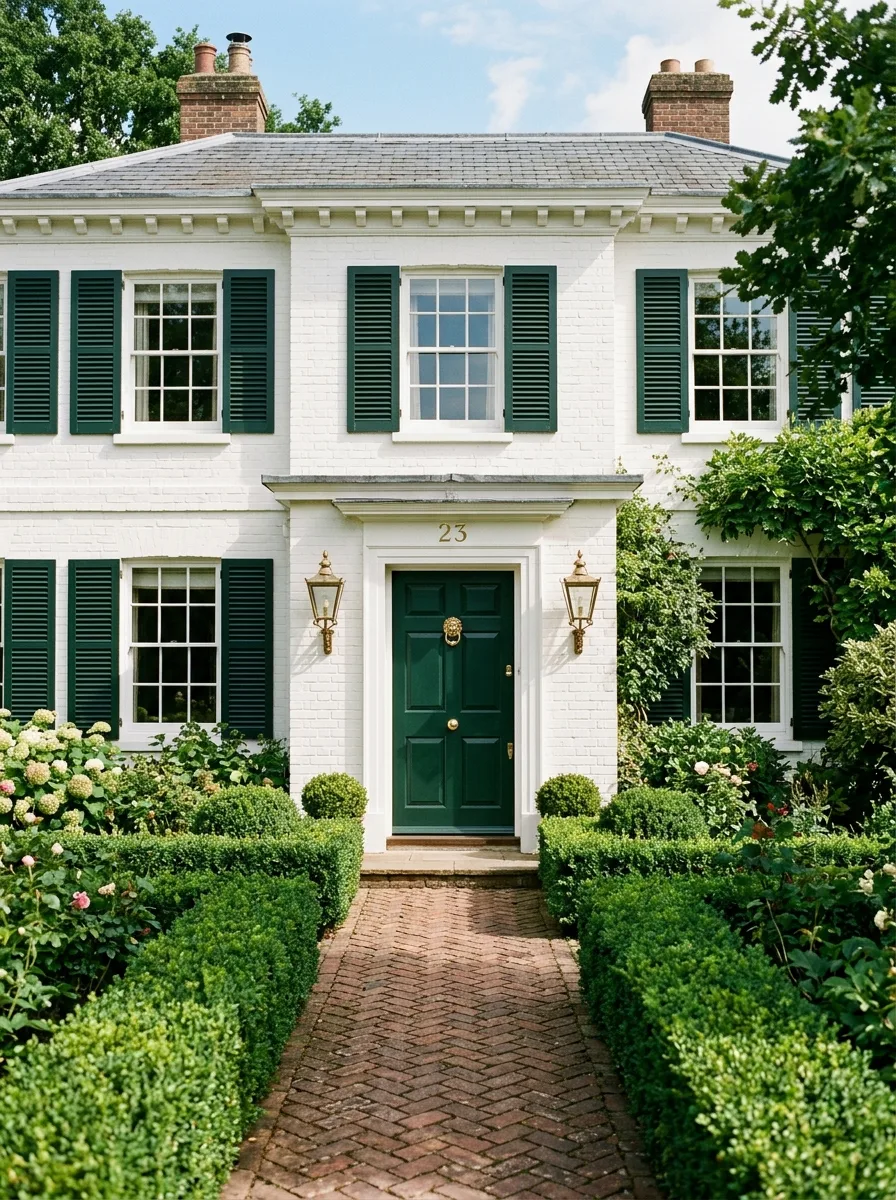
Hunter green is a deep, classic green that looks rich with brass or gold-tone hardware, lights and house numbers. Use it on a front door against white or cream siding, on shutters, or on the whole exterior with brass coach lights and a door knocker. It suits Georgian, Federal-style and other traditional houses.
Good to know: solid brass darkens outdoors unless it is lacquered, so decide whether you want a finish that ages or one that stays bright.
24. Warm Concrete with Timber Cladding
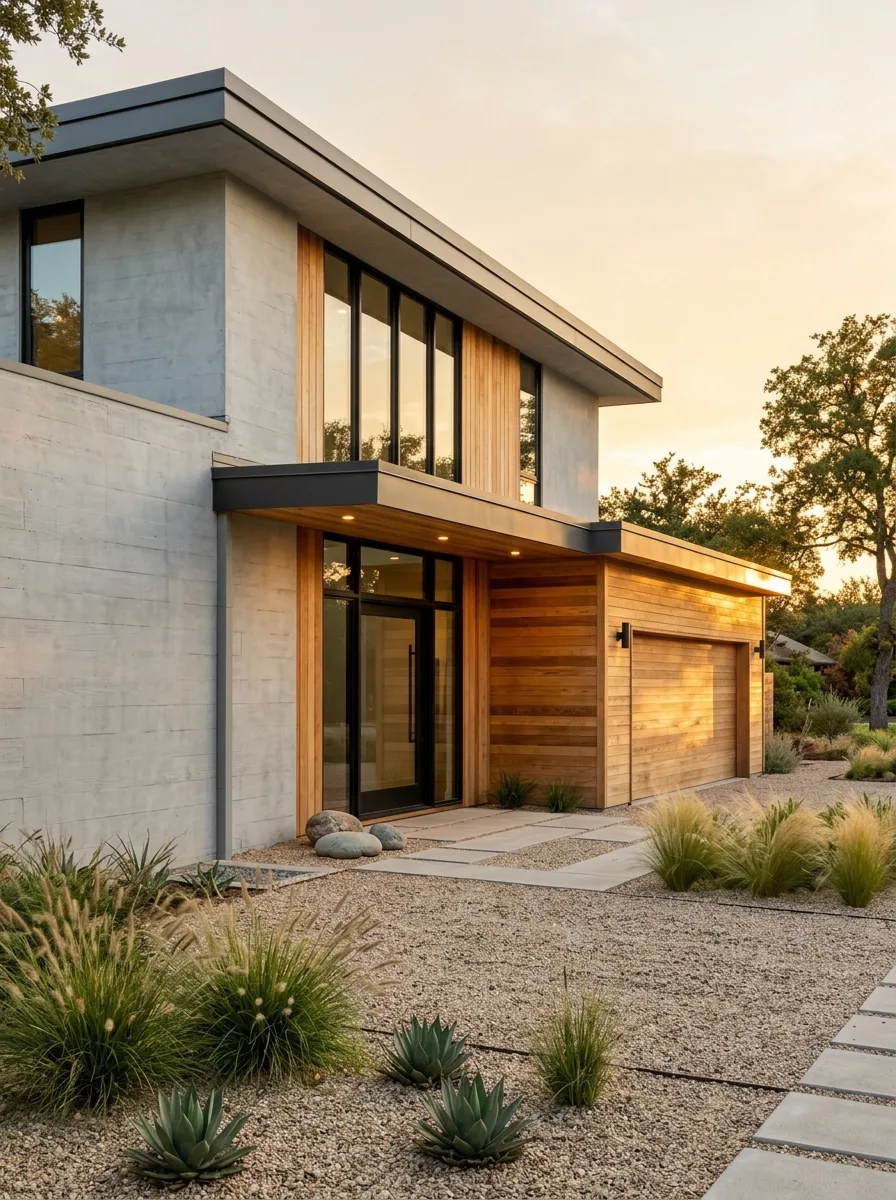
Gray concrete or concrete-look panels with sections of natural wood cladding combine a modern base with warmth. Put the wood where people look and reach: the entry surround, a feature wall or the garage door. It suits modern houses with clean lines and crisp transitions between materials.
Good to know: keep wood cladding clear of the ground and splash zones, follow the cladding maker’s instructions for spacing and ventilation behind the boards, and plan for refinishing.
25. Soft Warm Gray with Lavender Undertone
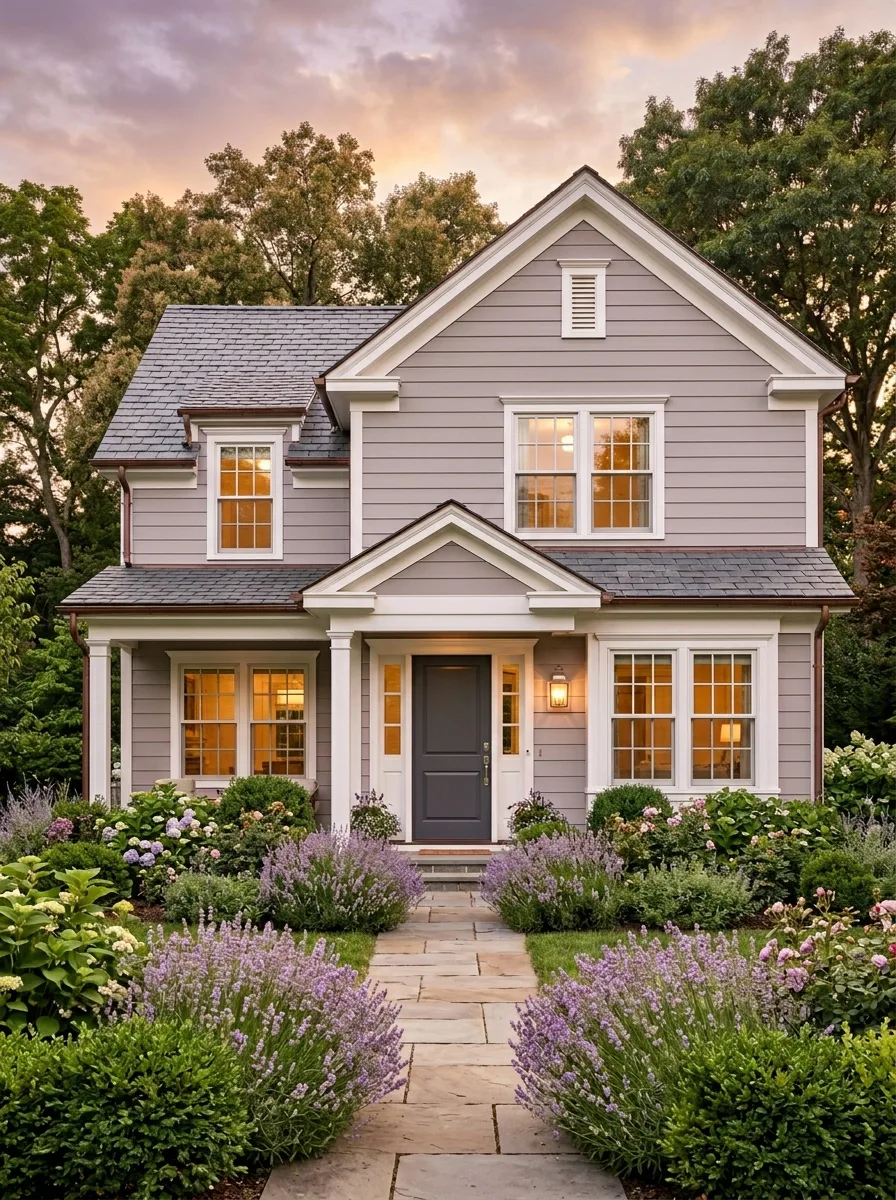
A gray with a slight lavender undertone looks like a standard gray at first but shows a hint of color as the light changes. Bright white trim and a charcoal or black front door keep it refined. It suits anyone who wants a gray that’s a little different from the neighbors’.
Good to know: undertones show more over a large area, so test a big sample; a lavender-gray that looks subtle on a chip can read clearly purple across a whole wall.
Common mistakes to avoid
- Choosing from a small chip indoors instead of large samples outside.
- Ignoring the undertones of the roof, brick and stone you’re keeping.
- Painting vinyl siding darker than its original color without a paint formulated for it.
- Painting brick without fixing moisture problems first or choosing a breathable treatment.
- Sanding or scraping old paint on a pre-1978 house without lead-safe practices.
- Skipping HOA or historic district approval before buying paint.
Exterior color FAQs
What are the 2026 colors of the year?
Sherwin-Williams chose Universal Khaki (SW 6150), Benjamin Moore chose Silhouette (AF-655), Behr chose Hidden Gem and Valspar chose Warm Eucalyptus. They are brand picks, not exterior-specific forecasts, so test them on your house like any other color.
Can I paint vinyl siding a dark color?
Sherwin-Williams advises staying no darker than the siding’s original color unless you use a paint formulated for darker colors on vinyl, because dark paint absorbs heat and can make the siding warp or buckle.
Do dark exterior colors make a house hotter?
Dark colors absorb more sunlight than light ones, which a lower LRV indicates. ENERGY STAR notes that lighter or reflective roofs stay cooler than roofs that absorb sunlight, with the biggest benefit in hot, sunny climates.
Should I paint my brick house?
Think carefully first. The Brick Industry Association notes that paint can be very difficult to remove from brick and needs repainting over time. If you go ahead, fix moisture problems first and choose a breathable treatment such as limewash, mineral paint or masonry stain.


3 Comments