

24 Mud Kitchen Ideas for Sensory Outdoor Play
A mud kitchen is an outdoor play kitchen where children cook pretend meals with soil, water, sand, leaves and stones. It can be as simple as a low table, a washing-up bowl and a few old pans, or a built unit with a sink, shelves and a roof. Either way, it gives children a place for messy, open-ended pretend play outside.
Below are 24 mud kitchen ideas, each with how to set it up and one practical tip. Start with the safety basics: water, small parts and the materials you build with need thought before any design detail.
Safety basics first
Supervise water play
CPSC warns that children can drown quickly and silently in containers of water, and that a bucket of water should never be left unattended where small children can reach it, even when it’s only partly filled. Empty sinks, tubs and buckets after every session and store them upside down.
Mind small parts for under-3s
Pebbles, acorns, bottle caps and dried beans are typical mud kitchen ingredients, but CPSC’s small parts rule exists because children under 3 can choke on, inhale or swallow small objects. Keep small loose parts for older children, or for play with an adult right there.
Build with safe materials
Use cedar or a sound softwood with an exterior finish that has fully cured, sand every edge smooth and round off the corners. Avoid old painted wood unless you’ve tested it, since paint from before 1978 may contain lead. If you use pallets, choose ones stamped HT (heat-treated) rather than MB (fumigated with methyl bromide).
Plan for hygiene
Cover sand and soil tubs when they’re not in use to keep cats and other animals out, as public health agencies advise for sandboxes, and have children wash their hands with soap and water after play, especially before eating.
The 24 ideas at a glance
| Idea | Best for | Effort | Safety note |
|---|---|---|---|
| Classic wooden | Most yards | Moderate build | Smooth edges, sunk screws |
| Pallet wood | Low-budget builds | Moderate build | HT stamp; no splinters |
| Running water | Water play | More work | Cold water only; empty basins |
| Two-story | Older children, big yards | Major build | Guardrails; soft surfacing |
| Chalkboard menu | Pretend restaurants | Easy add-on | Keep it under cover |
| Herb garden | Smelling and picking | Easy | Pet-toxic herbs |
| Overhead canopy | Rainy or sunny yards | Moderate build | Wind; sharp sheet edges |
| Shelves and hooks | Tidying up | Easy | Hooks above eye level |
| Sand and mud station | Mixing textures | Easy | Cover when not in use |
| Tin cans and pots | A low-cost kit | Easy | Sharp can rims |
| Natural loose parts | Ages 3 and up | Easy | Choking hazard under 3 |
| Sensory bins | Texture play | Easy | No water beads |
| Fairy garden corner | Storytelling | Easy | Tiny accessories |
| Nature art station | Creative play | Easy | Handwashing |
| Mud pie bakery | Pretend shops | Easy | Small coins |
| Potting bench | Young gardeners | Moderate | Untreated seed |
| Flower pressing | Quiet play | Easy | Poisonous flowers |
| Corner kitchen | Small yards | Moderate build | Fence rot |
| Rock collection | Curious kids | Easy | Magnifier in the sun |
| Rope and pulley | Older children, supervised | Moderate | Strangulation risk |
| Water wheel and channels | Water play | Moderate | Empty after play |
| Seasonal decorating | Year-round play | Easy | Toxic berries and seeds |
| Reading nook | Quiet breaks | Easy | Bring cushions in |
| Recycled play store | Group play | Easy | Bottle caps are small parts |
1. Classic Wooden Mud Kitchen
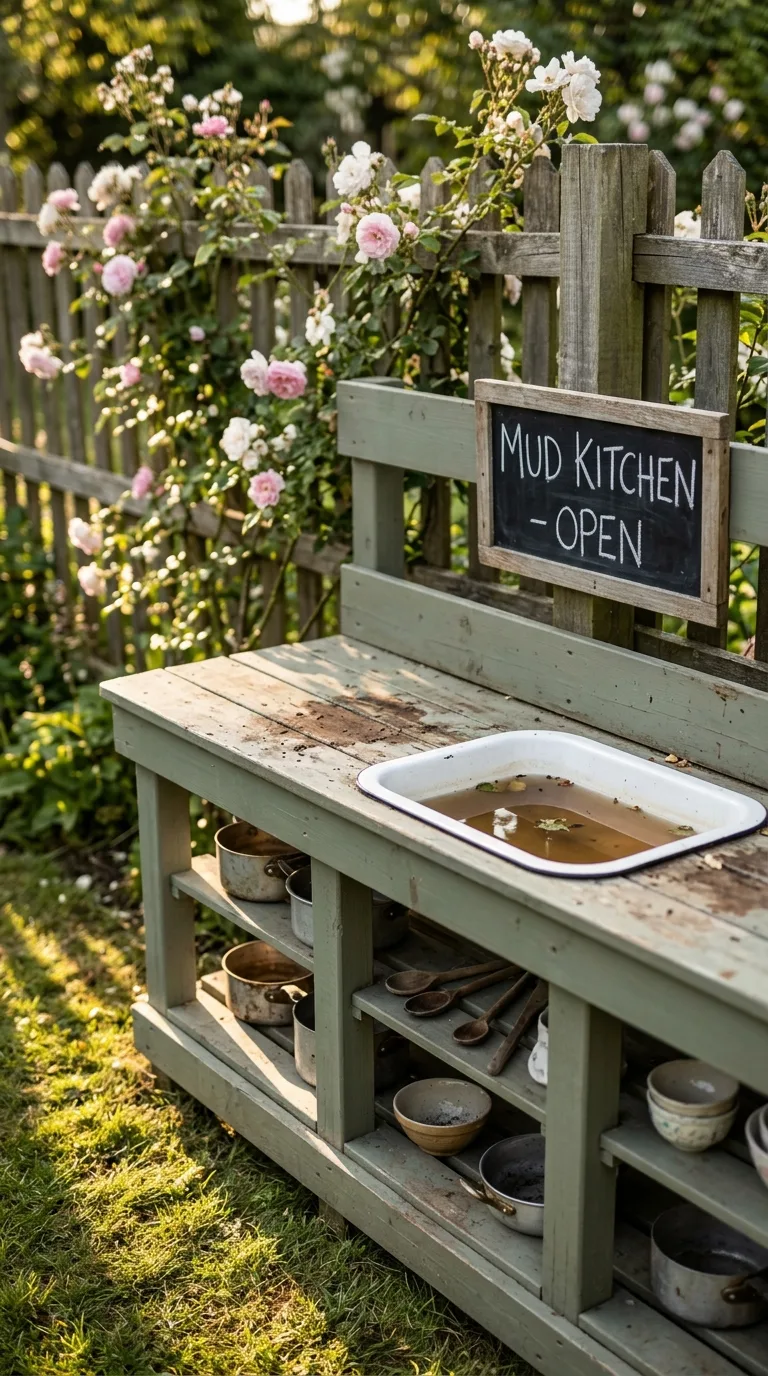
A classic wooden mud kitchen has a worktop with one or two bowls set into it, a shelf underneath for pots and a back panel with hooks or pegs. Cedar weathers to silver-gray and resists rot without a finish, while pine needs exterior paint or sealer. Build the worktop at about your child’s waist height so they can stir without reaching up.
Good to know: sand all edges, round the corners and countersink screws so no heads or points stick out. Check for splinters and loose screws at the start of each season.
2. Pallet Wood Mud Kitchen
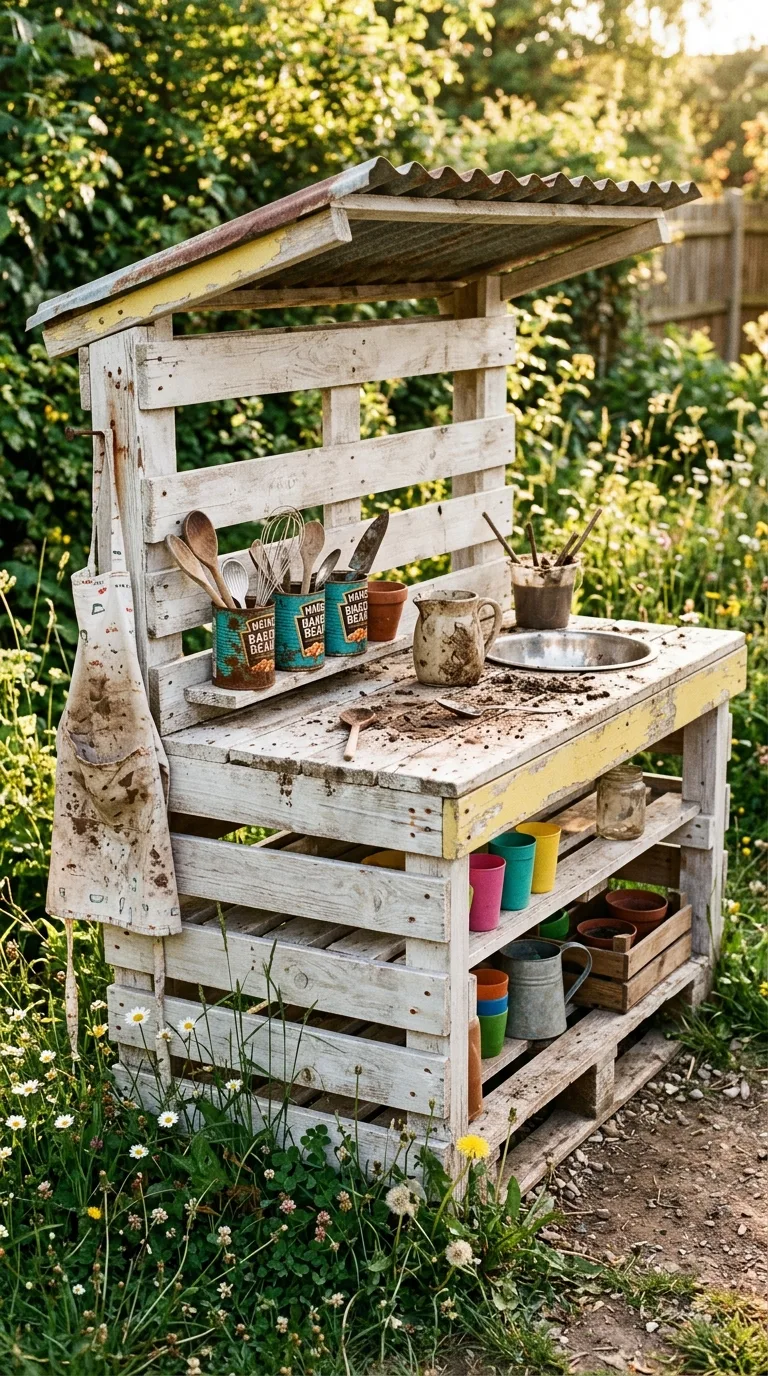
Pallets can be taken apart and rebuilt into a worktop, shelves and a back panel for little or no cost. Slatted shelves let water drain away instead of pooling, and a small roof from offcuts or corrugated sheet turns the kitchen into a market stall.
Good to know: choose pallets stamped HT, meaning heat-treated, and skip ones marked MB (methyl bromide fumigation), stained ones and any from unknown sources. Sand every surface children touch and pull out protruding nails.
3. Mud Kitchen with Running Water
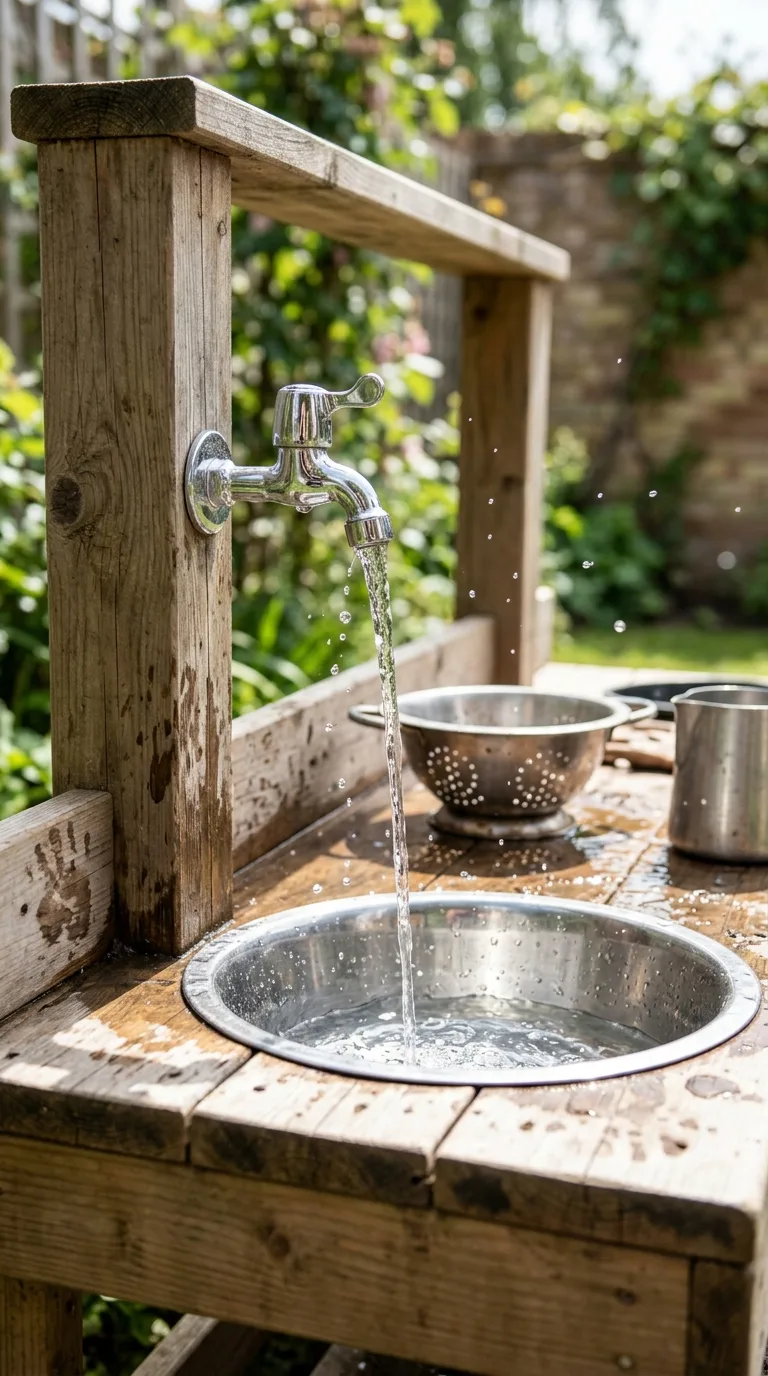
Running water makes mud kitchen play more interesting, and there are simple ways to supply it: a hose to a child-height outdoor tap, a drinks dispenser with a push tap on the worktop, or a small hand pump. Use a removable bowl as the sink, and set the kitchen on a slope or gravel so runoff drains away from the play area.
Good to know: use cold water only, keep any water container small or lidded, and empty sinks, tubs and buckets after every session. Teach children that the water is for play, not drinking.
4. Two-Story Mud Kitchen
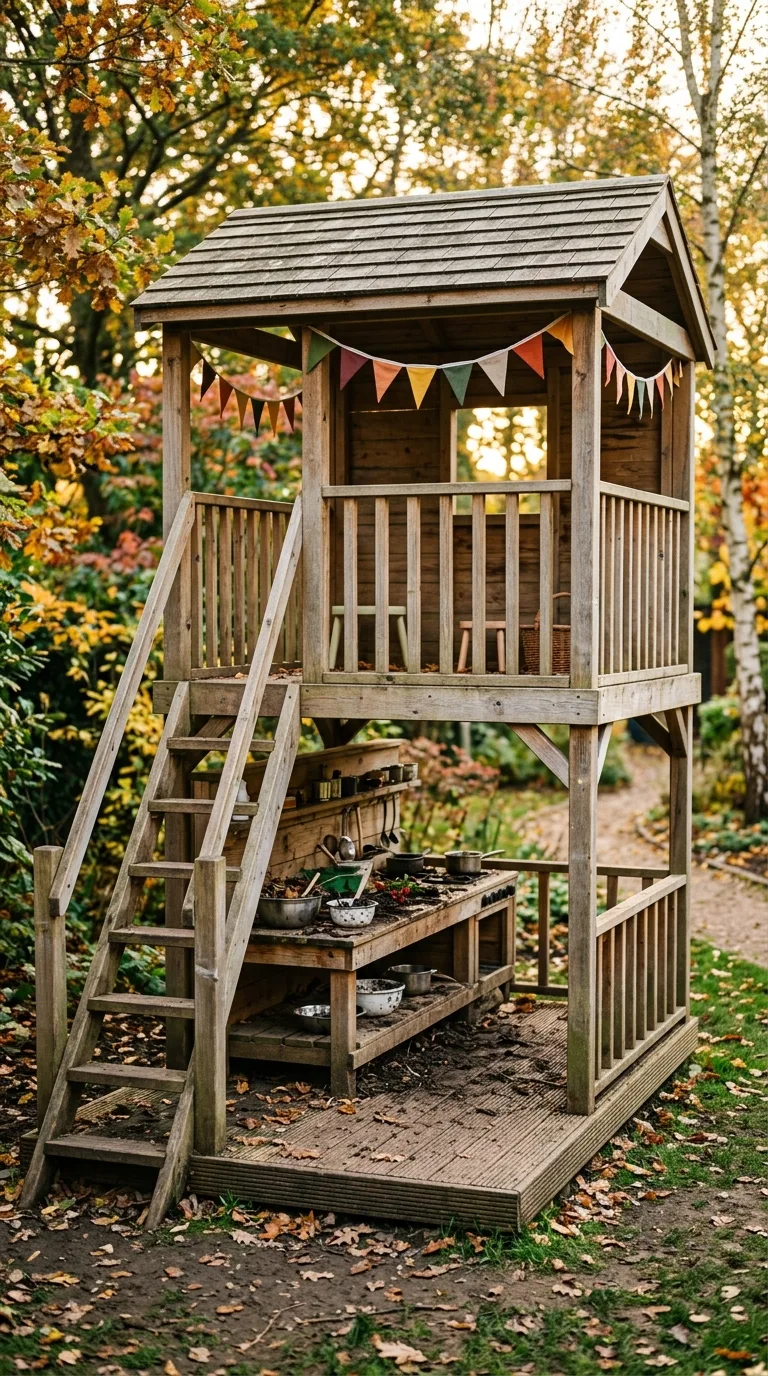
A two-level unit puts the kitchen at ground level and a small platform or lookout above, reached by a ladder or steps. It suits bigger yards and older children, and lets several children play at once without crowding the worktop.
Good to know: CPSC’s playground checklist calls for guardrails on raised platforms, and openings smaller than 3.5 inches or larger than 9 inches to prevent head entrapment. Put a loose, soft surface such as wood chips or mulch under the structure and at least 6 feet around it; grass and dirt don’t protect against serious head injuries.
5. Mud Kitchen with Chalkboard Menu
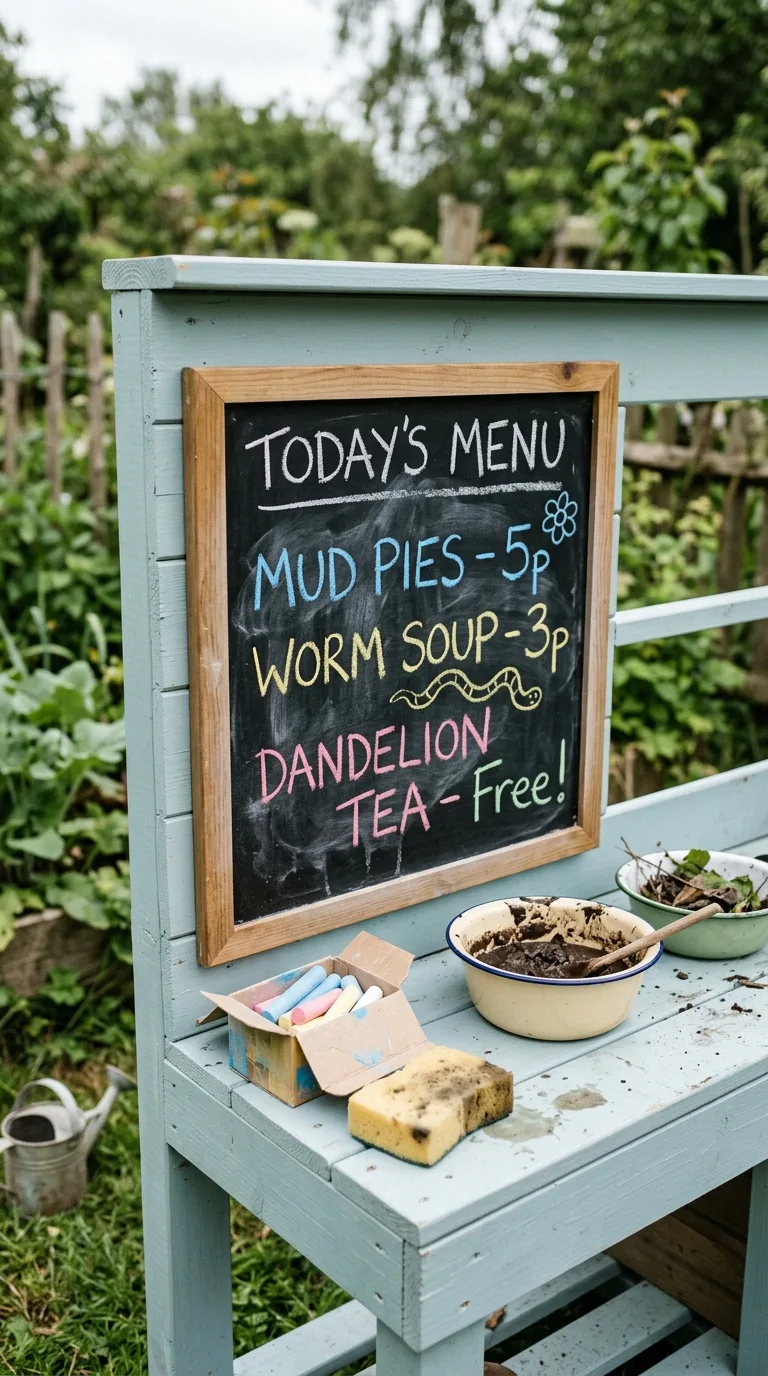
A chalkboard panel on the back or side of the kitchen gives children a place to write the day’s menu, draw recipes or keep a tally of customers, which brings early writing and counting into the game. Paint a smooth exterior plywood panel with chalkboard paint, or hang a framed board at child height.
Good to know: check that the chalkboard paint is suitable for outdoor use; if not, mount the board under the roof or an overhang. Keep a damp sponge and a tub of chunky chalk beside it.
6. Mud Kitchen with Herb Garden Planting
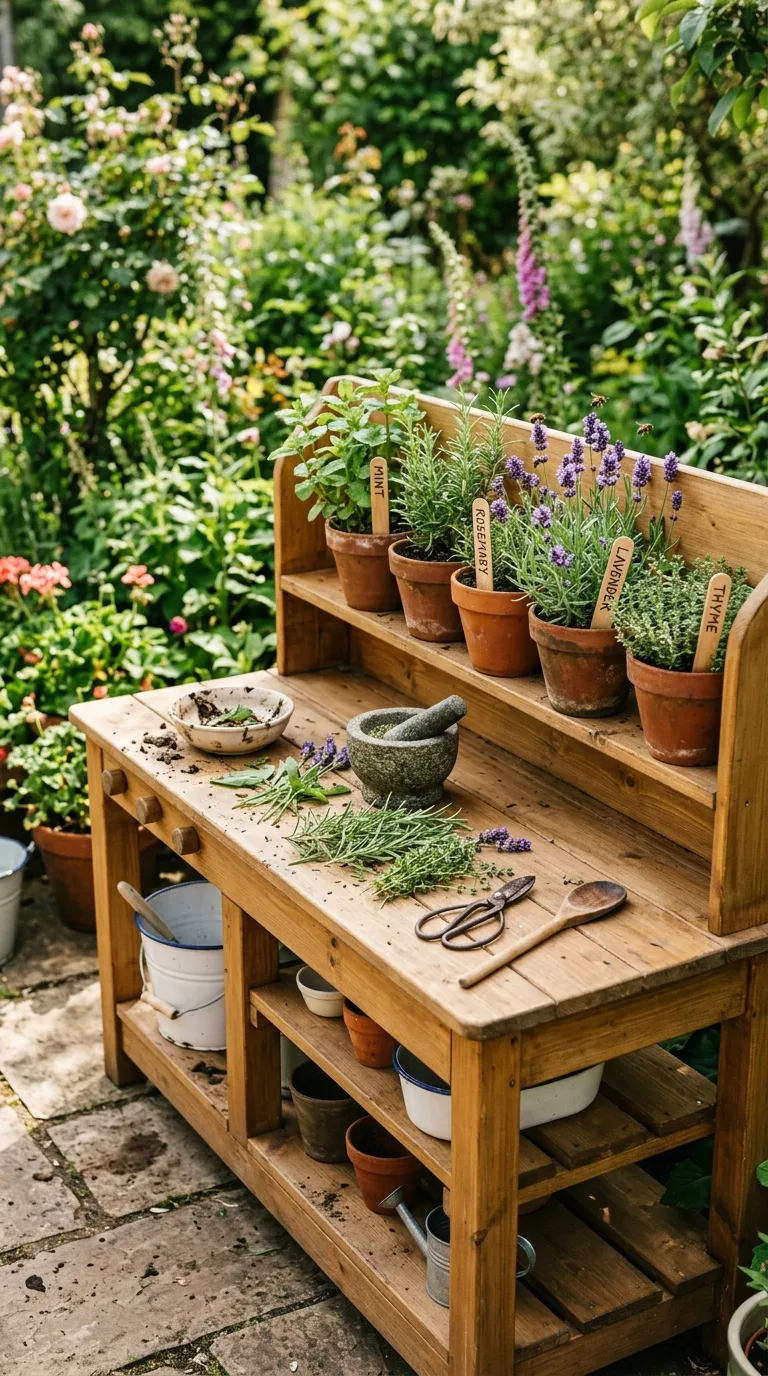
A few pots or a small bed of herbs beside the kitchen gives children real leaves to smell, pick and add to their recipes. Rosemary, thyme, lemon balm and mint are tough and fragrant. A small planter box next to the worktop keeps them within reach.
Good to know: grow mint in its own pot, since NC State notes it spreads rampantly in the ground. If you have pets, the ASPCA lists mint, lavender and chamomile as toxic to dogs and cats, while rosemary, thyme and lemon balm are listed as non-toxic.
7. Mud Kitchen with Overhead Canopy
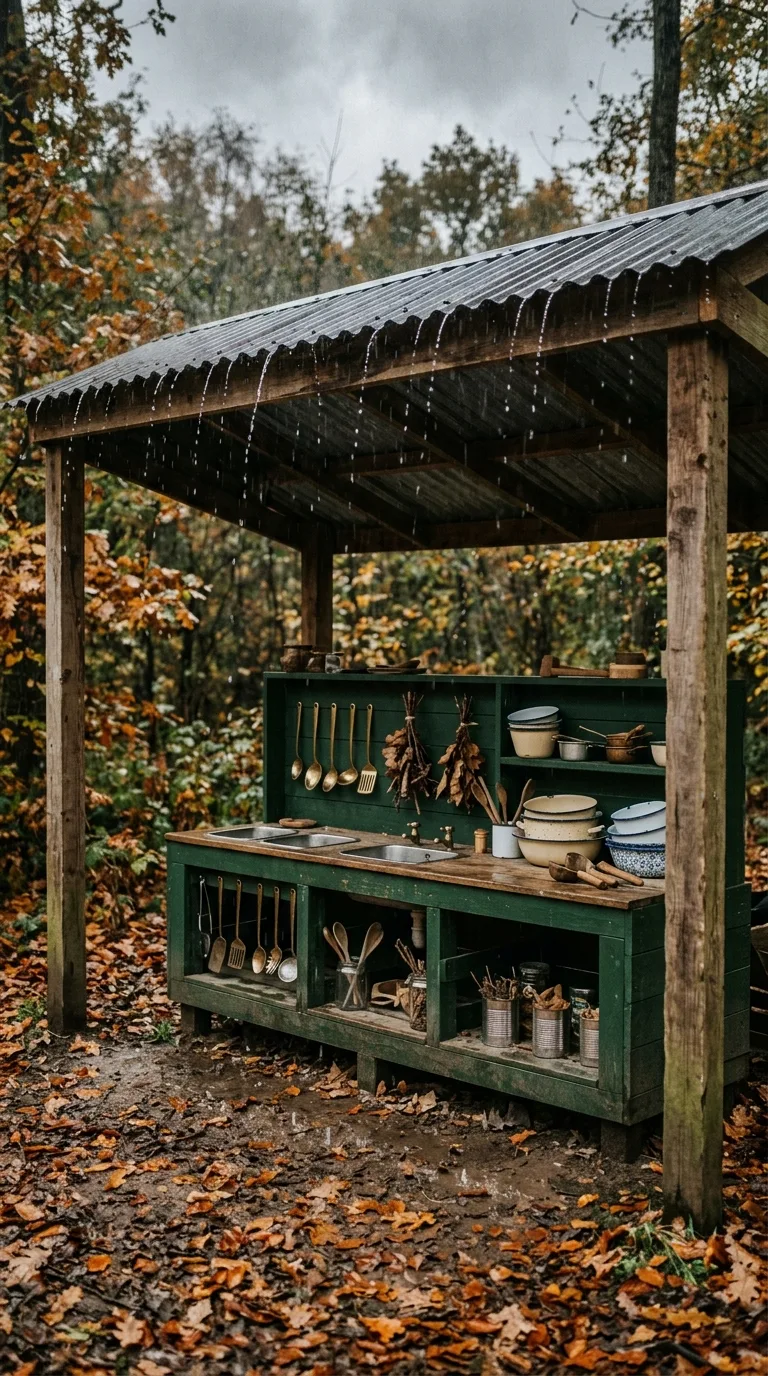
A small roof over the kitchen keeps rain off the worktop and gives shade in summer, so the kitchen gets used in more kinds of weather. A timber lean-to with corrugated metal or polycarbonate sheeting is a common design, and a shade sail is a simpler option.
Good to know: set the posts firmly in the ground or bolt them to the frame, since even a small roof catches the wind, and cover or file any cut metal edges.
8. Mud Kitchen with Storage Shelves and Hooks
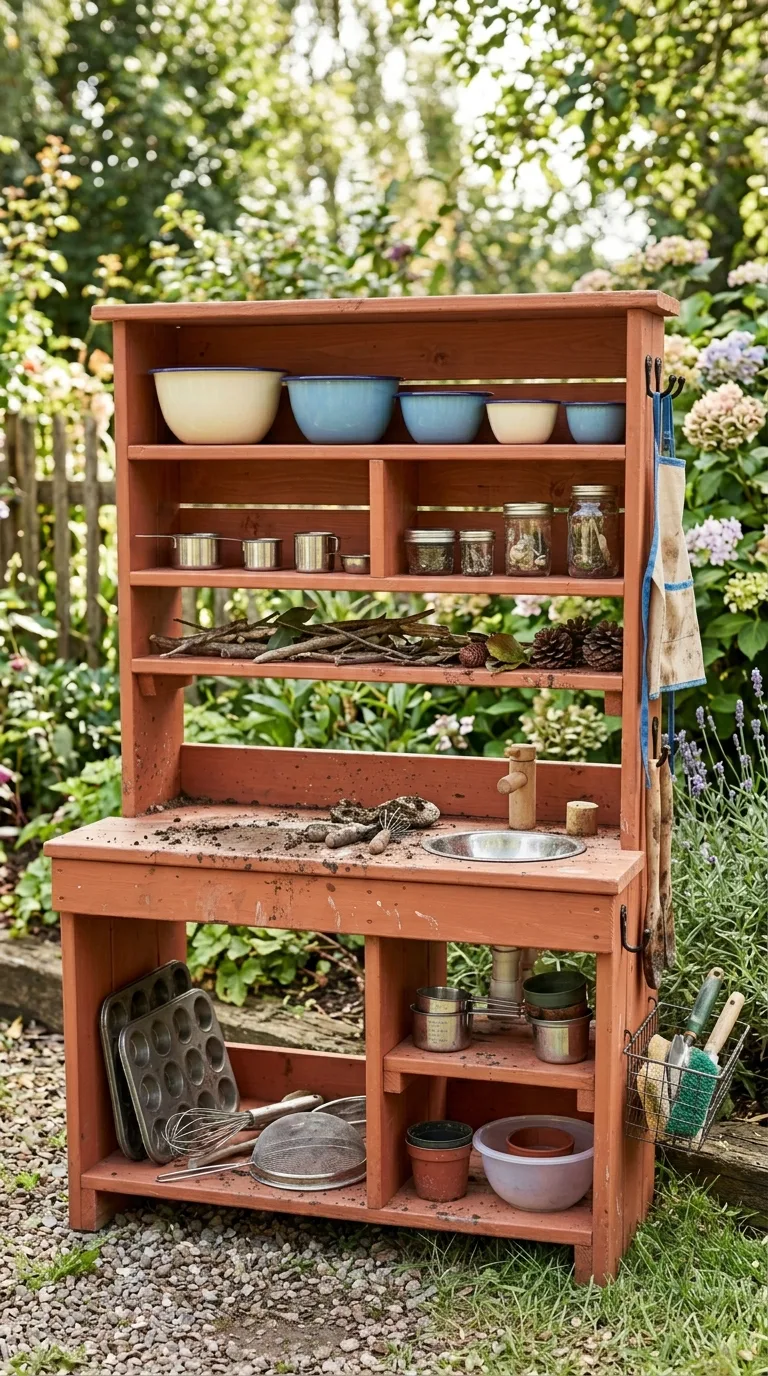
Shelves above and below the worktop, plus a row of pegs on the back panel, give every pot and spoon a place, so tidying up becomes part of the play. Open shelves let children see what’s there, and a crate for small items stops them getting lost.
Good to know: use rounded pegs, or mount hooks above children’s eye level, so a child leaning over the worktop can’t walk into a sharp hook. Slatted shelves drain better than solid ones.
9. Mud Kitchen with Sand and Mud Mixing Station
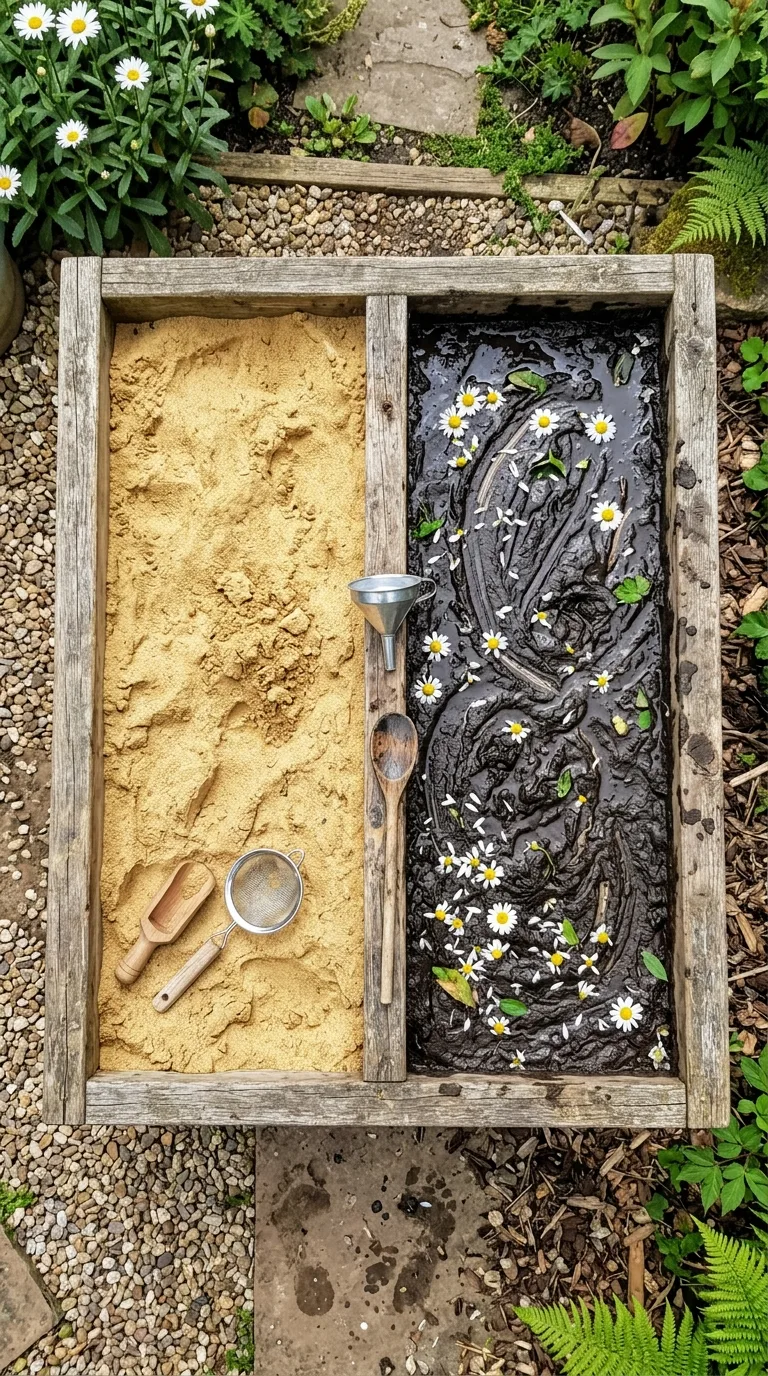
Two tubs side by side, one of play sand and one of soil, let children mix their own textures and see how adding water changes each one. Add scoops, sieves and a jug, and set the tubs low enough for children to reach in comfortably.
Good to know: use bagged play sand sold for sandboxes, and cover the sand and soil tubs after play so cats and other animals don’t use them as litter boxes.
10. Vintage Tin Can and Pot Mud Kitchen

Old saucepans, baking tins, muffin trays, ladles and wooden spoons from thrift stores, garage sales and family kitchens make a sturdy, low-cost mud kitchen kit. Real metal pans are hard to break and make satisfying sounds. Add a few new pieces now and then to keep the play fresh.
Good to know: check every item for sharp edges: tin cans opened with a standard opener leave a cutting rim, so use smooth-edge cans or tape the rims, and skip chipped or broken pieces.
11. Mud Kitchen with Natural Loose Parts
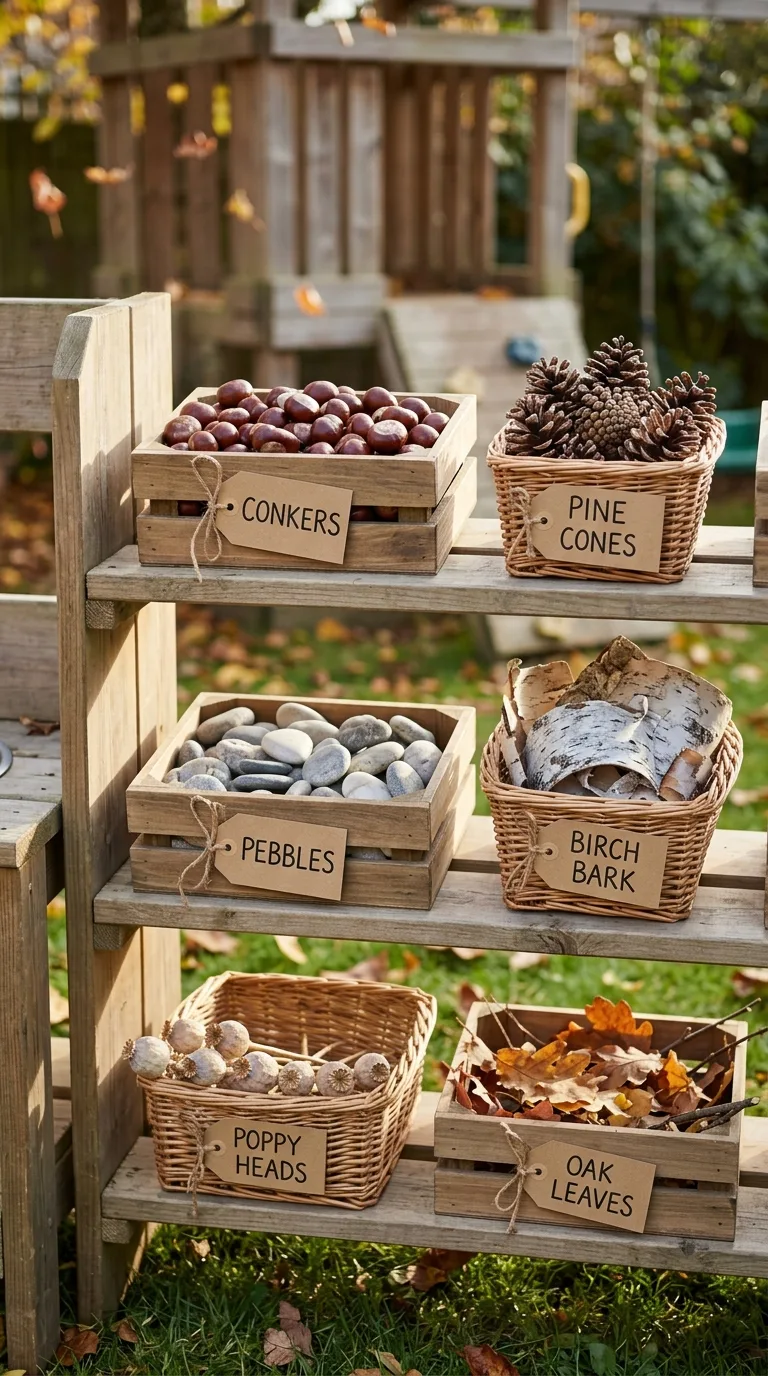
Pinecones, bark, smooth stones, seed heads, leaves and short sticks become ingredients for soups, cakes and potions. Store them sorted in crates or baskets on the shelves, and refresh the collection each season with new finds.
Good to know: many natural loose parts are small enough to choke a child under 3, so give toddlers larger items only. Leave out horse chestnuts (conkers): NC State rates them as highly toxic if eaten.
12. Mud Kitchen with Sensory Bins
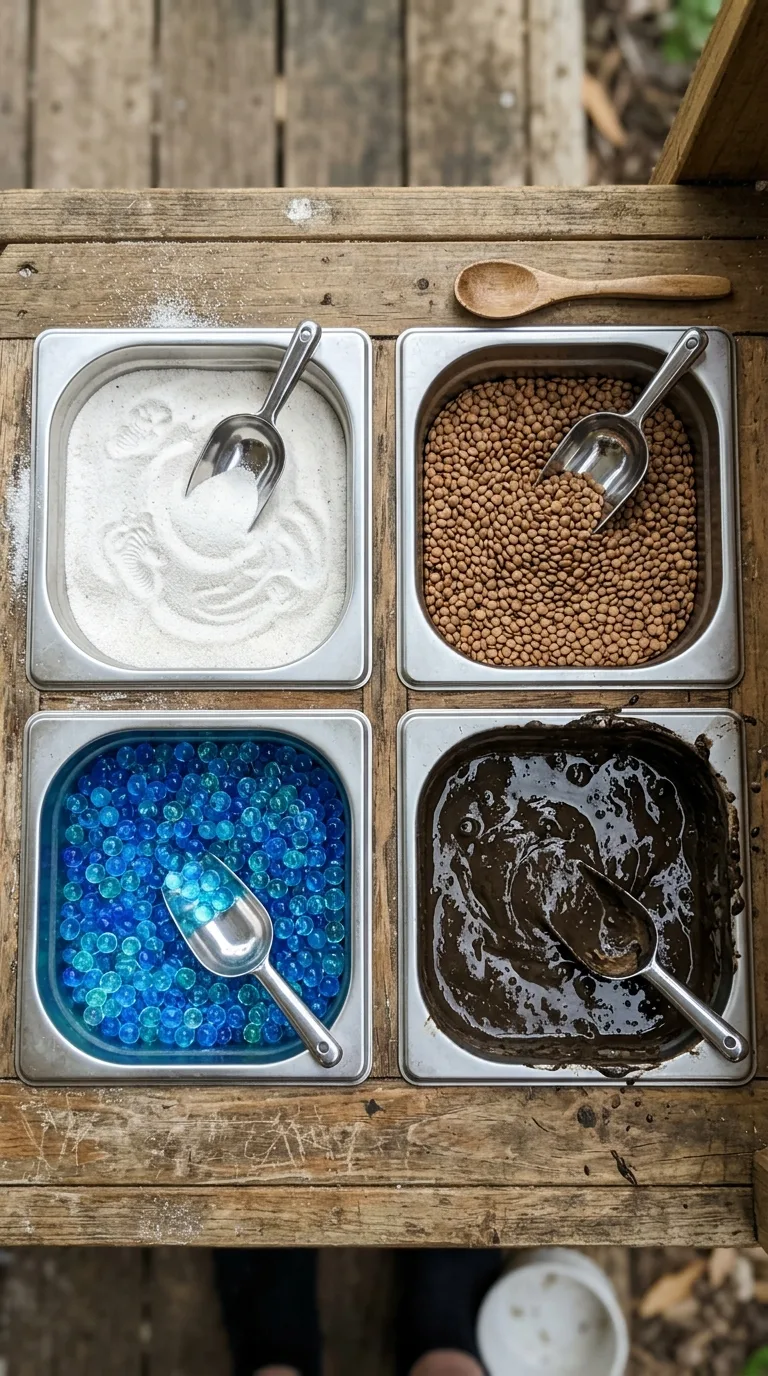
A row of tubs filled with different materials, such as soil, sand, gravel, kinetic sand or dried rice, gives children a range of textures to compare. Set the bins into the worktop or on a low bench, with scoops, funnels, sieves and cups beside each one.
Good to know: leave out water beads: CPSC advises removing water beads from any environment with children, because swallowed beads can expand and block the intestines. Dried rice, beans and gravel are choking hazards for children under 3.
13. Mud Kitchen with Fairy Garden Corner
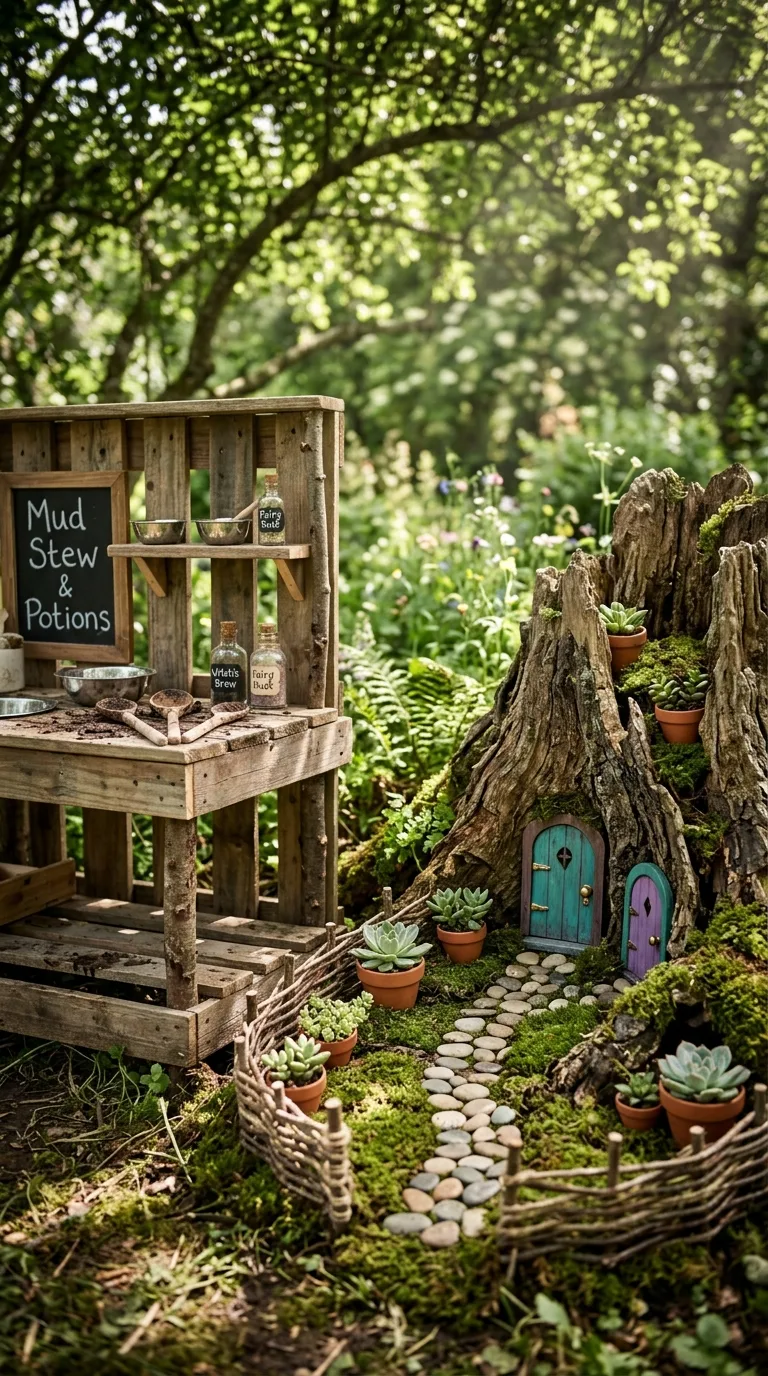
A small fairy garden beside the mud kitchen, with low plants, moss, a tiny door and a pebble path, gives children a second place for stories and a source of petals and leaves for recipes. Let them help plant and arrange it, and change it with the seasons.
Good to know: creeping thyme and other low, tough plants cope with small hands better than delicate alpines. Keep tiny accessories for children 3 and up, since they’re small parts.
14. Mud Kitchen with Nature Art Station
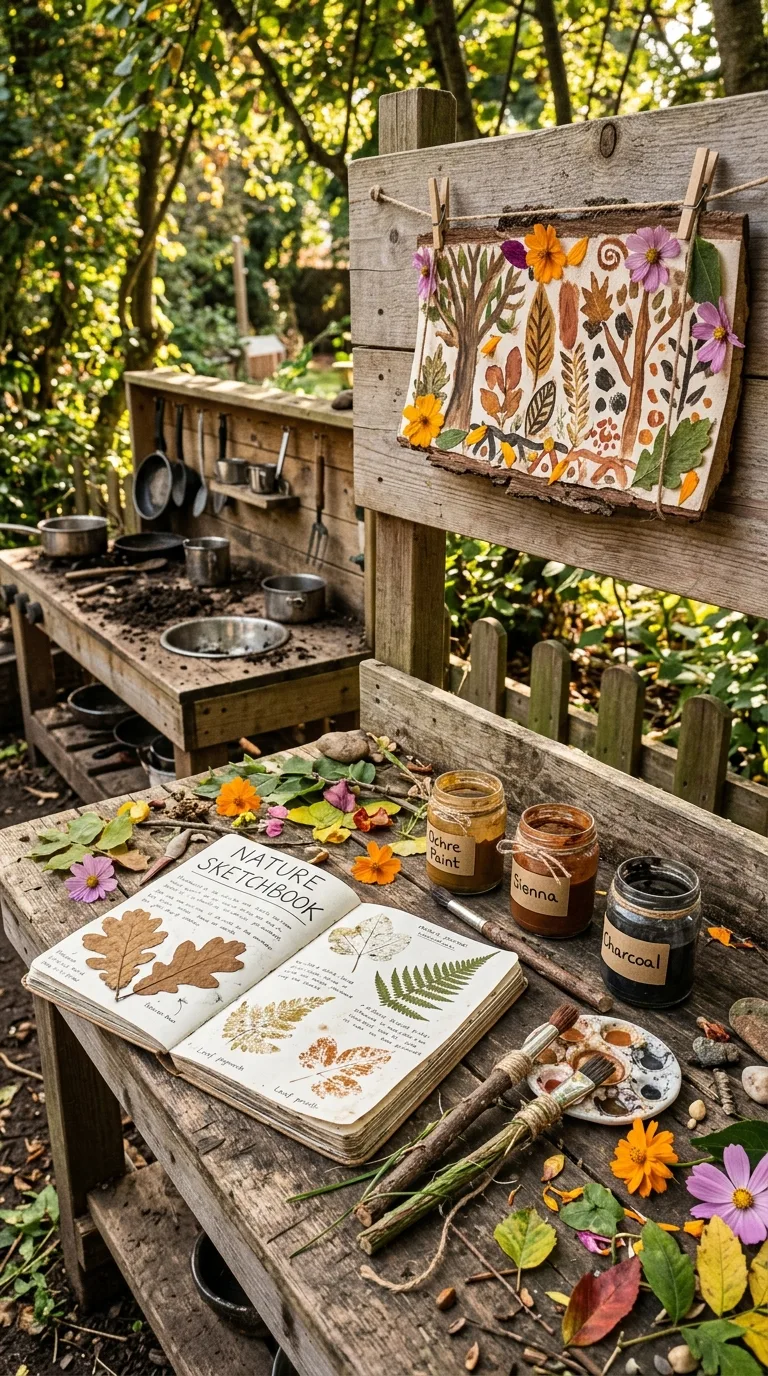
A flat work surface with a board for showing finished work lets children paint and build with natural materials. Mix soils of different colors with water to make mud paints, and offer brushes, paper, leaves for rubbings and pressed flowers.
Good to know: a row of pegs on a board or fence makes a simple outdoor gallery. Have children wash their hands with soap and water when they finish.
15. Mud Kitchen with Mud Pie Bakery Theme
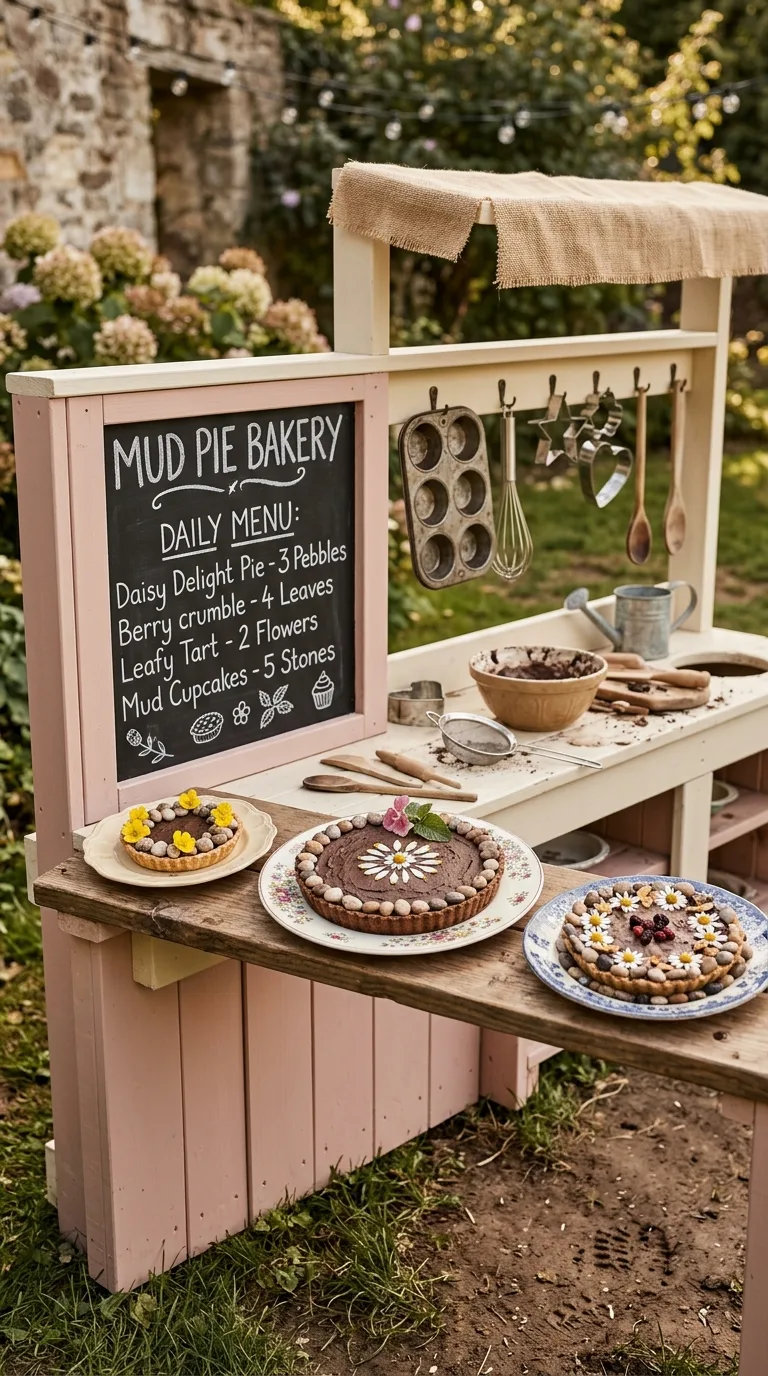
A bakery theme gives children a clear starting point: muffin tins, loaf pans, cake molds, rolling pins and cookie cutters, a shelf for displaying the bakes and a chalkboard of the day’s specials. Measuring, mixing, shaping and selling bring counting and conversation into the play.
Good to know: a toy cash register and large pretend coins extend the game; real coins and small play money are choking hazards for children under 3.
16. Mud Kitchen with Potting Bench Integration
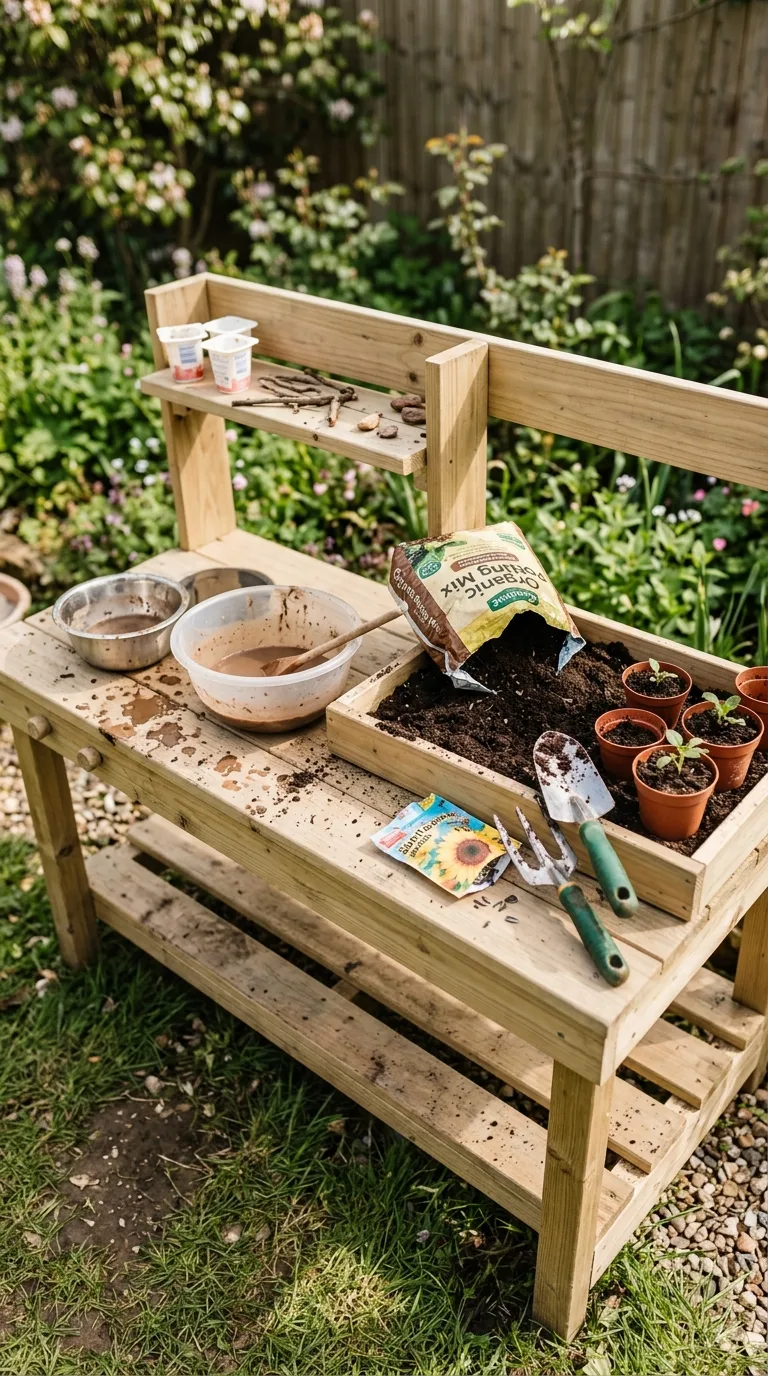
A low potting bench next to the kitchen, with a soil tray, child-size tools, small pots and seeds, links mud play to growing real plants. Large seeds such as sunflowers, peas and beans are easy for small hands, and children can watch them sprout over the following weeks.
Good to know: buy untreated seed, since seed labeled as treated has a pesticide coating, and have children wash their hands after handling potting mix. Large seeds are choking hazards for children under 3, so plant them together.
17. Mud Kitchen with Flower Pressing Station
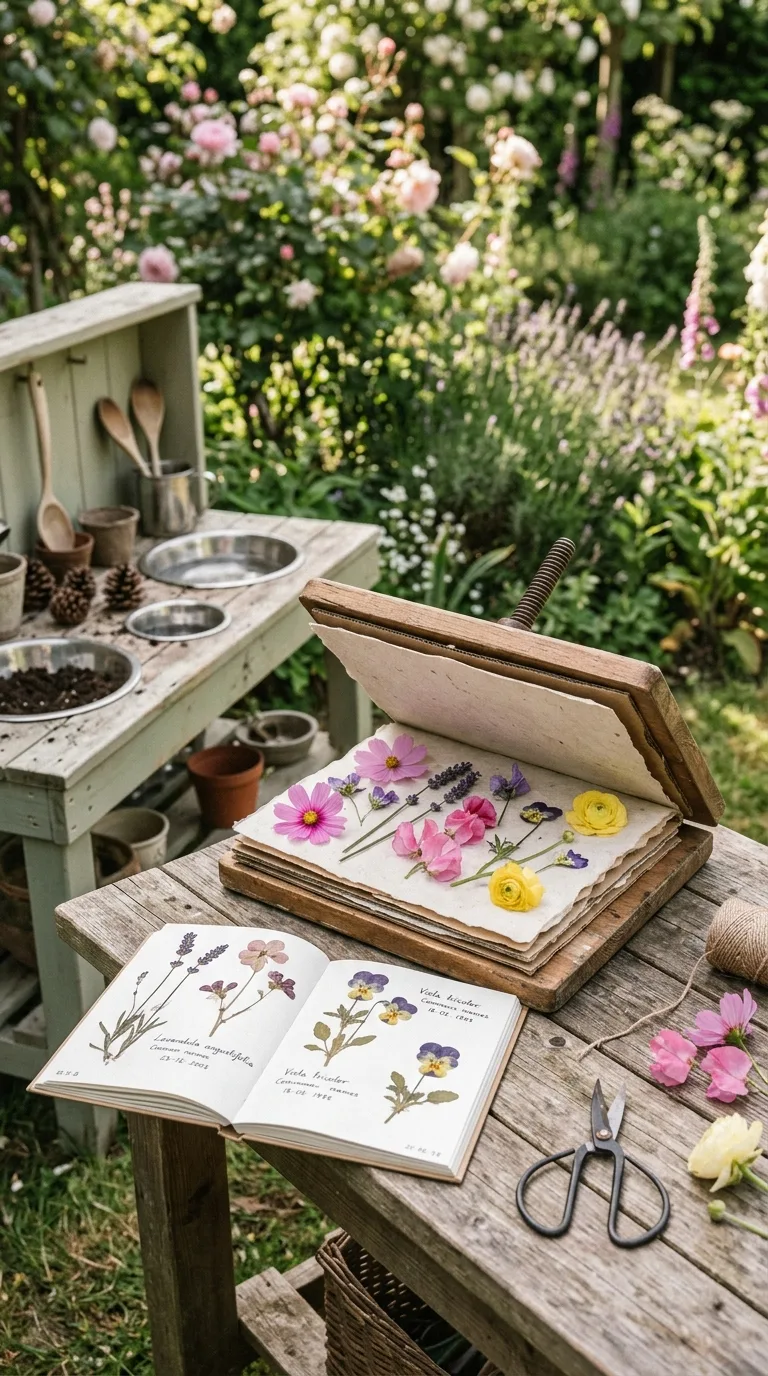
A simple wooden flower press with wing nuts, or a heavy book and some paper, turns garden flowers and leaves into pressed pictures and bookmarks. Children learn to choose and handle flowers carefully, and the collection changes with the seasons.
Good to know: teach children which plants they may pick, and keep poisonous ones out of the play area; foxglove, for example, is rated highly poisonous by NC State Extension.
18. Corner Mud Kitchen for Small Gardens
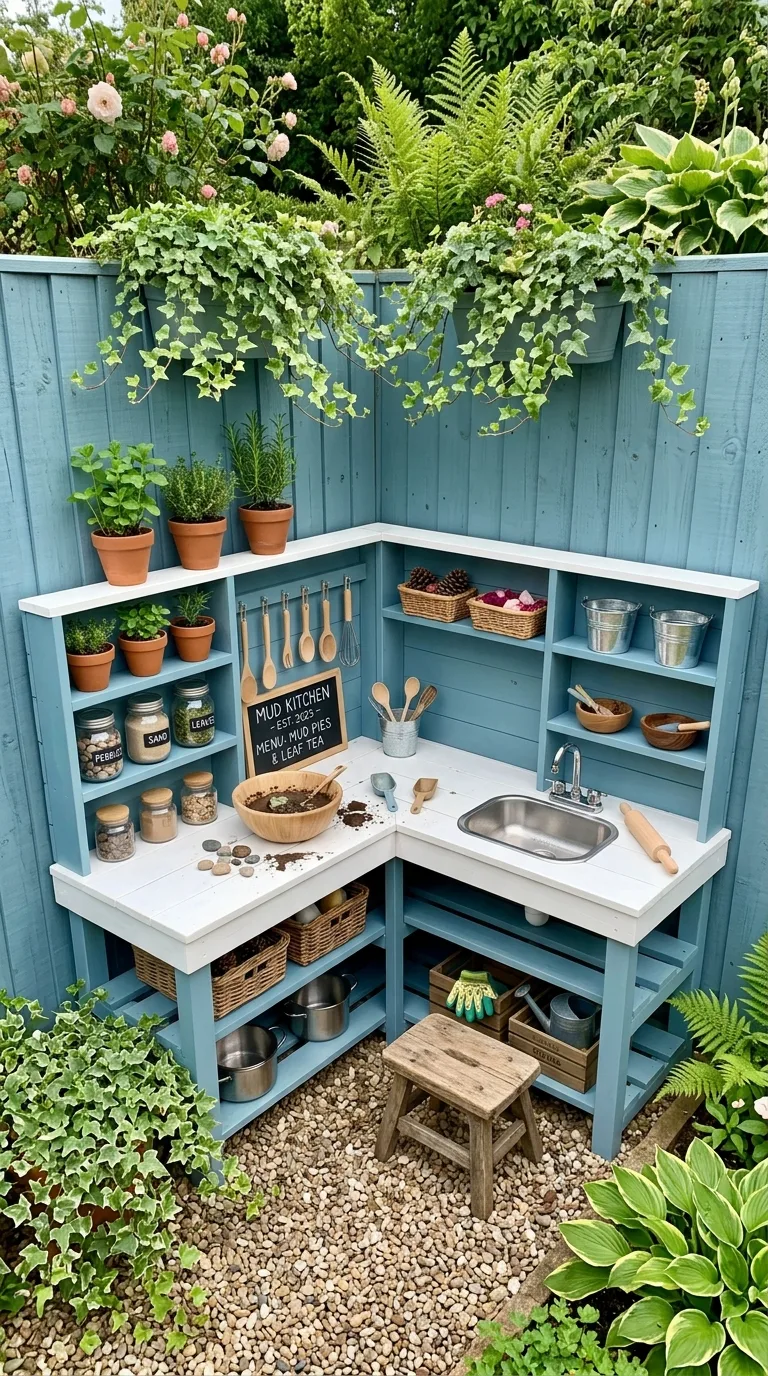
A corner unit fits a worktop and shelves along two fence panels and leaves the rest of a small yard free. The corner feels sheltered, like a den, and the back panels can hold pegs, a chalkboard and a small shelf. For more ways to use a compact space, see these backyard ideas.
Good to know: wet mud against a wooden fence speeds up rot, so give the kitchen its own back panel with a small gap to the fence, and check with your neighbor before fixing anything to a shared fence.
19. Mud Kitchen with Rock and Stone Collection
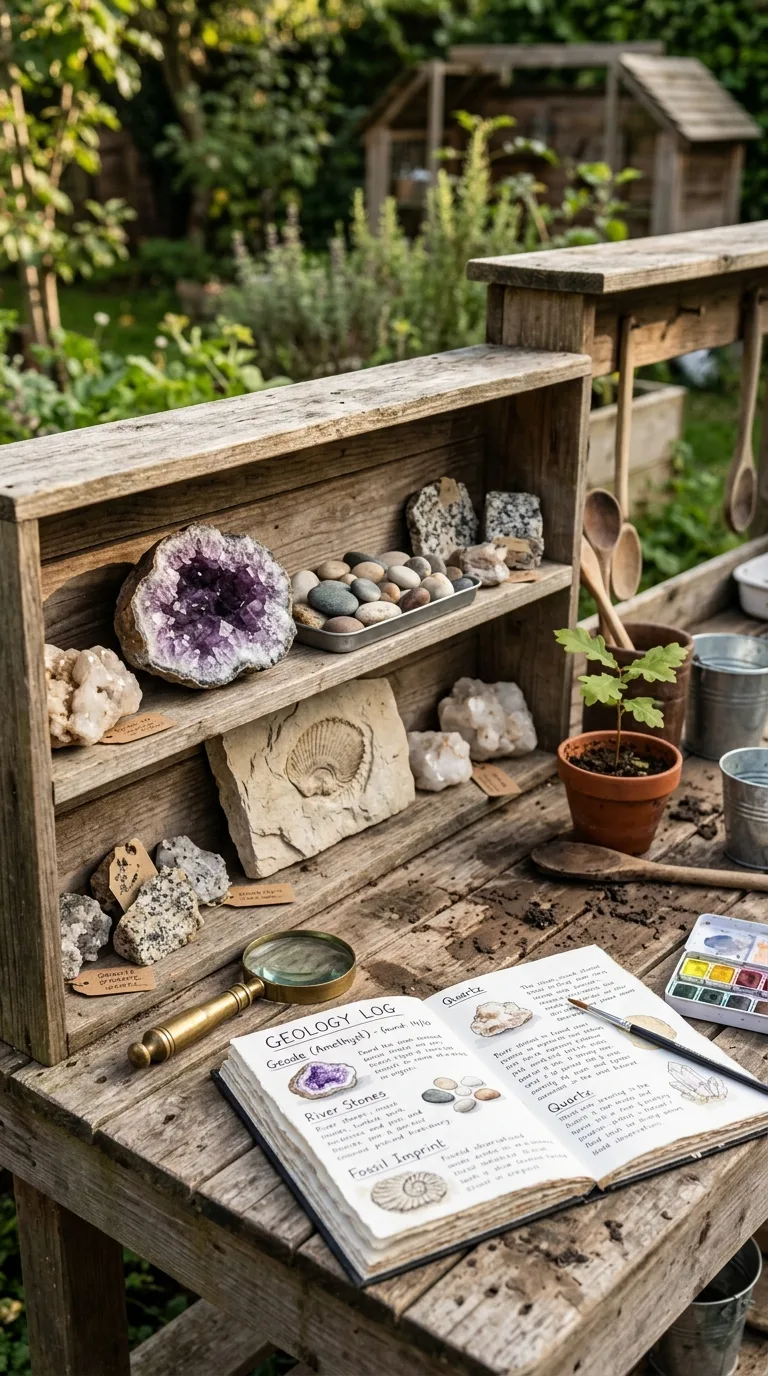
A shelf or divided box of interesting stones, shells and fossils adds a small natural history corner to the kitchen. Stones work as ingredients, and a magnifying glass, a soft brush and a notebook let children look closer and record their finds.
Good to know: a magnifying glass left in the sun can focus enough heat to scorch or ignite dry material, so store it in a box in the shade. Keep small stones away from children under 3.
20. Mud Kitchen with Rope and Pulley System
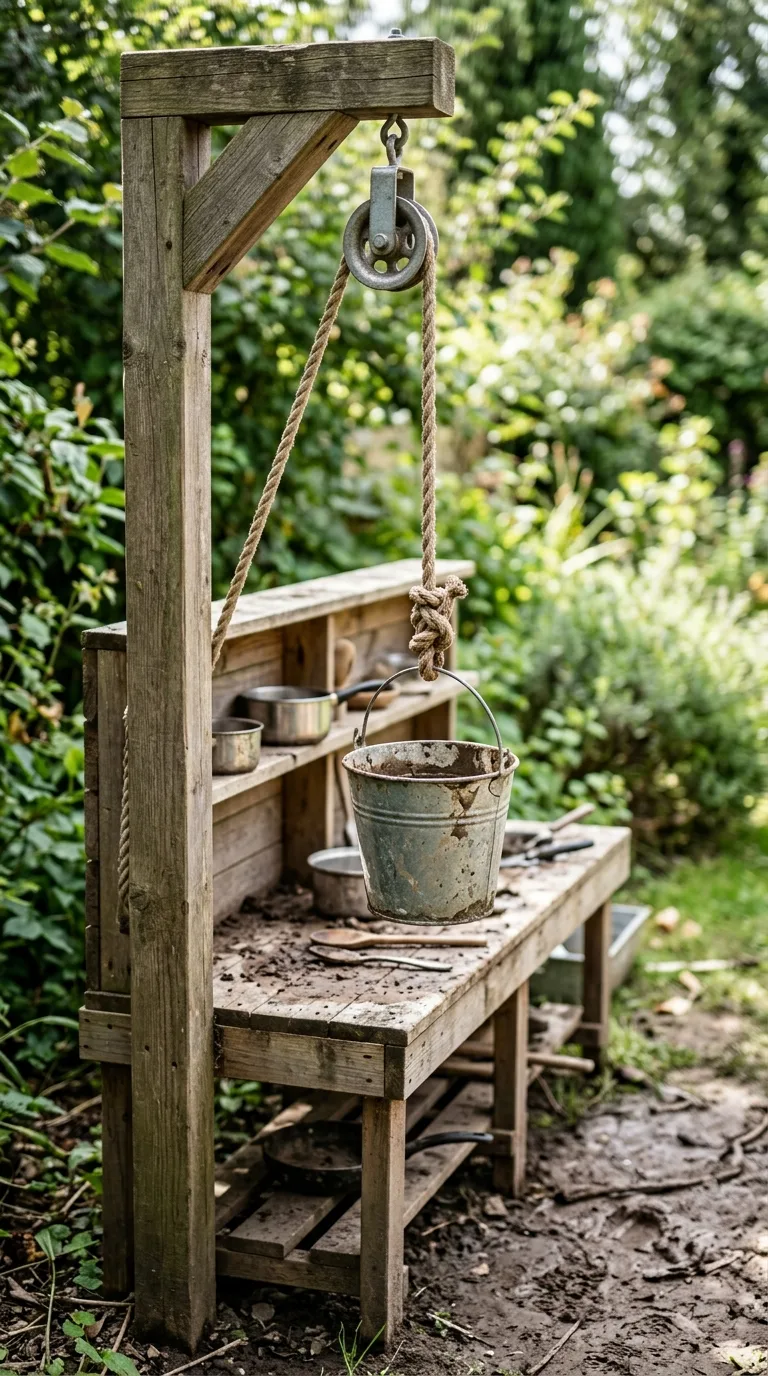
A pulley and small bucket on a sturdy post lets children lift mud, water and ingredients up to a shelf, and shows them how a pulley makes lifting easier. It works best with two children, one loading and one pulling.
Good to know: ropes on play structures are a strangulation hazard, and CPSC warns against attaching ropes, clotheslines or leashes to play equipment. Use a short rope that can’t form a loop, keep it away from any platform or slide, and take it down after supervised play.
21. Mud Kitchen with Water Wheel and Channels
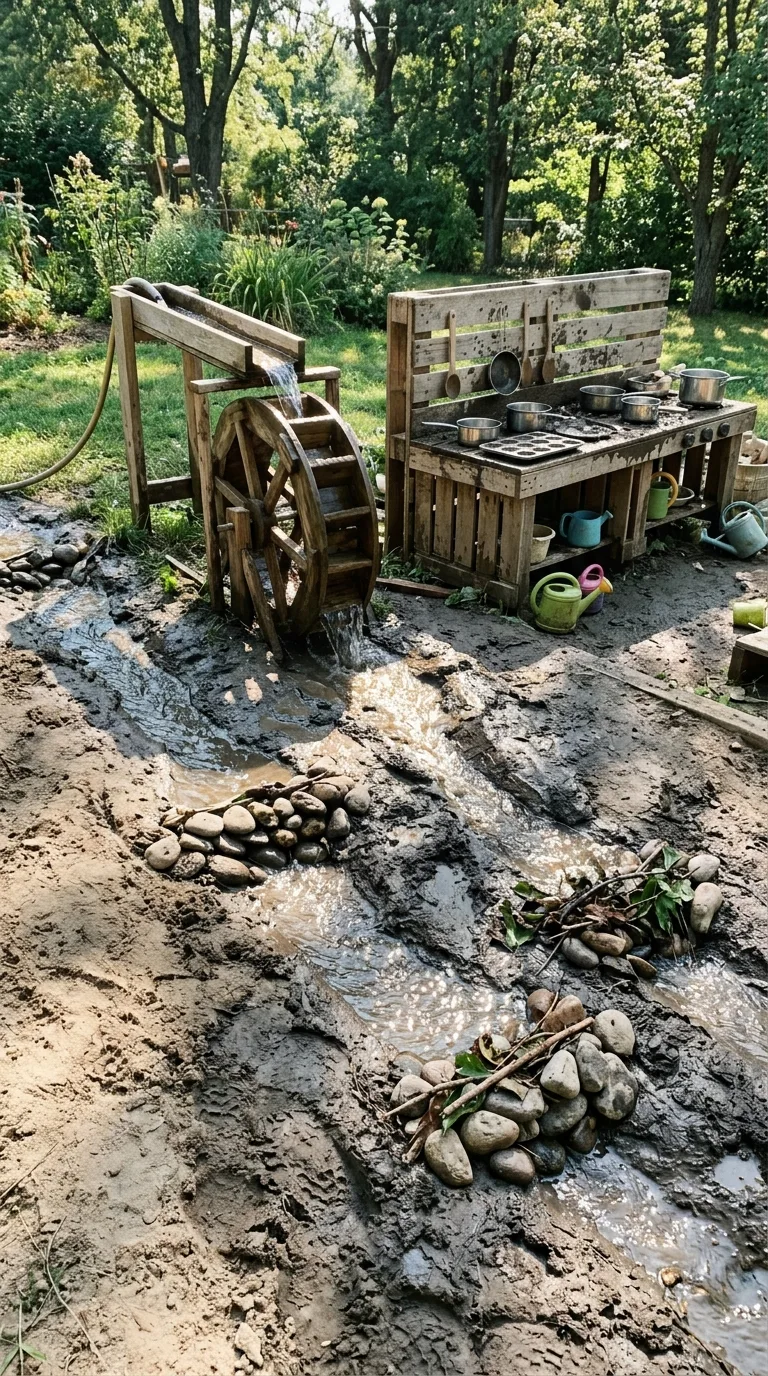
A water wheel fed from a jug or a raised tub, and channels dug into a sloped patch of sand or soil, let children move water and see what happens when they change its route. Pipes, gutters and funnels make the system easy to rebuild each time.
Good to know: empty the tub, channels and containers after play: standing water is a drowning hazard for toddlers, and the CDC advises emptying or covering anything that holds water once a week to stop mosquitoes breeding.
22. Mud Kitchen with Seasonal Decorating Station
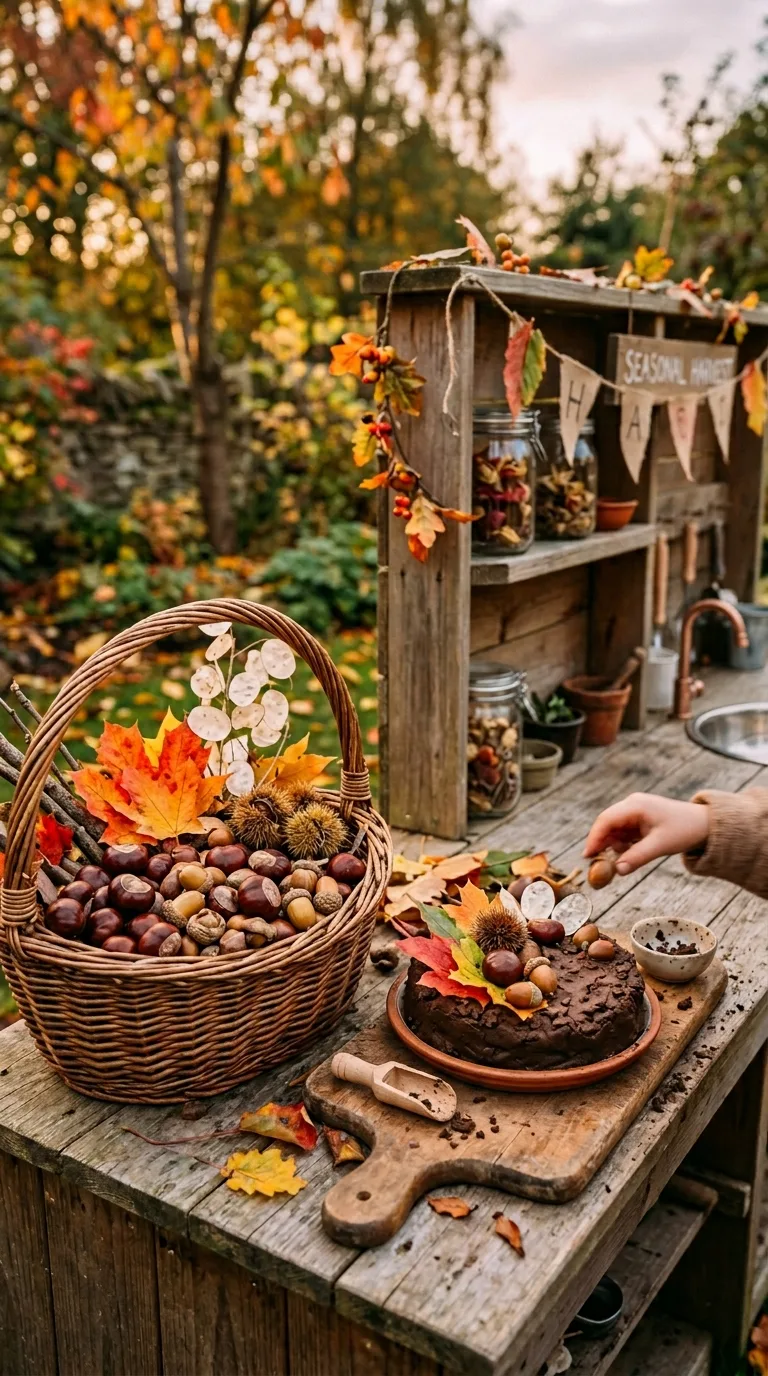
A basket of seasonal finds, such as spring petals, summer leaves and flowers, and autumn seed heads and colored leaves, gives children fresh material to decorate mud pies and potions. Collecting it encourages them to notice what’s changing in the garden.
Good to know: teach a look-don’t-eat rule for berries and seeds. NC State notes English holly berries are particularly poisonous to children and rates nandina berries as highly toxic, so remove anything you can’t identify.
23. Mud Kitchen with Outdoor Reading Nook
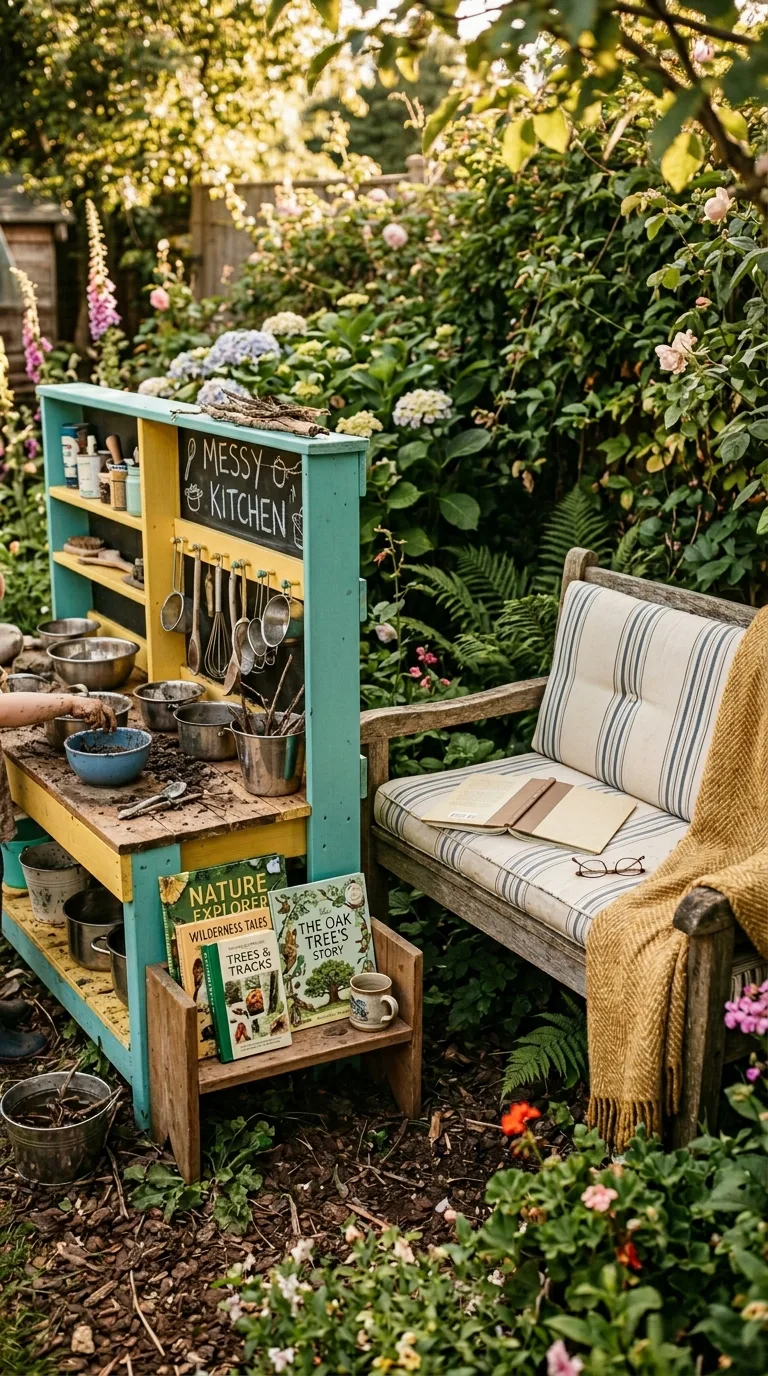
A bench with a weatherproof cushion, or a small tent or den beside the kitchen, gives children a quiet spot between bouts of messy play. Stock a basket with nature books and field guides so they can look up the leaves, bugs and stones they find.
Good to know: store books and cushions in a lidded, waterproof box or bring them in overnight, since dew and rain ruin them quickly.
24. Mud Kitchen with Recycled Materials Play Store
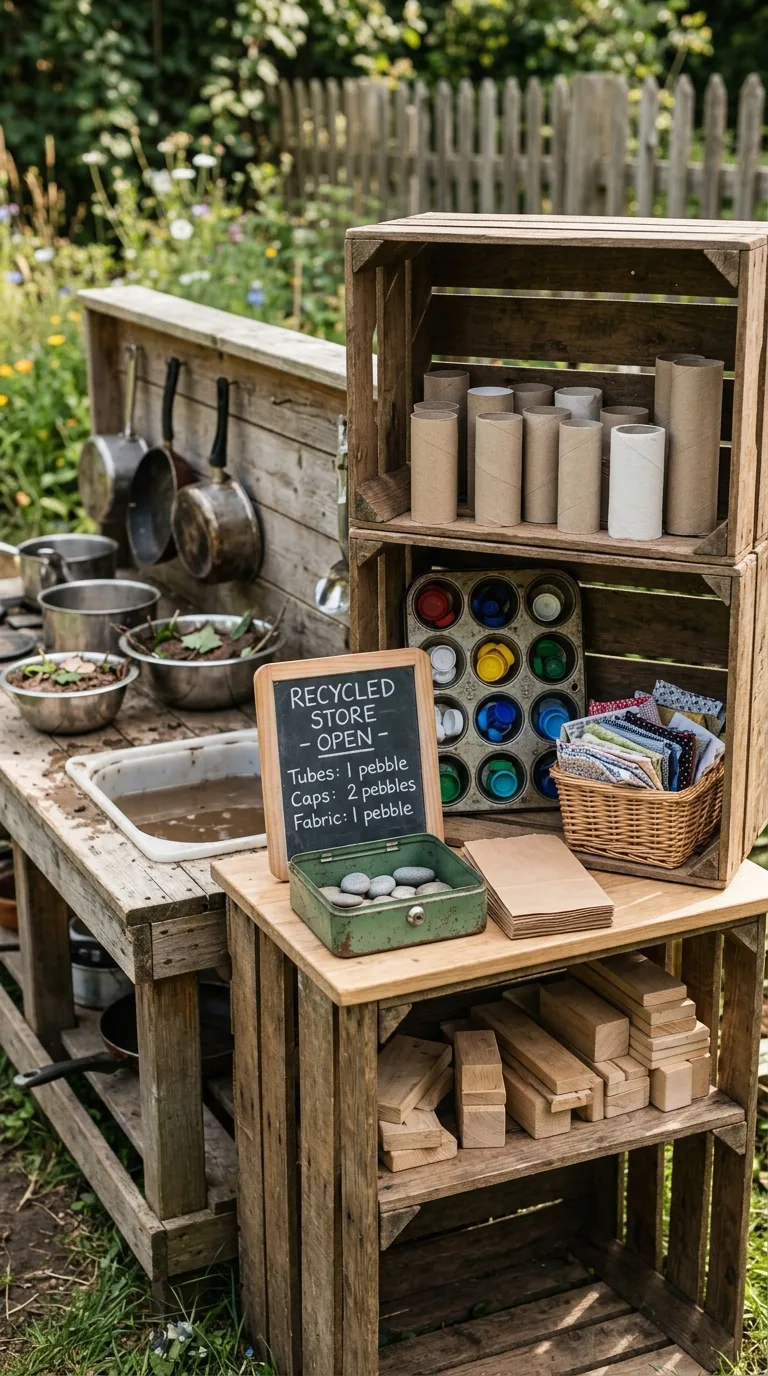
A shelf of clean recycled materials, such as cardboard tubes, fabric scraps, ribbon and wooden offcuts, lets children run a shop alongside the kitchen, with roles for shopkeeper, customer and delivery driver. Add paper bags, a cash tin and a price board.
Good to know: bottle caps, pebble coins and small offcuts are choking hazards for children under 3, so keep them for older children, and leave long ribbon out of toddlers’ play.
Common mistakes to avoid
- Leaving water in buckets, sinks or tubs after play.
- Giving water beads or small loose parts to children under 3.
- Building from old painted wood or unmarked pallets without checking them.
- Hanging ropes or cords on a raised platform or climbing frame.
- Building a platform without guardrails or a soft surface underneath.
- Leaving sand and soil tubs uncovered for cats.
Mud kitchen FAQs
What age is a mud kitchen for?
Toddlers through school-age children enjoy them. For children under 3, leave out small loose parts and stay close by, especially around water.
What is the best wood for a mud kitchen?
Cedar resists rot naturally; pine costs less but needs exterior paint or sealer. Whatever you use, sand it smooth, and avoid old painted wood unless it has been tested for lead.
Where should a mud kitchen go?
On level ground near a hose or outdoor tap, in part shade, where an adult can see it from the house, and away from wooden fences and house walls so splashes don’t cause damage.
How do I keep a mud kitchen clean?
Hose it down after play, empty all the water, cover sand and soil tubs, and have children wash their hands with soap and water afterward.


