

24 Patchwork Painting Ideas That Feel Cozy
Patchwork painting borrows the look of a quilt: a grid of squares, each filled with its own color or pattern. It is forgiving, because every square is a small, separate painting, and it works on canvas, watercolor paper, journal pages and wood.
Below are 24 patchwork painting ideas, from classic quilt grids to seasonal and themed designs, each with what to paint and how. Start with the basics on planning the grid and getting clean edges.
Before you start
Plan the grid
Measure the surface and pick a square size that divides into it evenly: a 12-inch square canvas fits sixteen 3-inch squares or nine 4-inch squares. Mark the lines lightly with a pencil and ruler, and sketch where each color and pattern goes so similar squares don’t end up side by side.
Pick paint for the surface
Acrylic suits canvas, panels and wood. Watercolor needs watercolor paper, taped to a board on all sides to reduce buckling. Paint pens and fine brushes handle stitch lines and small motifs. For children, choose paints with the ACMI AP seal, which ACMI recommends for kids in grade 6 and younger.
Get clean edges with tape
Golden Artist Colors recommends low-tack painter’s tape with the edge pressed down firmly, then a thin coat of the base color over the tape edge to seal it before you paint the next color. Pull the tape off at a sharp angle once the paint is dry. Test the tape on a scrap first, since it can lift paint or tear paper.
Finish the piece
Varnish protects acrylic paintings, but wait until the paint has fully dried: for thin paint, Golden suggests a day or two before an isolation coat and another two days to a week before varnish. Frame watercolor patchwork under glass and hang it out of direct sunlight, which fades paper and pigment.
The 24 ideas at a glance
| Idea | Main colors | Key technique | Skill level |
|---|---|---|---|
| Classic quilt | Mixed solids | Grid and stitch lines | Beginner |
| Floral | Soft brights | Simple brush flowers | Beginner |
| Pastel | Pink, blue, mint, lilac | Tints mixed into white | Beginner |
| Boho | Terracotta, mustard, sage | Limited palette | Beginner |
| Watercolor | Any | Alternate squares | Beginner |
| Gingham | One color plus white | Transparent crossing stripes | Intermediate |
| Autumn | Rust, orange, gold | One-stroke leaves | Beginner |
| Heart | Reds, pinks, cream | Folded paper template | Beginner |
| Rainbow | Rainbow order | Light colors first | Beginner |
| Polka dot | Any | Dotting tools | Beginner |
| Cottagecore | Greens, cream, dusty pink | Small nature motifs | Intermediate |
| Vintage | Faded muted colors | Thin aging glaze | Intermediate |
| Geometric | Bold solids | Tape and quilt blocks | Intermediate |
| Star | Warm soft colors, gold | Eight-point star | Intermediate |
| Monochrome | One color, many values | Light-to-dark mixing | Beginner |
| Striped | Brights plus a neutral | Flat brush stripes | Beginner |
| Sunflower | Yellow, green, cream | Textured centers | Beginner |
| Denim | Light to dark blues | Diagonal dry brush | Intermediate |
| Winter | White, icy blue, navy | Six-armed snowflakes | Beginner |
| Plaid | Red and black, green and navy | Repeated crossing stripes | Intermediate |
| Honeybee | Yellow, honey, brown | Hexagon template | Beginner |
| Woodland | Greens, browns, cream | Simple tree shapes | Beginner |
| Seaside | Blue, sand, white, navy | Scallops and shells | Beginner |
| Cross stitch | Soft muted colors | Tiny X’s on a grid | Intermediate |
1. Classic Quilt Patchwork
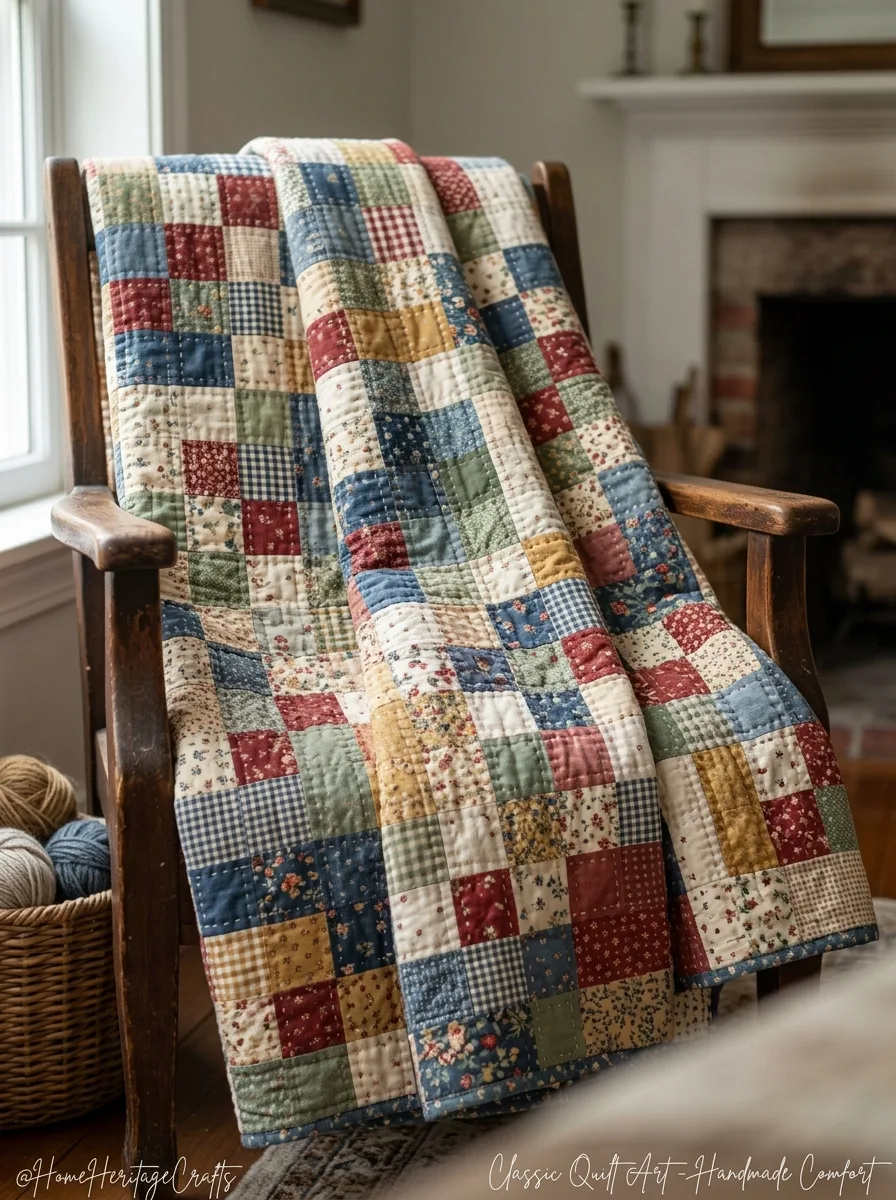
A classic quilt painting is a grid of even squares, each in a different color or simple pattern. Mark the grid in pencil, paint the solid colors first, then add dots, stripes or small flowers to some squares once they are dry. Finish with short dashed lines along the seams so they look like stitching.
Good to know: alternate solid and patterned squares like a checkerboard so busy patterns never sit side by side.
2. Floral Patchwork
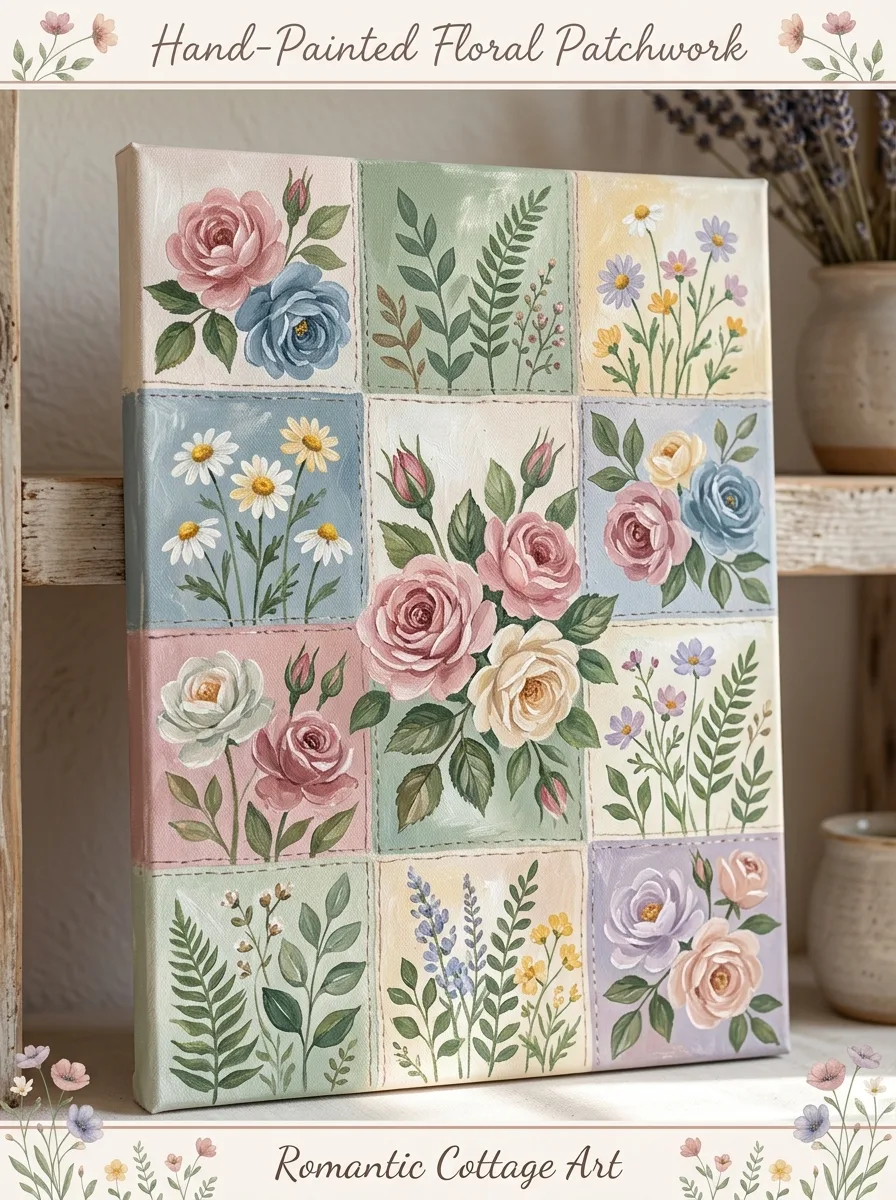
Each square holds a small flower, bud or leaf on its own background color. Paint the backgrounds first and let them dry, then add simple flowers: five dots around a center for a daisy, a spiral for a rose, two curved strokes for a leaf. Leave a few squares plain so the flowers have room.
Good to know: pressing a round brush down and lifting it makes a quick petal shape; practice the stroke on scrap paper first.
3. Pastel Patchwork
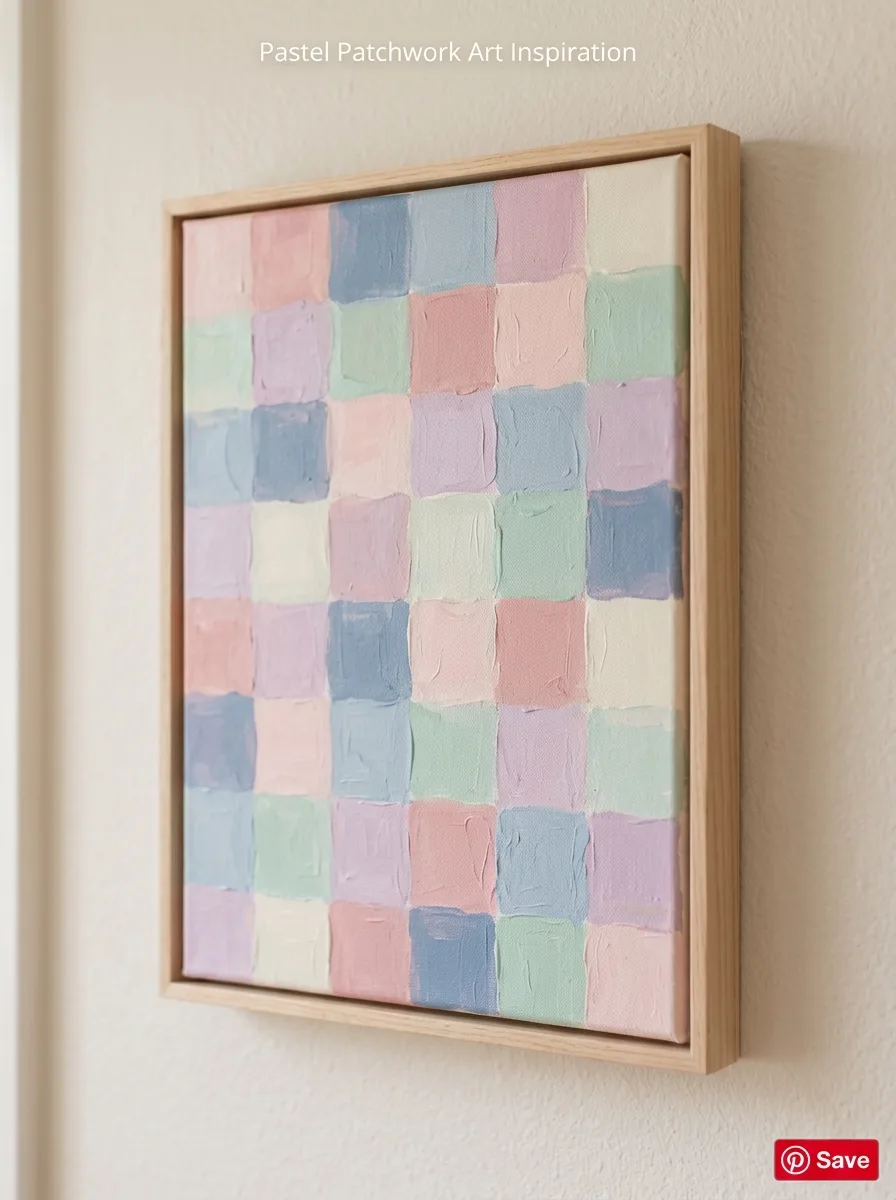
A pastel quilt uses soft pinks, blues, mint and lilac in solid squares, mixed with gentle dots, stripes and small hearts. Mix each pastel by adding a little color to white rather than white to the color, so you don’t use up paint chasing a light shade. Small hearts suit a nursery, and these heart pattern painting ideas offer more designs.
Good to know: keep the pastels close in lightness but not identical; if every square is equally light, the grid fades from a distance.
4. Boho Patchwork
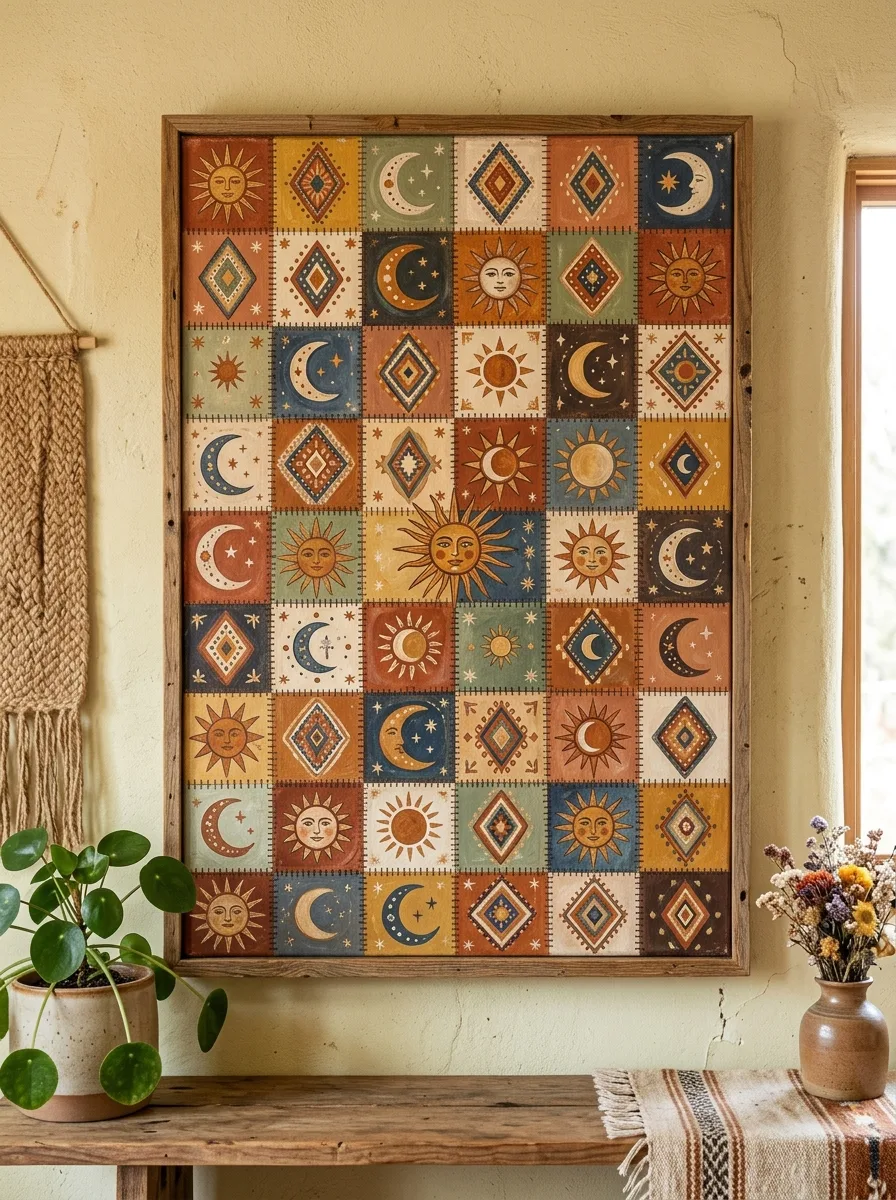
A boho quilt uses earthy colors such as terracotta, mustard, sage and cream. Fill the squares with simple motifs like suns, diamonds, stripes, dots and crescent moons; these moon painting ideas have more ways to paint them. Add small dots and lines around the motifs for detail.
Good to know: limit the palette to four or five colors and repeat them across the grid, so a busy pattern still looks planned.
5. Watercolor Patchwork

Lightly pencil a grid on watercolor paper and fill each square with a single wash of color. Paint every other square first, like the dark squares of a checkerboard, and let them dry before filling the rest, because wet squares that touch bleed together. Leave thin white gaps between squares for a crisper look.
Good to know: tape the paper to a board on all four sides before painting; peeling the tape off after the paint dries also leaves a clean white border.
6. Gingham Patchwork
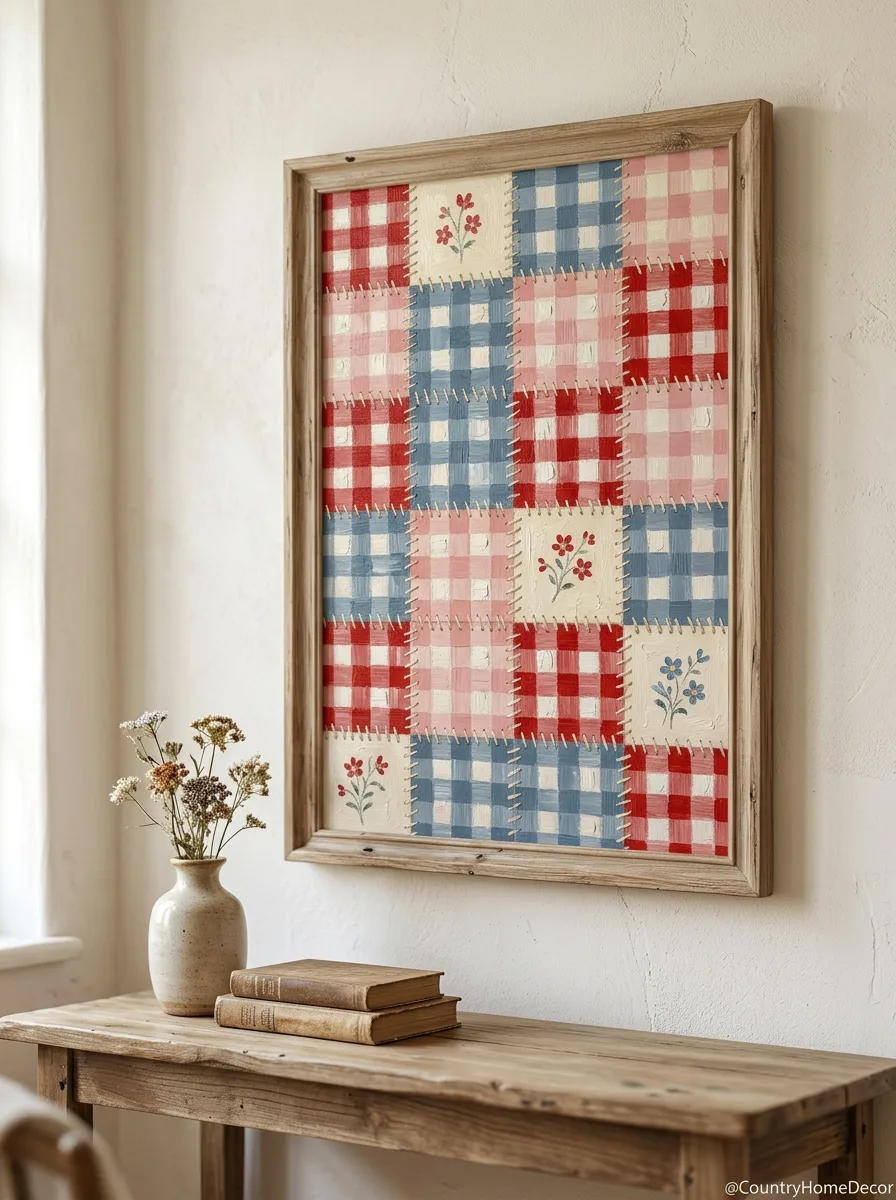
Gingham is a check made of crossing stripes. Paint a light background, then thin, see-through stripes of one color running one way and, when those are dry, the same stripes crossing them. Where the stripes cross, the color doubles and gets darker, which creates the check. Mix gingham squares with plain or dotted ones.
Good to know: the effect depends on transparent paint, so use watercolor or acrylic thinned with a glazing medium; opaque paint only makes a grid.
7. Autumn Patchwork
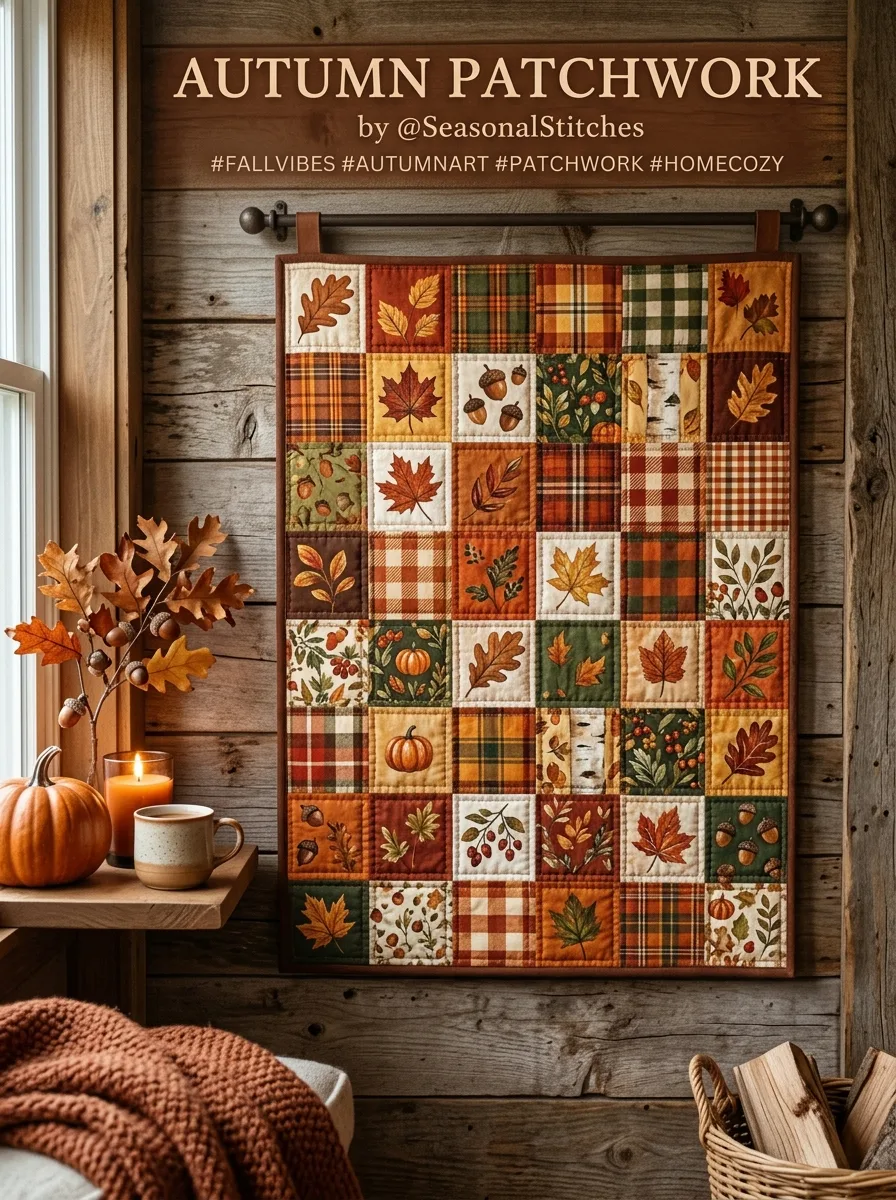
An autumn quilt uses rust, orange, gold, deep red and brown. Paint the squares in solid fall colors, then add a simple motif to some of them, such as a leaf, an acorn, a small pumpkin or a plaid. Keep one or two cream squares so the warm colors have contrast.
Good to know: for a quick leaf, press a round brush down at the stem end and lift as you pull the stroke, then add a thin vein once it’s dry.
8. Heart Patchwork
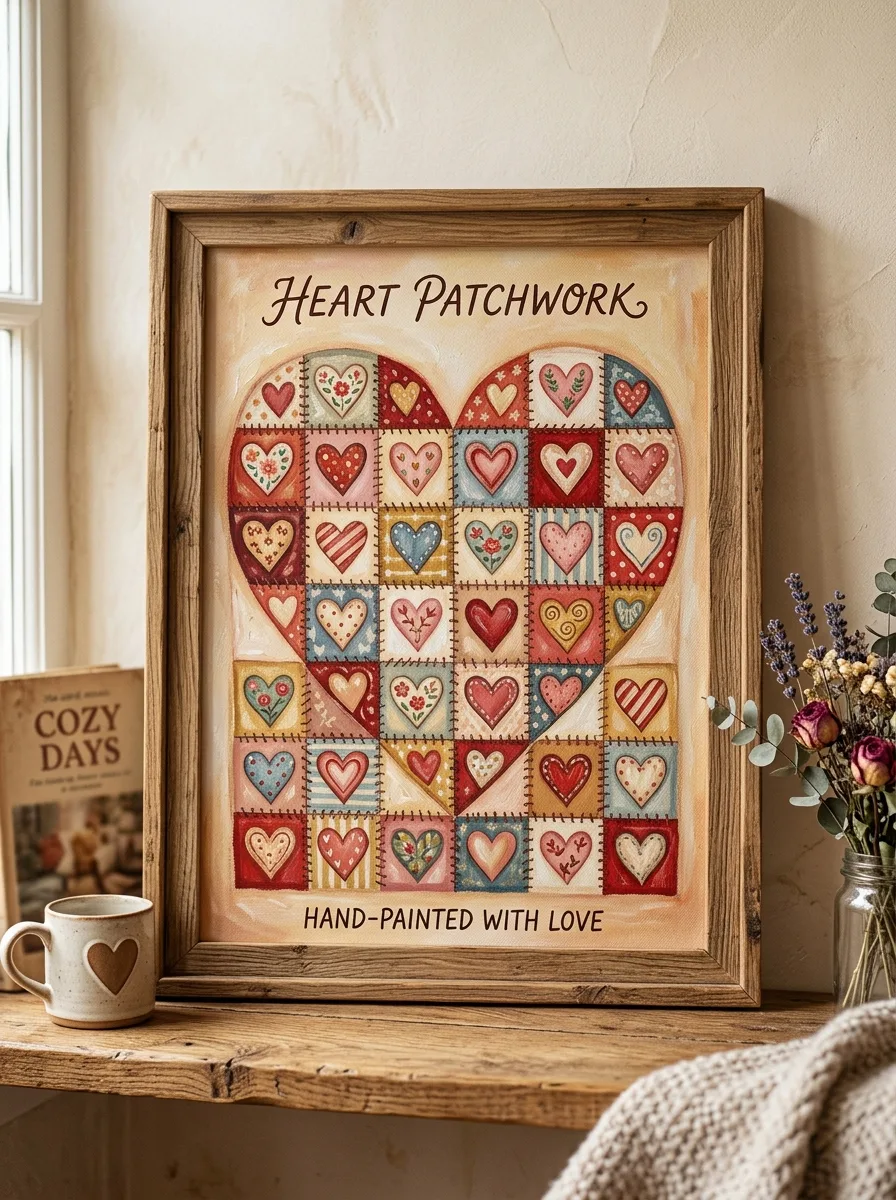
Paint the grid in soft solid colors, then add hearts to some squares: one large heart, a row of small ones or just an outline. Fill the other squares with dots or leave them plain. Reds and pinks give a Valentine look, while cream and blush keep it softer.
Good to know: for even hearts, cut one from folded paper and trace it in each square; folding keeps both halves symmetrical.
9. Rainbow Patchwork

Arrange the squares in rainbow order, either in diagonal bands or row by row: red, orange, yellow, green, blue and purple. Paint them solid, then add white dots, stripes or small hearts to some. Repeat the sequence across the grid so the colors flow.
Good to know: paint the lightest colors first and rinse the brush well between colors, so yellow doesn’t pick up traces of blue and turn green.
10. Polka Dot Patchwork
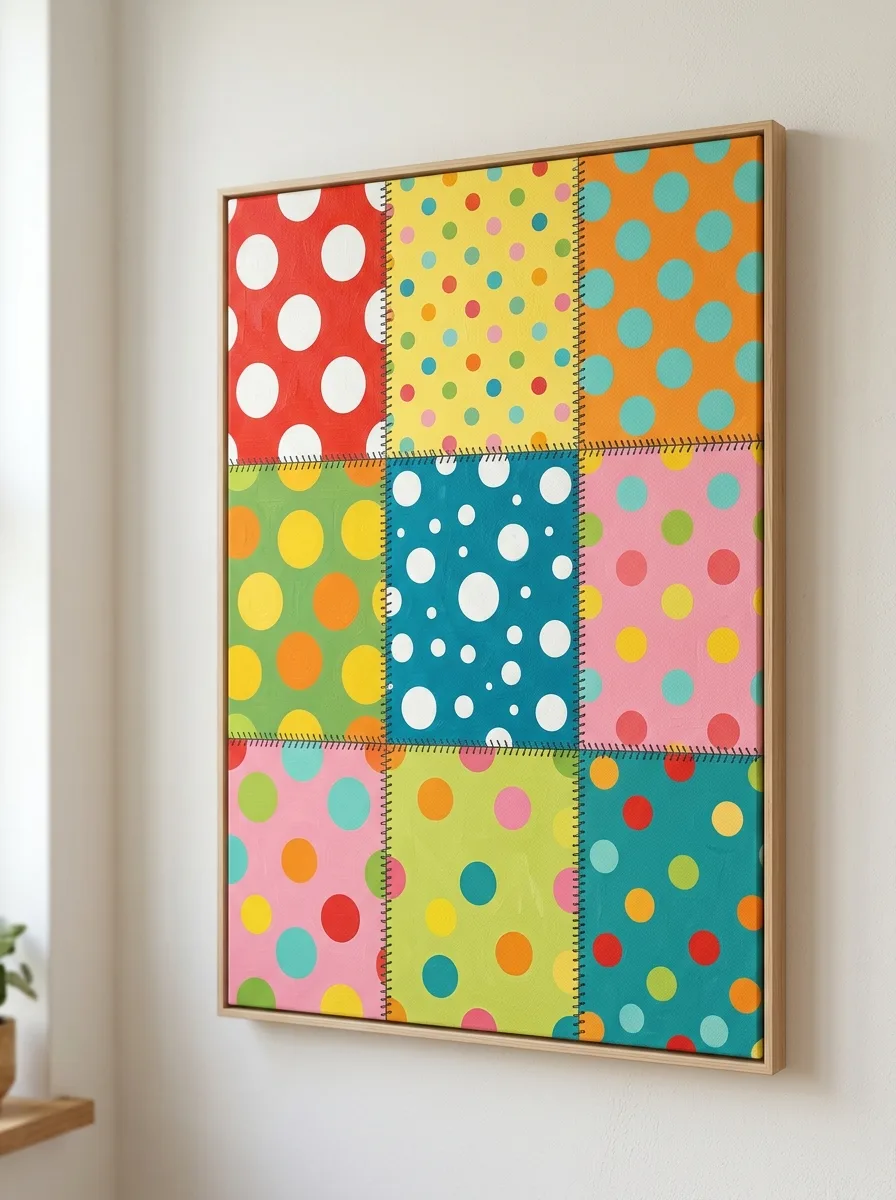
Fill the grid with dots: big dots in one square, tiny ones in the next, colored dots on white or white dots on color. The end of a brush handle, a cotton swab or a pencil eraser dipped in paint makes round, even dots. Leave a few squares plain or striped for balance.
Good to know: reload the tool every dot or two, because the dots shrink as the paint runs out.
11. Cottagecore Patchwork
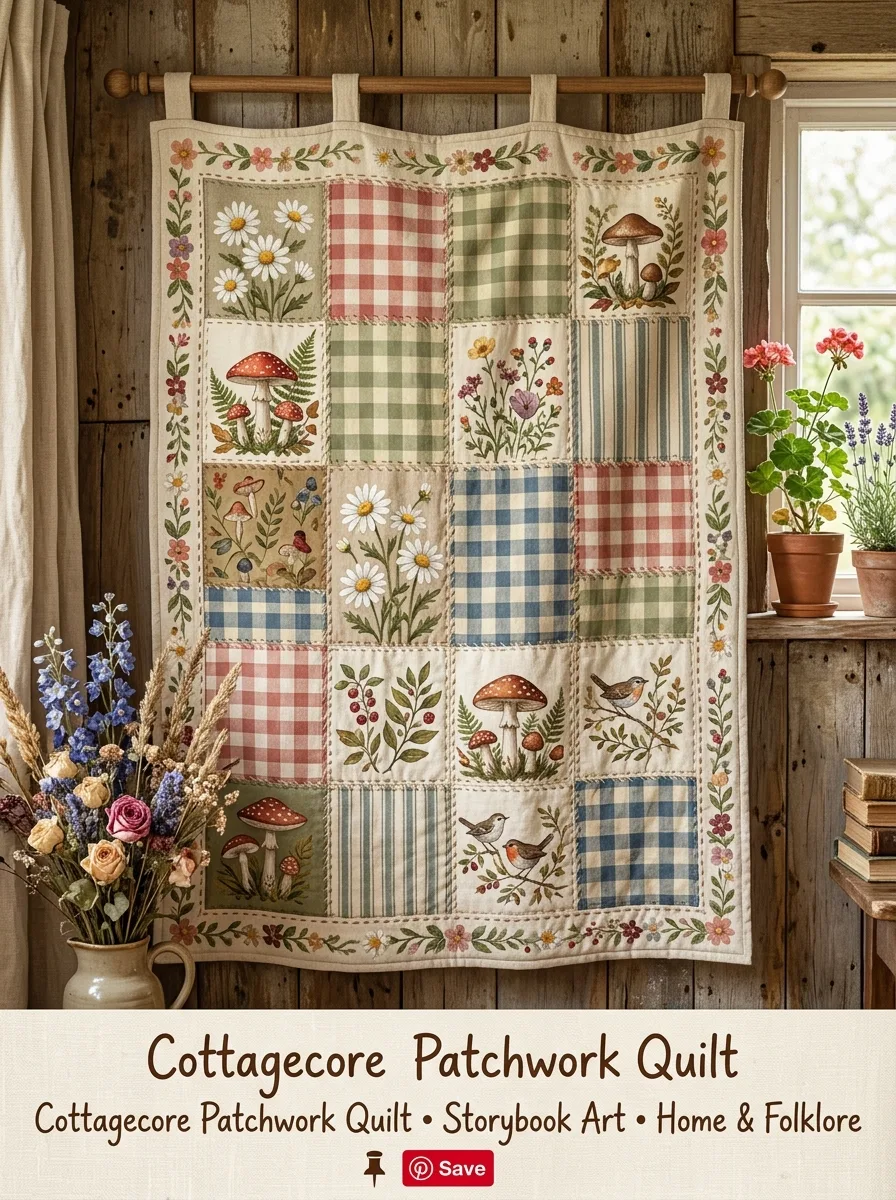
Cottagecore patchwork uses soft greens, cream, dusty pink and brown with small nature motifs: daisies, mushrooms, ferns and bits of gingham. Paint the background squares first, then the motifs, one per square, and finish with dashed stitch lines along the seams. Leave a few squares plain so the motifs have room.
Good to know: a red mushroom cap with white dots reads clearly even at a small size, so it works well in small squares.
12. Vintage Patchwork

A vintage quilt uses faded colors such as dusty rose, muted blue, mustard, sage and cream, with small florals and dots. Paint the squares and patterns and let them dry, then brush a very thin glaze of warm brown or gray over everything to soften the colors and make them look aged.
Good to know: test the aging glaze on a scrap painted in the same colors; adding another thin layer is easy, but a glaze that’s too dark is hard to undo.
13. Geometric Patchwork
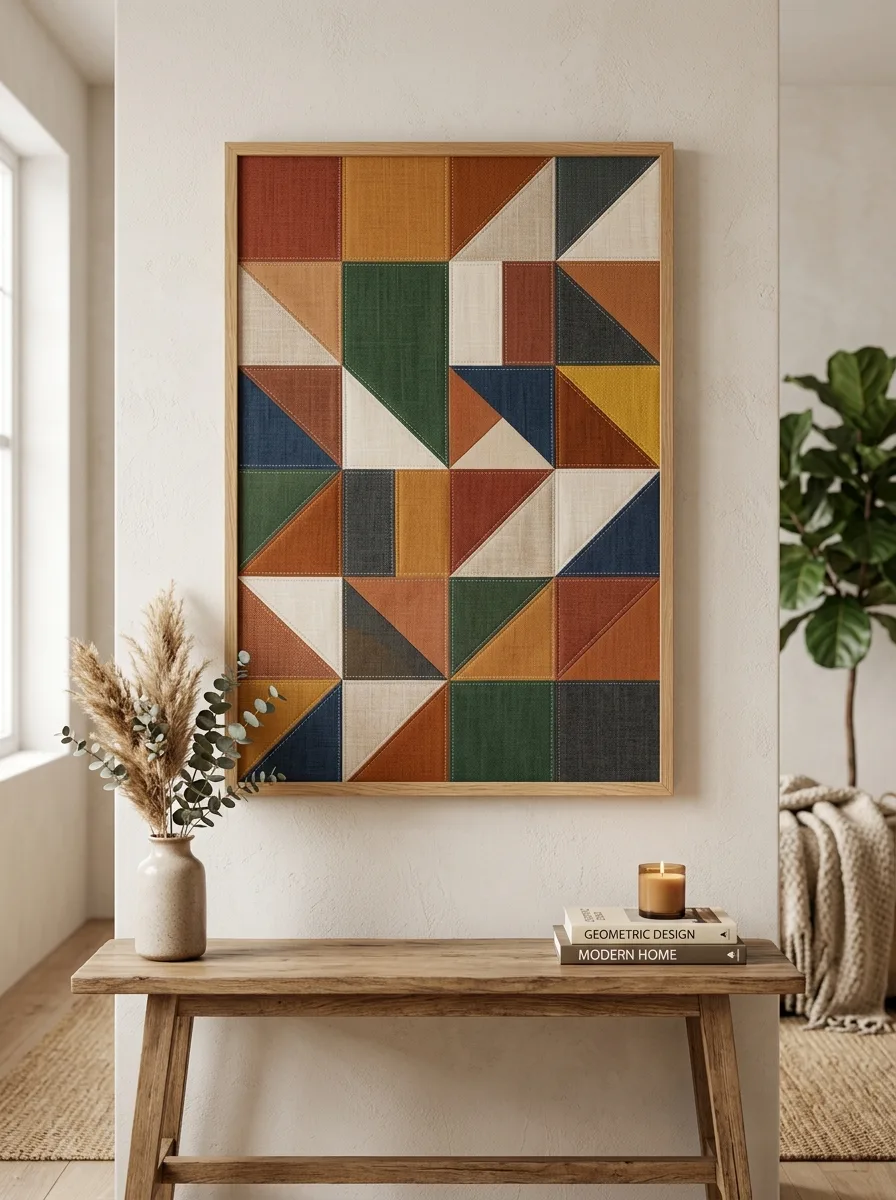
Divide each square into triangles, stripes or smaller squares and fill each part with a solid color. Classic quilt blocks such as half-square triangles, a square split corner to corner into two colors, give a sharp, modern look. Use painter’s tape to keep the straight edges clean.
Good to know: plan the colors on graph paper first; geometric quilts depend more on where light and dark shapes fall than on the exact colors.
14. Star Patchwork
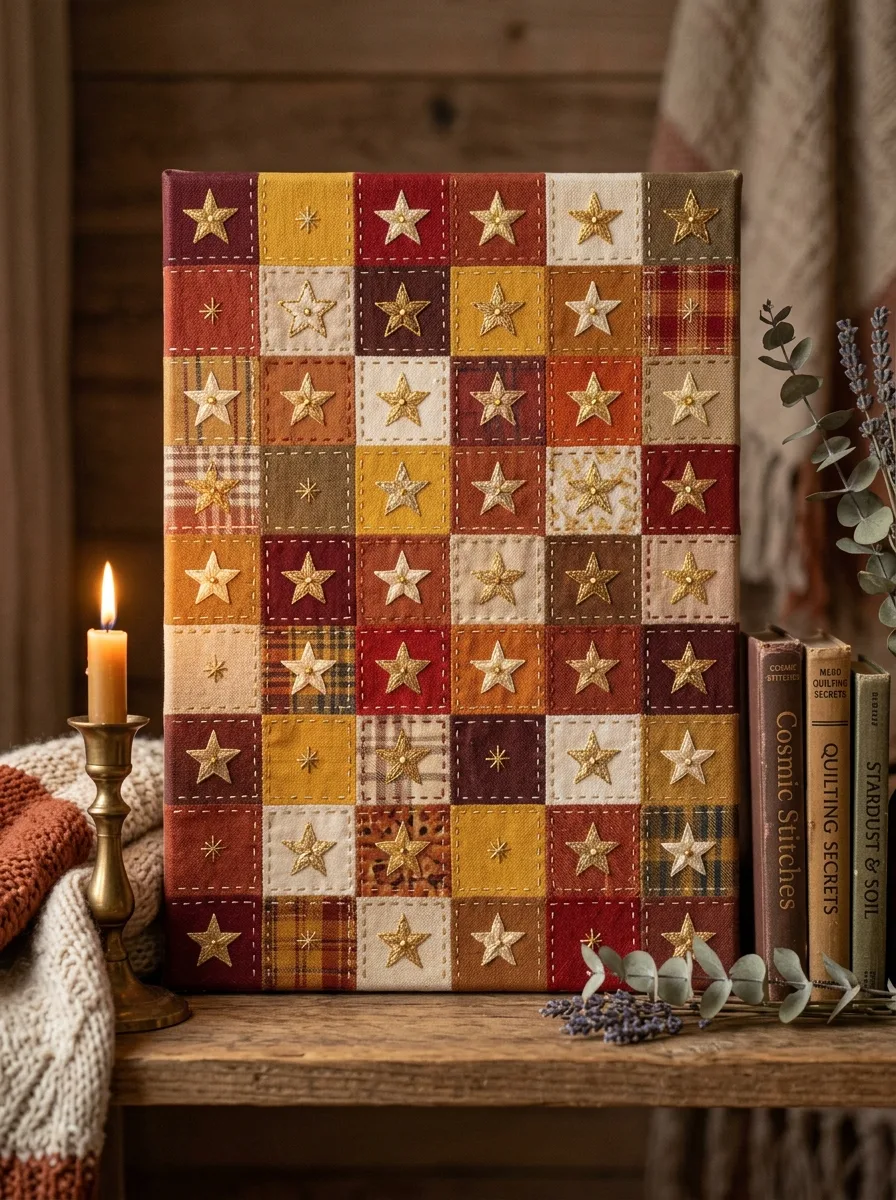
Paint the grid in warm, soft colors, then add stars in gold, cream or white to some squares: five-point stars, simple asterisks or a quilt-style eight-point star. Fill other squares with tiny dots for a night-sky feel. These star pattern painting ideas show more ways to paint stars.
Good to know: an eight-point quilt star is eight diamonds meeting at the center; pencil a plus sign and an X first as guide lines.
15. Monochrome Patchwork
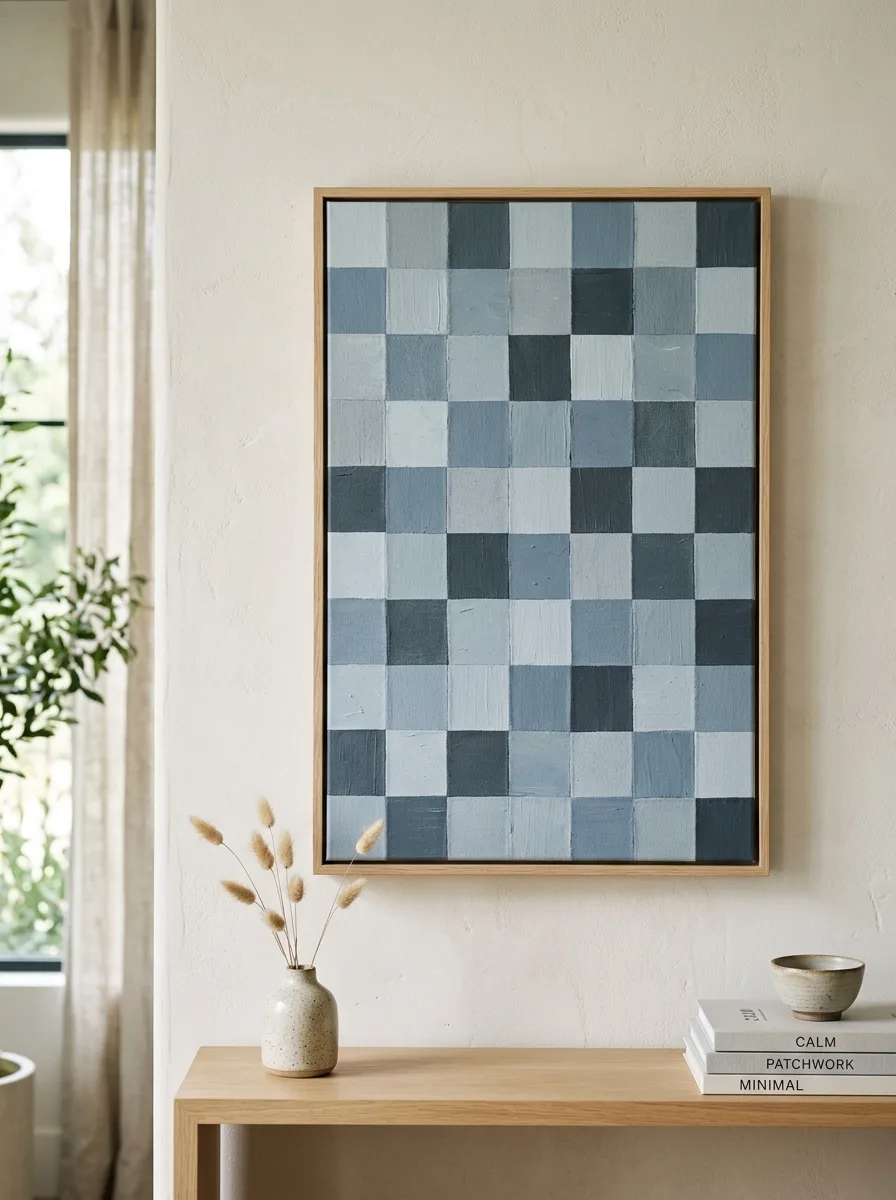
Choose one color and mix five or six versions of it, from very light (more white) to very dark (a little black or the color’s opposite on the color wheel). Paint the squares in a random mix of those shades, then add a simple pattern to a few. The result is calm and suits a minimalist room.
Good to know: number your mixes and paint a swatch of each on paper, so you can match a shade if you run out halfway through.
16. Striped Patchwork

Fill each square with stripes and change their direction from square to square: horizontal, vertical or diagonal. Combine thick and thin stripes, and mix bright colors with a neutral. Paint the background color first, then the stripes on top, using tape or a steady flat brush.
Good to know: a flat brush as wide as the stripe you want makes even stripes in one pass.
17. Sunflower Patchwork
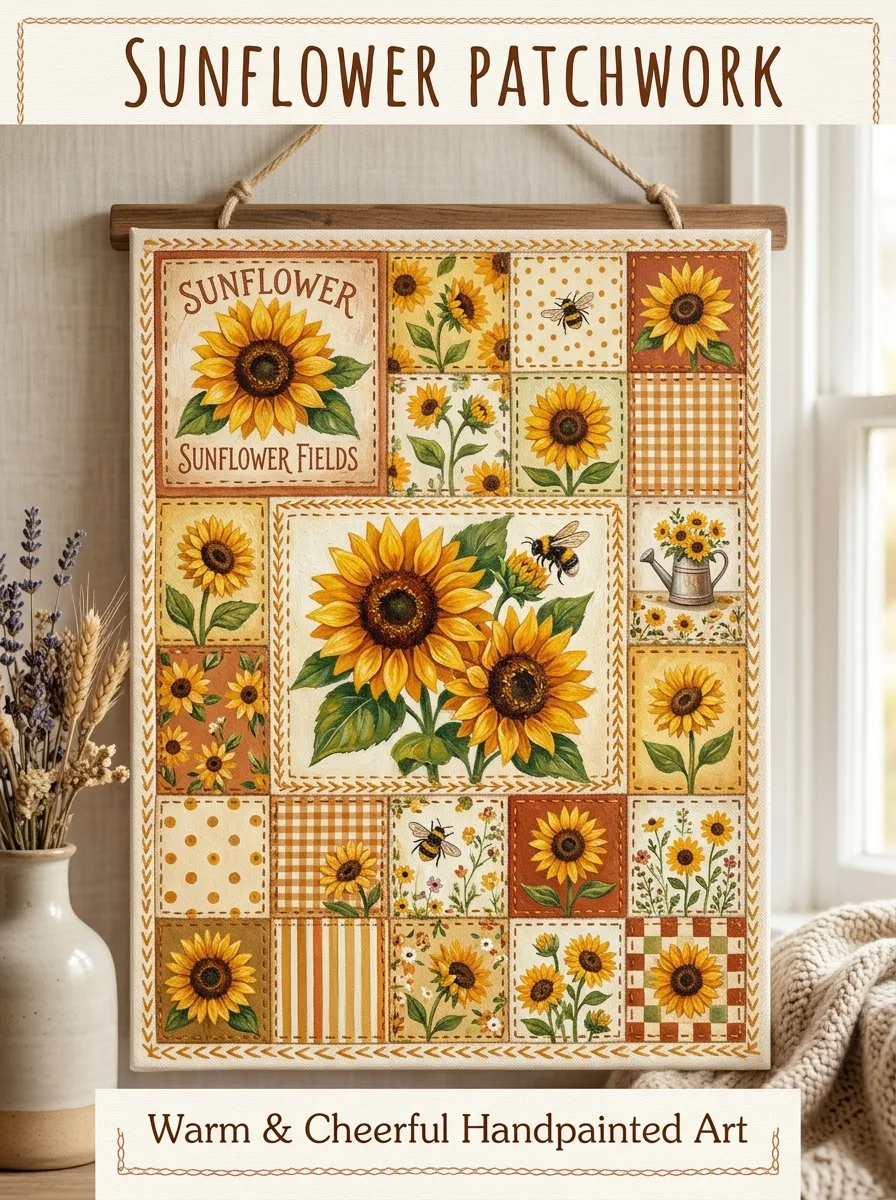
Paint some squares with sunflowers: a brown center, a ring of yellow petals and perhaps a leaf. Fill the others with green, cream, blue or gingham. One sunflower per square, sized to almost fill it, looks bolder than several small ones.
Good to know: dab the flower centers with a dry, stiff brush or a sponge to give them a seed-head texture.
18. Denim Patchwork
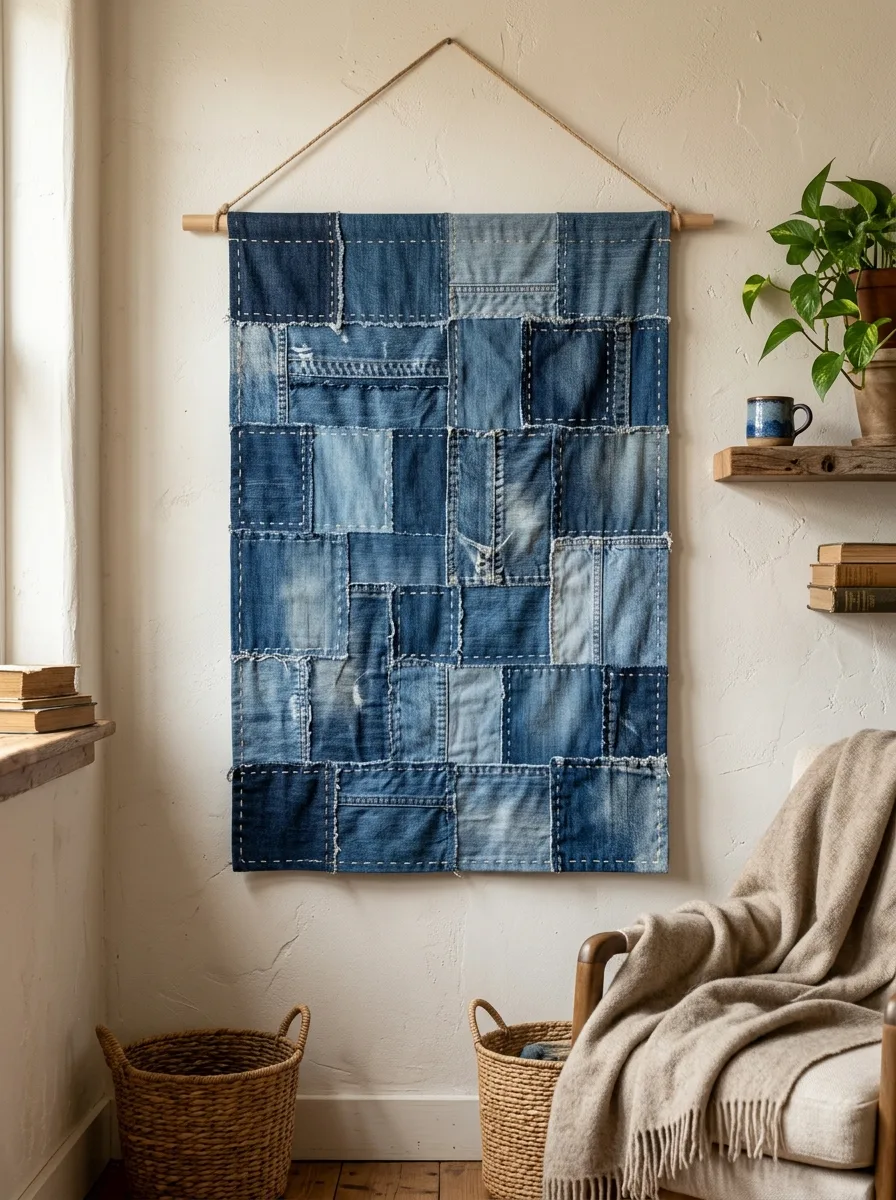
Paint the squares in light, medium and dark blues. For a worn denim look, drag a dry brush with a little lighter blue or white across each square in fine diagonal lines, then add dashed stitching in gold or orange along the edges, like the seams on jeans. One or two cream squares add contrast.
Good to know: denim is a twill weave, which is why it shows fine diagonal lines, so keep the dry-brush strokes in the same direction within each square.
19. Winter Patchwork
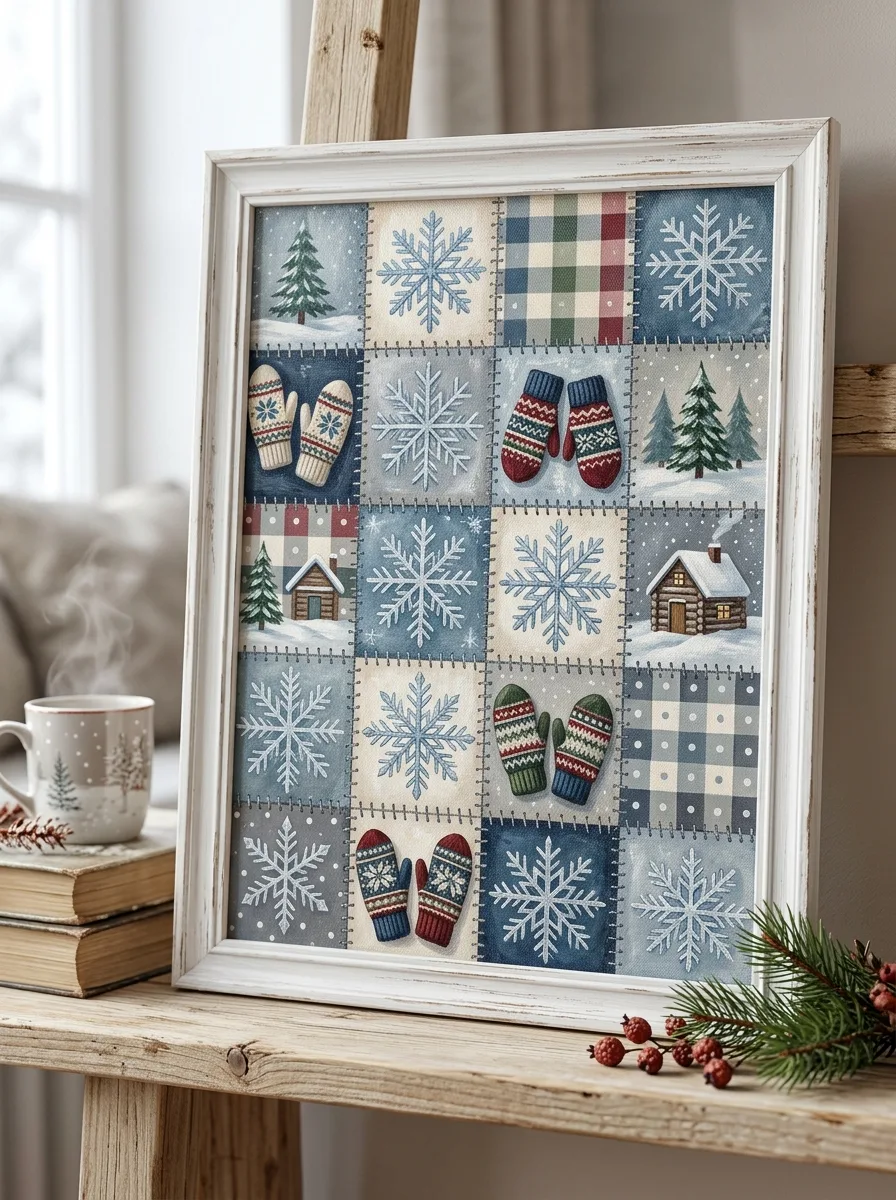
A winter quilt uses white, icy blue, gray and navy, with snowflakes, mittens and simple knit patterns. Paint the squares, then add white snowflakes: three crossed lines with small V shapes at the ends. A few navy squares make the white motifs stand out.
Good to know: snowflakes have six arms, so three crossed lines are the right starting point; a four-armed cross looks less like snow.
20. Plaid Patchwork
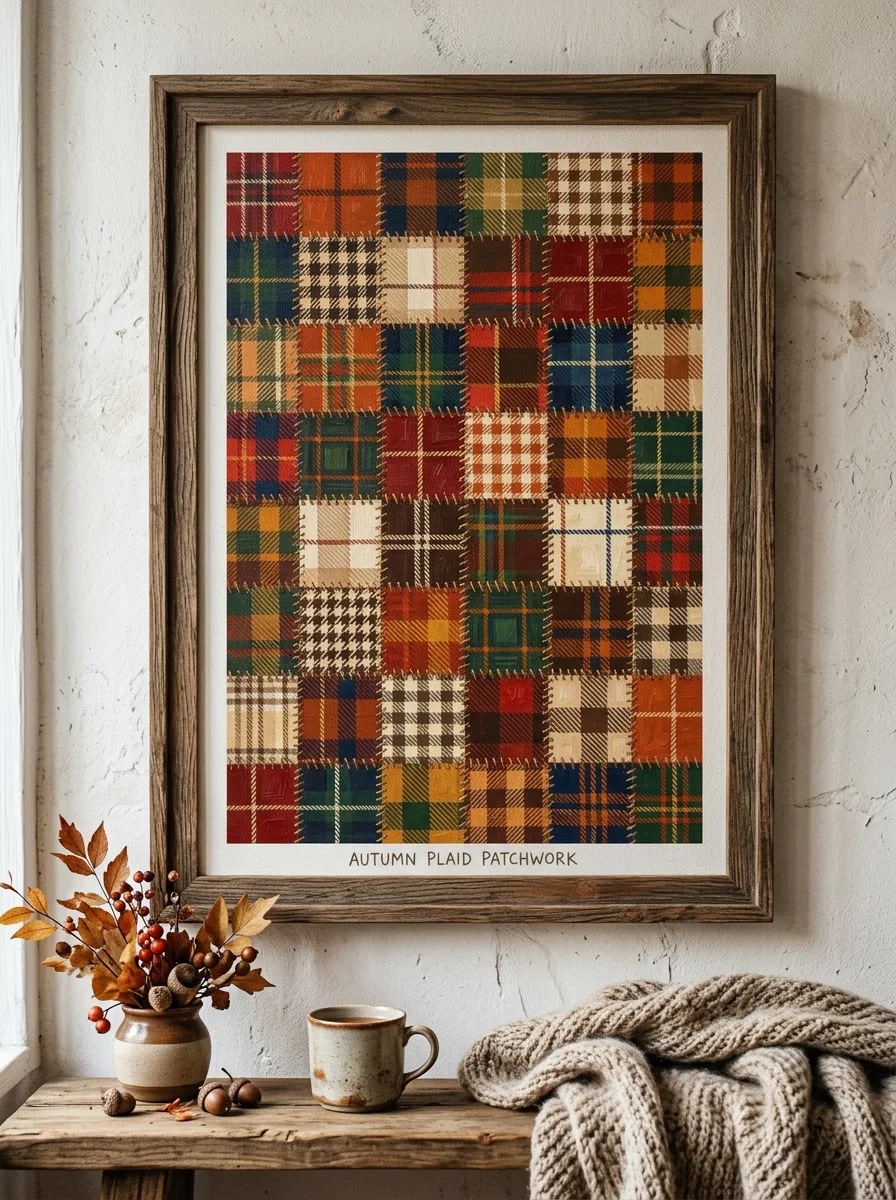
Plaid is made of crossing stripes of different widths. Paint a base color in each square, then wide and narrow stripes going across, then the same stripes going down. Where the stripes cross, use a darker mix of the two colors. Red and black, green and navy, or tan and brown give a classic flannel look.
Good to know: keep the stripe sequence the same in both directions; that repeat is what makes it read as plaid instead of random stripes.
21. Honeybee Patchwork
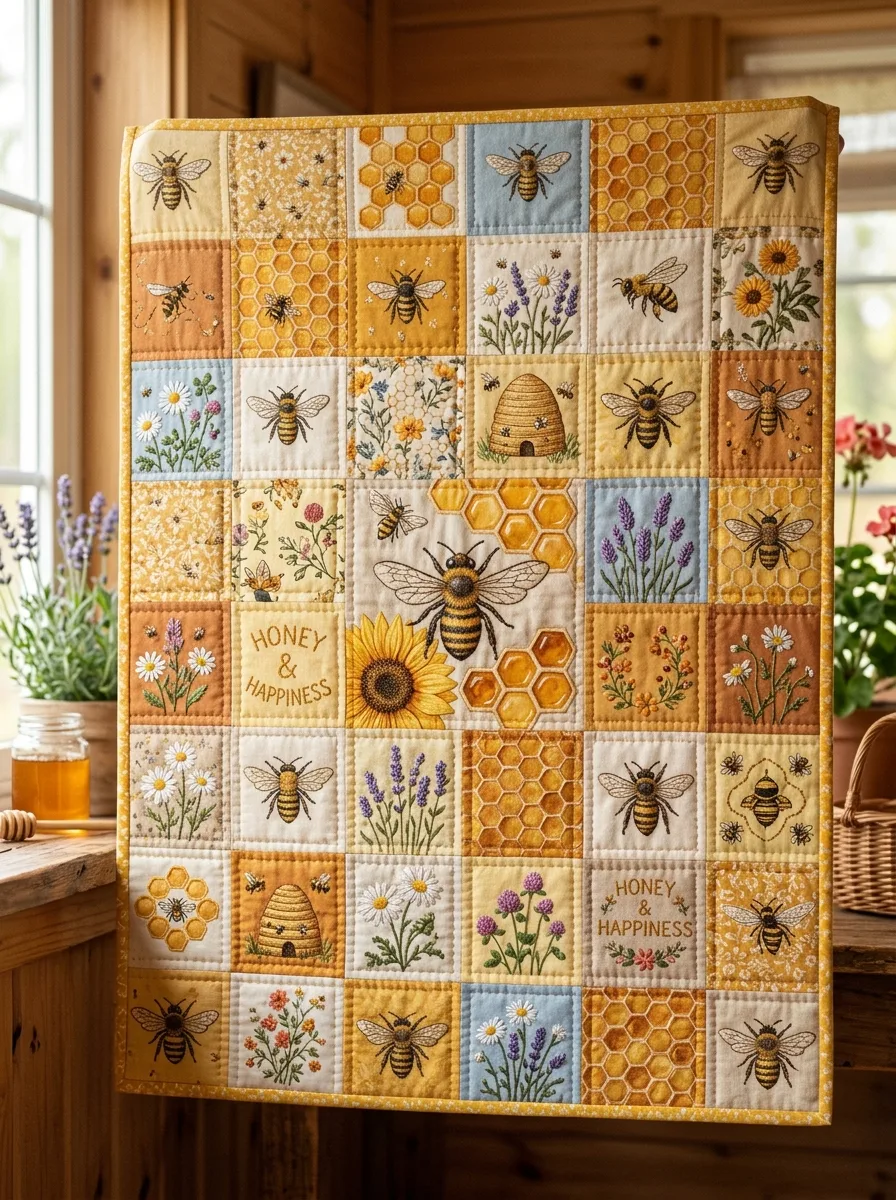
Paint the squares in yellow, honey, cream and brown, then add honeycomb hexagons to some, small bees to others and tiny flowers in between. A simple bee is a yellow oval with black stripes, two small white wings and a dark dot for a head.
Good to know: for neat honeycomb, trace a small hexagon cut from card, or lightly pencil a hexagon grid before painting.
22. Woodland Patchwork
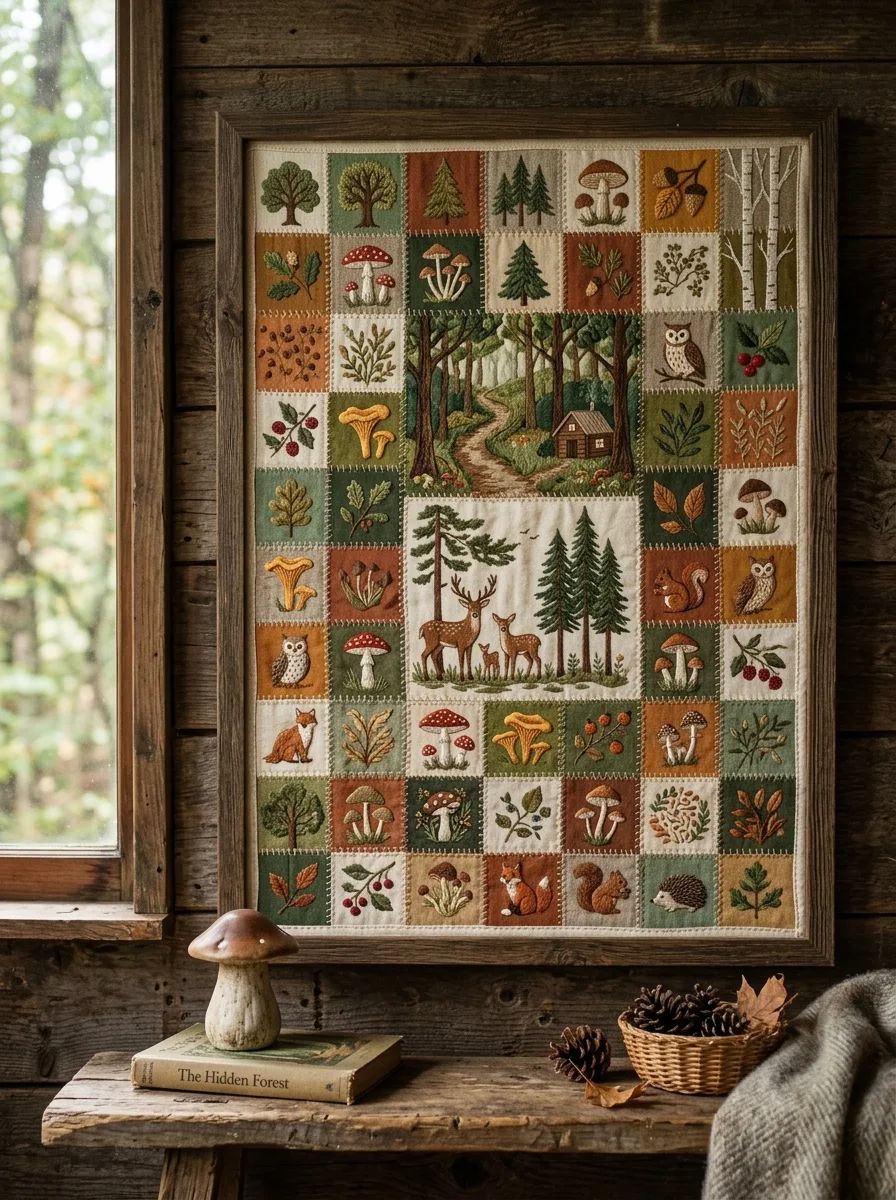
A woodland quilt uses greens, browns and cream with simple forest motifs: pine trees, mushrooms, acorns and ferns. A pine tree is a stack of three triangles on a short trunk, and a fern is a line with short strokes on both sides. Add stitch lines along the seams.
Good to know: vary the greens from yellow-green to deep blue-green so neighboring tree squares don’t blend together.
23. Seaside Patchwork
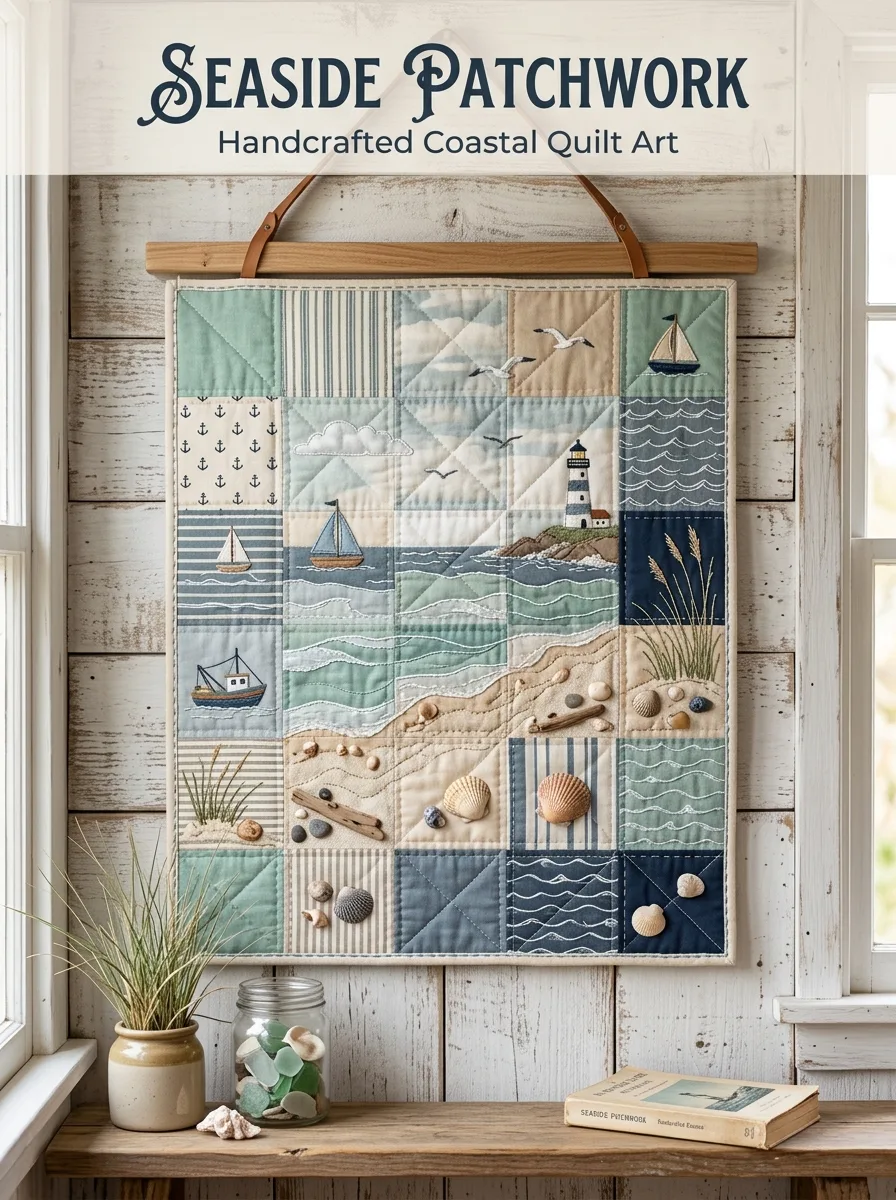
Paint the squares in soft blue, sand, white and navy, then add shells, waves, starfish and stripes. Waves can be rows of curved lines or scallops. A navy square with white stripes looks nautical next to sand-colored shell squares. Dashed stitch lines along the seams tie the squares together.
Good to know: a simple scallop shell is a fan of lines spreading from one point at the bottom, with a small rounded base.
24. Cross Stitch Patchwork
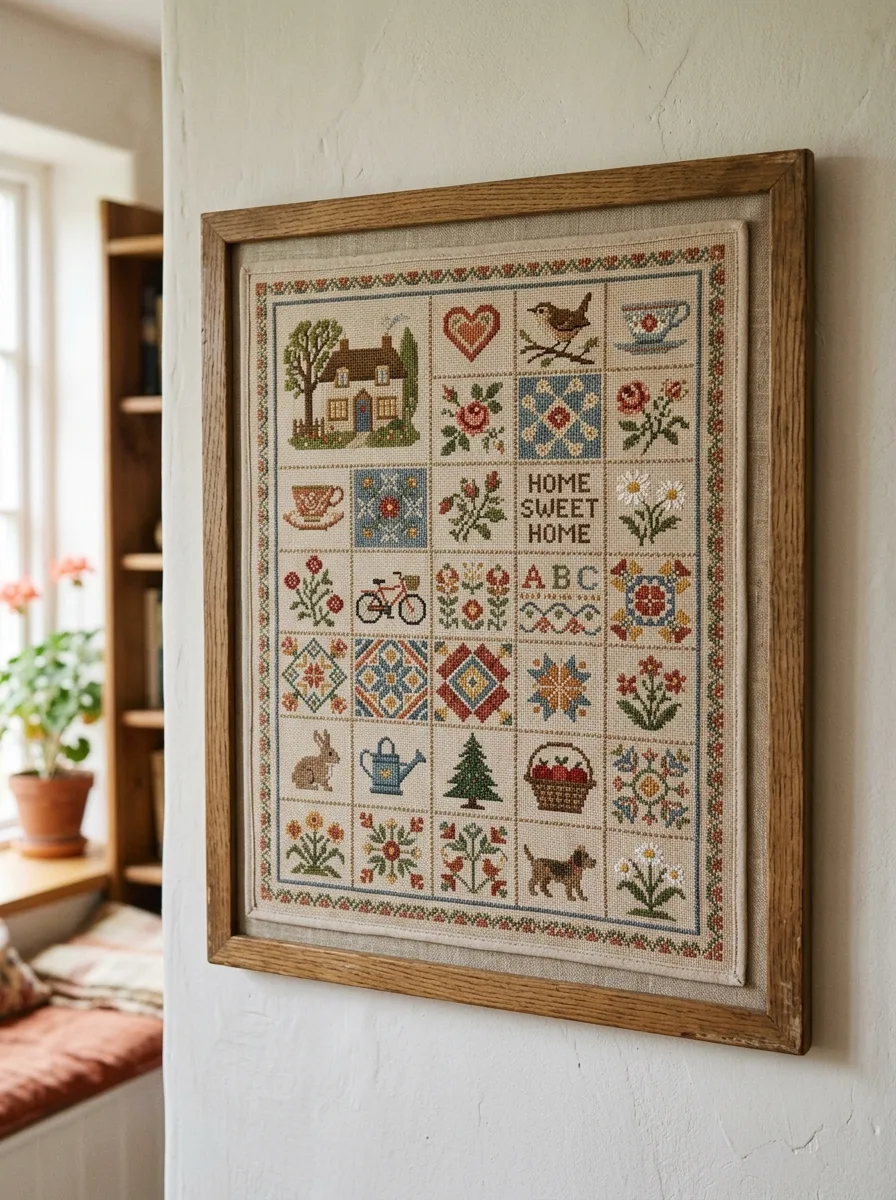
This design makes each square look like cross-stitch. Pencil a fine grid of tiny boxes inside a square, then paint a small X in each box that belongs to the motif, such as a heart, flower or star. Plan each motif on graph paper before you paint.
Good to know: a fine paint pen makes neater small X’s than a brush; keep all the top strokes slanting the same way, as stitchers do.
Common mistakes to avoid
- Choosing a square size that doesn’t divide evenly, leaving a thin strip at one edge.
- Painting a wet watercolor square next to another wet one, so they bleed together.
- Using tape without testing it, so it tears paper or lifts paint.
- Putting two busy patterns side by side.
- Making every square the same lightness, so the grid disappears from across the room.
- Varnishing acrylic before it has fully dried.
Patchwork painting FAQs
What is the easiest patchwork painting for beginners?
A classic quilt grid of solid squares with dots or stripes in a few of them.
How do you paint straight lines for a patchwork grid?
Draw the grid with a ruler and pencil, then use low-tack painter’s tape for the edges. Press the tape down, seal the edge with a thin coat of the base color, and peel it at a sharp angle once the paint is dry.
What paint should I use for patchwork painting?
Acrylic for canvas and wood, watercolor for paper, and paint pens for stitch lines and small details. For children, look for the ACMI AP seal.
Can I paint patchwork on fabric?
Yes, but use fabric paint, or acrylic mixed with a fabric medium, and follow the label for drying and heat-setting.


