

25 Luxury Small Pool Designs for Small Yards
A small yard can still fit a pool, but the design has to work harder: every foot of paving, every step and every view counts. Small pools also tend to sit close to the house and the back door, which makes barriers and supervision even more important.
Below are 25 small pool designs, each with what it involves and one practical point to plan for. Start with the basics, because they apply to any pool, however small. If an in-ground pool is not practical, see these above-ground pool deck ideas.
Plan these first
Fence it, however small it is
Drowning is the leading cause of death for children ages 1 to 4, according to CPSC. Its Pool Safely campaign recommends a fence at least 4 feet high around the pool, with self-closing, self-latching gates that open out from the pool. If the house forms one side of the barrier, add a door or pool alarm. The American Academy of Pediatrics recommends a fence that completely surrounds the pool, not just a yard boundary fence.
Watch the water
CPSC advises naming an adult Water Watcher whenever children are in or near the water, someone not distracted by a phone or chores. For infants and toddlers, the AAP recommends touch supervision, with an adult in the water and within arm’s reach. Swim lessons and CPR training add more layers of protection.
Drains and spas
CPSC advises using drain covers that comply with federal safety standards and checking that they aren’t cracked or missing. For a spa or hot tub, it recommends keeping the water at 104°F or below and using a locked safety cover whenever the spa isn’t in use.
Permits, setbacks and power
In-ground pools usually need permits, and setbacks from property lines, utilities and the house can limit what fits in a small yard, so check before you design. Confirm that equipment can reach the yard, too. CPSC recommends GFCI protection and an electrician qualified in pool work for all pool wiring and lighting.
The 25 designs at a glance
| Design | Best for | Plan for |
|---|---|---|
| Natural stone plunge pool | Cooling off in a corner | Non-slip, sealed stone |
| Cocktail pool with benches | Socializing in the water | Locking cover if heated |
| Infinity edge | Sloping yards with a view | Catch basin, higher cost |
| Narrow lap pool | Long, thin yards | Side-yard setbacks |
| Swim spa | Exercise in a small footprint | Fence or cover rules |
| Mosaic courtyard pool | Enclosed courtyards | Pool-rated tile |
| Glass-walled pool | Raised terraces | Engineer and specialist installer |
| Sunken pool lounge | Sheltered seating | Drainage; gas safety |
| Natural swimming pool | Chlorine-free swimming | Experienced designer, local rules |
| Dark-bottom pool | Modern designs | Harder to see the bottom |
| Waterfall feature | Masking noise | No climbing route over the fence |
| L-shape with sun shelf | Corners, two zones | Supervision on the shelf |
| Geometric pool with fire | Evening use | Licensed gas installer |
| Pergola and cabana | Shade and changing | Permits; cabana door |
| Pebble finish | Natural texture | Feels rougher underfoot |
| Floating deck over water | Tiny yards | Short overhang |
| Zen pool | Calm, simple gardens | Self-seeding maples, bamboo type |
| LED underwater lighting | Night use | Qualified electrician, GFCI |
| Oval pool in lawn | Traditional homes | Clippings in the water |
| Travertine deck | Warm, classic look | Tumbled finish, sealing |
| Privacy wall, tropical plants | Overlooked yards | Zones and toxicity |
| Black minimalist pool | Contemporary homes | Hot dark paving |
| Pool with raised spa | Two temperatures | 104°F limit, drain covers |
| Rendered-wall courtyard | Mediterranean style | Door alarms |
| Outdoor shower and screen | Rinsing and changing | Drainage rules |
1. Natural Stone Plunge Pool
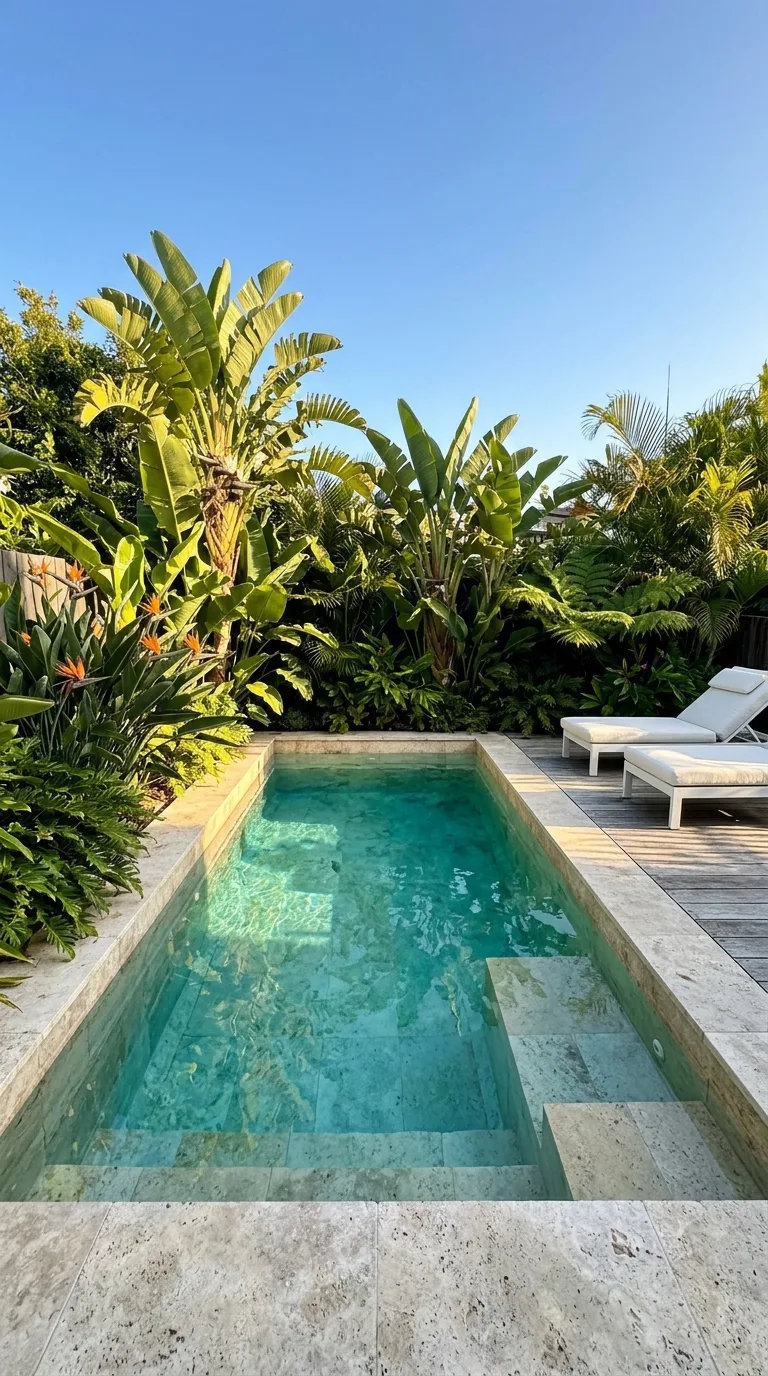
A plunge pool is built for cooling off and soaking rather than swimming laps, so it fits a courtyard or a corner of a small yard. Natural stone coping and paving in travertine, limestone or slate give it a warm, permanent look, and a small spillway adds the sound of moving water.
Good to know: choose stone with a textured, non-slip finish rather than a polished one for wet, bare feet, and ask the supplier whether it needs sealing.
2. Cocktail Pool with Built-in Bench Seating
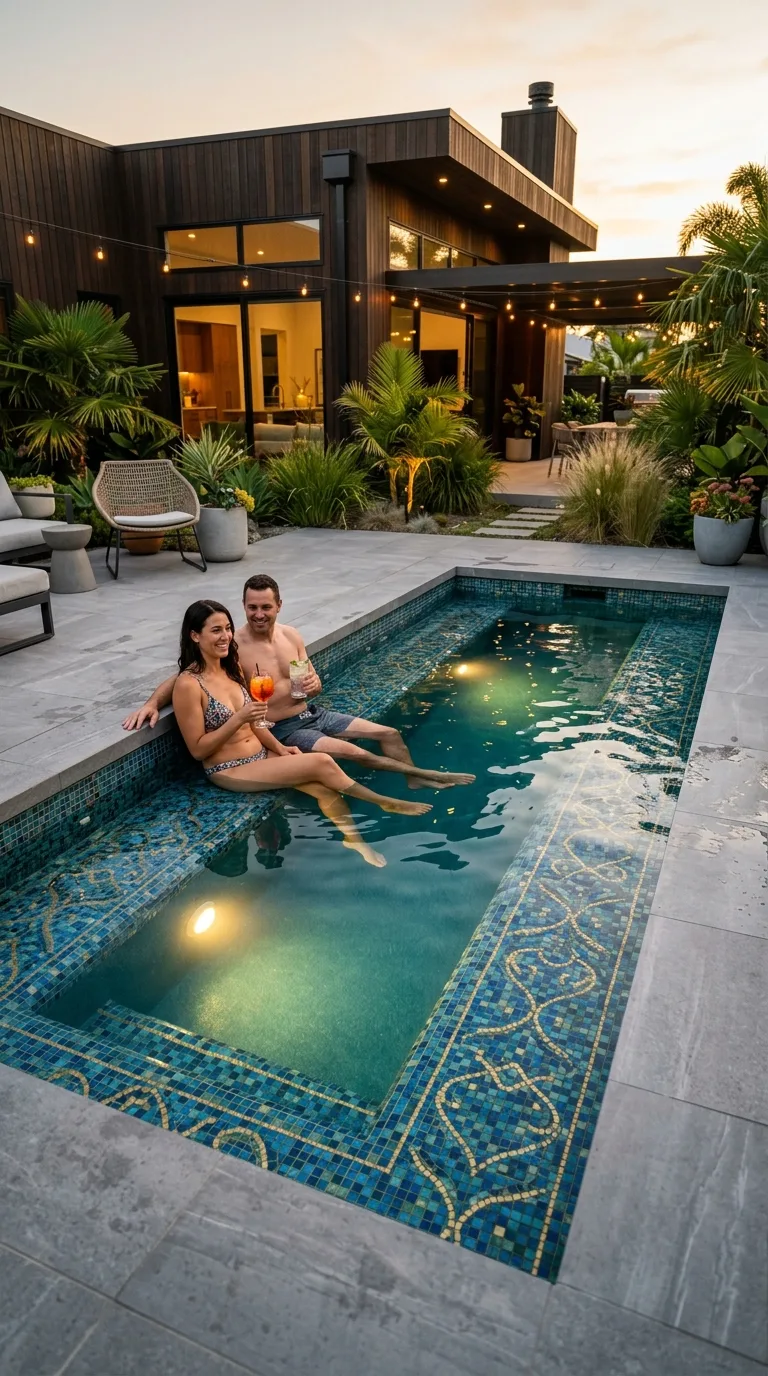
A cocktail pool is a small, shallow pool designed for sitting and socializing in the water rather than swimming. Built-in benches along one or two sides become an in-water lounge, and adding jets and a heater makes it work more like a large spa you can use in more seasons.
Good to know: if you heat it like a spa, treat it like one: keep a locking safety cover on it and keep the water at 104°F or below, the limit CPSC recommends for spas.
3. Infinity Edge Small Pool
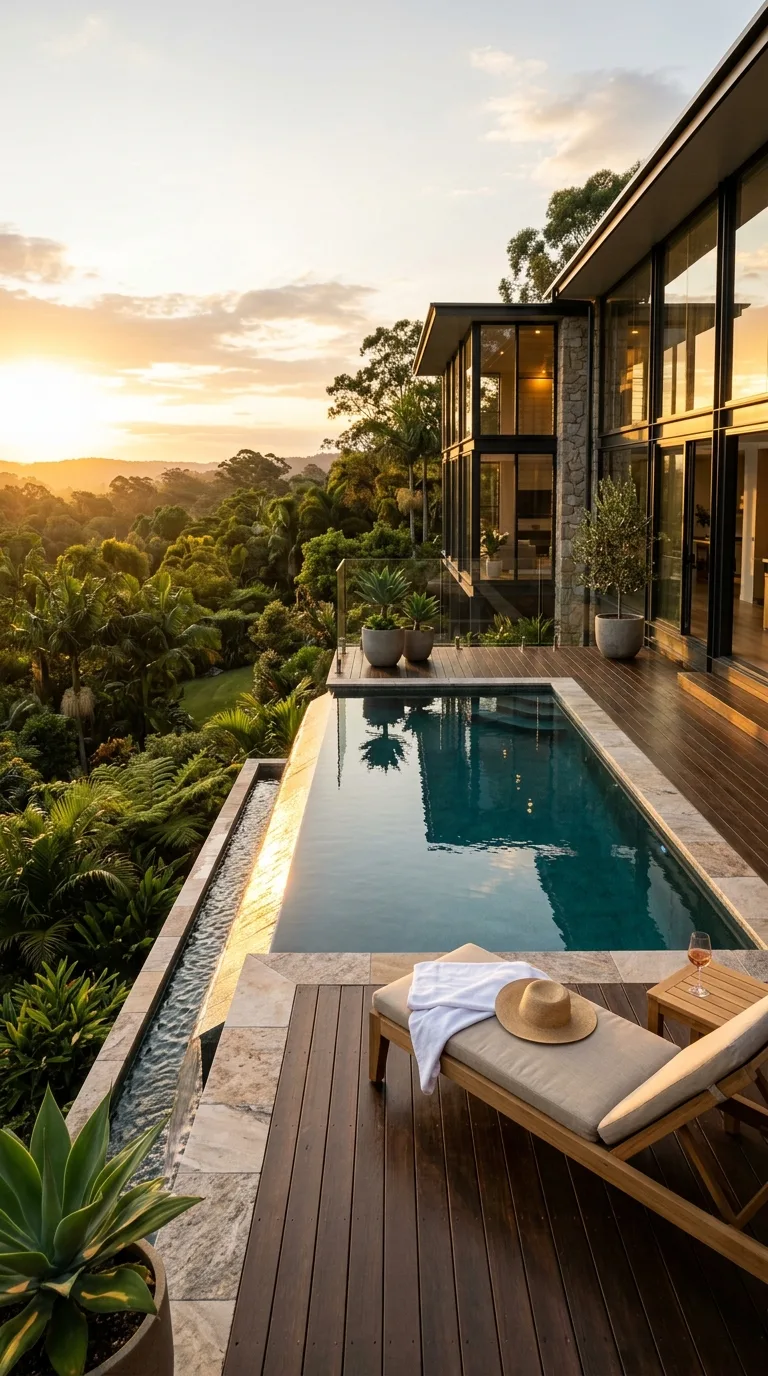
An infinity or vanishing edge lets water spill over one side into a hidden catch basin, so the surface seems to run into the view beyond. It works best on a slope or raised terrace facing a garden or skyline. The catch basin, extra pump and structural work make it one of the more expensive features to add.
Good to know: the spillover side is often a drop on the outside, so the catch basin area needs the same barrier protection as the pool, and the edge itself shouldn’t double as a walkway.
4. Narrow Lap Pool for Long Thin Yards
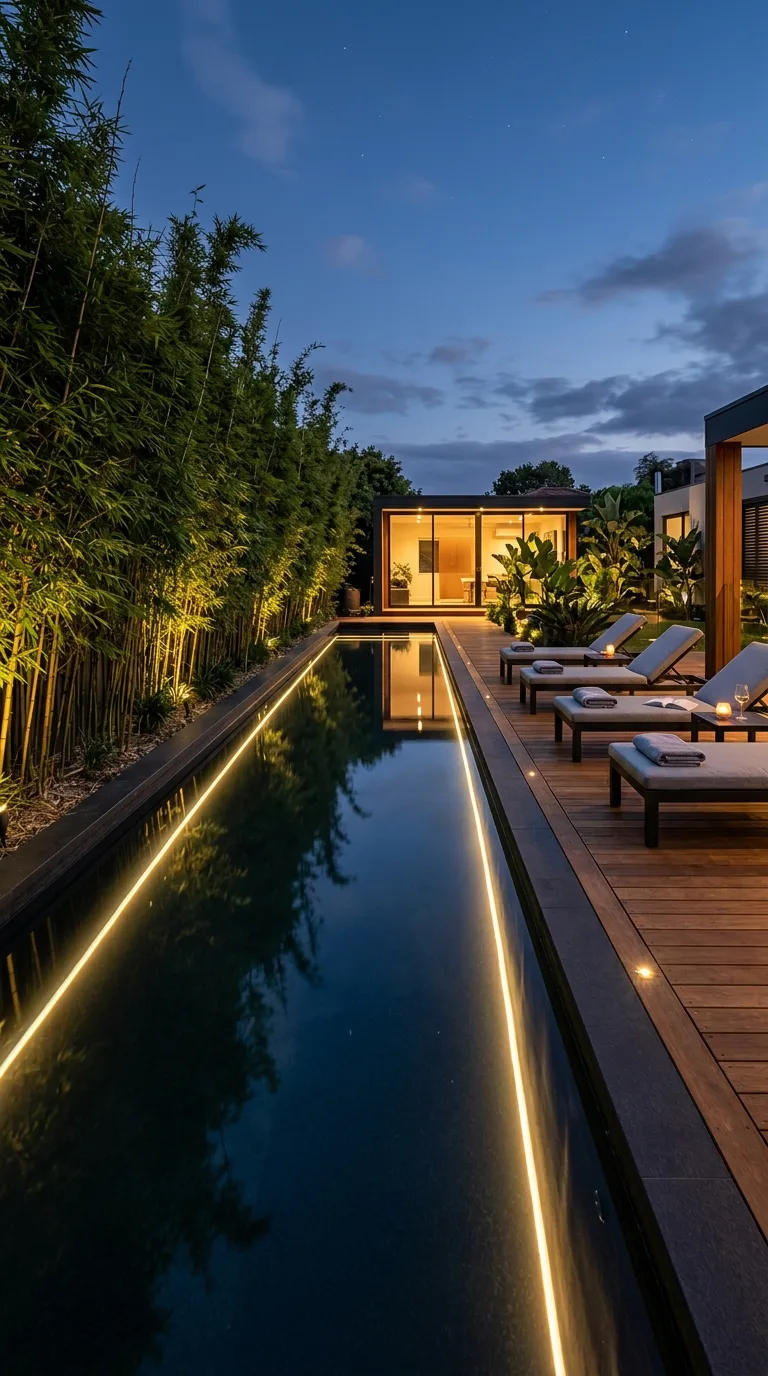
A long, narrow pool fits a side yard or the length of a thin lot and gives room to swim laps in a small footprint. A dark interior suits its architectural lines, paving along one side holds loungers, and a hedge or screen along the far boundary encloses it.
Good to know: plan the shape around the distance you want to swim, and check setbacks from the property line early, since they can rule out the narrowest side yards.
5. Swim Spa with Dual Zone Design
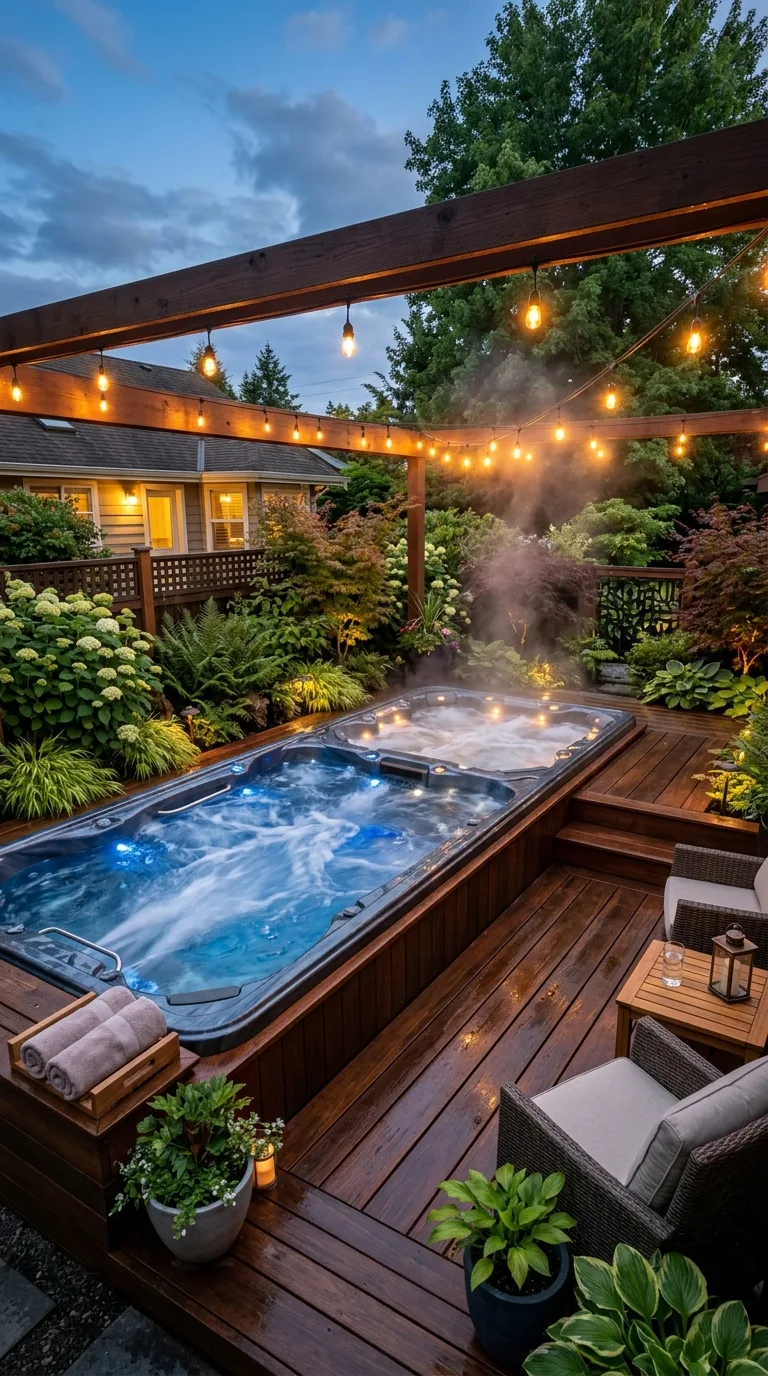
A swim spa is a factory-built unit with a swim zone, where jets create a current to swim against, and often a separate, warmer spa zone. It fits where a full pool won’t, can sit above ground or be set partly into a deck, and suits people who want exercise and a soak in one. With decking, planters and a pergola around it, it can anchor a private backyard escape.
Good to know: local codes may treat a swim spa as a pool or as a spa, so ask the building department whether it needs a fence as well as a locking safety cover, and have a licensed electrician plan the power supply.
6. Courtyard Pool with Mosaic Tiles
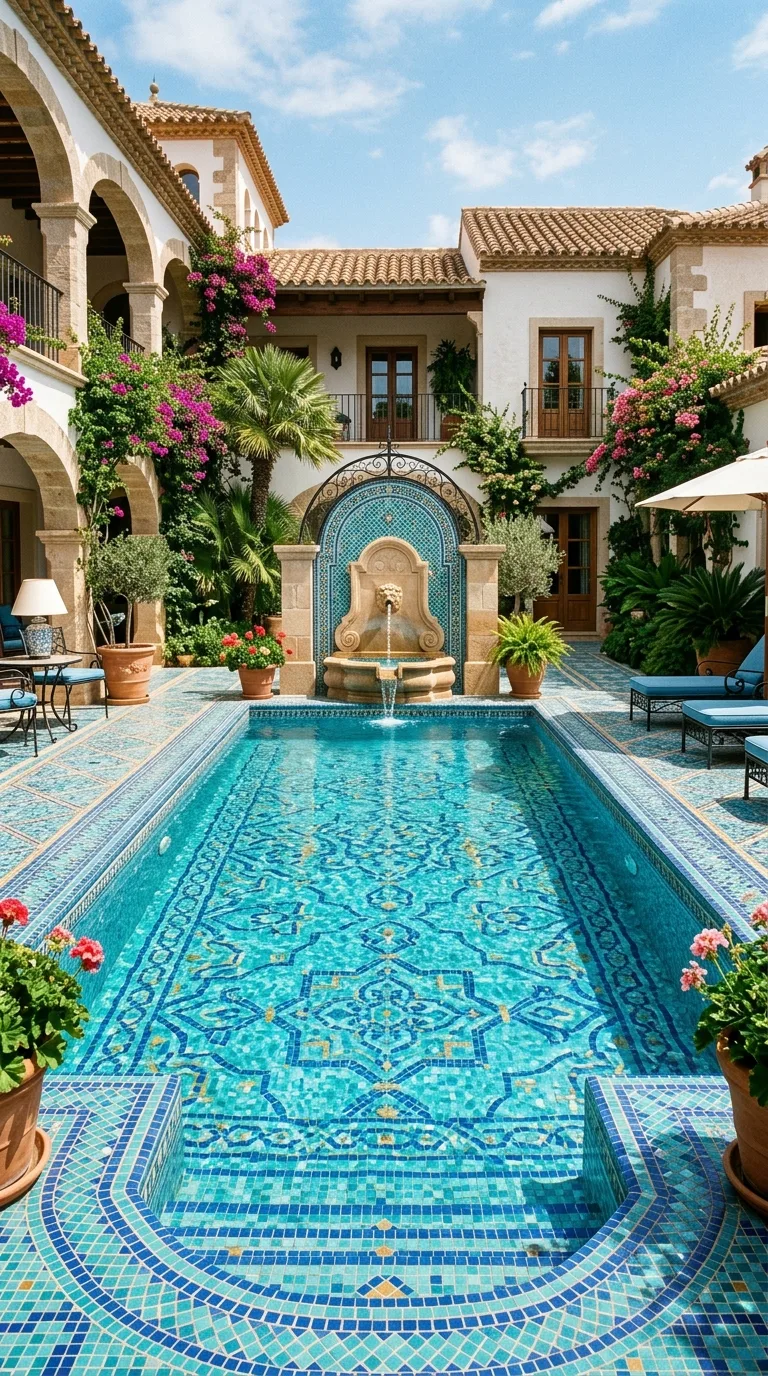
Glass or ceramic mosaic reflects light and gives a courtyard pool a jewel-like finish in blues and greens. Tiling the whole interior is a large job; a mosaic waterline band or a feature panel gives a similar effect on a smaller budget. In an enclosed courtyard, a small wall fountain adds sound.
Good to know: use tile and setting materials rated for submerged pool use, and choose slip-resistant tile for steps and benches.
7. Glass-Walled Pool
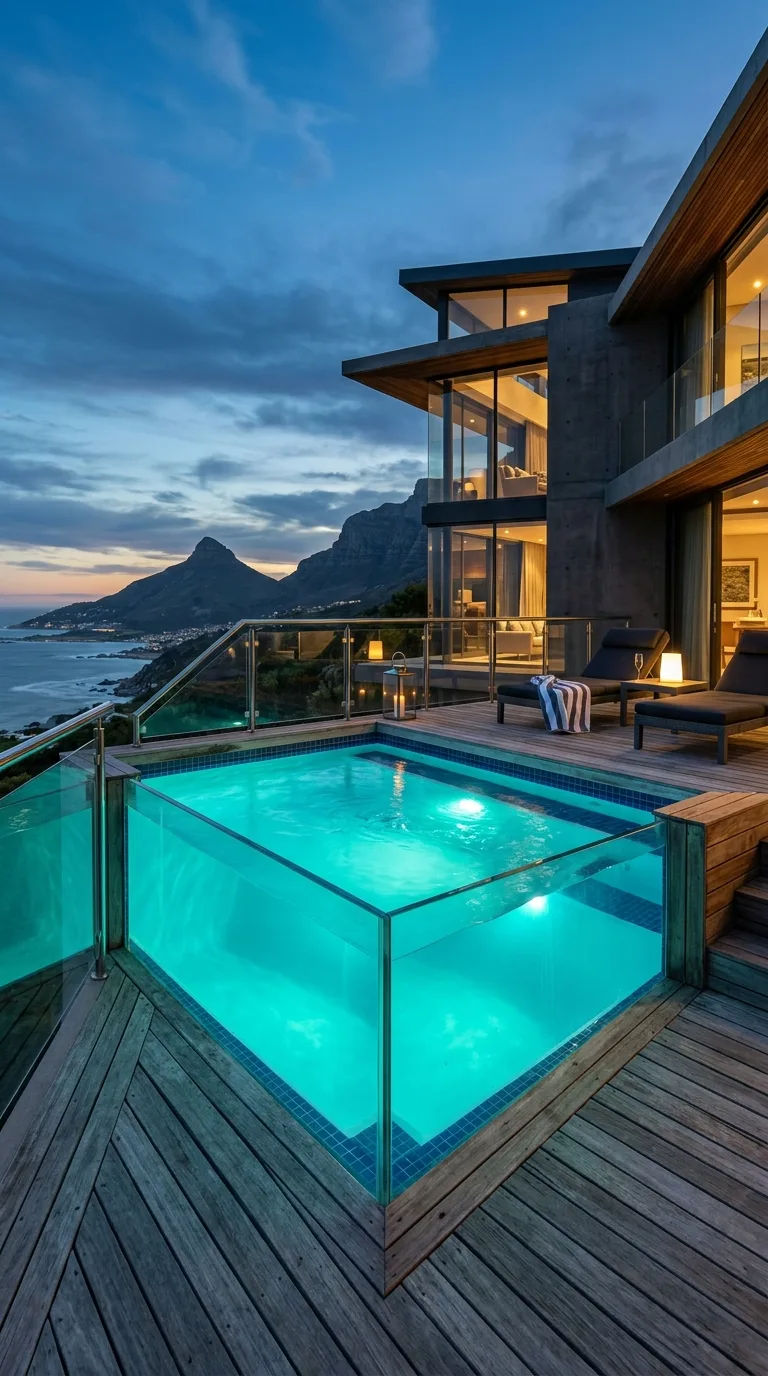
A glass or acrylic panel in one wall lets you see into the water from the side, which works where a pool sits on a raised terrace above a lower garden or patio. It is a specialist build: the panel, its seals and the wall around it must be engineered and installed by a contractor experienced with viewing walls.
Good to know: budget for the specialist design and glazing, and think about privacy, since a glass wall also puts swimmers on view from the lower level.
8. Sunken Pool Lounge
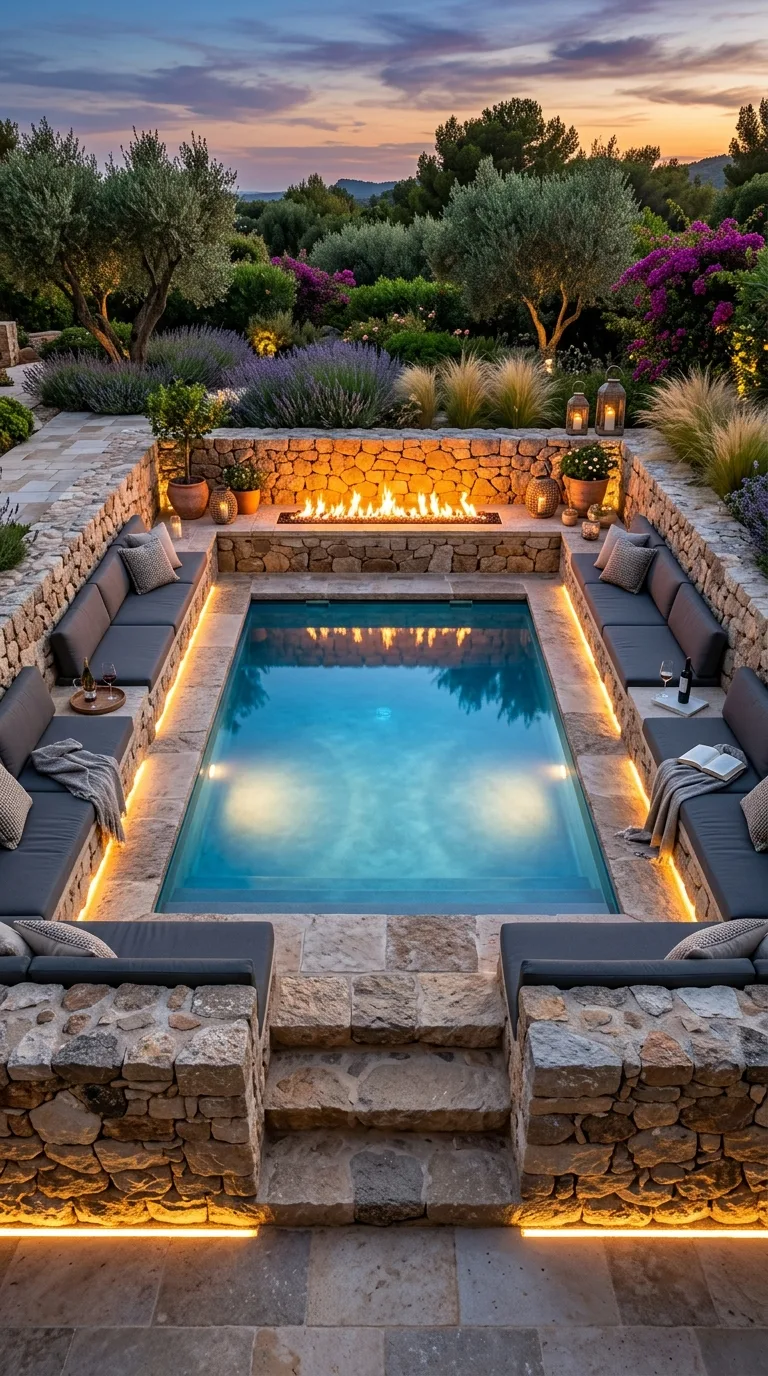
A sunken lounge drops the pool and its seating below the level of the garden, with wide steps down and built-in benches around the water. Retaining walls in stone, steel or rendered concrete define the space and can hold lighting and planting pockets, and a gas fire feature at one end adds warmth on cool evenings.
Good to know: propane is heavier than air and can collect in low spots, so a gas fire feature in a sunken space should be installed by a licensed gas fitter following the maker’s instructions, and the area needs a drain so rain doesn’t collect.
9. Natural Swimming Pool
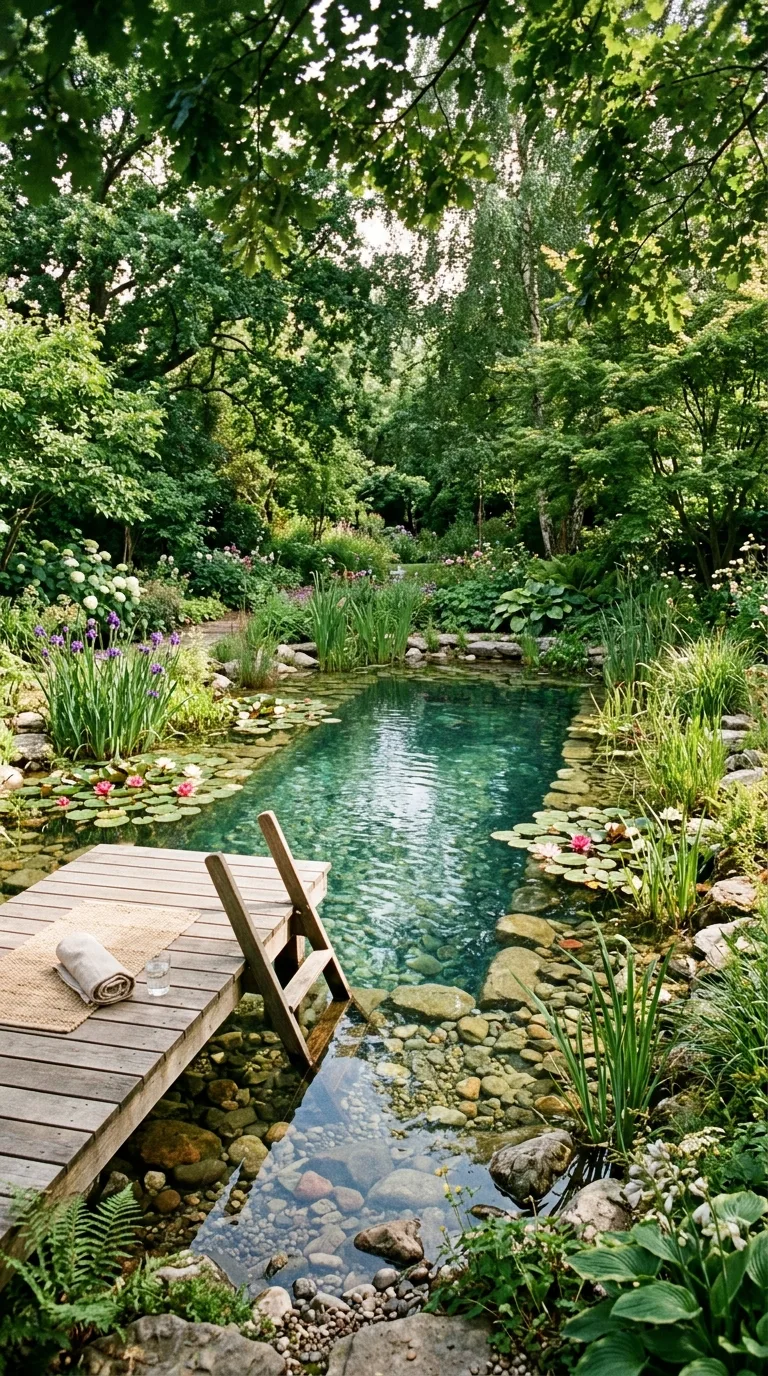
A natural pool keeps the water clear with a planted regeneration zone and biological filtration instead of chlorine. The swimming area is separated from a shallow zone of aquatic plants such as water lilies and rushes, which gives the edge a pond-like look. Because the water isn’t disinfected like a conventional pool, its quality depends on good design and steady maintenance.
Good to know: work with a designer experienced in natural pools, check that local codes allow one, and avoid invasive water plants such as yellow flag iris, which NC State Extension lists as invasive.
10. Dark-Bottom Pool
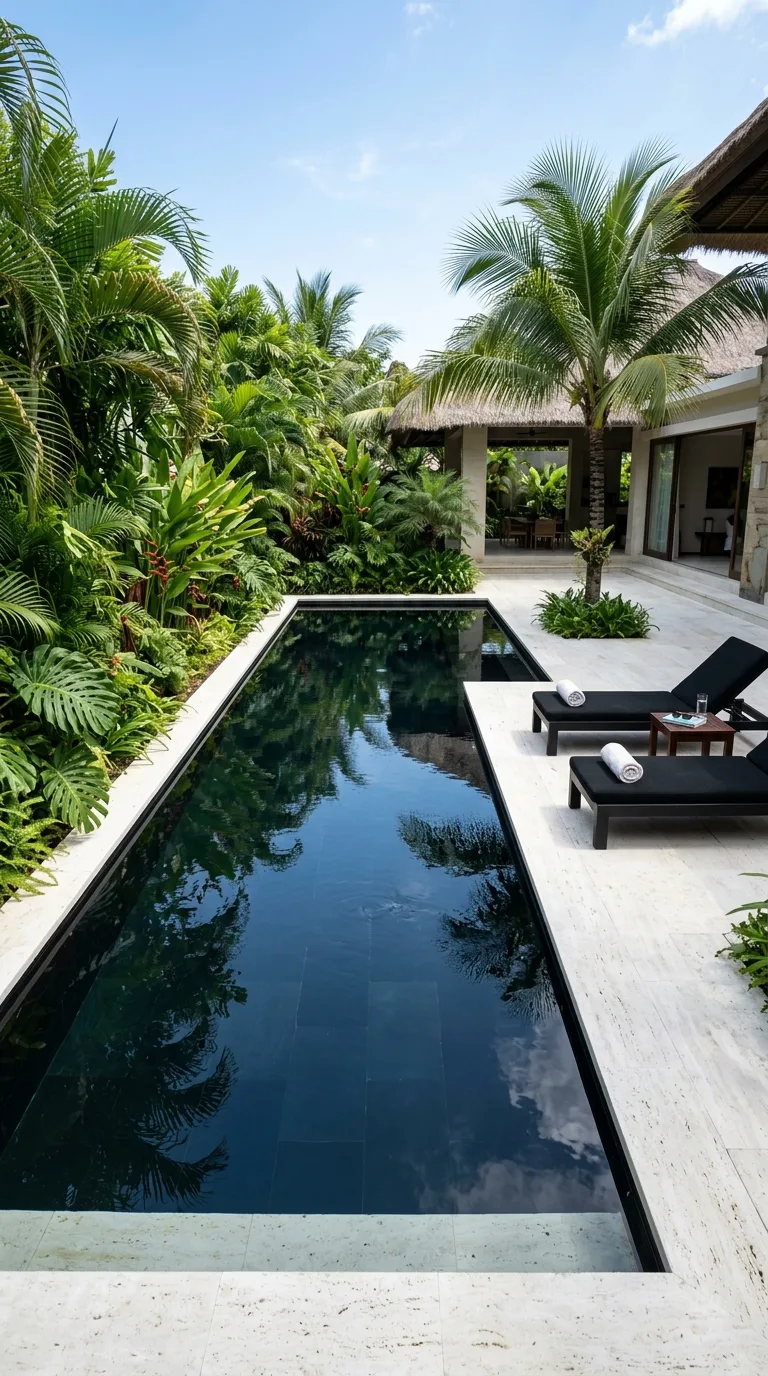
A charcoal, black or deep navy interior gives the water a deep, reflective look, especially against pale coping. It suits modern architecture and lush planting, and warm-white underwater lights make it glow at night.
Good to know: a dark finish makes it harder to see the bottom and anyone underwater, so good underwater lighting and active supervision matter even more.
11. Pool with Waterfall Feature
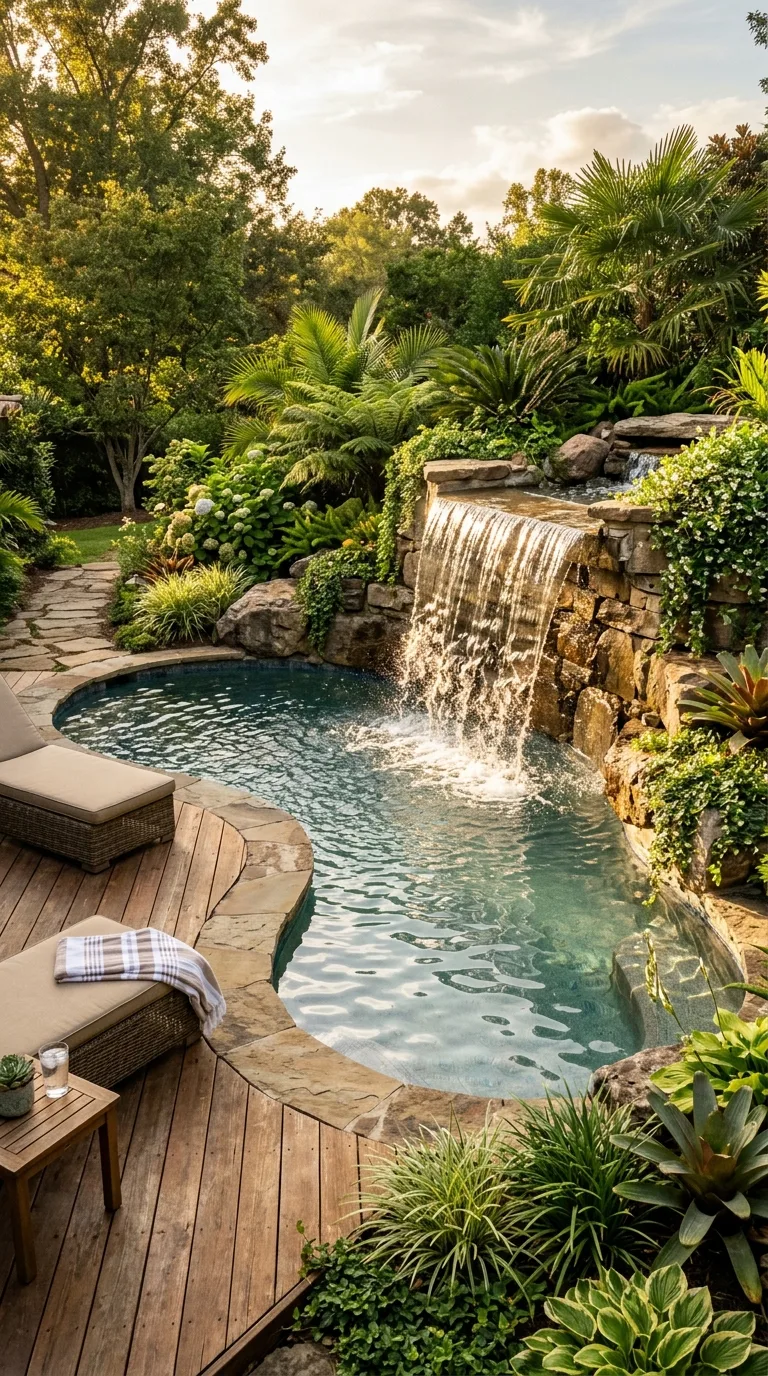
A sheet of water from a raised wall, a rock cascade or a narrow slot in a rendered wall adds movement and sound, and the sound helps mask traffic and neighbors. Placing it at the far end draws the eye across the water, and lighting it from behind makes a glowing curtain at night.
Good to know: keep raised walls and rockwork from forming a climbing route over the pool fence, and have the pump and lights wired with GFCI protection.
12. L-Shaped Pool with Sun Shelf
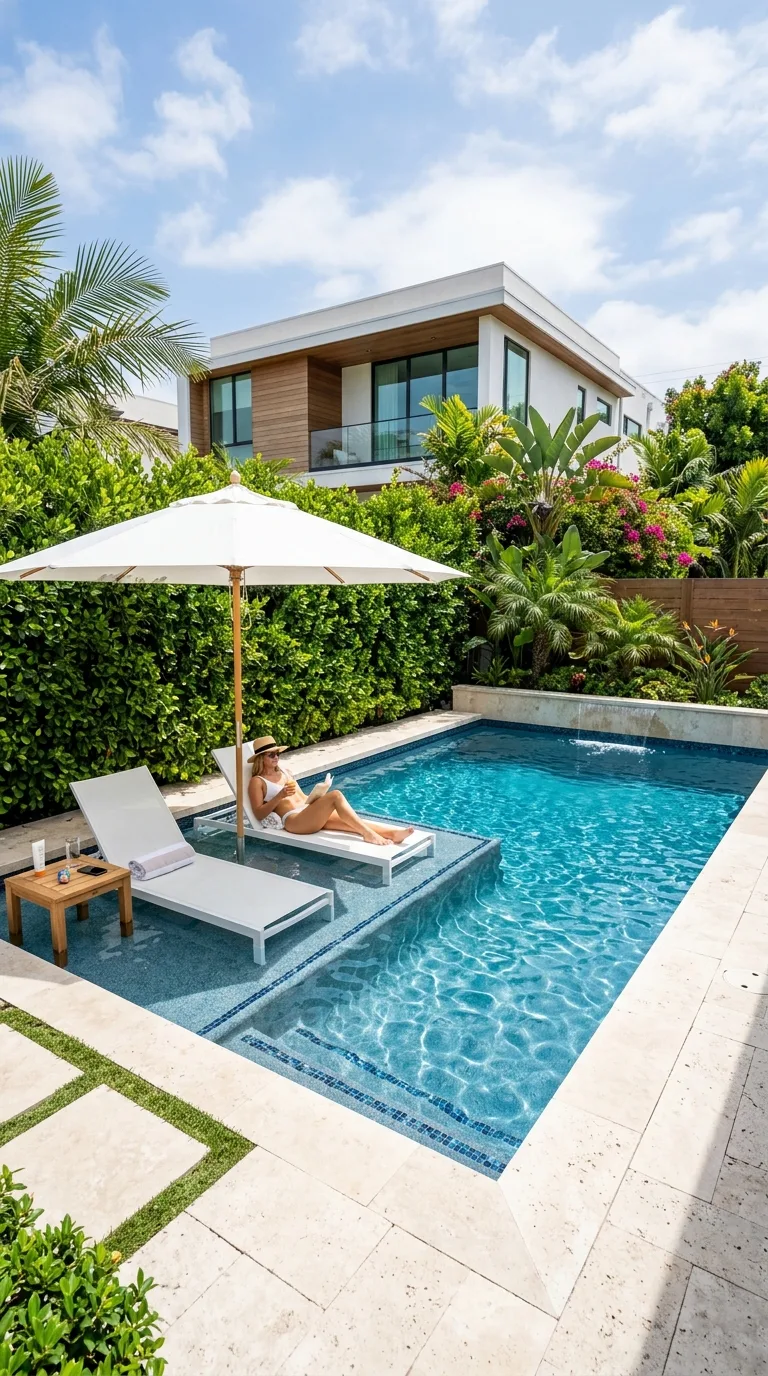
An L-shape wraps around a patio corner, an outdoor kitchen or a planting bed, and it can separate two zones: a sun shelf on one arm and a deeper swimming area on the other. A sun shelf is a wide, shallow ledge where you can sit or set a lounger in the water, and a contrasting tile marks it out.
Good to know: a sun shelf looks safe for small children, but deeper water is a step away, so toddlers still need touch supervision, and nobody should dive from it.
13. Geometric Pool with Fire Feature
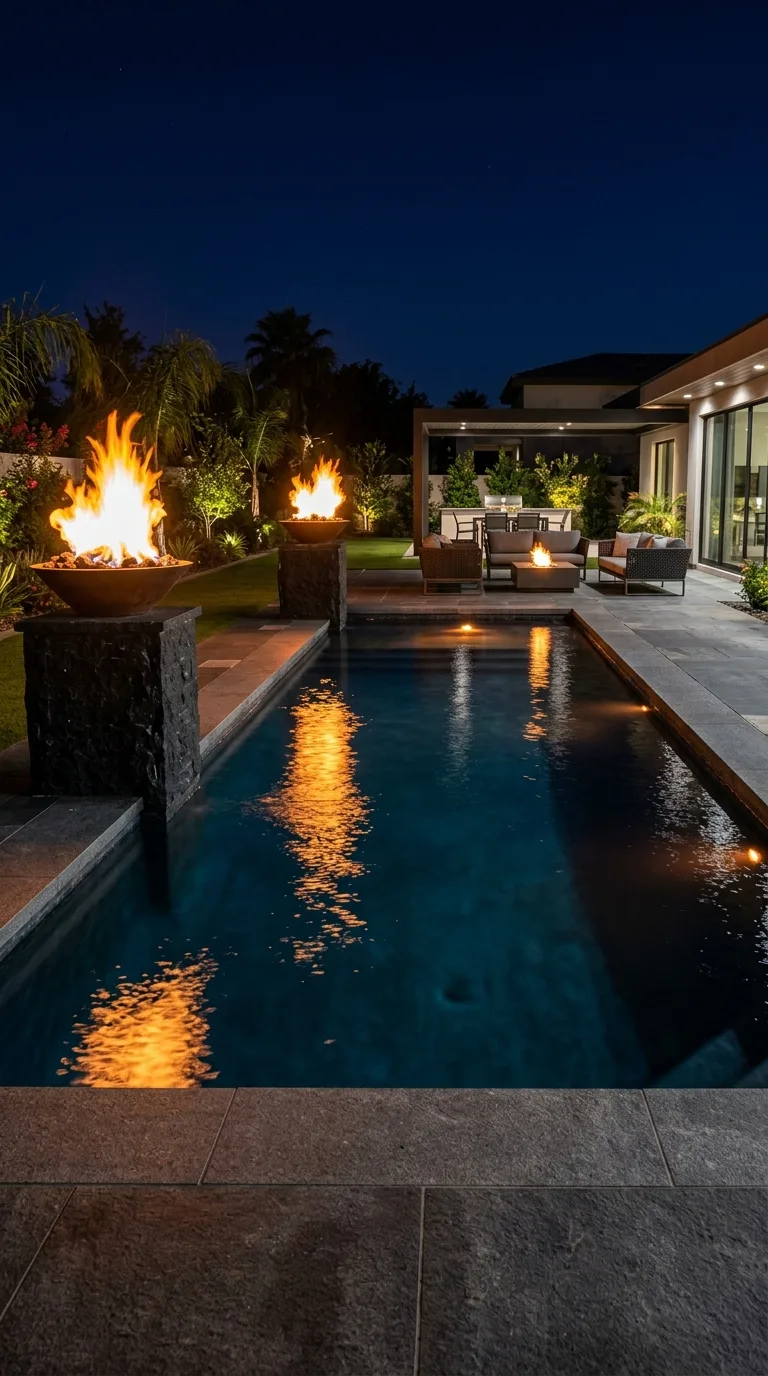
A clean rectangle or square pool with gas fire bowls on plinths, or a linear fire feature at the edge, sets flame against water. Using the same stone for the coping, plinths and paving ties everything together.
Good to know: gas lines need a licensed installer and usually a permit, and fire bowls should sit where wind won’t push the flame toward seating, umbrellas or planting.
14. Pool with Pergola and Cabana
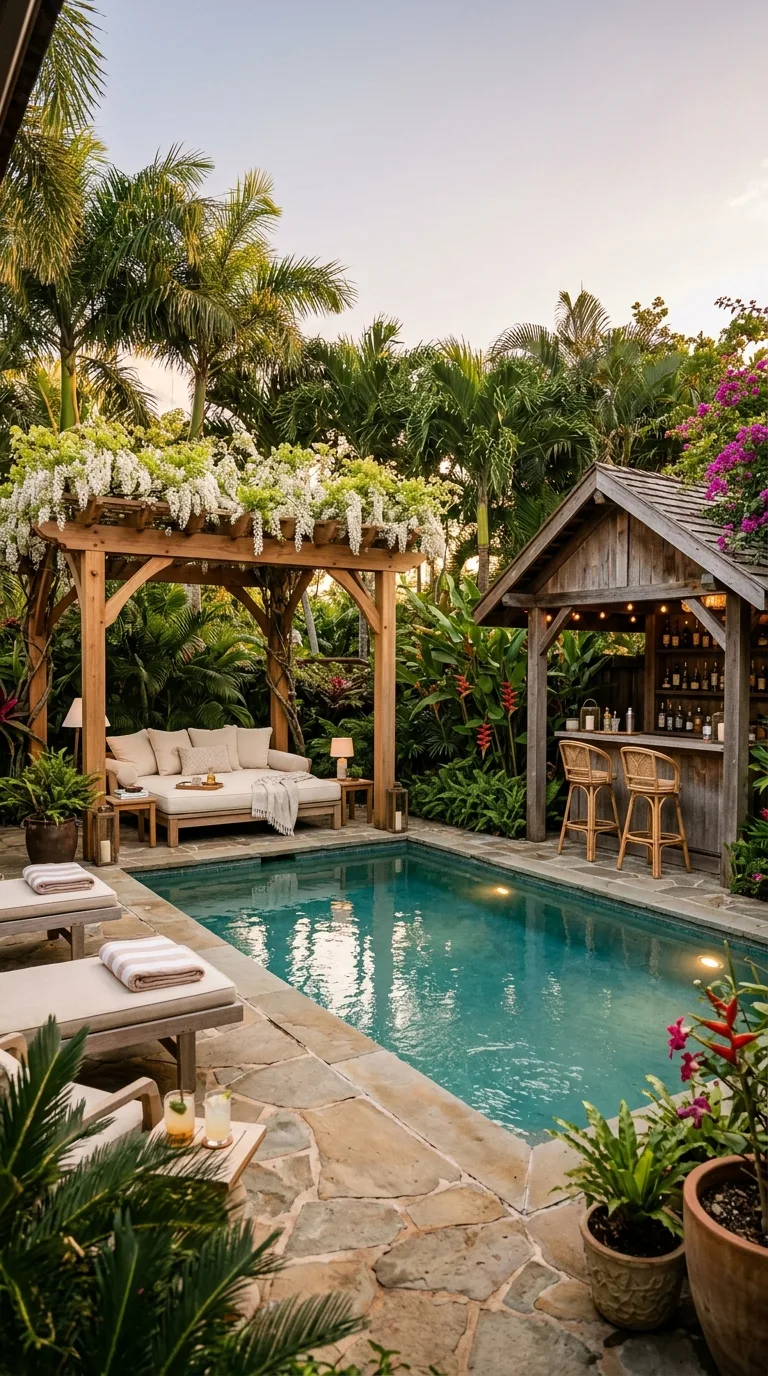
A pergola at one end gives shade and a place for a daybed, and a small cabana adds a changing room and towel storage so nobody walks wet through the house. Building both in the same materials as the pool surround makes the space look planned as one.
Good to know: pool houses often need permits and setbacks, and a cabana door that opens onto the pool area shouldn’t become an unlatched way in for children.
15. Pebble Finish Pool
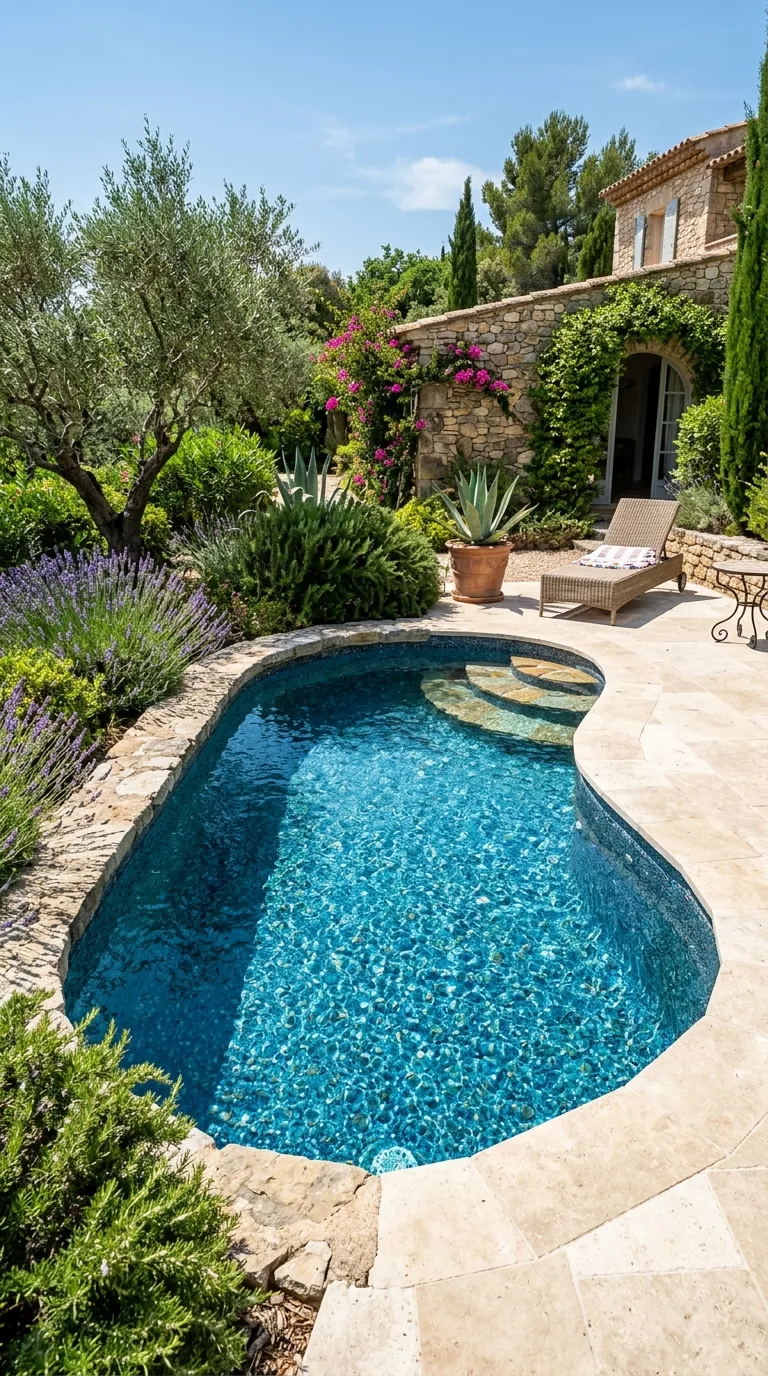
An exposed pebble finish gives the pool interior a natural, textured surface, and its color changes the water color: lighter blends generally read lighter and brighter, darker blends deeper. Ask to see wet samples or a finished pool, because color looks different underwater.
Good to know: pebble feels more textured underfoot than smooth plaster, which some swimmers notice on steps and benches, so feel a sample before you choose.
16. Pool with Floating Timber Deck
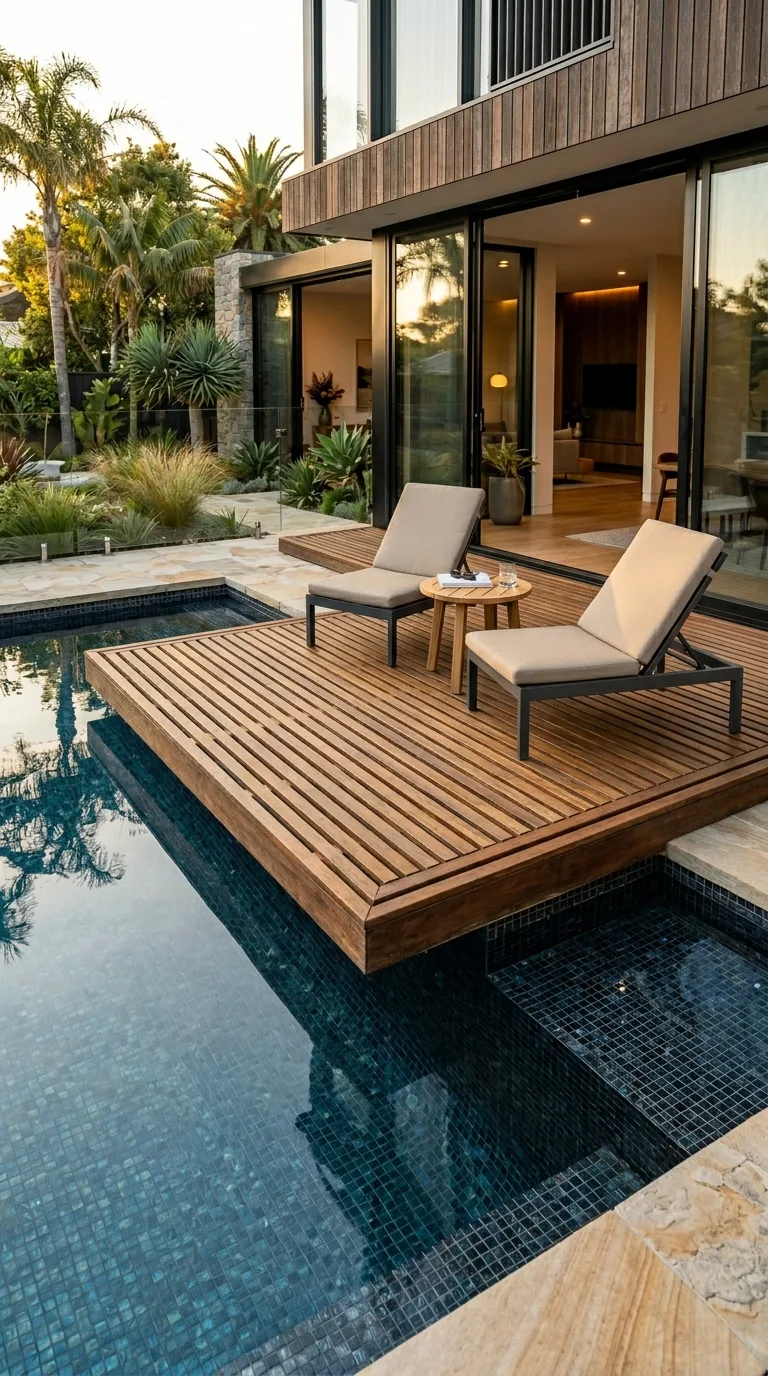
A deck that cantilevers over one edge of the pool appears to float and adds lounging space in a yard where every foot counts. It needs a hidden structure designed by an engineer or an experienced builder, and boards suited to constant moisture.
Good to know: keep the overhang short so swimmers can’t surface underneath it out of sight, and make sure the deck doesn’t give a child a way into the pool from outside the fence.
17. Zen Pool with Japanese Landscaping
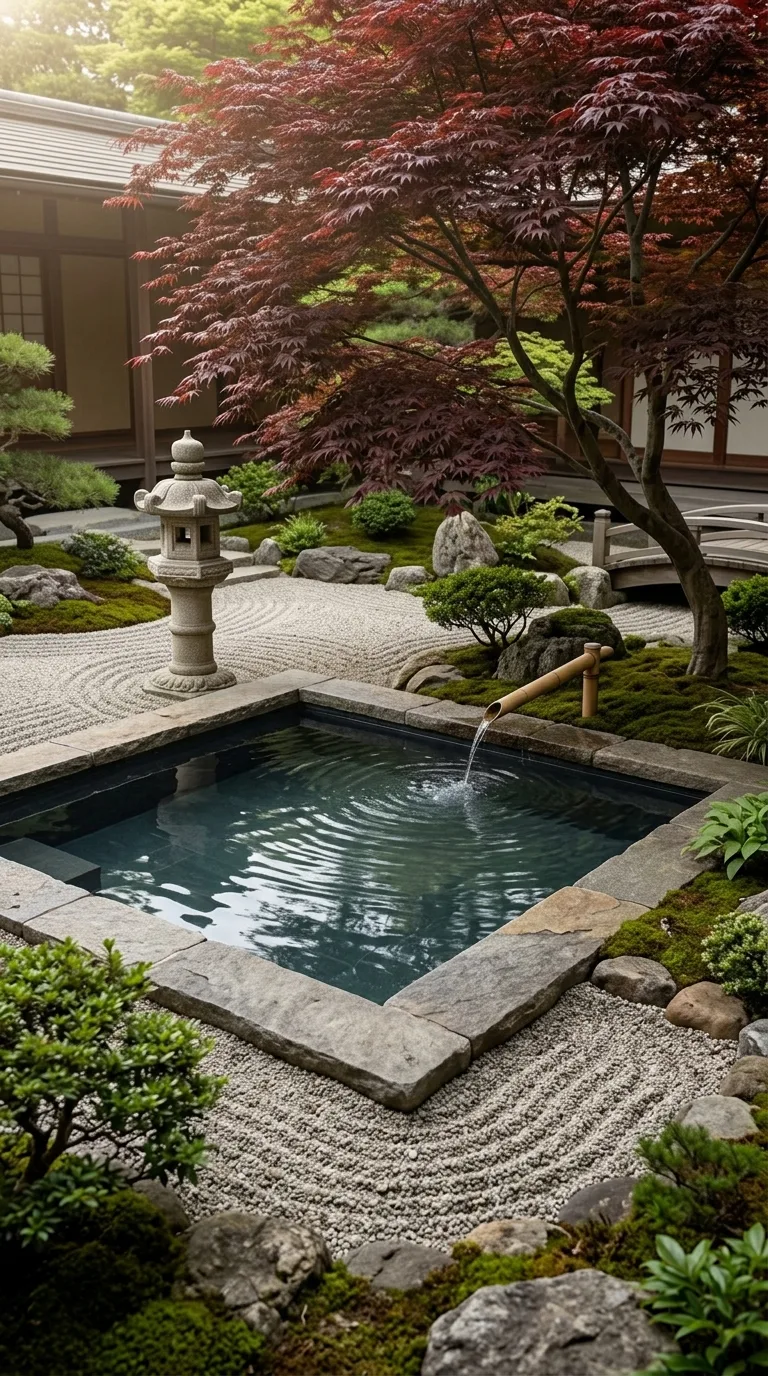
Clean lines, stone coping, gravel, a few specimen plants and a bamboo water spout give a small pool a calm, uncluttered setting. Japanese maple and Japanese black pine are classic choices; NC State Extension lists both for zones 5 to 8.
Good to know: NC State notes Japanese maple self-seeds and can become weedy, so pull seedlings, and choose a clumping bamboo, since running golden bamboo is listed as invasive.
18. Pool with LED Underwater Lighting
LED pool lights can switch between warm white and colors from a remote or app. Combined with path lights, wall lights and uplights on plants, they make a small pool usable, and safer, after dark.
Good to know: CPSC lists faulty underwater lighting among pool electrical hazards, especially in older pools, so have an electrician qualified in pool work install and inspect lights, with GFCI protection.
19. Oval Pool with Lush Grass Surround
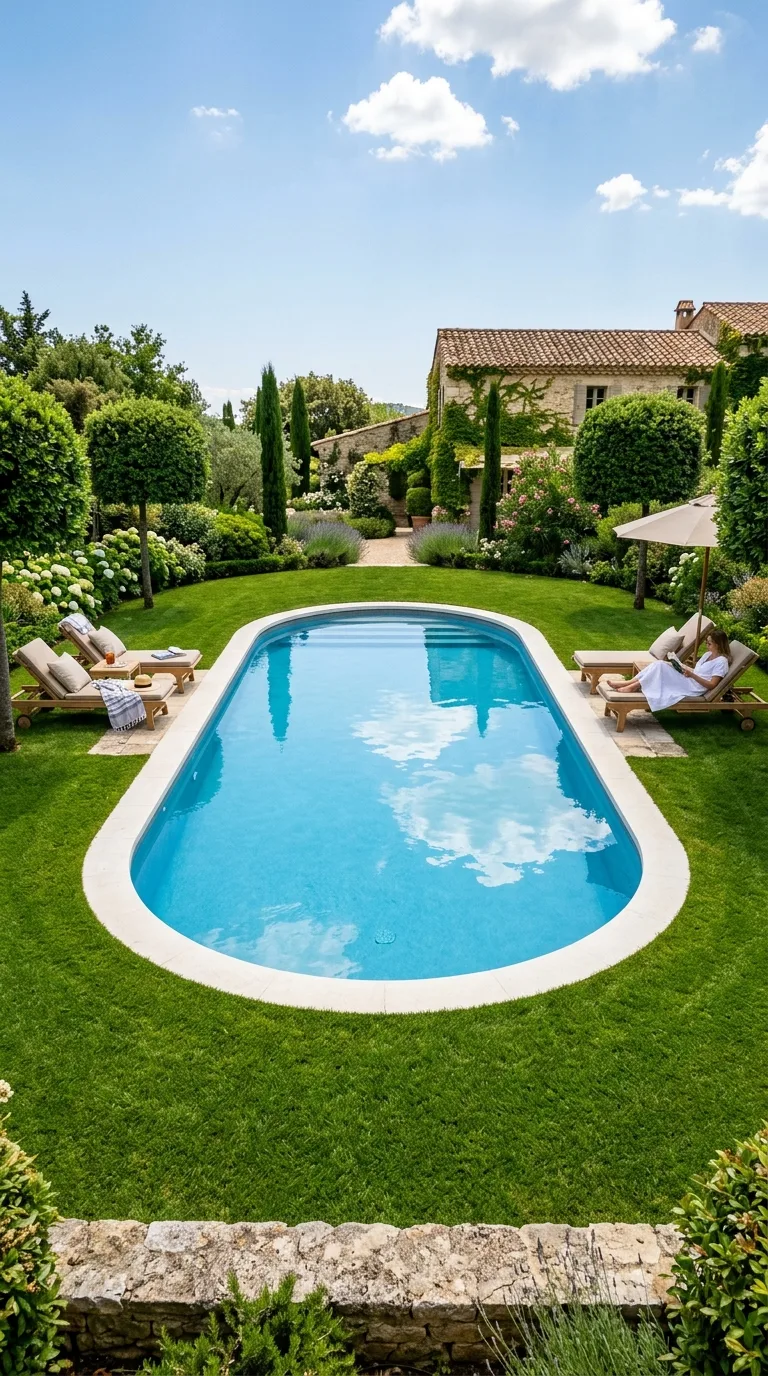
An oval pool with a narrow stone coping set in lawn has a soft, classic look that suits traditional homes. A pair of loungers on a small paved area and potted olive trees or standard roses around it keep the design formal and simple.
Good to know: grass clippings end up in the water, so leave a paved band wide enough to walk on. NC State lists olives for zones 8 to 10 and notes fruiting trees are messy near paving, so look for a fruitless cultivar or grow them in pots you can move to shelter.
20. Pool with Stone Coping and Travertine Deck
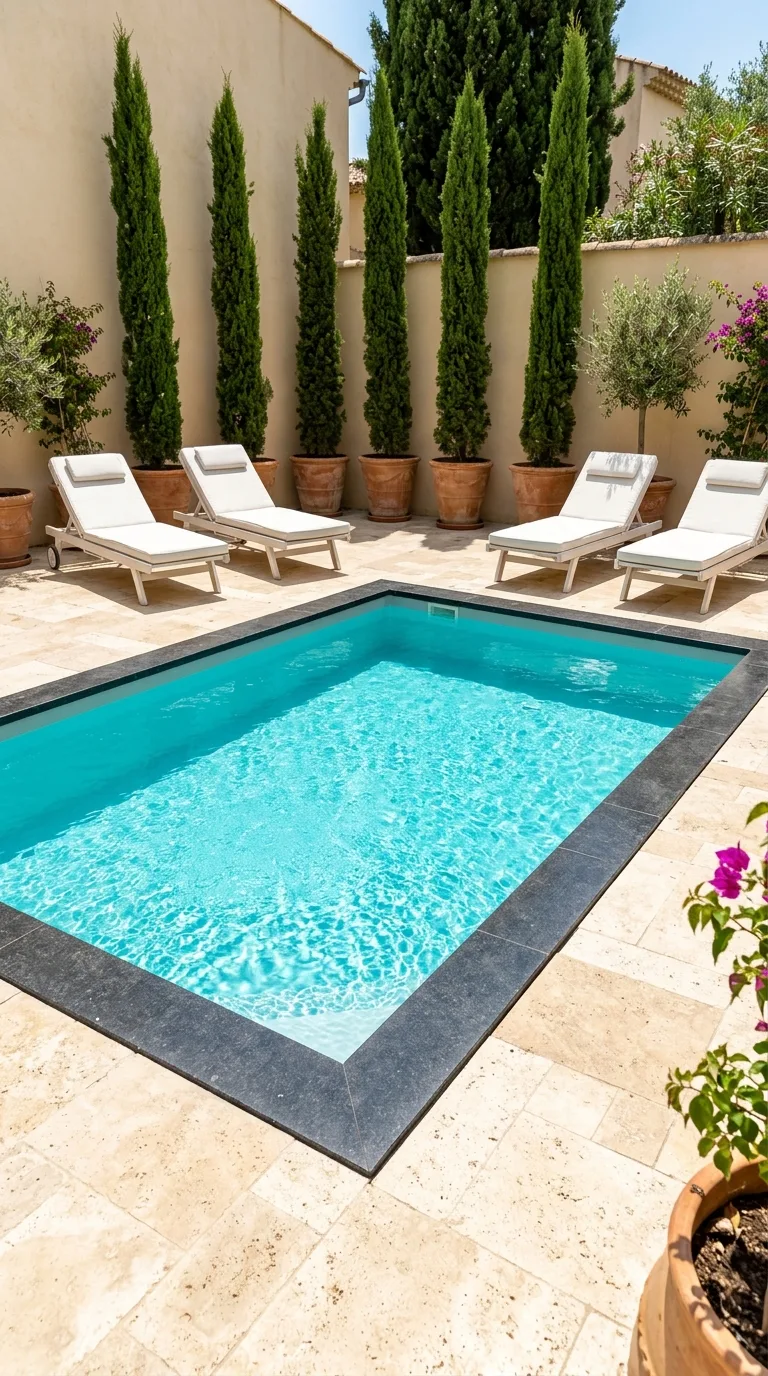
Travertine paving with stone coping in warm cream tones is a classic pool pairing. Running the same paving around all sides makes a small yard look larger, because the ground reads as one surface.
Good to know: choose tumbled or textured travertine rather than polished for wet feet, and ask the supplier about sealing, since travertine is porous.
21. Pool with Privacy Wall and Tropical Plants
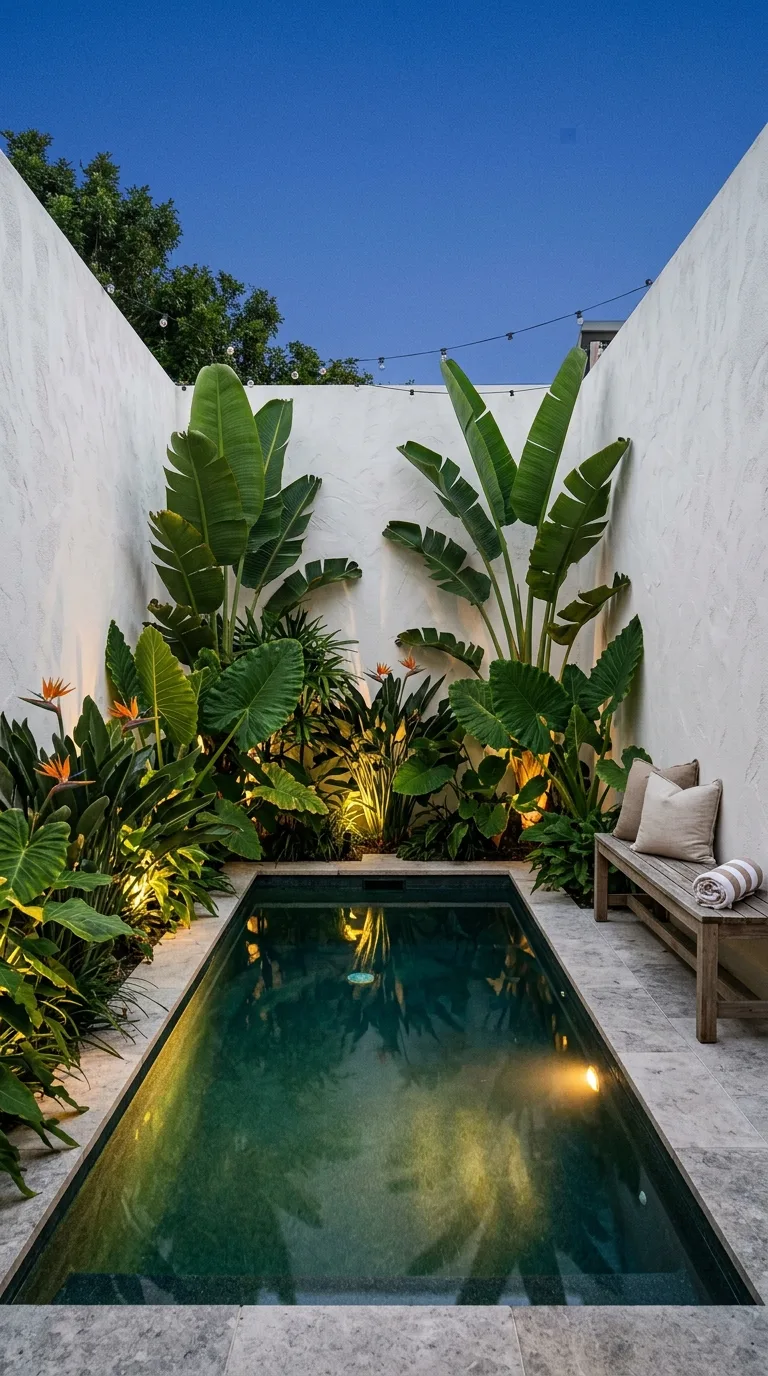
Rendered walls, stone or slatted screens around the pool create the feel of a private room, and big-leaved plants soften the walls. Bananas, bird of paradise and elephant ears give a tropical look, and uplighting turns them into silhouettes at night.
Good to know: check zones and toxicity: NC State lists bird of paradise for zones 10 to 12 and elephant ears for zones 8 to 11; both are toxic to pets, and elephant ears are poisonous to children too. Hardy banana (Musa basjoo) grows in zones 5 to 10 but dies back in winter in the colder half of that range.
22. Modern Black Pool with Minimalist Design
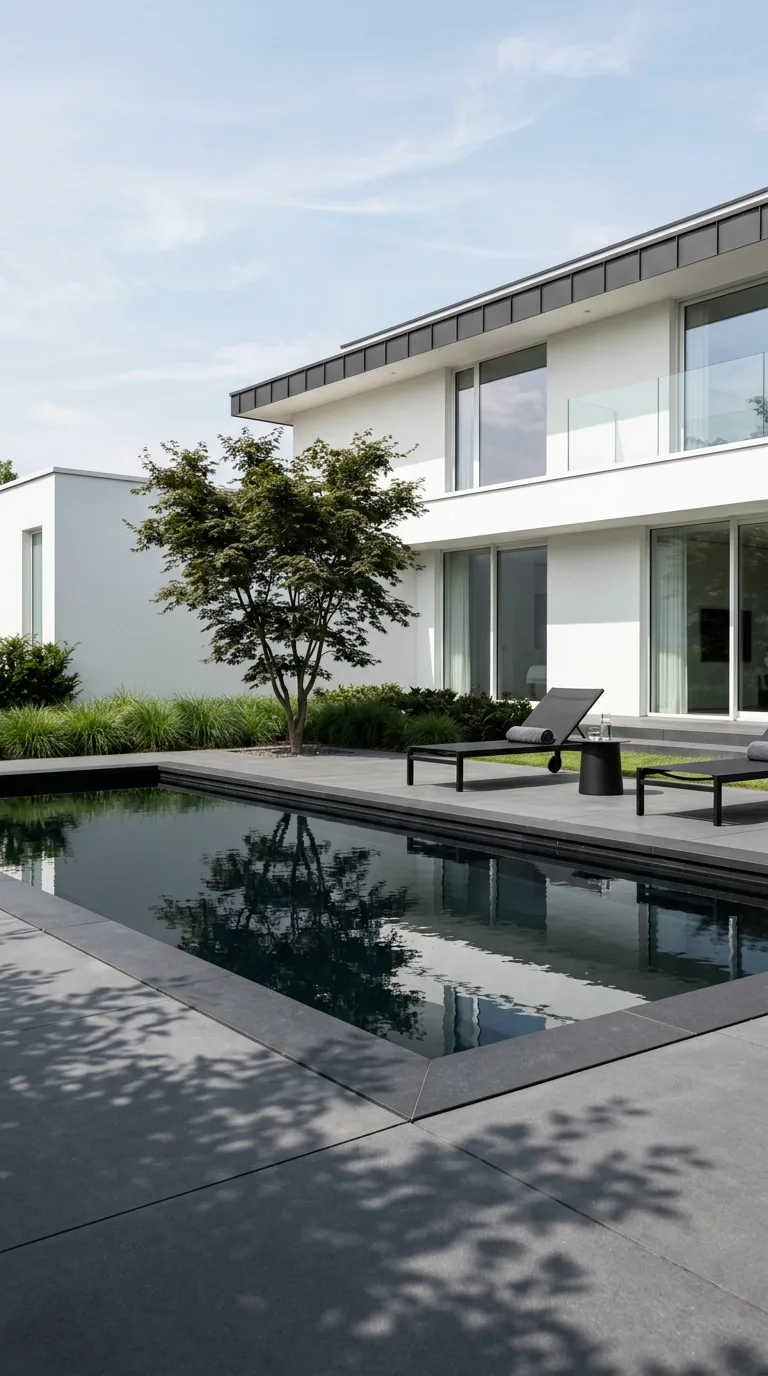
A black interior with black coping, charcoal paving and very little planting gives a pool that mirrors the sky on calm days. The look depends on restraint: simple furniture, one specimen tree and no clutter.
Good to know: dark coping and paving get hot in direct sun, so use lighter paving where people walk barefoot, and keep the underwater lighting good, since dark water hides what is below.
23. Pool with Built-in Spa Adjoining
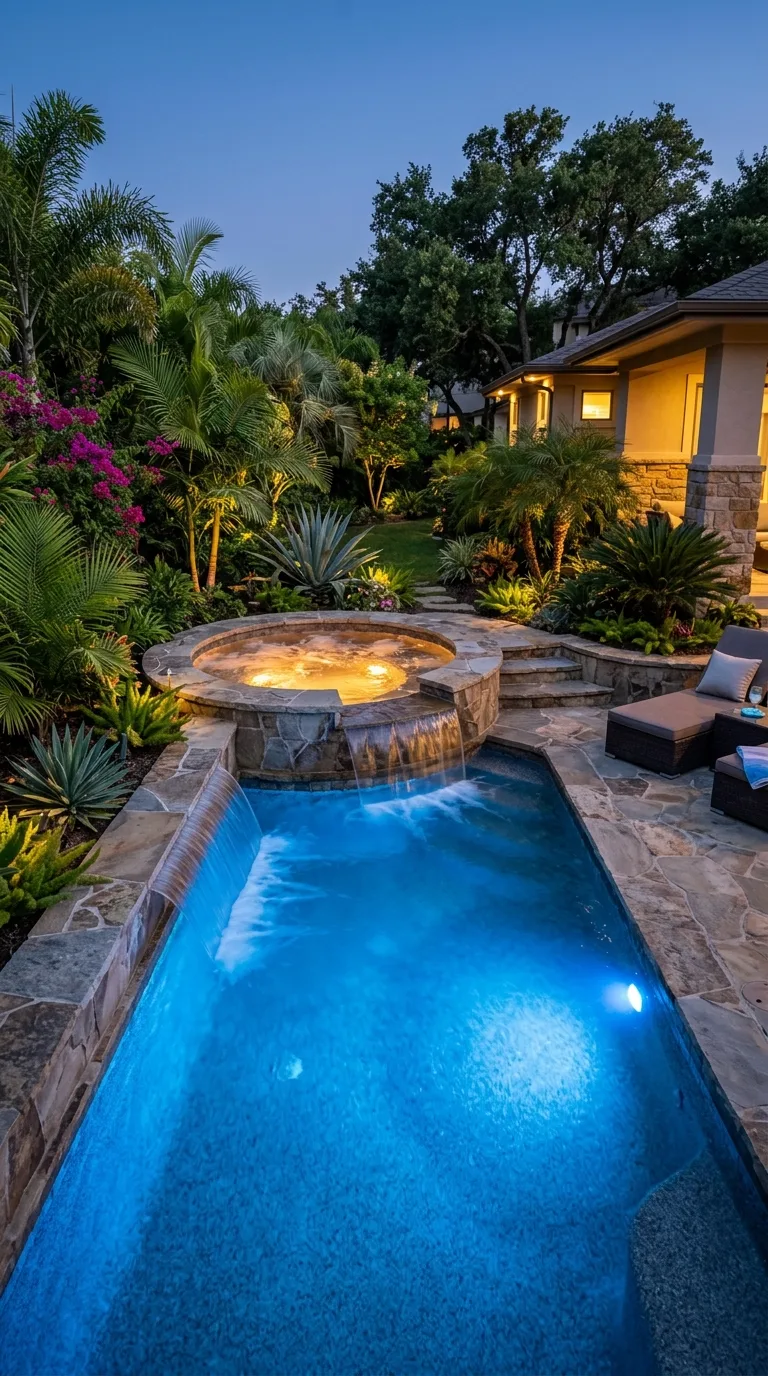
A spa set slightly above one end of the pool, spilling into it over a shared wall, gives two water temperatures in one design. Using the same tile or stone for both keeps them unified, and separate lighting tells the two zones apart after dark.
Good to know: CPSC recommends keeping spa water at 104°F or below, checking that drain covers are in place and not cracked, and keeping young children out of the spa unless an adult is watching constantly.
24. Courtyard Plunge Pool with Rendered Walls
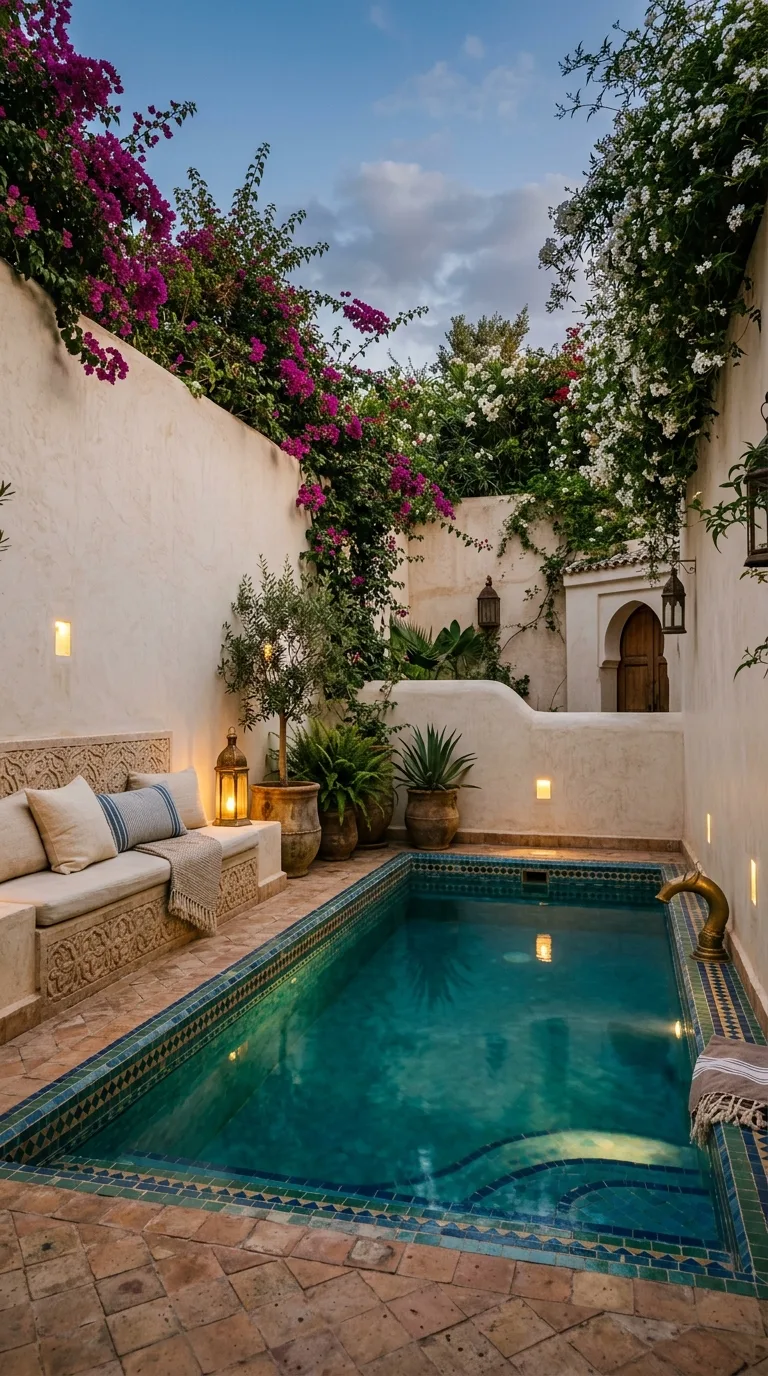
Smooth rendered walls in white, warm gray or sand around a plunge pool draw on Mediterranean and Moroccan courtyard traditions. Planting pockets, a mosaic panel or a built-in bench add detail, and small recessed wall lights give a warm glow at night.
Good to know: when the house opens straight into the pool courtyard, the house wall becomes part of the barrier, so Pool Safely advises a door or pool alarm on doors that lead to the water.
25. Pool with Outdoor Shower and Timber Changing Screen
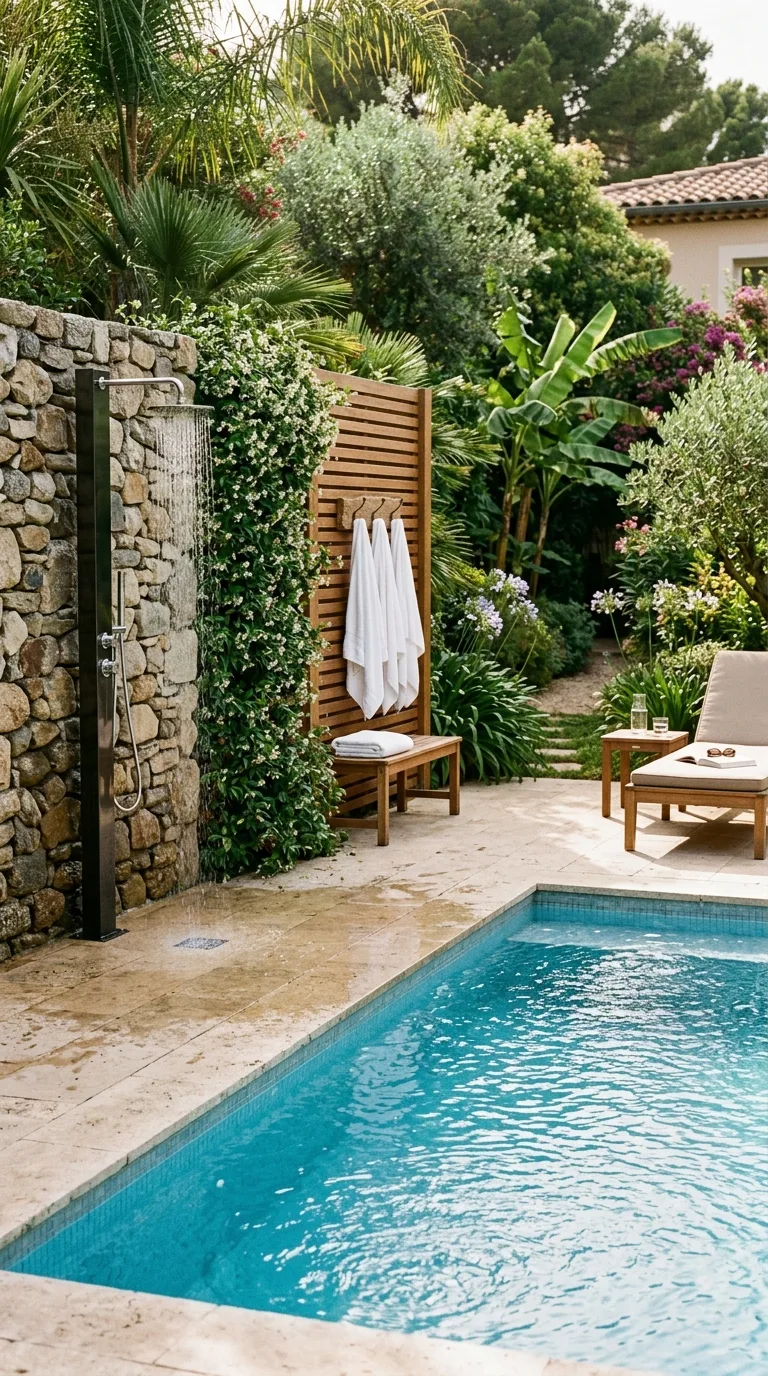
An outdoor shower beside the pool lets swimmers rinse off before and after a swim, and a slatted timber screen gives privacy for changing while letting air and light through. A stainless or stone shower column, a towel hook and a small bench complete it.
Good to know: plan the drain before you pave, since local plumbing rules decide where shower water can go, and use a mixing valve if you add hot water.
Common mistakes to avoid
- Relying on the yard’s boundary fence instead of a fence that completely surrounds the pool.
- Leaving doors from the house to the pool without alarms.
- Leaving a spa or swim spa uncovered or unlocked.
- Choosing polished stone or tile for wet walkways and steps.
- Planting running bamboo or invasive water plants such as yellow flag iris.
- Having pool wiring or lighting done by someone not qualified in pool work.
Small pool FAQs
What is the smallest practical pool?
A plunge or cocktail pool, built for soaking and cooling off rather than laps. Setbacks and access in your yard decide what fits, so check them first.
Does a small pool need a fence?
Yes. Size doesn’t change the drowning risk. Pool Safely recommends a fence at least 4 feet high with self-closing, self-latching gates, and local codes may require more.
Is a swim spa a good alternative to a pool?
It can be, if you want to swim against a current and soak in a small footprint. Ask whether local code treats it as a pool or a spa, and keep a locking cover on it.
Are dark pool finishes a safety concern?
They make it harder to see the bottom and anyone underwater, so pair them with good underwater lighting and active supervision.


