

24 Grass-Free Front Yard Ideas That Look Lush
Giving up on grass in your front yard might sound unconventional, but it is one of the smartest landscaping decisions you can make for your home. Traditional lawns demand constant watering, mowing, fertilizing, and time that most homeowners simply do not have. Grass-free front yards, on the other hand, can look incredibly lush, vibrant, and full of life with far less maintenance and water use. Whether you are dealing with poor soil, a dry climate, or simply want a more beautiful and intentional outdoor space, these 24 grass-free front yard ideas will inspire you to reimagine what a welcoming, stunning front yard can truly look like.
1. Gravel and Rock Garden
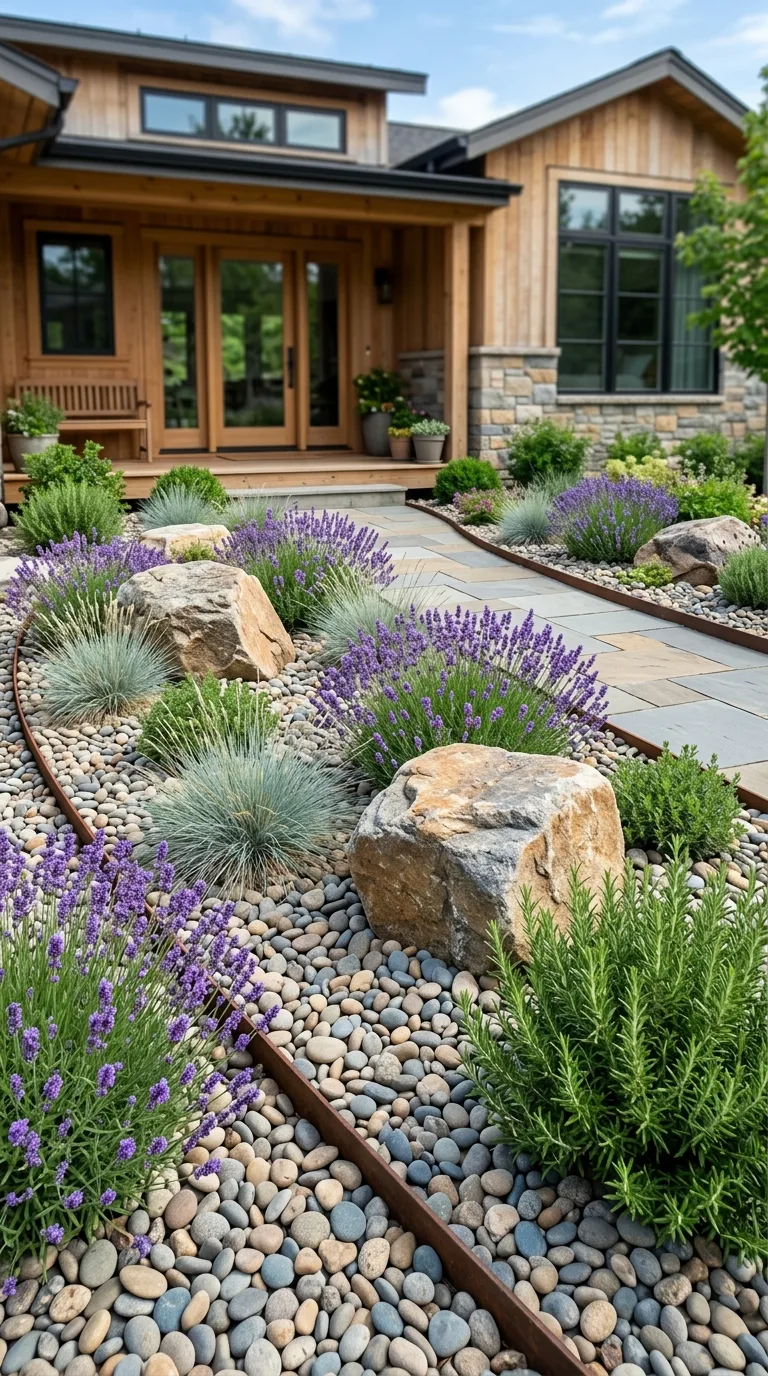
A gravel and rock garden is one of the most versatile and visually appealing grass-free options available to homeowners. Using a combination of smooth river pebbles, crushed granite, and carefully placed decorative boulders creates a layered, naturalistic landscape that requires virtually no watering or upkeep once it is established. The varying textures and tones of different gravel types add depth and visual interest that a plain lawn simply cannot offer.
The key to making a gravel garden look intentional rather than unfinished is thoughtful plant placement throughout the space. Inserting drought-tolerant plants like rosemary, ornamental grasses, lavender, or agave into the gravel creates a beautifully balanced composition of hard and soft elements. Edging the gravel areas with steel, stone, or brick borders keeps everything crisp and defined. This is a genuinely low-maintenance solution that looks more polished and designed than almost any traditional lawn approach.
2. Native Plant Garden
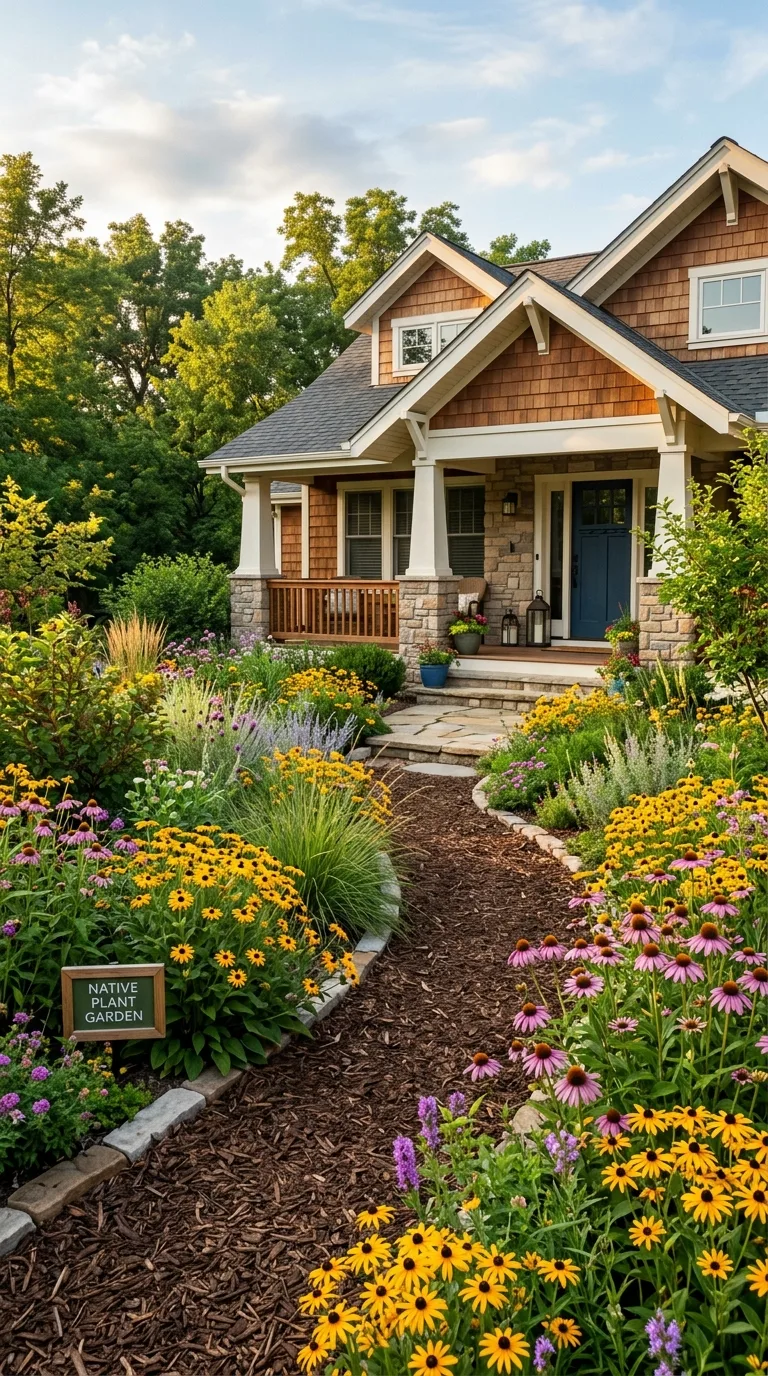
Replacing your front lawn with native plants is one of the most ecologically responsible and visually rewarding choices you can make as a homeowner. Native plants are adapted to your specific region, which means they thrive with minimal watering, no fertilizing, and very little intervention once established. They also provide essential habitat for pollinators, birds, and beneficial insects, making your front yard a living ecosystem rather than a sterile green carpet.
The beauty of a native plant garden lies in its seasonal dynamism. Different plants bloom at different times throughout the year, ensuring your front yard always has something new and beautiful to show. Combining native wildflowers, shrubs, and grasses in varying heights creates a layered, meadow-like composition that looks designed and intentional. Adding a simple mulch pathway through the planting ties the space together and makes it feel like a true garden rather than an unmaintained patch of wild growth.
3. Creeping Ground Cover Plants
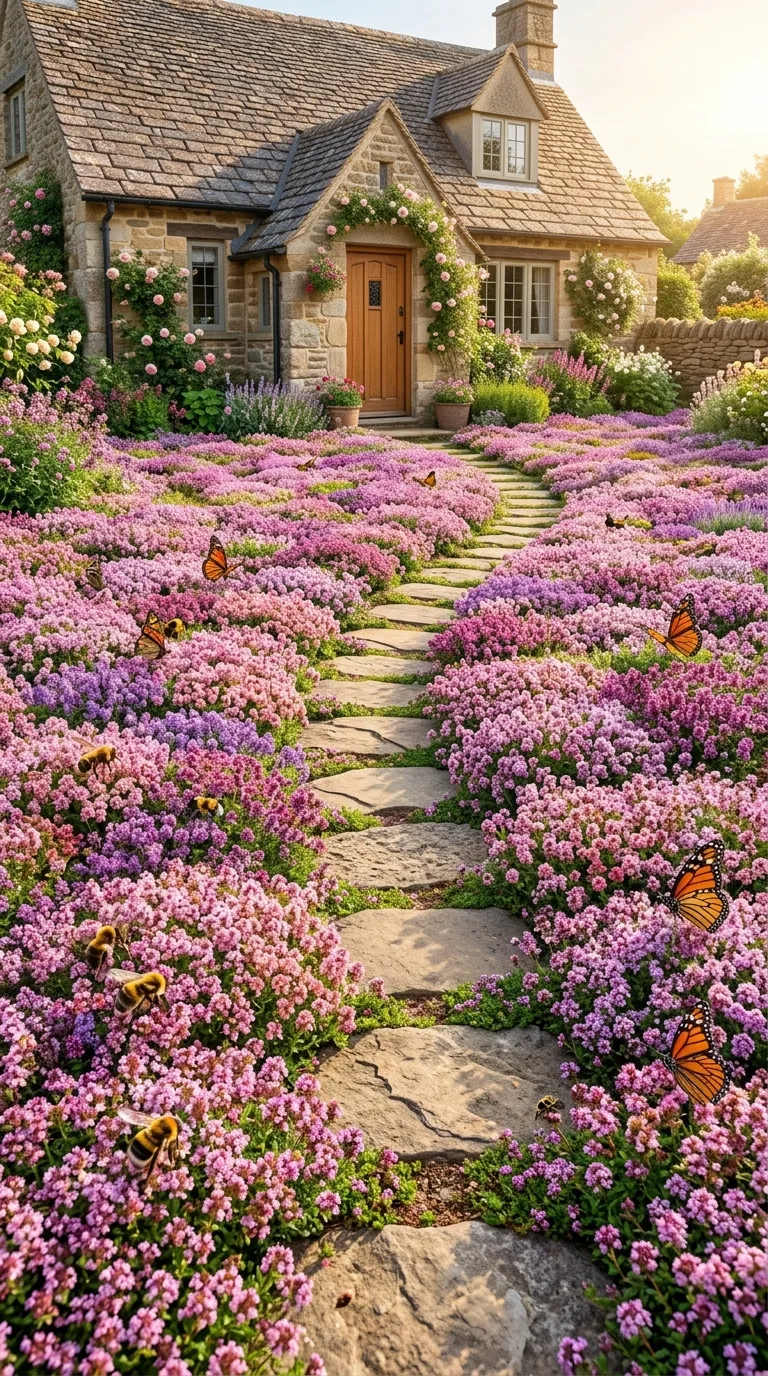
Creeping ground cover plants are one of the best grass alternatives available because they spread low and dense across the soil, suppressing weeds and creating a lush, full appearance without any mowing required. Varieties like creeping thyme, ajuga, sedum, and Irish moss form a thick, carpet-like surface that feels alive and textured. Many of these plants also produce small flowers seasonally, adding pops of color across the entire front yard.
One of the greatest advantages of ground covers is how well they perform in difficult growing conditions where grass typically struggles. Shaded areas under trees, steep slopes, and dry rocky patches where grass refuses to grow are all places where ground cover plants genuinely thrive. Mixing two or three compatible varieties creates a mosaic effect of varying textures and colors. Once established, most ground covers are extremely drought-tolerant and need only occasional trimming to maintain their clean, lush appearance throughout the year.
4. Mulch and Garden Bed Design
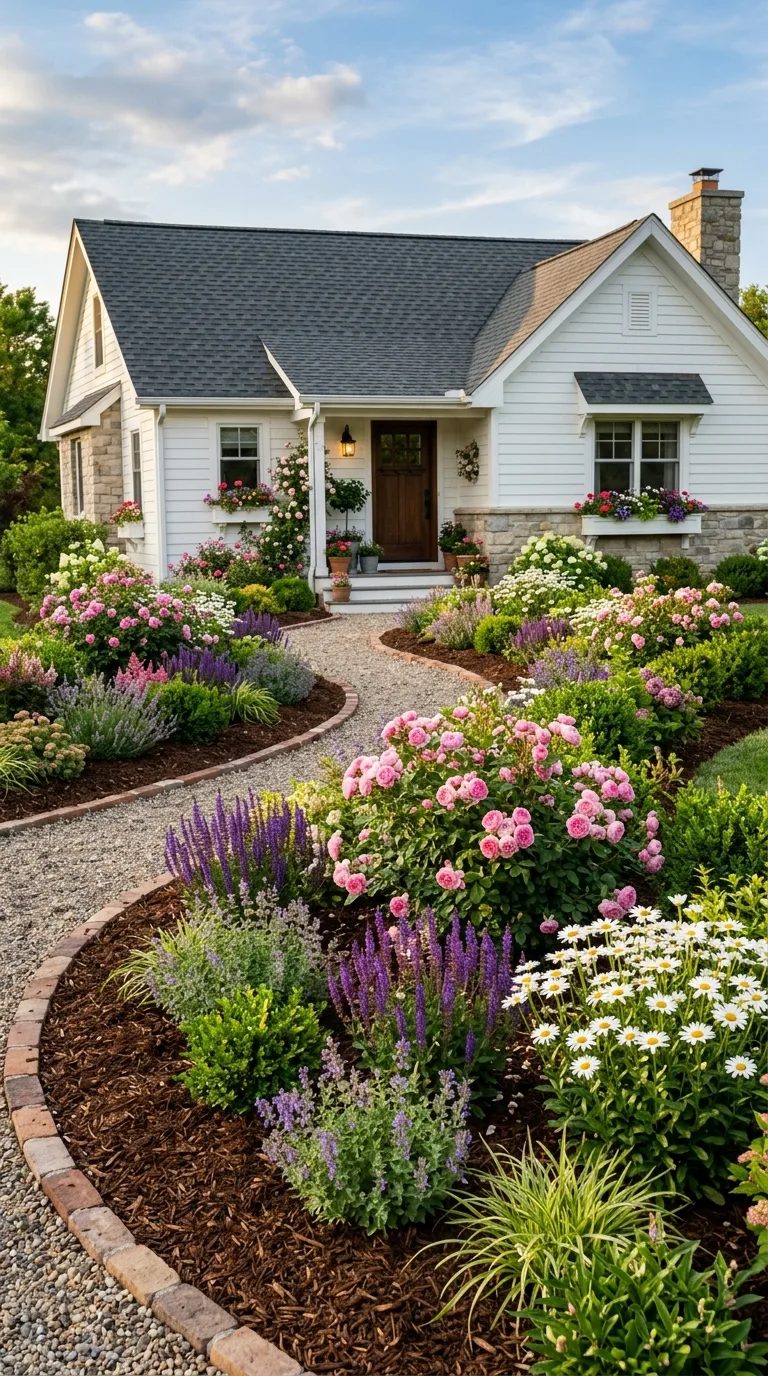
A thoughtfully designed front yard composed almost entirely of raised and in-ground garden beds with rich dark mulch is a classic grass-free approach that never goes out of style. Generous mulch coverage suppresses weeds, retains soil moisture, and gives the entire yard a clean, well-maintained appearance year-round. The dark contrast of fresh mulch makes surrounding plants look more vibrant and lush, almost like the plants are performing against a perfectly staged backdrop.
The design of your beds matters enormously in making a mulch-based yard look intentional and beautiful. Curved, sweeping bed edges feel more natural and relaxed, while straight geometric edges suit modern or formal homes. Layering plants of varying heights within each bed creates a full, lush composition throughout every season. Adding a mulch pathway that winds between the beds gives structure and flow to the space. This approach works beautifully for almost every home style and climate zone across the country.
5. Decomposed Granite Pathway Design
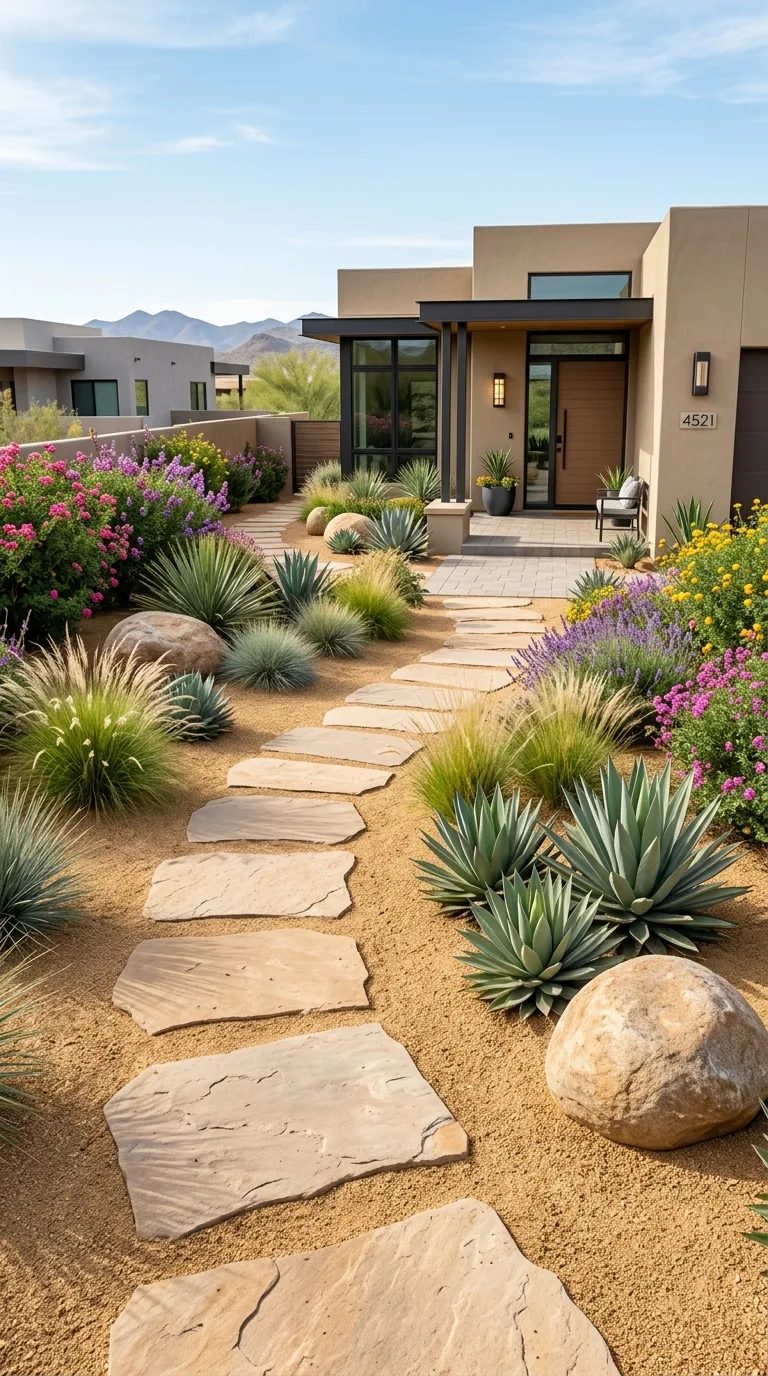
Decomposed granite is a finely crushed natural material that creates a warm, earthy surface ideal for grass-free front yards in any climate. It compacts firmly underfoot, making it comfortable to walk on, while its golden-brown tones complement almost every home exterior color. Used as a primary ground covering with plants weaving through it, decomposed granite creates a Southwest-inspired aesthetic that is both sophisticated and remarkably easy to maintain throughout the entire year.
Beyond its practical benefits, decomposed granite has a naturally refined appearance that elevates the overall look of a front yard without a large budget. It allows rainwater to percolate into the soil below, which makes it a permeable, environmentally friendly alternative to concrete or asphalt hardscaping. Surrounding patches of decomposed granite with low-growing ornamental plants, boulders, and drought-tolerant shrubs creates a layered landscape that looks professionally designed even when built entirely on a do-it-yourself weekend budget.
6. Wildflower Meadow Front Yard
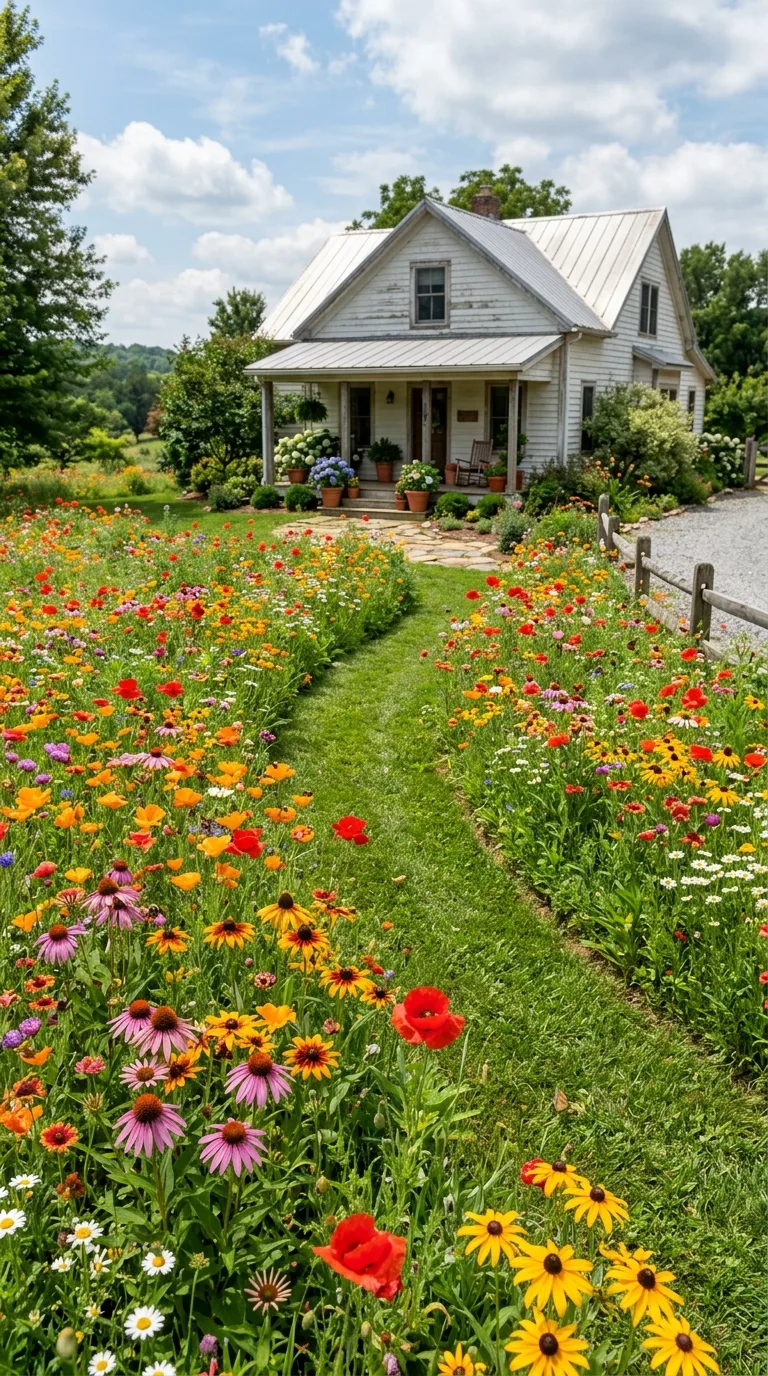
A wildflower meadow front yard is one of the most joyful and visually spectacular grass-free transformations you can make to your property. Seeding your front yard with a regional wildflower mix produces a constantly changing tapestry of color throughout the growing season, from early spring through late fall. Poppies, coneflowers, black-eyed Susans, cosmos, and native daisies all contribute to a glorious, textured landscape that draws pollinators and admiring glances in equal measure.
Creating a wildflower meadow requires some initial preparation but very little ongoing effort once the plants are established and self-seeding. Clearing the existing lawn, amending the soil lightly, and broadcasting seed in fall or early spring gives the best germination results. Mowing the meadow once a year in late winter keeps woody growth from taking over. Adding a simple mown pathway through the center of the meadow gives structure and signals to neighbors that this is an intentional garden rather than neglected lawn that has gone to seed.
7. Succulent Garden
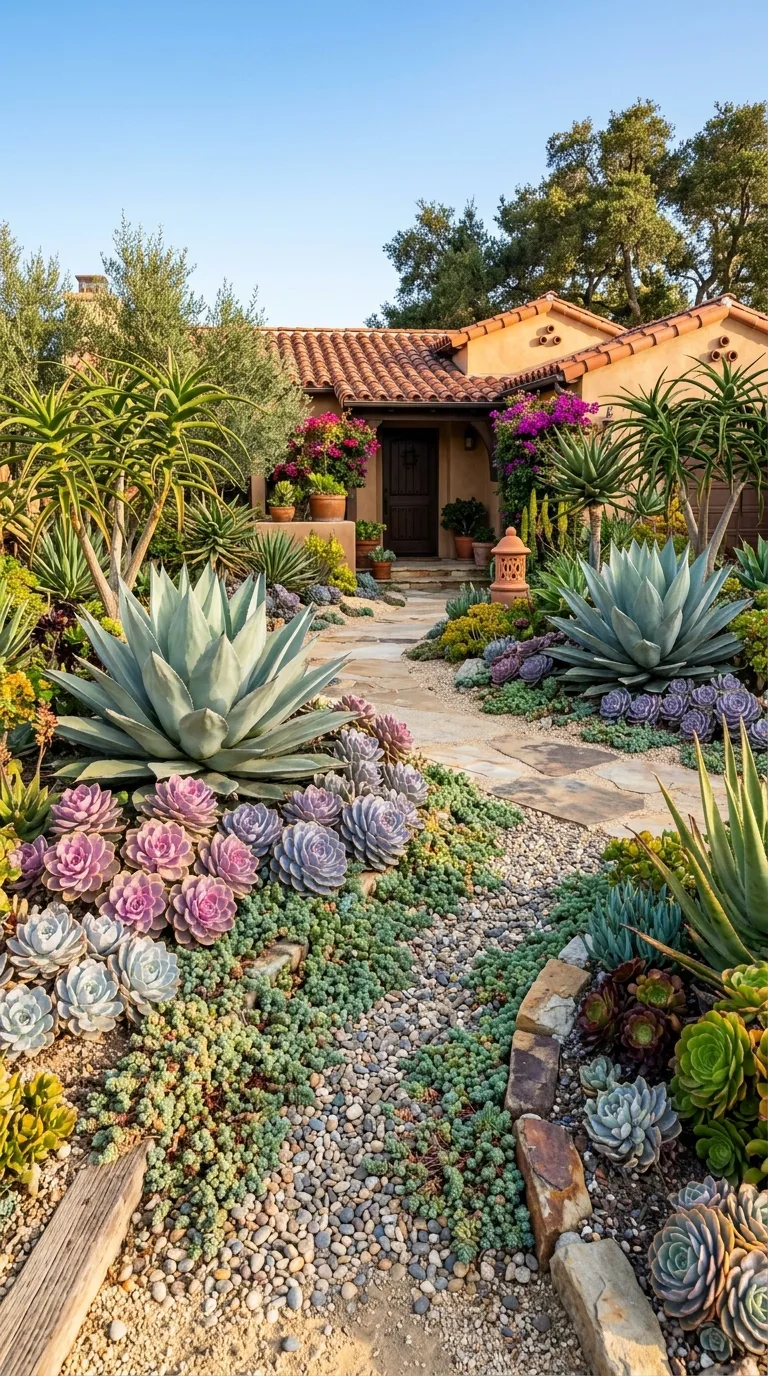
A succulent front yard is a stunning, sculptural approach to grass-free landscaping that works particularly well in warm, dry climates. The incredible variety of succulent shapes, sizes, and colors available today means you can create a front yard that feels like living artwork. Rosette-shaped echeverias, towering agaves, sprawling sedums, and geometric aloes all contribute to a composition that is endlessly interesting and requires almost no water once the plants are fully established.
The visual success of a succulent garden depends on thoughtful spacing and layering. Planting larger architectural succulents like agave or aloe as anchor points throughout the yard and filling in around them with smaller rosette varieties and ground-covering sedums creates a full, cohesive look. Finishing the ground between plants with pale gravel or decomposed granite enhances drainage, suppresses weeds, and gives the entire garden a clean, gallery-like finish. This is one of the most photogenic grass-free yard styles available today.
8. Moss Garden
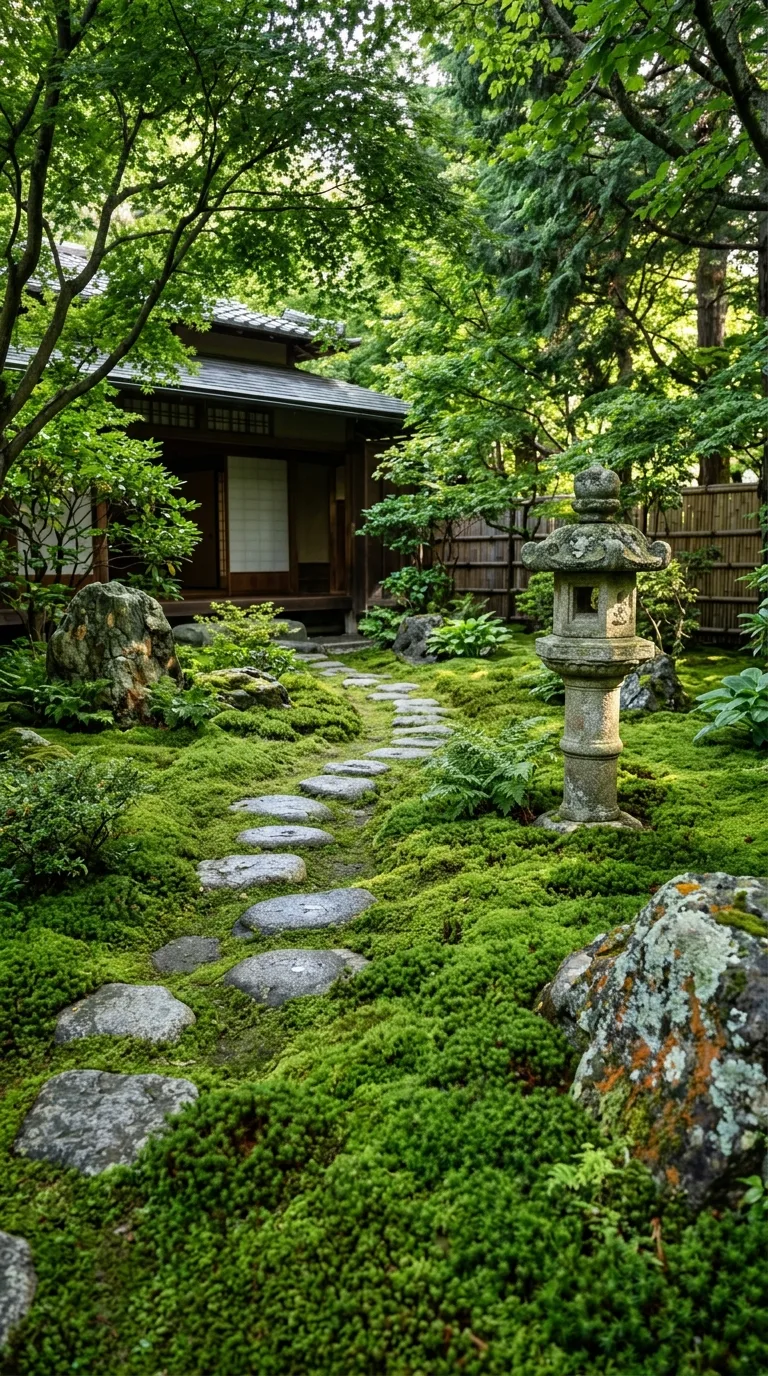
A moss garden front yard is a breathtakingly lush and serene alternative to traditional grass that thrives in shaded, moist environments where other plants struggle to survive. Moss creates a velvety, deep green surface that looks almost impossibly soft and inviting. It requires no mowing, no fertilizing, and only modest watering, making it one of the most genuinely low-maintenance ground covers available to homeowners in the right growing conditions.
Establishing a moss garden takes some patience, but the results are uniquely beautiful and deeply calming. Moss grows beautifully over rocks, around the bases of trees, and along stepping stone pathways, creating a naturalistic, Japanese garden-inspired atmosphere. Adding a few carefully placed boulders, a simple stone lantern, or a small water feature amplifies the serene, contemplative quality of a moss garden. This is an ideal front yard solution for homes surrounded by trees that create too much shade for traditional grass to survive.
9. Clover Lawn Alternative
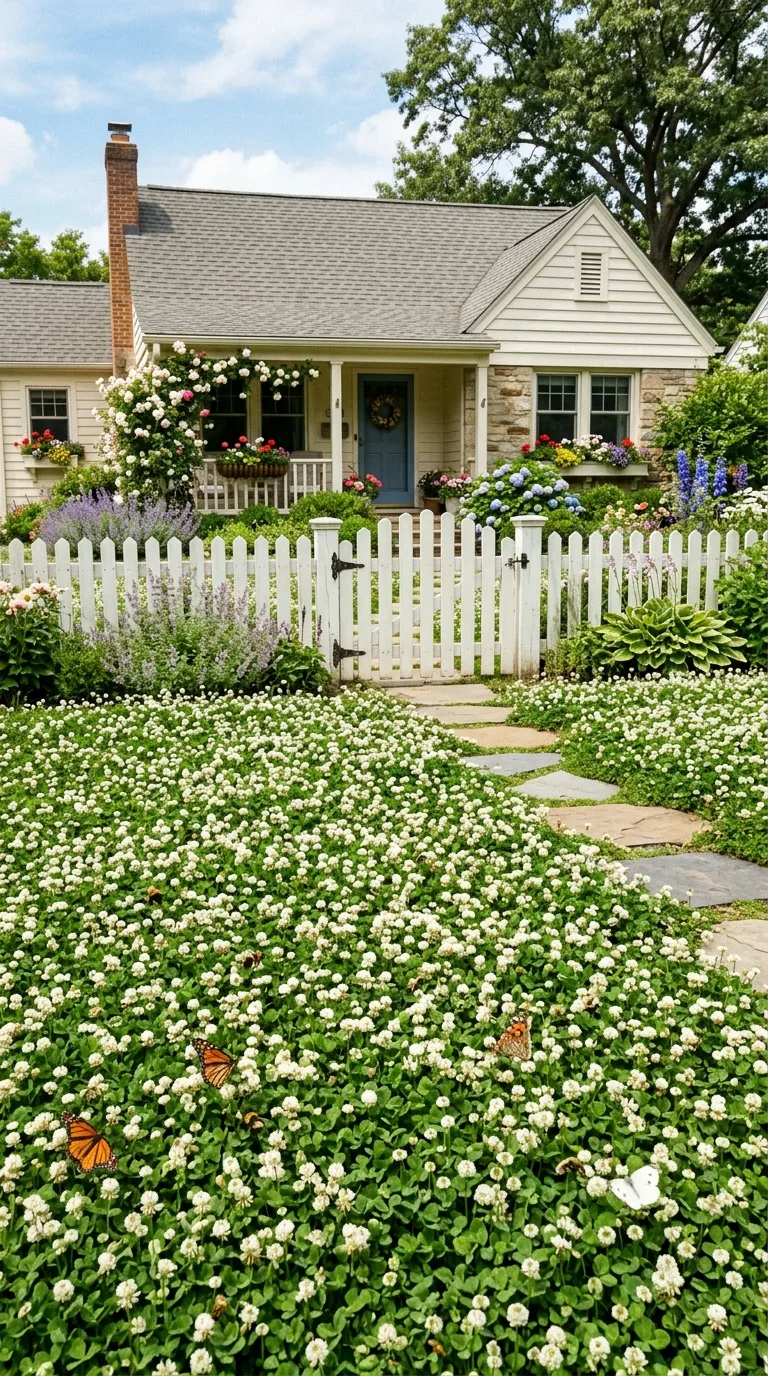
White clover is rapidly gaining recognition as one of the best grass-free alternatives for homeowners who still want a soft, green, low-growing front yard without the high maintenance of traditional turf. Clover stays lush and green through summer heat and drought conditions that would leave a grass lawn burned and brown. It requires no fertilizer because it fixes its own nitrogen from the atmosphere, and it needs far less mowing than conventional grass throughout the entire growing season.
Beyond its practical advantages, clover has a delightful, old-fashioned charm that many homeowners find genuinely appealing. Its small white flowers attract bees and butterflies throughout summer, supporting local pollinator populations in a meaningful way. Mixing clover with other low-growing plants like creeping thyme or chamomile creates a diverse, fragrant ground cover that is truly beautiful and ecologically valuable. This is a wonderful option for anyone who wants a green front yard without the environmental cost of a traditional fertilized lawn.
10. Raised Garden Beds
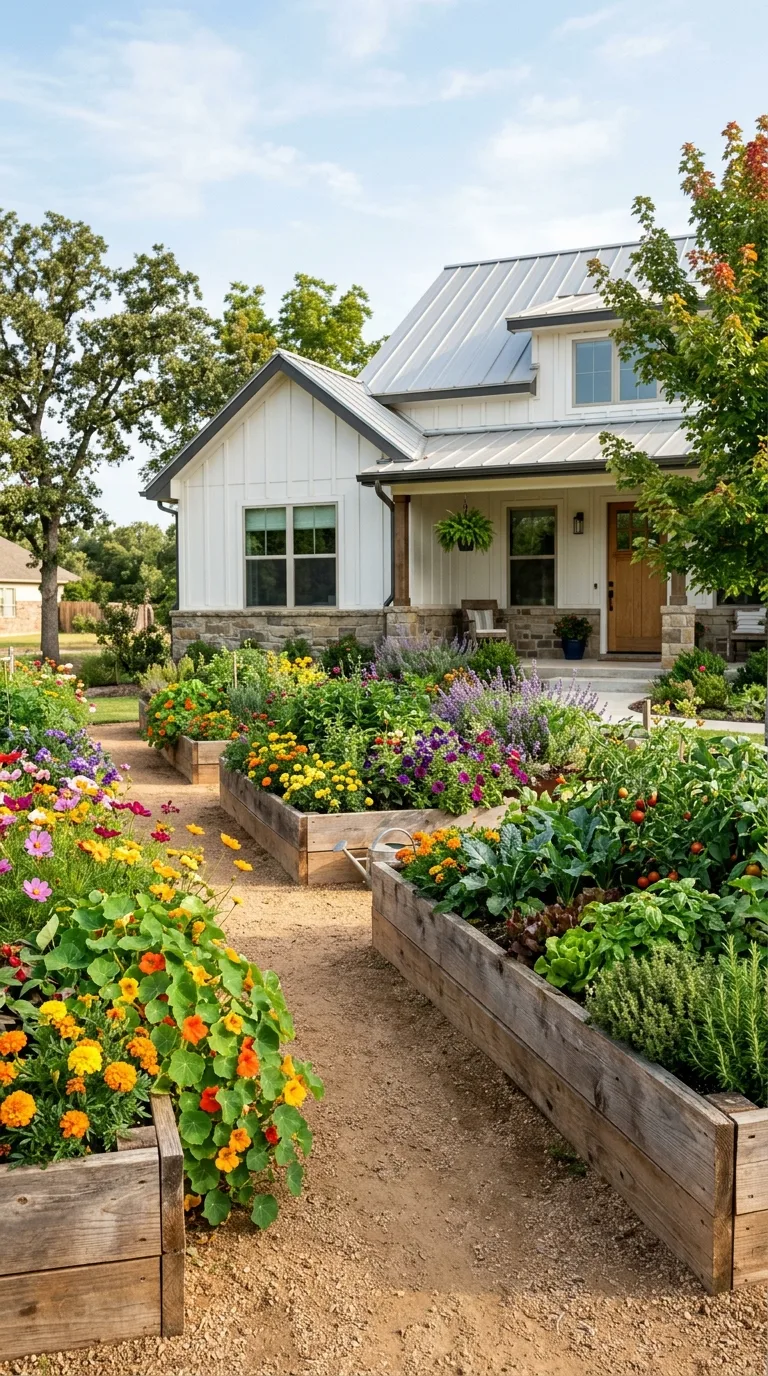
Filling your front yard with beautifully built raised garden beds is a grass-free approach that combines structure, practicality, and genuine visual charm. Raised beds built from cedar, painted wood, corten steel, or natural stone create strong architectural lines that give the yard a designed, intentional appearance. Filling them with a mix of flowering plants, edible crops, and textural foliage creates a yard that is both beautiful and deeply purposeful in a way a plain lawn never could be.
The modular nature of raised beds means you can customize the layout to suit your home’s architecture and your personal aesthetic preferences. Arranging beds in a geometric pattern with gravel or decomposed granite pathways between them creates a formal, structured front yard that feels both productive and elegant. Planting pollinator-friendly flowers at the edges of each bed softens the hard lines of the structure. This approach gives you a front yard that rewards daily engagement and looks spectacular throughout every season of the growing year.
11. Artificial Turf with Plant Borders
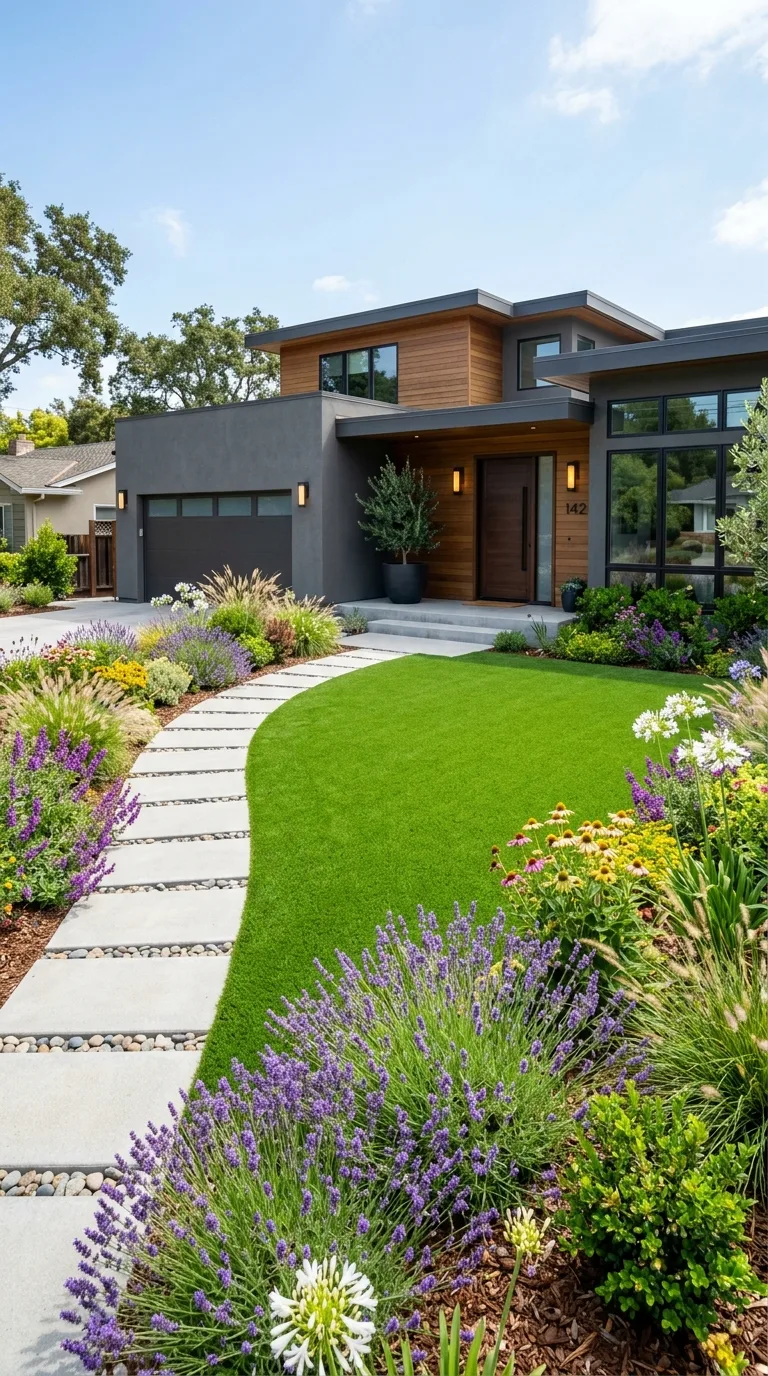
High-quality artificial turf has improved dramatically in recent years, and when paired with lush real plant borders, it creates a front yard that looks genuinely inviting and green year-round without a single drop of irrigation water. The best modern artificial turf products have realistic blade variation, a natural green color range, and a texture that reads as authentic from a distance. It is a practical solution for water-restricted regions where keeping real grass alive is simply not feasible.
The trick to making artificial turf look natural and beautiful is everything that surrounds it. Edging the turf with wide, lush real plant borders of native shrubs, ornamental grasses, lavender, and flowering perennials creates a living frame that makes the overall yard feel organic and well-tended. Adding real trees or large shrubs as focal points within or beside the turf area introduces shade and vertical interest. When done thoughtfully, artificial turf combined with real plantings creates a front yard that is virtually maintenance-free and consistently beautiful.
12. Flagstone Patio and Planting
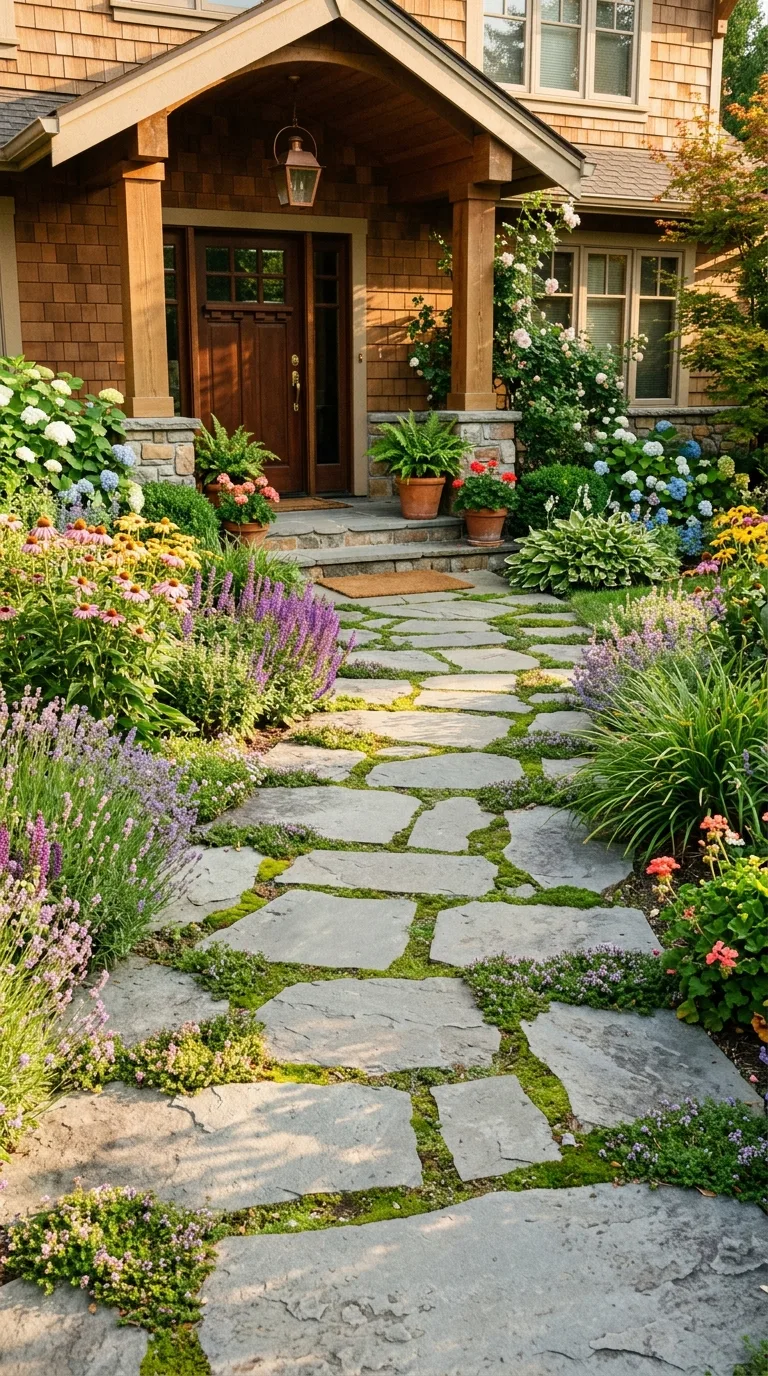
A flagstone front yard replaces grass with a naturally beautiful, irregular stone surface that has been used in garden design for centuries because of its timeless, elegant appeal. Irregular flagstone pieces in tones of gray, buff, rust, or slate create a visually rich ground surface that works with almost every architectural style. Leaving gaps between the stones for low-growing plants like thyme, moss, or chamomile to fill in gives the whole design a softer, more organic character.
The beauty of a flagstone front yard is how it balances hard and soft elements in a way that feels ancient and enduring. Using flagstone as a primary walkway or gathering area and framing it with generous planting beds creates a layered, welcoming composition. Adding potted plants, a small garden bench, or a fountain within the flagstone area turns the front yard into a true outdoor room. This is a design that genuinely improves with age as plants fill in and the stones develop a natural patina over time.
13. Drought-Tolerant Xeriscape
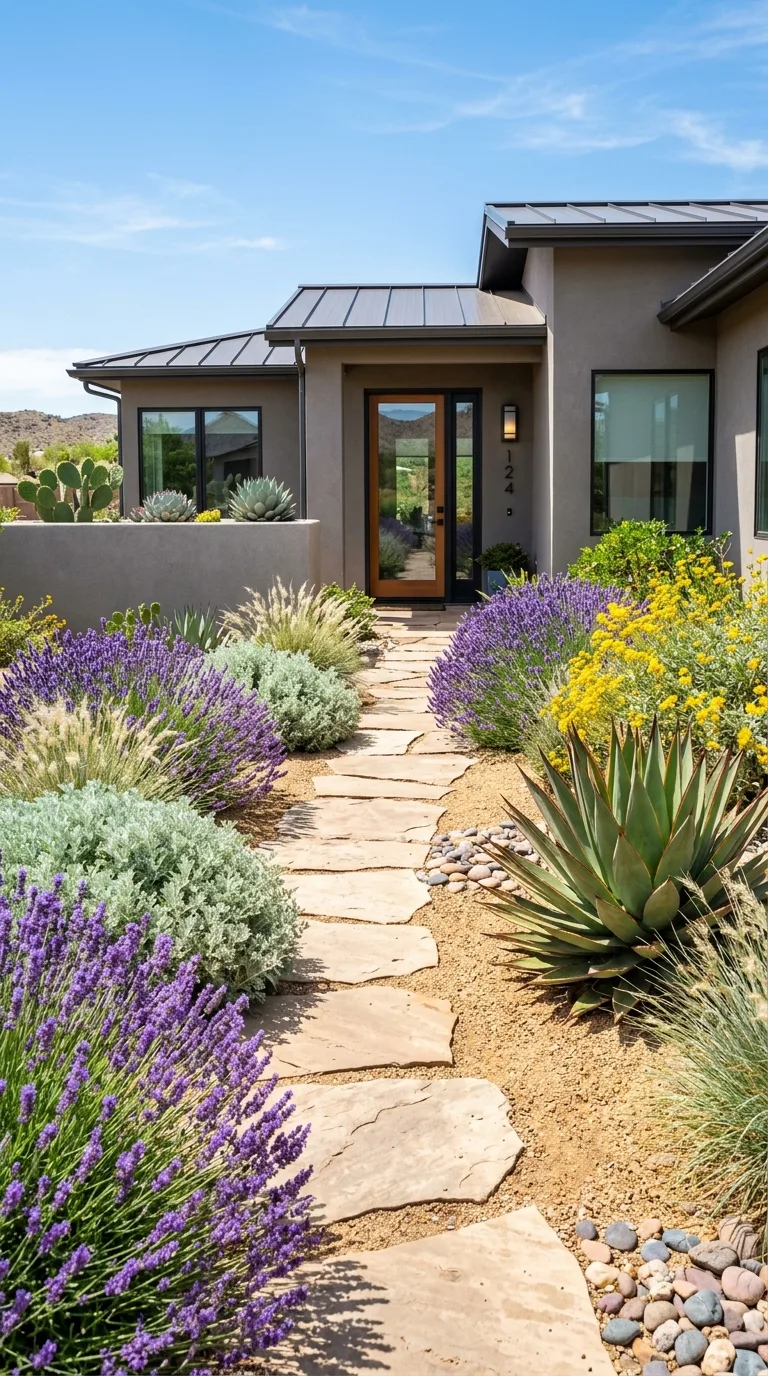
Xeriscaping is a complete landscaping philosophy built around using plants and materials that require minimal supplemental water once established. A well-designed xeriscape front yard is not a collection of cacti on bare dirt as many people imagine but rather a beautifully layered garden of drought-adapted shrubs, ornamental grasses, flowering perennials, and ground covers that collectively create a lush, full landscape. It is one of the most sustainable front yard approaches available to homeowners today.
The key to a beautiful xeriscape is selecting plants with varying textures, bloom times, and heights to ensure the yard always looks vibrant and full. Pairing fine-textured grasses with bold-leafed agave, delicate-flowered salvias with structural lavender, and ground-covering sedums with airy ornamental grasses creates a composition that feels intentional and alive. Finishing the ground with decomposed granite or river rock ties everything together and eliminates the need for mulching, weeding, or any regular maintenance that grass would demand.
14. Ornamental Grass Front Yard
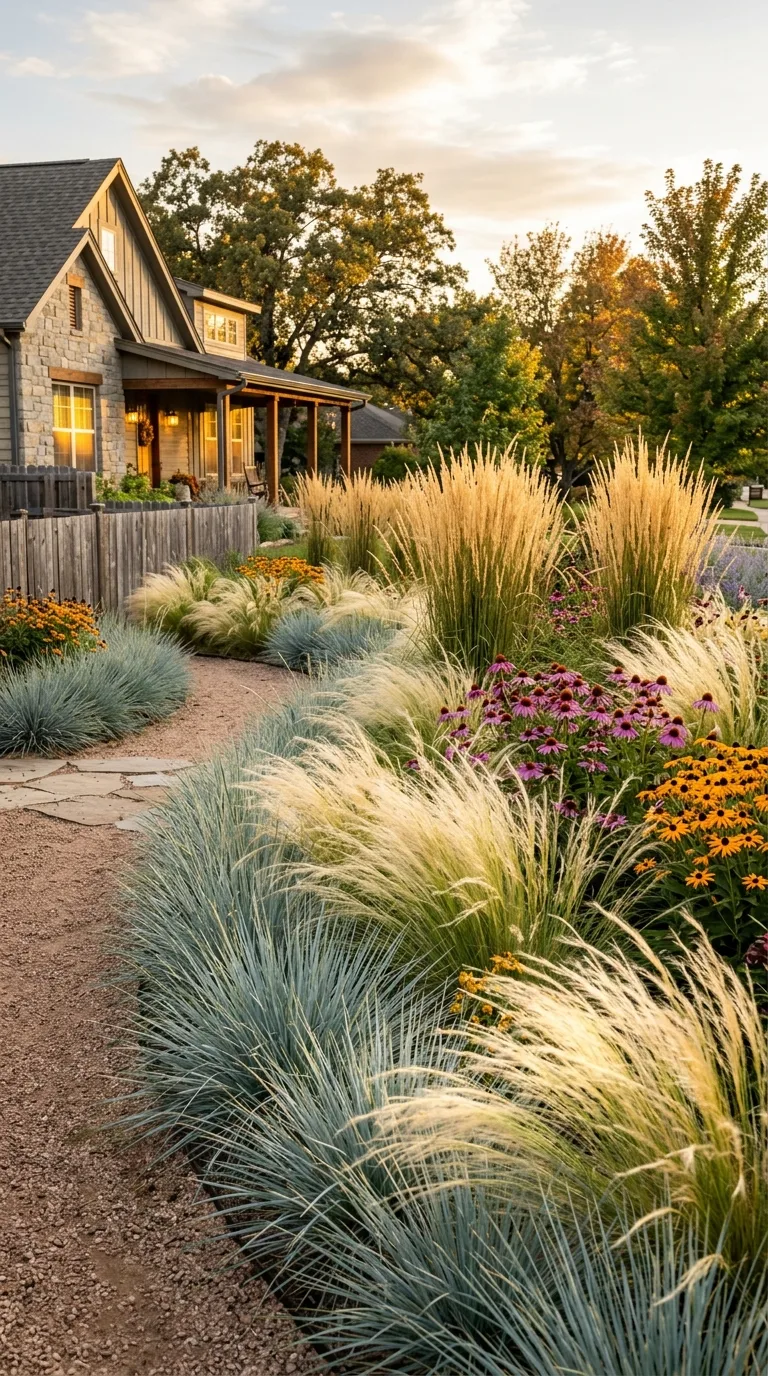
An ornamental grass front yard is a wonderfully dynamic and low-maintenance grass-free approach that creates movement, texture, and year-round visual interest. Unlike lawn grass, ornamental varieties like Karl Foerster feather reed grass, Mexican feather grass, maiden grass, and blue oat grass grow in sculptural clumps that look beautiful through every season, including winter when their seed heads catch the light and sway in the breeze in the most visually captivating way.
Designing with ornamental grasses requires thinking about both their mature size and their seasonal changes throughout the year. Grouping them in odd-numbered clusters of three or five creates a naturalistic, designed look rather than a haphazard planting. Mixing tall background grasses with shorter mid-layer varieties and low ground-covering options creates a full, layered composition. Adding a few flowering perennials throughout the grass planting introduces seasonal color and further elevates the overall design of the front yard in a meaningful way.
15. Paved Courtyard Front Yard
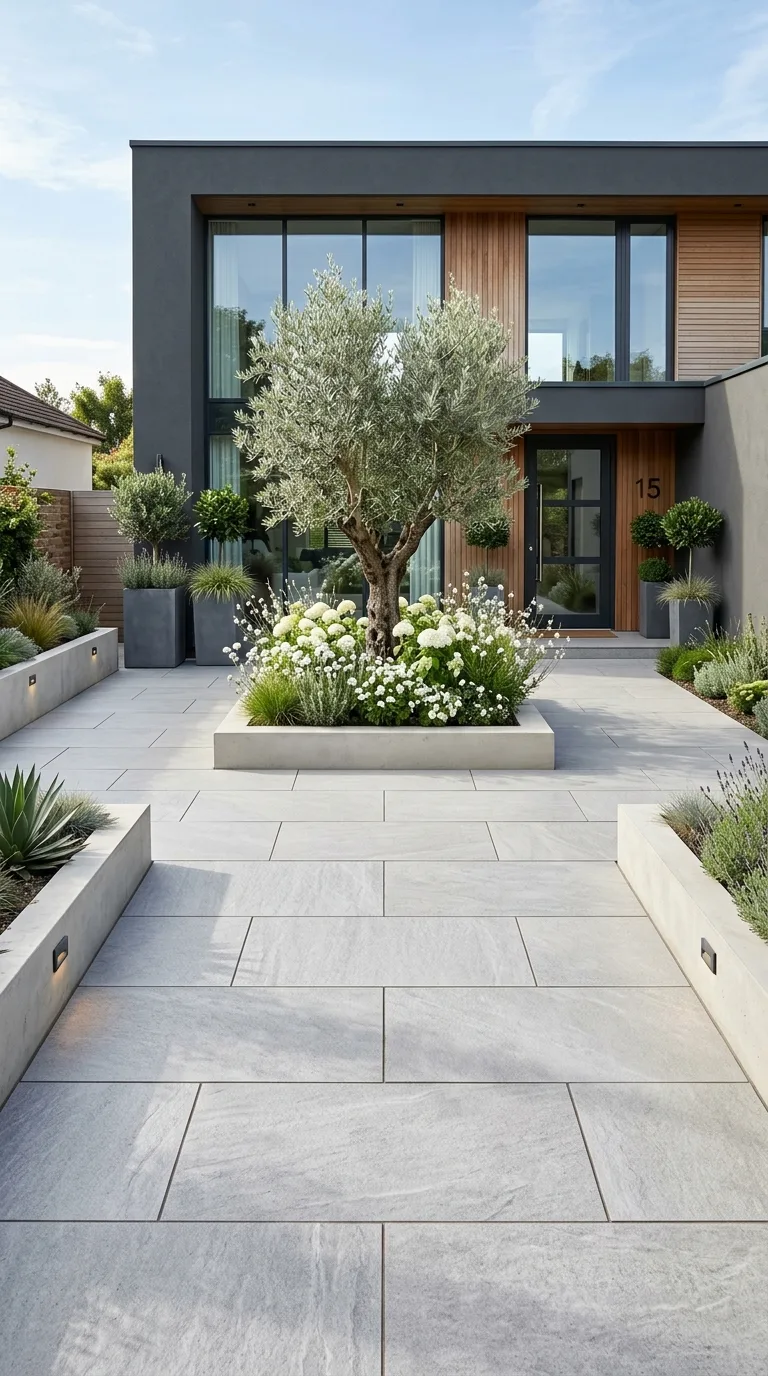
Converting a front yard into a paved courtyard is a bold design decision that creates an incredibly elegant, architectural exterior for any style of home. Using materials like brick, concrete pavers, natural slate, or porcelain tiles in a thoughtful pattern transforms the front of a home into something that looks both sophisticated and welcoming. The clean lines of a well-paved courtyard make the home itself look more substantial and intentionally designed from the street.
The success of a paved courtyard front yard depends on integrating generous planting areas within and around the hardscape. Raised planters built into the courtyard design, pots and urns overflowing with seasonal plants, and strategic tree pits that allow shade trees to grow through the paving all prevent the space from feeling cold or sterile. Adding outdoor furniture, a water feature, or statement lighting makes the courtyard an inviting space to spend time rather than just a path to the front door.
16. Edible Front Yard Garden
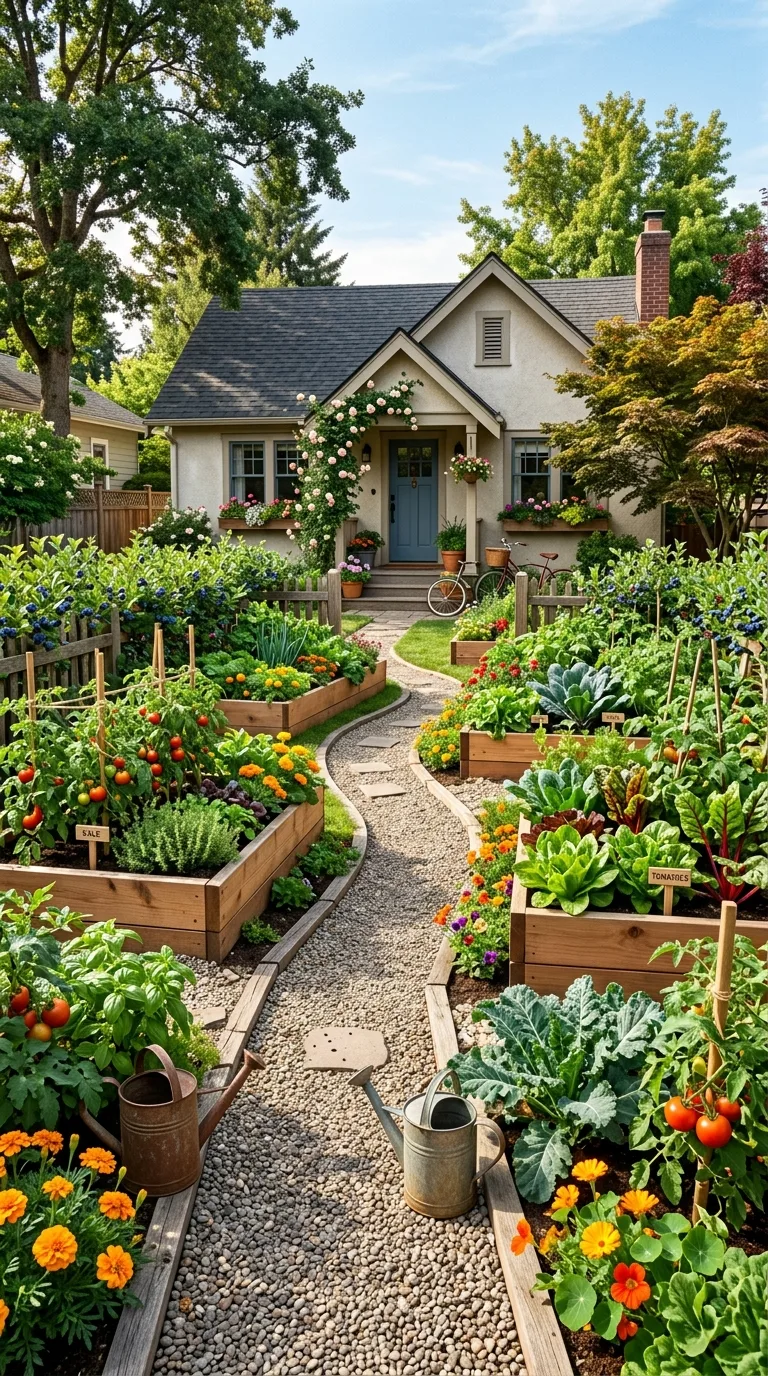
An edible front yard garden is a radical and deeply rewarding reimagining of what a front yard can be. Replacing grass with raised vegetable beds, fruit trees, berry bushes, and edible ground covers creates a space that is productive, beautiful, and genuinely purposeful. Herb gardens along the front path, blueberry bushes used as hedging, and climbing beans on a trellis along the fence all contribute to a yard that feeds your family while looking intentional and cared for.
The best edible front yards are designed to be beautiful first and functional second, so that the garden has genuine curb appeal alongside its productivity. Mixing edible plants with ornamental flowers and foliage blurs the line between a traditional garden and a kitchen garden in the most appealing way. Raised cedar beds with a gravel pathway system, consistent edging, and seasonal flower borders create a front yard that neighbors admire and ask about constantly. This approach is especially popular with eco-conscious homeowners who want every square foot of their property to serve a purpose.
17. Pebble and Stepping Stone Path
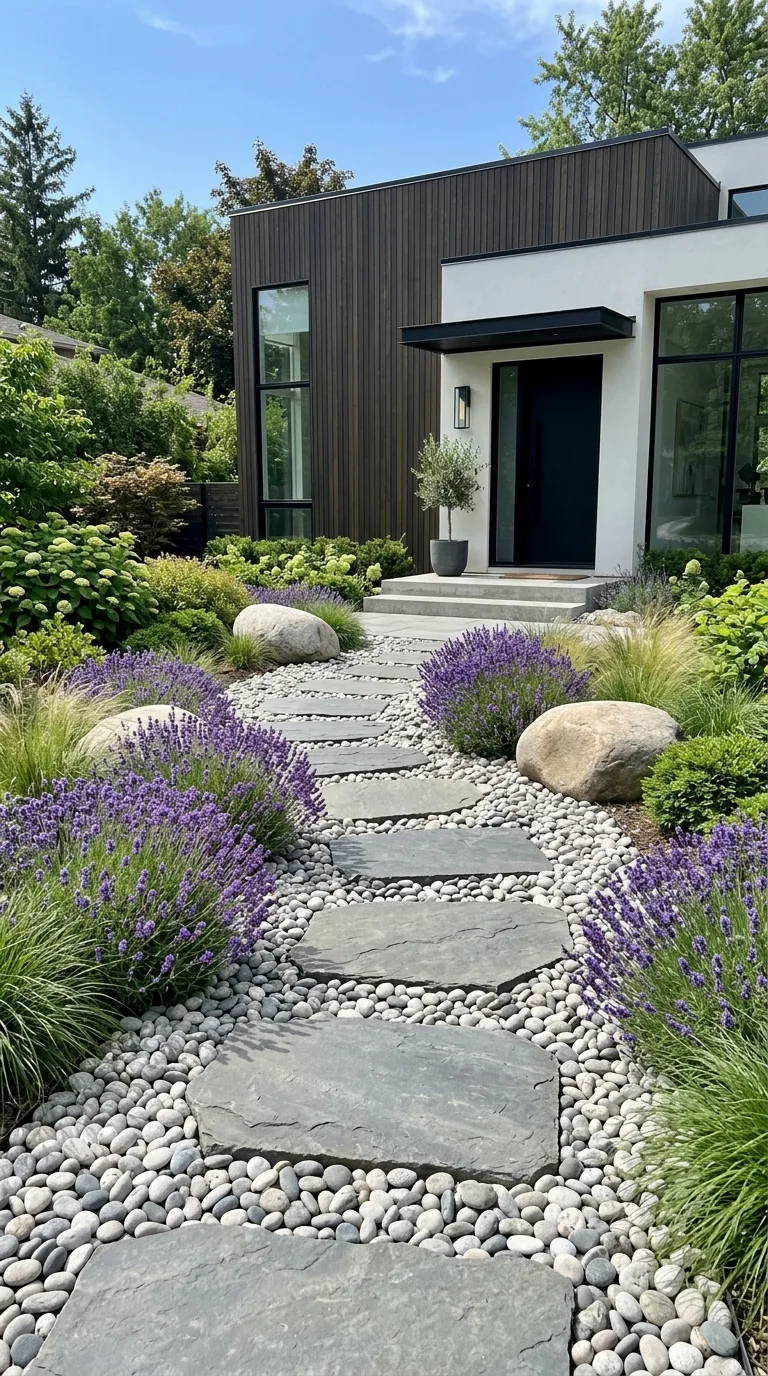
A front yard designed around a network of stepping stone paths set into fine pebble ground covering is a quietly elegant grass-free solution that works beautifully for homes of every architectural style. Large natural stone slabs or irregular flagstones set into a sea of smooth white, gray, or buff-toned pebbles create a visually rich surface that is both functional and genuinely beautiful. The contrast between the solid stones and the loose pebbles gives the yard a layered, composed appearance.
Planting low ornamental grasses, lavender, or ground-covering perennials in clusters around and between the stepping stones softens the hardscape and brings the design to life. Placing a few larger decorative boulders as anchoring focal points throughout the yard creates a sense of scale and natural authenticity. This design style is particularly effective for modern or minimalist homes where clean materials and intentional restraint in the landscape communicate the same design sensibility as the architecture itself.
18. Fern and Shade Garden
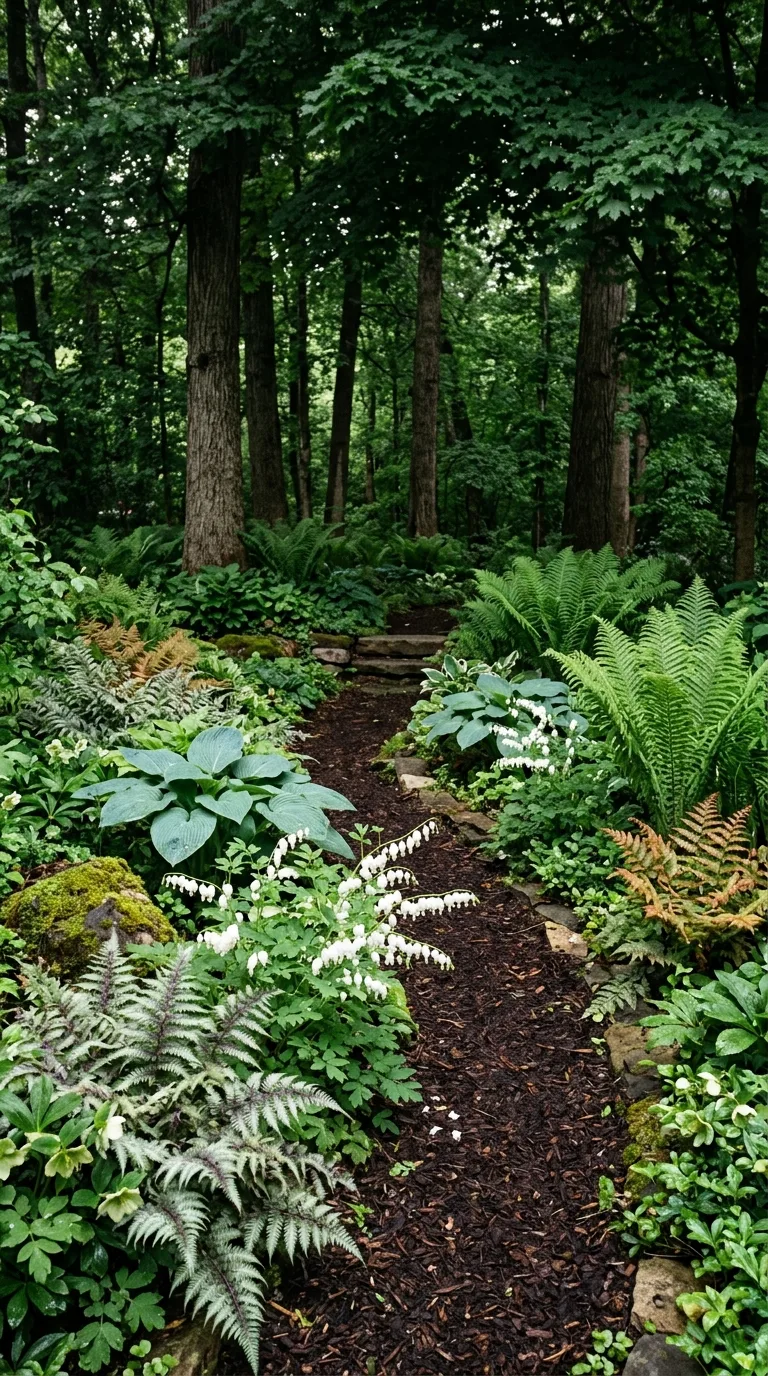
A front yard dominated by ferns and shade-loving plants is a gloriously lush and deeply green alternative to grass for homes with significant tree coverage. Ferns create a layered, forest-floor aesthetic that is both calming and visually rich. Varieties like Japanese painted fern, ostrich fern, and autumn fern offer a range of textures and colors from deep forest green to silvery blue to bronze that collectively create a tapestry of foliage unlike anything a lawn could produce.
Combining ferns with other shade-tolerant plants like hostas, astilbes, bleeding hearts, and hellebores creates a front yard that is full of interest through every season. Spring brings delicate flowers, summer delivers maximum foliage drama, fall offers rich color changes, and winter reveals the skeletal structure of the planting in an elegant way. Bark mulch pathways winding through the fern garden add a woodland feel and keep the space navigable and well-defined. This is a magical approach for the right property.
19. Lavender Field Front Yard
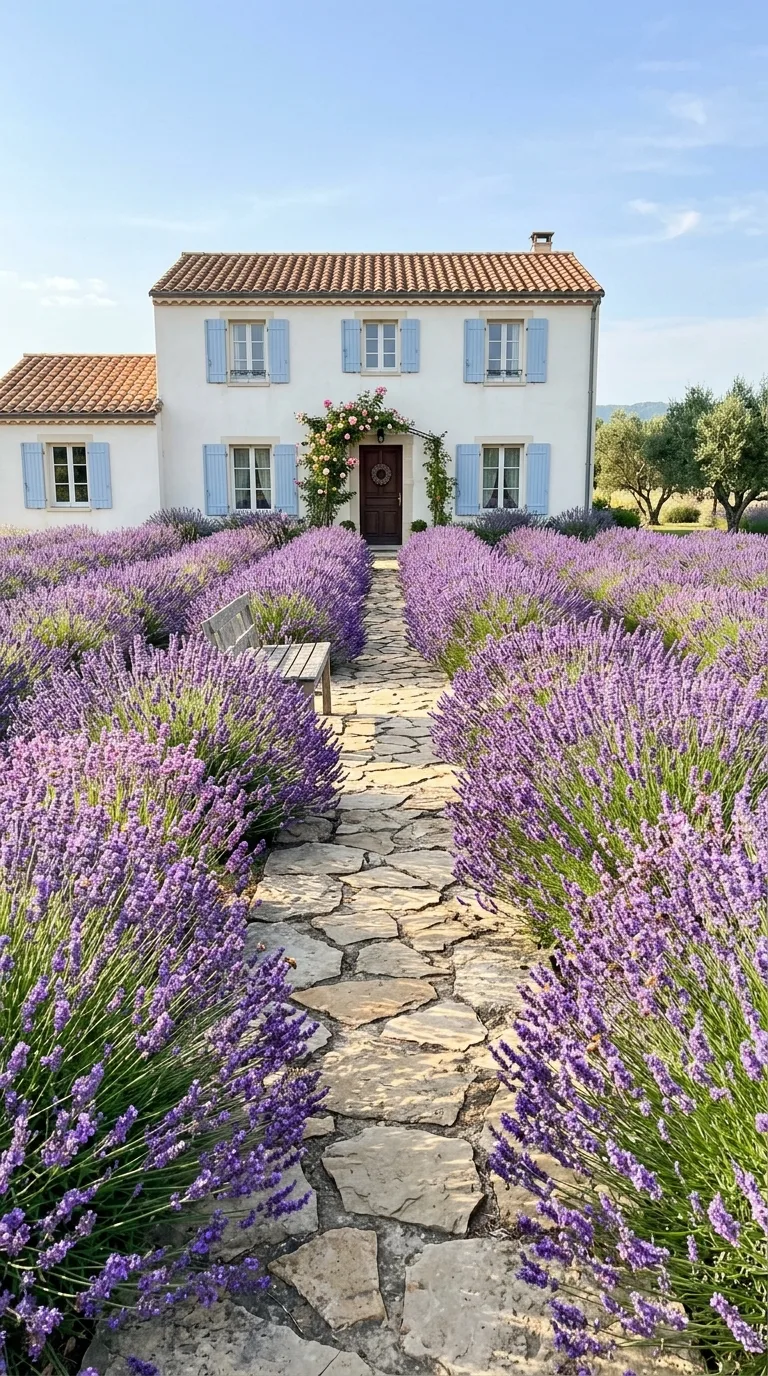
A front yard planted generously with lavender is one of the most romantic and sensory front yard transformations possible, filling your entire property with fragrance, color, and life every time the plants come into bloom. Lavender is incredibly drought-tolerant once established, requiring almost no supplemental watering in most climates. It blooms prolifically in early summer with spikes of purple, pink, or white flowers that attract bees and butterflies from every corner of the neighborhood.
Designing a lavender front yard works best when the plants are arranged in flowing rows or gentle masses rather than scattered randomly. Pairing lavender with low-growing companions like creeping thyme, catmint, or ornamental sage creates a soft, fragrant ground layer that keeps the yard looking full between lavender blooming seasons. A stone or gravel pathway cutting through the lavender plantings adds structure and allows you to walk through and enjoy the fragrance up close. This is an exterior that stops traffic during peak bloom every single year.
20. Brick Paver Design
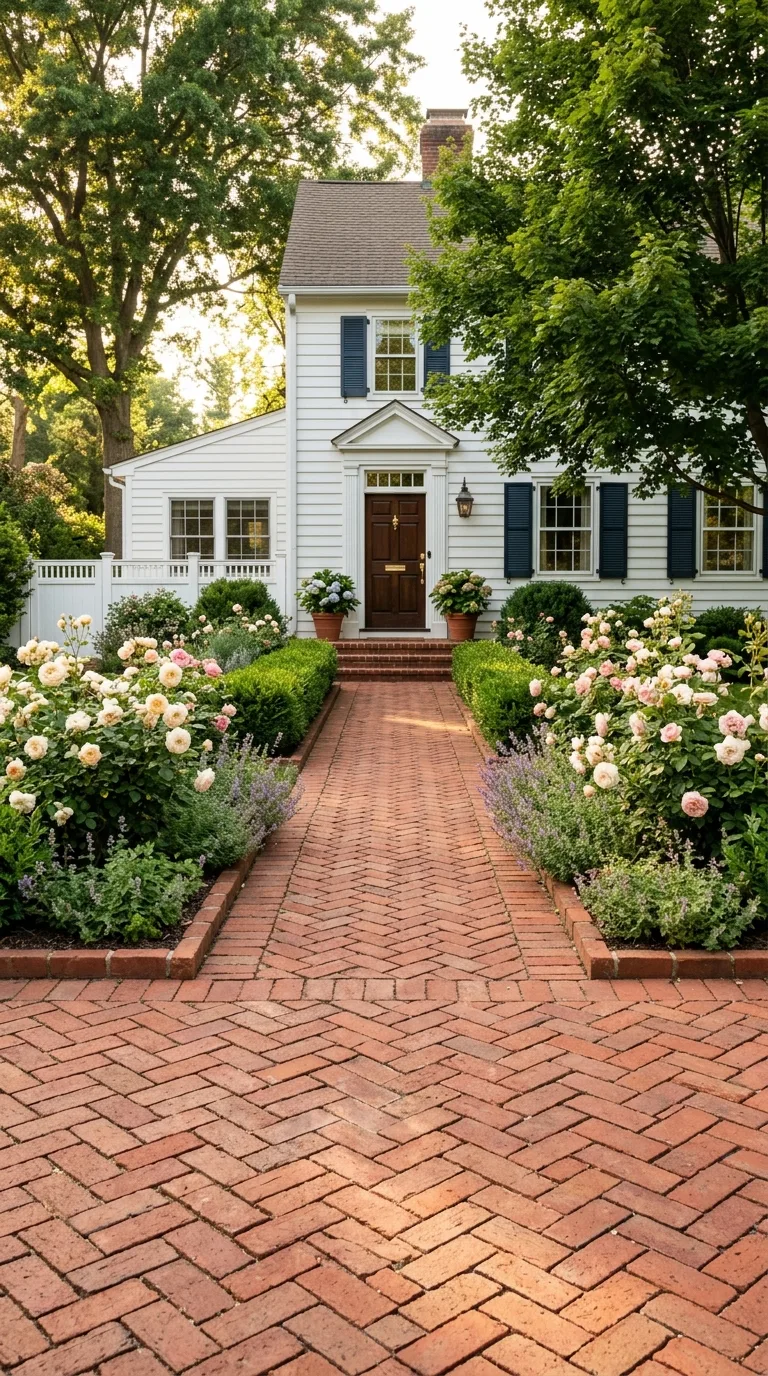
A front yard paved with brick is a timeless and deeply beautiful grass-free solution that suits traditional, craftsman, colonial, and cottage-style homes with particular elegance. Brick has a warmth and texture that other paving materials struggle to replicate, and it improves visually with age as it weathers and develops natural patina. Using brick in a herringbone, running bond, or basket weave pattern adds visual interest to the ground plane and makes the front yard feel designed and thoughtfully executed from every angle.
Integrating generous planting beds within a brick front yard prevents the space from feeling too hard or formal. Brick-edged garden beds filled with perennials, roses, or ornamental shrubs soften the hardscape beautifully and bring seasonal color to the design. Adding a central focal point such as a small fountain, a specimen tree, or a large planted urn creates visual hierarchy and makes the front yard feel like a curated, intentional space rather than simply a paved surface leading to a front door.
21. Zen Inspired Sand and Stone Garden
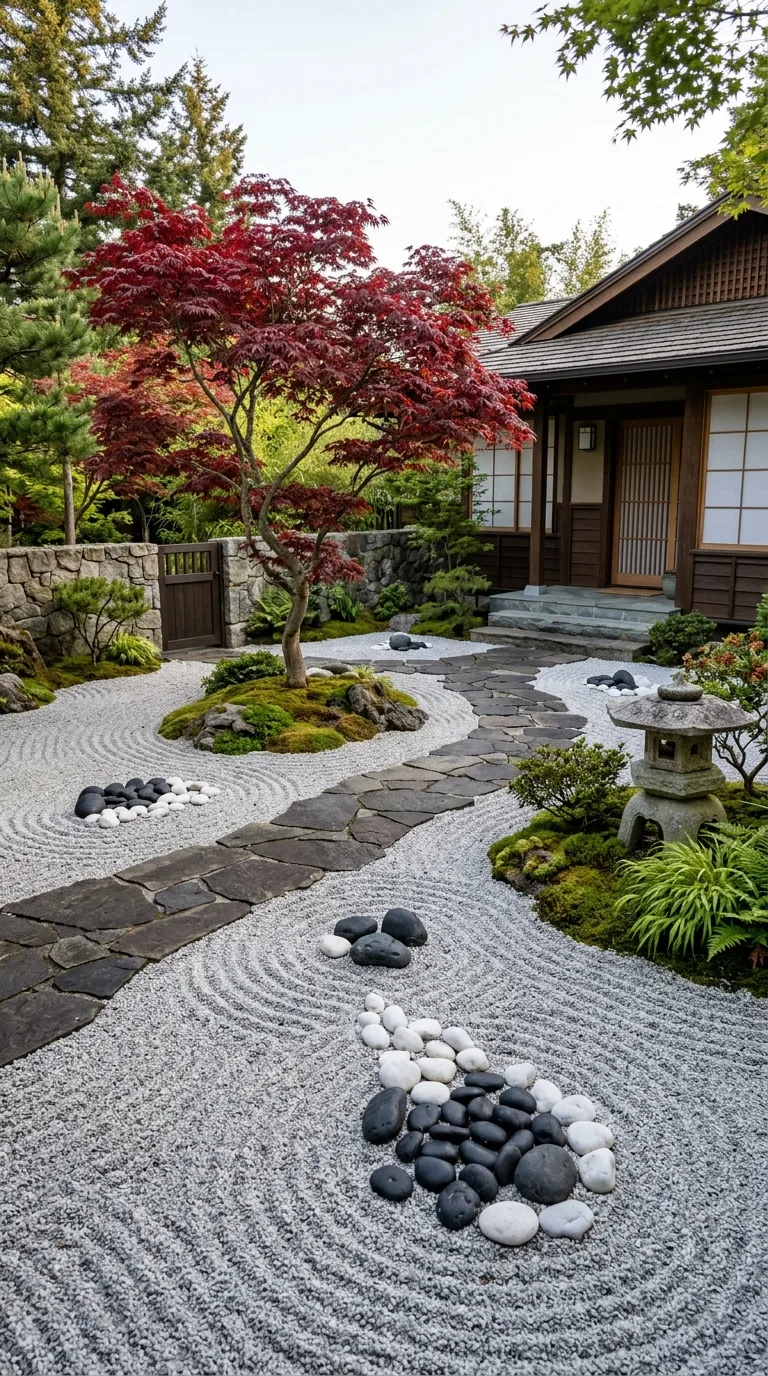
A Zen-inspired front yard uses carefully raked sand or fine gravel, precisely placed stones, and minimal planting to create a front yard of extraordinary calm, balance, and visual purity. This style, rooted in traditional Japanese garden design, translates beautifully to modern residential settings where homeowners value clean lines, intentional simplicity, and a sense of tranquility that begins the moment you arrive home. Every element in a Zen garden is placed with deliberate purpose and meaning.
Creating a Zen-inspired front yard does not require strict adherence to traditional Japanese garden rules but rather an appreciation for the principles behind them. Using light-toned sand or fine gravel raked into patterns, framing the space with a few architectural plants like Japanese maple, bamboo, or black pine, and placing smooth river stones in asymmetric groupings creates an immediately recognizable aesthetic. A simple bamboo fence or low stone wall as a boundary reinforces the contained, meditative quality of the design and gives it genuine authenticity.
22. Tropical Plant Front Yard
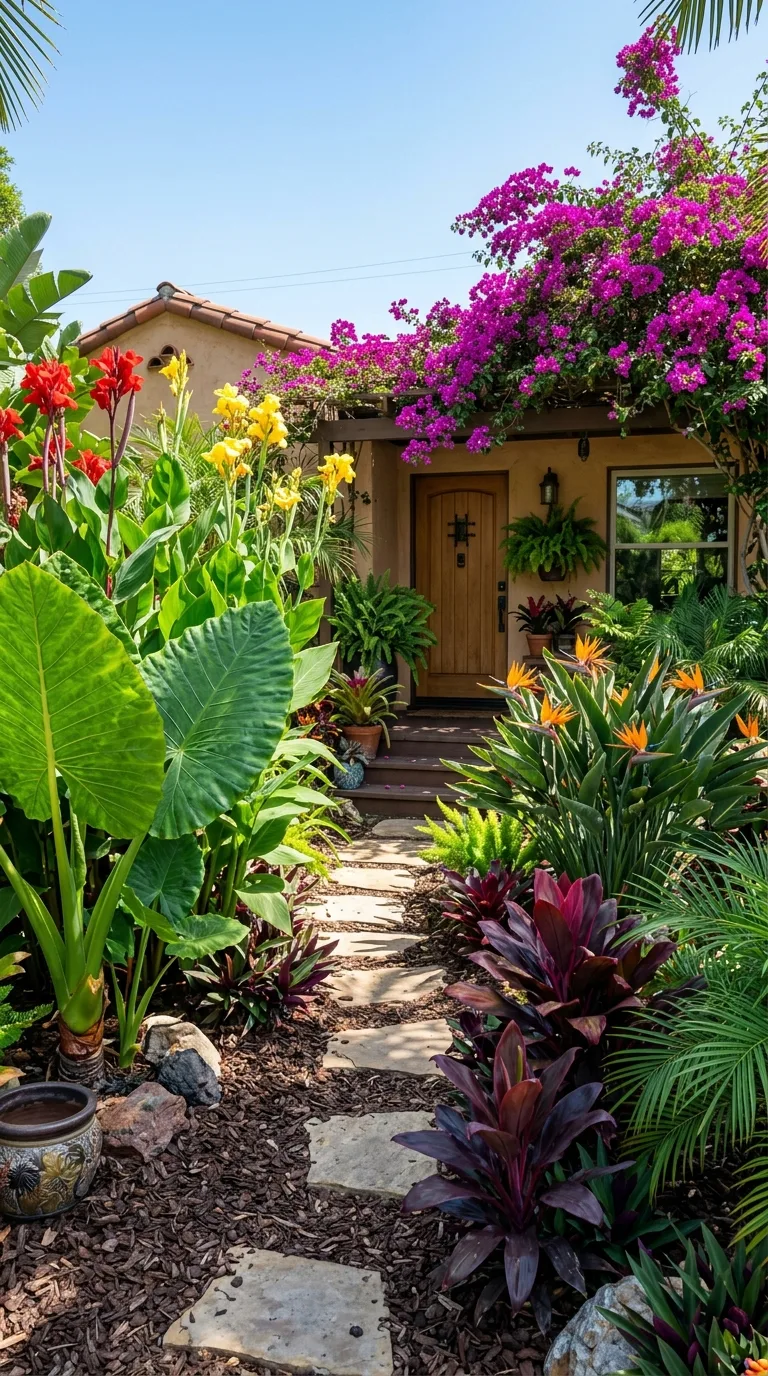
A tropical-inspired front yard is a bold, lush, and deeply dramatic grass-free design that uses large-leafed, exotic-looking plants to create the impression of a private jungle retreat right at your front door. Banana plants, cannas, bird of paradise, elephant ears, and ti plants all contribute oversized foliage in shades of green, burgundy, yellow, and orange that create an immediate visual impact from the street. This look is breathtaking during the growing season and genuinely unforgettable.
The key to a successful tropical front yard is layering plants of different heights and leaf sizes to create the densely packed, multi-tiered canopy that makes tropical environments feel so immersive and lush. Pairing bold architectural plants with flowering tropical companions like lantana, bougainvillea, or impatiens adds color beneath the canopy layer. Finishing the ground with dark bark mulch intensifies the sense of richness and makes all the foliage colors appear deeper and more vibrant. This is a front yard style that demands attention and delivers pure drama.
23. Creeping Thyme Carpet
Creeping thyme is one of the most beloved grass alternatives available because it forms a dense, fragrant, drought-tolerant carpet that stays low and requires almost no maintenance once established. It releases a delightful herbal fragrance when brushed or walked upon gently, making it a sensory pleasure as well as a visual one. In late spring and early summer, it explodes into tiny pink, purple, or white flowers that cover the entire surface in a breathtaking display that attracts pollinators by the thousands.
Creeping thyme works beautifully as a full front yard ground cover or as a filler between stepping stones, pavers, and rock garden elements. It tolerates light foot traffic, making it practical as well as decorative. Mixing several varieties of creeping thyme with slightly different flower colors and foliage tones creates a natural, patchwork effect across the yard. Once blooming season is over, the deep green foliage remains attractive and dense throughout the rest of the year, keeping the front yard looking lush and well-covered in every season.
24. Woodland Garden Design
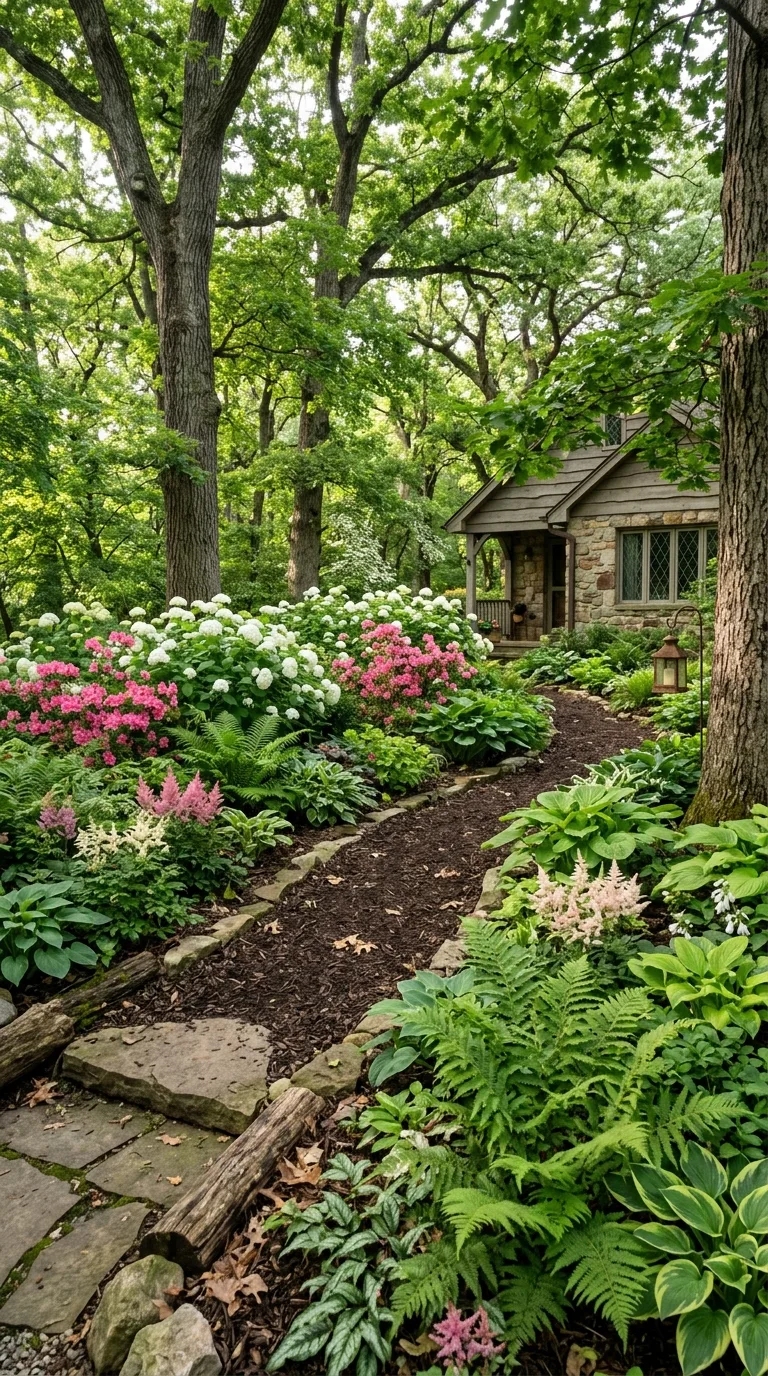
A woodland garden front yard draws inspiration from the natural forest floor, using layers of shade trees, understory shrubs, and low-growing woodland plants to create a deeply lush, naturalistic landscape that requires minimal maintenance once established. This design works beautifully for properties with existing mature trees that already cast significant shade. Rather than fighting the shade with struggling grass, a woodland garden embraces it and uses it as the foundation of a genuinely beautiful planting design.
The layered structure of a woodland garden is what gives it such visual richness and a sense of established permanence. Tall shade trees form the upper canopy, flowering shrubs like hydrangeas, azaleas, or viburnums create the mid-layer, and hostas, ferns, astilbes, and wildflowers carpet the ground below in a tapestry of texture and color. A bark-mulched winding path leading through the layers invites exploration and makes the front yard feel like a private nature retreat. This is a front yard that grows more beautiful with every passing year.


