

24 Backyard Ideas That Feel Like a Private Escape
A backyard feels like an escape when it gives you privacy, shelter and a reason to stay outside: a screened corner, some shade, a place to sit by a fire or by water. Most of that comes from a few well-placed screens, plants and seating areas rather than a big budget.
Below are 24 backyard ideas, each with what it involves and one practical point to plan for, from fire safety to invasive plants. Start with the basics, because they apply to most of these projects.
Plan these first
Check permits and buried lines
Fences, pergolas, decks, retaining walls, gas lines, outdoor kitchens and pools often need permits, and HOAs may set their own rules on height and materials. Call 811 before you dig so buried utility lines can be marked.
Keep fire away from what can burn
The US Fire Administration advises using fire pits, chimneys and outdoor fireplaces at least 10 feet away from your home or anything that can burn, putting a metal screen over wood fires and watching children closely. Check local burn rules too, since some areas restrict open fires.
Treat water as a hazard for children
A plunge pool, hot tub or deep pond needs barriers and supervision. The American Academy of Pediatrics recommends a fence at least 4 feet high that completely surrounds a pool or spa, together with an adult actively watching whenever children are near the water.
Pick plants that won’t take over
Some popular screening plants are invasive. NC State Extension lists Chinese privet and running golden bamboo as invasive, and both are hard to remove once established. Check your state’s invasive plant list and choose plants hardy in your USDA zone.
The 24 ideas at a glance
| Idea | What it adds | Plan for |
|---|---|---|
| Pergola with curtains | Adjustable privacy and shade | Outdoor fabric, wind |
| Sunken seating | Shelter without tall walls | Drainage; gas safety |
| Outdoor fireplace | Warmth and a focal point | 10 ft clearance, permits |
| Living privacy wall | Year-round screening | Non-invasive shrubs |
| Tropical plunge pool | Cooling off | Fence and supervision |
| Bamboo screen | Quick privacy | Panels or clumping bamboo only |
| Outdoor bedroom | Napping outside | Roof, netting, dry storage |
| Glass garden room | Use in every season | Shade, vents, stove safety |
| Water feature | Sound that masks noise | Mosquitoes; child safety |
| Fire pit circle | Evening gatherings | 10 ft clearance, spark screen |
| Hammock | A low-cost retreat | Tree straps, healthy trees |
| Covered patio with lights | Evening dining | Outdoor-rated, GFCI |
| Secret garden path | A sense of discovery | Level stepping stones |
| Zen garden | Quiet and calm | Weed barrier; maple seedlings |
| Outdoor movie theater | Entertainment | Outdoor cords, noise rules |
| Raised deck with canopy | A sheltered vantage point | Guardrails, permits |
| Wildflower meadow | Pollinators and color | Site prep; native seed |
| Hot tub enclosure | Private soaking | Cover, 104°F, deck load |
| Greenhouse hideaway | A warm winter retreat | Vented heating |
| Moroccan lounge | Color and pattern | LED candles in lanterns |
| Shaded canopy lounge | Midday comfort | Anchor posts, outdoor fan |
| Fairy light garden | Soft night light | Loose wraps on branches |
| Outdoor kitchen and dining | Cooking outside | Grill placement, utilities |
| Candlelit dining nook | Dinner for two | Flames clear of foliage |
1. Pergola with Flowing Curtains
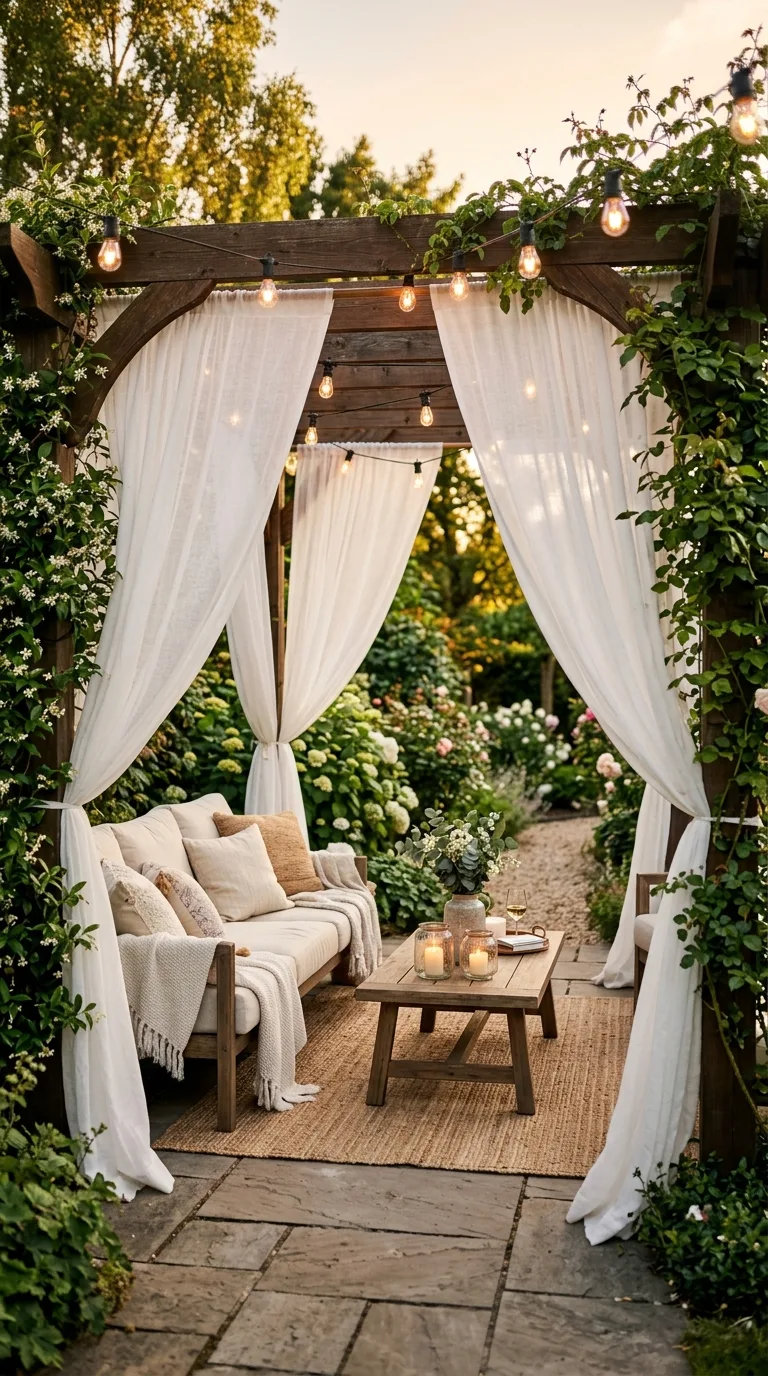
Outdoor curtains on a pergola let you open the space up or close off two or three sides for shade and privacy. Sheer, light-colored fabric keeps it airy, while heavier panels block more sun and wind. Add outdoor furniture, cushions and lanterns inside and it becomes an outdoor room.
Good to know: choose fabric made for outdoor use, tie the panels back in strong wind, and take them down over winter to make them last.
2. Sunken Seating Area
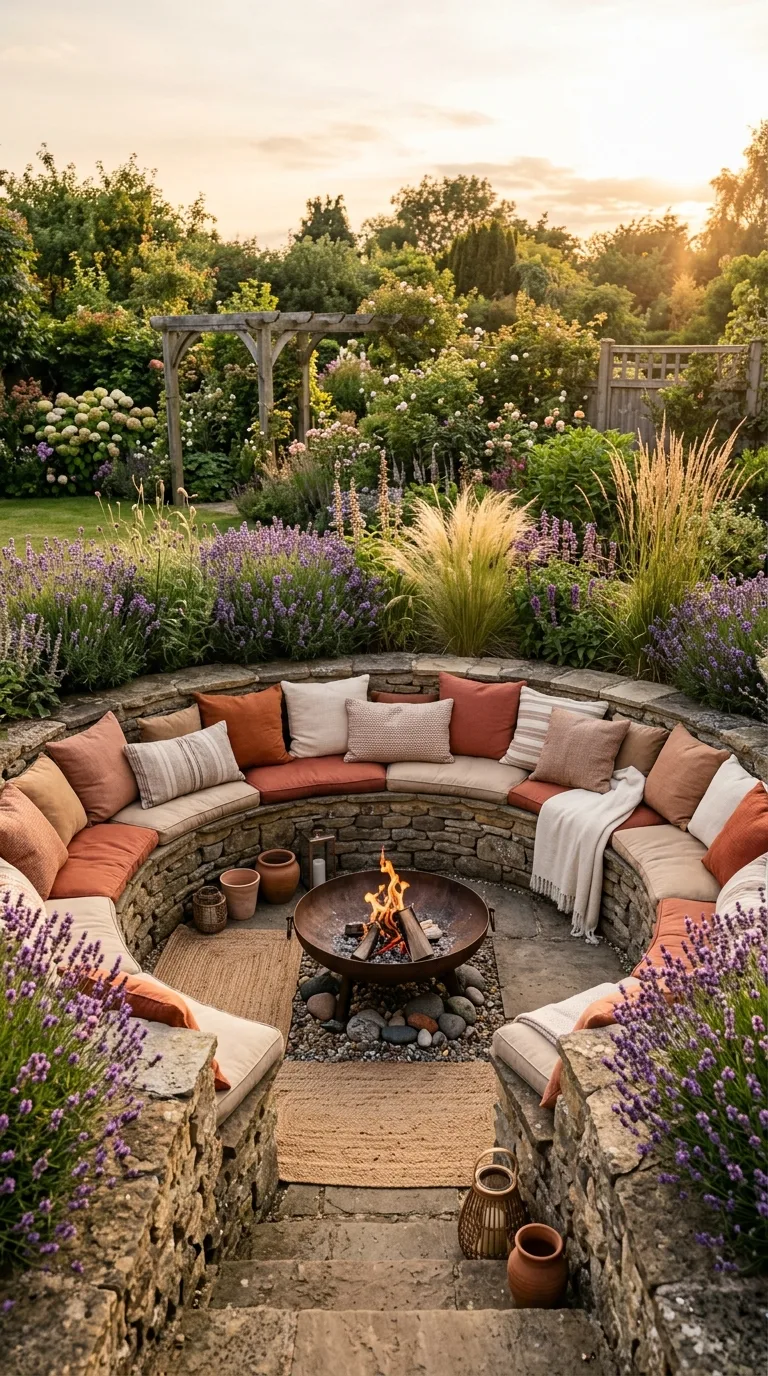
Lowering a seating area a few steps below the garden creates a sheltered bowl that feels private without tall walls. Built-in benches around the edge seat more people, retaining walls in stone, brick or steel add texture at eye level, and a central fire feature makes it a gathering spot.
Good to know: a sunken area collects rainwater, so it needs a drain. Propane is heavier than air and can collect in low spots, so a gas fire pit there should be installed by a licensed pro following the maker’s instructions, and taller retaining walls may need a permit.
3. Outdoor Fireplace Lounge
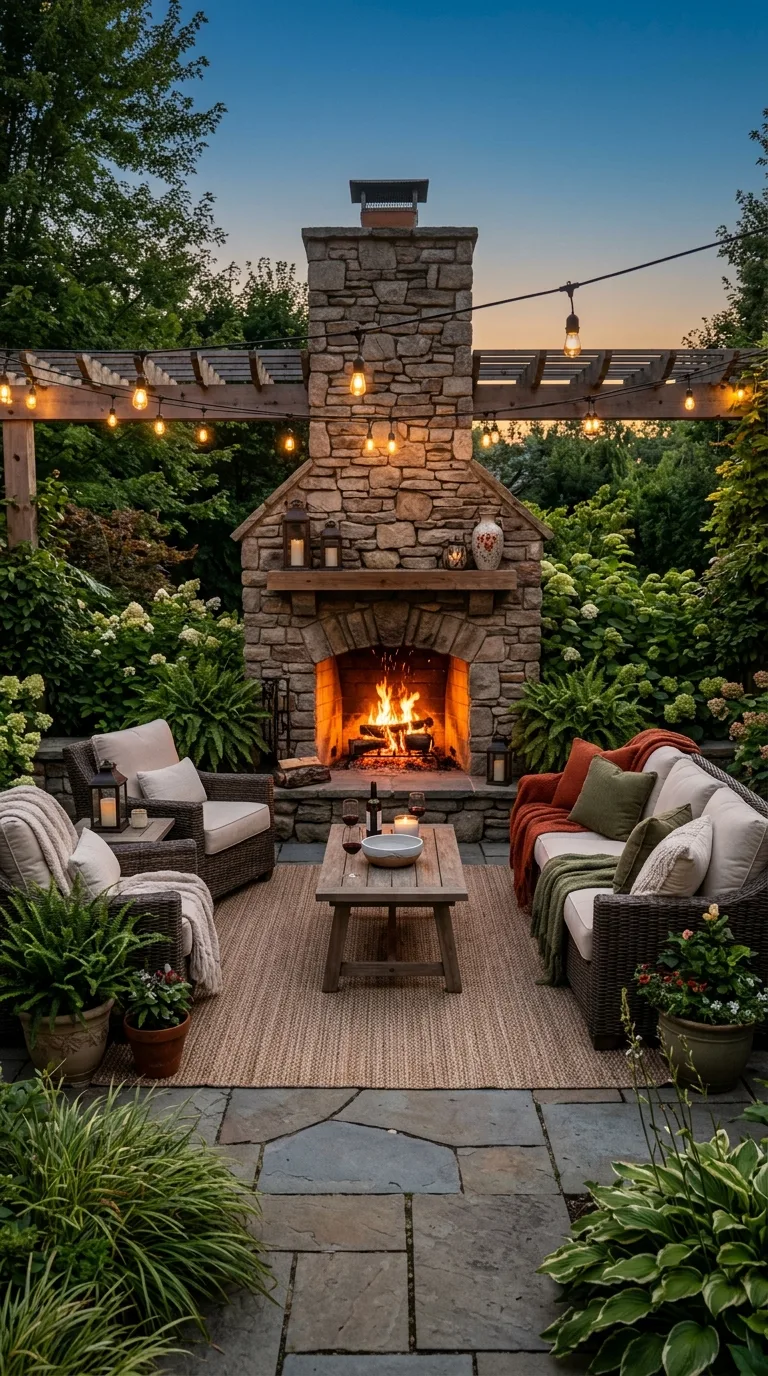
A masonry or stone fireplace gives the yard a focal point and lets you use it on cool evenings. Sofas, armchairs and an outdoor rug arranged around it make an outdoor living room, and a niche for firewood and some low lighting finish it.
Good to know: the US Fire Administration advises using outdoor fireplaces at least 10 feet from the home or anything that can burn, and a built-in fireplace should be designed to local code and usually needs a permit.
4. Living Privacy Wall with Plants
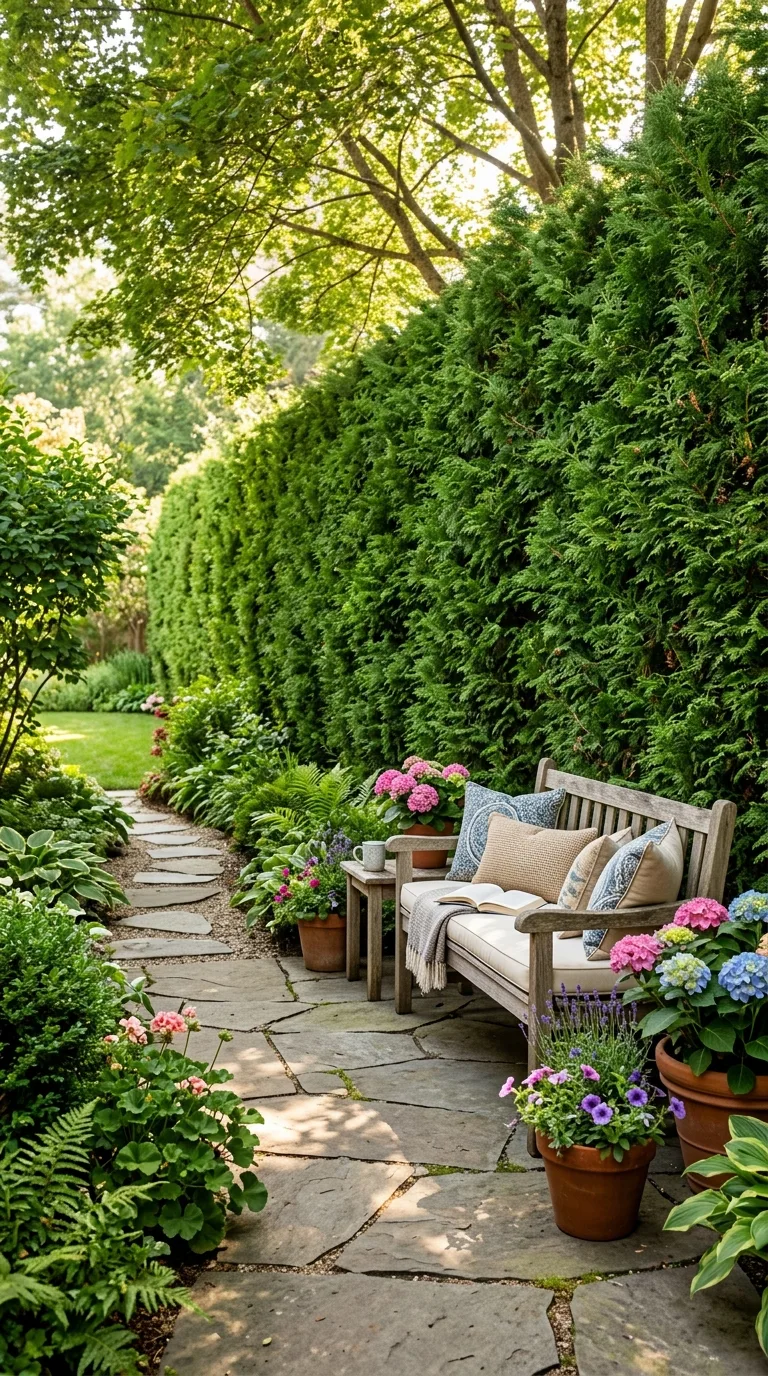
A row of evergreen shrubs makes a soft, living boundary that screens year-round and gives birds shelter. American arborvitae is a native choice for zones 3 to 7, though NC State notes deer browsing can be a serious problem. Mixing flowering shrubs, ornamental grasses and vines on a trellis makes a looser, more natural screen.
Good to know: avoid Chinese privet, which is invasive, and think twice about Fraser photinia, which NC State says is prone to leaf spot in humid areas. Space plants for their mature width so the hedge doesn’t outgrow the space.
5. Tropical Plunge Pool
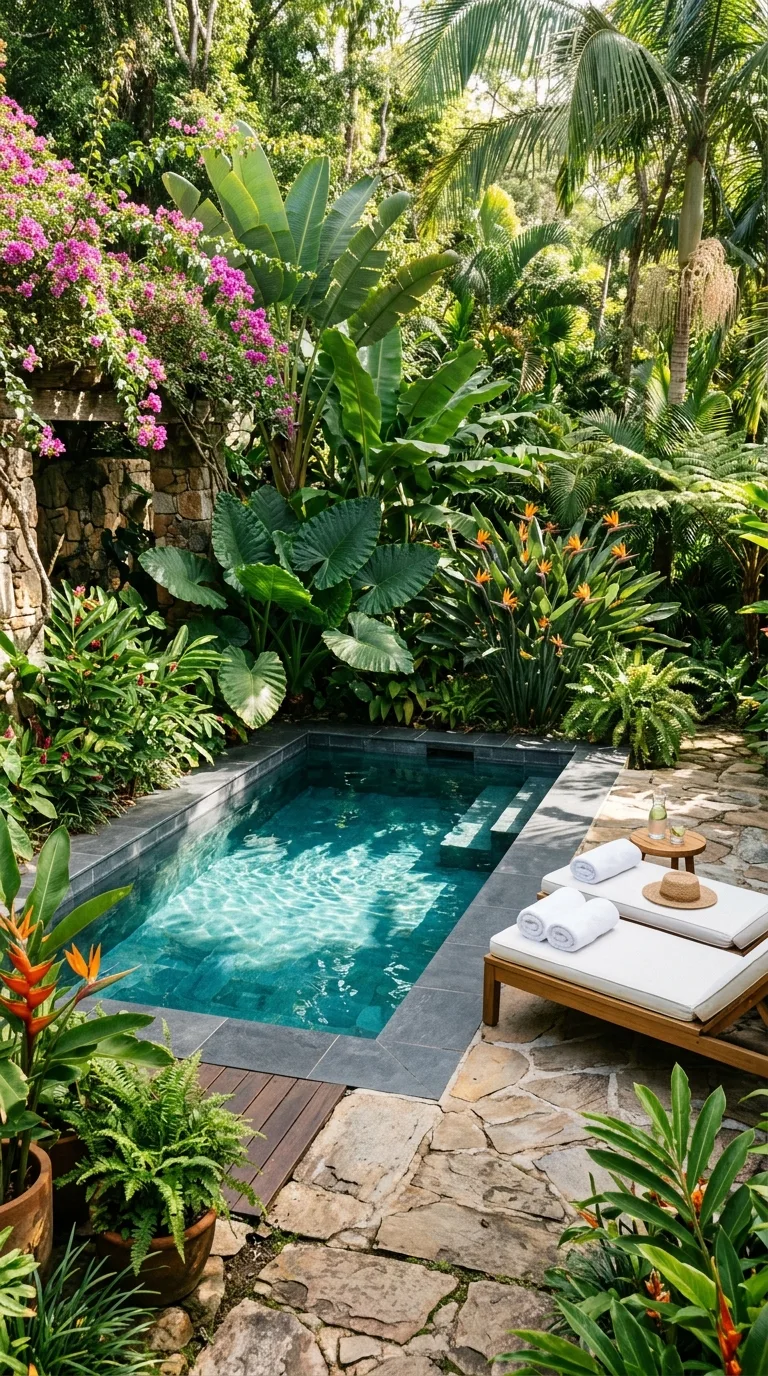
A plunge pool takes far less room than a full pool and is made for cooling off and soaking. Big-leaved plants around it, stone or porcelain paving and underwater lighting give it a resort feel. These small pool designs for small yards show more layouts that fit a compact space.
Good to know: a plunge pool needs the same protection as any pool: a fence at least 4 feet high with a self-closing, self-latching gate, and an adult watching whenever children are near. Elephant ears are poisonous to children and pets, per NC State Extension.
6. Bamboo Privacy Screen
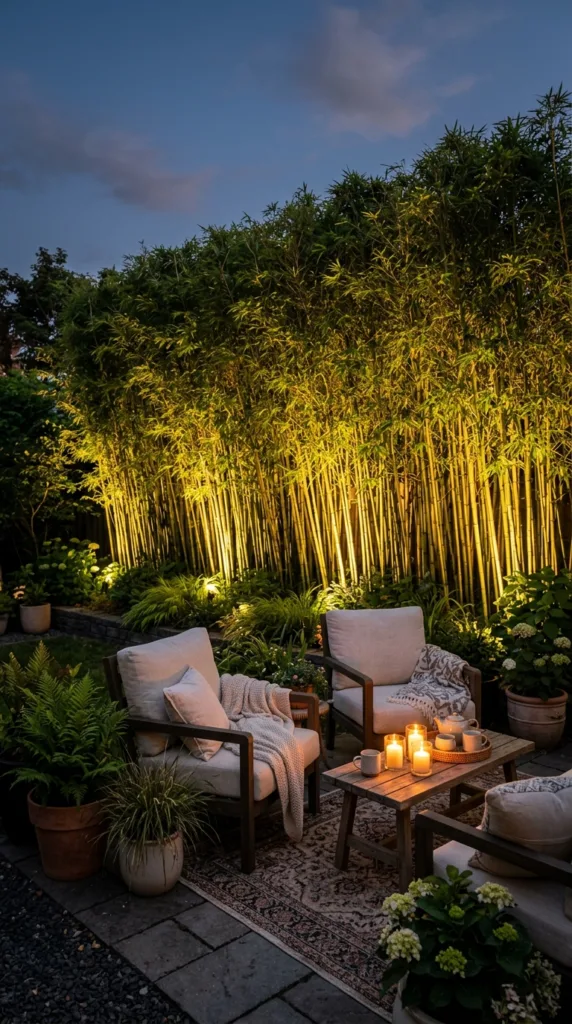
Bamboo gives a soft, rustling screen. Pre-made bamboo panels fixed to an existing fence give privacy right away without planting anything. For living bamboo, clumping types such as hedge bamboo (Bambusa multiplex) stay in a tight clump; NC State lists it for zones 8 to 11 and notes it is not a running bamboo.
Good to know: running bamboos such as golden bamboo spread aggressively by rhizomes, and NC State notes it tends to escape even hardscape barriers, so don’t plant running types in the ground.
7. Cozy Outdoor Bedroom
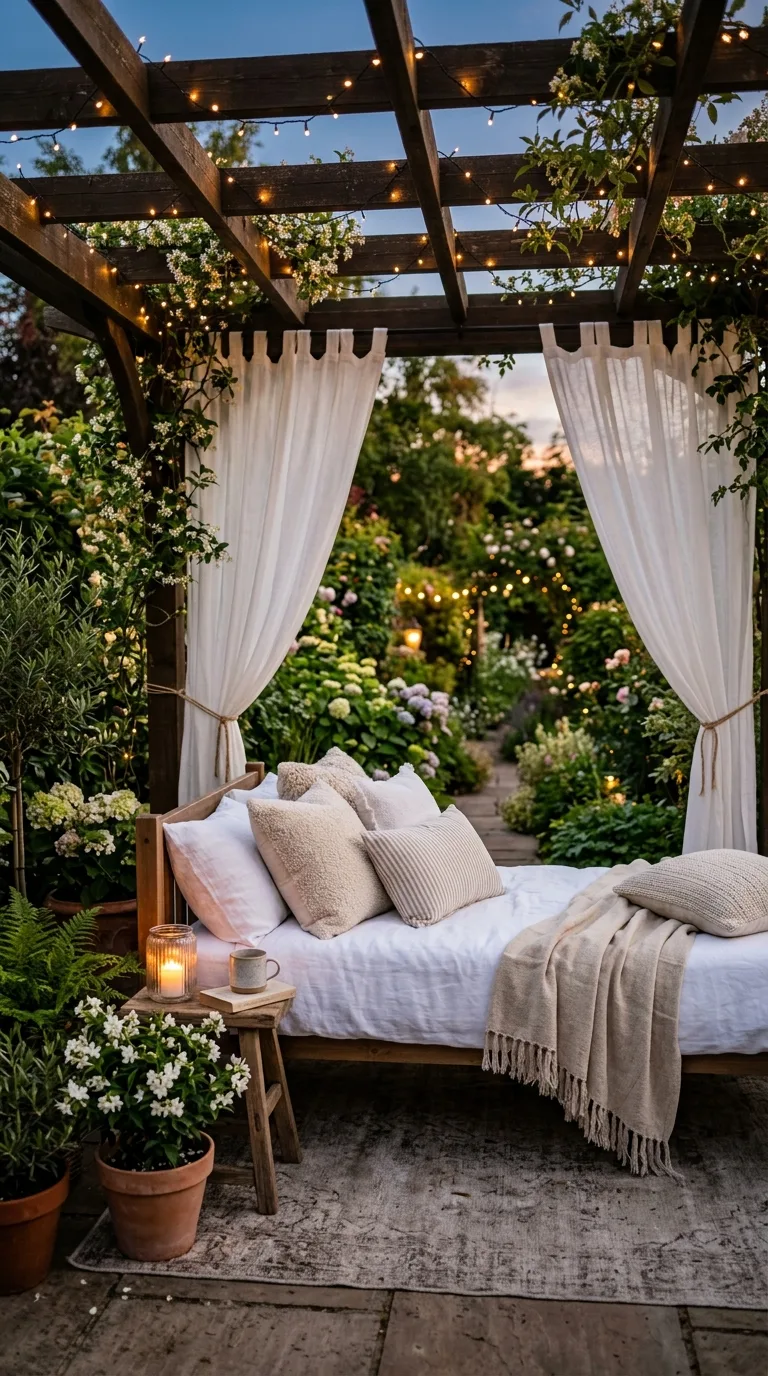
A daybed on a covered patio, or under a pergola with a solid or waterproof roof, makes a place to nap or sleep outside on warm nights. Curtains or screens on the open sides add privacy, and outdoor cushions and a side table make it comfortable.
Good to know: add mosquito netting or an outdoor-rated ceiling fan to keep the air moving, and store cushions and bedding in a dry box or indoors when rain is forecast.
8. Garden Room with Glass Walls
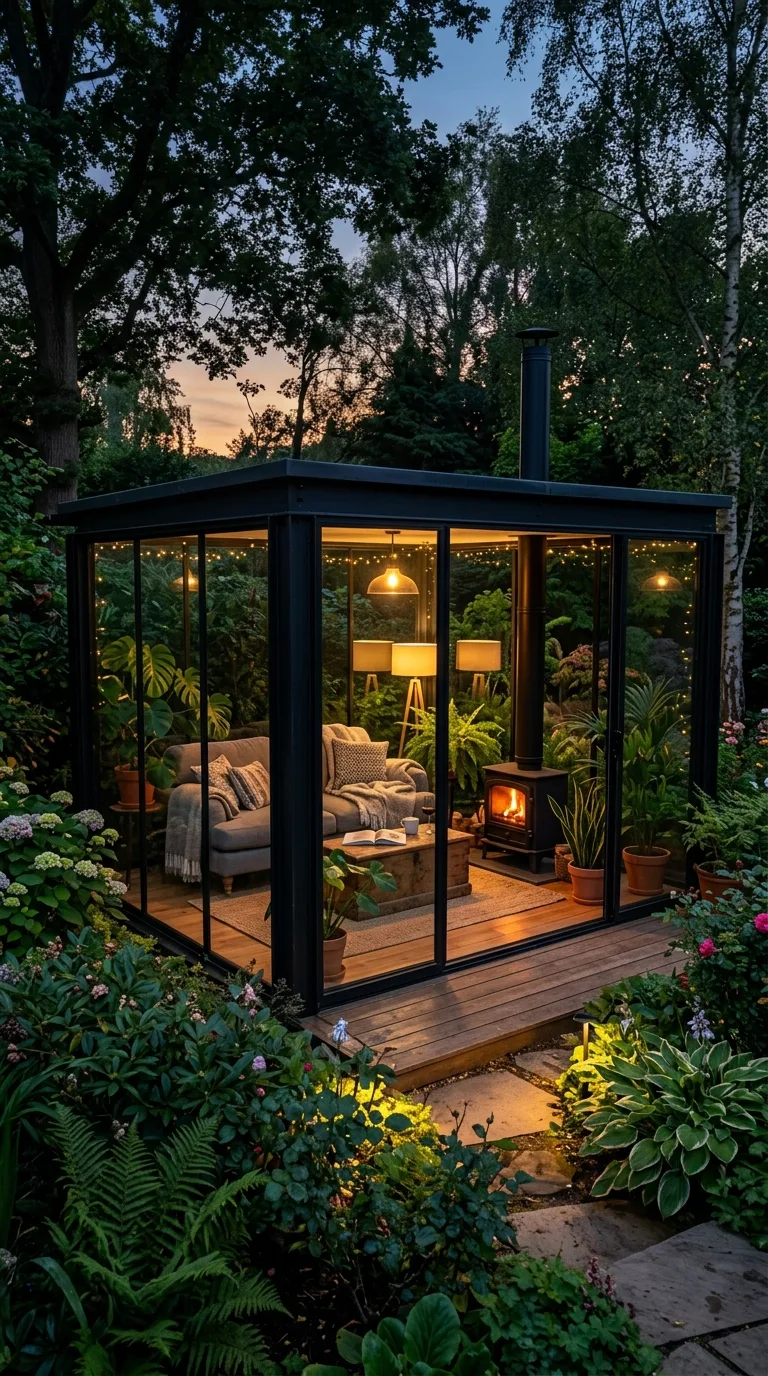
A glazed garden room set out in the garden gives a sheltered place to sit and read in any season, with views on every side. Folding or sliding glass panels open it up in summer, and a sofa, lamps and plants make it work as an extra room.
Good to know: a glass room overheats in summer without shade and vents, and a wood stove needs proper clearances, a chimney, usually a permit and a carbon monoxide alarm, so plan both with a builder.
9. Water Feature and Reflection Pool
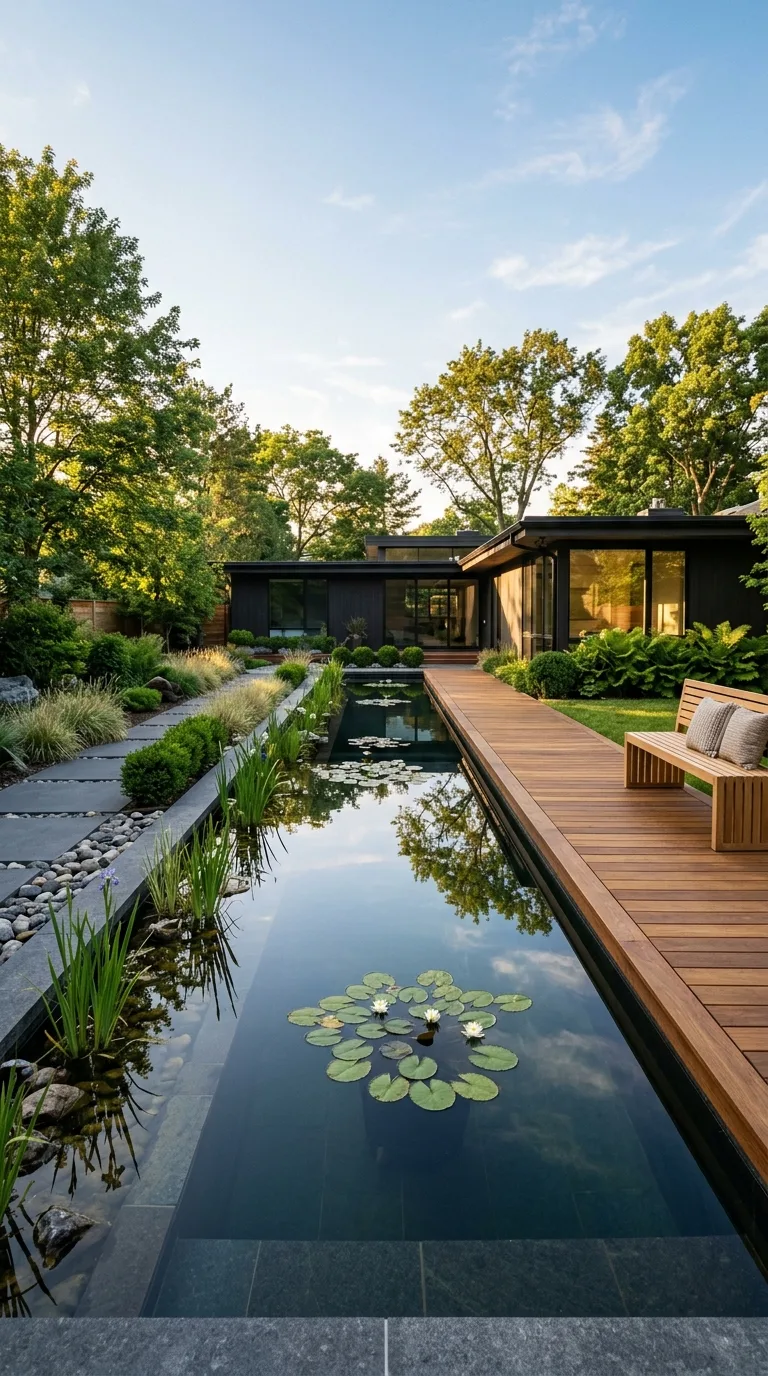
Moving water adds sound that helps mask traffic, while a still reflection pool doubles the sky and planting. A long, narrow rill gives a modern garden a strong line, a wall fountain fits a small courtyard, and water lilies and rushes soften the edges of a pond.
Good to know: skip yellow flag iris, which NC State lists as invasive, keep the water moving with a pump because mosquitoes breed in still water, and fence or cover any pond deep enough to be a danger to small children.
10. Stone Fire Pit Circle
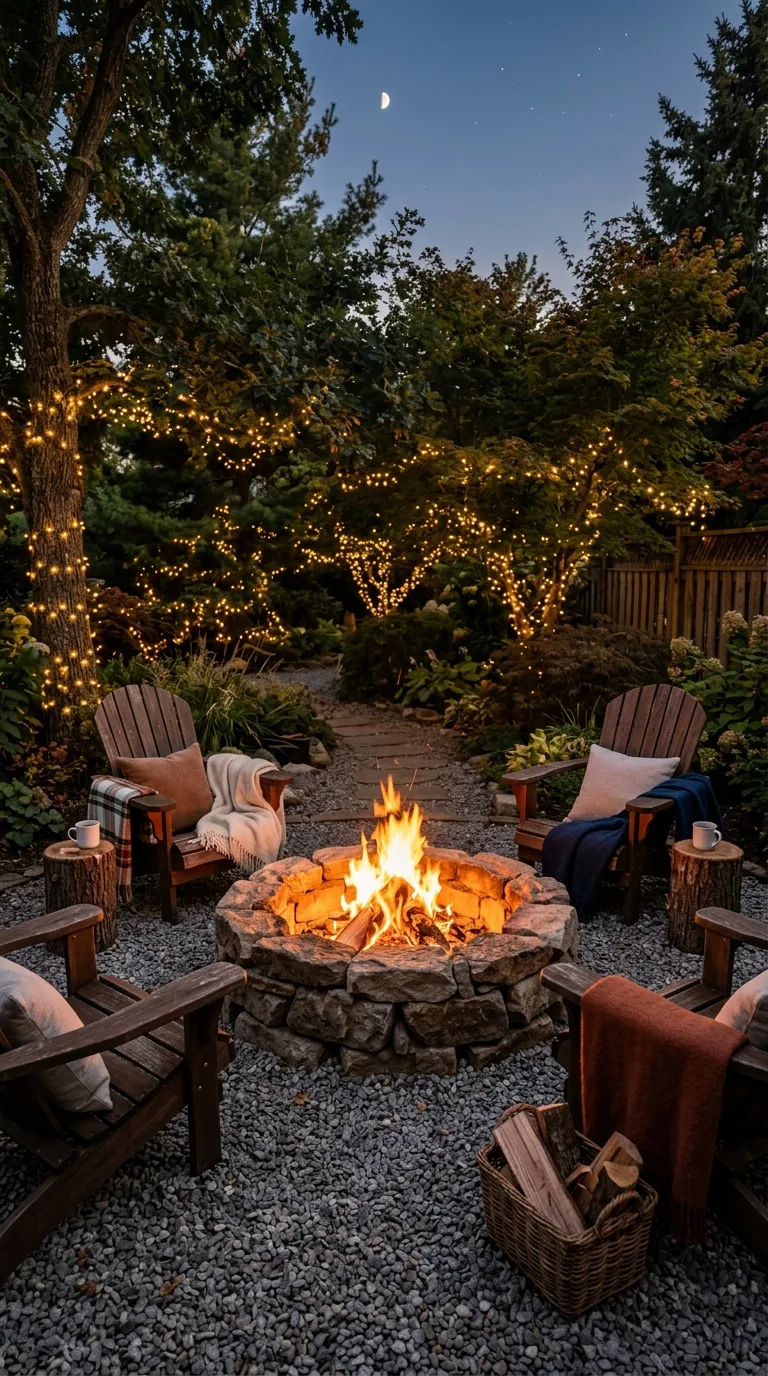
A fire pit in fieldstone, granite or steel, ringed with benches or Adirondack chairs, makes a natural gathering spot. A gravel or paved floor keeps the area tidy, and tall grasses or shrubs around the outer edge enclose it without blocking the sky.
Good to know: keep the pit at least 10 feet from the house and anything that can burn, including fences and shrubs, as the USFA advises, use a metal spark screen over wood fires, and keep a hose or extinguisher nearby.
11. Hammock Garden Retreat
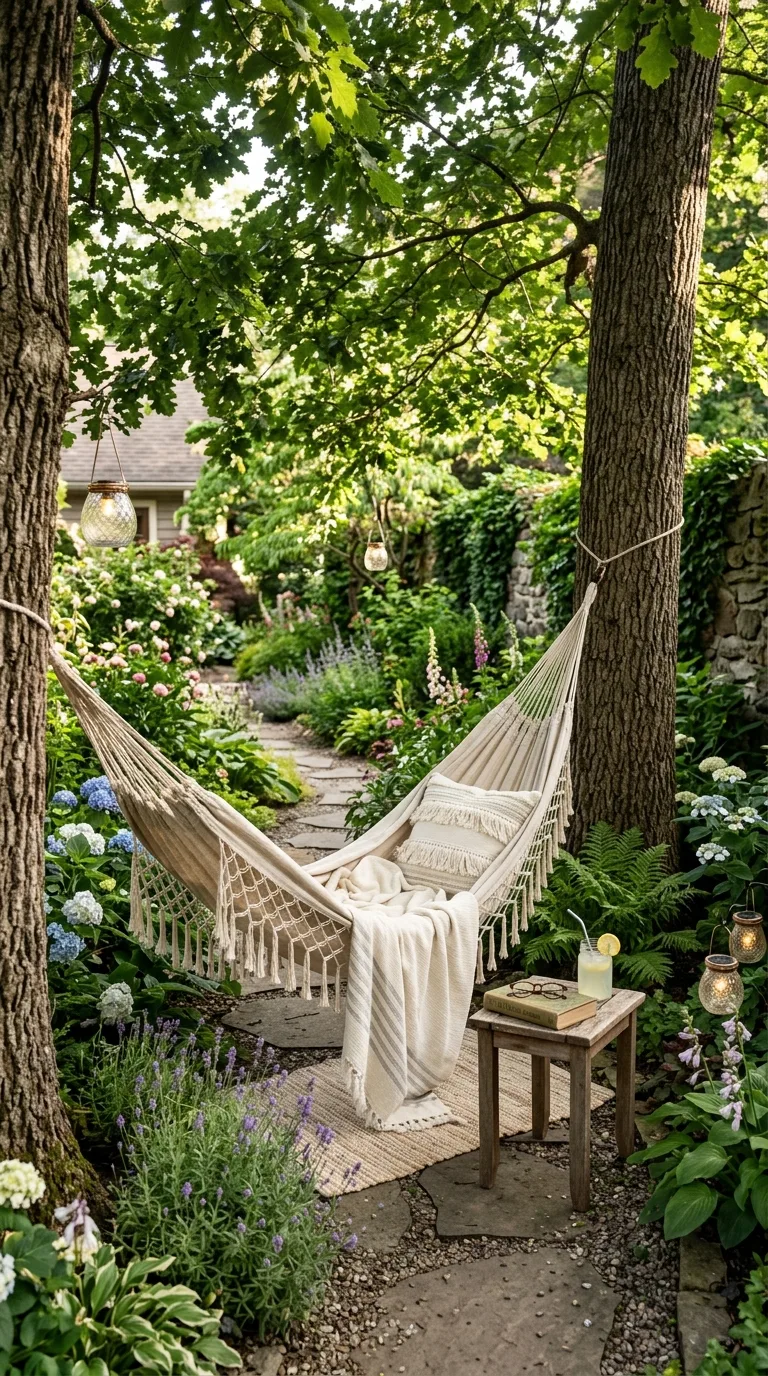
A hammock between two trees or on a stand is one of the simplest backyard retreats. Planting around it makes a small outdoor room, and a low table for a book and a drink plus solar lanterns in the planting finish it.
Good to know: use wide tree straps rather than rope, bolts or nails to protect the bark, hang it only from healthy, sturdy trees, and keep it low over soft ground.
12. Covered Patio with Bistro Lighting
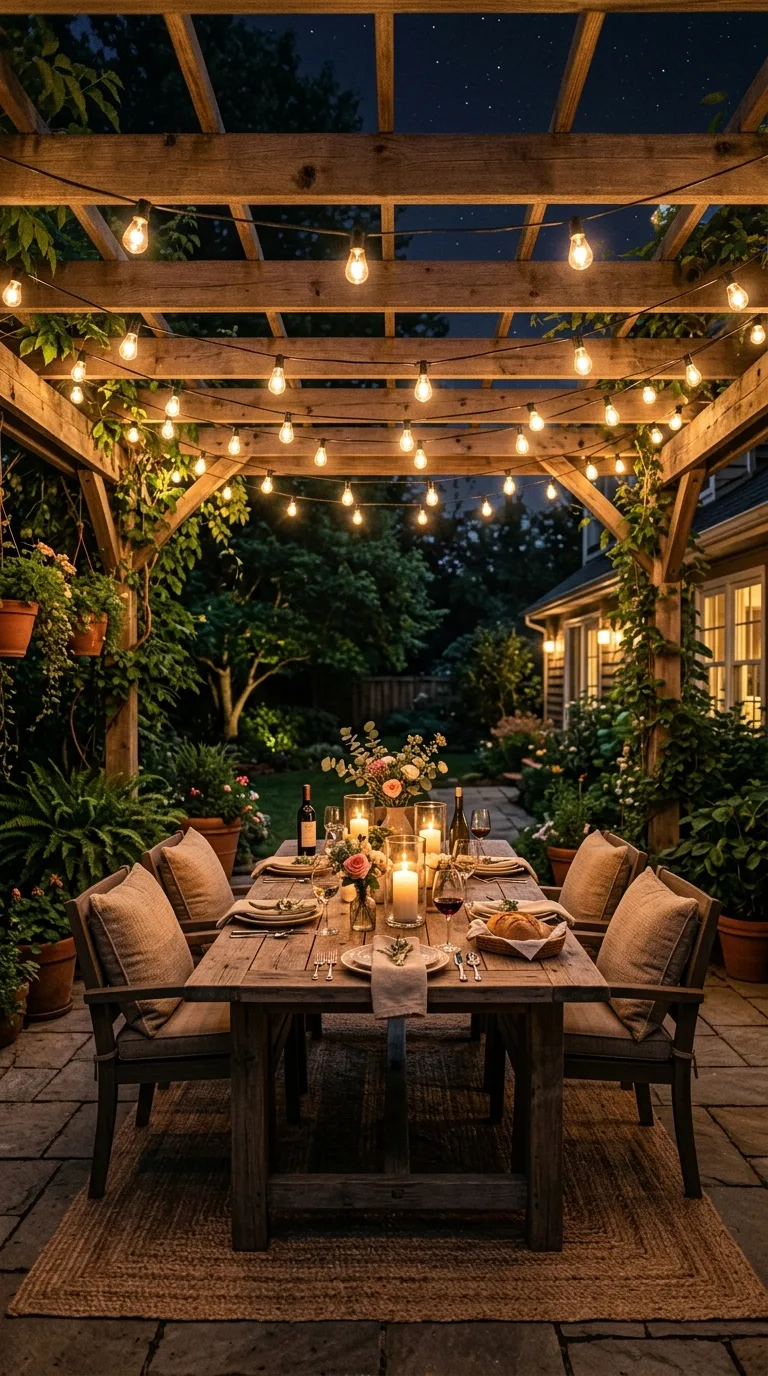
A pergola, sail or canopy over the dining table with bistro lights strung overhead gives the yard a restaurant feel after dark. Table lanterns and low lights in nearby planters add depth.
Good to know: use lights and cords rated for outdoor use, plug them into GFCI-protected outlets, and fix the strings to posts or the structure rather than to branches that move in the wind.
13. Secret Garden Path
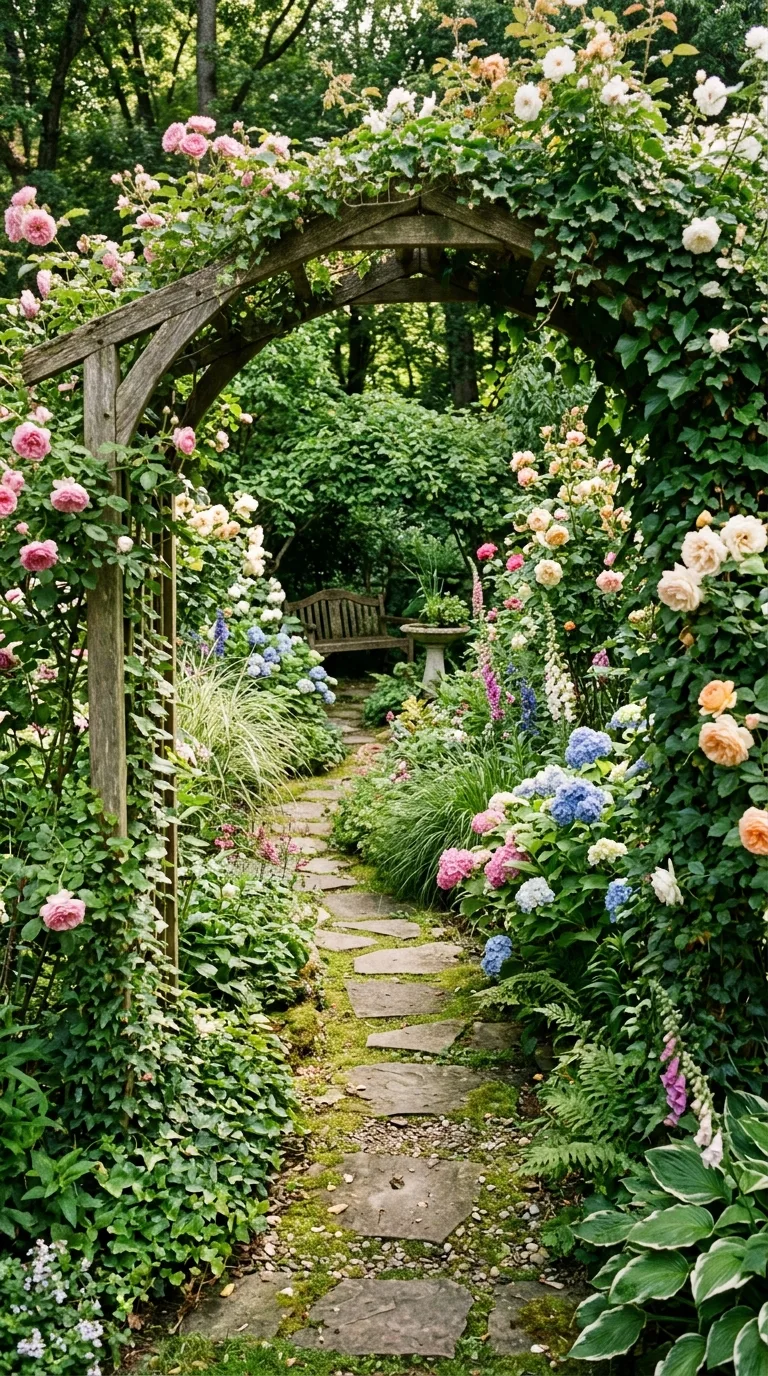
A path that bends around tall planting or through an arbor to a hidden seat makes a small garden feel larger, because you can’t see it all at once. Stepping stones, gravel or bark suit a natural look, and a bench or birdbath gives the path a destination.
Good to know: set stepping stones level and close enough for a natural stride so they don’t rock or trip anyone, and add low path lights if you’ll walk it after dark.
14. Zen Meditation Garden
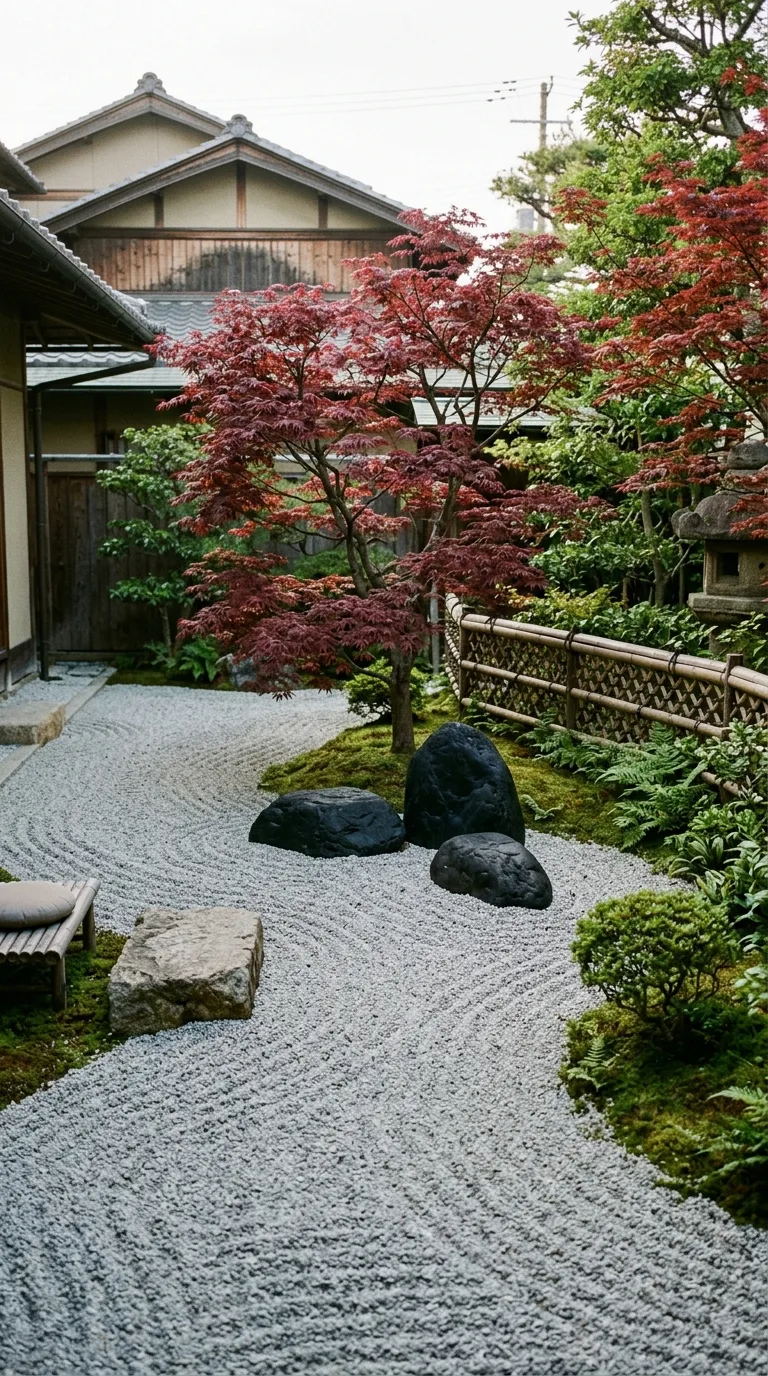
Raked gravel, a few carefully placed stones, minimal planting and a sense of enclosure create a quiet place to sit. Japanese maple, moss, clumping bamboo and ornamental grasses suit the style, and a simple bench or flat stone keeps the materials natural.
Good to know: NC State notes Japanese maple prefers dappled shade and shelter from drying winds, and that it self-seeds and can become weedy. Gravel needs a weed barrier and edging to stay clean.
15. Outdoor Movie Theatre
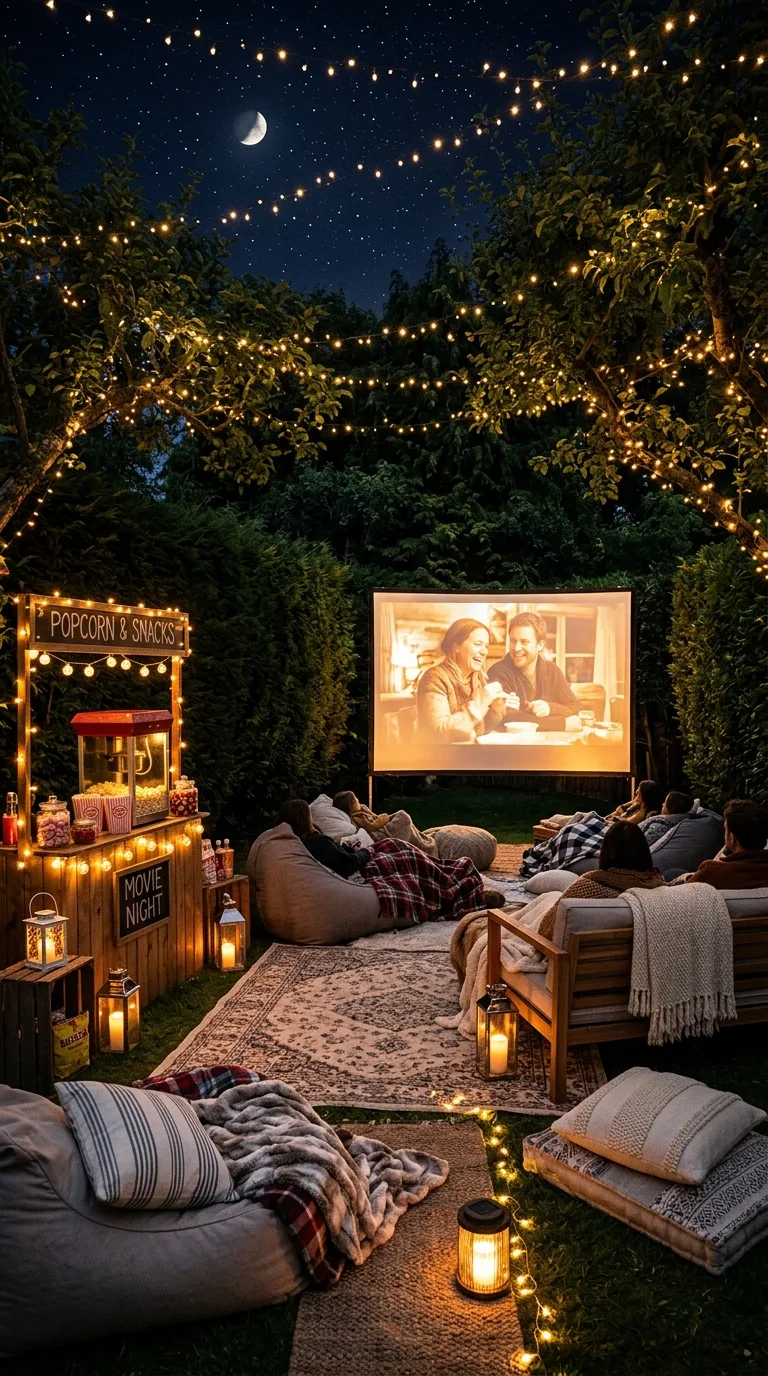
A projector, a screen and a mix of bean bags, sofas and blankets make a backyard cinema. A fixed screen or a frame for a fabric screen saves setup time, and tall planting or a fence behind the screen keeps the film private.
Good to know: use extension cords rated for outdoor use and GFCI-protected outlets, bring the projector inside after each use, and check local noise rules for late showings.
16. Raised Deck with Canopy
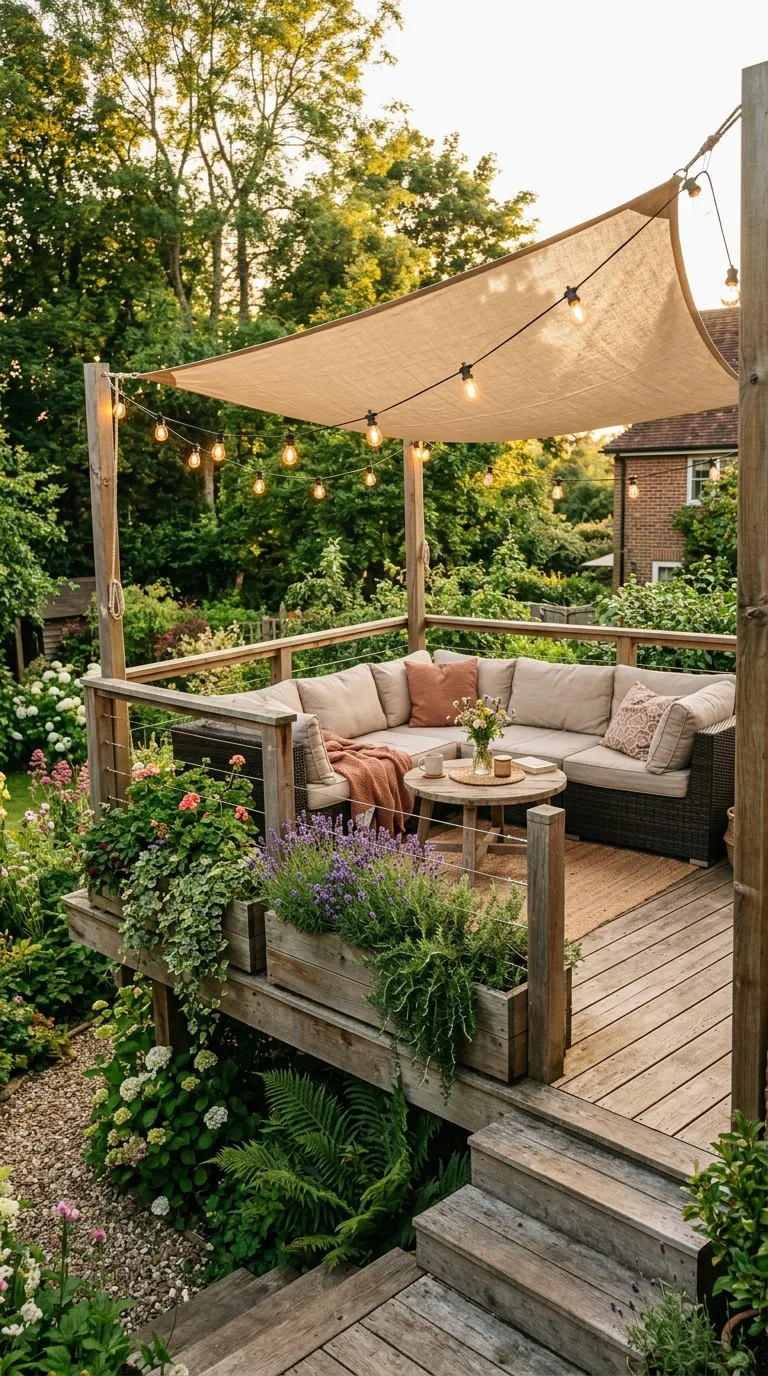
A deck raised a few steps above the garden, with a canopy or sail overhead, gives a sheltered vantage point at the back of the yard. Sofas, a rug and planters make it an outdoor living room separate from the house.
Good to know: decks more than about 30 inches above the ground generally need guardrails, most decks need a permit, and a canopy adds wind load, so anchor it to the structure rather than just weighting it.
17. Wildflower Meadow Corner
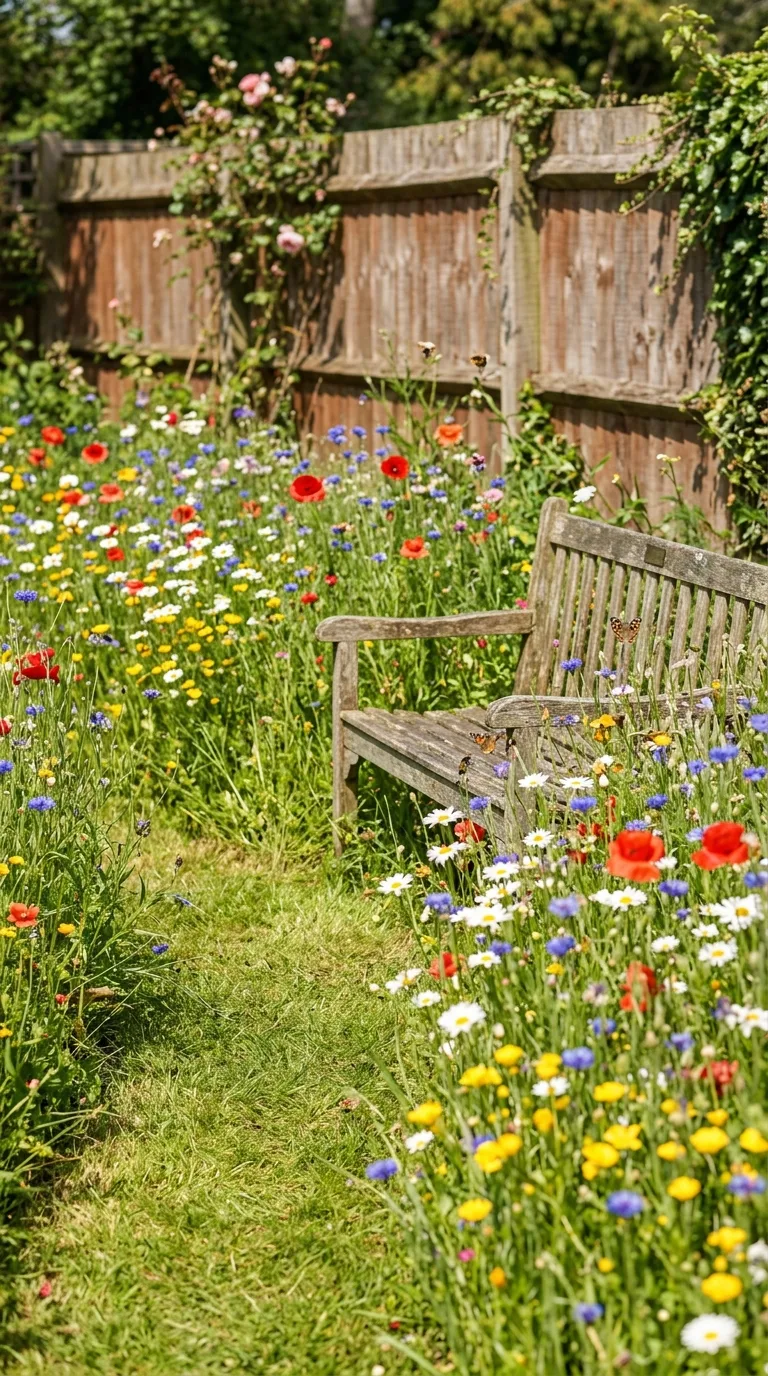
A corner of native wildflowers and grasses brings in bees and butterflies and adds movement and color. Clear the existing lawn and weeds first, then sow a regional native seed mix; many native seeds need a cold, moist period to germinate, so fall sowing often works well. A mown path to a bench lets you sit inside it.
Good to know: Penn State Extension notes annuals give color the first year, while perennials spend it building roots and flower more from the second. Avoid mixes with ox-eye daisy, which NC State calls invasive outside its native range.
18. Hot Tub Privacy Enclosure
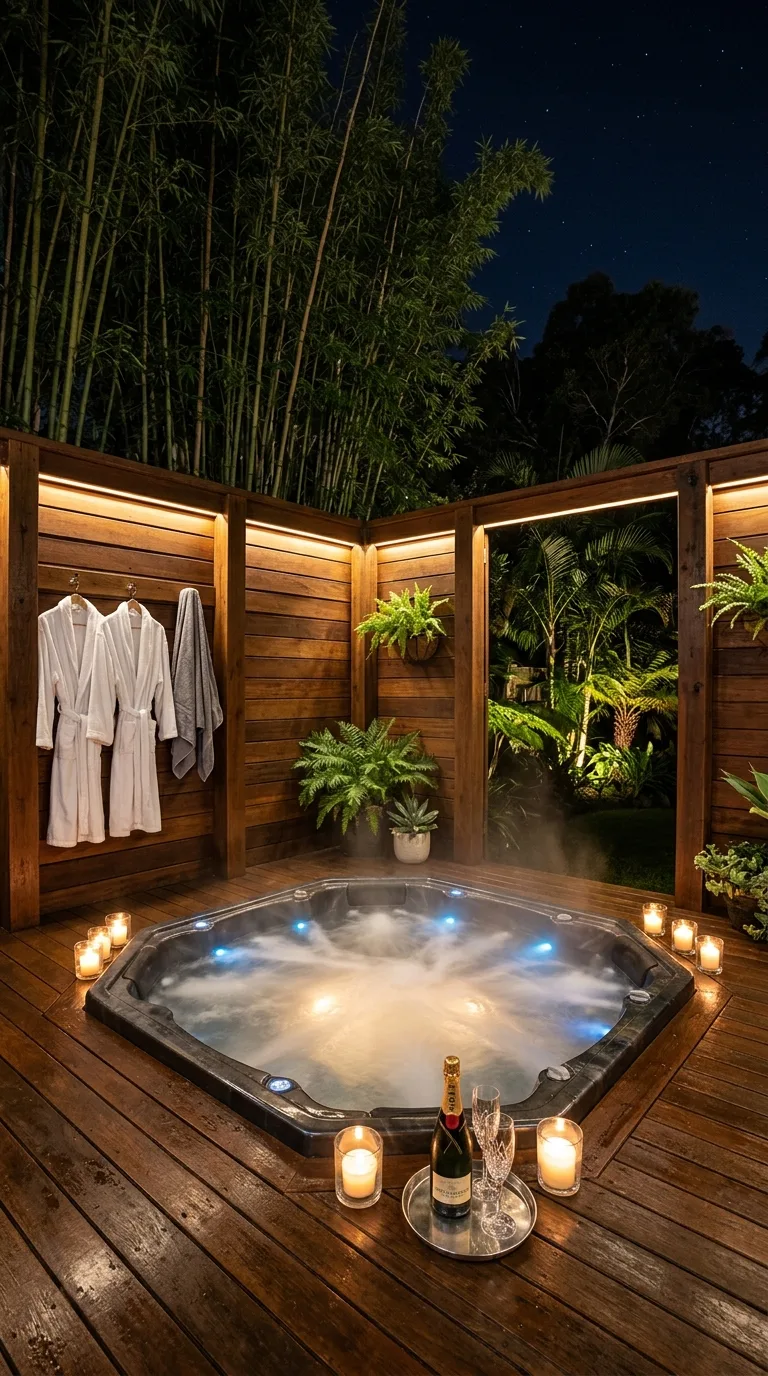
Screens, panels or hedging around a hot tub block neighbors’ views, and lanterns, plants and a robe hook make the area feel like a spa. A deck or stone surround makes the tub look built in.
Good to know: CPSC recommends keeping the water at 104°F or below and using a locked safety cover when the tub isn’t in use. A filled hot tub is very heavy, so a deck must be designed for its weight, and the wiring needs GFCI protection and a licensed electrician.
19. Greenhouse Hideaway
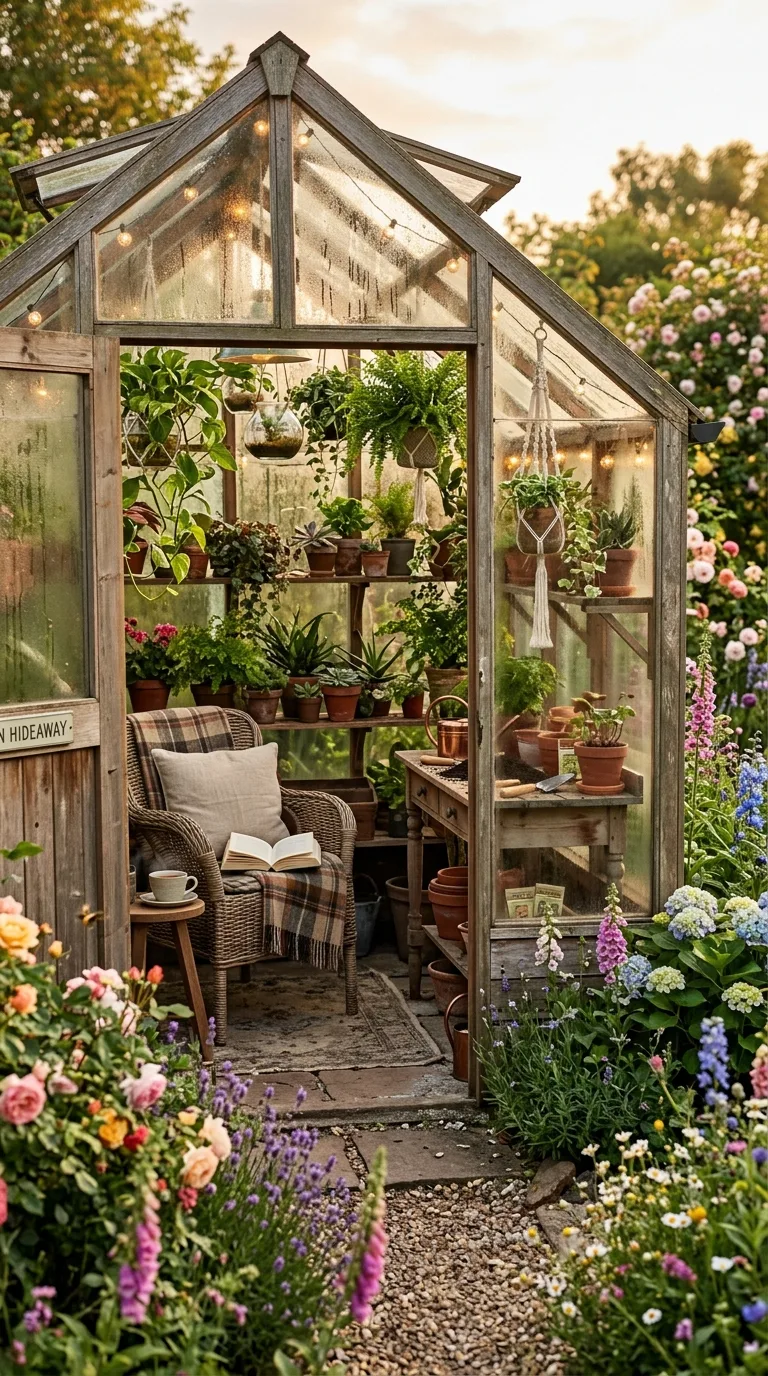
A small greenhouse can be a retreat as well as a growing space: a potting bench, a chair in a sunny corner and a few favorite plants make it a place to spend a rainy afternoon. These greenhouse layout ideas show ways to arrange benches and seating.
Good to know: Oklahoma State University Extension warns that gas, oil or coal heaters in a greenhouse need fresh air and exhaust venting to avoid carbon monoxide and ethylene buildup, and that a greenhouse can overheat on sunny days without ventilation.
20. Moroccan Inspired Outdoor Lounge
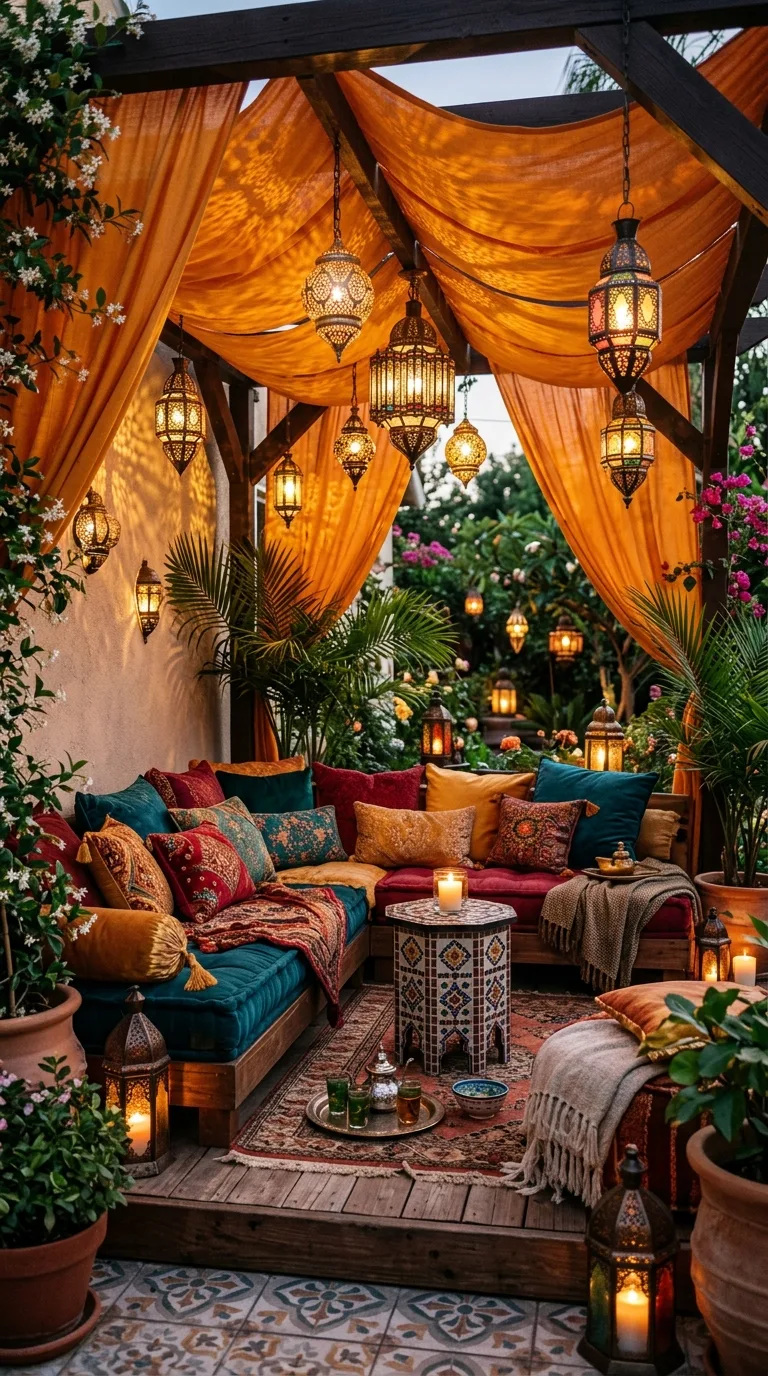
Low platform seating with jewel-toned outdoor cushions, layered rugs, pierced metal lanterns and mosaic tile give a corner a Moroccan feel. A draped canopy overhead and a carved side table or brass tray complete the look.
Good to know: use LED candles in lanterns hung near fabric and plants. If you plant common jasmine for scent, NC State lists it for zones 7b to 10 and notes it can reach 40 feet, so give it a sturdy support.
21. Shaded Canopy Lounge
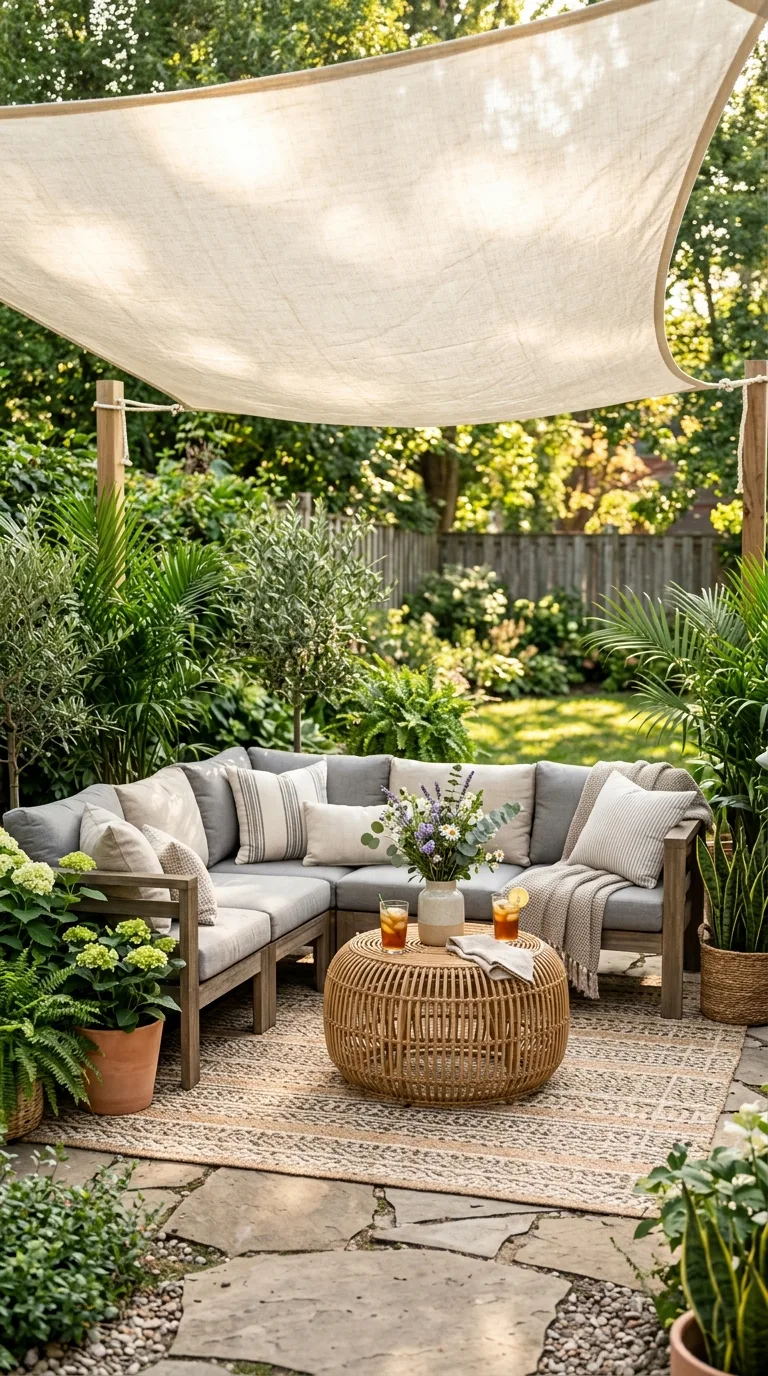
A shade sail, fabric canopy or vine-covered pergola over a lounge makes the garden usable in the midday heat. Sofas, cushions in earthy tones and a rug make it feel like part of the house, and a screen or tall pots on the sun-facing side add privacy.
Good to know: shade sails pull hard on their anchor points, so mount them on posts with proper footings, and any overhead fan must be rated for outdoor use and installed by an electrician.
22. Fairy Light Forest Garden
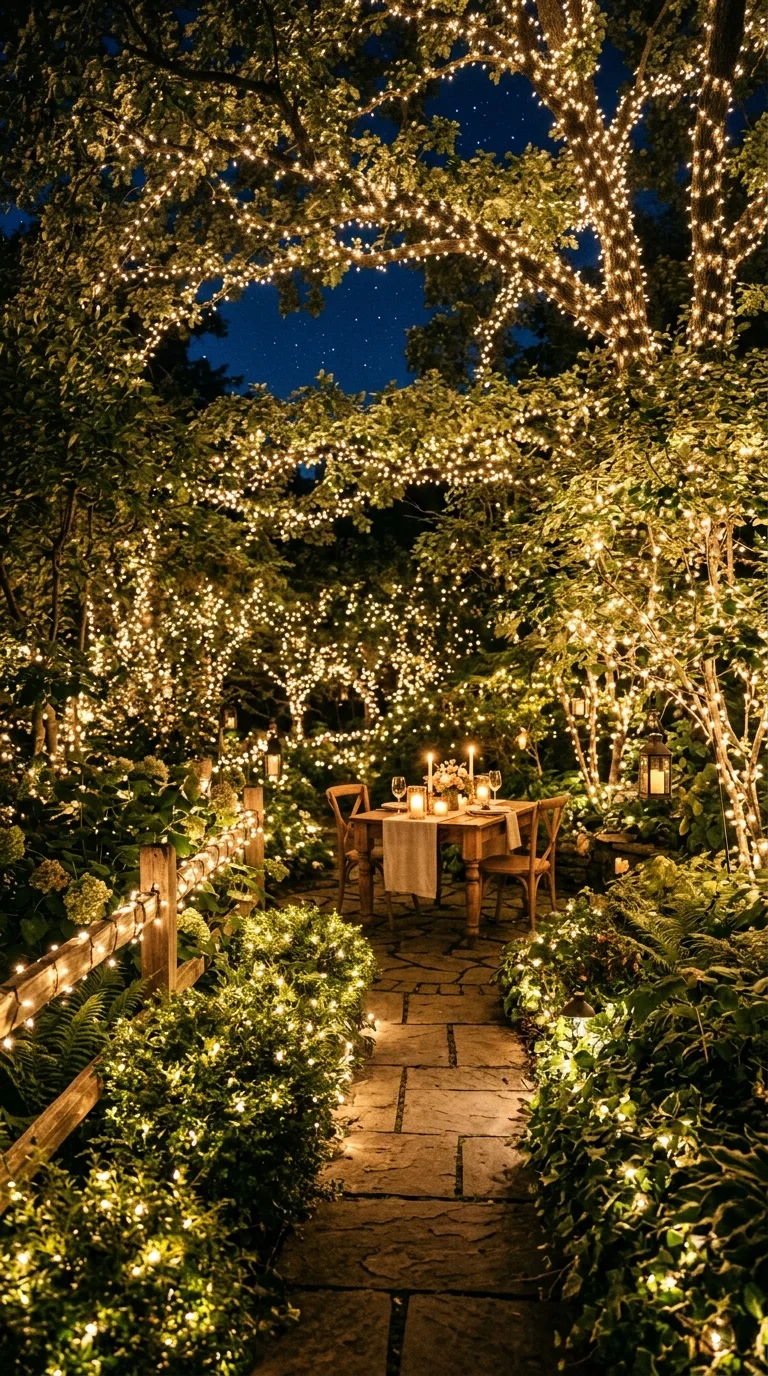
Small warm-white lights wound through trees, along fences and in planters give the garden a soft glow after dark. Layering them at different heights, in the canopy, along the fence and at ground level, creates depth.
Good to know: use outdoor-rated, low-voltage or solar lights, wrap branches loosely, and remove or loosen the strands each season so they don’t cut into growing bark.
23. Outdoor Kitchen and Dining Retreat
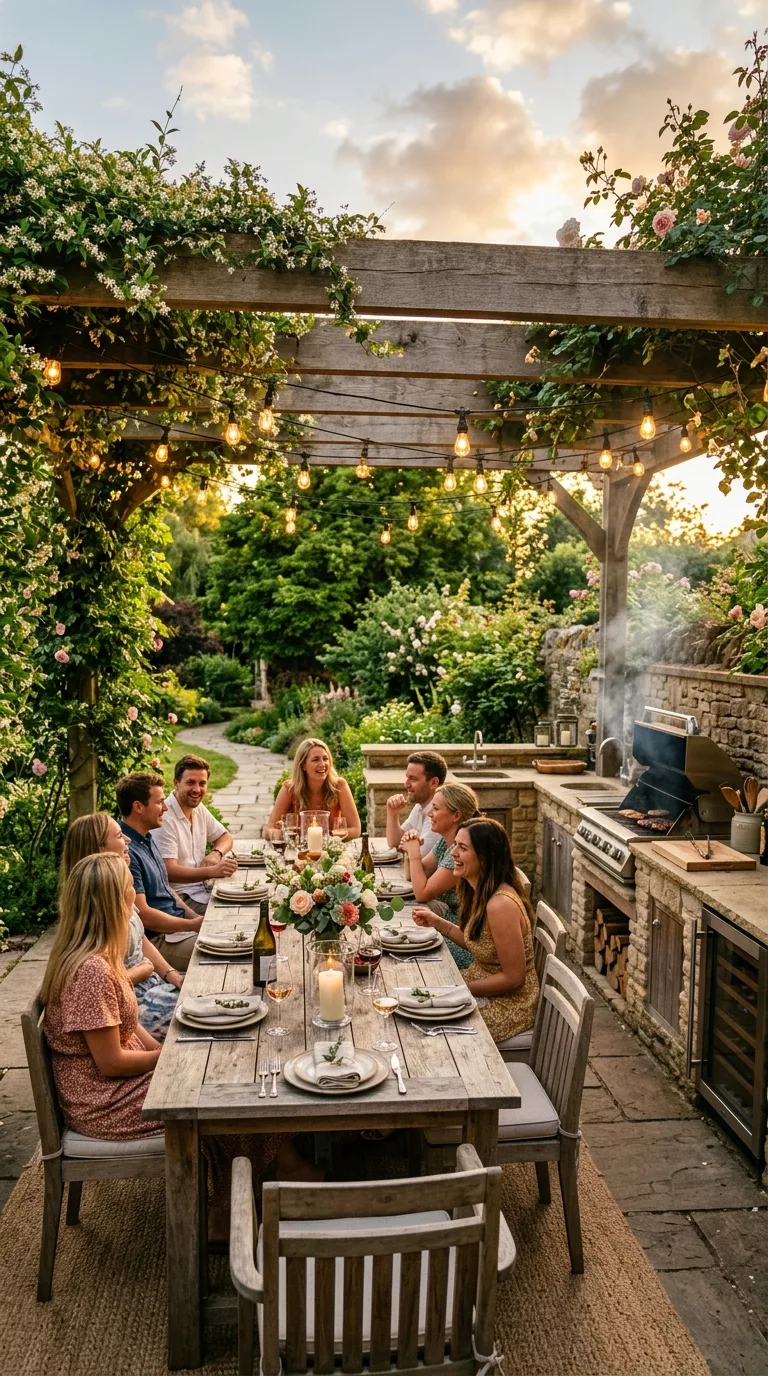
A grill, prep counter, sink and fridge beside a dining table under a pergola let you cook and eat outside without trips indoors. Stone, concrete or tile counters stand up to weather, and potted herbs and low lighting make the space feel lived in.
Good to know: the USFA advises keeping grills well away from siding and deck railings and out from under eaves and overhanging branches. Plan gas, water and power runs, with permits and licensed trades, before you pave.
24. Candlelit Garden Dining Nook
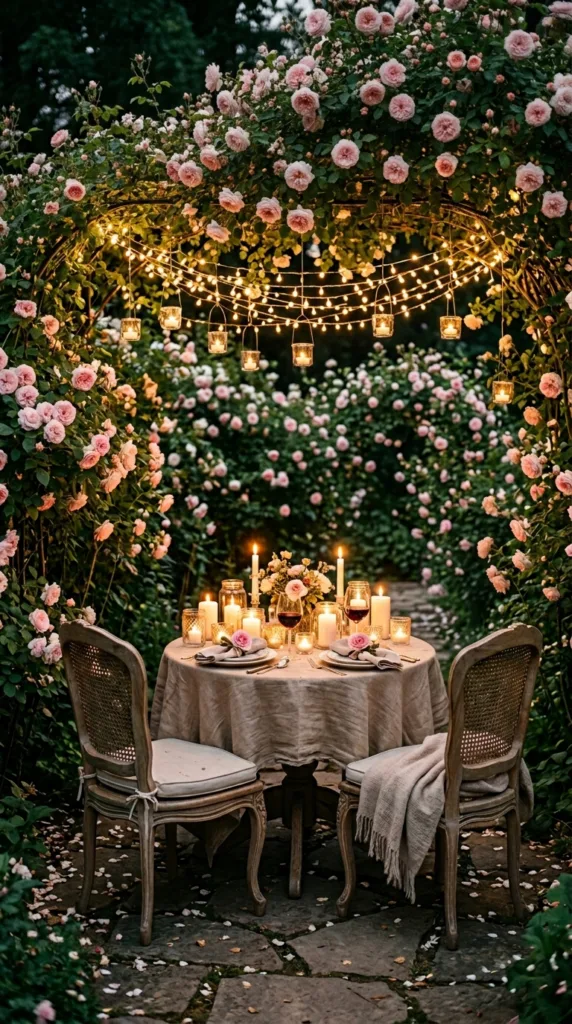
A small table tucked into an alcove of hedging, a ring of pots or a rose-covered arbor makes a private place for dinner for two or four. Fragrant plants such as roses, jasmine or lavender nearby add scent.
Good to know: keep candle flames clear of foliage, fabric and overhanging branches, never leave them burning unattended, and use battery-powered candles in lanterns hung from branches.
Common mistakes to avoid
- Planting invasive screens such as Chinese privet or running bamboo.
- Placing a fire pit or fireplace closer than 10 feet to the house, fences or shrubs.
- Leaving a plunge pool, hot tub or deep pond where children can reach it unsupervised.
- Using indoor lights or extension cords outdoors.
- Building decks, pergolas or retaining walls without checking permits and buried utility lines.
Private backyard FAQs
What is the cheapest way to make a backyard more private?
Pre-made screens fixed to an existing fence, outdoor curtains on a pergola, or tall containers of grasses give privacy quickly. A hedge costs less but takes time to fill in.
How far should a fire pit be from the house?
The US Fire Administration advises at least 10 feet from your home or anything that can burn. Local fire codes and HOA rules may be stricter.
Which privacy plants should I avoid?
Invasive ones such as Chinese privet and running golden bamboo, both listed as invasive by NC State Extension. Check your state’s invasive plant list and your USDA zone.
Does a plunge pool or hot tub need a fence?
Pools generally do under local codes, and the AAP recommends a fence that completely surrounds a pool or spa. CPSC also recommends a locked safety cover on hot tubs when they aren’t in use.


One Comment