

24 Pool Coping & Tile Ideas That Look Stunning
Coping is the cap that runs along the top edge of a pool wall, and tile covers the waterline, the interior or the area around the pool. Together they decide how a pool looks, but also how safe and comfortable it is to walk on, and how much upkeep it needs.
Below are 24 coping and tile ideas, each with what it suits and what to check before you choose it. Start with the four basics, because they rule out some materials for some pools.
Before you choose: four basics
Choose surfaces that grip when wet
Coping and pool surrounds are wet most of the summer, and people walk on them barefoot. Avoid polished stone and glossy tile there. Choose honed, tumbled, brushed or textured finishes, and for tile, look for products the manufacturer classifies as Exterior, Wet under the ANSI A326.3 standard, a category intended for pool decks, patios and walkways.
Think about heat underfoot
Dark materials absorb more sun, so dark slate, bluestone and black tile get hotter to stand on than light stone or concrete. In a hot, sunny climate, lighter colors are more comfortable; dark coping suits shaded pools or milder climates.
Protect stone from salt and chemicals
Travertine, limestone, sandstone and marble are porous, and marble, limestone and travertine are calcium-based, so acids can etch them. Ask your installer about a penetrating sealer and how often to reapply it, rinse off chemical splashes, and for a saltwater pool, ask your stone supplier which grades they recommend.
Plan for freezing winters
Water that soaks into a porous material expands when it freezes and can crack it. In cold climates, choose stone, brick and tile that the supplier rates for freeze-thaw conditions.
The 24 ideas at a glance
| Idea | Where it goes | Best for / watch out |
|---|---|---|
| Travertine | Coping and deck | Warm look, stays fairly cool; seal it |
| Bullnose brick | Coping | Traditional homes; use frost-rated brick in cold areas |
| Cantilever concrete | Coping | Modern pools; avoid a slick, smooth finish |
| Limestone | Coping | Soft look; seal and rinse off chemicals |
| Dark slate | Coping | Bold contrast; gets hot in full sun |
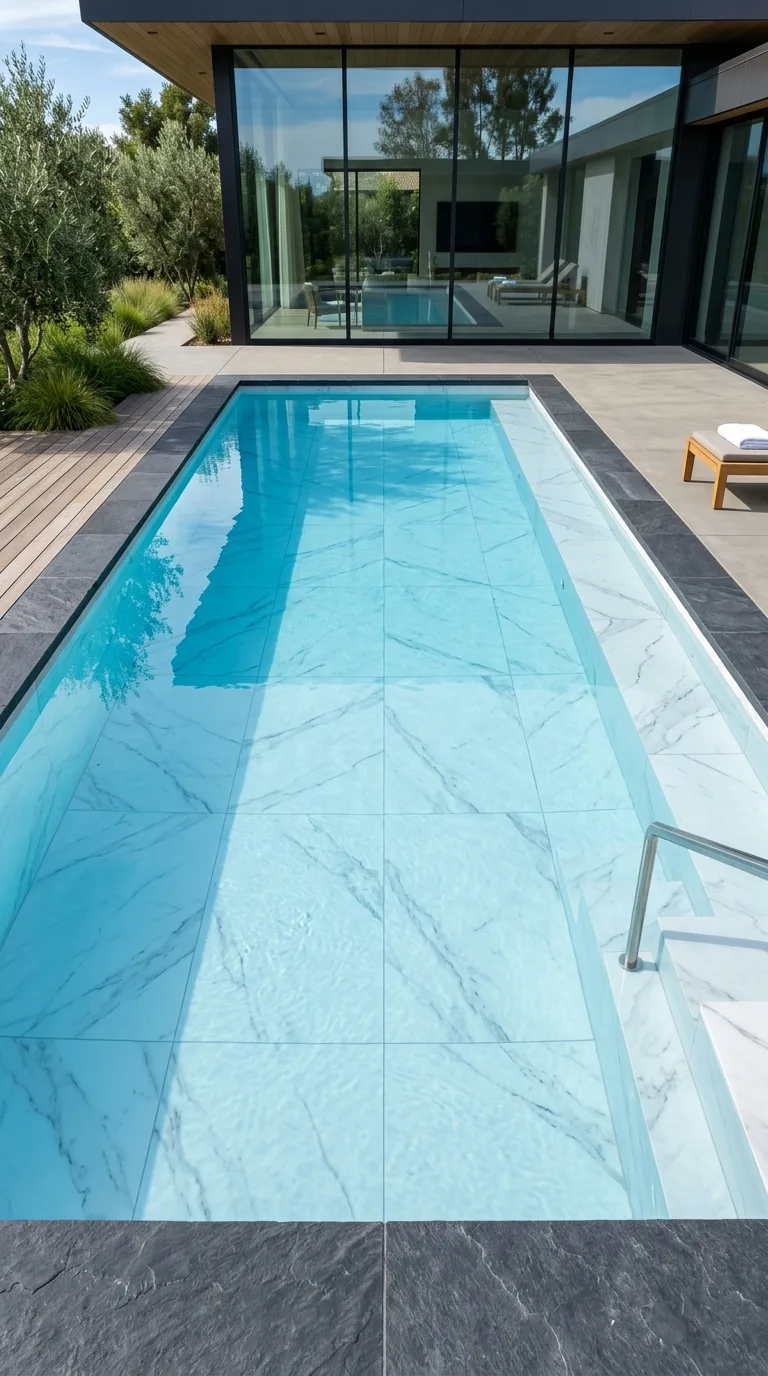
| White marble | Coping | Luxury look; use honed, not polished |
| Pebble finish | Pool interior | Natural look; texture can feel rough |
| Glass waterline band | Waterline | Sparkle at the waterline; specialist install |
| Penny round mosaic | Walls, curves | Retro look; many grout lines to clean |
| Large-format porcelain | Interior | Calm, modern look; needs a flat base |
| Cobalt blue mosaic | Interior | Deep blue water; strong color |
| Herringbone floor | Interior | Lap pools; more cutting and labor |
| Wood-look porcelain | Coping and deck | Wood look without rot; pick a textured tile |
| Bluestone | Coping | Formal designs; gets hot in full sun |
| Iridescent glass | Interior | Shifting color; costly, specialist install |
| Terracotta-style tile | Surround | Mediterranean look; porcelain is lower-upkeep |
| Black waterline band | Waterline | Graphic line; shows white scale |
| Geometric feature wall | One wall | Focal point; check the tile suits wet use |
| Mediterranean mosaic | Interior | One-of-a-kind; check tiles are pool-rated |
| Sandstone | Coping | Natural settings; porous, so seal it |
| Infinity-edge trough tile | Overflow trough | Dramatic edge; needs engineering |
| Exposed aggregate concrete | Coping | Good grip, budget-friendly |
| Pearl and white glass | Interior | Bright, light water color |
| LED coping lights | Under the coping | Evening glow; hire a pool-qualified electrician |
1. Travertine Coping with a Matching Deck
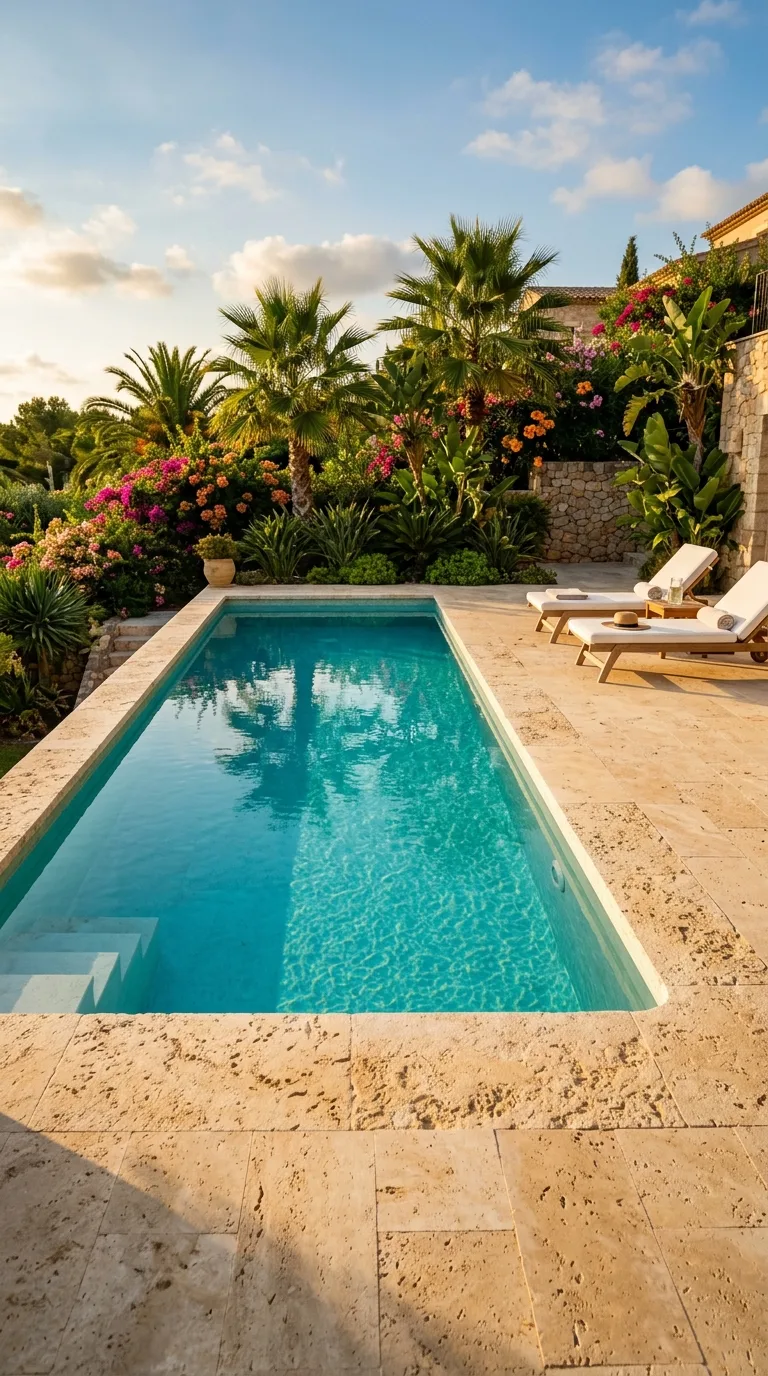
Travertine coping carried across the surrounding deck gives a seamless, warm-toned surface that makes the pool area feel larger. A tumbled finish has softly worn edges; a honed finish looks smoother and more modern. Light travertine also stays more comfortable underfoot than dark stone in summer sun.
Good to know: travertine is porous, so ask your installer about sealing it, especially around a saltwater pool, and rinse off chemical splashes.
2. Bullnose Brick Coping
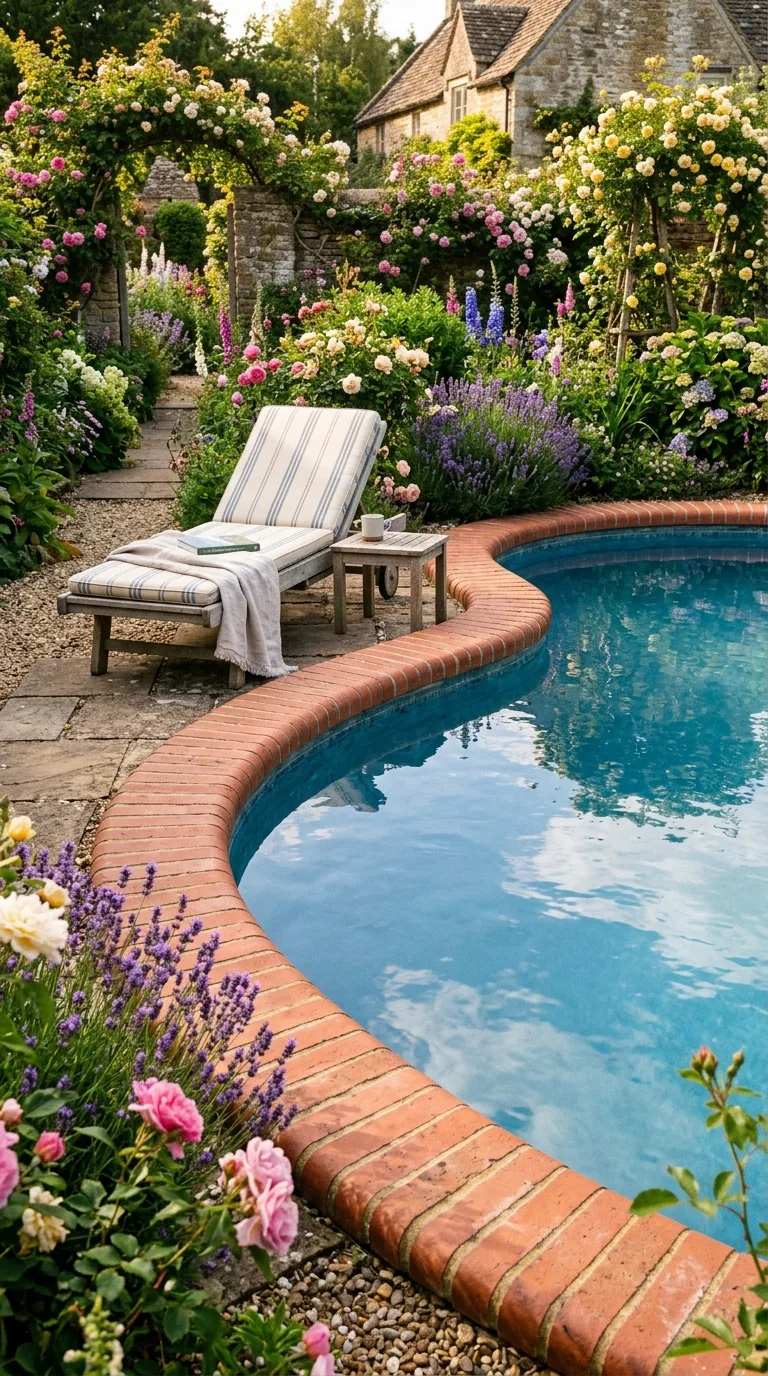
Bullnose brick coping has a rounded top edge that’s comfortable to sit on and suits cottage gardens and traditional homes. Red, buff and reclaimed bricks each give a different character, and the mortar color matters too: sand-colored mortar softens the look, dark mortar makes each brick stand out.
Good to know: in areas with freezing winters, use brick the supplier rates for paving or coping in severe weather; ordinary wall brick can crack after repeated freezing.
3. Cantilever Concrete Coping
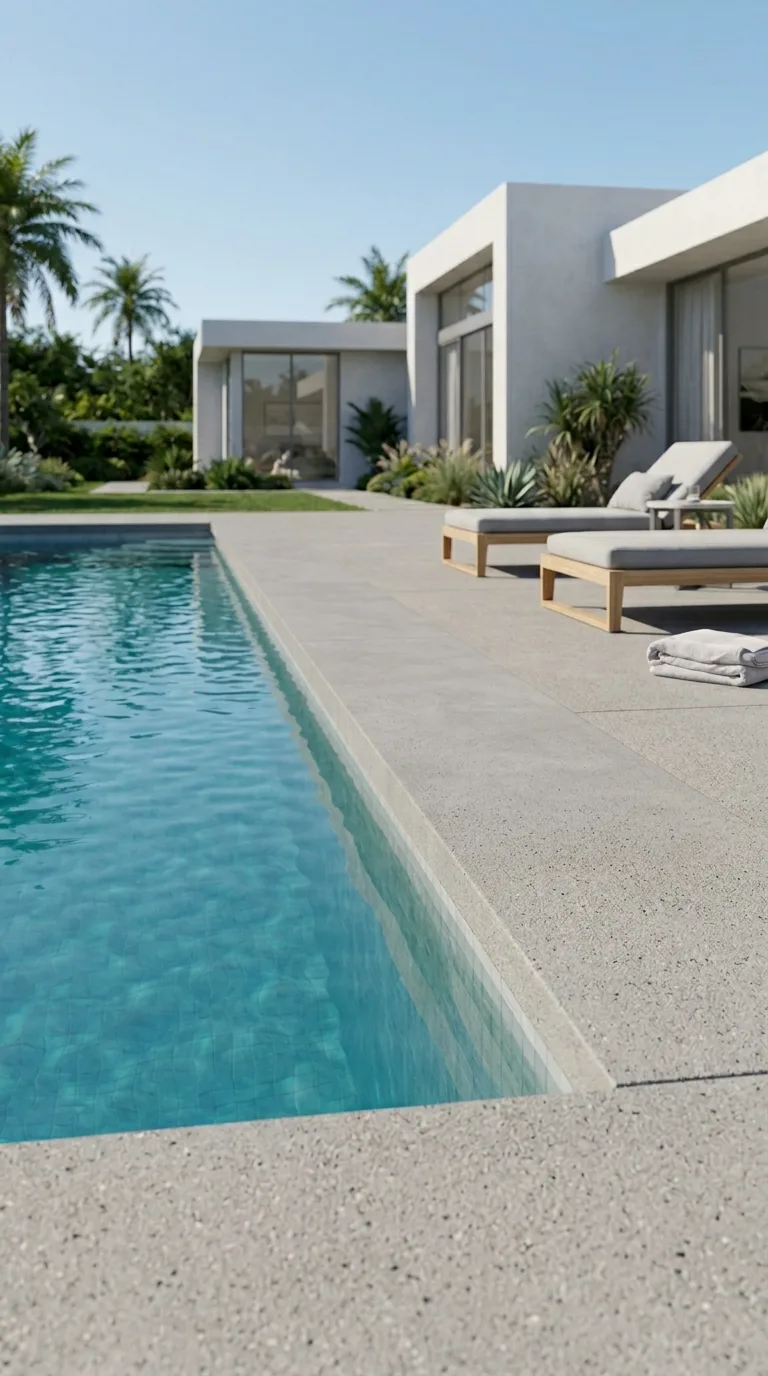
Cantilever concrete coping extends a smooth concrete lip slightly beyond the pool wall, casting a thin shadow line that gives a modern pool a crisp edge. It can be finished smooth, honed or with exposed aggregate, and tinted gray, charcoal or sand to match the deck.
Good to know: a very smooth troweled finish can be slippery when wet, so ask for a light texture on the walking surface.
4. Natural Limestone Coping
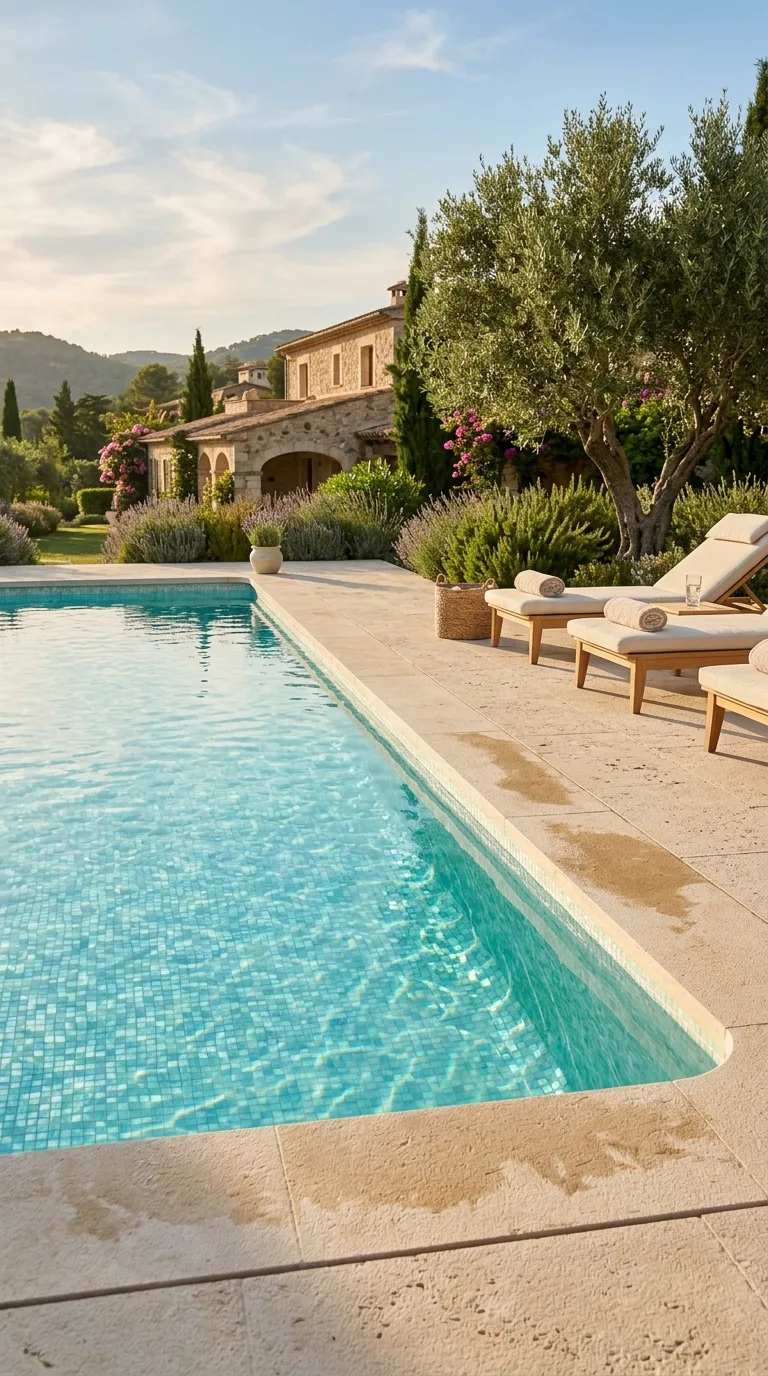
Limestone coping in pale cream, buff or soft gray has a quiet, matte look that suits both classic and modern pools. A brushed or bush-hammered finish adds texture for grip.
Good to know: limestone is relatively soft, porous and calcium-based, so pool chemicals and acids can etch it. Choose a dense grade, seal it, and rinse off splashes.
5. Dark Slate Coping
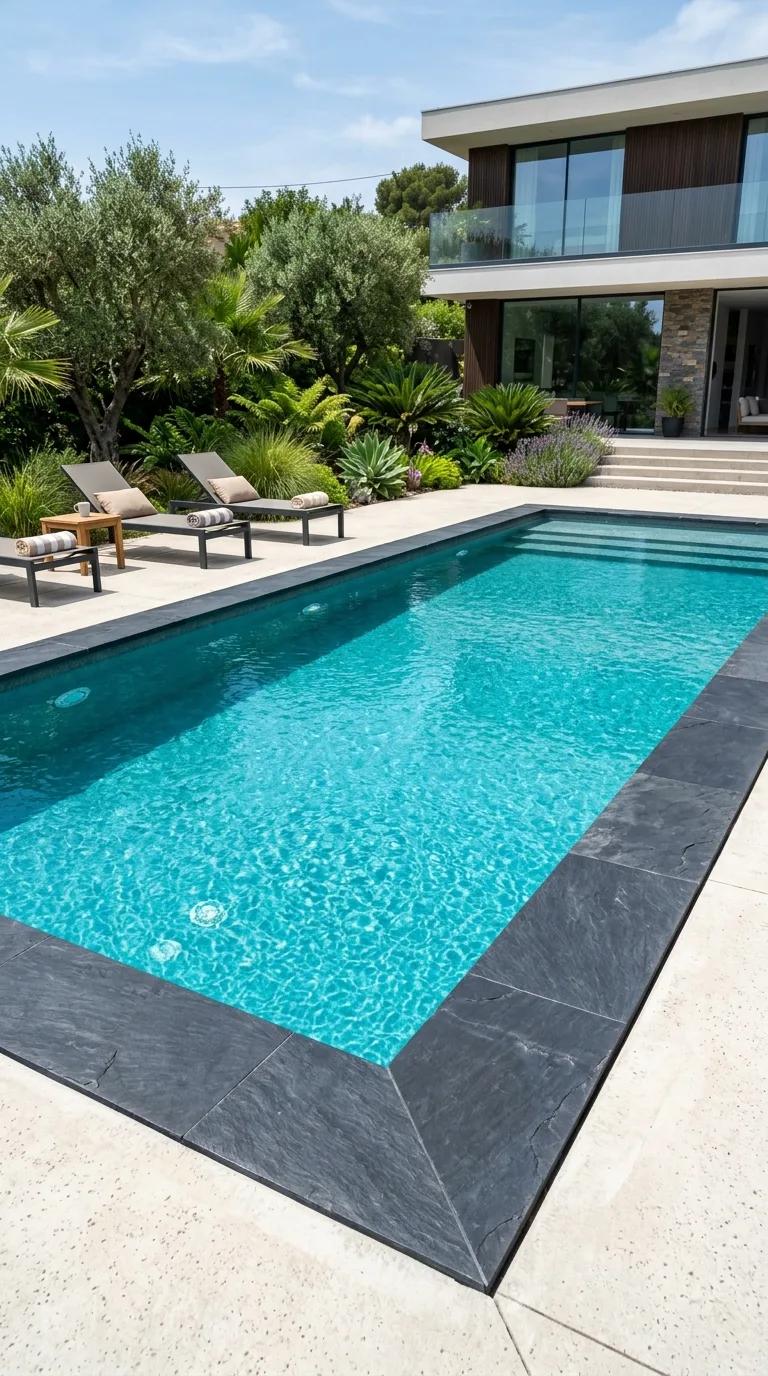
Dark slate coping in charcoal or near-black gives strong contrast against blue water and suits dark pool interiors and minimal, modern landscapes. Its natural cleft surface has texture that helps with grip.
Good to know: dark stone gets hot in direct sun, so dark slate is best for shaded pools or cooler climates. Buy a dense, good-quality slate; poorer grades can flake.
6. White Marble Coping
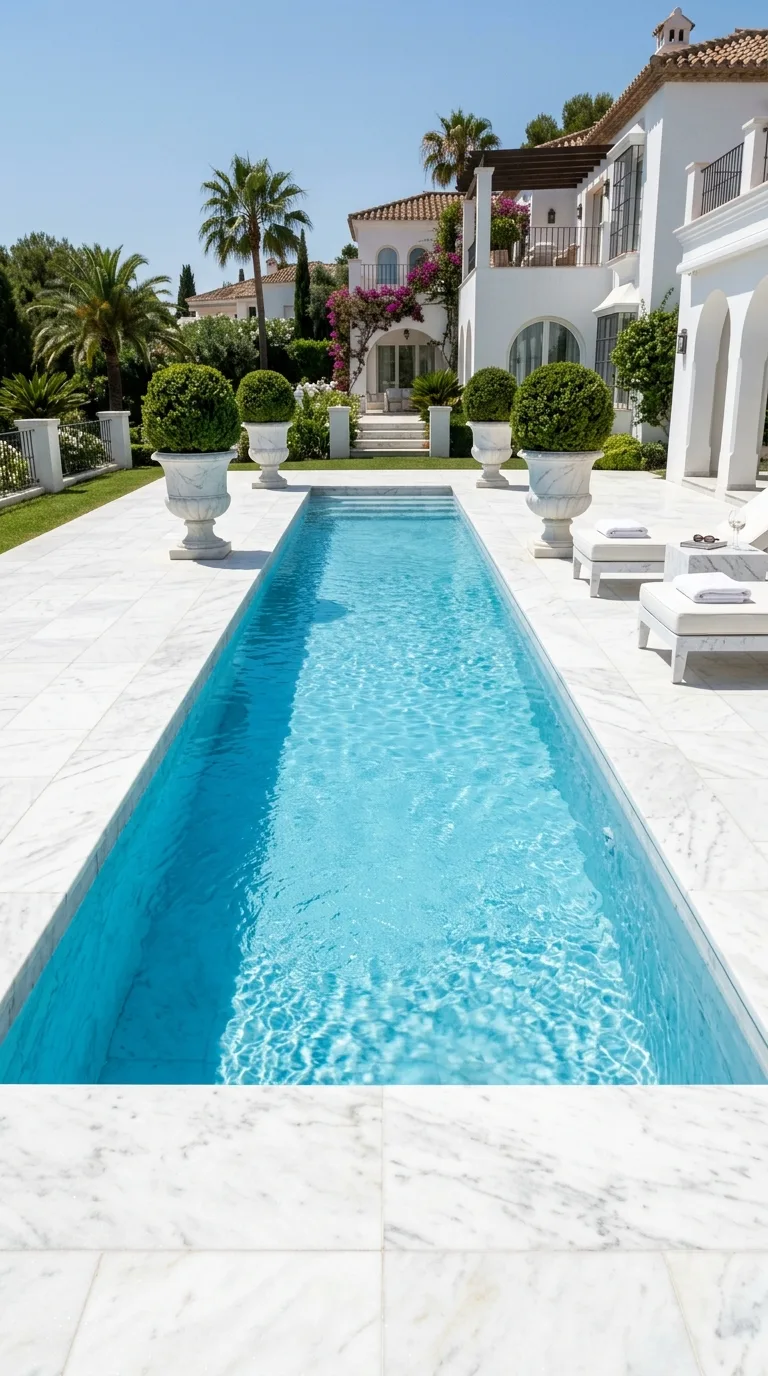
White marble coping, from softly veined Carrara to bright Thassos, makes pool water look vivid by contrast and pairs well with white or pearl interiors.
Good to know: polished marble is slippery when wet, so choose a honed or tumbled finish for coping. Marble is calcium-based and can etch and stain, so it needs sealing and regular care.
7. Pebble Mosaic Pool Floor
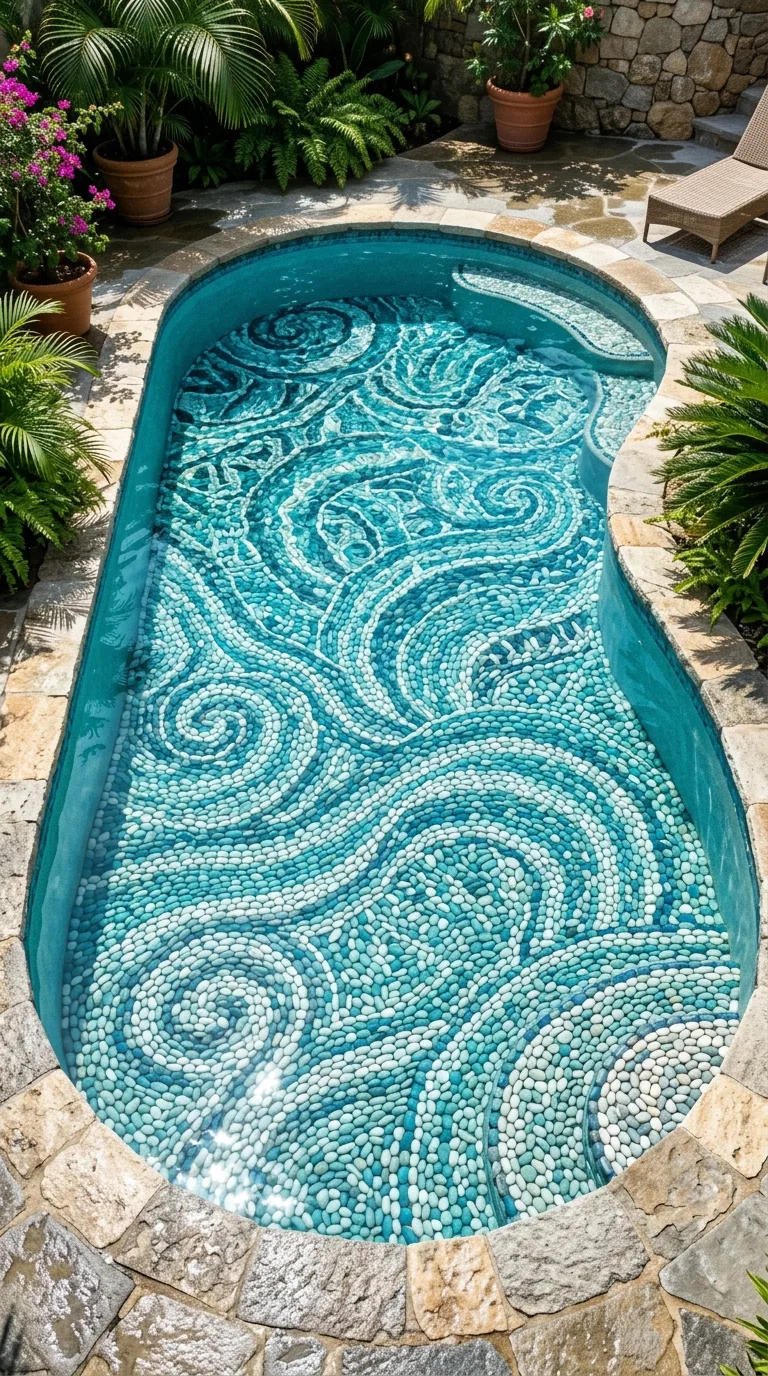
A pebble finish sets small smooth pebbles into the pool’s interior surface, in blends such as turquoise, white, gray or black, for a natural, textured look that interacts well with underwater lighting.
Good to know: it costs more than standard plaster, and the texture can feel rough on bare feet, so ask to touch samples; blends with smaller, smoother pebbles feel gentler.
8. Glass Tile Waterline Band
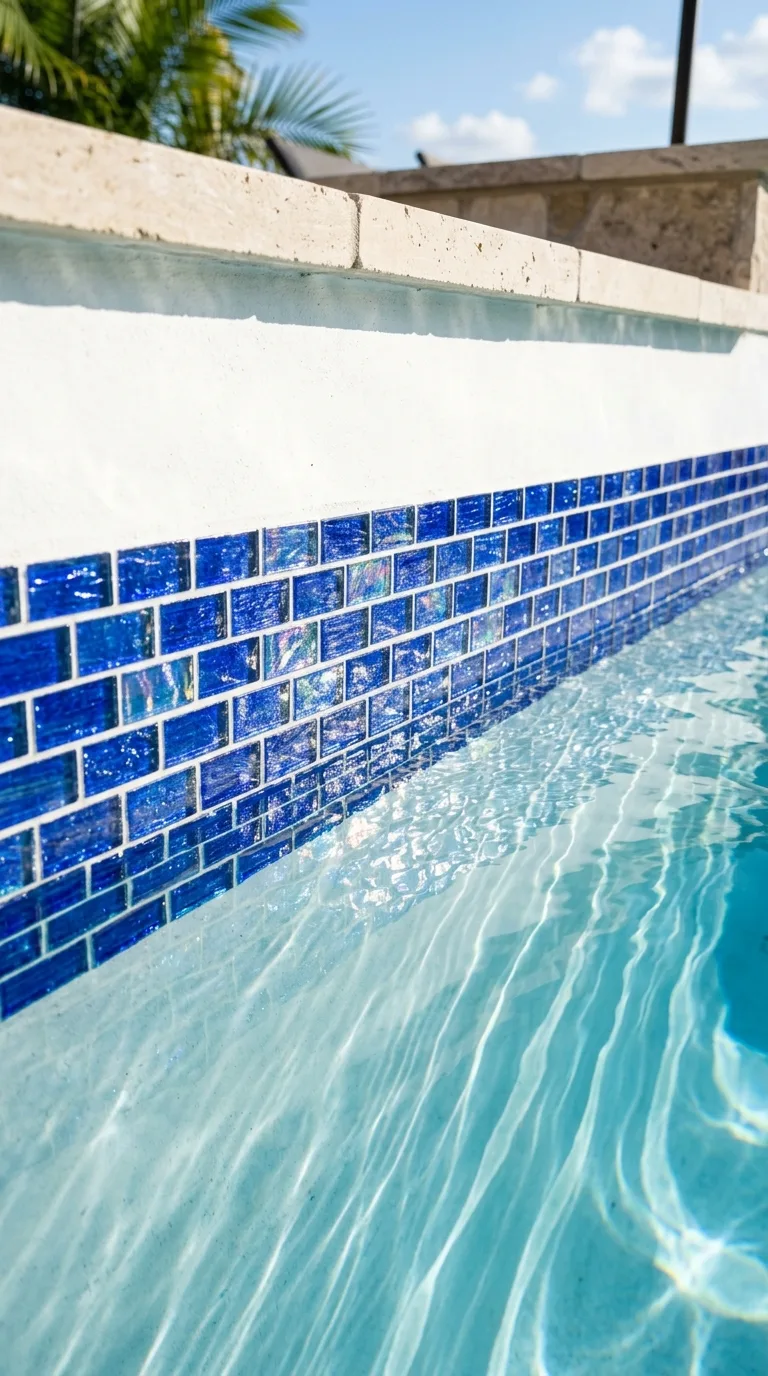
A band of glass mosaic tile at the waterline catches light and adds color where the water meets the wall. Cobalt against white plaster looks classic; bronze or gold against a dark interior looks more glamorous; aqua, teal and pearl give softer effects.
Good to know: waterline tile is easier to clean than plaster at the scum line, but glass tile needs an installer experienced with glass and the right setting materials.
9. Penny Round Mosaic Tiles
Penny round mosaic tiles bring a retro look to pool walls, steps and niches, and their small size follows curves without awkward cuts. Pairing penny-round walls with a larger tile on the floor adds variety.
Good to know: small tiles mean many grout lines, which take more cleaning over time.
10. Large Format Porcelain Pool Tiles
Large-format porcelain tiles, often 24 by 24 inches or bigger, give a pool interior a calm, modern look with few grout lines. Stone- and concrete-look porcelain lets you match the coping or deck.
Good to know: use tiles the manufacturer rates for submerged pool use, and hire an installer experienced with large formats: big tiles need a very flat base. For floors and steps, choose a slip-resistant finish.
11. Cobalt Blue Mosaic Tile Pool
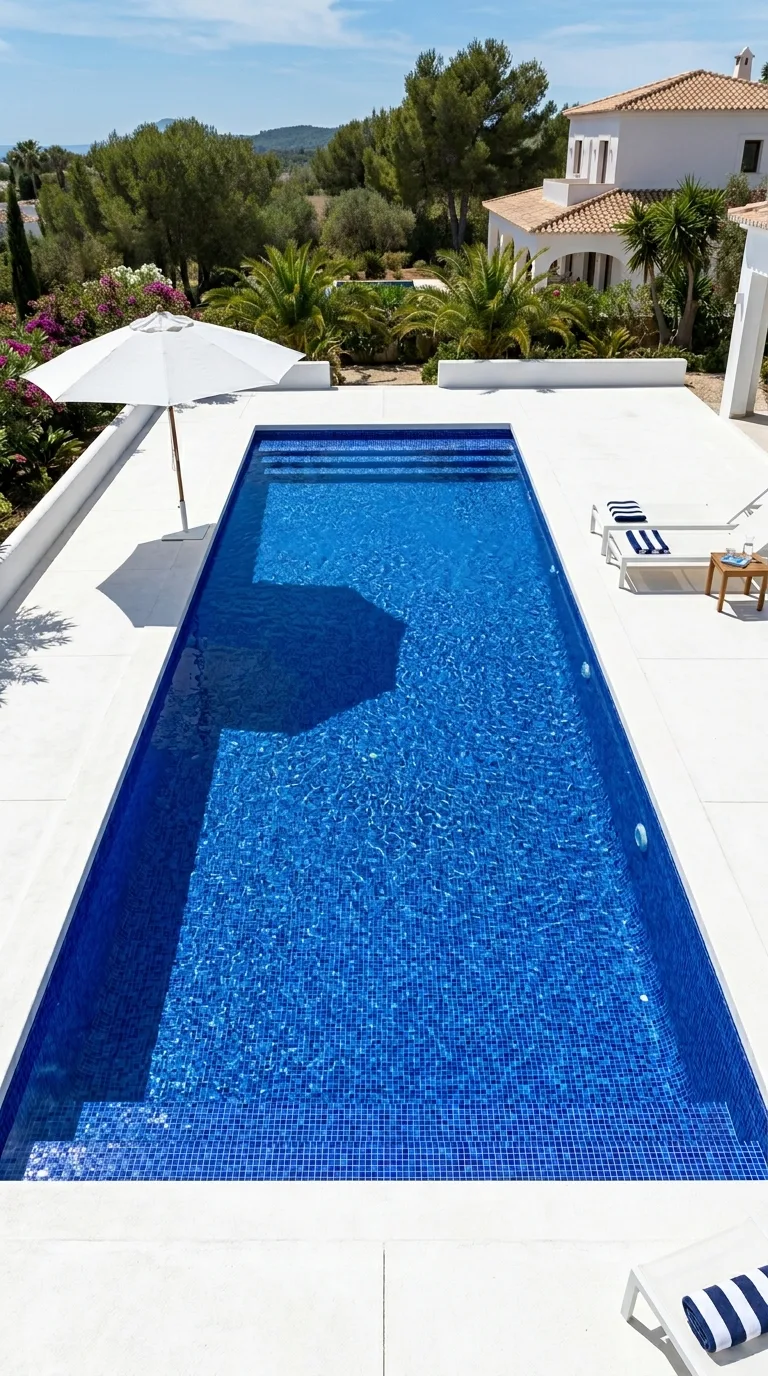
A pool tiled entirely in cobalt blue mosaic makes the water look deep and saturated, and it stands out most against white or pale cream decking.
Good to know: a strong color like this is hard to change later, so look at a large sample in your own light before you commit.
12. Herringbone Pattern Pool Floor
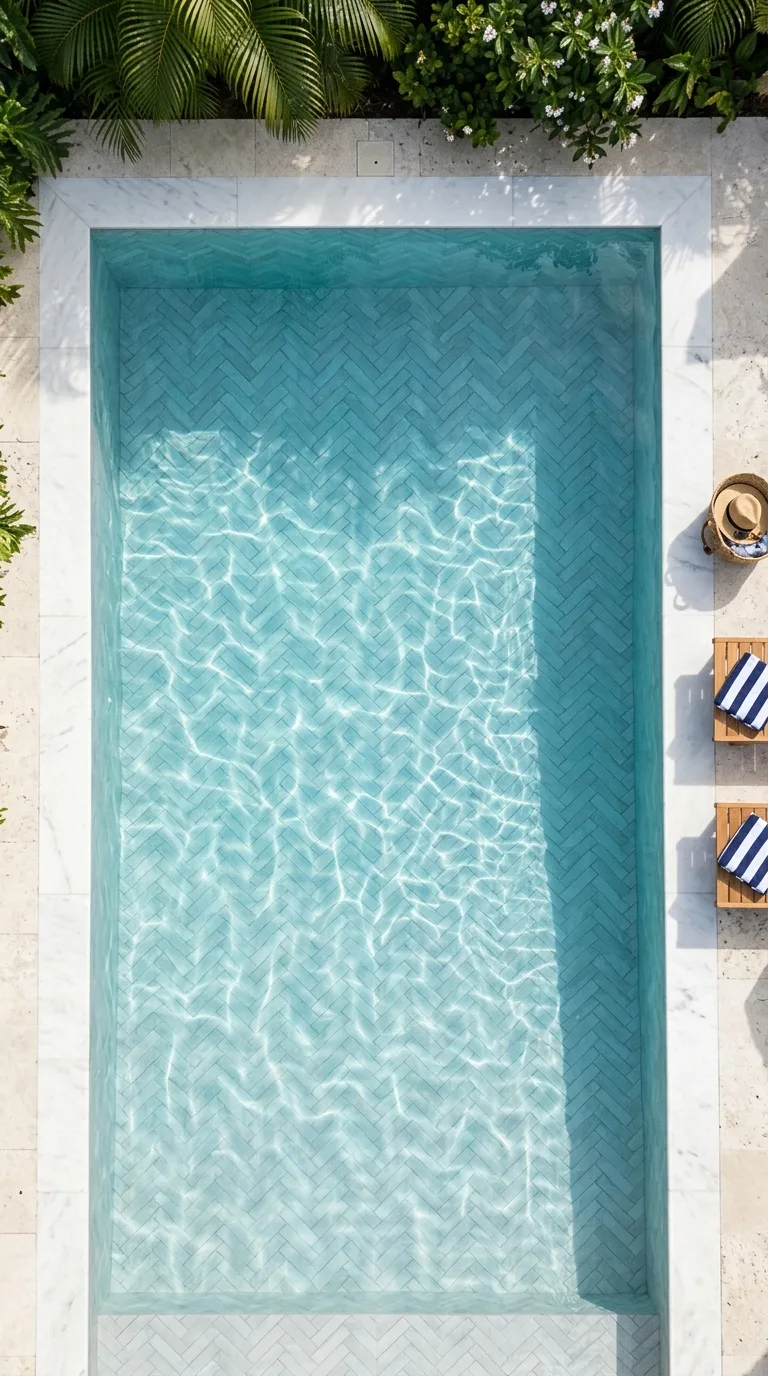
Laying long rectangular floor tiles in a herringbone pattern adds movement and suits lap pools, where the pattern underlines the pool’s length. Tiles with slight color variation give a softer, stone-like effect.
Good to know: herringbone takes more cutting and labor than a straight grid, so expect a higher installation cost.
13. Wood-Look Porcelain Coping
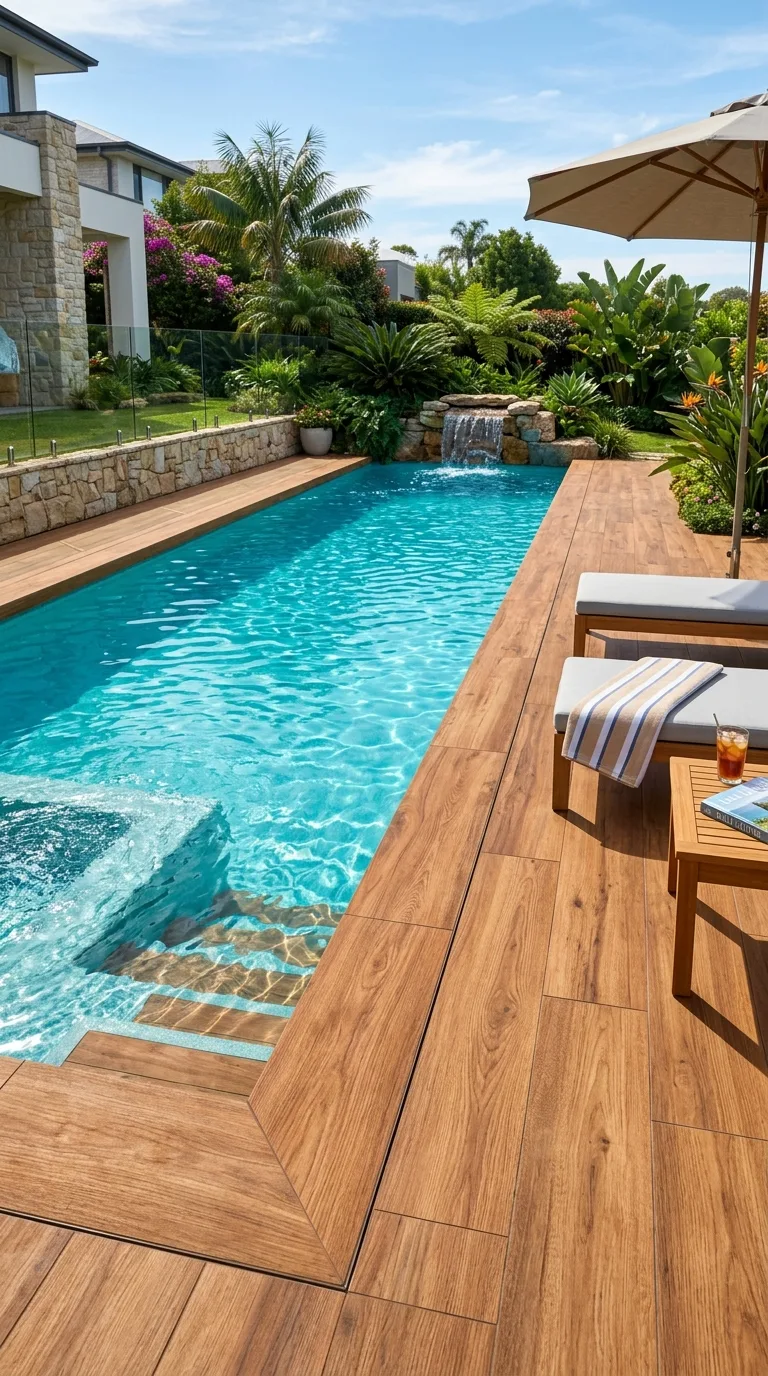
Wood-look porcelain coping gives the warmth of timber grain without rot, splinters or refinishing, and carrying it across the deck creates a continuous surface.
Good to know: choose a textured product the maker rates for exterior wet areas, and coping pieces made for pool edges.
14. Bluestone Coping
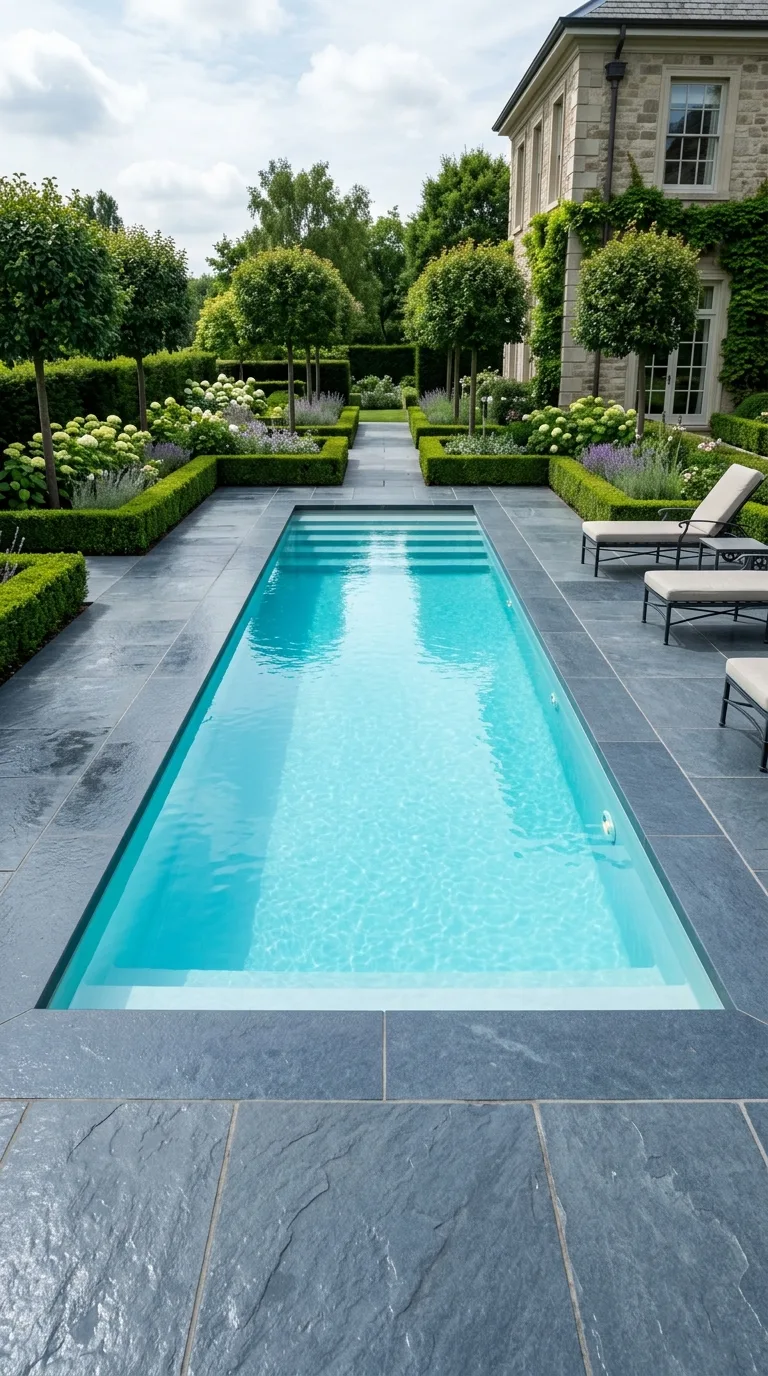
Bluestone coping has a cool blue-gray color and fine texture that suit formal pools with clean lines, especially with mid-blue or white interiors.
Good to know: like other dark stone, bluestone can get hot in full sun, so consider how much shade the pool gets.
15. Iridescent Glass Tile Interior
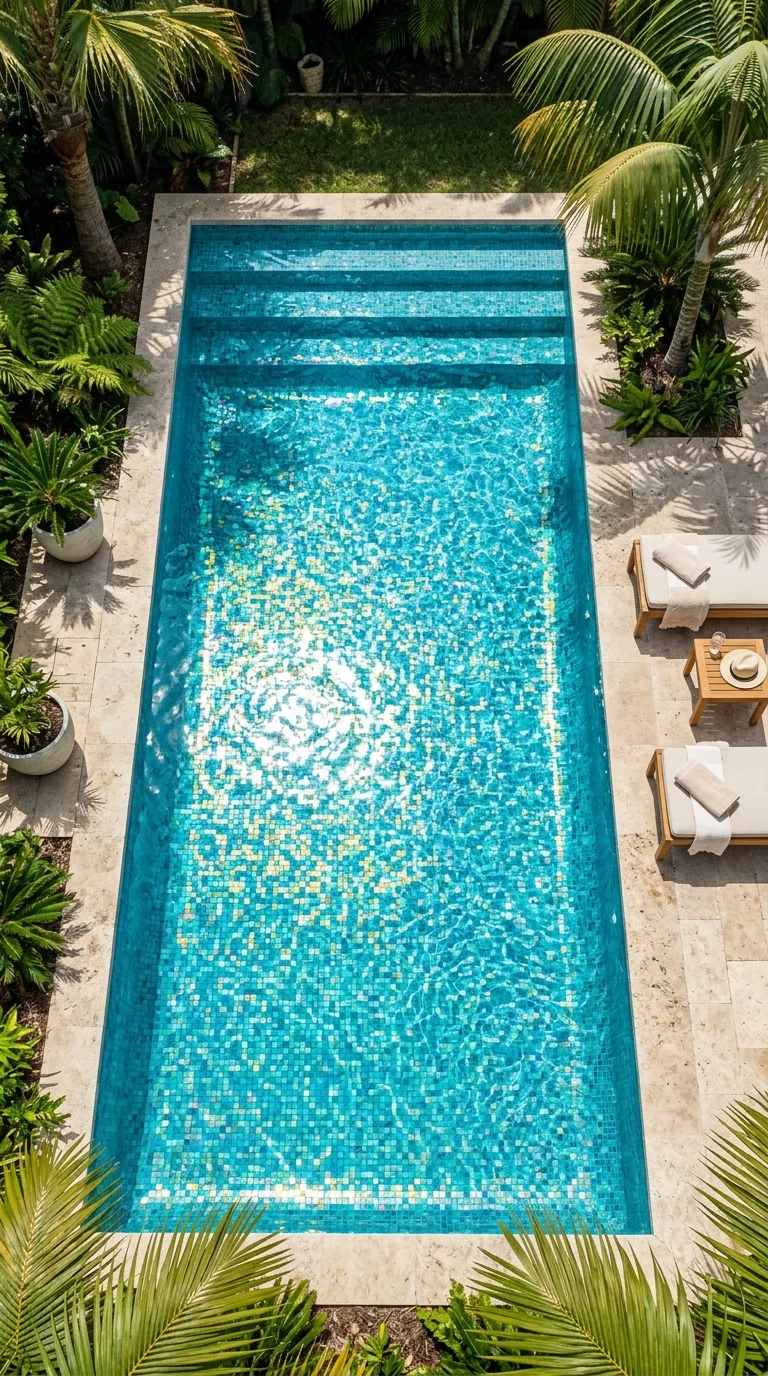
An iridescent glass tile interior shifts color as the light changes, in palettes such as aqua and pearl, gold and bronze, or blue and violet, and it reacts strongly to underwater lighting at night.
Good to know: it’s one of the costlier finishes and needs an installer experienced with glass tile.
16. Terracotta Style Tile Surround
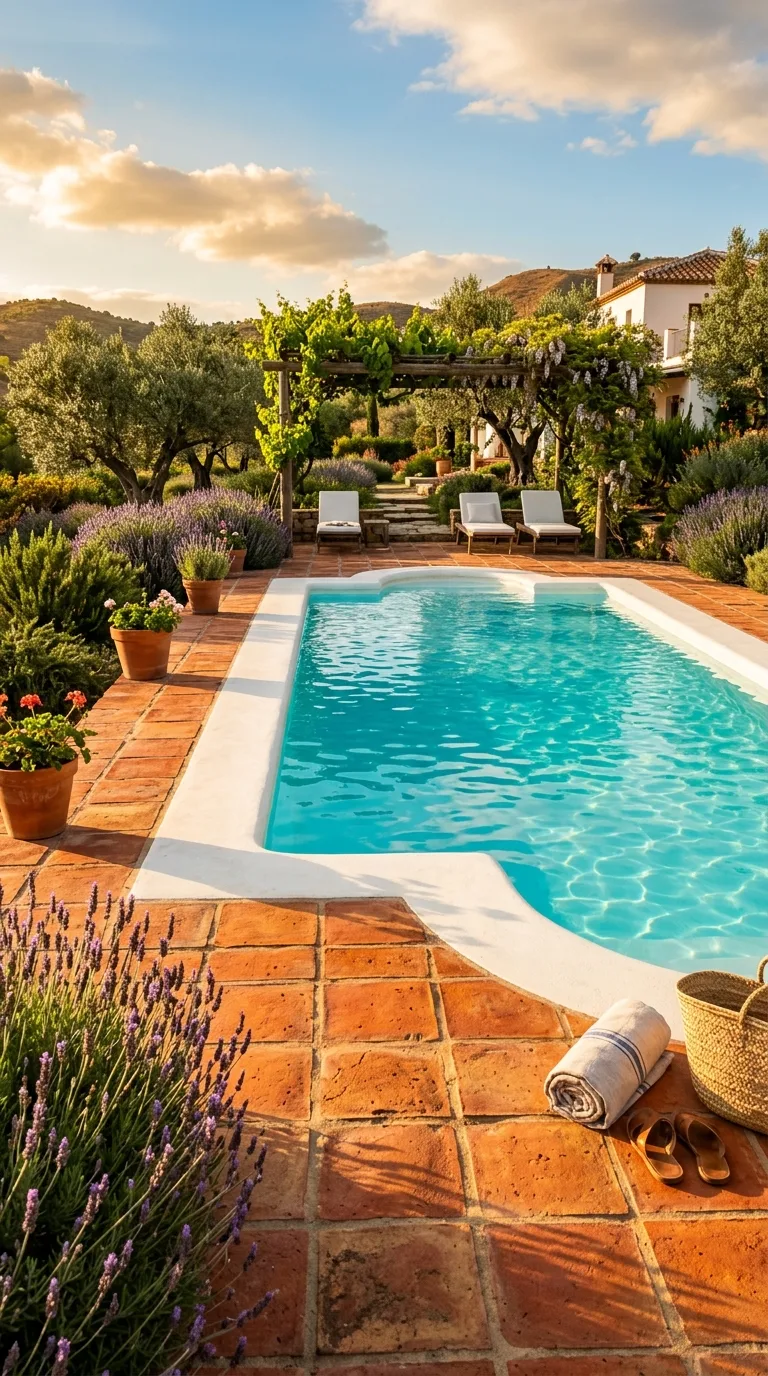
A terracotta-style surround brings warm, Mediterranean color and suits gardens with olive trees, lavender and pergolas. A pale coping between the terracotta and the water keeps the look crisp.
Good to know: genuine terracotta is porous, needs sealing and can crack in freezing weather; terracotta-look porcelain gives the color with less upkeep.
17. Black Waterline Tile Accent
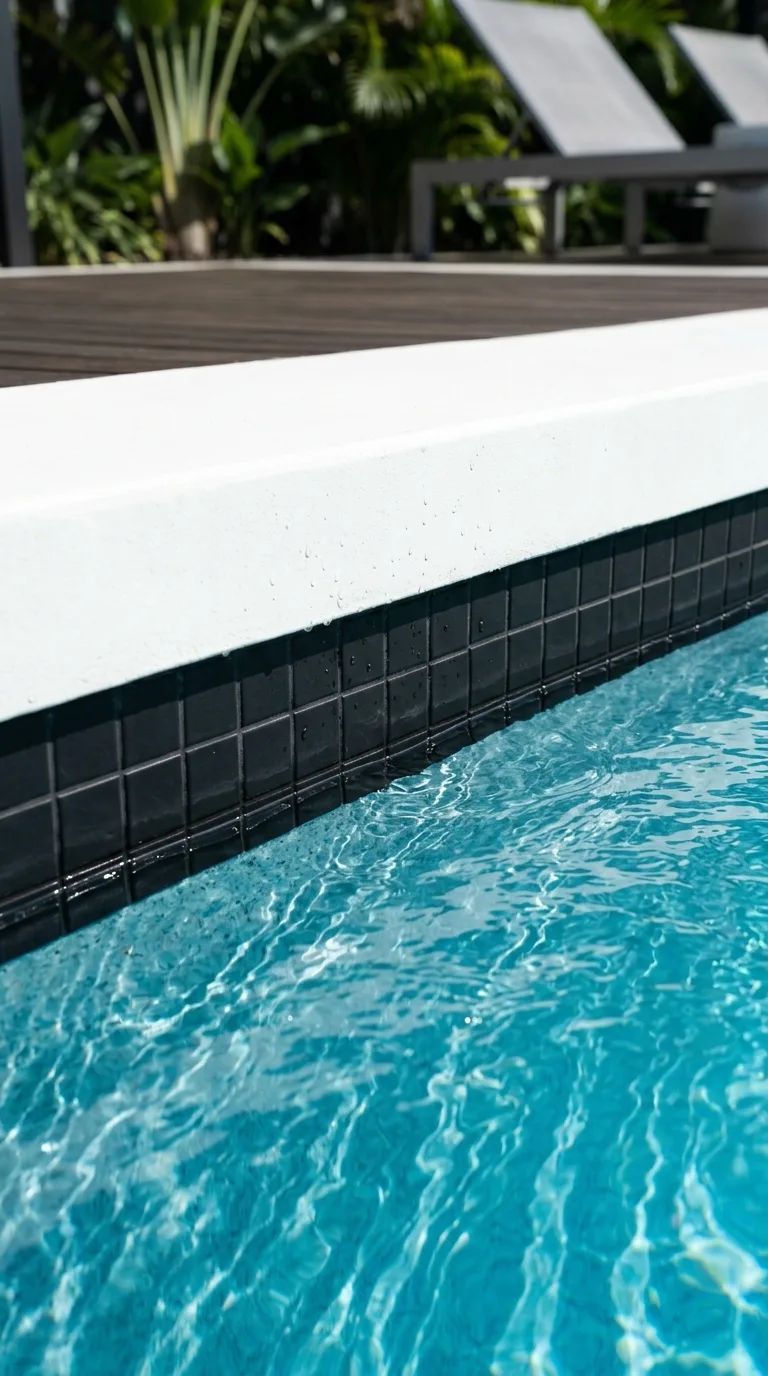
A black tile band at the waterline draws a crisp, graphic line around the pool, most striking against a white or pale interior. Matte or textured black tile looks more refined than gloss.
Good to know: dark tile makes white mineral scale more visible, so keep water chemistry balanced and brush the waterline regularly.
18. Geometric Patterned Tile Feature Wall
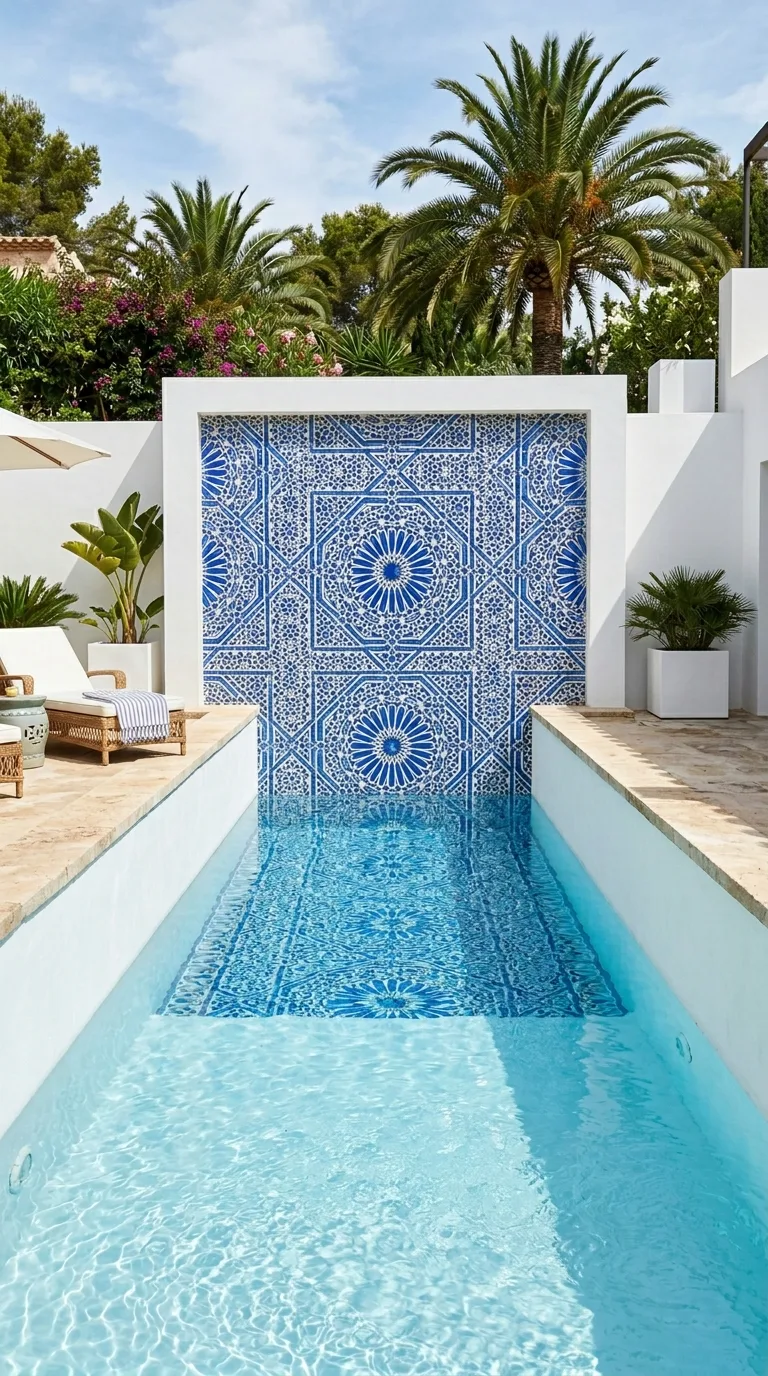
A geometric patterned tile wall at one end of the pool, in blue and white, black and gold or terracotta and cream, creates a focal point. Keep the other surfaces plain so the wall stands out, and light it at night.
Good to know: cement tiles (often called encaustic or hydraulic tiles) are porous and need sealing, so check the maker’s guidance before using them where they’ll be splashed or submerged; printed porcelain is the easier choice.
19. Mediterranean Mosaic Pool Interior
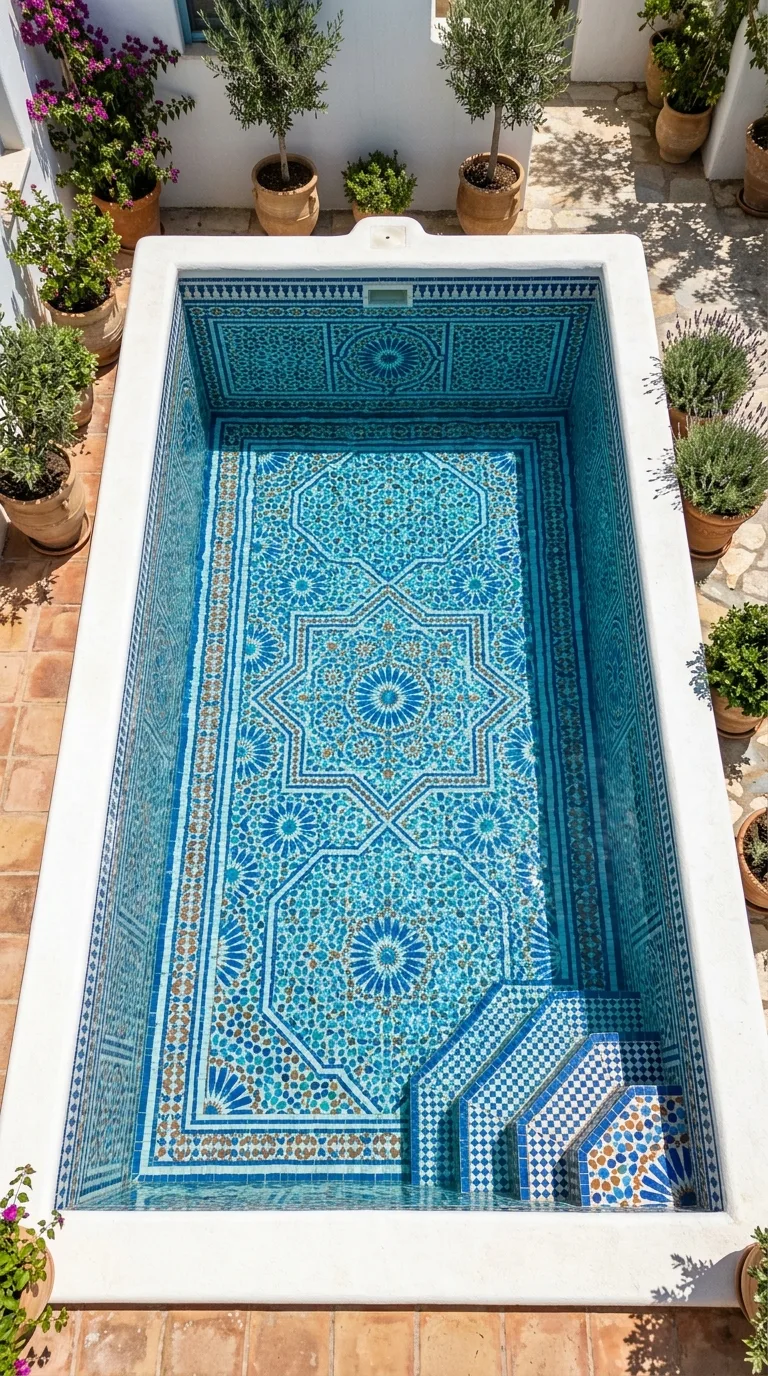
A Mediterranean-style mosaic interior uses glazed ceramic tiles in patterns inspired by Morocco, Spain, Portugal and Turkey. With white walls, arches and planting such as jasmine and citrus, it can turn a backyard into a Mediterranean-style retreat.
Good to know: hand-painted and decorative tiles aren’t all suitable for pools, so ask whether the tiles are rated for submerged use (and for freezing, if that applies where you live).
20. Sandstone Coping
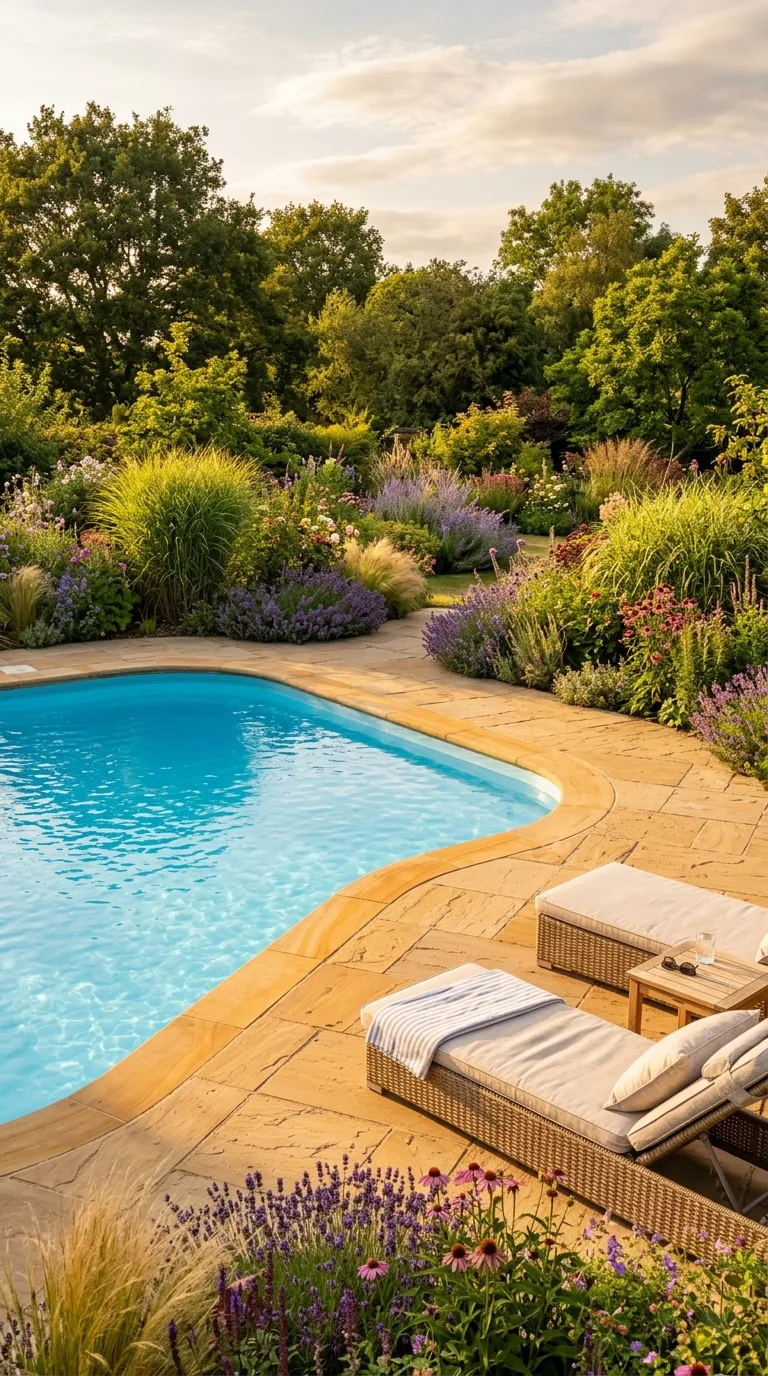
Sandstone coping, in tones from pale cream to rust and brown, suits natural settings and homes with sandstone or brick. Sawn edges look cleaner; split faces look more natural. It pairs well with planting such as ornamental grasses, lavender and native shrubs.
Good to know: sandstone is porous and some types are soft, so choose a dense stone, seal it and rinse off chemical splashes.
21. Infinity Pool Tile in Wet Edge Blue
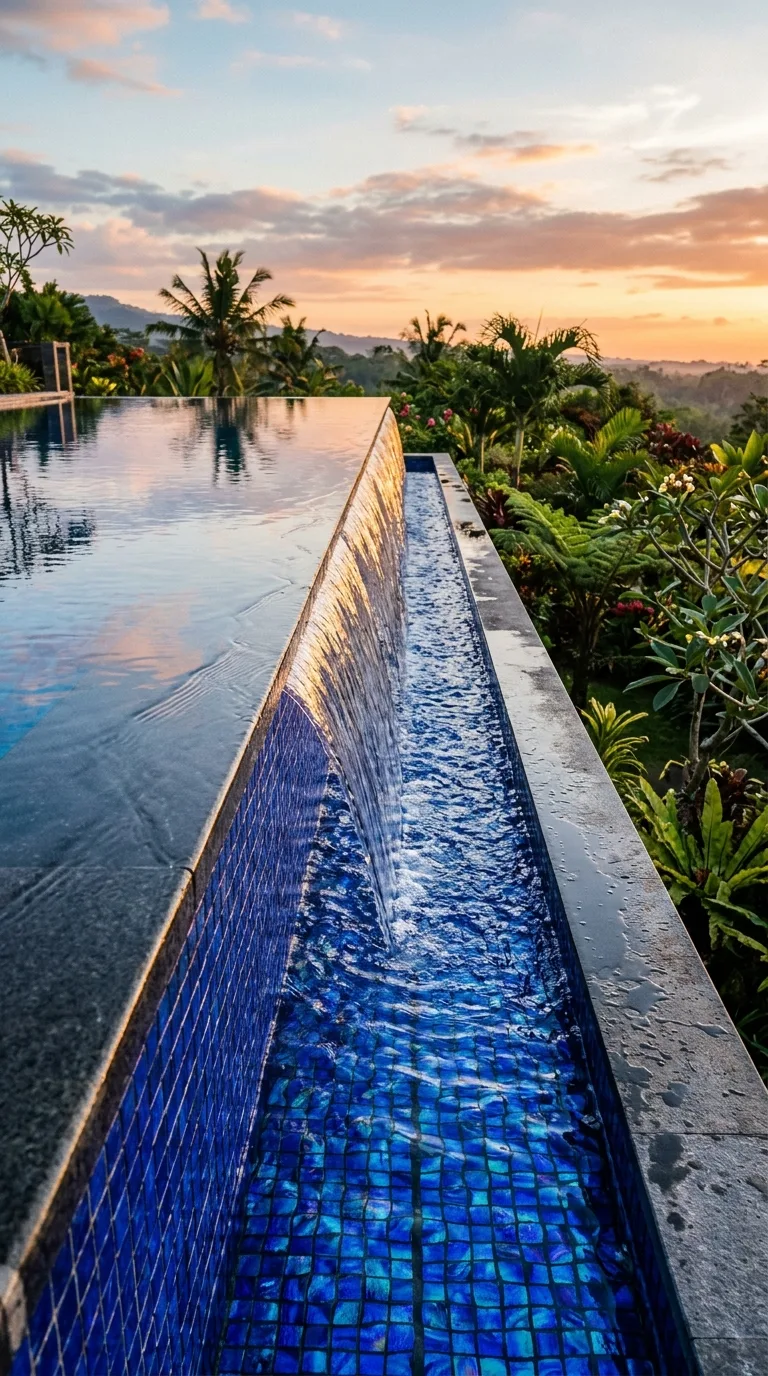
In an infinity pool, the tile in the catch basin below the vanishing edge is seen constantly from the deck. A deep cobalt or sapphire trough tile against a lighter aqua interior creates a gradient of blue, and lights in the trough make the falling water glow at night.
Good to know: an infinity edge is a structural and plumbing project, with a catch basin and extra pumping, so it needs a designer and builder experienced with vanishing-edge pools.
22. Brushed Concrete Coping with Aggregate Finish
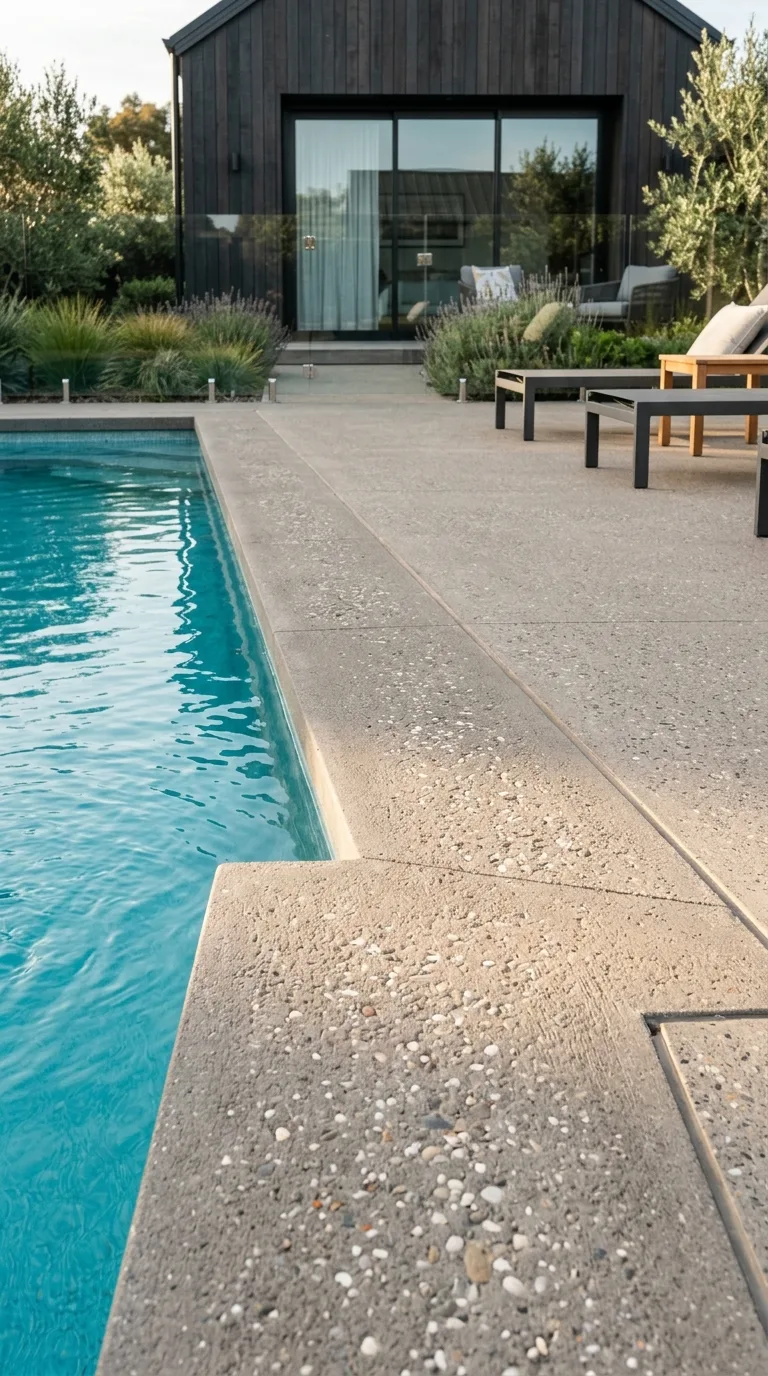
Exposed aggregate concrete coping reveals small stones, shells or glass beads in the surface, giving texture and grip at a moderate cost. White cement with pale quartz looks light and coastal; gray cement with dark aggregate looks more modern.
Good to know: the texture can feel coarse, so ask to see and touch a finished sample, and match the aggregate to your pool interior for a cohesive look.
23. Pearl and White Glass Mosaic Interior
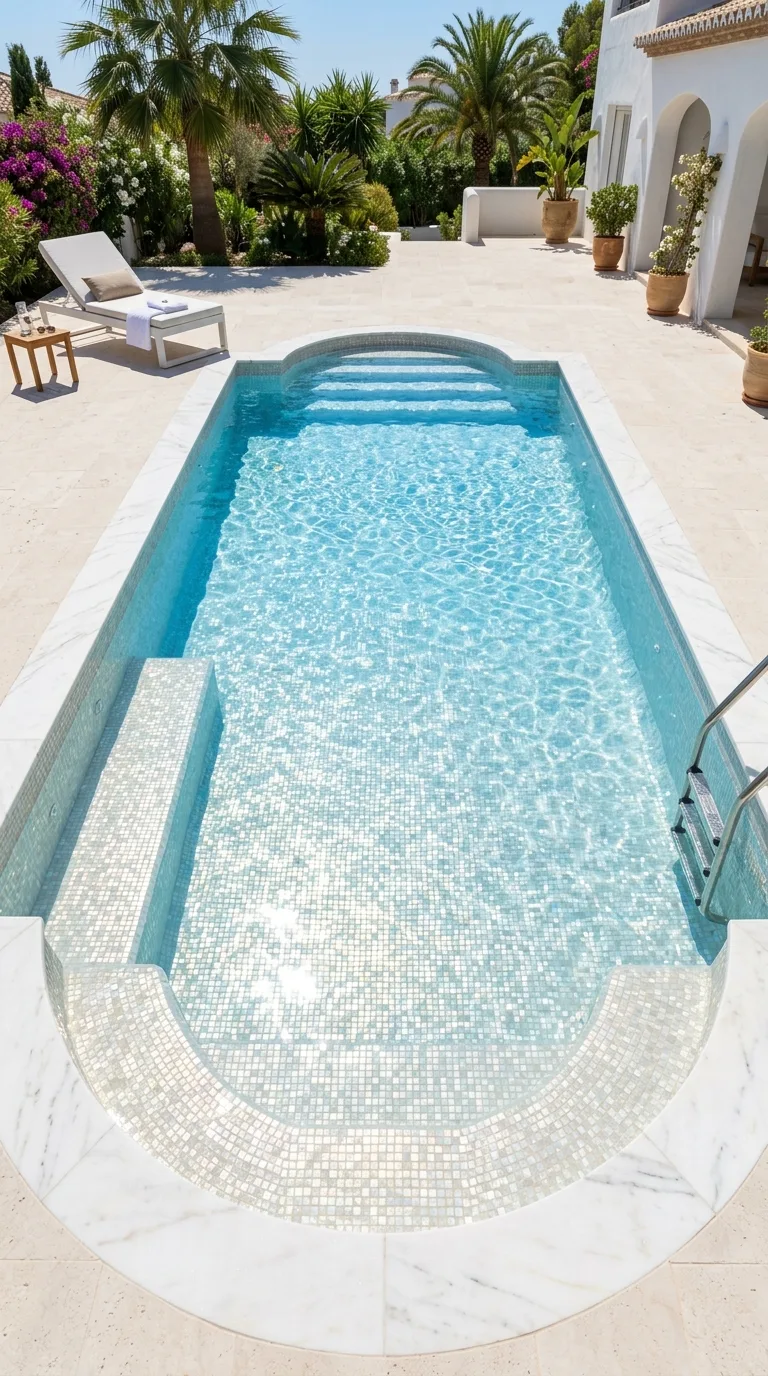
A pearl and white glass mosaic interior reflects a lot of light, so the water looks bright and clear. It pairs well with pale coping and decking.
Good to know: light interiors show dirt and debris more, so plan on regular brushing and skimming.
24. Coping with Integrated LED Step Lighting
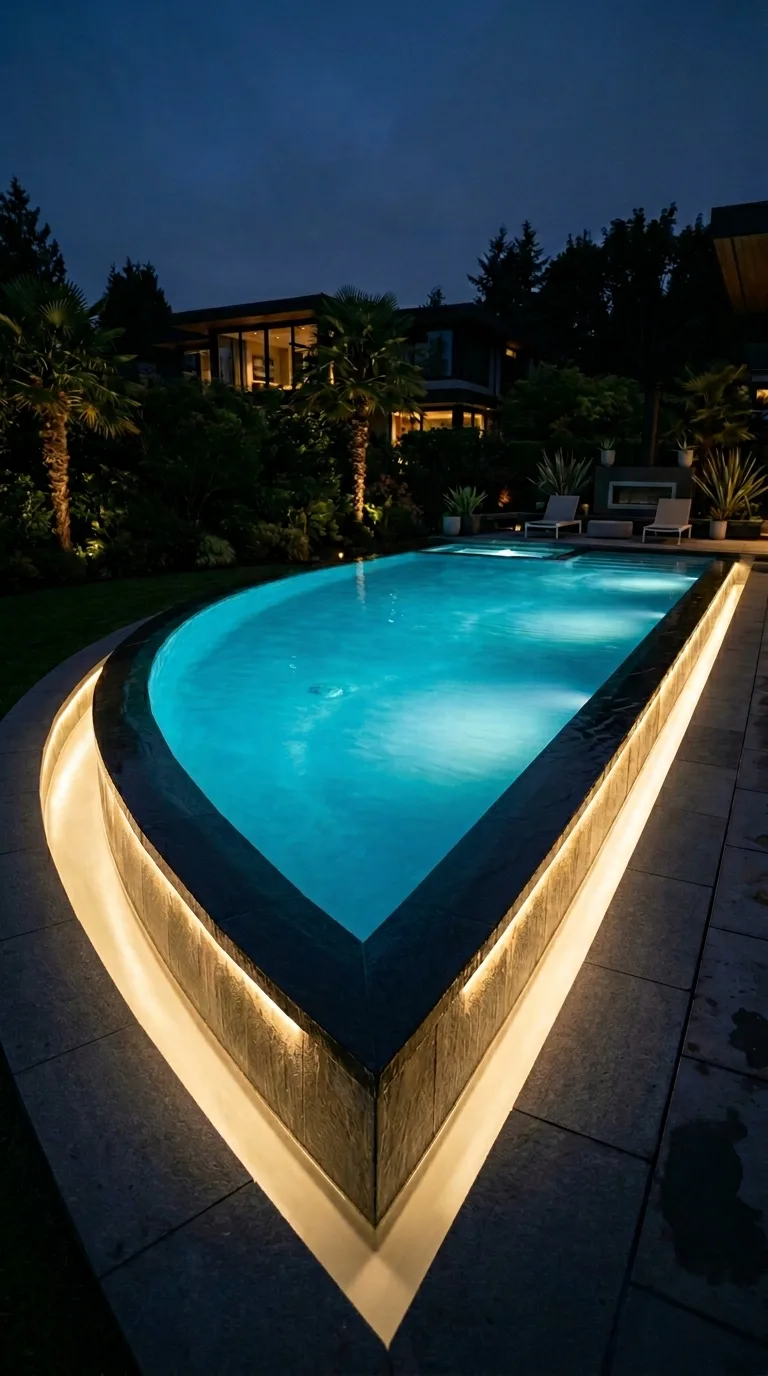
LED strip lighting set into a recess under the coping casts a soft glow onto the water and the pool wall after dark, without the light source being visible. Warm white feels calm; color-changing options can match underwater lights.
Good to know: pool lighting is a serious electrical job. The U.S. Consumer Product Safety Commission says it’s most concerned about faulty underwater lighting, recommends GFCI protection, and advises having an electrician qualified in pool and spa work handle the wiring.
Common mistakes to avoid
- Using polished stone or glossy tile on coping and walking surfaces.
- Choosing dark coping for a pool in full sun in a hot climate.
- Leaving porous stone unsealed, especially around a saltwater pool.
- Using decorative or cement tiles that aren’t rated for pools where they’ll be soaked.
- Doing pool lighting or electrical work yourself instead of hiring a pool-qualified electrician.
Pool coping and tile FAQs
What is the best pool coping for a hot climate?
Light-colored, textured stone or concrete, such as travertine, limestone or light exposed-aggregate concrete. Dark slate and bluestone get hotter in full sun.
Is travertine good for saltwater pools?
It’s widely used, but it’s porous, so ask your installer about a penetrating sealer and your stone supplier about grades suited to saltwater pools.
What tile is safest around a pool?
Tile the manufacturer classifies for exterior wet areas under ANSI A326.3, with a textured rather than polished finish.
How do I keep waterline tile clean?
Brush it regularly and keep the water chemistry balanced to limit scale, which shows most on dark tile.


