
20 Living Room Wall Art Ideas That Create Focus
Wall art gives a living room a focal point: something for the eye to land on and for the furniture to relate to. The right piece depends on the size of the wall, what sits below it and how much light the spot gets.
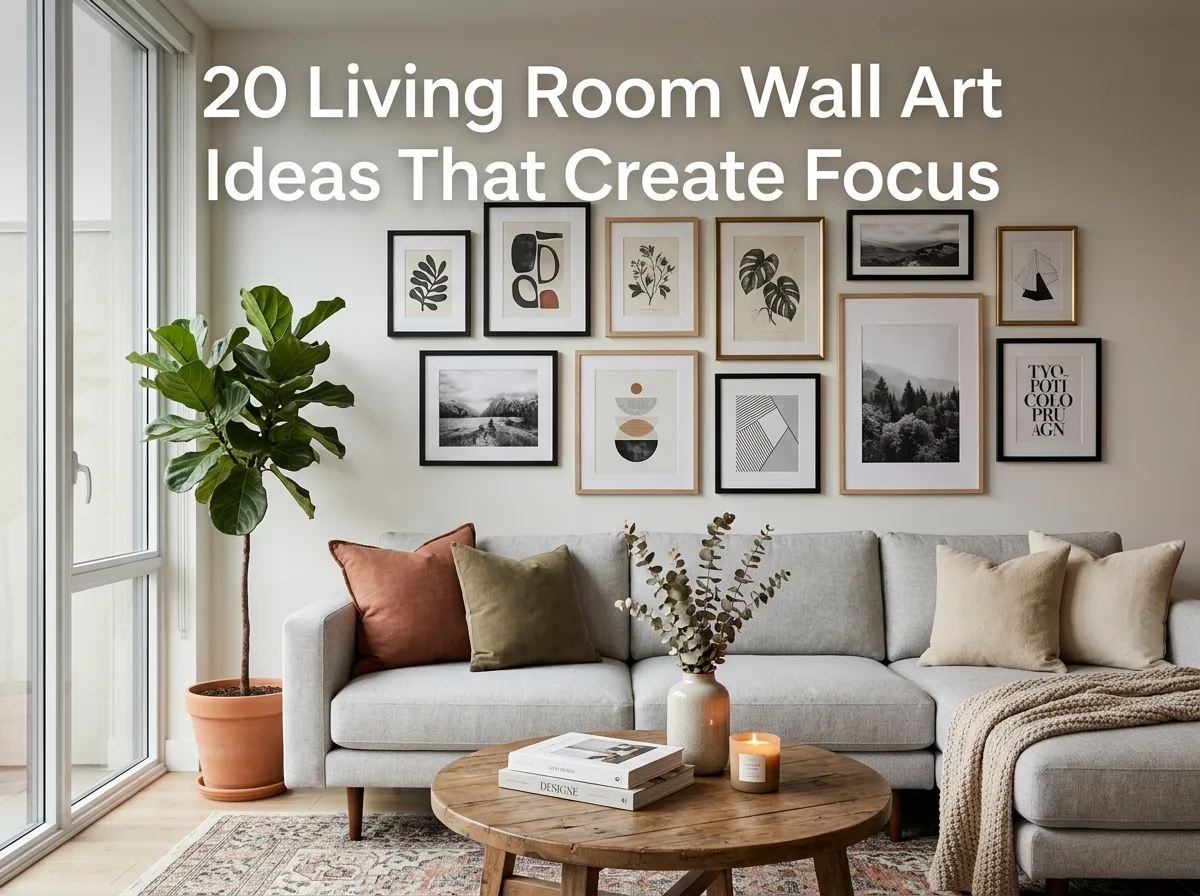
Below are 20 living room wall art ideas, each with how to use it and one practical tip. Start with the hanging basics, because size and height decide whether art looks planned or random.
Hanging basics
Hang it at eye level
A common rule of thumb among galleries and framers is to put the center of the art, or of a whole group, about 57 to 60 inches from the floor. In a living room where people mostly sit, a little lower often looks better.
Size it to the furniture
Over a sofa or console, leave roughly 6 to 12 inches between the furniture and the bottom of the frame, and aim for art about two-thirds the width of the piece below. These are design rules of thumb, not standards, so adjust them to your wall.
Use hardware rated for the weight
Fix heavy mirrors and large frames into studs or with anchors rated for the load. In earthquake areas, Ready.gov advises that you secure heavy items, including objects that hang on walls, and FEMA suggests hanging heavy pictures and mirrors away from couches and anywhere people sit.
Protect art from light and heat
The Library of Congress advises displaying framed works out of direct sunlight and away from working fireplaces and radiators, ideally on interior walls. UV-filtering glazing slows fading of prints and photos.
The 20 ideas at a glance
| Idea | Best spot | Suits | Watch for |
|---|---|---|---|
| Oversized abstract canvas | Above the sofa, largest wall | Most styles | Scale |
| Gallery wall | Behind the sofa, large walls | Eclectic, personal rooms | Even gaps |
| Black-and-white photo series | Above a sofa or console | Modern, minimal rooms | Sun fading |
| Large botanical print | Feature wall | Neutral rooms | Print resolution |
| Woven wall hanging | Above the sofa | Boho, natural rooms | Dust, heat |
| Statement mirror | Beside or opposite a window | Small or dark rooms | Weight |
| Minimalist line art | Plain white wall | Scandinavian, minimal rooms | Too small a piece |
| Diptych or triptych | Above a long sofa or credenza | Modern rooms | Equal gaps |
| Floating shelf display | Behind the sofa, alcoves | Renters, collectors | Shelf load and lip |
| Metal wall sculpture | Feature wall | Modern, industrial rooms | Weight, sharp edges |
| Landscape photography | Behind the sofa, above a console | Calm rooms | Print quality |
| Graphic poster | Neutral wall | Eclectic, mid-century rooms | Frame it |
| Ceramic plates | Wall near a dining area | Traditional, eclectic rooms | Right hangers |
| Blueprint art | Above a console | Modern, industrial rooms | Fading originals |
| Painted accent wall | Wall behind the sofa | Any style | Test the color |
| Vintage oil painting | Above a sofa or console | Traditional, eclectic rooms | Heat and sun |
| Typography | Hallway, gallery wall | Modern rooms | Personal wording |
| Layered mantel display | Mantel | Rooms with a fireplace | Heat from a working fire |
| Fabric panel | Above the sofa | Boho, global styles | Fading, dust |
| Neon sign | Dark accent wall | Eclectic, loft rooms | Certified power supply |
1. Oversized Abstract Canvas

One large abstract canvas gives a living room an obvious focal point, and abstract work fits most furniture styles. Pick a piece that repeats one or two colors from your cushions, rug or wood tones so it ties the room together. Hang it over the sofa or on the largest empty wall, centered on the furniture below.
Good to know: scale is the most common mistake. Over a sofa, art about two-thirds of the sofa’s width usually looks right. Tape kraft paper the size of the canvas to the wall to check before you buy.
2. Gallery Wall with Mixed Frames

A gallery wall mixes photos, prints, small paintings and even textiles in different frames, so the wall reads as a personal collection. To keep the variety from looking messy, start with one larger anchor piece, keep the gaps between frames even and repeat a few colors or frame finishes.
Good to know: lay the arrangement out on the floor first, trace each frame on paper, tape the templates to the wall and mark the nail points before you hammer. Treat the whole group as one piece and center it at eye level.
3. Black and White Photography Series

A series of black-and-white photos in matching frames looks calm and unified, whether the images are family portraits, travel shots or architectural details. Three or five prints in a straight line above a sofa or console give the wall an even rhythm. Identical thin frames and wide white mats give a clean gallery look.
Good to know: photographs fade and discolor in strong light, so hang them out of direct sun and use UV-filtering glazing for originals or prints you can’t replace.
4. Large Scale Botanical Print

A large print of ferns, palms, leaves or branches brings green and a natural subject into the room, and suits traditional, modern and transitional styles. A simple natural wood or thin gold frame lets the image lead. Botanical art is an easy way to add color to a neutral living room.
Good to know: an oversized print needs a high-resolution source, or it will look blurry up close. Ask the seller for the largest size the image can be printed at without losing detail.
5. Textured Woven Wall Hanging

A woven hanging, macramé piece or tapestry adds texture and softness that flat prints can’t, and can soften echo in a room of hard surfaces. Hang a large piece above a sofa or a decorative fireplace, and pair it with wood, leather and linen. Cream and beige pieces are the most versatile; rust or mustard adds warmth.
Good to know: fiber art can burn and it collects dust, so don’t hang it directly above a working fireplace. Vacuum it gently now and then with a brush attachment on low suction.
6. Statement Mirror as Art

A large mirror works as art and bounces light around the room, which helps in a small or dark living room. Hanging it beside or opposite a window reflects daylight and the view. The frame sets the style: gilded and ornate feels classic, a round brass frame feels modern, and a sunburst adds a mid-century note.
Good to know: large mirrors are heavy and fragile, so hang them from hardware rated for the weight, fixed into studs where possible. In earthquake areas, avoid hanging a heavy mirror directly over seating.
7. Minimalist Line Art

Line art uses a few continuous lines to suggest a face, figure or plant, so it adds personality without visual clutter. A large line drawing in a thin black or oak frame on a white wall suits Scandinavian, modern and minimalist rooms. Its simplicity works best with plenty of empty wall around it.
Good to know: line art is quiet, so it needs size to work as a focal point. A small print on a big wall disappears; choose a large piece or hang two related drawings side by side.
8. Diptych or Triptych Artwork

A diptych or triptych splits one image, or a set of related images, across two or three panels hung side by side. The format covers a wide wall, such as over a long sofa or credenza, without the weight of one huge canvas. Abstract art and landscape or ocean photography work well split this way.
Good to know: keep the gaps between panels equal and fairly narrow so they still read as one piece, and measure the total width, gaps included, against the furniture below.
9. Floating Shelf Art Display

Picture ledges or floating shelves let you lean and overlap frames instead of hanging each one, mixed with a few small objects such as a vase or sculpture. Two or three long shelves stacked on the wall behind a sofa make a relaxed display you can change with the seasons, without new holes in the wall.
Good to know: choose ledges with a front lip or groove so frames don’t slide off, and fix the shelves into studs or with anchors rated for the load. Keep heavy objects off shelves above where people sit.
10. Metal Wall Sculpture

A metal wall sculpture adds depth and shadow that flat art can’t, and the effect changes as light moves through the day. Brass, iron, copper or mixed metals can repeat the finish of lighting and hardware elsewhere in the room. A picture light or nearby lamp brings out the shadows in the evening.
Good to know: metal pieces can be heavy and have sharp edges, so check the weight, use the mounting hardware supplied, and hang them where children won’t brush against them.
11. Landscape Photography Print

A large landscape photo of mountains, a coastline or desert gives the room a sense of depth and place. Print it large and frame it simply in black or natural wood so the image leads. It works well above a low media console or behind a sofa, where it acts a little like a window.
Good to know: for a big print, start from a high-resolution image and use a printer that offers archival papers or canvas, then hang it out of direct sun to slow fading.
12. Bold Graphic Poster Art

Graphic posters, from vintage travel posters to modern prints and typographic designs, bring strong color and personality to a living room. A large framed poster in red, orange or electric blue stands out on a neutral wall. Posters suit eclectic, creative and mid-century rooms, and usually cost far less than original art.
Good to know: frame posters rather than taping them up: a frame keeps the paper flat and clean, and UV-filtering glazing slows fading of bright inks.
13. Ceramic Plate Wall Arrangement

A wall of decorative plates adds pattern, color and a collected look, especially in traditional, eclectic and Mediterranean-style rooms. Choose a clear color story, such as blue and white, earth tones or hand-painted florals, and vary the plate sizes. Building the group around one larger central plate keeps it organized.
Good to know: use plate hangers sized to each plate, or adhesive disc hangers; spring hangers that grip too tightly can chip the rim. Keep antique plates away from busy spots where they could be knocked.
14. Architectural Blueprint Art

Framed architectural plans or elevations bring precise lines and a sense of history to a living room wall. Plans of famous buildings, an old city map or the original drawings of your own house all work. Dark wood or black metal frames suit modern, industrial and traditional rooms, and three in a row over a console make a neat set.
Good to know: old drawings and blueprints fade in strong light, so frame a reproduction for a sunny wall and keep originals behind UV-filtering glazing, out of direct sun.
15. Painted Accent Wall as Art

Sometimes the wall itself is the art: a bold block of color, a hand-painted mural or a geometric pattern gives the room a focal point without any frames. A deep green wall behind a neutral sofa, or a terracotta wall with one floating shelf, is enough. If you’re choosing a color by mood, see these living room color psychology ideas.
Good to know: paint a large sample first and look at it in morning and evening light. For geometric designs, apply painter’s tape only once the base coat has fully dried, and press the edges down firmly for crisp lines.
16. Vintage Oil Painting

A vintage oil painting from an antique shop, estate sale or auction adds visible brushwork, age and a one-off focal point that prints can’t copy. A large landscape or portrait in a gilded frame above a sofa or console is a classic choice, and it also works in modern rooms as a contrast.
Good to know: keep paintings away from working fireplaces, radiators and direct sun, as the Library of Congress advises for framed works generally. Hang heavy gilt frames from two hooks fixed into studs so they stay level.
17. Typography and Quote Art

A large typographic print with a single word, a short phrase or well-designed lettering adds meaning as well as pattern. Good printing, a refined typeface and a frame that suits the room keep it from looking generic. A large black-and-white print in a thin oak frame on a white wall looks modern and clean.
Good to know: pick words that are personal, such as a place, a family saying or a line from a favorite book, rather than common slogans, which date quickly.
18. Layered Art Arrangement Above Fireplace

A mantel is a natural place for a layered display: lean one large piece against the wall, overlap a smaller frame in front and add a few objects such as a vase, a small sculpture or greenery. Layering looks relaxed and collected rather than formal, and it is easy to change through the year.
Good to know: if the fireplace is used, keep dried greenery, paper and fabric clear of the heat, display prints you can replace rather than valuable originals, and secure leaning frames so they can’t slide forward.
19. Fabric Wall Art Panel

Stretching a patterned fabric over a wooden frame makes a soft, textured piece of art, often for less than a large painting. Japanese indigo, African wax prints, vintage textiles or designer fabrics all work. A large panel in warm earth tones over a neutral sofa adds pattern without hard edges.
Good to know: fabric fades and collects dust, so hang it out of direct sun, and staple it to the back of the frame so it can be taken off for cleaning or swapped later.
20. Neon Sign as Modern Wall Art

A neon-style sign, whether a word, short phrase or simple shape, adds light as well as color, so it works as art after dark. Warm white or soft pink on a dark accent wall looks good in person and in photos. It suits eclectic, contemporary and loft-style living rooms.
Good to know: most home ‘neon’ signs are LED neon, which runs at low voltage and stays cool; traditional glass neon runs on high voltage and uses fragile glass tubes. Choose a sign with a safety-certified power supply, such as one with a UL or ETL mark.
Common mistakes to avoid
- Hanging art too high, so it floats above the furniture.
- Choosing a piece that is too small for the wall or sofa.
- Hanging heavy mirrors or frames from drywall alone, or right over seating in earthquake areas.
- Putting valuable originals or photos in direct sun or above a working fireplace.
- Leaving uneven gaps in a gallery wall or between panels.
Wall art FAQs
How high should wall art be hung?
A common rule of thumb is to put the center of the art about 57 to 60 inches from the floor. Over a sofa, leave roughly 6 to 12 inches between the sofa back and the frame.
What size art should go over a sofa?
Art about two-thirds of the sofa’s width usually looks balanced. A group of frames can stand in for one large piece.
Can I hang art above a working fireplace?
Heat and soot can damage it, and the Library of Congress advises keeping framed works away from working fireplaces. Choose a mirror, metal piece or a print you can replace for that spot.
How do I stop wall art from fading?
Hang it out of direct sunlight, use UV-filtering glazing for prints and photos, and swap pieces around now and then.


3 Comments