

23 Minimalist Bedroom Ideas With Personality
A minimalist bedroom works when everything left in view is either useful or chosen, and everything else has a place out of sight. The personality comes from materials, one or two pieces of art, a plant and the books you’re actually reading, rather than from lots of accessories.
Below are 23 minimalist bedroom ideas, each with how to do it and one practical thing to know. Start with the basics; storage and lighting decide whether a minimal room stays calm in daily use.
Get the basics right
Plan storage before decor
Decide where clothes, chargers, books and spare bedding will live before buying anything for display. Closed storage, such as a wardrobe, drawers under the bed or a nightstand with a drawer, is what keeps surfaces clear day to day.
Anchor tall storage
Minimal rooms often rely on a tall wardrobe or dresser. CPSC’s Anchor It campaign advises anchoring all furniture with drawers, doors and shelves to the wall to prevent tip-overs.
Use warm, layered light
A single ceiling light makes a sparse room look stark. Add a lamp or sconce by the bed and use warm bulbs; ENERGY STAR groups soft white and warm white bulbs in the 2200–3000K range.
Keep the palette small, vary the texture
Two or three colors plus natural materials such as wood, linen, wool and ceramic stop a minimal room from looking flat.
The 23 ideas at a glance
| Idea | What it adds | Effort | Watch for |
|---|---|---|---|
| Platform bed | A low, clean base | Moderate | Mattress warranty support rules |
| One art piece | A focal point | Easy | Scale and hanging |
| Wood nightstand | Warmth | Easy | Water rings |
| Linen bedding | Texture | Easy | No fabric softener |
| Sheer curtains | Soft daylight | Easy | Privacy at night |
| One plant | Life and color | Easy | Toxic to pets |
| Hidden storage | Clear surfaces | Moderate | Under-bed clearance |
| Muted accent wall | Gentle color | Moderate | Test samples |
| Sculptural pendant | Interest overhead | Moderate | Bulb heat in paper shades |
| Futon on a low base | Simplicity | Moderate | Airing and moisture |
| Monochrome gray | Depth in one color | Moderate | Undertones |
| Open closet | Visible wardrobe | Moderate | Dust and sun |
| Floating nightstands | Open floor | Moderate | Wall fixings |
| Textured white bedding | Depth without color | Easy | Frequent washing |
| Asymmetry | A composed look | Easy | Light on both sides |
| Filament bulbs | Warm glow | Easy | Glare, energy use |
| Plaster or concrete look | Raw texture | Major | Limewash is caustic |
| Books | Personality | Easy | Sun fading |
| Matte black hardware | Graphic contrast | Easy | Hole spacing |
| Sculptural floor lamp | Height | Easy | Stable base, cords |
| Window as the view | Light and outlook | Easy | Early light, privacy |
| Handmade ceramic | A human touch | Easy | Not always watertight |
| Scent | A signature fragrance | Easy | No lit candles |
1. Platform Bed with Clean Lines
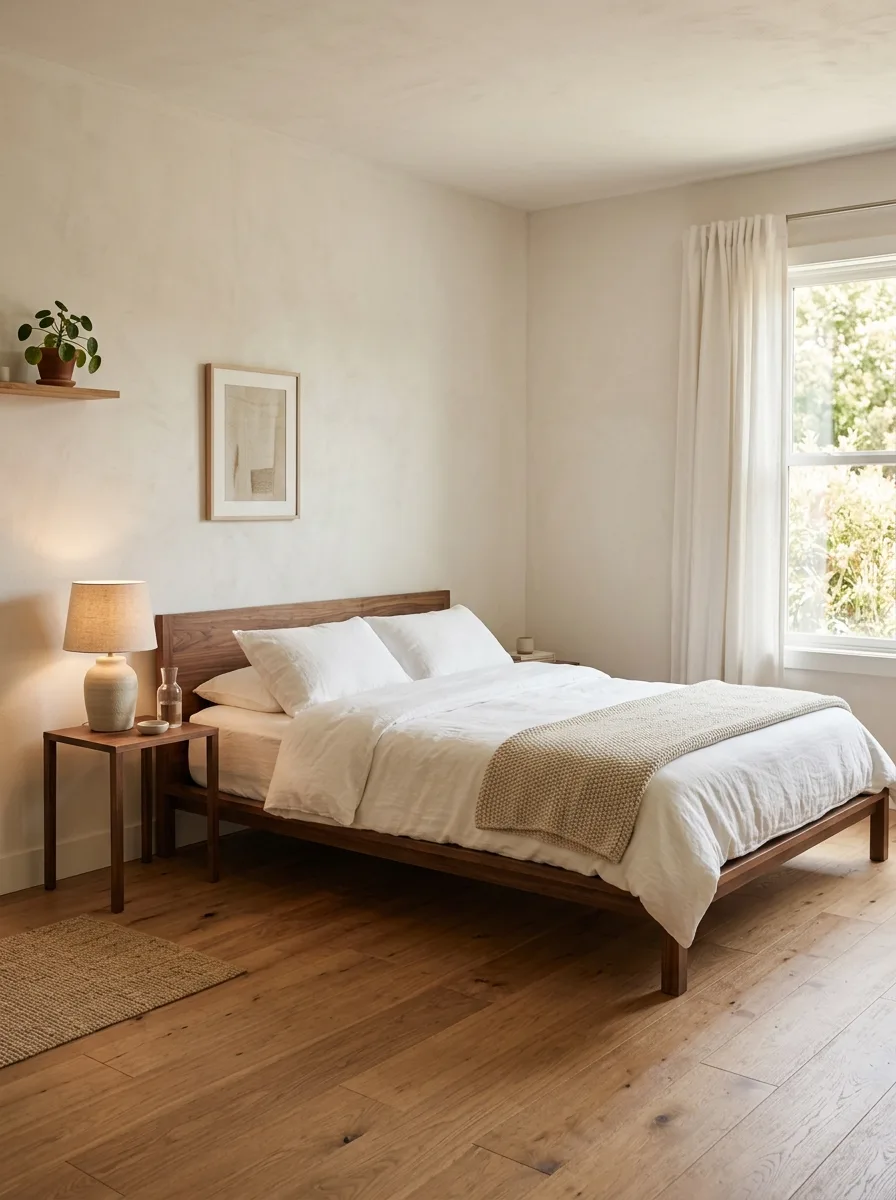
A low platform bed with clean lines is the base of most minimalist bedrooms. It needs no box spring and adds little visual bulk. Walnut, pale ash or matte black frames each set a different tone, so the frame’s material does the work that decoration would do elsewhere. Simple white or neutral bedding and one throw let the frame show.
Good to know: check your mattress warranty before buying: many specify how far apart platform slats can be or require a solid surface. A very low bed is also harder to get out of for anyone with knee or back problems.
2. Single Statement Art Piece
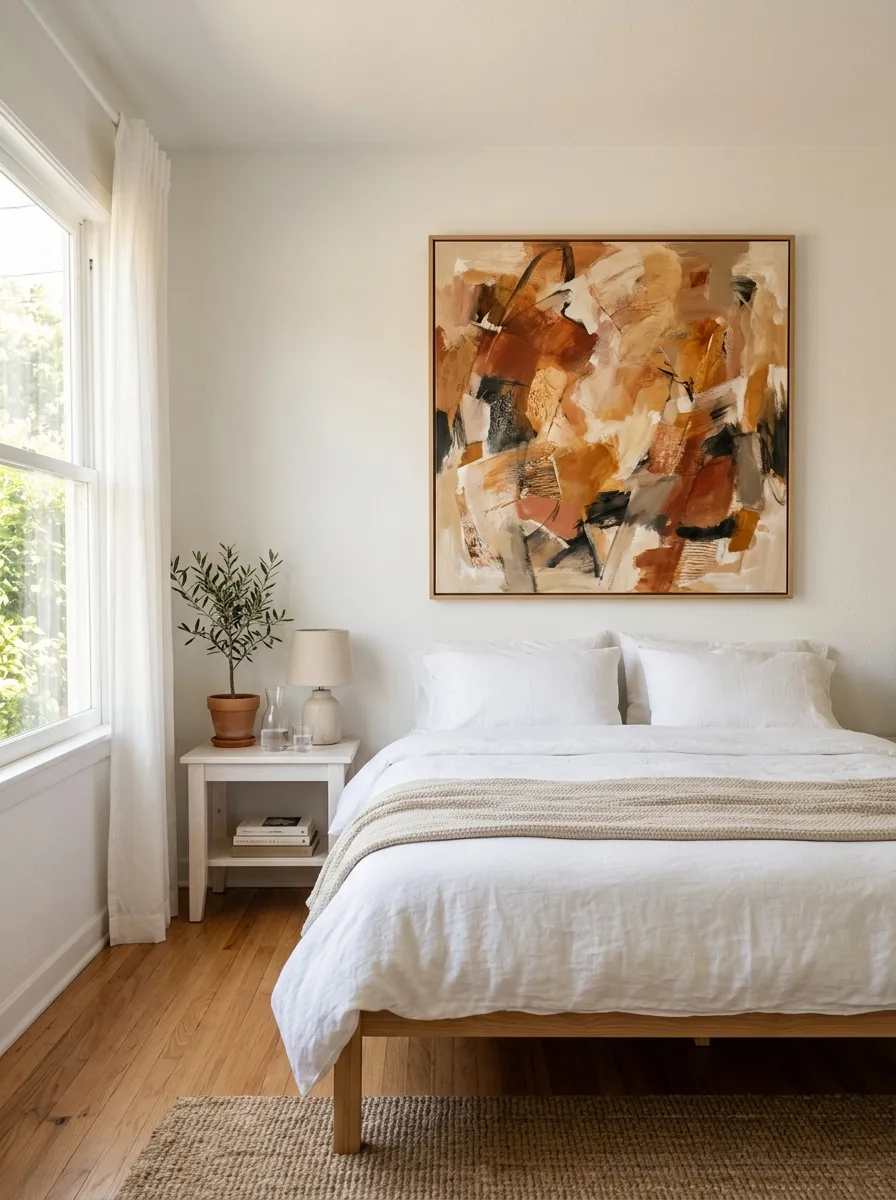
One well-chosen piece of art above the bed or on the facing wall can carry the whole room: a large abstract, a photograph or a simple line drawing in a thin frame. A piece with meaning to you, such as a print from a trip or a favorite artist, adds more personality than generic decor. For sizing and placement, see these wall art ideas.
Good to know: a common guideline is about two-thirds the width of the headboard for art above a bed. Hang it with two hooks or a cleat so it stays level and can’t slip.
3. Warm Wood Nightstand with One Object
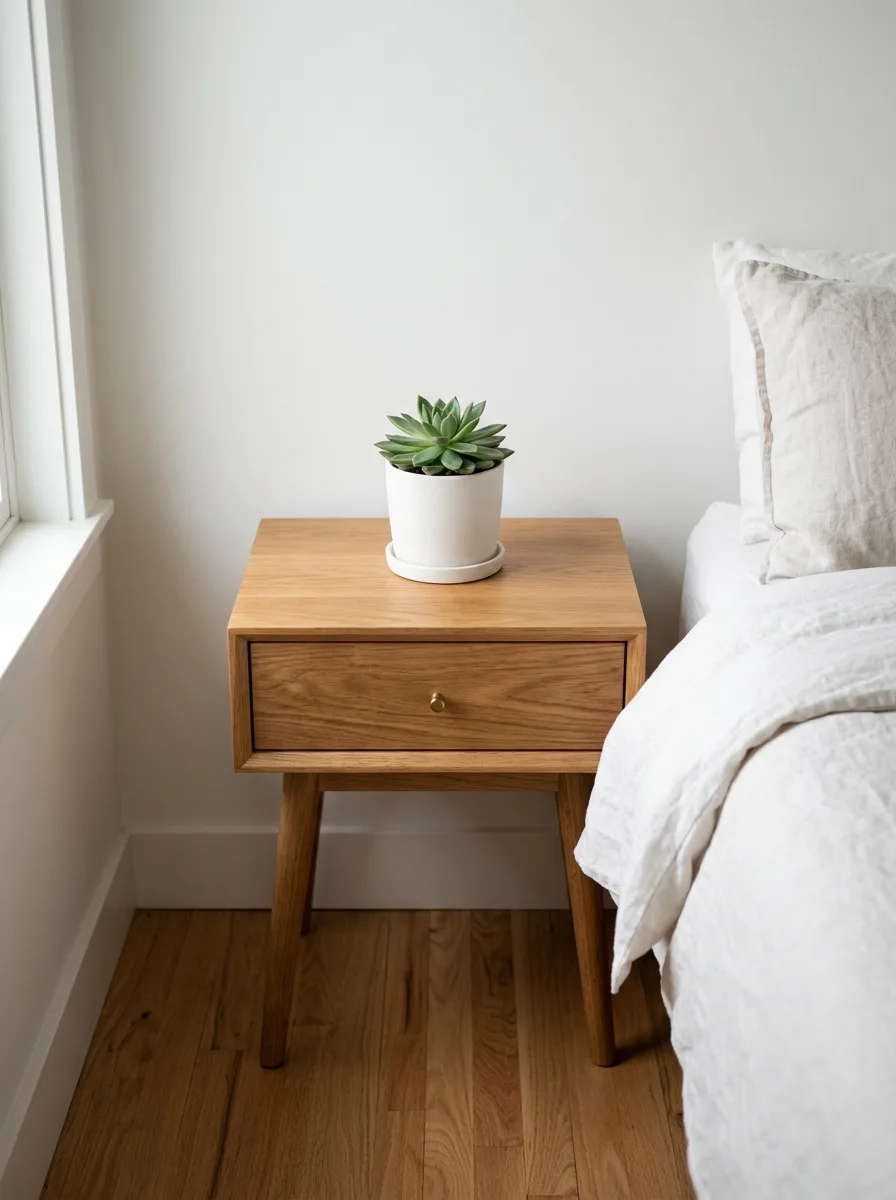
A plain wood nightstand with visible grain holding one or two things, such as a ceramic lamp and a book, keeps the bedside calm. A slim walnut table, a pale oak cube or a small round table all work. Choose a piece with a drawer so the clutter has somewhere to go.
Good to know: a top close to the height of the mattress is easiest to reach from bed. Use a coaster or tray for water glasses, since condensation can leave rings on many wood finishes.
4. Neutral Linen Bedding in Earthy Tones
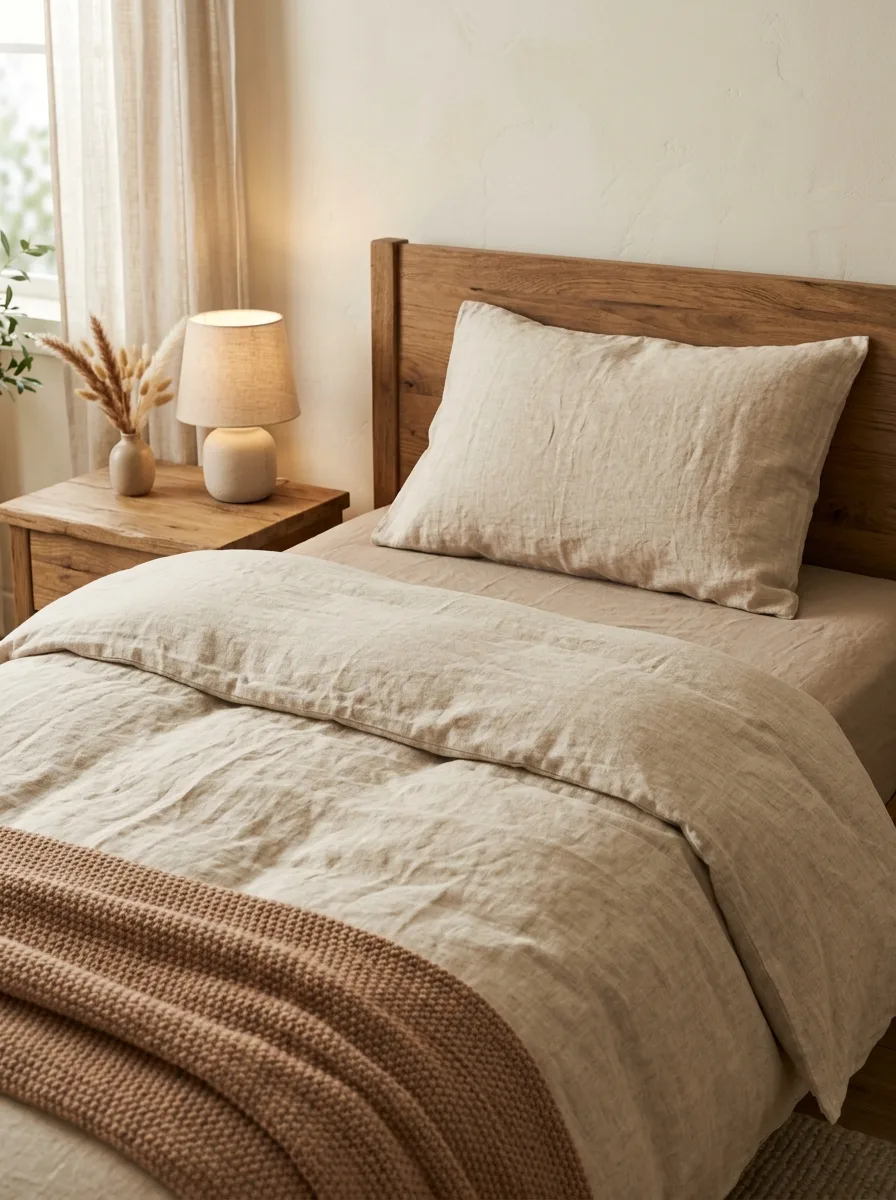
Linen bedding in oatmeal, sand, clay or pale stone adds texture and warmth without pattern. Its natural creases look relaxed rather than messy, so the bed looks good without decorative pillows. Pair linen sheets with a linen or cotton duvet in a close tone for a layered, single-color bed.
Good to know: linen makers generally advise cool or lukewarm water, a gentle cycle, low heat or line drying, and no fabric softener, which coats the fibers and makes them less absorbent.
5. Floor to Ceiling Sheer Curtains
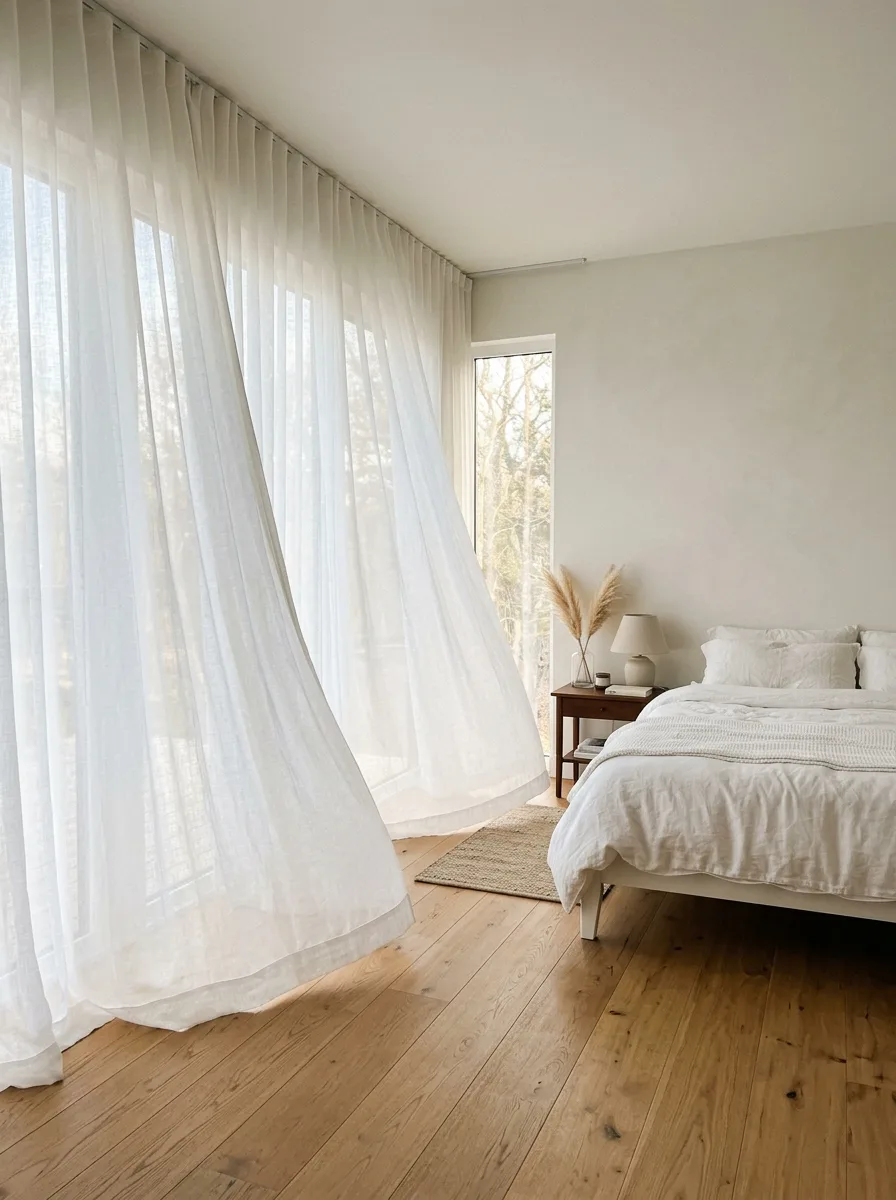
Floor-to-ceiling sheer curtains in white or soft cream filter daylight and soften the window without adding visual weight. Mount a slim rod close to the ceiling so the walls look taller, and use enough fabric to gather softly when drawn.
Good to know: sheers give little privacy after dark, so pair them with a shade or lined panel. If young children use the room, CPSC advises cordless window coverings.
6. Single Indoor Plant as a Living Accent
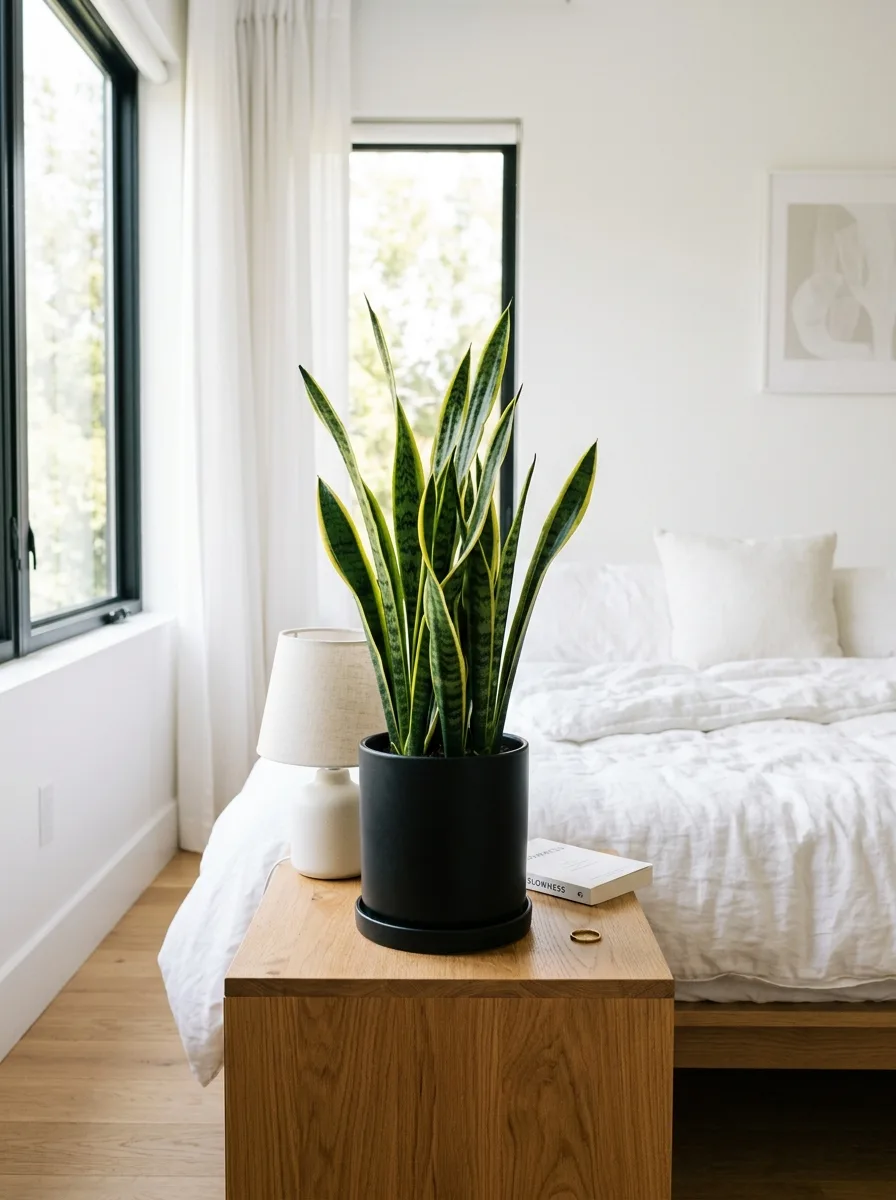
One healthy plant on a windowsill, nightstand or in a corner adds color and an organic shape. Choose one that suits your light: NC State Extension notes snake plant tolerates very low light and parlor palm copes with low light. A plain pot in matte black, white or terracotta keeps the look clean.
Good to know: the ASPCA plant list rates snake plant, pothos and monstera as toxic to cats and dogs; parlor palm, Boston fern and hoya are non-toxic. Plants won’t purify the air either: Iowa State Extension, citing EPA, says they have little effect in a home.
7. Hidden Storage for a Clutter Free Room
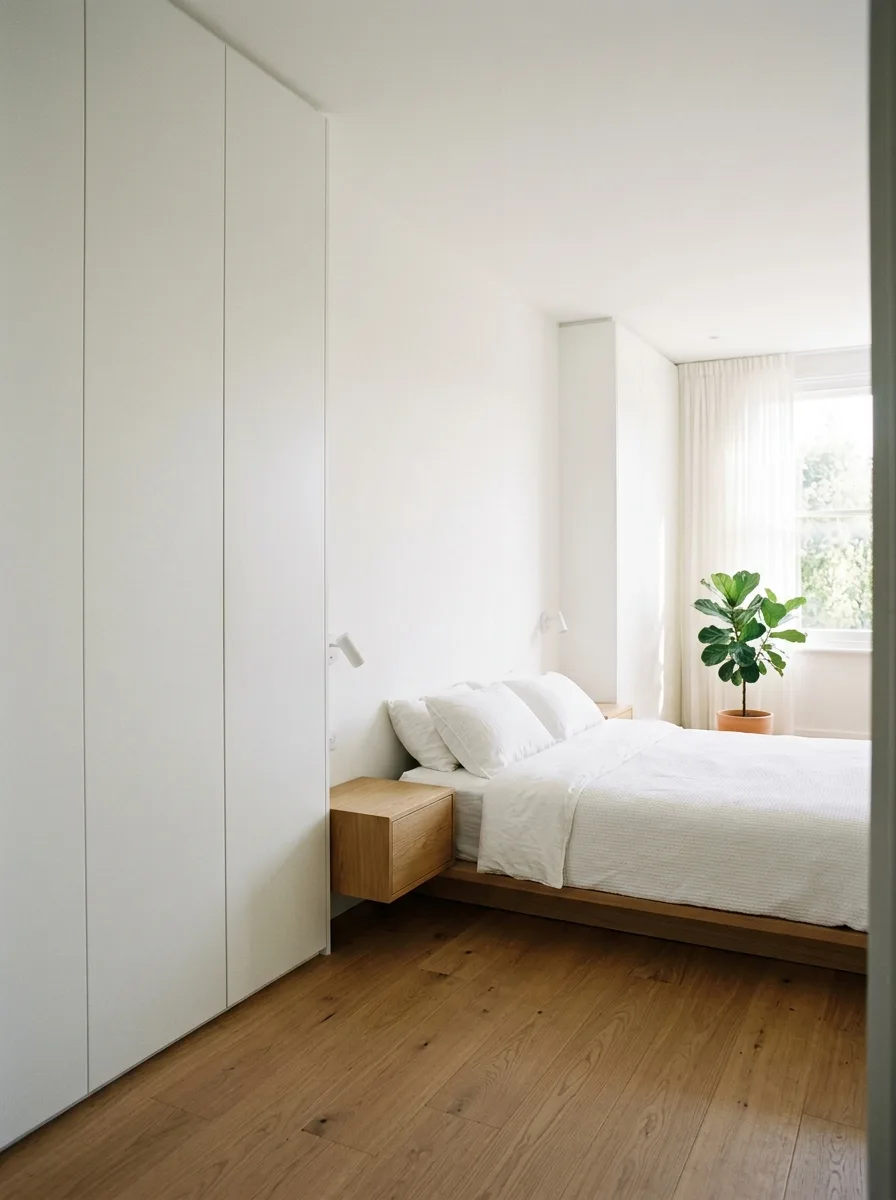
A minimalist bedroom depends on closed storage: a wardrobe with flat or handleless doors, drawers under the bed and nightstands that close. A lift-up storage bed holds bulky things such as spare duvets. When everything has a hidden home, putting things away takes seconds and the surfaces stay clear.
Good to know: measure the space under your bed frame before buying under-bed drawers, and leave room to pull them fully open. Push-to-open doors need a little clearance to work, so follow the hardware’s spacing instructions.
8. Accent Wall in a Muted Tone
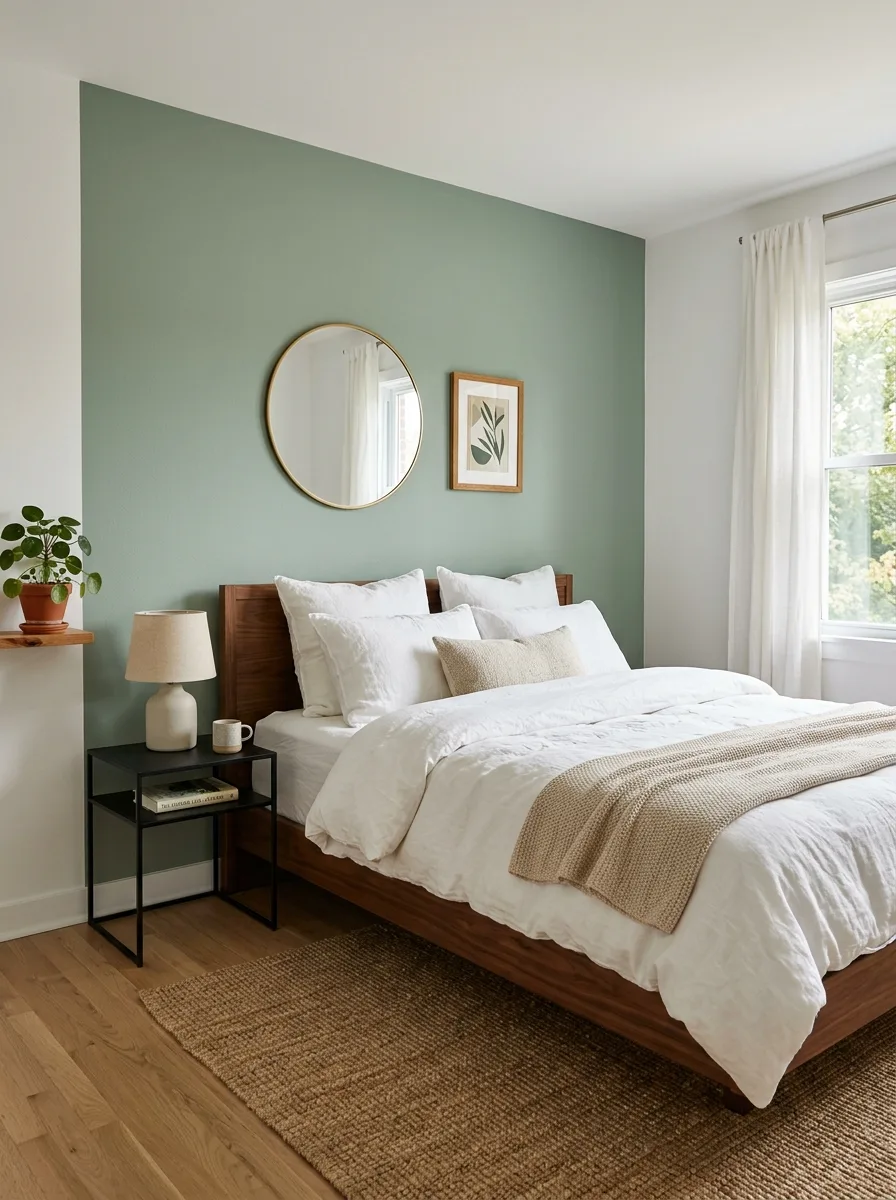
One wall behind the bed in a muted color, such as soft sage, dusty blue, warm clay or pale mushroom, adds color without breaking the calm. Keep the other walls in warm white or cream. A sage wall behind a walnut bed with white linen bedding is a simple combination.
Good to know: paint large samples and look at them in morning and evening light, since muted colors can turn gray or green depending on the light. Ventilate during and after painting.
9. Pendant Light as a Sculptural Element
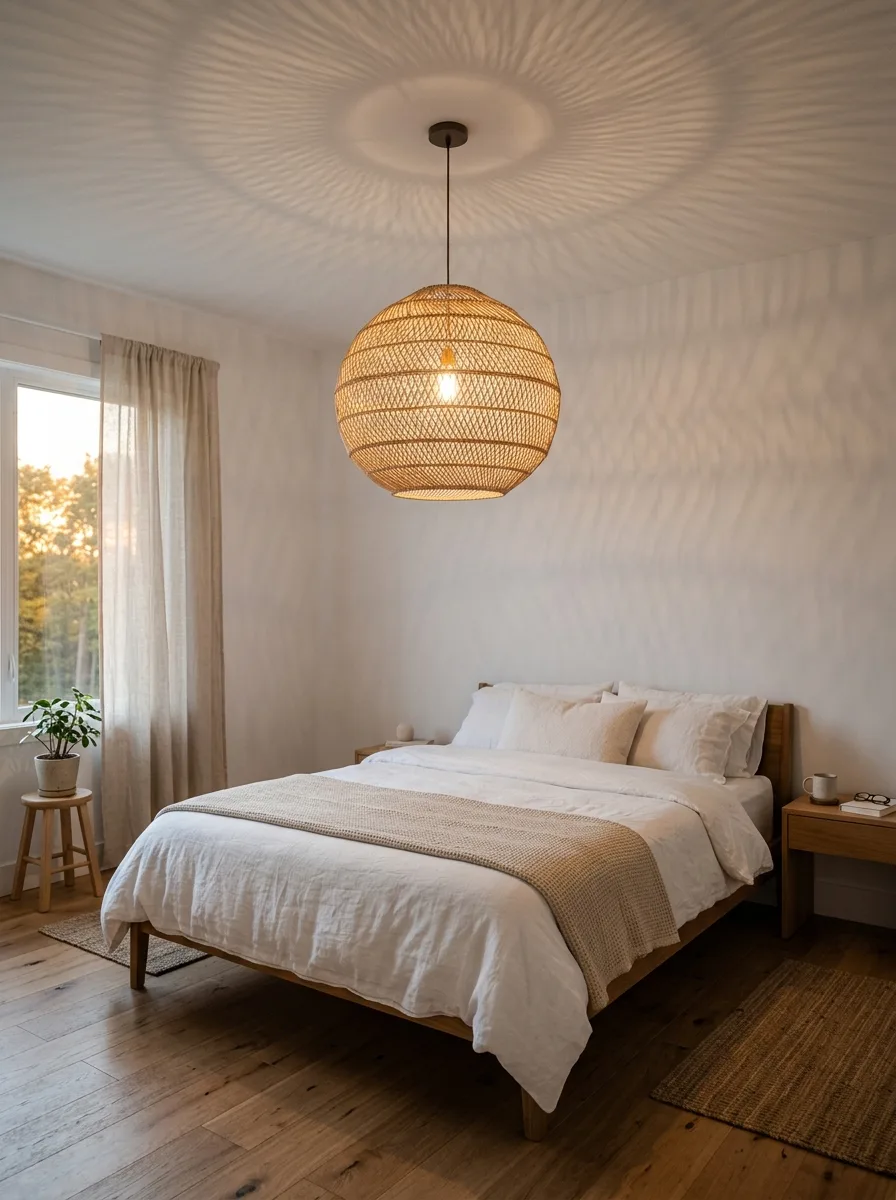
A sculptural pendant in place of a basic ceiling light adds interest without taking up floor or surface space. A woven rattan shade, a geometric brass fixture or a paper lantern each set a different tone. Hang it centered in the room and put it on a dimmer so it can give a low evening light.
Good to know: check the fixture’s maximum wattage and use LED bulbs in paper and rattan shades; ENERGY STAR notes incandescent bulbs release 90% of their energy as heat.
10. Japanese Inspired Futon on Tatami
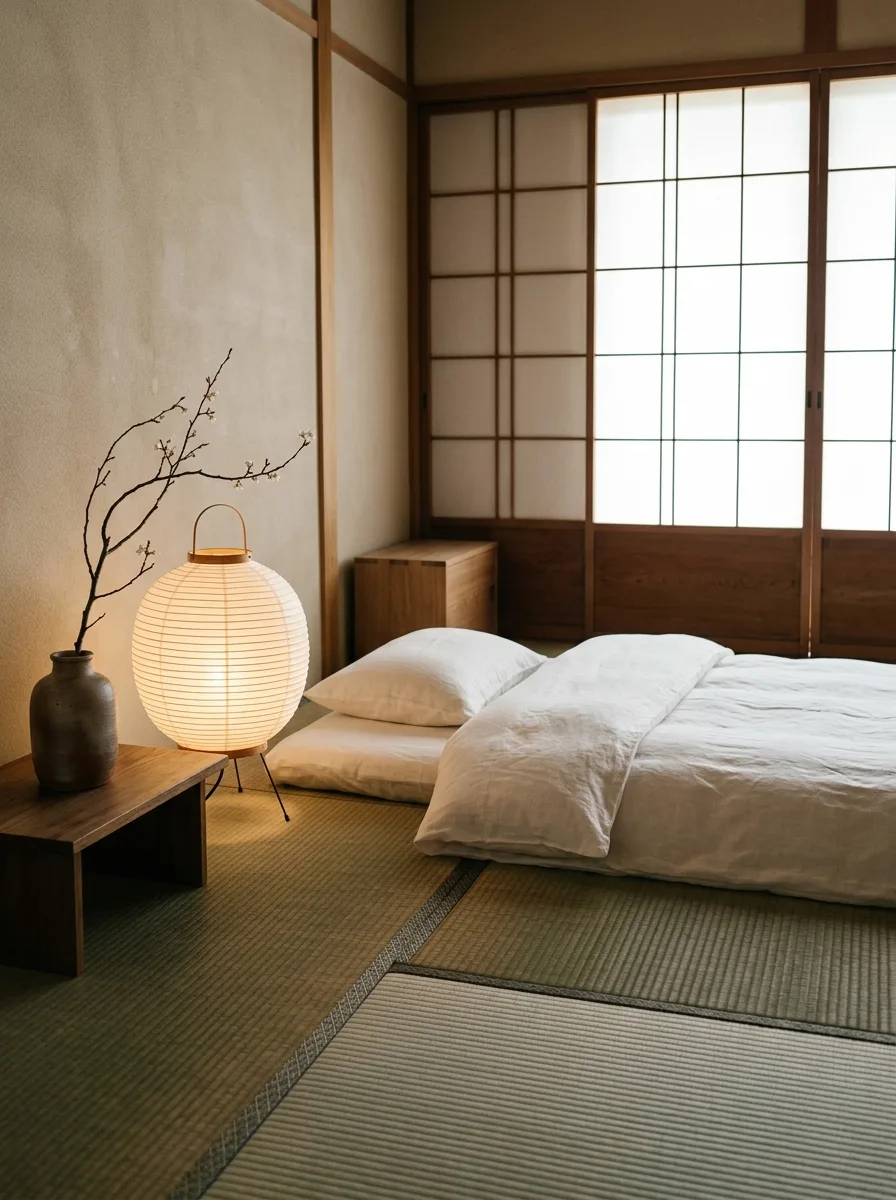
A futon on tatami mats or a low wooden platform, with a paper lantern and a low side table, borrows from Japanese bedrooms, where the bedding is traditionally folded away during the day to free the floor. Add one ceramic vessel with a branch and leave the rest of the floor clear.
Good to know: bedding on the floor gets little airflow underneath, so moisture can build up. Fold the futon away or stand it up to air regularly, or use a slatted base, and keep tatami dry.
11. Monochromatic Gray Palette
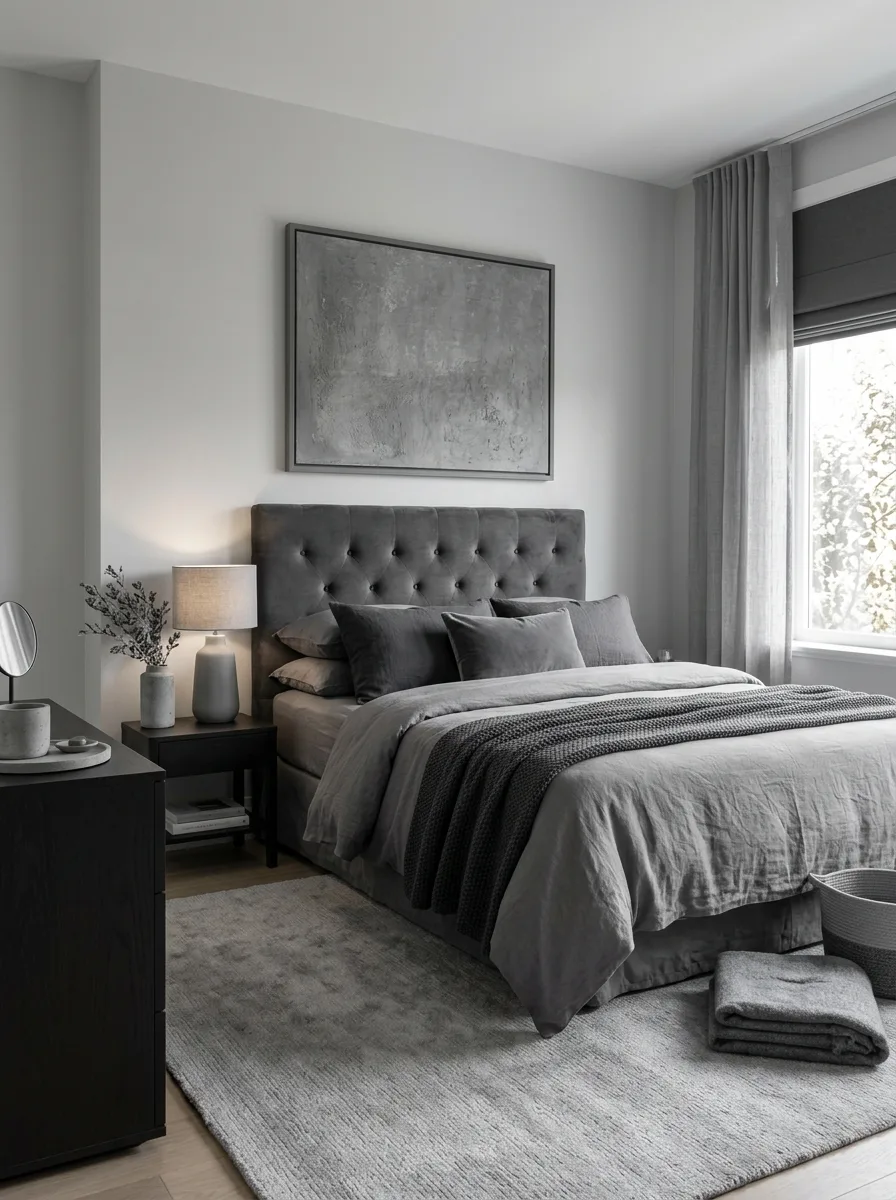
A room in one color family, from pale silver to deep charcoal, gets depth from tone and texture rather than contrast. A pale gray wall, a charcoal headboard, mid-gray bedding and a silver-gray wool rug show how it works. Mix velvet, linen and wool so the shades don’t blur together.
Good to know: grays have blue, green, violet or warm undertones, so compare samples side by side in your own room before choosing, and keep the undertones consistent.
12. Open Closet with Curated Wardrobe
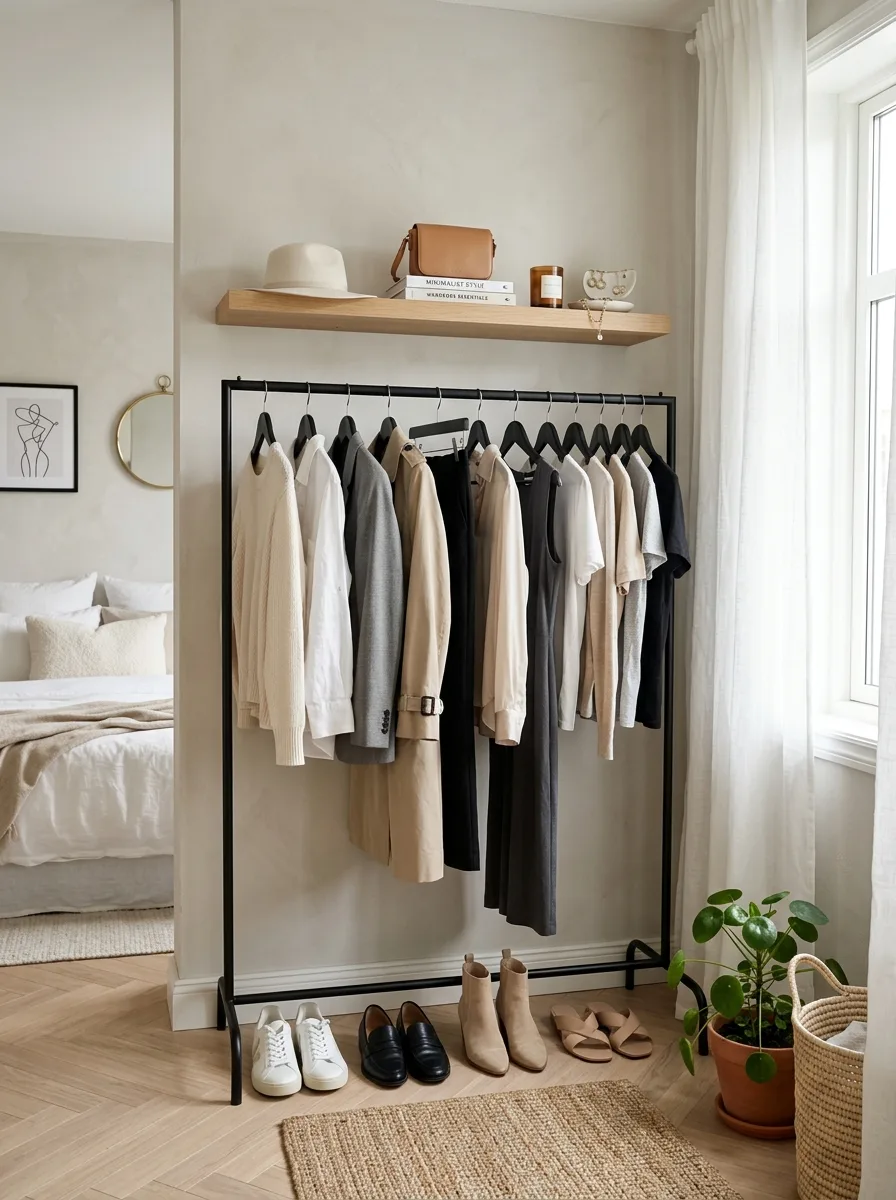
An open closet or clothing rail with a small, edited wardrobe in a related color range makes clothes part of the room’s look. A matte black or brass rail, a few pairs of shoes on a low shelf and a hook for a bag are enough. It works best when the wardrobe really is small.
Good to know: open rails collect dust and strong sun fades clothes, so keep the rail out of direct sunlight and check its weight rating. Clean wool before storing it; University of Maryland Extension notes moths feed mainly on soiled wool.
13. Floating Nightstands for Visual Lightness
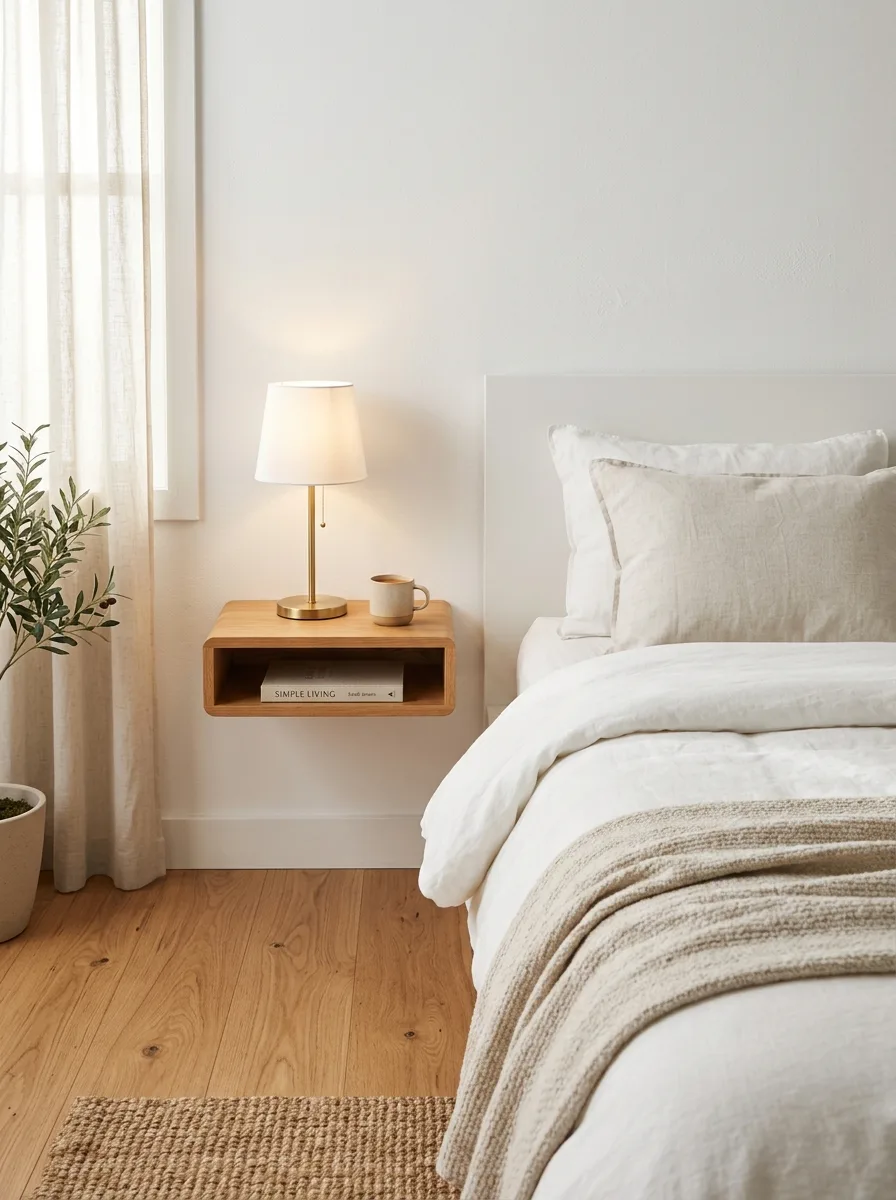
Wall-mounted nightstands leave the floor open below, which makes a small bedroom look larger and is easier to clean under. A floating shelf or drawer in warm wood or matte white holds a lamp and a book. Mount them at a height close to the top of the mattress.
Good to know: screw them into studs or use anchors rated for the load, and plan where the lamp and charger cords will run before drilling.
14. Textured White Bedding with Depth
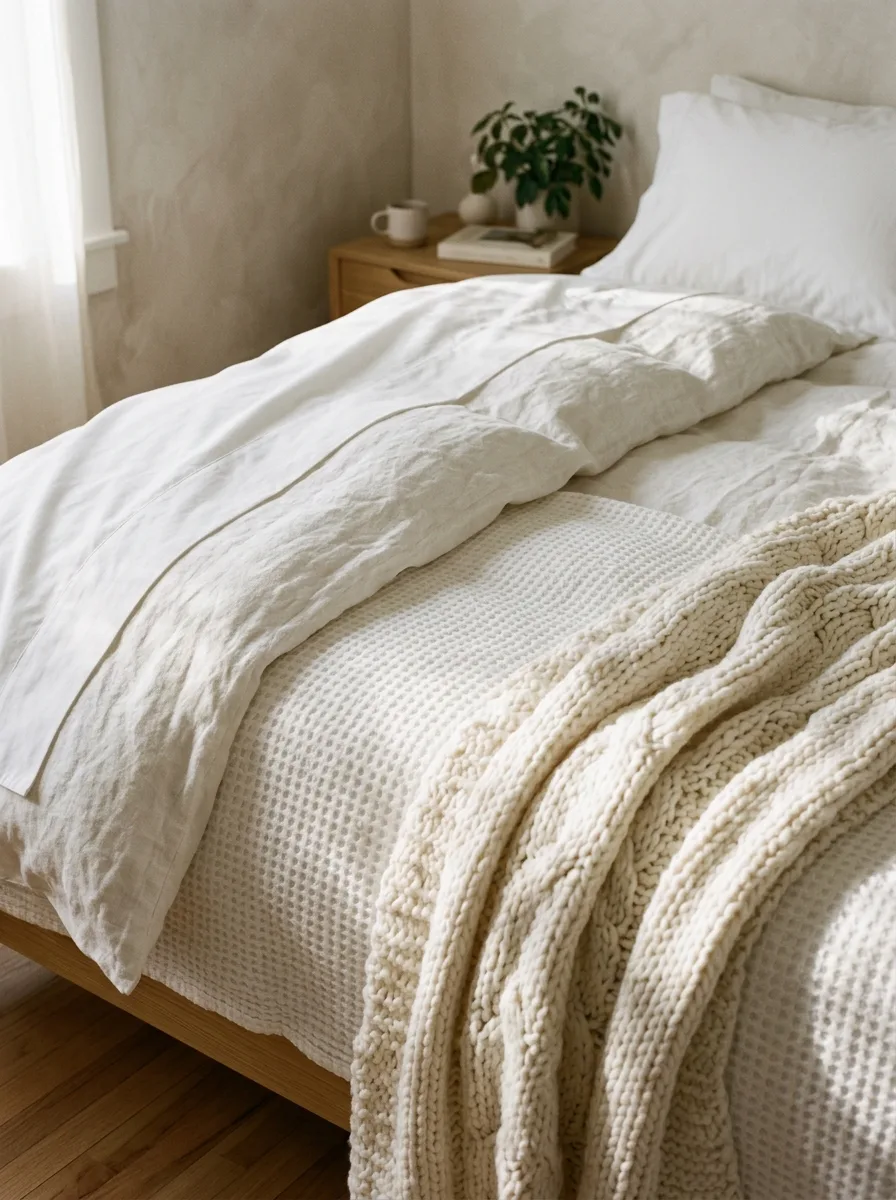
An all-white bed looks richer when each layer has a different texture: smooth percale sheets, a waffle-weave blanket, a linen duvet and a chunky knit throw. The textures catch light differently and give the bed depth without color or pattern. For more ways to layer white bedding, see these Nancy Meyers bedroom ideas.
Good to know: white bedding needs frequent washing, so choose pieces that are machine washable and check each care label before you buy.
15. Asymmetrical Furniture Arrangement
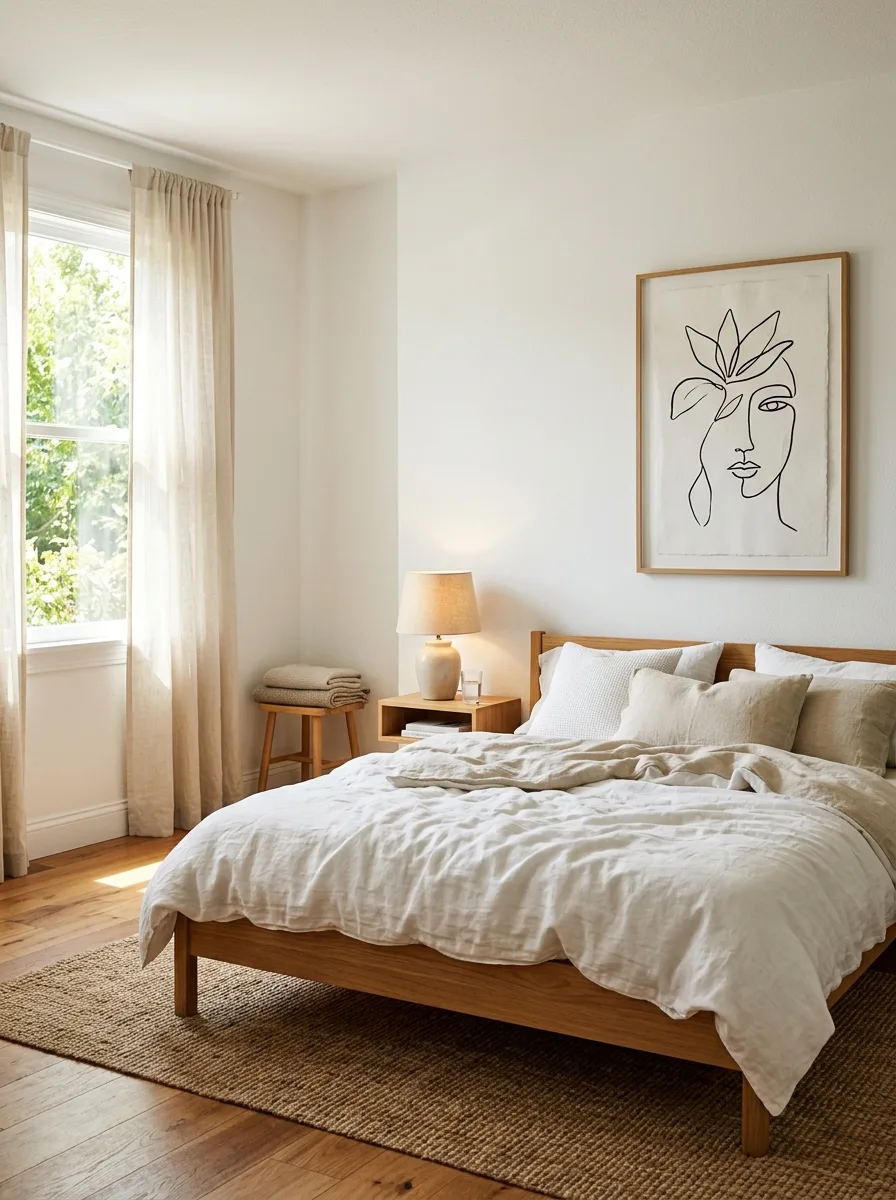
Breaking strict symmetry can make a minimal room look composed rather than catalog-like: a single nightstand with a lamp on one side and a piece of art on the other, or a reading chair set at an angle in a corner. Balance comes from visual weight, not matching pairs.
Good to know: make sure the side without a nightstand still has light within reach of the bed, such as a wall sconce; CDC’s fall-prevention checklist advises a lamp close to the bed where it’s easy to reach.
16. Warm Lighting with Exposed Filament Bulbs
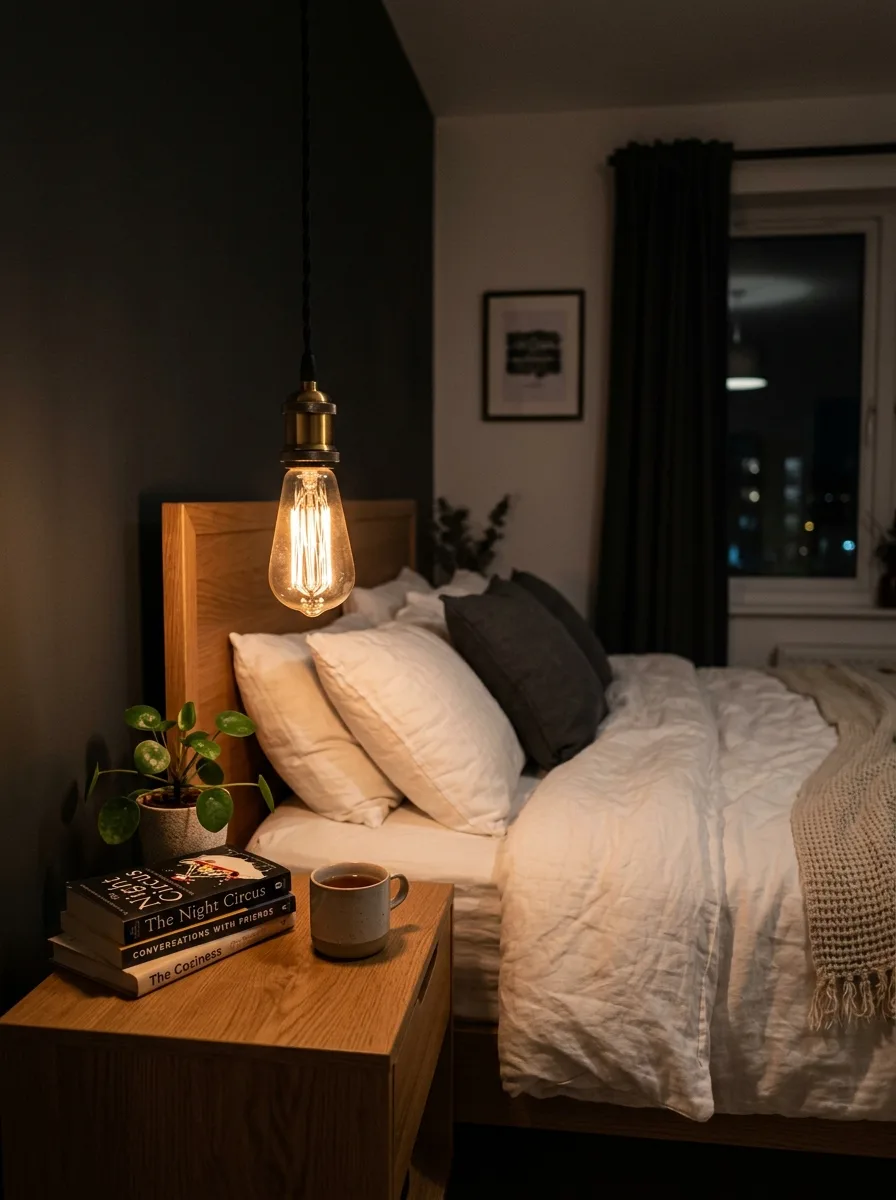
Exposed-filament bulbs in a simple pendant or pair of sconces add a warm, amber glow, and the bulb itself becomes the decoration. LED filament versions copy the vintage look; ENERGY STAR notes that LEDs produce light up to 90% more efficiently than incandescent bulbs. Amber-tinted bulbs give the warmest tone.
Good to know: bare bulbs can glare, so place them above or beside eye level rather than in your line of sight from bed, choose lower-brightness bulbs and use a dimmer.
17. Concrete or Plaster Wall Finish
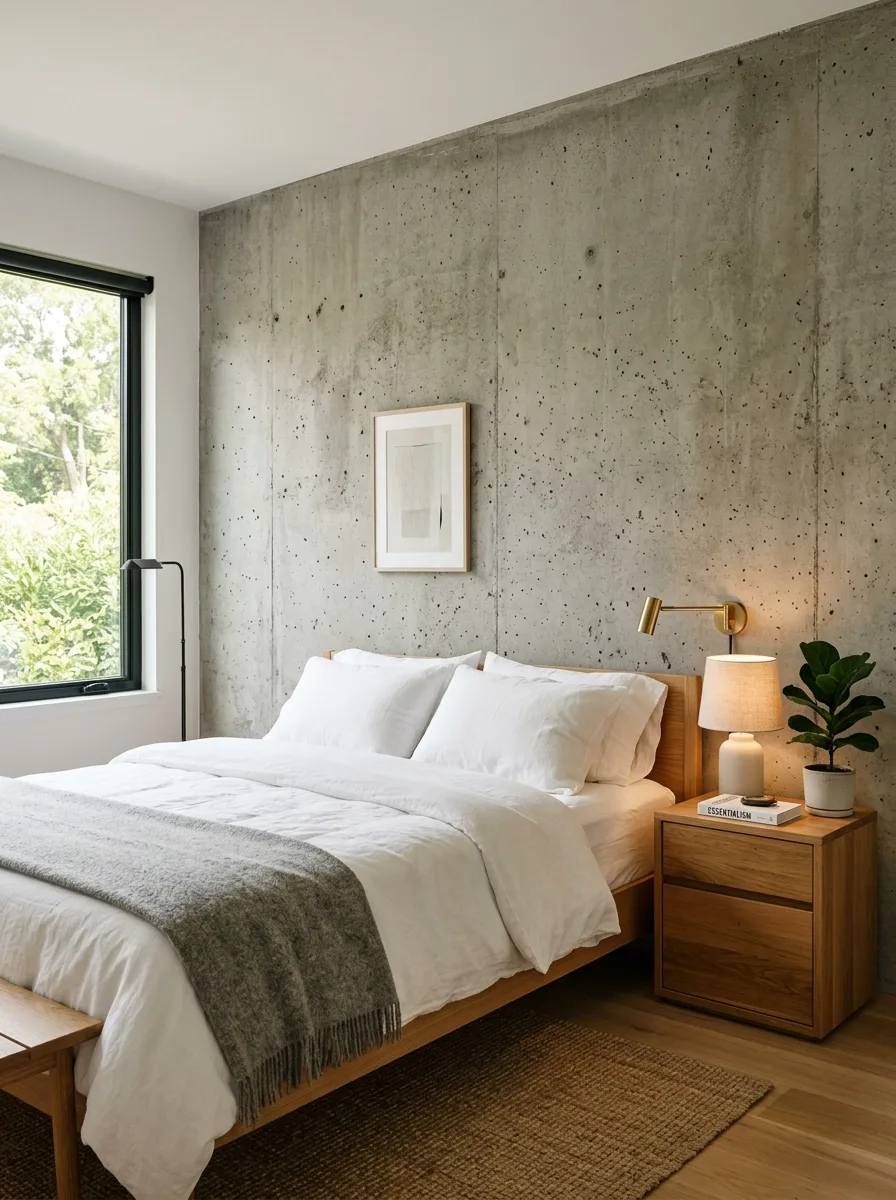
A plaster or concrete-look wall behind the bed adds raw texture and subtle color variation that flat paint doesn’t. Limewash, Venetian plaster, microcement or concrete-effect paint give the look without pouring concrete. Pair it with white bedding and warm wood so the room doesn’t feel cold.
Good to know: limewash is strongly alkaline, and its makers call for goggles and gloves during application. It bonds to porous surfaces such as plaster, so check the product’s instructions before using it over existing paint.
18. Books as Decor and Personality
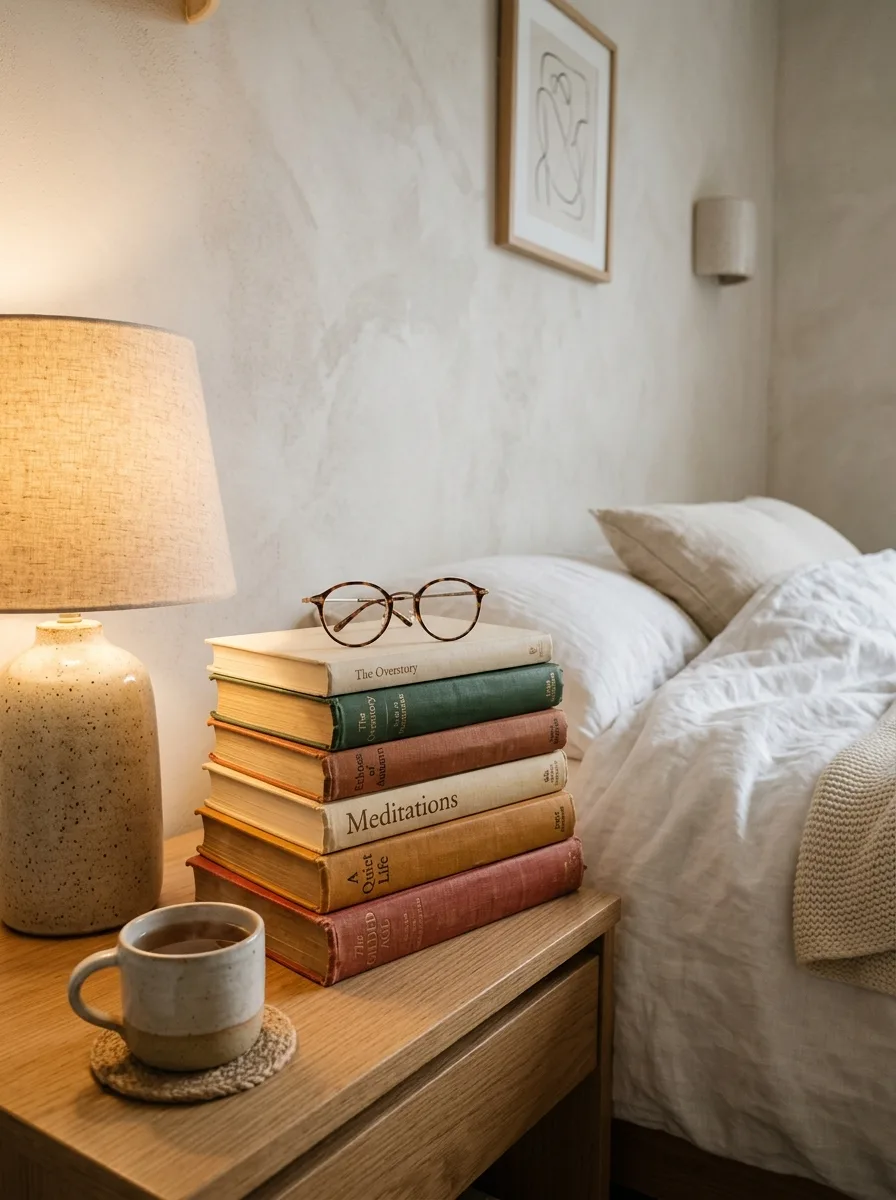
A short stack of books on the nightstand or a single shelf of favorites shows your interests better than decorative objects can. Keep it to a few books you’re reading or care about, stacked neatly or leaned on a shelf with a bookend.
Good to know: keep books out of strong direct sun, which fades covers and spines.
19. Matte Black Hardware and Fixtures
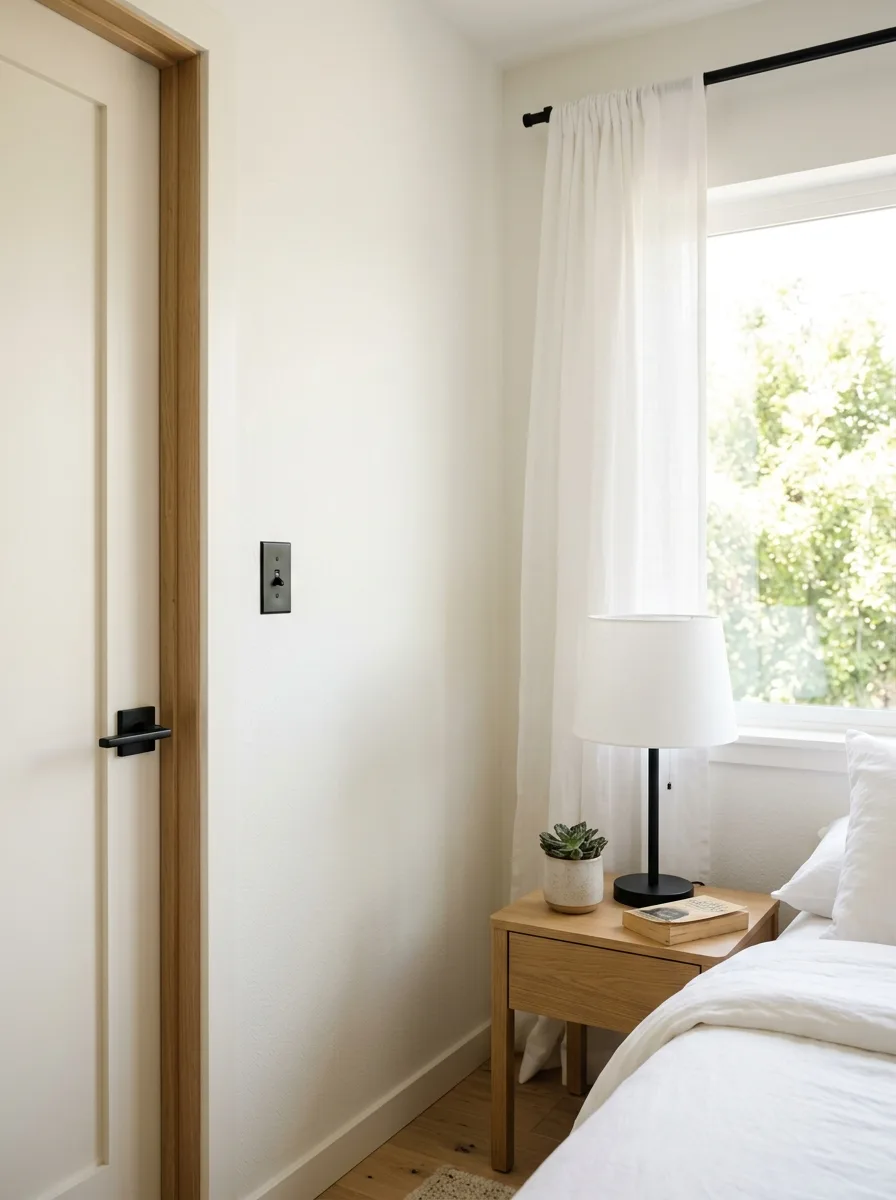
Repeating a matte black finish on door handles, curtain rods, lamp bases and light switches gives a minimal room a clean, graphic outline against white or neutral walls. The consistency matters more than the color, so pick one finish and use it throughout. For more ways hardware lifts a room, see these master bedroom ideas that look expensive.
Good to know: measure the center-to-center distance between existing screw holes before buying new pulls, and clean matte finishes with mild soap and a soft cloth, since abrasive cleaners can wear them.
20. Floor Lamp with Architectural Form
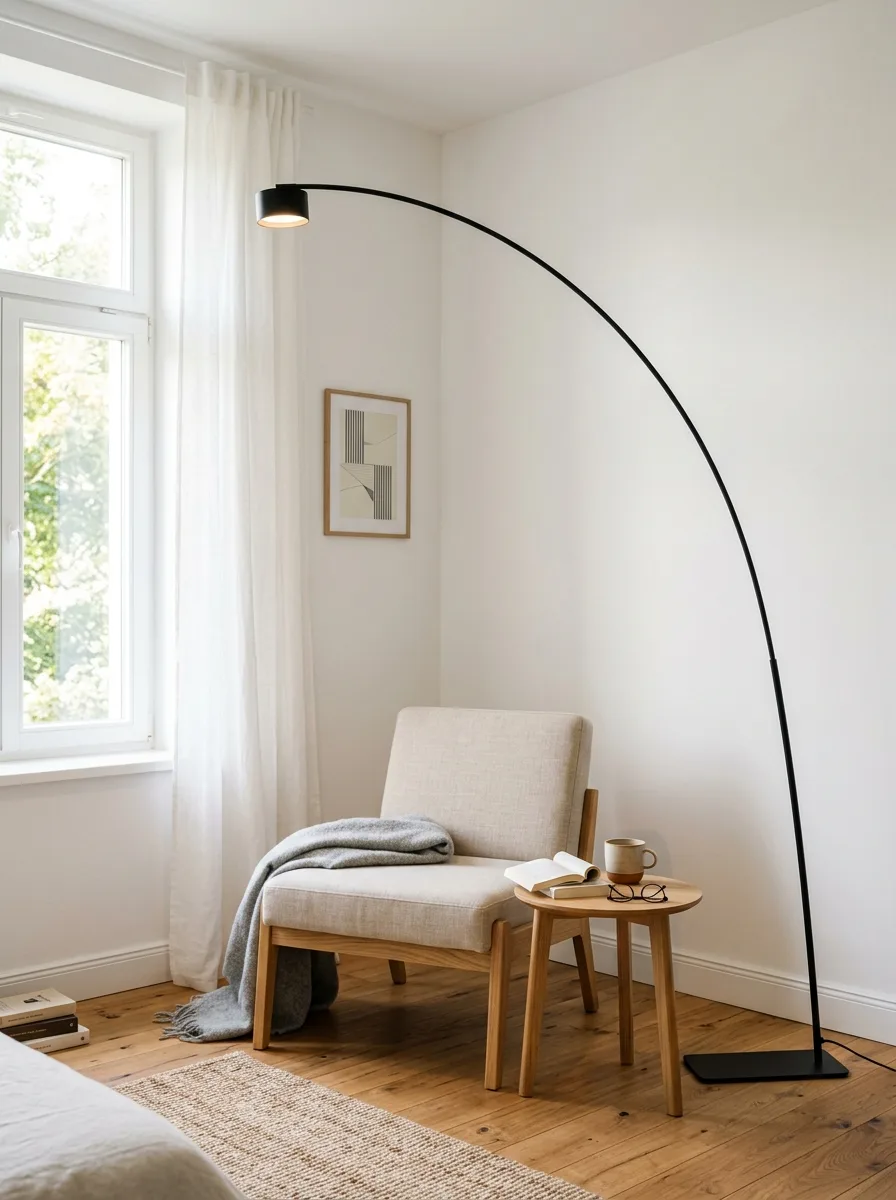
A floor lamp with a strong shape, such as a slim arc, a wooden tripod or a simple column, adds height and light to an empty corner. Matte black suits a modern room, natural wood a Scandinavian one and brass a warmer scheme. It gives reading light without taking table space.
Good to know: choose a lamp with a heavy, stable base, especially an arc lamp, and run the cord along the wall; CDC’s fall-prevention checklist advises coiling or taping cords next to the wall so no one trips.
21. Window as the View and the Art
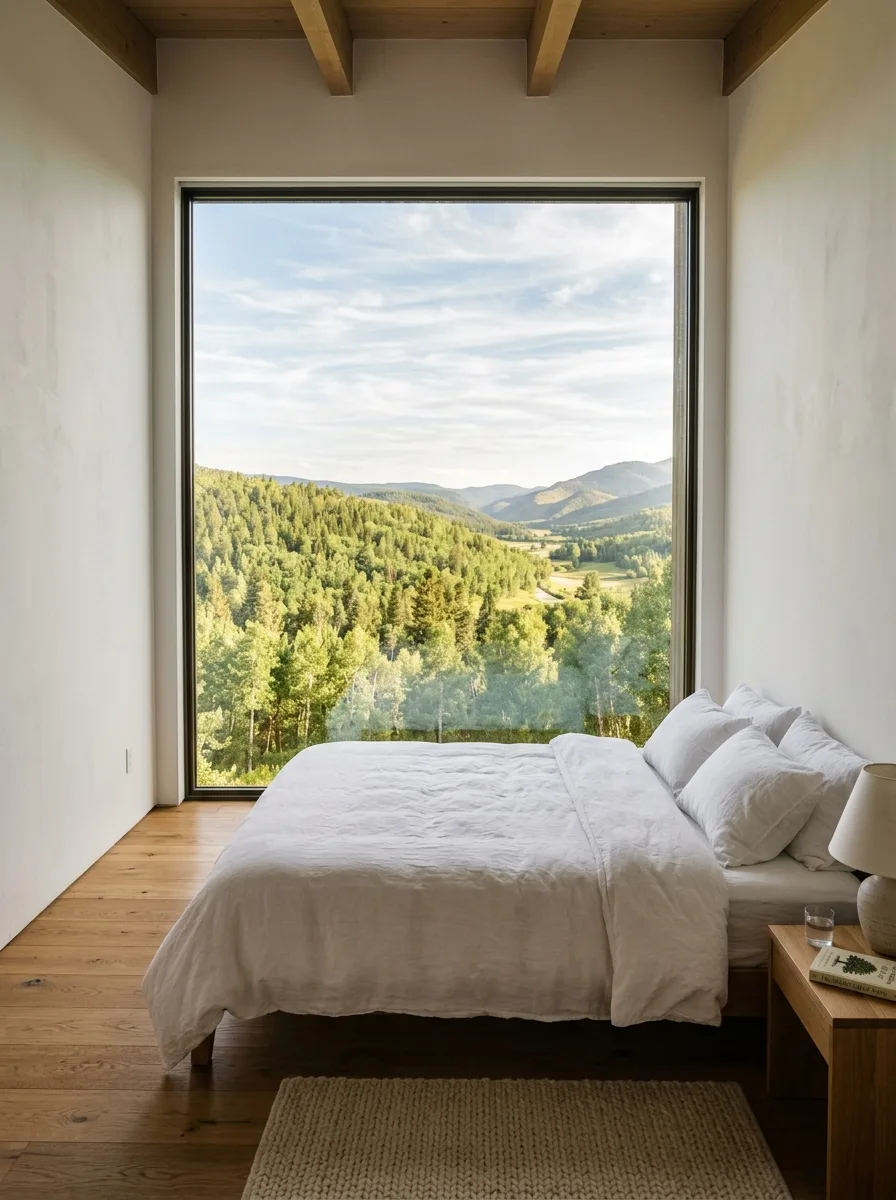
If the bedroom has a good view, keep window treatments minimal and let the view be the main feature. Placing the bed to face or sit beside the window brings morning light and the sky into the room. Leave the wall around the window bare so nothing competes with it.
Good to know: early sun can wake you, and an uncovered window offers no privacy at night, so add a shade that disappears when open, such as an inside-mounted roller blind.
22. Handmade Ceramic Accent
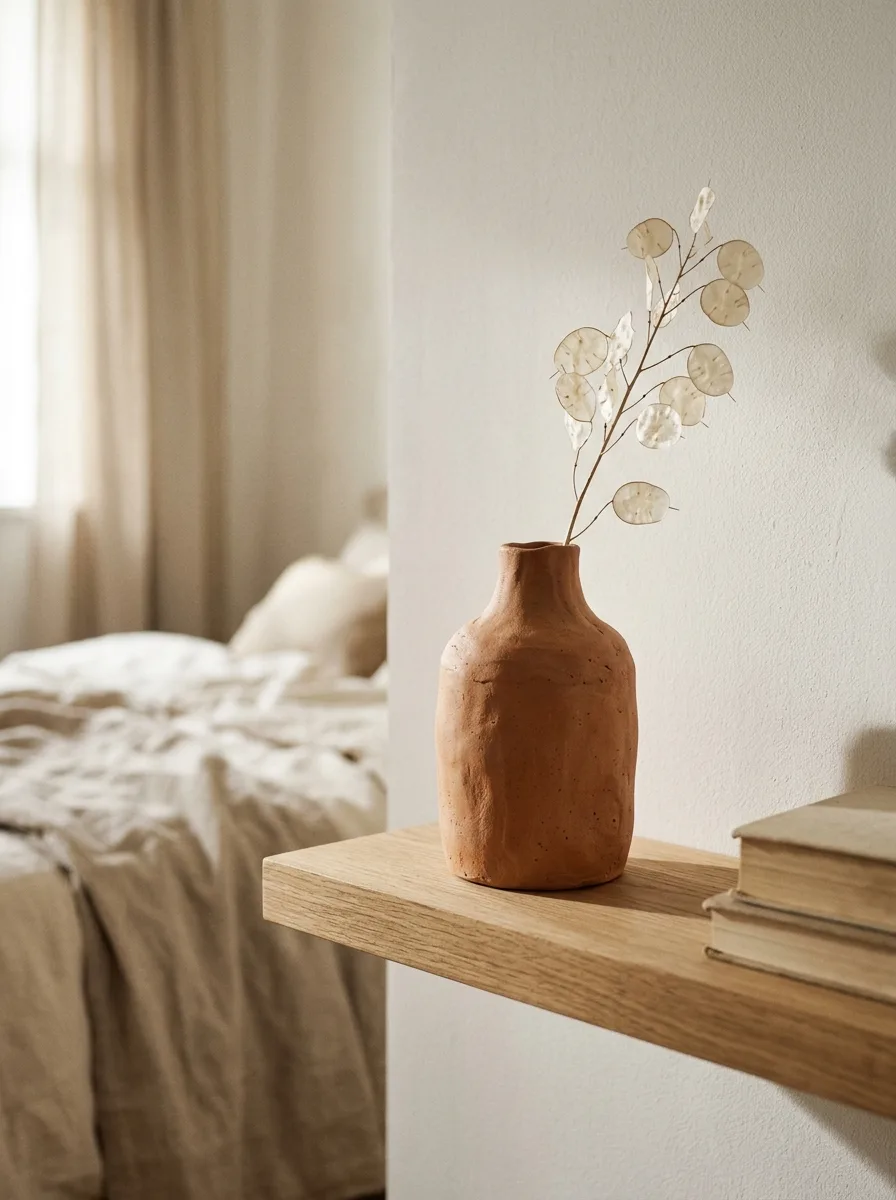
One handmade ceramic piece, such as a vase, a bowl or a small sculpture, adds a human touch to a spare room. Slight irregularities in the shape and glaze give it character that factory-made objects lack. Put it where light shows its texture, such as on a windowsill or floating shelf.
Good to know: unglazed or crackle-glazed pottery may not be watertight, so put fresh flowers in a glass liner inside it.
23. Scent as the Invisible Design Element
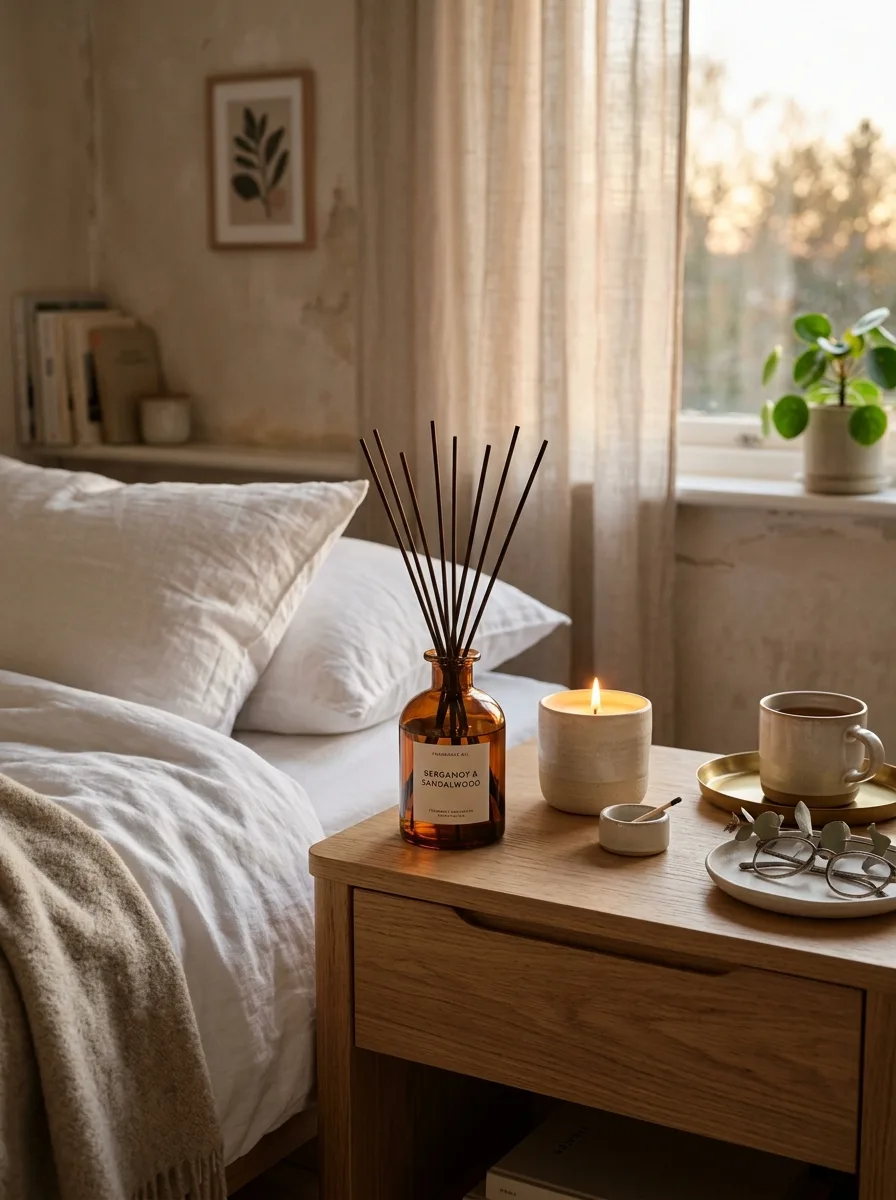
Scent adds personality you can’t see. A reed diffuser, a linen spray or a sachet in a drawer gives the room a signature fragrance without adding objects. Lavender, cedar or eucalyptus are popular choices, but choose what you like: NCCIH, part of the NIH, says it is unclear whether lavender aromatherapy helps anxiety or sleep.
Good to know: skip lit candles here: the U.S. Fire Administration advises against lit candles in bedrooms and sleeping areas. With pets, the ASPCA advises placing diffusers where animals can’t knock them over.
Common mistakes to avoid
- Clearing surfaces without adding closed storage, so the clutter comes back.
- Lighting a sparse room with one bright ceiling light.
- Using only smooth, flat materials, so the room looks cold.
- Leaving tall wardrobes and dressers unanchored.
- Choosing plants without checking whether they’re toxic to pets.
- Burning candles for scent in the bedroom.
Minimalist bedroom FAQs
How do I make a minimalist bedroom feel warm?
Use warm white walls, wood furniture, linen and wool textiles, warm bulbs and one or two personal pieces, such as art or books you care about.
What should a minimalist nightstand hold?
A lamp, the book you’re reading and perhaps a glass of water. Chargers and everything else go in a drawer.
Which plants suit a minimalist bedroom with pets?
The ASPCA lists parlor palm, Boston fern and wax plant (hoya) as non-toxic to cats and dogs. Snake plant, pothos and monstera are on its toxic list.
Does lavender help you sleep?
The evidence is unclear. NCCIH says it is not known whether lavender aromatherapy helps anxiety or sleep. Choose a scent you enjoy, and CDC’s advice to keep the bedroom quiet, relaxing and cool still applies.


